
A slow-acting A/C recharge kit is the first sign. The second is sticking that rental UV light under the dash and discovering a puddle of fluorescent oil on your driveway. Finding the exact spot where refrigerant, coolant, or vacuum escapes from a modern car is the hardest part of the job — and the most expensive when you pay a shop by the hour. A dedicated automotive leak detector turns that hours-long hunt into a ten-minute confirmation, saving your system and your wallet.
I’m Min — the co-founder and writer behind Gadgets Feed. I focus on breaking down the real-world performance of automotive diagnostic tools by cross-referencing technical datasheets, sensor types, and verified user feedback across hundreds of hours of market research to determine which detector actually delivers for the working mechanic or serious DIYer.
This guide compares electronic sniffers, UV dye kits, and smoke machines across price and performance to help you select the right best auto ac leak detector for your specific diagnosis needs.
How To Choose The Best Auto AC Leak Detector
An automotive leak detector is more than a simple gas sniffer. The most effective units fall into three distinct categories, each suited to a specific diagnosis challenge. Matching the tool to the likely failure point — a refrigerant line, a vacuum hose, or a cracked gasket — determines whether you find the leak in five minutes or end up chasing a false positive all afternoon.
Sensor Technology: Heated Diode vs. Infrared vs. Semiconductor
Electronic sniffers for refrigerant use one of three sensor cores. Heated diode sensors (like the Elitech CPU-1G) are affordable and fast, with response times around 3 seconds, but they require regular tip replacement. Infrared sensors (like the Elitech ILD-200) offer longer service life — up to ten years — and superior resistance to false alarms from ambient contamination, but come at a premium. Semiconductor sensors (found in the Sensyx SFD series) provide a middle ground with adjustable sensitivity levels and UL1484 safety compliance.
Smoke Machines vs. Electronic Sniffers: When to Use Each
An electronic sniffer is the best tool for pinpointing a refrigerant leak in an A/C line or evaporator core. A smoke machine, however, is the definitive tool for EVAP, intake, exhaust, and vacuum leaks. The AutoLine Pro HyperSmoke and the Solary SD302 both inject a visible fog into a sealed system; you watch the smoke pour out of the failed seal. For modern vehicles with complex purge-valve circuits and plastic intake manifolds, a smoke machine often finds leaks that a sniffer misses because the escaping gas mixes with ambient air before triggering the sensor.
Dye Kits for Slow, Oil-Based Leaks
Fluorescent UV dye kits remain the most cost-effective method for locating intermittent or very slow leaks in coolant, power steering, and engine oil circuits. A high-intensity 12V UV light like the Mastercool 53351 makes even a microscopic trail of dye glow clearly against dark engine blocks. The trade-off is time: dye circulates through the system for hours or days before the leak becomes visible, whereas a sniffer or smoke machine delivers results in minutes.
Quick Comparison
On smaller screens, swipe sideways to see the full table.
| Model | Category | Best For | Key Spec | Amazon |
|---|---|---|---|---|
| AutoLine Pro HyperSmoke | Smoke Machine | EVAP & Vacuum Leaks | Built-in air compressor; 30 sec warm-up | Amazon |
| Elitech ILD-200 | IR Sniffer | Precision Refrigerant Leaks | 10-year IR sensor; 0.14 oz/yr sensitivity | Amazon |
| Mastercool 53351 | UV Dye Kit | Coolant & Oil Leaks | 50W 12V UV light; universal dye | Amazon |
| Solary SD302 | Smoke Machine | Exhaust & Intake Leaks | Dual air/smoke mode; pressure gauge | Amazon |
| Sensyx SFD201 | Sniffer | 2-in-1 Refrigerant & Combustible Gas | Rechargeable Li-ion; 30s warm-up | Amazon |
| Sensyx SFD200 | Sniffer | Refrigerant Leaks | Japan-made semicon sensor; LCD screen | Amazon |
| Elitech CPU-1G | Sniffer | Budget-Friendly Sniffing | 7 sensitivities; 0.11 oz/yr max | Amazon |
In‑Depth Reviews
1. AutoLine Pro HyperSmoke APM-HS11
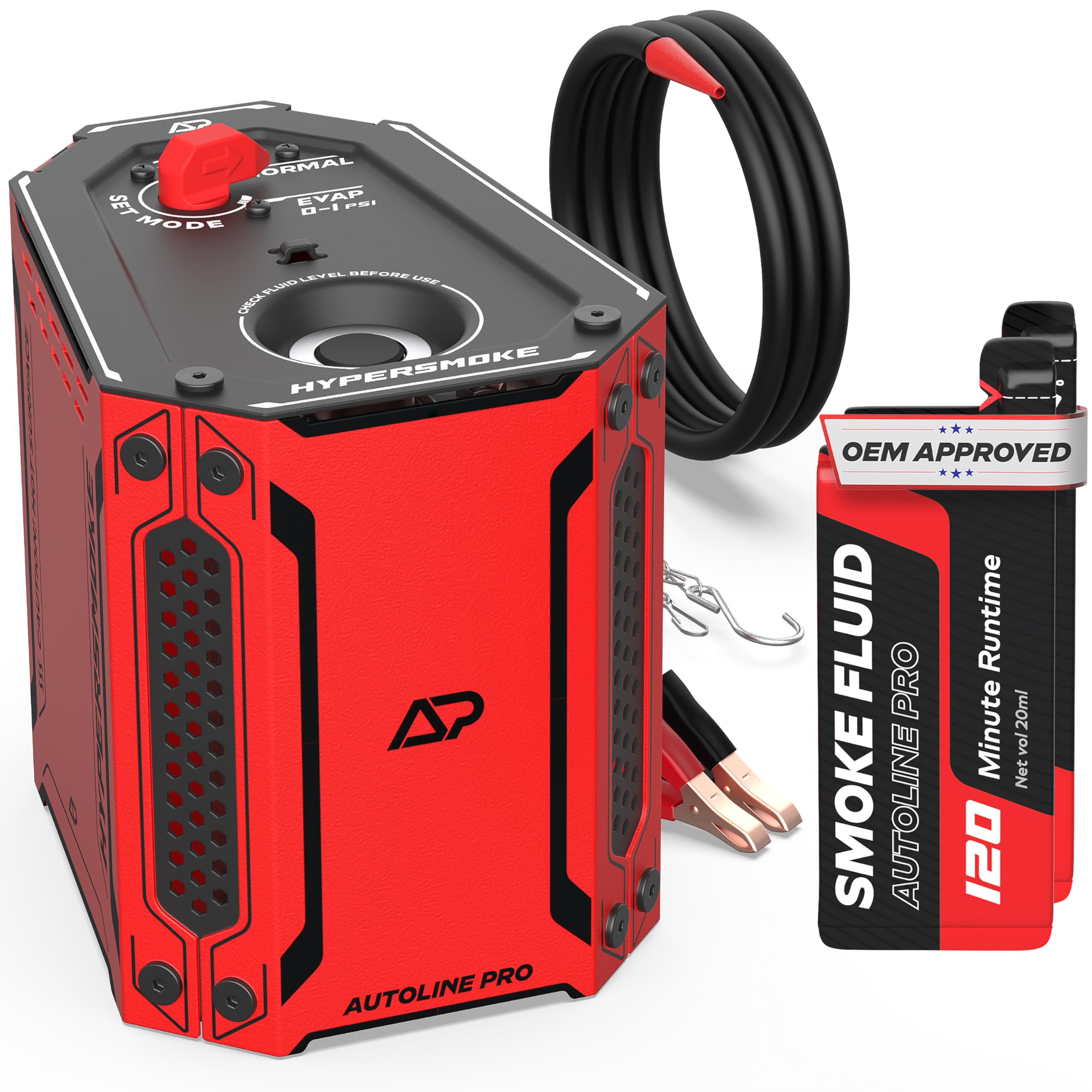
The AutoLine Pro HyperSmoke is a compact, professional-grade smoke machine engineered in the USA for the widest range of diagnostic applications. Its built-in air compressor eliminates the need for a separate air source, and the adjustable pressure system lets you switch from < 1 PSI for sensitive EVAP systems up to higher pressures for turbo, boost, and exhaust circuits. The unit produces thick, visible smoke within 30 seconds of powering up via 12V battery clamps.
This kit includes two bottles of OEM-approved smoke fluid providing 240 minutes of total runtime, a tapered output nozzle, and a hanging hook for hands-free operation. The HyperSmoke technology prevents overheating and uses an EVAP-safe low-pressure mode to avoid damaging purge valves. The 3-year full coverage warranty reflects the manufacturer’s confidence in this design.
Verified user reports confirm it diagnosed months-long lean codes in minutes by revealing cracks in intake boots and vacuum lines. The power cables are short for rear-mounted exhaust testing, but a simple jumper cable extension solves the reach issue. For the DIY mechanic or shop technician tackling EVAP, intake, and exhaust leaks daily, this machine delivers professional results at a mid-range investment.
Why it’s great
- Adjustable pressure protects EVAP systems from damage
- Builds smoke in under 30 seconds with consistent output
- Compact form factor with a generous 3-year warranty
Good to know
- Battery leads are short for rear-of-vehicle testing
- Included fluid lasts about 60 minutes per fill
2. Elitech ILD-200 Infrared Leak Detector

The Elitech ILD-200 represents the pinnacle of refrigerant sniffing technology with its infrared sensor — vastly different from the heated diode sensors found in budget units. The IR sensor resists false triggers from ambient gas contamination and offers a rated service life of ten years. Its maximum sensitivity of 0.14 oz/yr is paired with three adjustable levels (High, Medium, Low) to help track a leak without bouncing the display off scale.
The 2.8-inch large LCD screen uses a peak-hold display that shows the direction of maximum concentration, allowing you to zero in on the exact failure point on a coil or line. The unit detects all common halogen gases including R134a, R1234yf, R410a, and R600a, plus complex blends like AZ-50 and HP62. It is powered by four C batteries and weighs under one pound, making it comfortable for extended overhead work under a dash.
Users have successfully located leaks in residential A/C coils, propane fireplaces, and automotive evaporators. Some owners noted the sensor is sensitive enough to trigger false positives if the filter is not changed regularly. For a technician who needs the most reliable electronic sniffer available and plans to keep it for years, the ILD-200 is the definitive choice despite its premium price.
Why it’s great
- IR sensor provides excellent false-alarm immunity and long life
- Peak-hold display clearly shows leak direction
- Detects all halogenated refrigerants including HFOs
Good to know
- Premium pricing puts it out of casual DIYer budget
- Sensor requires periodic filter cleaning for stable readings
3. Mastercool 53351 Professional UV Leak Detection Kit

The Mastercool 53351 is a comprehensive all-in-one UV detection kit designed for automotive coolant, oil, fuel, ATF, and refrigerant leaks. The centerpiece is a 50-watt, 12V high-intensity UV inspection light that connects directly to a car battery — no expensive bulbs or lithium packs to replace. The kit includes a 1 oz cartridge of universal fluorescent dye for oil-based systems (roughly 10 applications) and a separate 1 oz engine coolant dye.
It ships with an R134a hose and coupler for direct injection into A/C systems, plus an R12 adapter for legacy vehicles. The molded case includes UV-enhancing safety glasses, a 4 oz dye remover, and 25 adhesive service labels. The light’s 12V power cord is generous enough to reach around the engine bay without an extension, and the entire kit weighs only 2.2 pounds.
Long-term users have reported the UV light lasting over a decade with consistent performance. Some technicians warn that the coolant dye’s color can be confused with orange Dexcool and recommend buying a different dye shade for clarity. The dye injector connector has been noted to not fit all R134a system ports. For a technician or DIYer who prefers the methodical, visual verification that dye provides, this kit is the gold standard.
Why it’s great
- High-power 50W UV light runs off vehicle battery
- Includes separate dye for oil and coolant systems
- R134a and R12 adapters cover legacy and modern vehicles
Good to know
- Coolant dye can be confused with existing orange coolant
- Dye injector port compatibility varies by system
4. Solary SD302 Automotive Smoke Machine
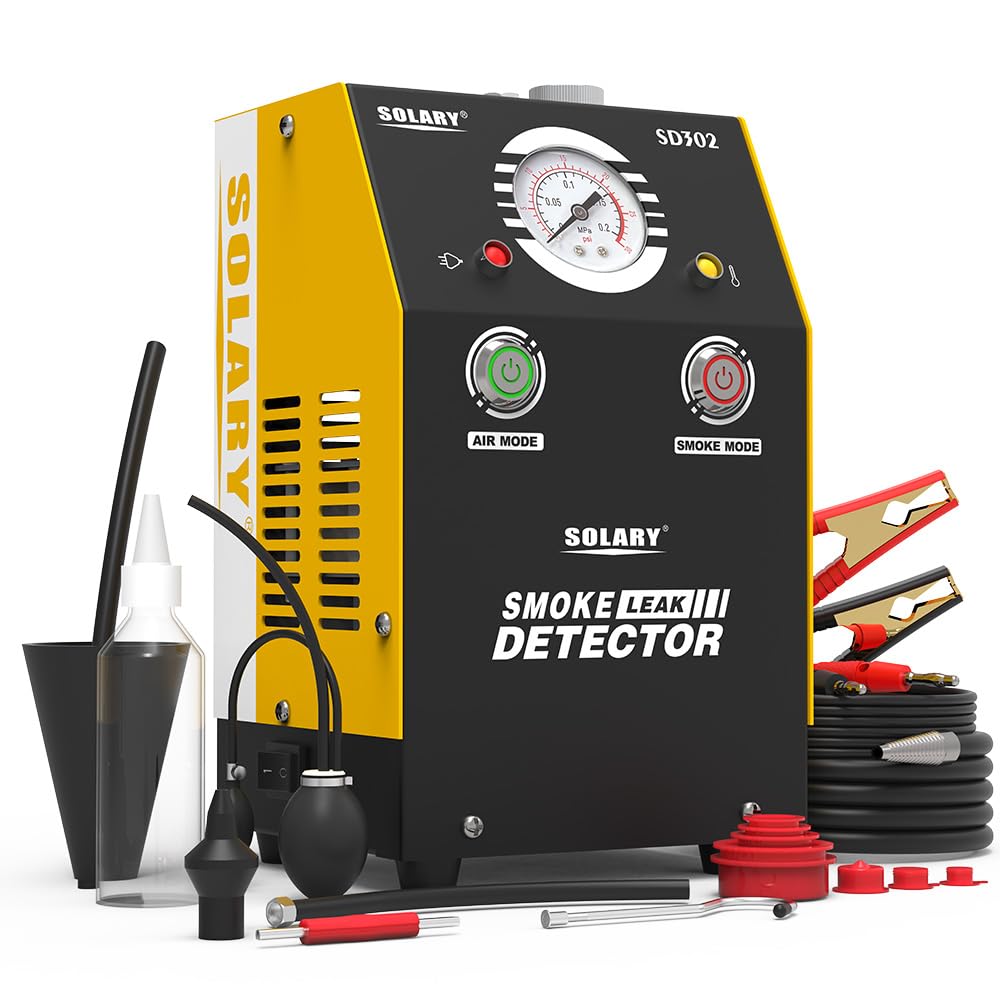
The Solary SD302 is a DC 12V smoke machine that prioritizes simplicity and visibility. It features two independently controlled modes: an air mode that pressurizes the system so you can listen for hissing, and a smoke mode that generates thick, non-toxic vapor to visually pinpoint the leak. An integrated pressure gauge allows you to see at a glance whether the system is holding pressure — a continuous rise means no leak, while a steady drop indicates a failure point.
This unit is built for EVAP, exhaust, intake, and fuel tank systems and works on cars, motorcycles, and trucks. It includes a built-in air pump and smoke generator so you don’t need to purchase separate equipment. The overheating protection system automatically interrupts smoke output if the internal temperature gets too high, resuming once cooled. The SD302 outputs smoke within 20 seconds of startup.
Real-world users have successfully found EVAP leaks in under one minute and exhaust leaks in under five minutes using the included tailpipe adapter. The machine is heavier than the HyperSmoke at 6 pounds, and some users noted the instructions are sparse. For the DIYer who needs both pressurization testing and smoke visualization at a mid-range price, the Solary SD302 is a capable workhorse.
Why it’s great
- Dual air and smoke modes provide two diagnostic methods
- Pressure gauge confirms system integrity visually
- Overheating protection prevents damage during extended use
Good to know
- Heavier than comparable smoke machines
- User manual lacks detailed troubleshooting guidance
5. Sensyx SFD201 Refrigerant & Combustible Gas Detector
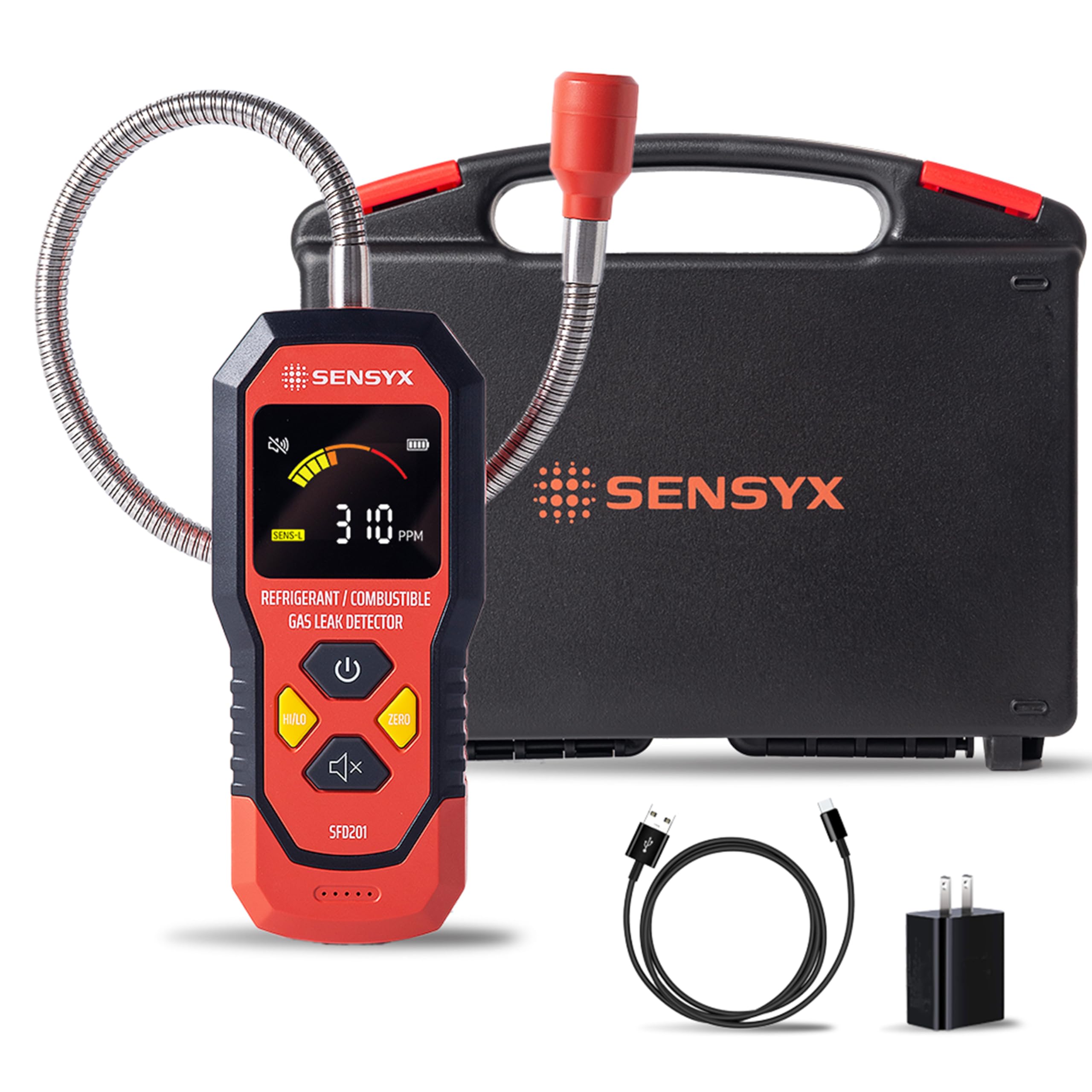
The Sensyx SFD201 is the enhanced version of the SFD200, adding combustible gas detection (methane, propane, isobutane) to its comprehensive refrigerant sniffing capabilities. The Japanese-made heat dioxide semiconductor sensor detects a massive range of gases including CFCs, HFCs, HCFCs, HFOs, and hydrocarbons. Its rechargeable lithium battery and USB-C charging eliminate the need for disposable batteries, and the large color LCD screen provides a clear visual level display.
With adjustable high/low sensitivity levels and UL1484 safety compliance, this unit is designed for both automotive HVAC work and home safety checks on natural gas lines. The sensor requires a 30-second warm-up period in the target environment (not outside) to avoid false positives. The beep can be muted for quiet operation, which is helpful when working in a customer’s driveway.
HVAC technicians have confirmed it detects R-410A leaks and natural gas leaks with the same unit in the first week of use. The slim body stores easily in a tool bag. Some users found the sensitivity almost too high for their needs, which is a positive safety feature. For anyone who wants one tool to handle both refrigerant and combustible gas detection without breaking the budget, the SFD201 is the smart upgrade.
Why it’s great
- Detects refrigerant AND combustible gas in one unit
- Rechargeable lithium battery with USB-C charging
- UL1484 safety rated for reliable performance
Good to know
- Must warm up in the same room as the target to avoid false alarms
- Does not identify the specific type of gas detected
6. Sensyx SFD200 Refrigerant Detector
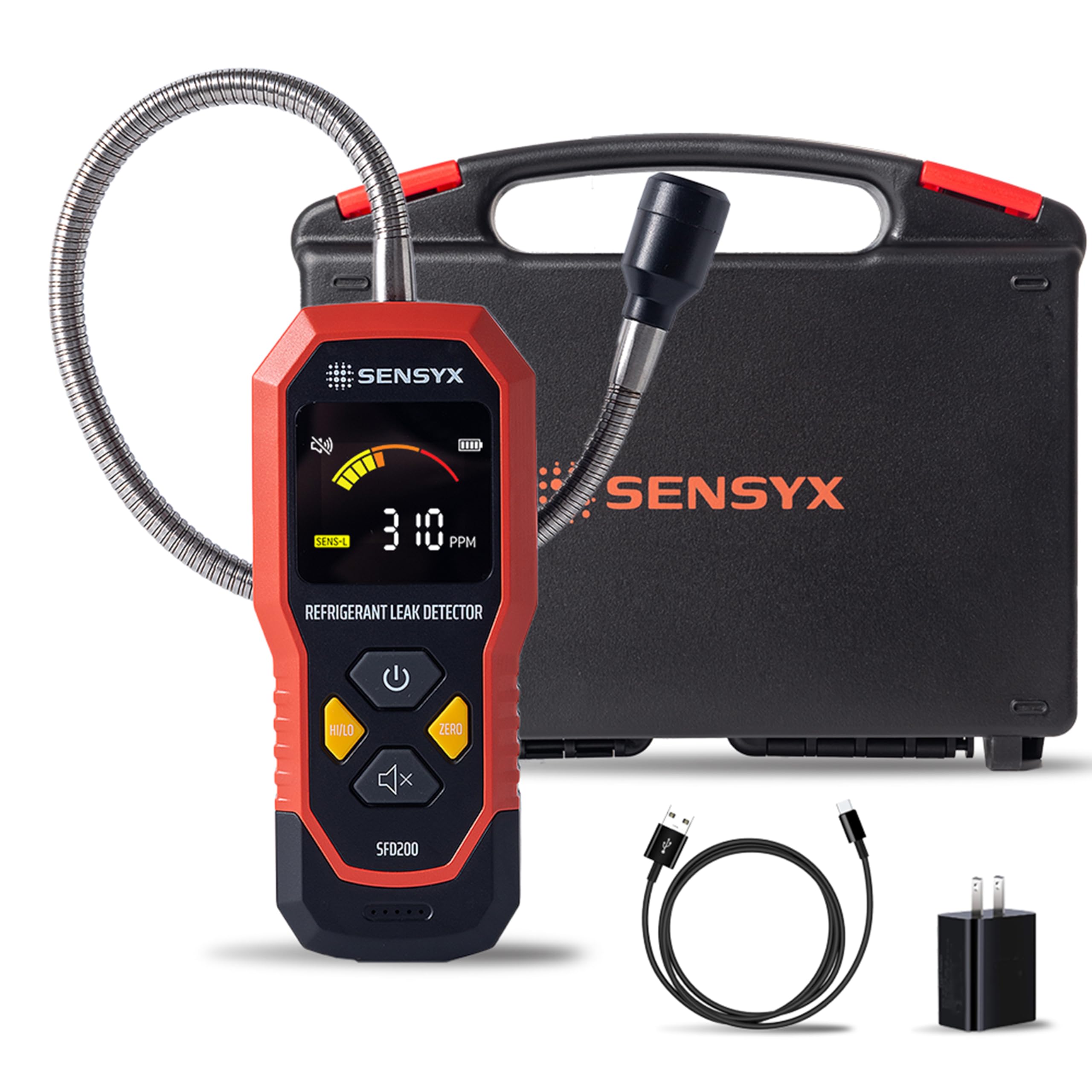
The Sensyx SFD200 is a rechargeable electronic sniffer using a Japan-made heat dioxide semiconductor sensor optimized for halogen refrigerant detection. It covers a wide range of CFCs, HFCs, HCFCs, and HFOs including R134a, R1234yf, and R410a. Two adjustable sensitivity levels allow you to start wide for general area scanning and then narrow the field to pinpoint the source.
The large color LCD screen uses a level-bar display that increases as the sensor approaches the leak, providing silent visual confirmation when the beeping becomes distracting. The rechargeable lithium battery and USB-C cable included in the box deliver cordless operation for hours of searching. The sensor conforms to UL1484 safety standards, a mark of quality in diagnostic instrumentation.
Users have reported using the SFD200 to find leaks in R410A evaporator coils and low-pressure A/C valves with rings. The slim form factor and included carrying case make it easy to bring on service calls. One user noted the unit is so sensitive it detected CO2 from breath, which confirms the sensor’s responsiveness. For a modern, rechargeable refrigerant-specific sniffer with a clear display, the SFD200 is a strong mid-range choice.
Why it’s great
- Rechargeable battery eliminates battery waste
- Color LCD display allows silent visual leak tracking
- UL1484 safety approved for professional use
Good to know
- Does not detect combustible gas like the SFD201 model
- High sensitivity can trigger false positives if not properly calibrated
7. Elitech CPU-1G HVAC Leak Detector

The Elitech CPU-1G is a traditional coronal (heated diode) sniffer that has earned a strong reputation for its no-nonsense performance and low cost. It detects all halogenated refrigerants including R22, R134a, R404a, R410a, and HFC blends. The unit warms up in 6 seconds and responds to a leak in just 3 seconds, which is competitive with units costing five times as much.
Seven adjustable sensitivity levels let you tune out background contamination, with a maximum sensitivity of 0.11 oz/yr — good enough to find a micro-leak in an evaporator coil. The 14-inch flexible stainless steel probe includes two alternative sensor tips, and the modular sensor design makes maintenance simple. It runs on 2 C alkaline batteries (included) and weighs 1.7 pounds.
Experienced HVACR technicians have given the CPU-1G high marks for finding leaks through walls and confirming diagnoses with 99% confidence. Some users noted the audible alarm is loud but effective, and the unit is rugged enough for daily shop use. The only consistent complaint is that the case and handle can arrive damaged if purchased in “Like New” condition. For the entry-level buyer or the mechanic who wants a dedicated sniffer that just works, the CPU-1G is the best value in the category.
Why it’s great
- Very fast 3-second response and 6-second warm-up
- Seven sensitivity levels for precise tuning
- Includes multiple spare sensor tips and C batteries
Good to know
- Heated diode sensor may need periodic tip replacement
- Loud audible alarm cannot be muted
FAQ
Can an electronic sniffer find a leak in a modern R1234yf A/C system?
Should I use a smoke machine or a sniffer for an EVAP system leak?
How often should I replace the tip on a heated diode sniffer like the Elitech CPU-1G?
Is a UV dye kit safe to use in a modern vehicle’s A/C compressor?
Final Thoughts: The Verdict
For most users, the best auto ac leak detector winner is the AutoLine Pro HyperSmoke because it combines professional-grade smoke diagnosis with adjustable EVAP-safe pressure and a compact, American-engineered design that handles the widest range of leak scenarios. If you need a precision infrared sniffer for refrigerant-specific work, grab the Elitech ILD-200 for its outstanding sensor life and false-alarm immunity. And for the budget-conscious DIYer who wants a tried-and-true electronic sniffer, nothing beats the Elitech CPU-1G for its low cost and reliable 3-second response time.