
Choosing the wrong lubricant for your vehicle’s air conditioning system can mean the difference between a cabin that cools instantly and a seized compressor that costs you a weekend and a pile of cash. The viscosity grade — measured in PAG weight — must match your compressor’s spec exactly, or the oil won’t circulate properly and the internal wear rates spike.
I’m Rikta — the co-founder and writer behind Gadgets Feed. I spend my time cross-referencing OEM viscosity charts, analyzing additive packages for thermal stability, and tracking which formulations deliver the most consistent film strength across the widest temperature range. (And Homer 🐱 supervised from the warm hood of the work car, tail flicking at every drop.)
This guide breaks down seven of the most reliable options on the market, covering everything from small 8-ounce bottles for a single compressor swap to full quarts for shop use. You will walk away knowing exactly which auto ac oil formulation delivers the best protection, leak detection, and long-term system cleanliness for your specific repair job.
How To Choose The Best Auto AC Oil
Selecting the right refrigerant oil comes down to three hard specs: the viscosity grade your compressor calls for, the presence of a compatible UV dye for leak tracing, and the quantity you need for the job. Here is what matters most.
Match the Viscosity Grade to Your Compressor
Most modern automotive AC systems running R134a use PAG 46, PAG 100, or PAG 150 oil. PAG 46 is the most common for smaller car compressors, while larger aftermarket or high-load compressors may require a heavier grade. Using a thicker or thinner oil than specified will starve bearings or create excessive drag, so always confirm the OEM part number or sticker under your hood before buying.
UV Dye vs No Dye
A pre-mixed UV dye saves you from having to add a separate bottle of dye when you recharge the system. If you are overhauling the system and want to spot micro-leaks weeks later with a blacklight, choose an oil that already contains the dye. For simple top-offs on a system you know is sealed, a dye-free oil keeps the system simpler and avoids any concern about residual dye staining.
Container Volume and Unit Cost
An 8-ounce bottle covers one compressor replacement on most cars, while a 32-ounce quart is better for shop use or if you plan to flush the system and change the oil in your vacuum pump as well. The premium per-ounce price always drops when you buy the larger volume, so match the bottle size to your actual project scope to avoid waste.
Quick Comparison
On smaller screens, swipe sideways to see the full table.
| Model | Category | Best For | Key Spec | Amazon |
|---|---|---|---|---|
| TSI Supercool P46-32D | Premium Quart | Full system rebuilds with leak detection | 32 fl oz, PAG 46, includes UV dye | Amazon |
| Mobil Rarus 427 | Premium Quart | Air compressors and general maintenance | 32 fl oz, synthetic formula, high flash point | Amazon |
| TSI Supercool P46-8 | Mid-Range | Single compressor replacement without dye | 8 fl oz, PAG 46, dye-free | Amazon |
| Universal Air RO 0900B | Mid-Range | Chevrolet Silverado and GM truck systems | 8 fl oz, PAG 46 R134A | Amazon |
| UView PAG 46 | Mid-Range | AC rebuilds with OEM-level purity | 8 fl oz, PAG 46, includes UV dye | Amazon |
| FJC 2200 | Budget Quart | Vacuum pump oil and fleet maintenance | 32 fl oz, oil-based, includes funnel | Amazon |
| Four Seasons 59007 | Budget Pick | Budget-friendly compressor refill | 8 fl oz, universal fit | Amazon |
In‑Depth Reviews
1. TSI Supercool P46-32D PAG Oil 46 Viscosity with UV Dye 32oz 1-Pack

This quart-sized bottle of PAG 46 delivers the best value-per-ounce of any premium AC oil on this list, and it comes pre-loaded with UV dye for instant leak detection after a recharge. TSI Supercool markets this as a high-performance synthetic that meets OEM specs, with anti-wear agents and friction modifiers that target long compressor life. The 32-ounce volume is enough for a complete system refill plus your vacuum pump oil change.
The formulation includes anti-oxidants that resist sludge formation, which matters when the system sits idle for months between seasons. Several users report vent temperatures dropping below 45°F after using this oil in combination with a proper vacuum and recharge. The dye is already mixed evenly throughout the oil, so you do not have to guess whether it is circulating correctly.
One common note from mechanics is that the bottle design is straightforward with a simple screw cap, so you will want to decant it into a squeeze bottle or use a small funnel for precise filling. For a shop or a serious DIYer tackling a full system swap, this quart covers multiple jobs and keeps the cost per ounce well below the 8-ounce alternatives.
Why it’s great
- 32-ounce volume covers full system plus vacuum pump
- Pre-mixed UV dye simplifies leak detection
- Anti-wear and anti-oxidant additives extend compressor life
Good to know
- Bottle cap design makes controlled pouring tricky without a funnel
- Not suitable for systems requiring PAG 100 or PAG 150 viscosity
2. Mobil Rarus 427 Compressor Oil

Mobil’s Rarus 427 is a fully synthetic compressor oil with a high flash point of 480°F, making it a strong choice for air compressors as well as certain automotive AC applications that call for a non-PAG mineral-based or synthetic lubricant. The 32-ounce bottle gives you a full quart of material that stays stable at high discharge temperatures, which reduces the risk of varnish buildup inside the compressor.
The clear, clean appearance out of the bottle is consistent with the synthetic base stock, and multiple users running multiple compressors report that this oil keeps their units running smoothly with fewer change intervals. It is also manufactured in the United States, which adds a layer of quality consistency that some budget oils lack.
Be aware that Rarus 427 is not a PAG oil, so it is not compatible with most modern automotive AC compressors that require PAG 46 or PAG 100 for proper lubrication of the piston and swash plate. You should only use this for applications where the manufacturer explicitly recommends a mineral or synthetic non-PAG oil — typically older R12 systems or stationary air compressors.
Why it’s great
- High 480°F flash point resists thermal breakdown
- Full quart bottle offers excellent value per ounce
- Synthetic base reduces sludge formation
Good to know
- Not a PAG oil — incompatible with most modern AC compressors
- Best suited for air compressors or older R12 systems
3. TSI Supercool P46-8 PAG 46 Without Dye 8oz 1-Pack
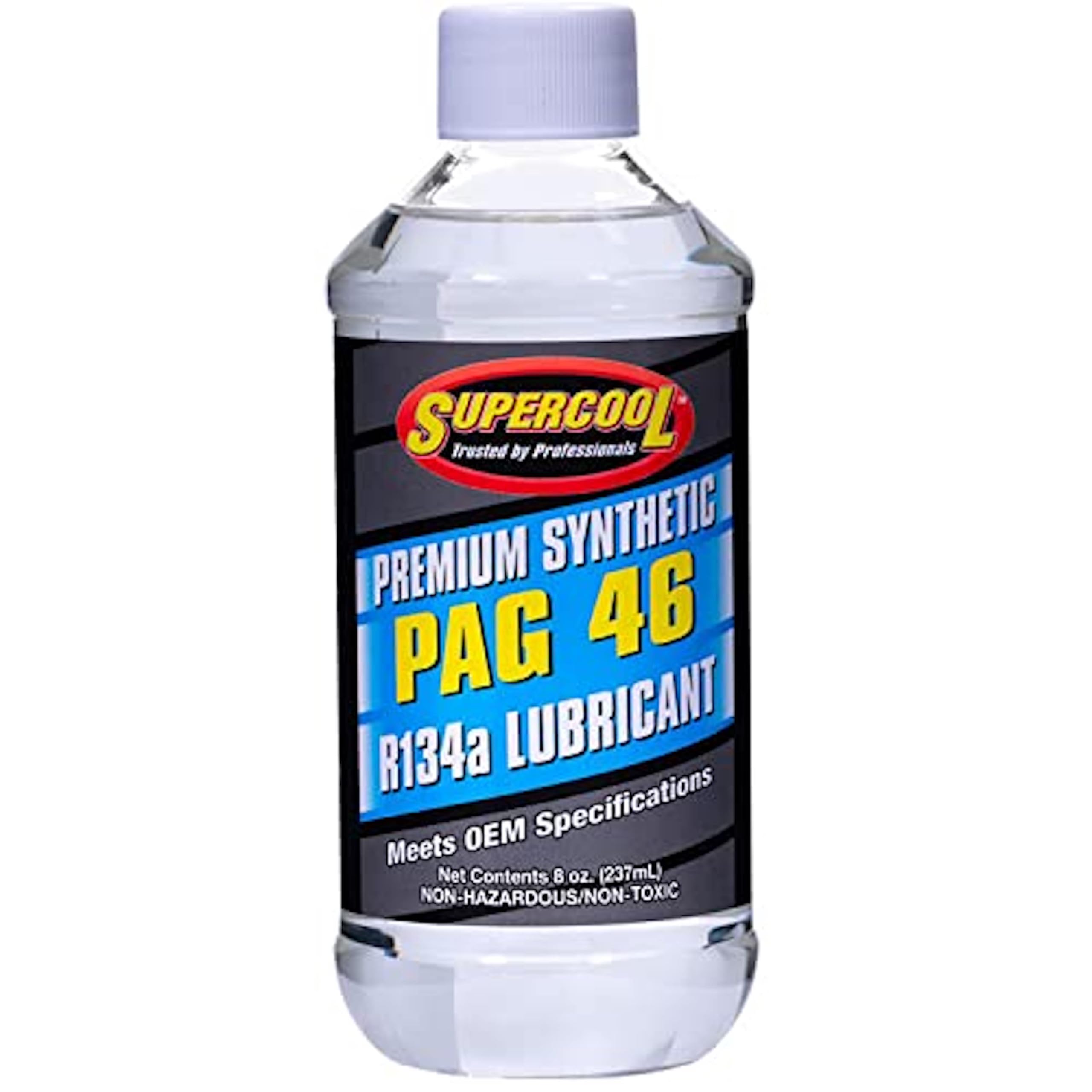
If you know your system is already dye-free and you just need clean PAG 46 oil for a compressor swap, this 8-ounce bottle from TSI Supercool hits the mark. It contains no UV tracer, which keeps the chemistry as simple as possible and eliminates any concern about residual dye staining or interfering with future diagnostic work. The PAG 46 viscosity is the standard for millions of R134a compressors on the road.
Real-world users have put this oil into Honda Odysseys after compressor replacement and reported vent temperatures dropping to 44°F, confirming the oil circulates well and does not degrade cooling performance. The 8-ounce volume is enough for most single compressor replacements, though some larger systems may require a second bottle if the manufacturer calls for a full system charge.
The bottle is compact and fits easily into a toolbox without taking up much space. Since there is no dye, you will need to rely on UV dye separate or gauge readings to confirm leak-free operation. This is still a great choice if you prefer to add your own dye separately or skip it entirely on a known-good system.
Why it’s great
- Clean PAG 46 formulation with no additives to complicate diagnostics
- Proven to work well in Honda and Nissan compressor replacements
- Compact bottle stores easily in a service kit
Good to know
- 8 ounces may not be enough for larger capacity systems
- No UV dye means you need a separate leak detection method
4. Universal Air Conditioner RO 0900B Refrigerant Oil

Universal Air Conditioner’s RO 0900B is a vehicle-specific oil from the UAC brand, formulated for R134A systems and frequently used in Chevrolet Silverados and other GM trucks. It is a PAG 46 oil packaged in an 8-ounce bottle, and it ships with a 30-day warranty directly from the manufacturer, which is an uncommon level of support for a consumable lubricant.
Users running it in full-size trucks report that it circulates well without causing clutch slippage or abnormal noise, and the viscosity holds up under the higher heat load of a larger condenser. Some owners also note that this oil works for general-purpose AC compressor refills beyond the GM lineup, but the bottle is labeled specifically for UAC compressors, so always cross-check your compressor’s spec sheet.
The oil itself is clear and free of any dye, which keeps the system clean from the start. If you are rebuilding a Silverado or Sierra AC system and want an oil that matches the UAC compressor from the factory, this is the closest drop-in option available without buying a gallon.
Why it’s great
- Specifically formulated for UAC compressors used in GM trucks
- 30-day manufacturer warranty adds purchase security
- Clear oil with no dye keeps the system simple
Good to know
- Vehicle-specific fit means it may not be ideal for import cars
- Only 8 ounces — verify your system’s total oil capacity
5. UVIEW PAG 46 8 oz. Bottle
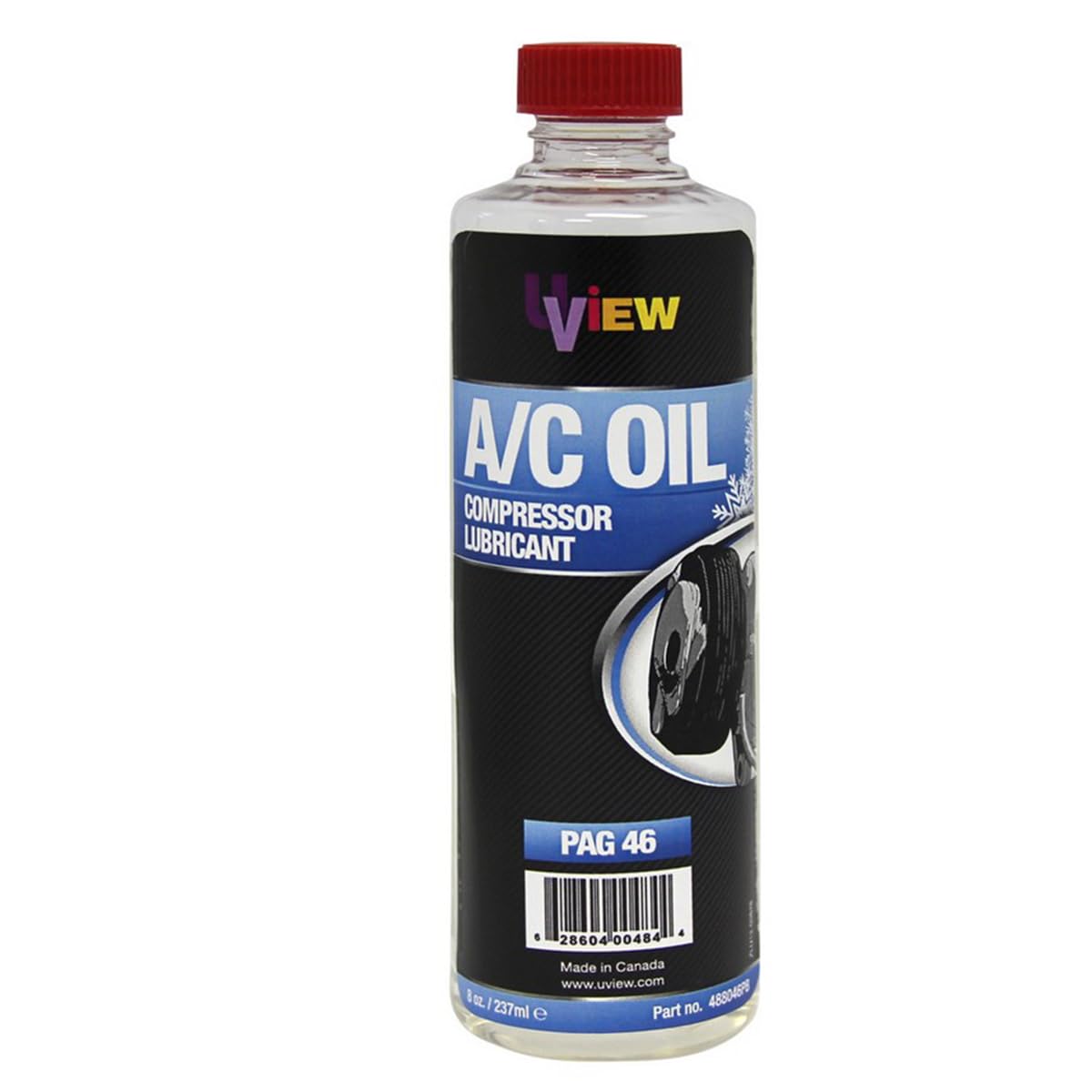
UView is a well-known name in the AC service tool space, and their PAG 46 oil lives up to that reputation. This 8-ounce bottle includes a pre-mixed UV dye — the same kind used in professional-grade leak detection kits — so you can run a blacklight over your connections after a recharge and spot even a pinhole leak immediately. Users working on Ford and Nissan compressors confirmed the oil circulates properly without clutch chatter.
The PAG 46 viscosity is the standard weight for most modern R134a compressors, and UView’s refining process keeps the oil clear and free of particulates that could clog an expansion valve. One experienced user mentioned using this oil to grease O-rings during a parts swap and then confirming with a blacklight that every seal was seated correctly — a smart trick for anyone doing a full system rebuild.
At 8 ounces, this bottle is best for a single compressor replacement or a top-off after replacing a leaking hose. Keep in mind that if your system is completely empty and requires a full oil charge, you may need a second bottle depending on the manufacturer’s spec.
Why it’s great
- Pre-mixed UV dye enables instant leak detection
- High-purity PAG 46 resists contaminating the system
- Trusted brand in professional AC service tools
Good to know
- 8-ounce volume may be insufficient for larger systems
- Not available in a quart-sized bottle
6. FJC 2200 Vacuum Pump Oil – 1 Quart

FJC’s 2200 vacuum pump oil is a budget-friendly quart that serves double duty as both a vacuum pump lubricant and a general-purpose non-PAG oil for certain maintenance tasks. It includes a small funnel right in the package, which is a thoughtful addition for topping off your vacuum pump safely without spilling. The oil itself has a light purple dye that makes it easy to see in the pump sight glass.
Users running this in Robinair and FJC vacuum pumps report that it holds viscosity well during extended evacuation cycles and does not break down under the heat generated by continuous running. Several owners also use it to lubricate shop air tools, which speaks to its versatility. The quart size gives you plenty of fluid for multiple pump oil changes before you need to reorder.
One important distinction: this is not PAG oil and should never be used inside an automotive AC compressor designed for PAG 46 or PAG 100. It is strictly for the vacuum pump that evacuates the AC system, or for other non-PAG applications. If you need PAG oil for the compressor itself, choose one of the dedicated PAG products above.
Why it’s great
- Full quart with a bonus funnel included in the package
- Purple dye makes pump sight-glass level checks easy
- Works well in Robinair and FJC vacuum pumps
Good to know
- Not compatible with automotive AC compressors — vacuum pump only
- Labeling can be confusing; the listing once read 32 quarts instead of 1
7. Four Seasons 59007 Premium Oil Bottle – 8 Oz

The Four Seasons 59007 is an entry-level, universal-fit AC oil that works for a wide range of vehicle applications. It comes in a basic 8-ounce bottle with no added dye, making it a straightforward choice for someone who just needs to refill a compressor after a seal replacement or a minor top-off. The oil itself is clear and has been used successfully in Honda CR-Vs and other popular models.
User reports are generally positive, with many noting that the oil helped restore cold air after a compressor swap. However, some buyers received bottles labeled under the Temp Select brand rather than Four Seasons, which raised questions about whether the formulation is identical. Most users who noticed the discrepancy used the oil anyway and reported no issues, but it is worth checking the label when it arrives.
At this volume and price point, this oil is best for a single quick job on a car with a small system capacity. If you plan on doing multiple vehicles or need UV dye for leak detection, you will be better served by one of the PAG 46 options with dye above.
Why it’s great
- Low entry price for a single compressor job
- Universal fit works across many car applications
- Clear oil with no unnecessary additives
Good to know
- Some bottles ship under a different brand label (Temp Select)
- No UV dye makes leak detection harder
FAQ
What happens if I use the wrong PAG viscosity grade?
Can I mix PAG oil with the old oil still in the system?
How much oil do I need for a compressor replacement?
Final Thoughts: The Verdict
For most users, the auto ac oil winner is the TSI Supercool P46-32D because it combines the best per-ounce value with an integrated UV dye and a full quart that covers both the compressor and vacuum pump. If you want a clean, dye-free PAG 46 oil for a single compressor swap, grab the TSI Supercool P46-8. And for a GM truck-specific rebuild that matches the UAC compressor perfectly, nothing beats the Universal Air RO 0900B.