
Our readers keep the lights on and my morning glass full of iced black tea. As an Amazon Associate, I earn from qualifying purchases.
Specs are compiled from manufacturer listings and verified buyer reviews and can change over time — please confirm the key details on the product page before buying.
Your car’s AC is blowing warm air again, and the auto parts store aisle is lined with cans promising a quick fix. The real trick is picking the right refrigerant type for your vehicle and a can that’s pure enough to let your compressor run smoothly without clogging anything. This guide breaks down three refrigerant options that match different cars and budgets — each one chosen for its reliability and real-world performance in returning cold air to your cabin.
I’m Min — the founder and writer behind Gadgets Feed. This guide is built by comparing the manufacturers’ published specifications and the patterns across verified customer reviews, so you get each pick’s real strengths and trade-offs instead of marketing spin.
Below you will find direct comparisons based on what actually cools your car — refrigerant type, can size, and buyer satisfaction — so you can choose your next auto ac refrigerant with confidence.
Our Picks at a Glance
How To Choose The Best Auto AC Refrigerant
Using the wrong refrigerant can damage your car’s AC compressor and seals, costing more to fix than the can itself. First, check whether your car needs R1234YF (used in most vehicles made after 2017) or R134a (used in older models). Once you know your system, decide between a standard replacement or a high-purity blend that may cool more efficiently with less weight. Can size matters too — most systems need more than one can, so check your system’s total capacity before you start.
Know Your Refrigerant Type First
Check the sticker under your hood or your owner’s manual to confirm which refrigerant your AC was charged with at the factory. R1234YF systems use a reverse-thread connection that prevents accidentally hooking up the wrong hose, so the hardware itself gives you a clue. R134a systems use standard threads. If you try to force the wrong can onto your car’s service port, you risk breaking the fitting or contaminating the system.
Purity and Accuracy Matter for Cooling Performance
A refrigerant can that’s measured by weight (not volume) gives you a precise charge so your system hits the right pressure range. High-purity formulations, like those exceeding standards such as AHRI 700, reduce the risk of moisture or mystery fillers that can cause compressor wear or poor cooling. For older R134a systems, hydrocarbon-based replacements absorb more heat per ounce than traditional R134a, meaning you need less weight to achieve the same cold air — but you must never charge by the old R134a weight guidelines.
Quick Comparison
| Model | Best For | Refrigerant Type | Net Weight | Compatible Systems | Amazon |
|---|---|---|---|---|---|
| ZeroR R1234YF★ Best Overall | Modern cars (2017+) | HFO-R1234YF | 8 oz | R1234YF | Amazon |
| ZeroR R134a Hydrocarbon | Older R134a systems | Hydrocarbon (99.5%+) | 6 oz | R134a | Amazon |
| Honeywell R1234YF (4-pack) | Full system recharge | HFO-1234yf | 4 cans total | R1234YF | Amazon |
In‑Depth Reviews
1. ZeroR® Genuine R1234YF Refrigerant Can for Automotive AC Systems – HFO
Our pick — over 4.5★ from 250+ verified ratings; the strongest balance of quality and price.
The modern-car standard that comes with an accuracy guarantee, measured by weight not guesswork.
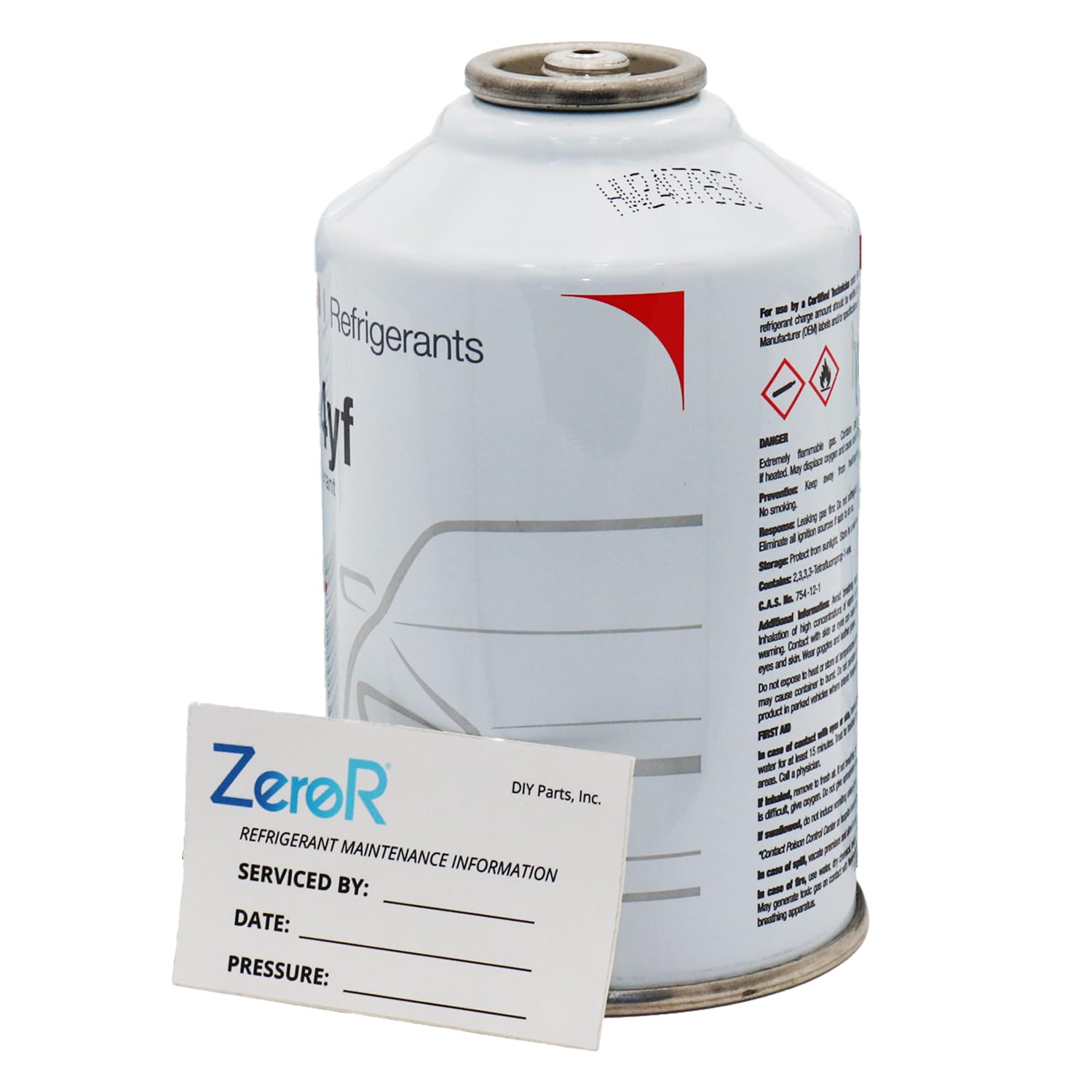
This ZeroR can holds 8 ounces of HFO-R1234YF refrigerant, which is a greener option than older refrigerants because it has a lower global warming potential (GWP). The can is measured by weight rather than by volume, so you get the precise amount every time — most systems take 2 to 3 cans, making it easy to top off or fully recharge without math. A reverse-thread design on the valve turns counterclockwise to connect, which stops you from accidentally attaching an incompatible hose and damaging your system.
Buyers report that after replacing a compressor and evacuating the system, this refrigerant charged smoothly and brought cooling performance back to normal with stable pressures. One owner of a 2018 Jeep Grand Cherokee noted it cooled their AC better than before. Each can also includes a service sticker to label your vehicle’s system for future reference, keeping you compliant with regulations and avoiding confusion at the next service visit.
Why it works
- 8 oz per can gives you a precise, weight-measured charge
- Reverse-thread valve prevents wrong-hose accidents
- Comes with a service sticker for future maintenance records
The trade-off
- Only works with R1234YF systems — useless for older R134a cars
- Most systems need 2-3 cans, so factor in buying multiple
Reach for it if: you drive a 2017-or-newer vehicle and want an accurate, easy-to-use can with built-in compatibility protection.
Look elsewhere if: your car runs on R134a — this refrigerant type is not compatible, and forcing it could damage your AC.
2. ZeroR® High-Purity R134a Replacement Refrigerant – Eco-Friendly 100% Natural Hydrocarbon
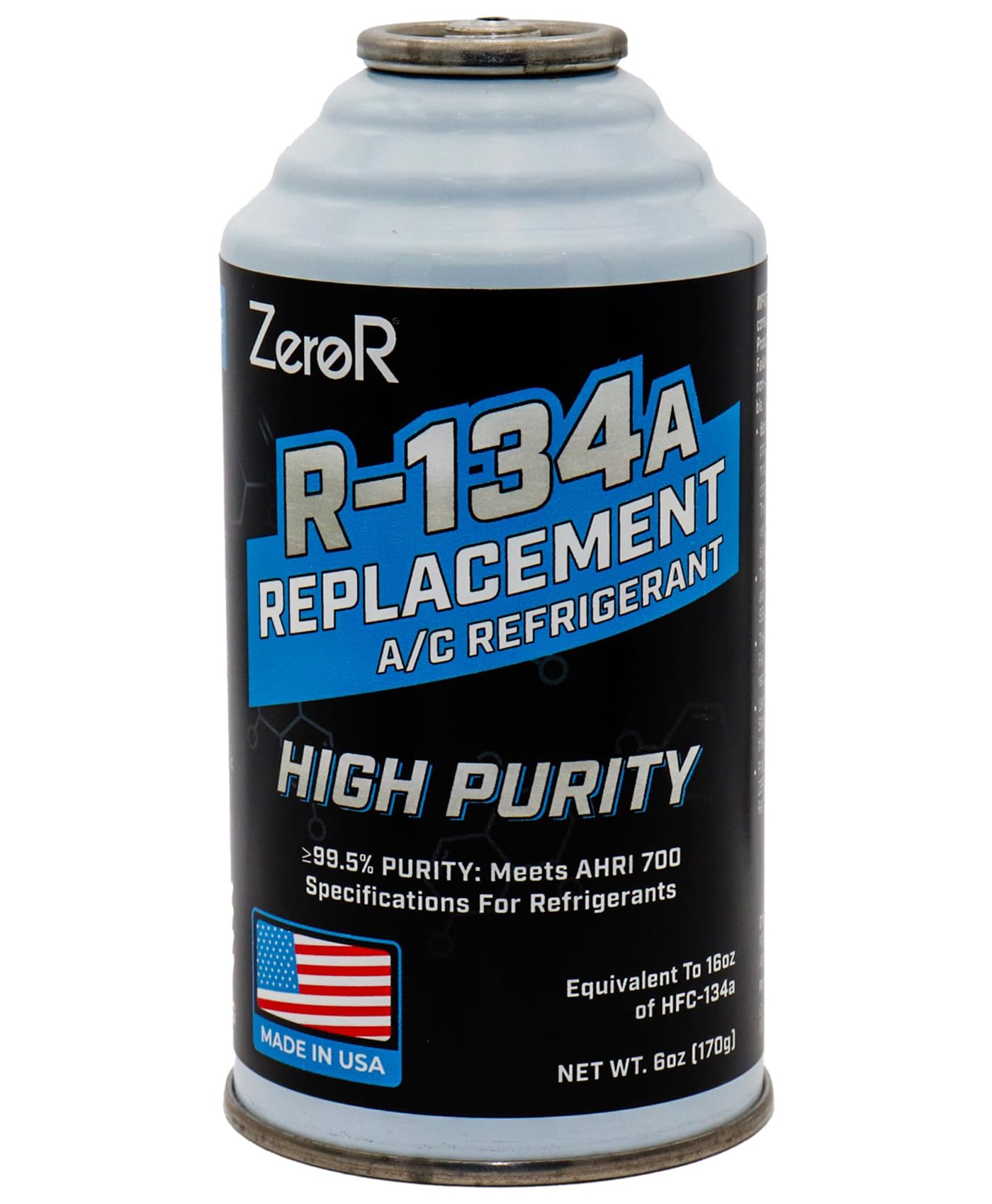
The R134a alternative that packs more cooling per ounce thanks to a 99.5%-plus purity blend.
This 6-ounce can from ZeroR is a hydrocarbon-based replacement engineered for systems originally charged with R134a. It is manufactured to a tightly controlled formula with purity exceeding common refrigerant standards like AHRI 700, which means no mystery fillers or moisture contamination. Because hydrocarbon refrigerants absorb more heat per ounce than traditional R134a, you need substantially less weight to match the same cooling — just do not charge by the old R134a weight guidelines.
This can uses a professional-style self-sealing female valve with standard half-inch ACME threads, so it connects directly to common R134a charging hoses without needing puncture cans or special adapters. Compared to the 8-ounce ZeroR R1234YF can above, this one holds 6 oz total — 2 oz less volume — but because it is a hydrocarbon blend, your system may need a lighter charge overall to reach the same vent temperature. Buyers have posted 566 ratings with an average of 4.1 stars, but its high-purity spec sheet targets informed DIY users who want a clean charge with less compressor load.
Standout features
- 99.5%+ purity exceeds AHRI 700 standard
- Self-sealing valve works with standard R134a hoses
- Hydrocarbon blend absorbs more heat per ounce than R134a
Important to know
- 6 oz can is smaller than the 8 oz R1234YF option — buy multiple for a full system recharge
- Designed for informed DIY users, not first-timers unfamiliar with charge weights
Great fit for: experienced DIYers with R134a systems who want a high-purity blend that cools efficiently with less refrigerant mass.
Skip if: your car uses R1234YF or you prefer a standard replacement without adjusting charge weight calculations.
3. Honeywell Automotive Refrigerant (4-pack)

The trusted four-pack that saves you from paying per can at the auto parts counter.
This Honeywell pack gives you four cans of HFO-1234yf refrigerant, which is the modern replacement for R-134a in automotive AC systems. Honeywell is the brand behind the original R1234YF formulation, so you are getting the genuine product in original packaging — buyers confirm no leaks and authentic labeling. One reviewer noted that their local store charges a high price per can, making this four-pack a better deal for anyone planning a full system recharge or multiple vehicles.
Professional-grade performance shows up in the reviews: accurate fill, no air or propellant contamination, and stable pressure that delivers ice-cold AC with smooth compressor operation. Unlike the single 8-ounce ZeroR R1234YF can, this Honeywell set includes four cans total, making it the more practical choice if your system needs a full charge or you want to keep extras on hand. One buyer mentioned that after using this with a vacuum pump and gauges, their AC system came back online in about two hours — a significant saving compared to a shop quote.
Why it stands out
- Four cans at once — enough for a full system recharge
- Authentic Honeywell HFO-1234yf in original packaging
- Buyers confirm professional-grade purity with no leaks
One consideration
- Higher upfront cost for the multi-pack than buying a single can
- Only works with R1234YF systems — not for older R134a cars
Best for: anyone recharging a modern R1234YF system from empty or maintaining multiple vehicles over time.
Not ideal if: you only need a small top-off — a single can might be less wasteful than opening the whole pack.
Understanding the Specs
R1234YF vs R134a Type
Your car’s AC system was designed for one specific refrigerant type. R1234YF (an HFO refrigerant) is used in most vehicles built after 2017. It has a lower global warming potential than R134a and uses a reverse-thread valve to prevent cross-threading with older hoses. R134a was the standard before 2017 and uses standard threads. Putting the wrong type into your system can damage seals and the compressor. Always check the under-hood sticker before buying.
Net Weight and Purity
Refrigerant is measured by weight, not volume, so a can labeled 8 oz contains exactly that much refrigerant if properly filled. Most passenger car systems hold between 16 and 24 ounces total, so you will often need 2 to 3 cans of the 8-ounce size or one 4-can pack. Purity matters because moisture or filler gases can reduce cooling performance and shorten compressor life. Hydrocarbon blends like the ZeroR R134a replacement absorb more heat per ounce than traditional R134a, so you use a lighter charge weight to get the same cold air — just never follow the old R134a weight chart when using them.
FAQ
How do I know if my car uses R1234YF or R134a refrigerant?
Can I use R1234YF in a system designed for R134a?
How many cans of refrigerant do I need for a full recharge?
Is a hydrocarbon refrigerant safe for my R134a system?
What does AHRI 700 standard mean for refrigerant purity?
Why does R1234YF use a reverse-thread can?
Can I use a single 6-oz can to top off my R134a system?
Does the Honeywell four-pack include a service sticker or adapter?
Final Thoughts: The Verdict
For most drivers, the best auto AC refrigerant is the ZeroR Genuine R1234YF can because it gives you a precise 8-ounce charge, a reverse-thread valve that prevents mistakes, and a service sticker to keep your records straight — all at a fair price for modern cars. If you drive an older R134a vehicle and want a high-purity blend that cools efficiently with less weight, grab the ZeroR High-Purity R134a Replacement. And for a full R1234YF system recharge or stocking up for multiple cars, the Honeywell Automotive Refrigerant four-pack delivers genuine Honeywell quality straight from the factory.
How We Picked
We do not accept paid placement. Every pick is matched to a real buyer and a real use-case; we do not hands-on test units.
Sources & Methodology
Specifications: manufacturer listings and product documentation. Review insights: verified customer reviews, as of July 2026. Pricing: not shown on this page (it changes often); check the current price via the retailer link.
As an Amazon Associate, Gadgets Feed earns from qualifying purchases. This does not affect which products we feature.