
A GPS that can’t handle salt spray, a screen you can’t read at noon, or a chartplotter that loses the trail when you need it most — these aren’t just annoyances on the water; they’re safety risks. Finding an auto boat GPS that survives the marine environment, delivers accurate position data, and offers a clear display in direct sunlight is the difference between a relaxing day on the water and a stressful one.
I’m Min — the co-founder and writer behind Gadgets Feed. I’ve spent countless hours cross-referencing transducer specs, display types, chart coverage areas, and mounting options to separate the real performers from the rest.
This guide breaks down the essential specs and real-world performance of the best auto boat GPS options available, so you can invest in navigation electronics that truly serve your boating style.
How To Choose The Best Auto Boat GPS
The right auto boat GPS balances display quality, chart detail, sonar capabilities, and connectivity options. A unit that works for a small fishing boat might feel inadequate on a center console, while a high-end multifunction display could be overkill for a daysailer. Focus on the specific environment and how you intend to use the data.
Display Size, Type, and Sunlight Readability
The display is your primary interface, and marine conditions are brutal on screens. A 5-inch display may work on a kayak or tiller boat, but at planing speeds or from a helm station, a 7-inch or 9-inch screen becomes far more usable. Look for IPS or SolarMax LCD technology, which offers wide viewing angles. The single most critical factor is brightness — measured in nits. Anything below 800 nits will wash out in direct sunlight, even with a sun visor. Touchscreens are convenient, but combined keypad-and-touch designs offer reliability in wet conditions.
GPS Receiver Sensitivity, Charts, and Waypoint Management
All modern marine GPS receivers lock onto satellites quickly, but some are more sensitive than others. A high-sensitivity receiver holds a fix under heavy tree cover or near bridges. Preloaded basemaps vary wildly — a unit with Humminbird Basemap covers 10,000+ lakes and US coastlines, while others ship with basic world maps and require a chart card purchase. Waypoint and route capacity matters for serious anglers or cruisers: 1,000 waypoints is entry-level; 10,000 is robust. AutoChart or Quickdraw Contours mapping lets you create custom depth contour maps in real time, a game-changer for exploring uncharted waters.
Sonar Type and Transducer Package
A GPS unit that includes sonar functionality is effectively a chartplotter-fishfinder combo, the most popular configuration for recreational boats. Traditional CHIRP sonar provides excellent target separation and returns. Two-CHIRP and Dual Spectrum CHIRP let you toggle between wide and narrow beams. DownScan Imaging gives a photo-like view directly below the boat, while SideScan reveals structure to port and starboard. The included transducer determines what you see out of the box — some units ship with a basic 2D transducer, while higher-end models include powerful multi-element transducers like the GT56-TM for crisp detail at speed.
Connectivity, Networking, and Expansion
Modern marine navigation electronics are rarely standalone devices. Wi-Fi connectivity allows wireless software updates and data sharing with a smartphone app. NMEA 2000 networking lets you share GPS data, waypoints, and sonar across multiple displays and connect to autopilots, wind sensors, and engine data. Ethernet ports are essential for linking multiple displays or adding radar. If you plan to integrate a trolling motor, autopilot, or AIS receiver, the unit must support the appropriate protocol — usually NMEA 2000 or proprietary links (like Garmin’s Force trolling motor integration).
Quick Comparison
On smaller screens, swipe sideways to see the full table.
| Model | Category | Best For | Key Spec | Amazon |
|---|---|---|---|---|
| Garmin ECHOMAP UHD2 94sv | Premium | Serious anglers & cruisers | 9” touchscreen, GT56 transducer, Navionics+ Charts | Amazon |
| Simrad NSS12 Evo3S | Premium | Vessel-wide integration | 12” SolarMax IPS, iMX 8 processor, C-MAP charts | Amazon |
| Raymarine EV-100 Wheel Pilot | Premium | Sailboat autopilot | EV-1 sensor, p70 control head, ACU-100 | Amazon |
| Simrad GO9 | Mid-Range | Versatile MFD with radar option | 9” touchscreen, HDI transducer, C-MAP Discover | Amazon |
| Lowrance Elite FS 10 | Mid-Range | Touchscreen with live sonar ready | 10” LCD, Active Imaging 3-in-1, FishReveal | Amazon |
| Furuno GP39 | Mid-Range | Rugged standalone GPS | 4.2” LCD, 10,000 waypoints, NMEA legacy | Amazon |
| Humminbird Helix 5 | Mid-Range | Reliable keypad control | 5” TFT, Dual Spectrum CHIRP, AutoChart Live | Amazon |
| Garmin Striker Vivid 7cv | Budget-Friendly | Entry-level with vivid sonar | 7” LCD, GT20 transducer, Quickdraw Contours | Amazon |
| Humminbird Helix 5 Chirp G3 | Budget-Friendly | Compact and economical | 5” TFT, Dual Spectrum CHIRP, Basemap | Amazon |
In‑Depth Reviews
1. Garmin ECHOMAP UHD2 94sv with GT56 Transducer
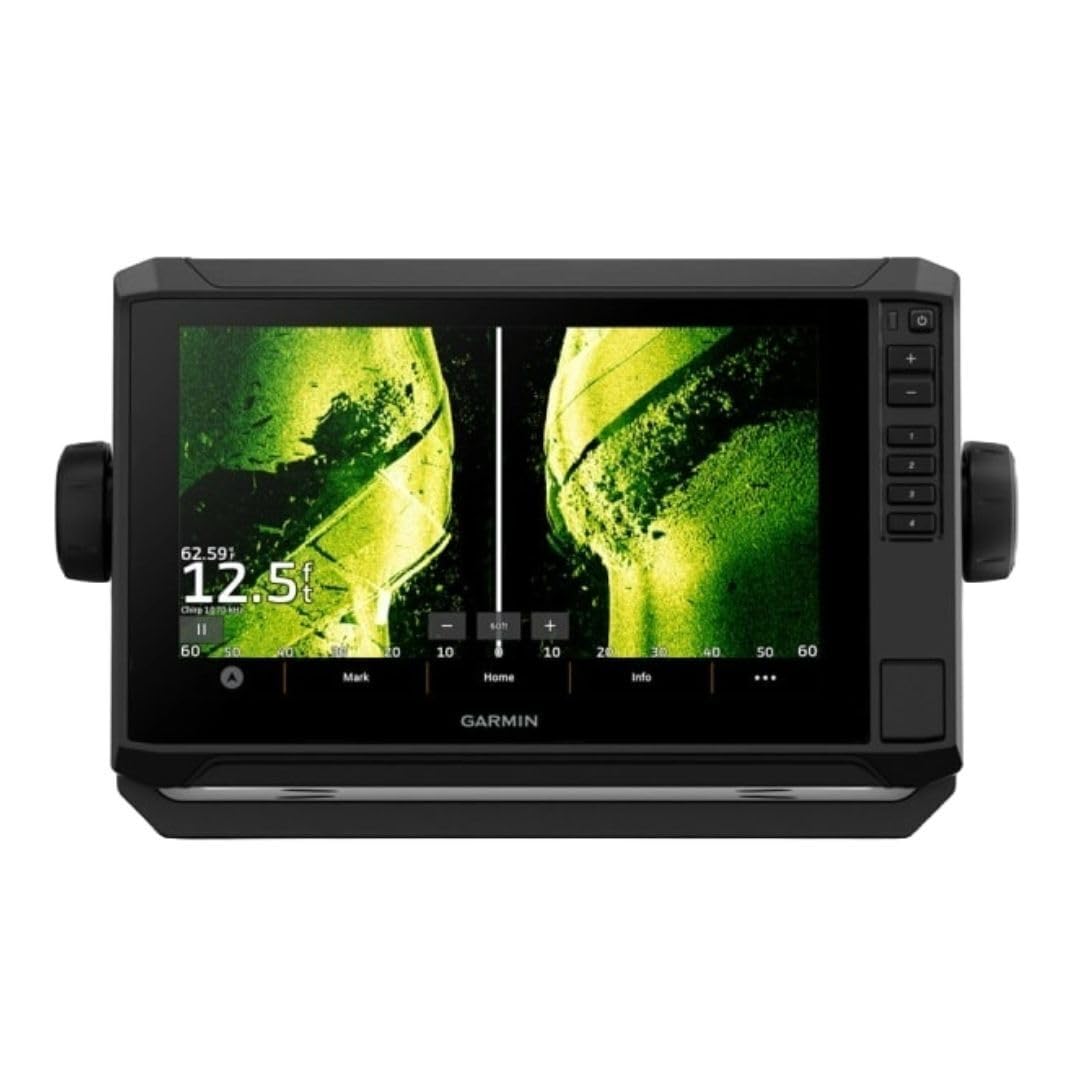
The Garmin ECHOMAP UHD2 94sv is the benchmark for a fully integrated marine navigation system in this bracket. Its 9-inch sunlight-readable touchscreen offers excellent detail and wide viewing angles, crucial for both center console helm stations and smaller cuddy cabins. The included GT56-TM transducer delivers Garmin traditional CHIRP, ClearVü, and SideVü scanning sonars with crisp separation, performing reliably even at moderate planing speeds.
Built-in Garmin Navionics+ coastal charts with integrated Navionics data provide deep coverage of US coastal waters and a vast library of inland lakes. The Wi-Fi connectivity enables seamless waypoint and route sharing between a second ECHOMAP unit, and the direct Force trolling motor integration gives anglers precise route-following and speed control from the display. The 9-inch screen size hits a sweet spot for visibility without dominating the helm.
This unit lacks multi-function networking for radar expansion, but for GPS navigation, high-definition sonar, and trolling motor control, it is remarkably complete. The flush mount option creates a clean, professional install. For boaters who want a premium navigation experience with minimal fuss, this chartplotter sets the standard.
Why it’s great
- Bright 9″ touchscreen is readable in direct sun.
- GT56 transducer provides excellent detail at speed.
- Built-in Navionics+ charts cover US coastal and inland waters.
- Wireless Force trolling motor integration.
Good to know
- No built-in radar port; expansion is limited.
- Premium price reflects the full feature set.
2. Simrad NSS12 Evo3S
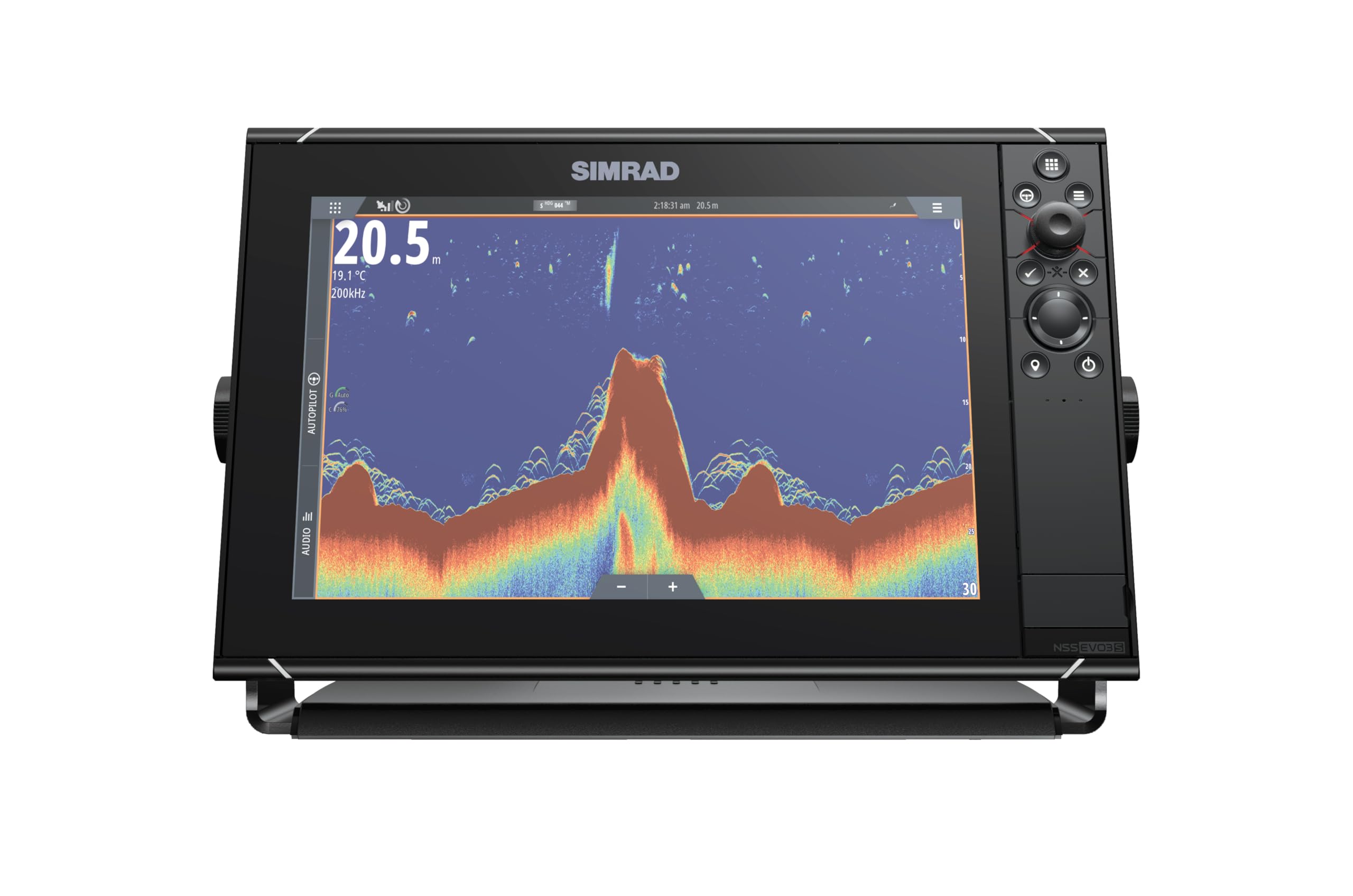
The Simrad NSS12 Evo3S represents the upper echelon of multifunction displays, built around a 12-inch SolarMax IPS screen that delivers exceptional brightness and contrast from any viewing angle. The iMX 8 high-performance processor provides nearly instantaneous screen transitions and responsive chart panning. This is less a fishfinder and more a vessel command center.
Preloaded C-MAP US Enhanced charts offer detailed inland and coastal coverage. The unit powers Active Imaging sonar, StructureScan 3D, and HALO radar without breaking a sweat. The hybrid control system — intuitive all-weather touchscreen with multi-touch gestures alongside a full-featured keypad with rotary dial — ensures reliable operation in rain, spray, or gloves. Network expansion via NMEA 2000 and Ethernet is extensive, supporting engine monitoring, audio control, and radar.
The flush-mount design with edge bezels creates a finished, professional look. This is not a budget option, but for boat owners who demand full vessel integration and a display that dominates the helm, the NSS12 Evo3S delivers unmatched capability. It is the unit you buy when you plan to add systems over time.
Why it’s great
- 12″ SolarMax IPS display is brilliant in any light.
- iMX 8 processor for blazing-fast performance.
- Hybrid touch/keypad control for all-weather use.
- Endless NMEA 2000 and Ethernet expansion.
Good to know
- U-mount bracket sold separately.
- Overkill for simple navigation and sonar only.
3. Raymarine EV-100 Wheel Pilot Pack

The Raymarine EV-100 Wheel Pilot Pack is a dedicated autopilot system rather than a standalone chartplotter, but for sailboat owners, it is the ultimate navigation tool. The package includes the EV-1 Sensor Core with a highly advanced flux compass, the p70 autopilot control head, the ACU-100 actuator unit, and a wheel drive motor. Calibration is handled through an intuitive on-screen wizard.
Installation on a 28 to 38-foot sailboat is a weekend project, not trivial but well-documented. The EV-1 sensor uses Raymarine’s Evolution Rate Gyro technology, which produces minimal course hunting even in 4-foot seas and 15 knots of wind. The p70 control head is slim and unobtrusive on the pedestal. For single-handers, this system transforms a demanding day of sailing into a manageable one — the boat holds course while you tend to sails, navigation, or a fishing line.
The system requires a SeaTalkng network for software updates, which typically means a compatible multifunction display. Some users report that the wheel component manual includes diagrams from an older model, but the plug-and-play nature of the components simplifies installation. If your primary need is steering automation, this pack is the gold standard.
Why it’s great
- Exceptional course-keeping with minimal hunting.
- Straightforward calibration wizard.
- Slim, clean wheel unit adds no bulk.
- Game-changer for single-handed sailing.
Good to know
- Requires SeaTalkng MFD for software updates.
- Installation can take a couple of full days on a sailboat.
4. Simrad GO9 Chartplotter and Fish Finder
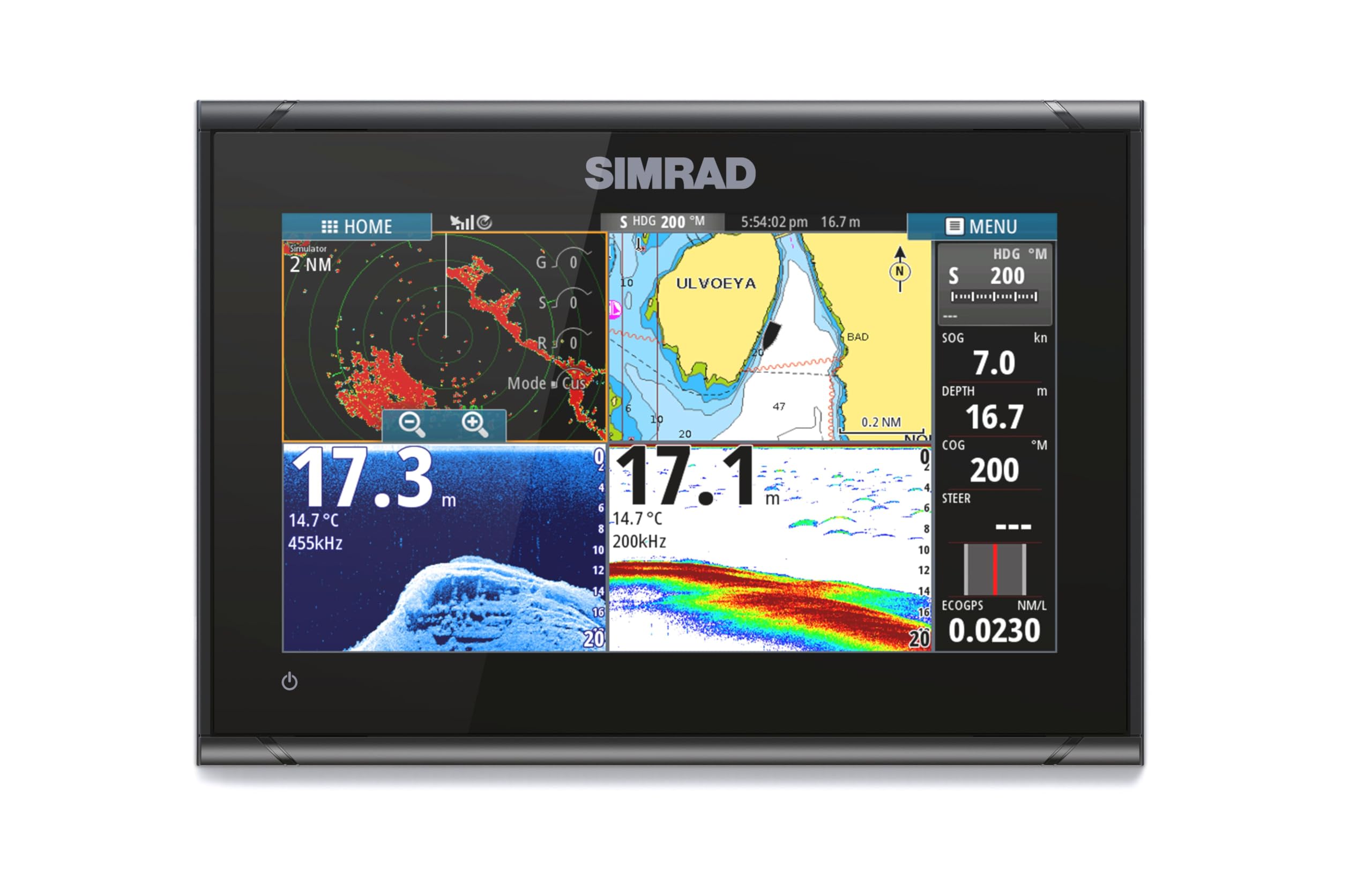
The Simrad GO9 packs an impressive feature set into a 9-inch form factor at a more accessible price point than the NSS Evo3S line. The included C-MAP DISCOVER chart card provides full-featured Vector Charts, Custom Depth Shading, Tides & Currents, and high-resolution bathymetric contours across the US and Canada. This is serious charting capability out of the box.
The HDI transducer with 83/200 kHz support delivers clear CHIRP sonar and DownScan Imaging for identifying bottom structure and fish targets. The touchscreen display is responsive and bright. NMEA 2000 connectivity allows for integration with wind sensors, autopilots, and engine data. The addition of Bluetooth and Wi-Fi enables screen mirroring to a smartphone or tablet, letting you view charts and sonar from anywhere on the boat.
Potential buyers should note that SideScan sonar may not function as expected with the included transducer — it’s a DownScan-only transducer, so SideScan requires a separate compatible transducer. Still, for sportboats, center consoles, and smaller cruisers, the GO9 offers a tremendous amount of navigation and fishfinding capability for the investment.
Why it’s great
- Included C-MAP Discover card with ultra-wide coverage.
- Responsive 9″ touchscreen with good sunlight visibility.
- NMEA 2000 and Wi-Fi for system integration.
- Screen mirroring to smartphone or tablet.
Good to know
- SideScan sonar requires a separate transducer.
- Entry-level HDI transducer included; upgrade for better detail.
5. Lowrance Elite FS 10

The Lowrance Elite FS 10 is a 10-inch touchscreen chartplotter and fishfinder that delivers premium features without reaching the top-tier price. It ships with the Active Imaging 3-in-1 transducer, providing CHIRP, SideScan, and DownScan sonar with FishReveal — a feature that identifies fish arches on the DownScan image. This is a substantial step up in sonar capability from entry-level units.
The unit is live sonar compatible, meaning it can be paired with ActiveTarget 2 XL for real-time forward-looking sonar. The high-detail contour mapping highlights ledges and drop-offs, helping anglers find productive zones faster. The touchscreen interface is intuitive and remains visible with polarized sunglasses. An Ethernet port allows linking a second unit, and the metal gimbal bracket provides rock-solid mounting.
Old-school Lowrance users will find the interface a welcome upgrade — much easier to navigate than previous generations. The included transducer performs well for freshwater fishing and trolling. This is a capable mid-range unit that grows with you, especially if you plan to add live sonar later.
Why it’s great
- Active Imaging 3-in-1 transducer with FishReveal.
- 10″ touchscreen visible in bright sun with polarized lenses.
- Live sonar ready for real-time forward view.
- Ethernet port for networking multiple units.
Good to know
- Preloaded maps are basic; upgrading to C-MAP or Navionics recommended.
- Screen size may feel large on very small tiller boats.
6. Furuno GP39 GPS
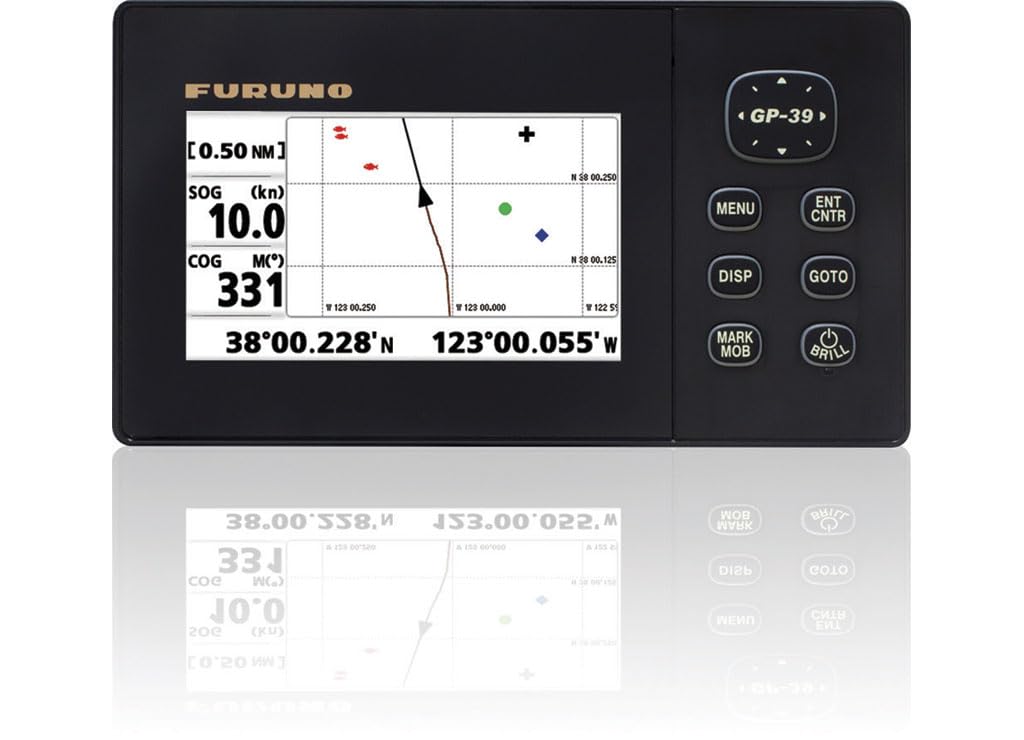
The Furuno GP39 is a pure GPS navigator, stripped of sonar and fishfinding features. Its 4.2-inch color LCD display is small by modern standards, but the build quality is exceptional. This is a unit built for reliability above all else — large-button control, a robust mounting bracket, and a GPS receiver that outperforms many competitors in fringe signal areas. It stores up to 10,000 waypoints, 100 routes with 30 waypoints each, and 3,000 track points.
The GP39 offers backward compatibility with legacy NMEA 0183 versions, a unique feature that allows it to interface with older autopilots and instruments. The included GPS antenna has a generous cable length, making installation flexible. For commercial fishermen, offshore cruisers, or anyone who needs a standalone GPS that will outlast the electronics on board, this is a proven workhorse.
The display is not designed for high-speed chart rendering or touch interaction. The mounting arrangement is functional but not visually refined — some users find the display angle problematic on vertical bulkheads. The manual is limited, so familiarization with Furuno menus is necessary. This unit fills a specific niche for reliability-focused navigators who value function over flash.
Why it’s great
- Rock-solid reliability; outlasts consumer-grade brands.
- Large, easy-to-use buttons for wet conditions.
- Backward compatible with legacy NMEA 0183.
- High capacity: 10,000 waypoints and 100 routes.
Good to know
- Small 4.2″ screen with limited chart detail.
- No built-in sonar, Wi-Fi, or touchscreen.
- Manual is sparse; menu navigation has a learning curve.
7. Humminbird Helix 5

The Humminbird Helix 5 is a compact, keypad-controlled chartplotter and fishfinder that prioritizes reliable operation in all weather conditions. The 5-inch color TFT display is readable even in bright sun, though a visor helps. It features Dual Spectrum CHIRP Sonar, which lets you toggle between wide coverage and narrow, high-detail scanning. The included transducer with suction cup mount makes it a versatile choice for temporary installations or rental boats.
Humminbird Basemap comes preloaded with coverage of over 10,000 lakes and continental US coastlines. The AutoChart Live feature is a standout — it creates real-time maps of depth contours, bottom hardness, and vegetation with eight hours of built-in recording time. This unit is compatible with premium LakeMaster, CoastMaster, and Navionics charts. The keypad control system remains intuitive even in chop.
The 5-inch screen size is limiting for split-screen views but perfectly adequate for a tiller console or kayak. The included shuttle bag and 7Ah battery make it a truly portable system. This is an excellent fit for jon boats, small pontoons, or any boater who values a compact, capable unit with proven mapping technology.
Why it’s great
- AutoChart Live creates custom depth maps in real time.
- Dual Spectrum CHIRP for flexible sonar searching.
- Portable kit with bag and battery included.
- Keypad controls work reliably in wet conditions.
Good to know
- 5″ screen is small for detailed chart work.
- No touchscreen navigation.
8. Garmin Striker Vivid 7cv

The Garmin Striker Vivid 7cv offers an impressive 7-inch color LCD display at a budget-friendly price point. The defining feature is the Vivid scanning sonar color palettes, which use distinct color schemes to help users easily distinguish fish from structure and bottom composition. The included GT20-TM transducer provides built-in Garmin CHIRP traditional sonar and CHIRP ClearVü scanning sonar.
The high-sensitivity GPS allows marking waypoints, creating routes, and viewing boat speed. Quickdraw Contours mapping lets you create custom contour maps of any body of water you explore, storing up to 2 million acres. Wi-Fi connectivity links to the ActiveCaptain app, enabling waypoint sharing and smart notifications including software update alerts. The tilt/swivel bailmount bracket provides flexible mounting options.
The Striker Vivid 7cv does not ship with preloaded charts — it relies on the built-in GPS for basic navigation and Quickdraw for custom mapping. Some users find the interface less intuitive than Garmin’s higher-end models. The display is bright and readable in direct sunlight. This is a strong entry-level option for boaters who prioritize sonar clarity and map-building over preloaded chart libraries.
Why it’s great
- 7″ display for excellent value.
- Vivid sonar color palettes make fish and structure pop.
- Quickdraw Contours builds custom maps on the water.
- Wi-Fi connectivity for waypoint sharing via app.
Good to know
- No preloaded charts out of the box.
- Interface has a learning curve compared to Garmin’s touch models.
9. Humminbird 411660-1 Helix 5 Chirp GPS G3

The Humminbird Helix 5 Chirp GPS G3 is a no-frills fishfinder and chartplotter combo that focuses on core performance. The Dual Spectrum CHIRP sonar provides two search modes: Wide Mode for maximum coverage and Narrow Mode for detailed scanning, driven by a Low-Q transducer that delivers precise 2D target separation. This is a capable sonar performer in a compact package.
Humminbird Basemap comes preloaded, offering coverage of over 10,000 lakes and continental US coastlines. The keypad control system is user-friendly and operates reliably in any weather. AutoChart Live creates custom depth contour maps while you boat, with eight hours of built-in recording time. The unit is compatible with premium LakeMaster, CoastMaster, and Navionics charts. The gimbal mounting bracket and transom-mount transducer make installation straightforward.
The 5-inch color TFT screen is small for split views but perfectly functional. The menu system takes some adjustment for new users, but long-time Humminbird owners will feel right at home. This is a dependable, economical entry point for boaters who want reliable GPS navigation and solid sonar without expanding into a full helm system.
Why it’s great
- Easy installation on small to mid-size boats.
- Dual Spectrum CHIRP sonar for flexible scanning.
- AutoChart Live for custom depth mapping.
- Keypad control works in all weather conditions.
Good to know
- 5″ screen is limiting for split-screen navigation.
- No touchscreen or wireless connectivity.
FAQ
Can I use a car GPS on my boat?
What is the difference between a chartplotter and a fishfinder?
Do I need an external GPS antenna?
What does NMEA 2000 compatibility mean for my boat?
Final Thoughts: The Verdict
For most boaters, the best auto boat GPS is the Garmin ECHOMAP UHD2 94sv because it delivers a large 9-inch touchscreen, exceptional sonar detail with the GT56 transducer, and built-in Navionics+ charts in a package that is user-friendly and installs cleanly. If your priority is vessel-wide integration with radar, engine monitoring, and autopilot, the Simrad NSS12 Evo3S is the command center you need. For the sailor seeking steering automation, the Raymarine EV-100 Wheel Pilot Pack transforms single-handed cruising and is worth every hour of install time.