
Our readers keep the lights on and my morning glass full of iced black tea. As an Amazon Associate, I earn from qualifying purchases.
Specs are compiled from manufacturer listings and verified buyer reviews and can change over time — please confirm the key details on the product page before buying.
Rust repair fails for one boring reason: the filler goes on soft, traps moisture, and lifts again a season later. The right product for a rusted panel is a reinforced filler — one carrying fiberglass strands or metal particles that bridge the pitted crater instead of sagging into it. This guide covers eight fillers built for rusted metal and holes rather than cosmetic door dings, and tells you which one suits the job in front of you.
I’m Min — the founder and writer behind Gadgets Feed. This guide is built by comparing the manufacturers’ published specifications and the patterns across verified customer reviews, so you get each pick’s real strengths and trade-offs instead of marketing spin.
You will see the mixing, sanding, and cure-time differences spelled out in plain terms, plus the surfaces each formula actually bonds to. That matters more than brand loyalty when you are shopping for the best auto body filler for rust and need a patch that outlasts the panel around it.
Our Picks at a Glance
How To Choose The Best Auto Body Filler For Rust
A rust repair is a structural repair, not a cosmetic one. The metal has thinned, pitted, or gone altogether, and whatever you spread into that crater has to carry itself without sagging. That single fact rules out a lot of general-purpose filler and points you toward a reinforced formula.
Reinforcement is the whole ballgame
Fiberglass strands act like rebar inside the filler — they bridge across a hole so the patch does not drop through. Short-strand fiberglass spreads and sands more easily, which suits small rust-outs and seams. Long-strand fiberglass is coarser and harder to push around, but it is the one built for bulk filling and heavy rust damage. Metal-reinforced filler takes a third route, bonding to aluminum and galvanized steel where a plain filler may struggle.
Read the cure time before you open the can
A filler that sets in 15 or 20 minutes gives you a tight working window — mix small batches and keep your spreader moving. A slower formula is more forgiving on a first attempt. The flip side of fast cure is that you can sand and prime the same day, which matters if the car is your daily driver and the panel is exposed.
Know what you are bonding to
Galvanized metal, aluminum, bare steel, and fiberglass each behave differently under a filler. Check the stated compatible materials before you buy. If your rust sits on galvanized or aluminum, pick a formula that names that surface outright, because adhesion failures on those metals are the most common reason a repair lifts later.
Do not forget the hardener and the finish
Some fillers ship with hardener in the box; some do not. Confirm it before you start, or you will be stuck mid-repair. And if the formula sands smooth enough to prime directly, you save a whole extra step of finish putty — a real convenience on large rust areas.
Quick Comparison
| Model | Best For | Filler Type | Container Size | Full Cure Time | Amazon |
|---|---|---|---|---|---|
| Duraglas Fiberglass Filled Filler 1 Gallon★ Best Overall | Small rust-outs, cracks and fiberglass holes | Short strand fiberglass | 1 gallon | 15 minutes | Amazon |
| Evercoat Metal Reinforced Filler 105013Best for Aluminum | Aluminum and galvanized steel rust repair | Metal reinforced | 13 fl oz | — | Amazon |
| Roberlo Maxifill Body FillerEasiest to Sand | Large-area sanding and smooth finishing | Lightweight microsphere | 3 liters | — | Amazon |
| Evercoat Everglass Short Strand Filler | Rusted metal, seams and shattered fiberglass | Short strand fiberglass | 32 fl oz | — | Amazon |
| Maxilight Superior Lightweight Body Filler | Large-area dents, dings and scratches | Lightweight self-leveling | — | — | Amazon |
| J-B Weld Body Filler 1 Gallon | Rust-outs on metal, wood and fiberglass | Two-component filler | 1 gallon | 30 minutes | Amazon |
| Bondo Body Filler Original Formula 00265 | Large rusted areas and everyday dents | Two-part lightweight compound | 6.30 lb filler | 20 minutes | Amazon |
| Evercoat Tiger Hair Long Strand Filler | Heavy-duty damage and bulk rust filling | Long strand fiberglass | 32 fl oz | 7 days | Amazon |
In‑Depth Reviews
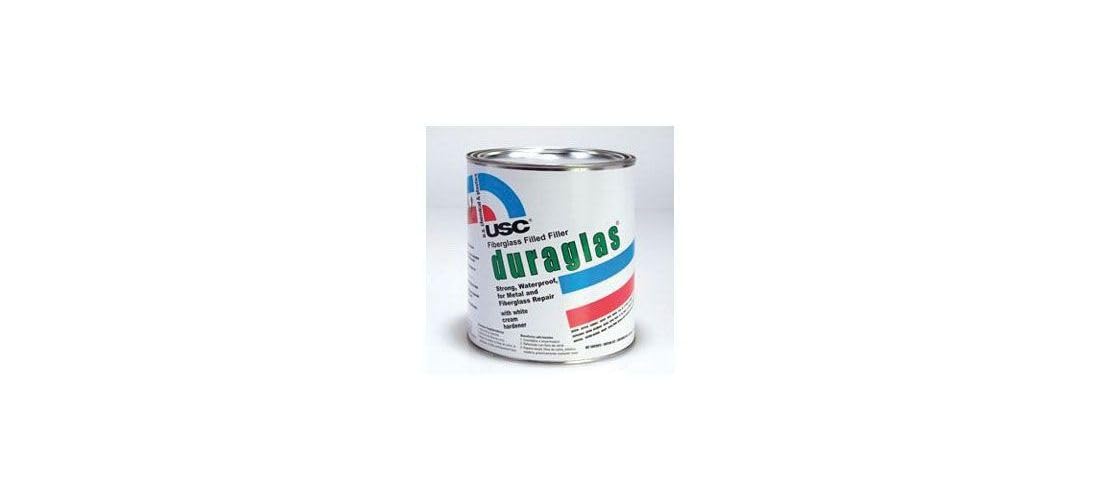
1. Duraglas Fiberglass Filled Filler 1 Gallon
Our pick — 4.5+★ from 800+ verified ratings; the strongest balance of quality and price.
A full gallon of short-strand fiberglass that sets in 15 minutes and bridges rust-outs instead of sinking.
If your rust problem is a hole in a rocker panel or a crack running along a seam, this is the shape of filler you want. The short fiberglass strands act as reinforcement inside the putty, so the patch spans the void and grips the surrounding metal. It is also the biggest tub in this lineup at 1 gallon, which means fewer reorders on a multi-panel job.
The working time is where you need to pay attention. Full cure lands at 15 minutes, the quickest set here, so mix small batches and commit to the spread. Get it right and you can sand and prime the same afternoon. The value is in the combination: a full gallon, a fiberglass-reinforced formula, and enough volume to cover several panels before you reorder.
Duraglas is a heavy tub at 11.1 pounds, and that weight is the honest trade-off for the volume you get — plan to set it on a bench rather than hold it overhead. The stated uses run to metal and fiberglass repair, rust repairs, and cracks or holes in fiberglass, with a finishing putty for the final skim. Sandability is decent, though the fiberglass content means you are shaping reinforcement, not butter. It suits someone fixing rust damage across several panels who wants one gallon to cover the whole job.
What earns the top spot
- Short-strand fiberglass bridges rust-outs and cracks so the patch carries itself
- 15-minute full cure lets you sand and prime the same day
- 1 gallon container covers multiple panels without a reorder
- Built for metal and fiberglass rust repair, not just cosmetic dents
Where it asks more of you
- At 11.1 pounds the tub is heavy to handle on overhead panels
- A 15-minute window is tight for a first-timer mixing by eye
- Fiberglass content makes shaping slower than a plain lightweight filler
Reach for this if: you are repairing genuine rust damage across several panels and want one large can of reinforced filler to handle all of it.
Think twice if: you are working overhead on a vertical panel where an 11.1-pound tub becomes awkward to manage.
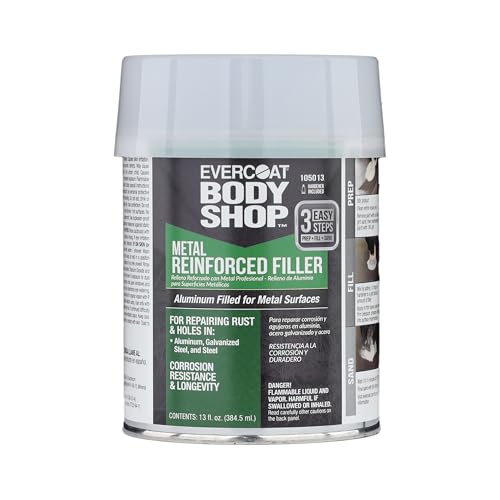
2. Evercoat Metal Reinforced Filler 105013
The pick for rust sitting on aluminum or galvanized steel, where ordinary filler struggles to hold.
Aluminum and galvanized panels are the surfaces that make fillers fail. This formula is built specifically around adhesion to aluminum, galvanized steel, and steel, so the patch grips the metal it was designed for. The 13-fluid-ounce tube is the smallest container here, which suits a targeted rust-out rather than a full-quarter-panel rebuild.
Strength is the reason it earns a place. The reinforced compound sets hard enough that it can be drilled and tapped after curing, so you can thread a fastener into the repair instead of working around it. It is also waterproof and described as stain-proof when used under basecoat clearcoats, which keeps the finish looking clean. Sanding and shaping are called out as easy, so getting a smooth surface does not turn into an all-day chore.
The catch is drying time. That same density that gives you a drillable repair means the set is not instant, so plan the job around a longer wait rather than a 15-minute turnaround. Buy the hardener situation straight — a liquid hardener is included with this one, so you are not hunting for a tube on the day. For a galvanized or aluminum rust repair that needs to hold a fastener, few formulas here are as purpose-built.
The adhesion story: naming aluminum, galvanized steel, and steel outright is the detail that matters — those are the surfaces where a generic filler lifts first.
Set your schedule around it: the slower dry is the honest cost of a repair you can drill and tap afterward.
Best matched to: a rust repair on aluminum or galvanized panels where the patch needs to hold a fastener.
Look elsewhere if: you are covering a large flat panel — 13 fluid ounces will not stretch far.
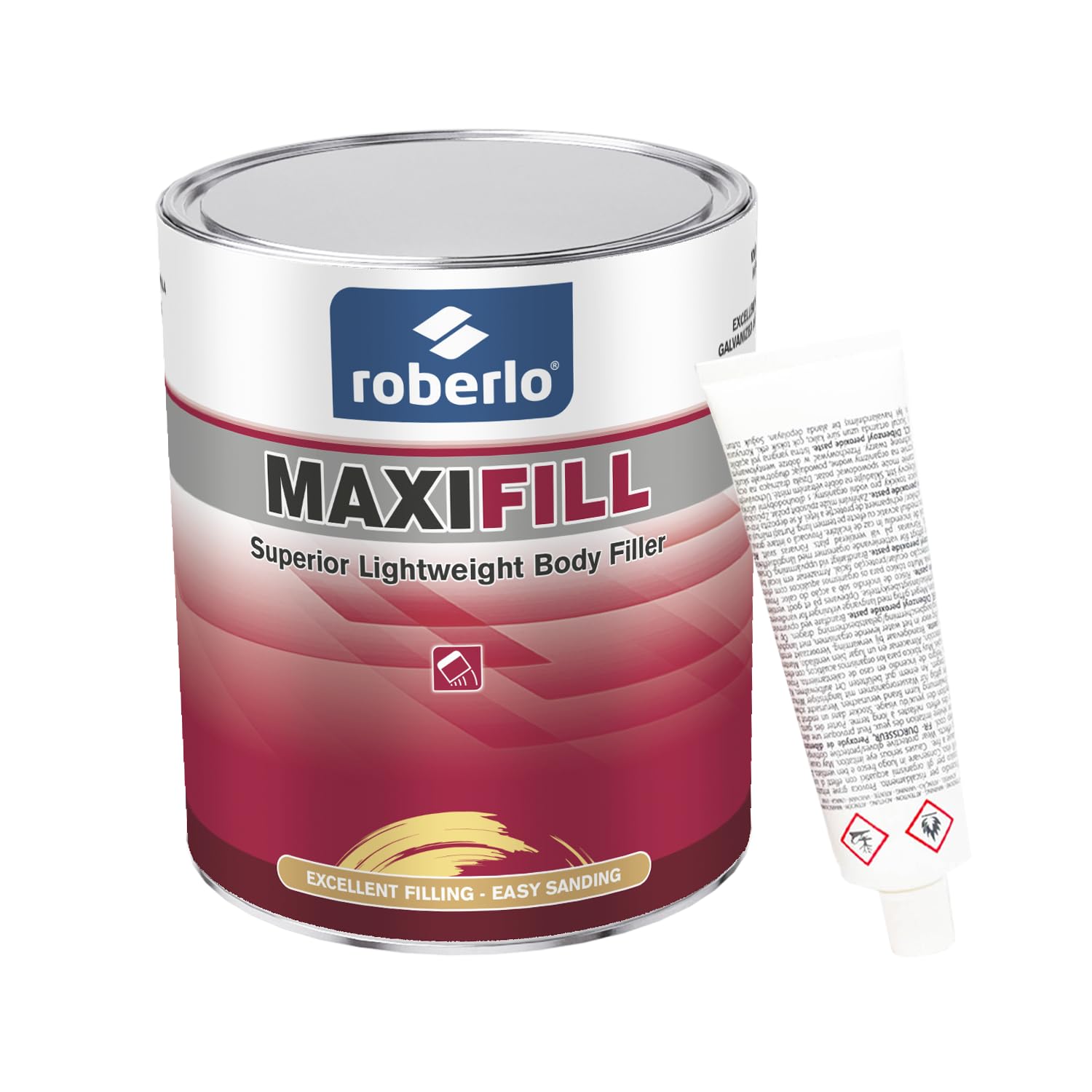
3. Roberlo Maxifill Superior Lightweight Body Filler
A 3-liter tub with rust inhibitors and microspheres that cut sanding time, for big smooth areas.
The feature that separates Maxifill from the fiberglass crowd is its microspheres technology. Tiny hollow spheres in the mix make the filler lighter and easier to sand, and the maker states it reduces sanding time by 40%. On a large rusted area, that sanding saving is the difference between an afternoon and a weekend.
It is also built with rust inhibitors in the formulation to help prevent future corrosion, and it bonds to aluminum, steel, zinc, galvanized, and fiberglass. Roberlo claims the formula eliminates the need for a separate finish putty — you apply, sand, and prime directly. The 3-liter tub plus included hardener makes it a complete kit, sized for serious repair work rather than a single small spot. Buyers report it spreads smooth as butter and sets in roughly 20-30 minutes, which is a comfortable working window.
Here is the honest limit. Durability is the trade-off worth flagging: it dries in decent time, but some owners mention it peeling off galvanized metal. If your rust sits on galvanized, treat that as a reason to prep the surface hard or choose a metal-reinforced formula instead. On steel and aluminum it is a strong, genuinely smooth performer. For an enthusiast rebuilding a large rusted section who wants easy sanding above all, it earns its spot.
Why sanding fans like it
- Microspheres technology the maker says reduces sanding time by 40%
- Rust inhibitors built into the formulation to help prevent later corrosion
- 3-liter tub with hardener included as a complete kit
- Claims to skip a separate finish putty — apply, sand, prime directly
What to prep around
- Peeling reported on galvanized metal — prep hard or pick a metal-reinforced filler there
- The large tub is more volume than a single small spot repair needs
Suits you when: easy sanding on a large steel or aluminum rusted area is the priority and you want a complete tub-with-hardener kit.
Skip the shortcut if: the rust is on galvanized metal — that is the one surface where customers note it lifting.
4. Evercoat Everglass Short Strand Fiberglass Reinforced Filler

Short-strand reinforcement that handles holes, rusted metal, body seams and shattered fiberglass in one can.
Not every rust job is a clean flat panel. Sometimes you are joining a seam, patching around a weld, or filling a spiderweb of cracks in fiberglass. This formula is the flexible one for those cases — the short-strand fiberglass reinforcement handles holes, rusted metal, body seams, and shattered fiberglass, and it works on steel, aluminum, and fiberglass alike.
Here is the standout number for anyone packing a toolbox: it weighs 1 pound, the most portable tub in this whole lineup. Compare that to the Duraglas 1-gallon can at 11.1 pounds and the difference is obvious — this is the one you can sling into a bag and carry to a job. The fiberglass reinforcement is what makes it hold on seams and rusted metal. The fiberglass content lets it handle flexing without cracking, so seams that move under load stay patched.
Sandability is a genuine strong point too — it sands nicely and dries quickly, so you are not fighting a gummy surface. One thing to check before you start: a few owners note the can does not come with hardener, so confirm the hardener situation before mixing. That is a supply detail, not a formula flaw. If you want a reinforced filler that travels light and covers seams as readily as rust holes, this is the one.
Carry-friendly by a wide margin: at 1 pound against the Duraglas tub’s 11.1 pounds, this is the filler you can actually throw in a bag.
Confirm the hardener: it is not always in the box — check before you plan the repair.
Pick this if: you are patching seams and cracks as well as rust, and want a reinforced filler light enough to carry to the job.
Double-check first: whether hardener is included with your can, since reviewers point out it is not always supplied.
5. Maxilight Superior Lightweight Auto Body Filler
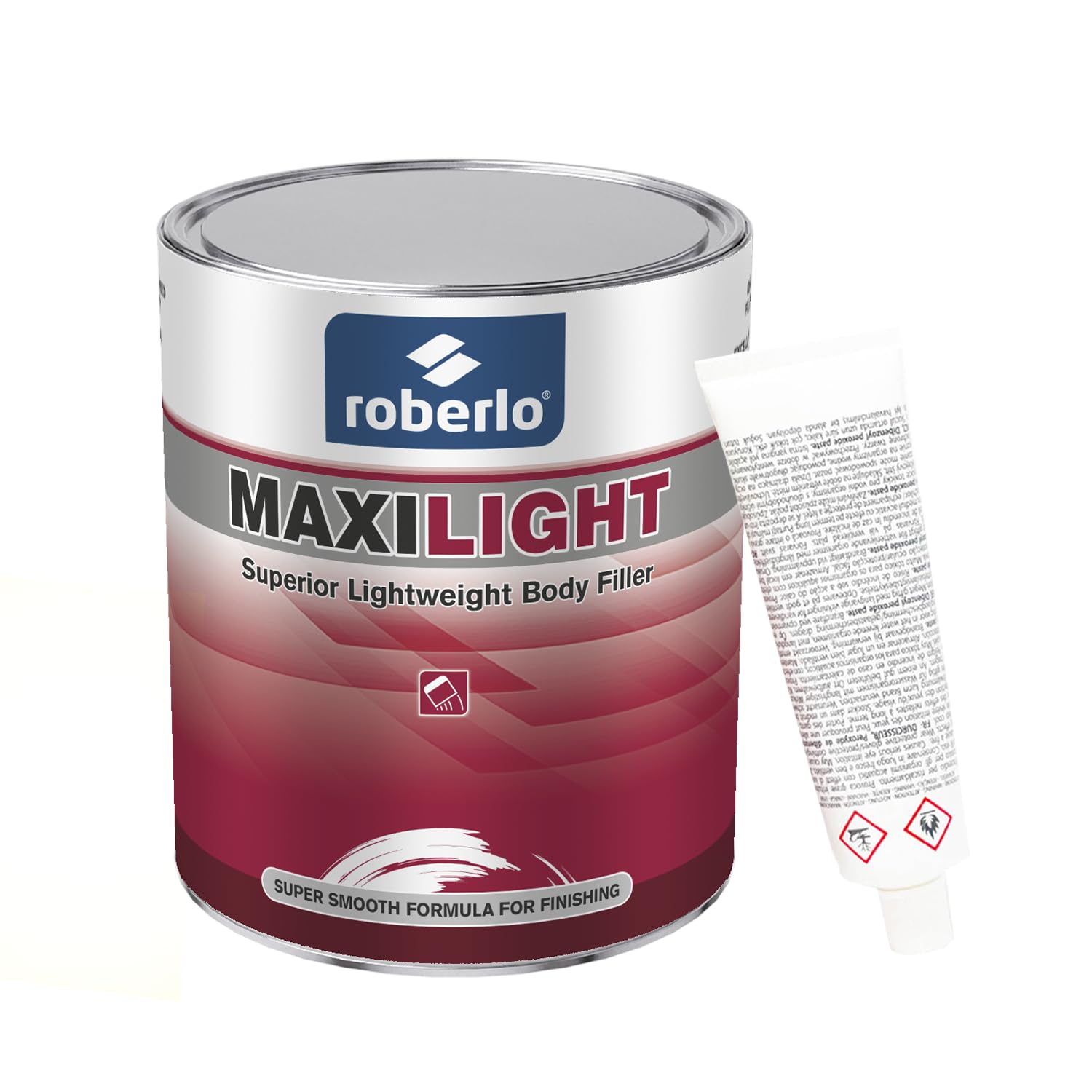
A creamy, self-leveling skim coat for large areas where you want the surface to flow flat on its own.
Lightweight fillers are not the ideal first choice for deep structural rust, but they are excellent for the broad shallow areas around it. This Maxilight formula is a self-leveling, creamy compound aimed at large-area repairs, dents, dings, holes, scratches, and rust. The self-leveling part means it flows toward flat as you spread, so you spend less time chasing a low spot.
It handles metal, fiberglass, and vinyl repair, and because it blends with automotive paints after sanding, the repair takes color and texture that match the surrounding panel. That makes it a good finishing coat over a reinforced patch — fill the crater with a fiberglass filler first, then level the whole area with this before priming. The trade-off is that it is a finish-grade product, so the deeper structural work still needs a reinforced filler underneath.
What sticks from owners is the sandability: it sands like chalk, easy to shape into a smooth feather edge. That chalky sandability forgives over-application, which is what makes a first-timer’s skim come out flat. If you are leveling a big rusted stretch that you have already filled structurally, this is the skim that makes it paint-ready. Spread it thin and let it self-level rather than building up thick layers.
The finishing role: a self-leveling skim that blends with automotive paint — best layered over a reinforced patch, not used alone for deep rust.
Sands like chalk: the feather-edge ease is what makes it forgiving for a first attempt.
Works well for: leveling a large already-filled rust area before primer, where you want a smooth, paintable surface.
Not the one if: the rust is deep and structural — a lightweight skim alone will not span it.
6. J-B Weld Body Filler 1 Gallon

A waterproof two-component filler in a full gallon that dries in 30 minutes and sands and paints.
J-B Weld brings its reputation for hard-setting repair into a full gallon pail. The filler is a two-component system — resin plus hardener — that dries in 30 minutes and is sandable, paintable, and waterproof once set. It repairs cracks and rust-outs on metal, wood, fiberglass, SMC, and more, so it earns its place on a job that crosses materials.
Owners rate the compound on how easily it spreads and sands once the resin-to-hardener mix is right. It sands cleanly and takes paint, so the finished repair looks right. The 1-gallon pail means you have plenty of material for large repairs, and the waterproof set means it holds up where moisture is a factor — exactly the environment around rust.
Two honest notes pull in opposite directions. Some owners find the fast set an advantage and others find it sets too quickly for comfortable spreading, so mix in small batches. And the consistency is a little thicker by some accounts, which suits filling a rust crater better than feathering a broad flat panel. For a rust-out where you need a hard, quick, waterproof patch on a mixed-material surface, this is a strong, practical choice.
Working in its favor
- Dries in 30 minutes, then sands and takes paint
- Waterproof once set — useful around moisture-prone rust areas
- Repairs metal, wood, fiberglass and SMC from one pail
- Full gallon gives plenty of material for large repairs
Plan your mix around this
- Sets quickly for some — mix in small batches
- Thicker consistency is less smooth for feathering wide flat panels
A solid match for: a quick, hard, waterproof rust-out repair on mixed materials where half an hour of cure suits you.
Consider another if: you want a long spreadable working window for wide flat panels.
7. Bondo Body Filler Original Formula 00265
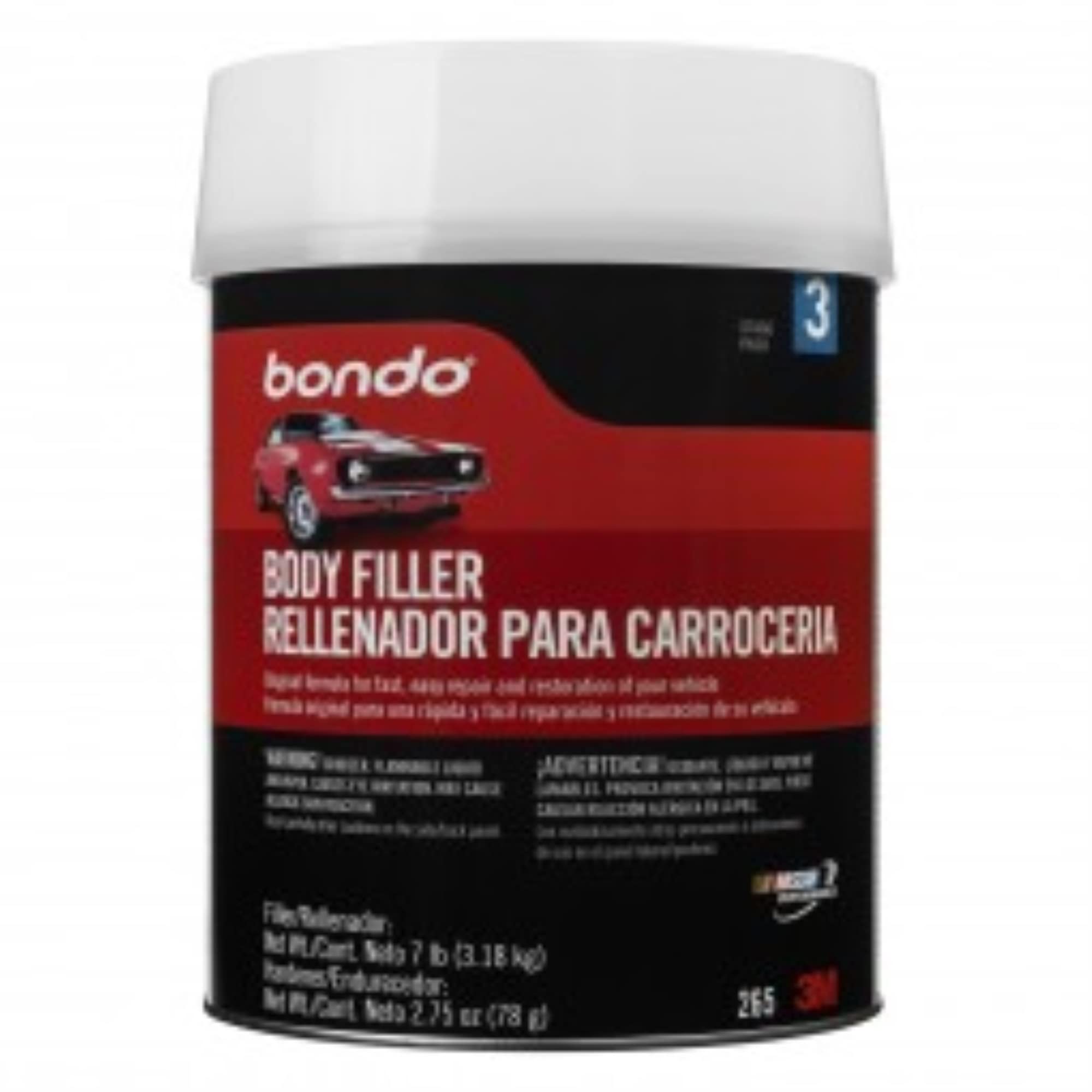
The familiar two-part compound for dents, holes and large rusted areas — mixes easy and cures in 20 minutes.
For a lot of people, the first filler they ever reach for is Bondo, and the original formula is still a sensible starting point. It is a two-part lightweight compound that mixes easily and spreads smoothly, and it cures in 20 minutes for same-day repairs. It is formulated to be non-shrinking, which matters on rust because shrinkage opens the patch back up over time.
The surface range is broad: wood, steel, aluminum, fiberglass, and concrete. The kit pairs 6.30 lb of filler with 2.75 oz of hardener in one can, so you have what you need to start the job without a separate purchase. It repairs dents, dings, holes, large rusted areas, and scratches — a wide net for a versatile everyday filler. Effectiveness is the quality owners value most, and it sands easily and dries quickly.
The genuine caveat is packaging, not performance. Some cans arrive dented in shipping, so inspect yours before the repair rather than after. Treat it as a shipping hiccup rather than a formula issue. If you want an affordable, well-known compound for a large rusted area and you are comfortable with a 20-minute working window, it is a practical budget entry.
An easy place to start: two parts, spreads smoothly, non-shrinking, and cures in 20 minutes — a forgiving compound for large rusted areas.
Check the can on arrival: some arrive dented from shipping, so inspect before you start.
Fits you if: you want a familiar, easy-spreading compound for a large rusted area and a 20-minute cure works.
Look at a fiberglass filler instead if: the rust goes right through and you need reinforcement to bridge a hole.
8. Evercoat Tiger Hair Long Strand Fiberglass Reinforced Filler

Long-strand reinforcement built for the tough jobs — heavy damage and bulk filling large rust repairs.
When the rust has eaten a real hole and you need the patch to bridge serious distance, long-strand fiberglass is the right tool. Tiger Hair carries high-strength polyester resin reinforced with long fiberglass strands, giving it excellent bridging and crack-filling properties. It is the pick for heavy-duty damage and bulk filling rust repairs where short-strand filler would sag through.
It applies across steel, aluminum, and fiberglass and is waterproof once set, so it holds up in the moisture-prone spots that cause rust in the first place. Durability is what earns it a place — this is a patch built to carry a load rather than just skim a surface. Cure time runs long at a stated 7 days for full cure, so plan for the patch to need proper time before you sand and paint the final finish.
The one thing to know going in is spreadability. Because the strands are long, pushing it around has been compared to working a ball of jelly — it takes a firmer hand than a lightweight filler. Some cans also arrive without hardener, so confirm before mixing. For a genuinely structural rust repair on a panel that has to hold together, the extra effort is worth it. It is not the filler for a quick door ding.
Built to bridge: long-strand polyester resin gives it the bridging and crack-filling ability that heavy rust damage demands.
The effort is real: long strands make it firmer to spread than a short-strand filler, and the stated full cure runs 7 days.
Choose it for: structural rust repair and bulk filling where the patch has to bridge a large hole and carry a load.
Wrong tool if: you are smoothing cosmetic dents — long strands are firm to work and overkill for a door ding.
Understanding the Specs
Fiberglass Strand Length (Short vs Long)
Short strands spread and sand easily and suit small rust-outs and seams. Long strands are coarser, bridge bigger holes and hold more load, but they are harder to push around and sand. Match the strand to the size of the damage: short for small, long for heavy bulk repairs.
Full Cure Time
Cure time is how long before the filler is set for sanding and priming. A 15 or 20 minute cure lets you sand the same day but leaves a tight working window, so mix small batches. A longer stated cure means plan the job across more time before the final finish.
Compatible Surfaces
Check what the filler names outright — steel, aluminum, galvanized, fiberglass, wood, SMC. Adhesion failures show up most on aluminum and galvanized metal, so if your rust sits there, pick a formula that lists that surface.
Container Size and Hardener
Volume tells you how far the can stretches: small tubes suit a single rust-out, gallon tubs cover multiple panels. Confirm whether hardener is included — some formulas ship with it, others do not, and you cannot mix without it.
FAQ
What is the best type of body filler for rust holes?
Can I put body filler directly over rust?
How long does auto body filler take to cure?
Will fiberglass filler stick to galvanized metal?
Do I need a separate hardener for body filler?
Is short strand or long strand fiberglass filler better for rust?
Can I sand and paint body filler the same day?
Does body filler work on aluminum or fiberglass panels?
How much filler do I need for a rusted panel?
Do I need a finishing putty over fiberglass filler?
Final Thoughts: The Verdict
For most rust repairs, the winner is the Duraglas Fiberglass Filled Filler — short-strand fiberglass that bridges the damage, a 15-minute cure for same-day finishing, and a full gallon to cover several panels without reordering. If your rust sits on aluminum or galvanized steel, reach for the Evercoat Metal Reinforced Filler, which names those surfaces outright and sets hard enough to drill and tap. And for a structural hole that has to carry load, the Evercoat Tiger Hair with its long-strand reinforcement is the one to grab — just give it the full cure time it asks for.
The Duraglas also carries the highest rating of the reinforced fillers here at 4.5+ stars across 800+ ratings. Match the formula to your surface and damage size, and the patch will hold.
How We Picked
We do not accept paid placement. Every pick is matched to a real buyer and a real use-case; we do not hands-on test units.
Sources & Methodology
Specifications: manufacturer listings and product documentation. Review insights: verified customer reviews, as of November 2026. Pricing: not shown on this page (it changes often); check the current price via the retailer link.
As an Amazon Associate, Gadgets Feed earns from qualifying purchases. This does not affect which products we feature.