
Our readers keep the lights on and my morning glass full of iced black tea. As an Amazon Associate, I earn from qualifying purchases.
Specs are compiled from manufacturer listings and verified buyer reviews and can change over time — please confirm the key details on the product page before buying.
Bodywork is brutal on time. A single dent means hours of sanding, filling, and re-doing before you ever spray a drop of paint. The right consumables — filler, guide coat, tape, and pads — are what separate a flat, straight panel from a wavy, orange-peel mess that screams “DIY.”
I’m Min — the founder and writer behind Gadgets Feed. This guide is built by comparing the manufacturers’ published specifications and the patterns across verified customer reviews, so you get each pick’s real strengths and trade-offs instead of marketing spin.
From fillers that sand like butter to a guide coat that reveals every pinhole, here is the auto body supply shortlist that actually earns a spot in your garage.
Our Picks at a Glance

How To Choose The Best Auto Body Supply
The right supply depends on your specific repair stage. A novice fixing a fender needs different consumables than a pro spraying a whole panel. Here is how to match the supply to the task at hand.
Filler: Weight, Cure Time, and Adhesion
Body filler is the backbone of dent repair, and the first number to check is the cure time. Some formulas cure in 20 minutes for same-day fixes, while others take 4 hours to fully cure — a huge difference if you are squeezing a repair into an afternoon. Lightweight fillers are also easier to sand, which saves your arms when you are shaping a large area. Adhesion matters too: a filler that sticks to galvanized steel, aluminum, and fiberglass gives you more surface flexibility than one that only works on bare metal.
Guide Coat: Powder vs. Spray
The classic mistake is buying a spray-can guide coat and then having to mask the entire panel. A dry powder guide coat needs no masking, no solvents, and no drying time — you wipe it on, sand, and see exactly where the low spots and pinholes are. This is the single biggest time-saver for someone who wants to skip the re-work of a repair.
Masking Tape: Heat Rating and Adhesion
Not all tape is created equal, and the difference shows when you pull it off after paint. A tape rated for a paint booth must handle heat without leaving residue or lifting its edges. Look for a tape that is flexible enough to follow curves and contours — a rigid tape will bridge and let paint bleed underneath. The adhesion balance is tight: too weak and it lifts, too strong and it can pull fresh clear coat.
Quick Comparison
| Model | Best For | Type | Size | Cure/Speed | Amazon |
|---|---|---|---|---|---|
| Dura-Gold Guide Coat★ Best Overall | Revealing sanding defects | Dry Powder | 7 oz (200g) | No drying time | Amazon |
| KREFINISH TapeSharp Lines | Heat-resistant masking | Crepe Paper | 0.94″ x 60 yds (6) | 120°C rated | Amazon |
| Roberlo MaxifillEasy Sand | Lightweight dent repair | Body Filler | 1 Liter | Sands in ~20 min | Amazon |
| DAYUAN Hammer Set | Pulling & shaping metal | Hand Tools | 7 Piece Kit | — | Amazon |
| USC Special Lite | Large filler jobs | Body Filler | 0.8 Gallon | 4 hr full cure | Amazon |
| RYCUBRE DA Sander | Fast material removal | Air Tool | 6 Inch Pad | 12000-13000 RPM | Amazon |
| Custom Shop Cups | Accurate paint mixing | Mixing Cups | 16 oz (100) | — | Amazon |
| 3M Platinum Glaze | Final pinhole filling | Polyester Glaze | 30 fl oz (887mL) | Sands in 15 min | Amazon |
| 3M Bondo Filler | Classic all-purpose repair | Body Filler | 6.30 lb + Hardener | Cures in 20 min | Amazon |
In‑Depth Reviews
1. Dura-Gold Premium Black Dry Guide Coat Kit
Our pick — over 4.5★ from 800+ verified ratings; the strongest balance of quality and price.
The guide coat that makes sanding defects impossible to miss, without a single spray can.
The thing everyone raves about is its quality — the powder gives a black contrast so pinholes and scratches show up instantly as you sand. At 7 ounces (200 grams), the cartridge is an extra-large size that outlasts spray cans and skips drying time entirely, which is the real workflow win.
You get a cartridge plus an applicator pad, and the application trick is to shake the powder onto the sponge before wiping the surface. It is a dry powder, so there are no aerosols, no solvents, and no over-spray to mask around — just wipe, sand, and see exactly where you are still low.
The buyers are clear on the trade-offs: the applicator pad can fall apart with rough use, and the powder spills easily if you are careless. The recurring advice is to avoid over-application, since piling on too much clogs your sandpaper. One owner even used it for boat building and found it revealed every imperfection for easy sanding.
Real-world read: This is the pick that saves the most labor on a repair — it prevents the over-sanding and re-work that eats a whole afternoon.
Mind the powder: Treat the cartridge gently and go light on the coat to keep your paper cutting clean.
Grab it if: you are sanding filler or primer and want to see defects before you paint.
Look elsewhere if: you prefer a liquid guide coat and don’t mind masking panels for a spray.
2. KREFINISH Painters Tape for Car Paint
A masking tape that holds its line in a 120°C paint booth without leaving sticky regret.
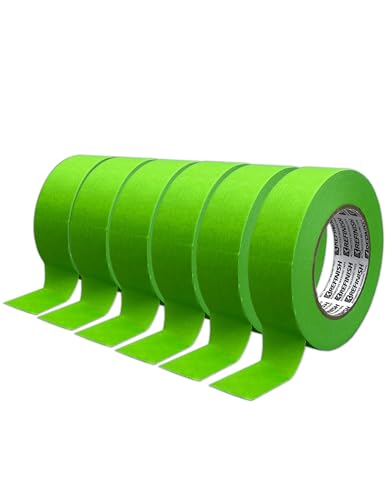
What wins owners over is the quality — this green crepe tape sticks well and comes off clean, and several buyers report it reminds them of 3M. Its heat resistance is the headline: rated for use up to 120°C in the paint booth, so it holds tight through a bake cycle without curling at the edges.
The configuration gives you six rolls of 0.94-inch by 60-yard tape, which is plenty for panel jobs. It is flexible enough to follow curves and contours, and the edge-lock design helps create sharp paint lines without smearing or drips bleeding underneath.
Results split on the adhesive strength — some find it thick and sticky with no residue, while others note tacky glue left behind if it sits too long. One owner installed Christmas lights on a car with it and kept it on for two weeks, but admitted the residue needed work to remove; his tip is to pull it within a week. It is also easy to tear, which helps when you need smaller pieces.
Edge-lock clarity: This tape is the answer for anyone tired of lifting edges and re-masking a panel after a booth session.
Pull it early: The residue reports show it’s best removed within a week, not left for months.
Reach for this if: you mask cars, trucks, or motorcycles and want a tape that survives booth heat.
skip it if: you need a low-tack tape for fresh clear coat or delicate airbrush work.
3. Roberlo Maxifill Superior Lightweight Body Filler
The lightweight filler that sands out beautifully after just 20 minutes of set time.
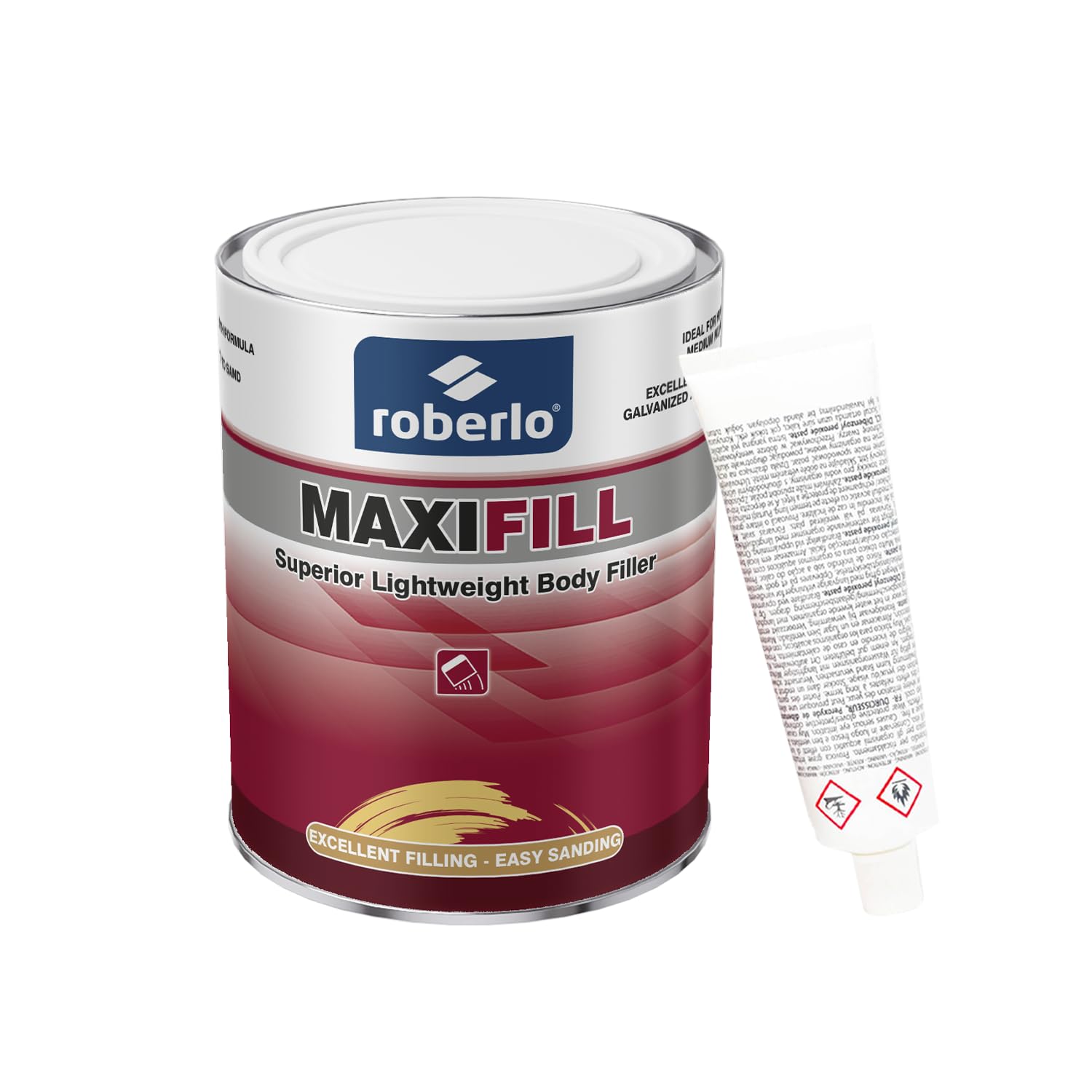
Buyers consistently rank this above Bondo, and the #1 reason is the sanding — it cuts smooth and easy, which is the difference between a flat panel and a frustrating afternoon. The kit includes 1 liter of filler plus the hardener, and the formula sets in 20-30 minutes so you can shape it quickly.
It adheres to fiberglass, metal, and plastic, giving you flexibility across different repair surfaces. The formula is paintable and flexible, so it blends with the surrounding panel instead of cracking under stress.
One owner who has ordered it several times calls it one of the best fillers he’s ever used, easy to sand and smooth to spread. His complaint is packaging, not product — the can rattles around in an oversized box and arrives beat up. Another buyer noted the 1-quart can arrived only about 2/3 full, though he admitted a little goes a long way. A few also report it peeling off galvanized metal, so that’s a surface to treat with care.
Butter-smooth cutting: The sanding here is the standout — it goes flat fast and leaves a surface ready for primer.
Check the can: The recurring gripes are beat-up packaging and a can that may not be full to the brim.
Choose this for: small to medium dents and scratches where easy sanding saves you real time.
Think twice if: you’re working on bare galvanized metal, where adhesion is the weak spot.
4. DAYUAN 7Pcs Auto Body Repair Kit
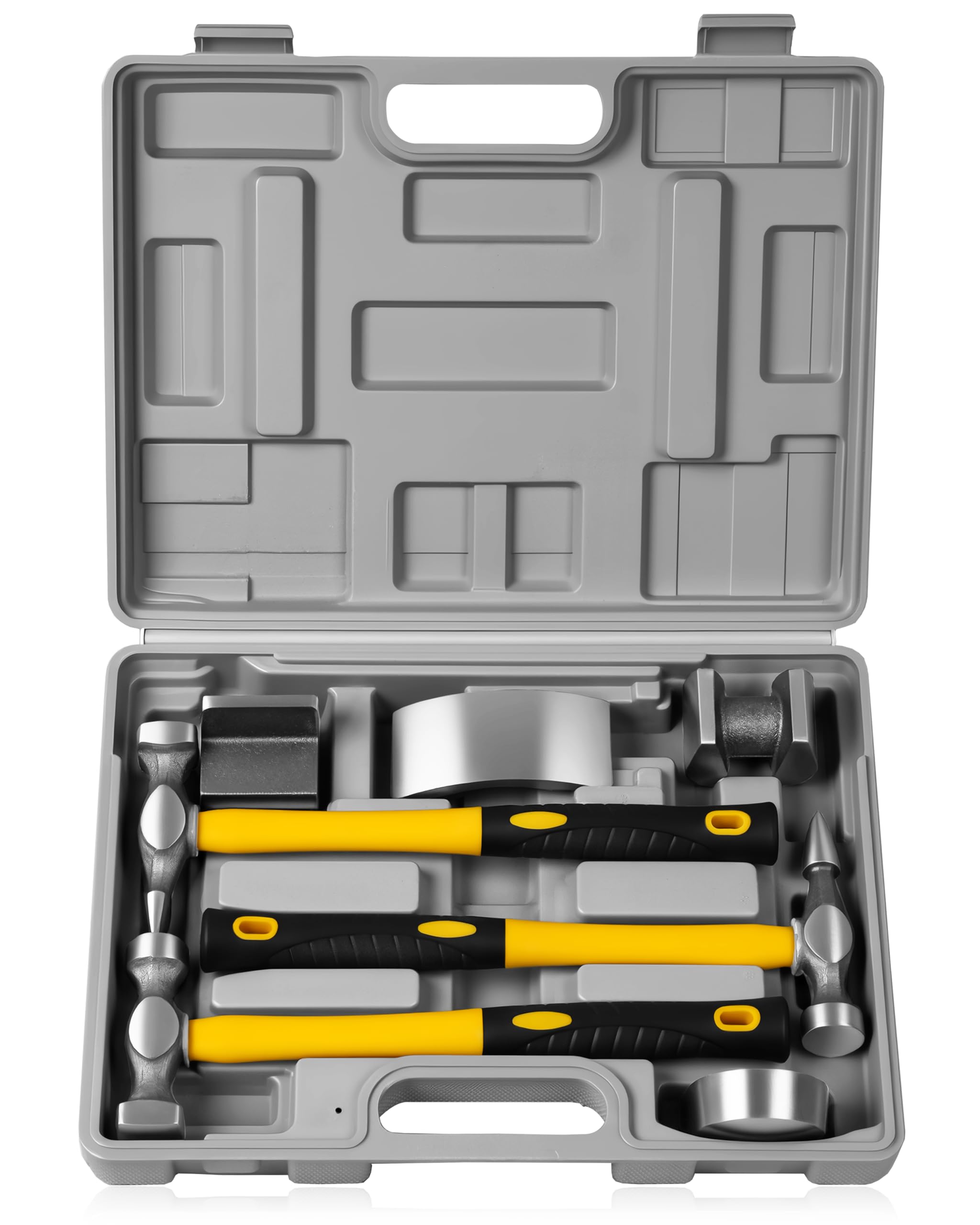
A 7-piece hammer-and-dolly set that pulled a bent core support back to almost new.
The hands-on stories are the strongest part of this kit — owners have straightened truck bed dents and hammered out a front-end collision’s bent core support to nearly factory shape. It is a genuine DIY kit for minor dents and panel forming, built around fiberglass-shaft hammers that offer a comfortable grip and shock resistance.
You get three percussion hammers, four precision dollies, and a storage case — the case is a real plus for anyone prone to losing tools mid-project. The non-slip ergonomic handles make long shaping sessions easier on your hands.
The honest fit note: quality is the most-discussed aspect, and it cuts both ways. Some find it works fine for light use without spending a fortune, while others say it wouldn’t hold up to heavy everyday shop work. This is a capable home-garage set, not a collision-shop daily driver.
Straightens real dents: The evidence is clear — this kit fixed actual collision damage, not just shelf dents.
Pro-oriented? No: Think of it as a capable starter set for light repairs, not a pro-grade daily workhorse.
Best for: the weekend DIYer who wants a complete hammer-and-dolly set in one box.
Not for: professionals who hammer panels all day and need maximum durability.
5. U.S. Chemical & Plastics Special Lite Lightweight Filler

A 0.8-gallon lightweight filler with a creamy texture that sands without plugging your paper.
Quality is the overwhelming theme here — owners praise how smoothly it spreads and how well it sands without loading up sandpaper, which keeps you cutting instead of stopping to clean. The formula is a lightweight, non-sag cream that gives a smooth finish and works across a wide range of automotive body repairs.
One owner who repairs with it notes the can is never more than 3/4 full, but calls it pliable and says it has never cracked or pulled away from metal — a durability point that matters on a panel you want to stay flat. Be ready for a full 4-hour cure time, which is longer than quick-set fillers.
The biggest recurring complaint is the packaging, not the product. Several report cans arriving with the lid dislodged and product spilling into the box, a shipping problem that wastes material before you even open it.
Easy to shape: The creamy consistency and non-sag formula make it forgiving for beginners spreading their first panel.
Patience required: The full cure takes 4 hours, so this is not the pick for a rushed same-day job.
Reach for it if: you want a large, lightweight filler that sands fast and stays flexible.
Wait on it if: you need a quick-cure filler to finish a repair the same day you start.
6. RYCUBRE 6 Inch DA Sander
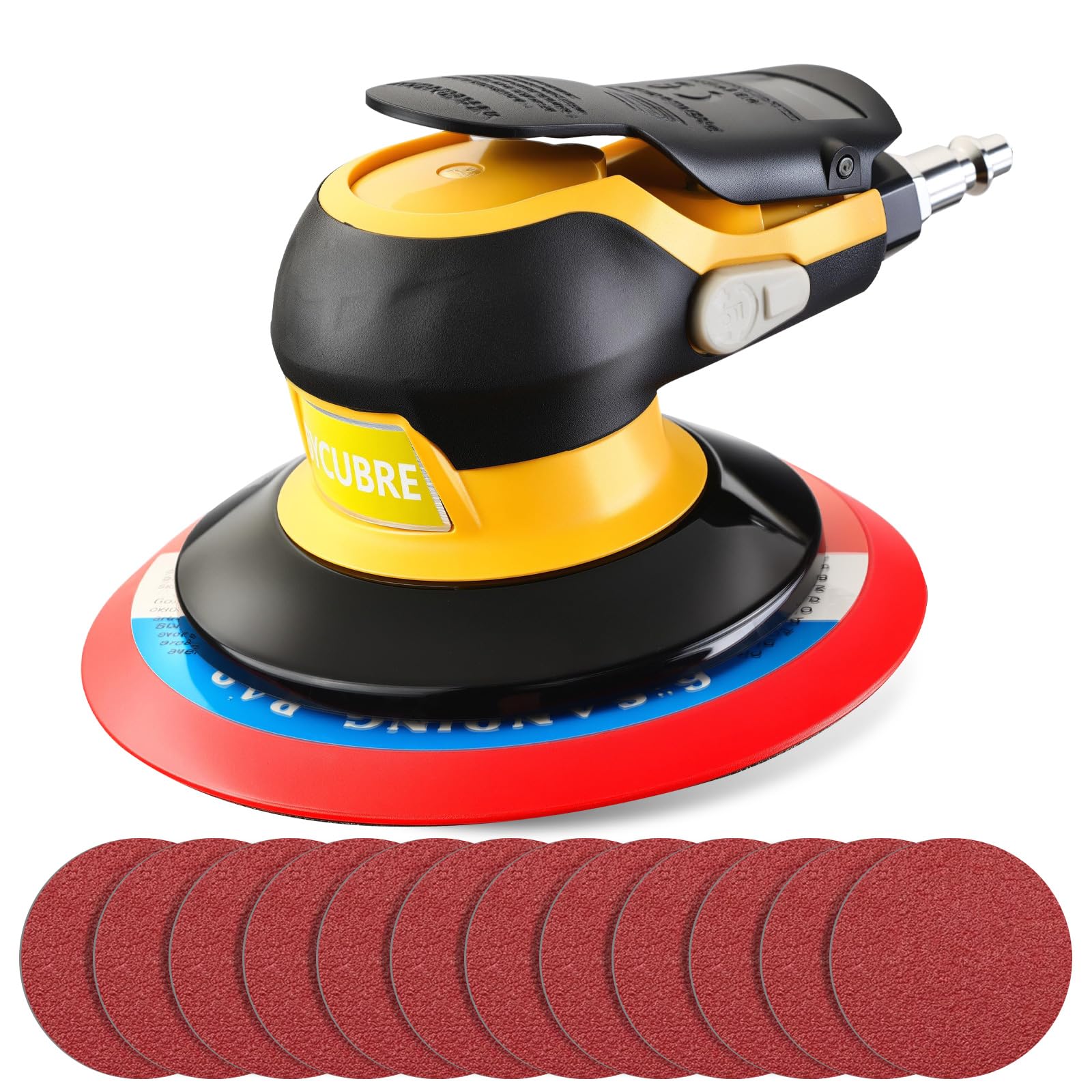
The 6-inch air sander that spins to 13000 RPM for fast material removal.
The stand-out spec is the speed — an unloaded working speed of 12000-13000 RPM at 0.8Mpa means you cut through filler and paint fast. The adjustable speed switch lets you adapt the rate to different materials, and the noise-reduction design keeps it quieter than most air tools of this class.
It runs on 5/6-inch pads with a 5mm eccentric orbit, which is a standard setup for bodywork. Weighing just 1.1 kg, it is light enough to handle for long sessions without arm fatigue, and the ergonomic shape keeps the grip comfortable.
The honest split here is on reliability: owners love how quietly it works and how well it performs, but a couple report it freezing up after just a few hours of use. One buyer who gave it top marks says it exceeds expectations and stays quiet, while another had a unit fail fast — a quality lottery that suggests this is best for light-to-moderate jobs, not daily production work.
Speed and silence: For the price, you get real cutting speed with noticeably low noise.
Durability gamble: The reviews show most owners are happy, but a small share hit early failures.
Good for: home-shop sanding where fast stock removal and low noise matter more than pro-grade longevity.
Not the one if: you need a sander that will survive continuous daily shop use.
7. Custom Shop Paint Mixing Cups
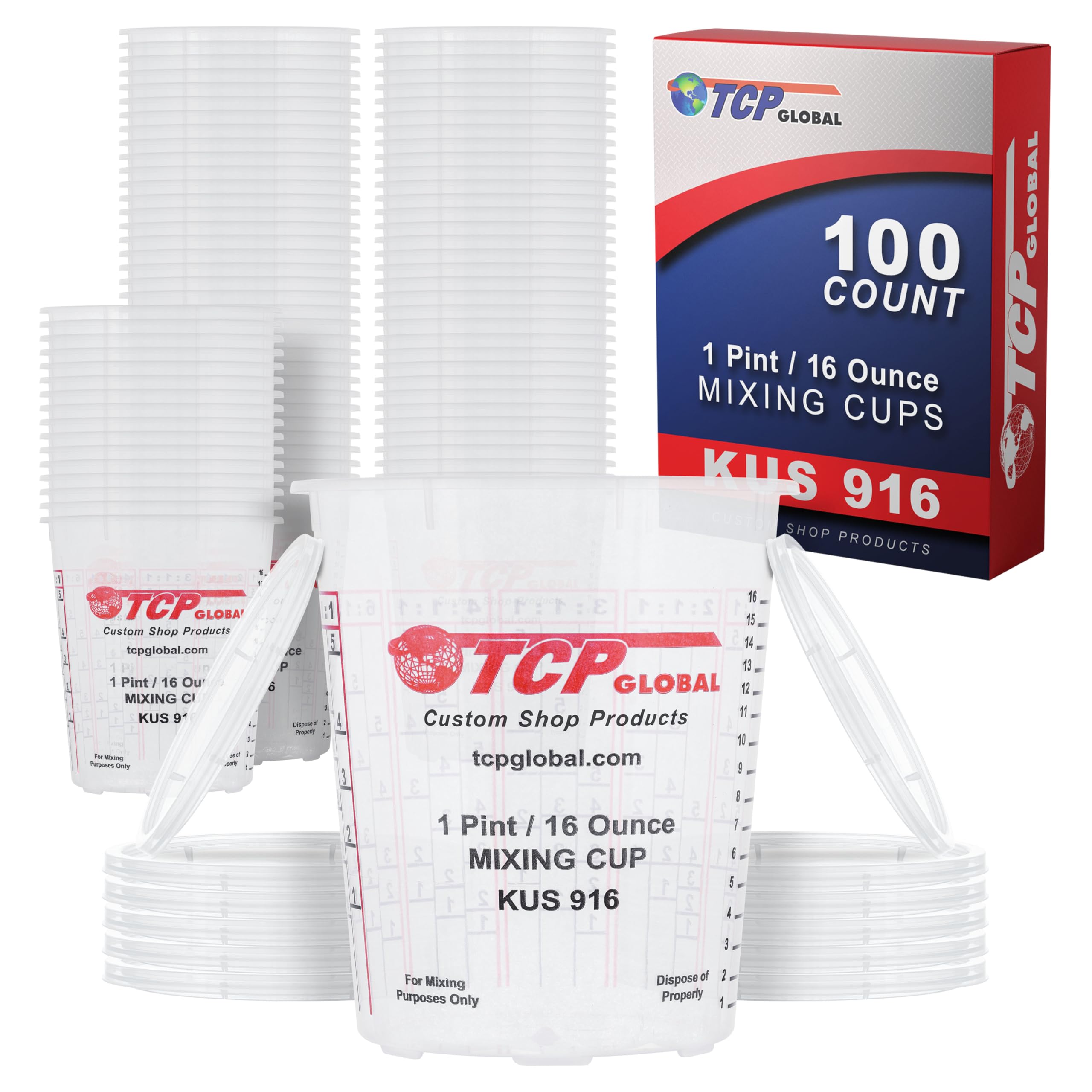
A box of 100 solvent-resistant 16-ounce cups with ratio scales built right in.
For anyone premixing paint or epoxy, the value is the sheer volume — 100 cups at 16 ounces each, plus 12 free lids that convert them into storage containers. The clear polypropylene plastic shows your liquid level at a glance, and the solvent-resistant design means they hold up to automotive paints and stains without cracking or dissolving.
The graduated ratio scales are the practical selling point: 1:1, 2:1, 3:1, 4:1, 6:1, and 8:1 markings make it easy to measure hardener accurately for a consistent mix. This is the kind of consumable that keeps a project moving without wasting activator.
The owners mention a critical caveat: the 1:1 ratio markings can be inaccurate, with some cups showing visibly different volumes at the same fill line. If you are mixing a critical two-part ratio, measure by weight or verify the mark before you commit. They also note a molding nub in the bottom of each cup that you need to stir around.
Bulk convenience: A hundred cups for the same price as a few from a hardware store makes this the obvious refill.
Trust but verify: The ratio lines are a guide, not gospel — double-check critical mixes.
Buy this for: auto body shops or frequent DIY painters who burn through mixing cups fast.
Check your ratios if: you rely on the printed marks for a precision hardener mix.
8. 3M Platinum Plus Glaze
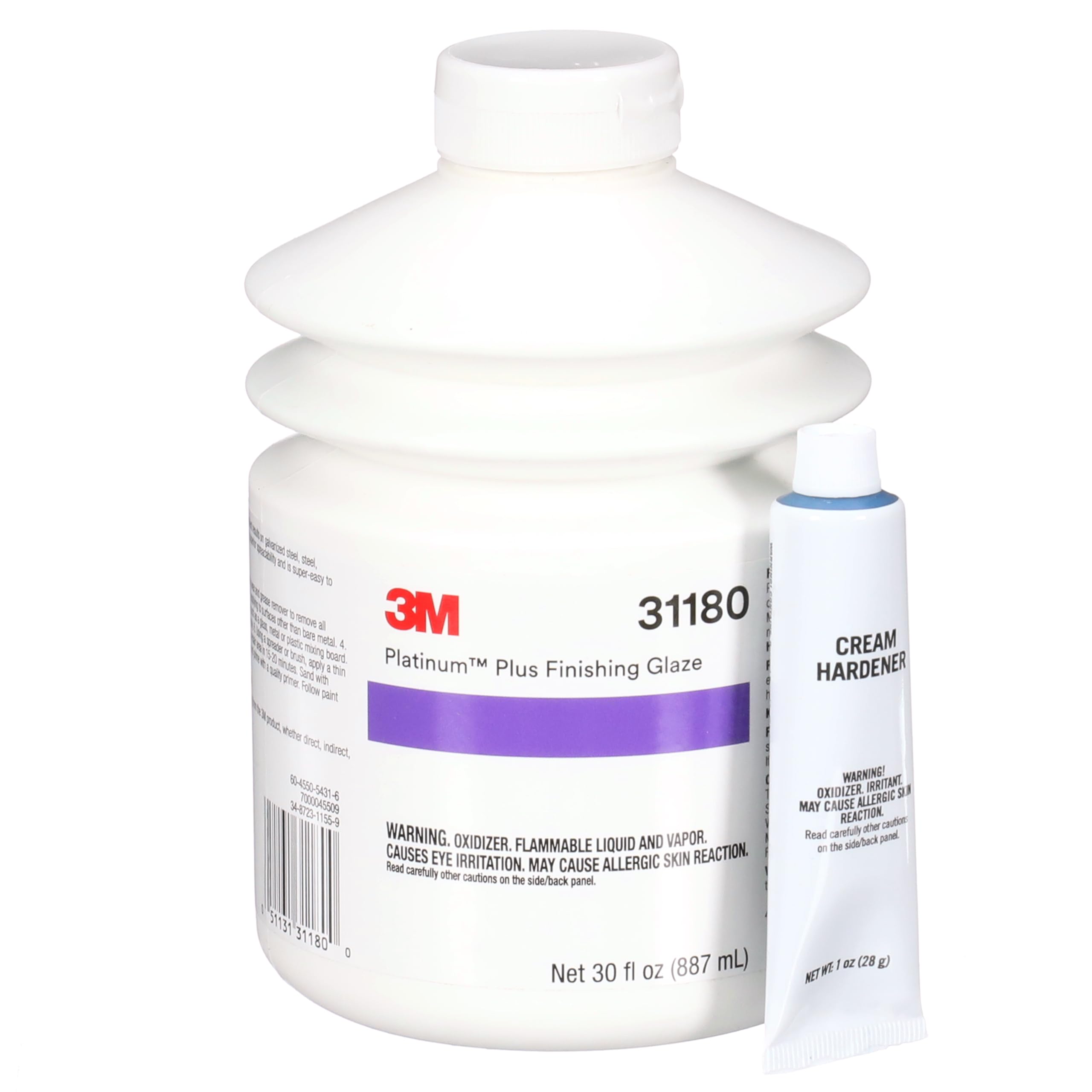
The self-leveling polyester glaze that fills pinholes perfectly and sands in 15 minutes.
Functionality is what wins people over here — owners call it a quality product that works as a final step in prep, filling shallow imperfections that body filler missed. The self-leveling formula offers good vertical hang, so it stays put on a panel face without sagging, and it sands easily in as few as 15 minutes for a flat finish.
It adheres to galvanized steel, E-coat, aluminum, fiberglass, and OEM paints, making it a universal finishing stage before primer. The 3M formula is engineered to be pinhole free, which is exactly what you want under a fresh coat of paint.
The recurring gripe is that the hardener is not included, so plan to buy activator separately. Owners also warn it sets up fast — even cutting the hardener in half doesn’t slow it much, so you need to work quickly and clean the spreader between passes. The low-shrink behavior and clean sanding are the reasons they keep coming back.
Pinhole killer: For the final skim before primer, this is the glaze that delivers the flat, clean surface you want.
Work fast: The quick set-up means you can’t dawdle, and you must supply your own hardener.
Grab this if: you’re chasing a glass-smooth finish and need a reliable pinhole-filling final coat.
Look elsewhere if: you want an all-in-one kit and don’t want to buy hardener separately.
9. 3M Bondo Body Filler, Original Formula

The original Bondo formula that spreads easy, cures in 20 minutes, and stays non-shrinking.
Effectiveness is the dominant theme — owners use it for everything from vehicle dents to cast iron sewer pipe repairs, and it bonds well to metal. The kit gives you 6.30 lb of filler plus a 2.75 oz hardener, and the two-part lightweight compound mixes easily and spreads smoothly for a fast repair.
The 20-minute cure time is the practical win, making it a same-day repair option. It is formulated to be non-shrinking and works on wood, steel, aluminum, fiberglass, and concrete — a genuinely universal repair material for the garage. Owners note it sands easily, dries quickly, and the pink tint helps you see the skim coat while shaping.
The main caution: excess hardener shortens working time, so follow the ratio. Several also report their cans arrived dented in shipping, a durability hit that’s the most-mentioned negative. The formula itself is proven, with buyers relying on it for years across varied temperature ranges.
Proven performer: This is the filler that has fixed everything from fenders to pipes, and it still delivers.
Watch the mix: Getting the hardener ratio right is the one thing that separates a smooth cure from an overheated mess.
Reach for this if: you want a trusted, fast-curing filler that works on multiple materials.
Expect a dent: The metal cans often arrive banged up, so inspect before you start the repair.
Understanding the Specs
Guide Coat: Powder vs. Spray
A dry powder guide coat needs no masking and no drying time, so you can sand immediately after applying. Spray versions require taping off the panel and waiting for the solvent to flash — the powder route is the time-saver in a one-person garage. The key is applying a light coat; too much powder clogs sandpaper and hides the defects you are chasing.
Cure Time vs. Working Time
Filler cure time tells you when you can sand, but working time tells you how long you have to shape it before it hardens. A 20-minute cure filler sets up fast, so you mix small batches and work quickly. A longer-cure filler gives you more time to spread and feather the edge, which is often the better trade for beginners. Excess hardener always shortens working time — follow the labeled ratio.
FAQ
Can I use a dry guide coat instead of spray guide coat?
How long does body filler take to cure?
Will the KREFINISH tape hold up in a paint booth?
Is there a difference between body filler and glaze?
Do I need a special hardener for the 3M glaze?
Can body filler stick to bare aluminum or galvanized metal?
How do I keep the Dura-Gold guide coat from clogging my sandpaper?
What air compressor do I need for a DA sander?
Final Thoughts: The Verdict
For most people, the auto body supply winner is the Dura-Gold Guide Coat Kit because it eliminates the most common re-work — the sanding guesswork — and the 7-ounce powder cartridge lasts far longer than a spray can. If you want a filler that sands like butter for small-to-medium dents, grab the Roberlo Maxifill. And for a masking tape that survives booth heat and pulls off clean, the KREFINISH six-pack is the one to reach for.
How We Picked
We do not accept paid placement. Every pick is matched to a real buyer and a real use-case; we do not hands-on test units.
Sources & Methodology
Specifications: manufacturer listings and product documentation. Review insights: verified customer reviews, as of August 2026. Pricing: not shown on this page (it changes often); check the current price via the retailer link.
As an Amazon Associate, Gadgets Feed earns from qualifying purchases. This does not affect which products we feature.