
Automotive carpet padding is the single most overlooked component in a vehicle restoration or sound-deadening project. Drivers install expensive carpet and floor mats over bare metal or old, deteriorated padding and wonder why road noise still rattles the cabin and the floorboard still radiates heat. The right underlayment transforms the interior feel from a hollow drum to a solid, quiet, thermally stable cockpit.
I’m Min — the co-founder and writer behind Gadgets Feed. I’ve spent countless hours analyzing the acoustic dampening coefficients, thermal transfer rates, and material compositions of every under-carpet solution available to find the products that genuinely deliver measurable results rather than just marketing claims.
Whether you are restoring a classic truck or simply want to dial down drone on the highway, understanding what separates performance padding from cheap filler is critical to choosing the best auto carpet padding for your specific build.
How To Choose The Best Auto Carpet Padding
Selecting the right underlayment requires weighing three competing priorities: acoustic dampening, thermal insulation, and ease of installation. The material composition—whether butyl rubber, fiberglass composite, or traditional jute—dictates how effectively the padding addresses each of these goals.
Material Type: Butyl Rubber vs. Fiberglass vs. Jute
Butyl rubber mats, typically 120 to 200 mils thick, offer the highest mass-loading density for damping panel vibrations and blocking low-frequency road noise. Fiberglass composites like the Design Engineering Under Carpet Lite add a thermal barrier advantage, reflecting heat from exhaust tunnels and transmission humps. Jute padding is the budget-friendly OEM-style material that provides basic sound absorption but does little to stop heat or dampen resonant vibrations.
Thickness and Coverage Area
Thickness directly correlates to noise reduction potential. A 200 mil mat will deaden more vibration and block more sound than a 120 mil mat, but it also adds weight and may be harder to mold into tight corners. Coverage area matters just as much—most vehicles require 25 to 30 square feet for a full floor installation. Measure your cabin floor plan carefully before committing to a single roll.
Installation Requirements
Self-adhesive butyl sheets offer the fastest installation process: peel, place, and roll. Fiberglass composites require spray adhesive or mechanical fasteners. Jute padding typically needs spray adhesive and careful trimming. Consider whether you want a single-layer solution or a multi-layer approach, combining vibration dampening with a separate closed-cell foam or jute layer for maximum sound absorption.
Quick Comparison
On smaller screens, swipe sideways to see the full table.
| Model | Category | Best For | Key Spec | Amazon |
|---|---|---|---|---|
| Siless Hybrid 3in1 | Butyl Composite | Ultimate noise and heat barrier | 200 mil / 25 sqft coverage | Amazon |
| Siless Max 120 mil | Butyl Mat | Vibration dampening on panels | 120 mil / 30 sqft coverage | Amazon |
| DEI Under Carpet Lite | Fiberglass Composite | Heat insulation and decoupling | 0.5 in thick / 11.6 sqft | Amazon |
| VEVOR Sound Deadening Mat | Butyl Mat | Budget butyl for large coverage | 200 mil / 25 sqft coverage | Amazon |
| Automotive Jute Padding | Jute | OEM-style sound absorption | 0.38 in thick / 5 yards | Amazon |
| TCH Hardware Carpet Roll | Polyester Carpet | Subwoofer box and trunk covering | 5/32 in thick / 48 in x 252 in | Amazon |
| Frienda Disposable Floor Mats | Disposable | Temporary protection for fleets | Paper/plastic / 500 count | Amazon |
In‑Depth Reviews
1. Siless Hybrid 3in1 200 mil

The Siless Hybrid 3in1 is the most complete single-purchase solution for anyone serious about automotive soundproofing. Its three-layer construction—butyl mastic, PE foam, and mass-loaded butyl membrane—simultaneously damps panel vibration, blocks low-frequency exhaust drone, and reflects heat from the transmission tunnel. At 200 mils thick and covering 25 square feet, it replaces the need for separate vibration dampener and thermal barrier products.
Users consistently report dramatic reductions in cabin noise and interior temperature after installation, with many noting that the material is soft enough to cut easily with scissors yet dense enough to add satisfying mass to door panels and floors. The peel-and-place adhesive requires no spray glue, and the tackiness is strong enough to hold on vertical surfaces without sagging.
The trade-off is that the 200 mil thickness can make molding into extremely tight double-curvature panels more challenging than thinner 120 mil alternatives. Some users recommend sealing seams with aluminum tape to maximize the thermal barrier effect. For a full-floors and doors build, two boxes are typically required.
Why it’s great
- Three-in-one design eliminates separate heat barrier purchase
- 200 mil thickness provides exceptional vibration dampening
- Peel-and-place installation requires no additional adhesives
Good to know
- Thick material is harder to shape in tight curved panels
- Seams may require aluminum tape for full thermal performance
2. Siless Max 120 mil

For enthusiasts who prioritize vibration dampening across a large surface area, the Siless Max 120 mil delivers the same premium butyl formulation as its thicker sibling but at a more manageable thickness. The 120 mil profile strikes an ideal balance between damping performance and workability—it conforms to complex panel shapes like door skins and wheel wells without resisting the installer’s pressure.
The 30 square foot coverage per box is generous enough to handle the floors of most sedans and SUVs with a single purchase, and the material weighs substantially less than 200 mil alternatives, which matters in performance builds where every pound counts. Users report that doors closure sounds become more solid and resonant panel vibrations are effectively neutralized.
The bmastic advanced formulation used by Siless produces zero off-gassing odor, a common complaint with cheaper butyl products. A roller tool is strongly recommended for proper adhesion, particularly in colder climates where the butyl stiffens before bonding.
Why it’s great
- 120 mil thickness offers excellent flexibility for complex panels
- 30 sqft coverage suits most full-vehicle floor installations
- No odor and zero off-gassing after installation
Good to know
- Does not include integrated foam layer for heat blocking
- Roller tool not included but essential for proper bonding
3. Design Engineering Under Carpet Lite
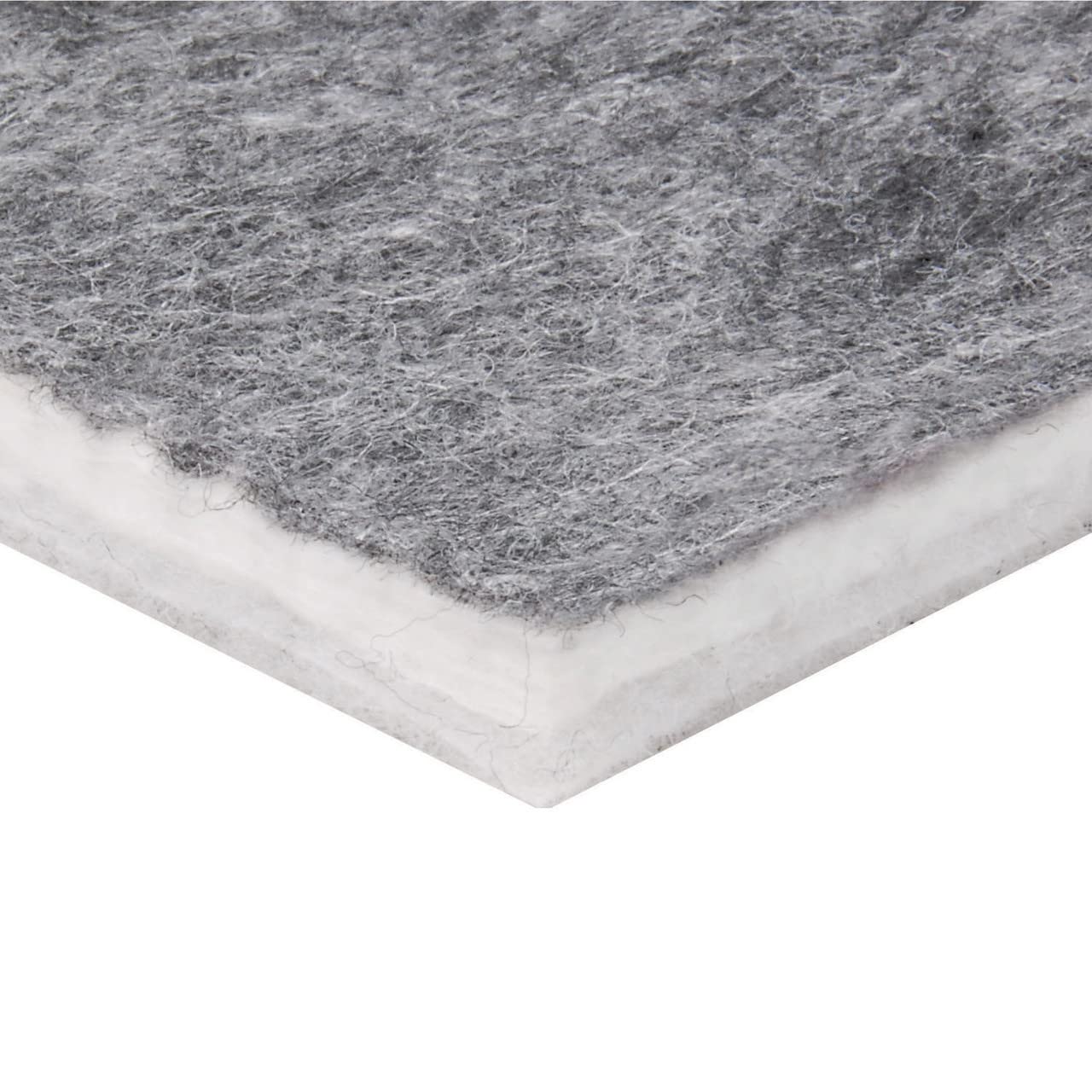
Unlike butyl deadeners that focus on adding mass to panels, the Design Engineering Under Carpet Lite uses a 0.5-inch thick multi-layer polyester and fiberglass composite to create a thermal and acoustic decoupling layer. Its primary strength is blocking radiant heat transfer from engine bays, exhaust pipes, and road surfaces—making it the go-to choice for builds where floorboard temperature is the critical issue.
Weighing only 0.23 pounds per square foot, it adds negligible weight to the vehicle while providing a noticeable reduction in cabin heat during summer driving and cold air intrusion during winter. The material is flexible enough to mold over transmission tunnels and under seats, and it can be installed with mechanical fasteners or spray adhesive.
The fiberglass content requires careful handling—users with skin sensitivity should wear gloves and a mask during cutting and installation. It also does not serve as a primary vibration dampener; for best results, pair it with butyl deadening mats on bare metal panels before laying this thermal layer.
Why it’s great
- Superior heat reflection compared to butyl-only solutions
- Extremely lightweight at 0.23 lbs per square foot
- Flexible enough for complex floor contours and tunnels
Good to know
- Fiberglass requires protective gear during installation
- Best used as secondary layer over butyl vibration dampener
4. VEVOR Car Sound Deadening Mat

The VEVOR 200 mil butyl mat offers the same thickness as premium options at a significantly more accessible price point, making it an excellent entry point for large-scale sound deadening projects. The 24-piece sheet configuration, each measuring 9.76 x 15.39 inches, provides flexibility for covering irregular panel shapes without wasting material.
Users report strong adhesion, no detectable odor, and effective noise reduction when used in combination with additional insulation materials like Thinsulate. The butyl compound remains pliable enough to work with in warm conditions, though heating with a heat gun or sunlight is recommended for optimal conformity in colder weather.
The adhesion is tenacious enough that repositioning once placed is difficult, so careful alignment matters. For those on a tighter budget who need 200 mil performance, this product delivers similar damping characteristics to name-brand butyl mats at roughly half the per-square-foot cost.
Why it’s great
- 200 mil thickness at a budget-friendly price point
- No odor and strong self-adhesive backing
- Sheet format allows efficient coverage of irregular areas
Good to know
- Adhesive bonds permanently with no repositioning window
- Cold installation requires heat gun for best adhesion
5. Automotive Jute Carpet Padding

For restorations of classic cars and trucks where maintaining an OEM-correct feel is a priority, traditional jute padding remains the authentic choice. This 20-ounce jute material from Bry-Tech mimics the factory padding used by Detroit manufacturers for decades, providing a familiar underfoot feel that repro carpet sets expect.
Jute absorbs airborne sound and adds a soft tactile cushion beneath the carpet, but it offers virtually no thermal barrier and minimal vibration dampening compared to butyl or fiberglass composites. When combined with a butyl deadener like Kilmat on the bare metal floor, users report achieving near-luxury interior noise levels even in older vehicles.
The material cuts easily with scissors and can be trimmed using the old padding as a template. It compresses under carpet weight without adding noticeable thickness to pedal areas. For a complete restoration, pair this jute layer with a dedicated butyl mat and the results will far exceed the factory-new experience.
Why it’s great
- Authentic OEM-style material for classic vehicle restorations
- Easy to cut and shape with standard scissors
- Provides soft underfoot cushioning that carpet expects
Good to know
- Does not block heat or dampen panel vibrations alone
- Requires separate butyl deadener for significant noise reduction
6. TCH Hardware Premium Carpet Roll

The TCH Hardware carpet roll is not a padding product in the traditional sense—it is the visible top-layer carpet used for covering subwoofer boxes, false floors, and trunk interiors. The non-woven polyester fiber construction with latex backing provides a clean, finished appearance for custom audio installations and interior trim panels.
At 5/32 inch thickness (approximately 4mm), it is thin enough to wrap around speaker box corners without bunching but substantial enough to hide surface imperfections in the underlying MDF or plywood. The gray color is a neutral match for most factory trunk carpets, and the rolled packaging ensures it arrives without creases from folding.
Some users note that the material feels more like felt than traditional automotive carpet, which may not satisfy those expecting a plush OEM floor carpet texture. It is best suited for vertical or non-wear surfaces rather than foot-traffic floor areas.
Why it’s great
- Large 4 ft x 21 ft sheet covers extensive trunk projects
- Fits tightly around subwoofer box corners without wrinkles
- Latex backing helps adhesive grip during installation
Good to know
- Felt-like texture may not match OEM carpet expectations
- Not intended as a floor padding or sound deadener
7. Frienda Disposable Floor Mats

The Frienda disposable floor mats serve an entirely different purpose from the other products on this list: temporary, single-use floor protection for detail shops, rental fleets, and service vehicles. Each 22 x 17 inch sheet is constructed from kraft paper laminated with a plastic film layer, providing a waterproof barrier that keeps mud, snow, and spills from reaching the factory carpet.
The 500-count package provides long-term supply for commercial operations, and the printed footprint designs add a touch of personality that passengers appreciate. The plastic film backing does an effective job of containing liquid spills until the mat can be replaced.
Quality concerns are noted by some users—the paper layer is thin and can tear under heavy foot traffic or wet conditions. These mats are a maintenance convenience item, not a permanent padding solution, and they will not reduce road noise or provide thermal insulation.
Why it’s great
- 500 mats in a single package for fleet-level coverage
- Plastic film layer blocks liquid from soaking through
- Cute printed designs add visual appeal for passengers
Good to know
- Thin paper construction can tear under heavy use
- No acoustic or thermal insulation properties
FAQ
Can I install butyl deadener directly over old jute padding?
How much carpet padding do I need for a full car floor?
Will thicker 200 mil padding reduce road noise more than 120 mil?
Final Thoughts: The Verdict
For most users, the best auto carpet padding winner is the Siless Hybrid 3in1 because its three-layer construction eliminates the need to buy separate heat barrier and sound deadener products, providing the most complete single-install solution at a competitive price per square foot. If you want maximum panel vibration control across a large vehicle with thinner, more workable material, grab the Siless Max 120 mil. And for classic car restorations where OEM-correct feel matters under the carpet, nothing beats the Automotive Jute Padding paired with a butyl deadener underneath.