
Our readers keep the lights on and my morning glass full of iced black tea. As an Amazon Associate, I earn from qualifying purchases.
Specs are compiled from manufacturer listings and verified buyer reviews and can change over time — please confirm the key details on the product page before buying.
You bought chickens for the eggs, not for a twice-a-day bucket run — and an auto chicken waterer is what breaks that chore. The catch is that “automatic” covers two very different machines: float-valve units that plumb into a garden hose, and gravity dispensers you simply fill and hang. Pick the wrong kind for your coop and you get either a puddle of mud or a flock standing around a dry bowl.
I’m Min — the founder and writer behind Gadgets Feed. This guide is built by comparing the manufacturers’ published specifications and the patterns across verified customer reviews, so you get each pick’s real strengths and trade-offs instead of marketing spin.
Below you get eight waterers sorted by how they actually get filled, plus the capacity and leak questions that decide most coop setups. Every pick here is a real, well-reviewed unit — the job is matching one to your flock size, your water source, and how often you want to think about it. For most coops, a float-valve model beats the biggest tank you can find.
Our Picks at a Glance
How To Choose The Best Auto Chicken Waterer
Two questions settle nine out of ten coop setups. Where is your water coming from, and how many beaks are drinking? Answer those before you look at any product page, because they eliminate half the field immediately.
Float valve or gravity — your water source decides
Your water source decides which waterer you buy. A float valve works like a toilet tank: a small float opens the water line when the bowl drops and shuts it when full. That only works if you can run a garden hose or plumb to a rain barrel within reach of the coop. If your run sits at the far corner of the property with no spigot nearby, you want a gravity waterer instead — you fill the reservoir, it drains down as the flock drinks, and you refill when it runs low.
Match capacity to your flock, not your enthusiasm
A bigger tank only helps until you’re hauling it full across a muddy yard. The honest sizing rule is refill frequency: a five-gallon reservoir stretched further than a two-gallon one on the same flock, and a nipple system loses nothing to spillage while open cups let birds splash and soil the water. Work out how many gallons your birds go through in the longest stretch you want to be away, then buy to that number.
Cleanliness is a materials question
Water that sits in a translucent jug grows algae, and algae is what turns a waterer into a scrubbing job. Opaque or dark-tinted plastic blocks the light that feeds it. Nipples keep beaks and dirt out of the reservoir entirely, while open cups are easier for hens to learn but collect whatever they track in. Anti-roost domes and raised legs matter more than they look — a bird perched on top of the waterer is a bird pooping into it.
Quick Comparison
| Model | Best For | Capacity | Fill Type | Drinking Style | Amazon |
|---|---|---|---|---|---|
| Omlet Insulated Chicken Waterer★ Best Overall | Small flocks in hot or freezing weather | 1.5 gallons | Top-fill, insulated | Cups + nipples included | Amazon |
| Lilyang Automatic Chicken WatererHose-Timer Ready | Hands-off watering on a hose timer | 2 gallons | Float valve, hose-fed | Watering cups | Amazon |
| TGEYD 4.2Gal Hanging Chicken WatererHangs Anywhere | Hanging or wall-mounted coops | 4.2 gallons | Gravity-fed | Nipples + cups | Amazon |
| VEVOR 5 Gallon Automatic Chicken Waterer | Long stretches between refills | 5 gallons | Gravity-fed | 6 drinking ports | Amazon |
| 3 Gallon Automatic Chicken Waterer | Remote coops plumbed to a rain barrel | 3 gallons | Float valve, hose-fed | 2.75-inch cups | Amazon |
| FARM-TUFF Hanging Chicken Waterer | Budget top-fill for mixed poultry | 3 gallons | Gravity-fed, top fill | Open drinking lip | Amazon |
| RentACoop 2 Gallon High Rise | Tight coops that need floor space back | 2 gallons | Gravity-fed, top fill | Cups + nipples included | Amazon |
| FARM-TUFF Galvanized Poultry Waterer | Large flocks on flat ground | 8 gallons | Gravity-fed | Open drinking lip | Amazon |
In‑Depth Reviews
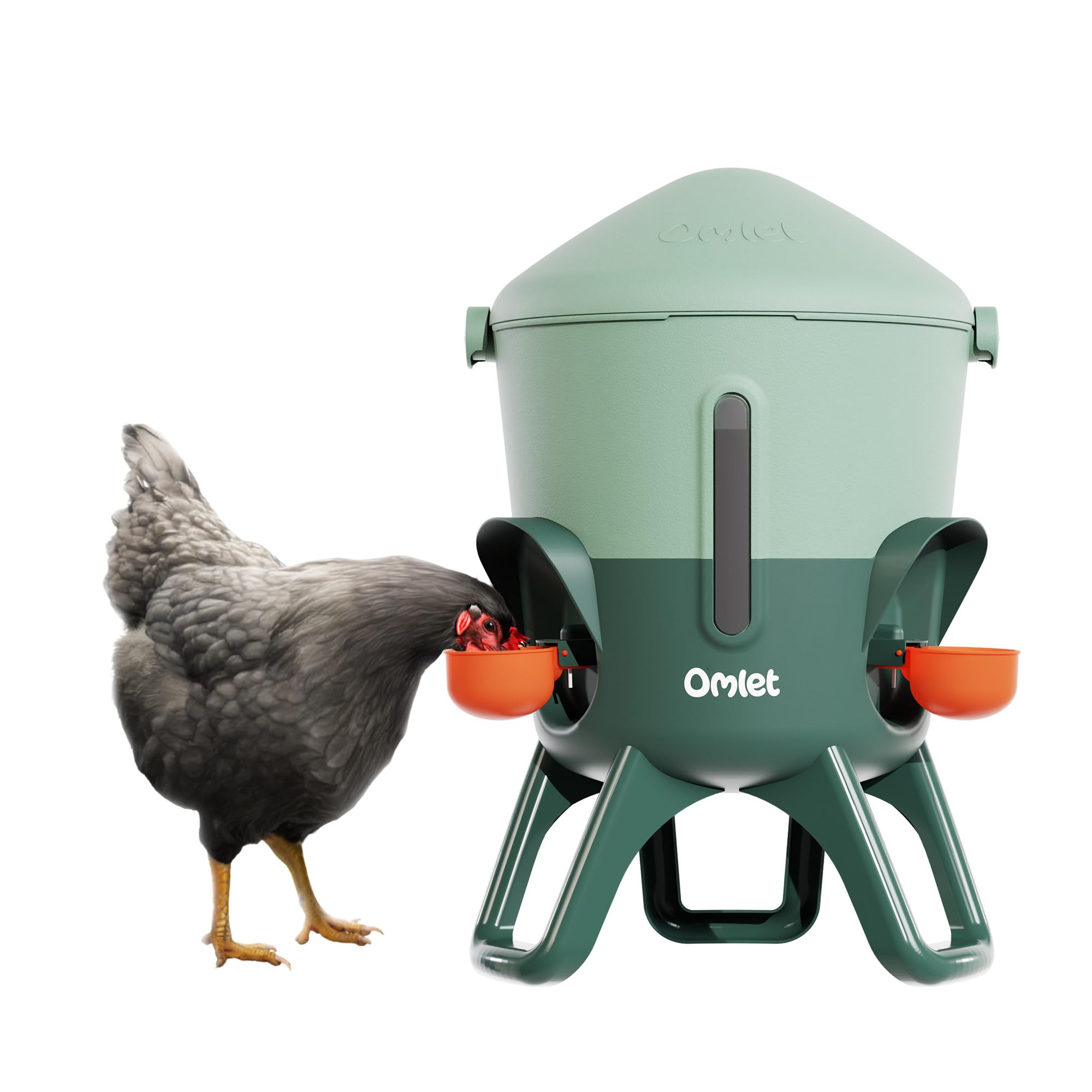
1. Omlet Insulated Chicken Waterer, 1.5 Gallon
Our pick — over 4.5★ from 600+ verified ratings; the strongest balance of quality and price.
The insulated jug that keeps water drinkable through a heat wave and a cold snap.
Water that stays cool in summer and resists freezing in winter is the whole point of this pick, and the double-wall insulation (two layers of wall with a gap between them) is what does it. That matters if your run bakes in afternoon sun or you get hard overnight frosts. The tank is a 1.5-gallon reservoir inside a shell that blocks 99% of light — that light block is why algae never gets a foothold, so a fresh fill still looks fresh days later instead of turning green and slimy.
What wins people over, though, is the drinking setup. Omlet ships a set of cups and a set of nipples so you can run either method and keep spares of both. Hens that have only ever drunk from a trough take to the cups fast, and the nipples give you a cleaner option once they learn. The unit stands on its own legs or hangs, and the wide lid makes refilling and wiping out a two-minute job rather than a scrubbing session.
The honest catch is capacity and cost. Buyers with 40-plus birds under the Arizona sun say one unit is not enough — they want several, and they still call it pricey. Against the Lilyang’s 2-gallon, 1.34 kg build, the Omlet is the heavier, better-insulated machine, but it holds less at 1.5 gallons versus 2. What the crowd does agree on is that the water quality justifies the spend: this is the top pick here, sitting at 4.6 stars from 600-plus buyers.
Where It Earns Its Keep
- Insulated walls hold temperature in both summer heat and winter cold
- Blocks 99% of light, so no algae and no slimy film in the reservoir
- Cups and nipples both included, with spares — swap methods any time
- BPA-free, UV-stable plastic with stainless steel bolts, plus legs or hanging
Where It Asks Something Back
- 1.5 gallons won’t cover a big flock — large setups want more than one
- The most expensive pick here, and several owners say it stings
- Legs and hang option are the only mounting; no wall bracket in the box
Built for: backyard keepers with a handful of hens who want water that stays cold, clean, and algae-free without daily attention.
Pass it by: if you’re running 40-plus birds — you’d need to buy two, and the price doubles with them.
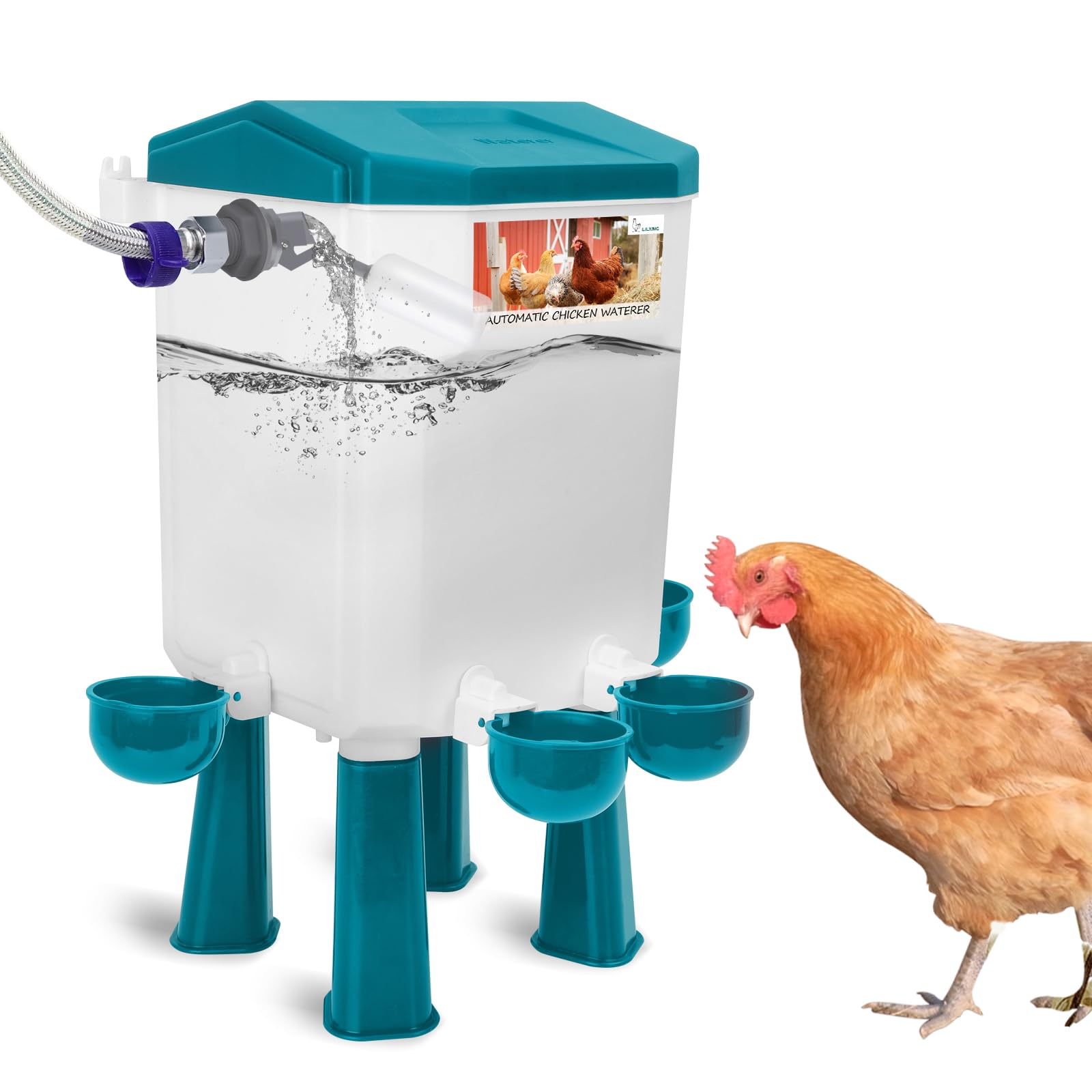
2. Lilyang Automatic Chicken Waterer, Auto Water Refills
Plumb it to a hose timer once and the flock drinks without you.
If you have a spigot near the coop, this one takes hauling water off your list. A float valve (the same mechanism as a toilet tank — it opens when the bowl drops and shuts when full) regulates the flow for you. Buyers report hooking it to a hose on a timer set to run five minutes every other day and not touching it since. That is the whole pitch of the float-valve design in one job.
Functionality is the other half of the story, and it earns its keep. The kit includes a 2-gallon bucket with lid, float valve, a 60-inch stainless steel hose with a 3/4-inch threaded end that screws straight onto a garden faucet, watering cups, support legs, and hanging brackets. The 2.6-inch cups fit everything from chickens up to ducks, geese, and quail, and the float valve uses an 18-8 stainless steel knob you hand-tighten for a seal. No wall to hang from? The legs let it sit on the ground instead.
Here is your honest warning. This is a float-valve design, so it depends on steady water pressure, and the weak points buyers flag are real: the legs are friction-fit (they push on and hold by friction, not screws) and can pop off when you lift the unit, the cups can drip, and some hose connections leak. Treat the joints as the thing to check, keep the spares handy, and it earns its rating — 4.0 stars from 500-plus buyers. It is also lighter at 1.34 kg than the bulky Omlet.
low-maintenance: on a hose timer with a few chickens, this is the closest thing to walking away from the chore — the five-minutes-every-other-day setup really does run itself.
Fair warning: friction-fit legs and drip-prone cups mean you’ll want a firm mounting spot and a habit of checking connections.
Reach for this if: you can run a hose to the coop and want watering handled automatically on a timer.
Think twice if: there’s no water line out there — gravity is your only option without one.
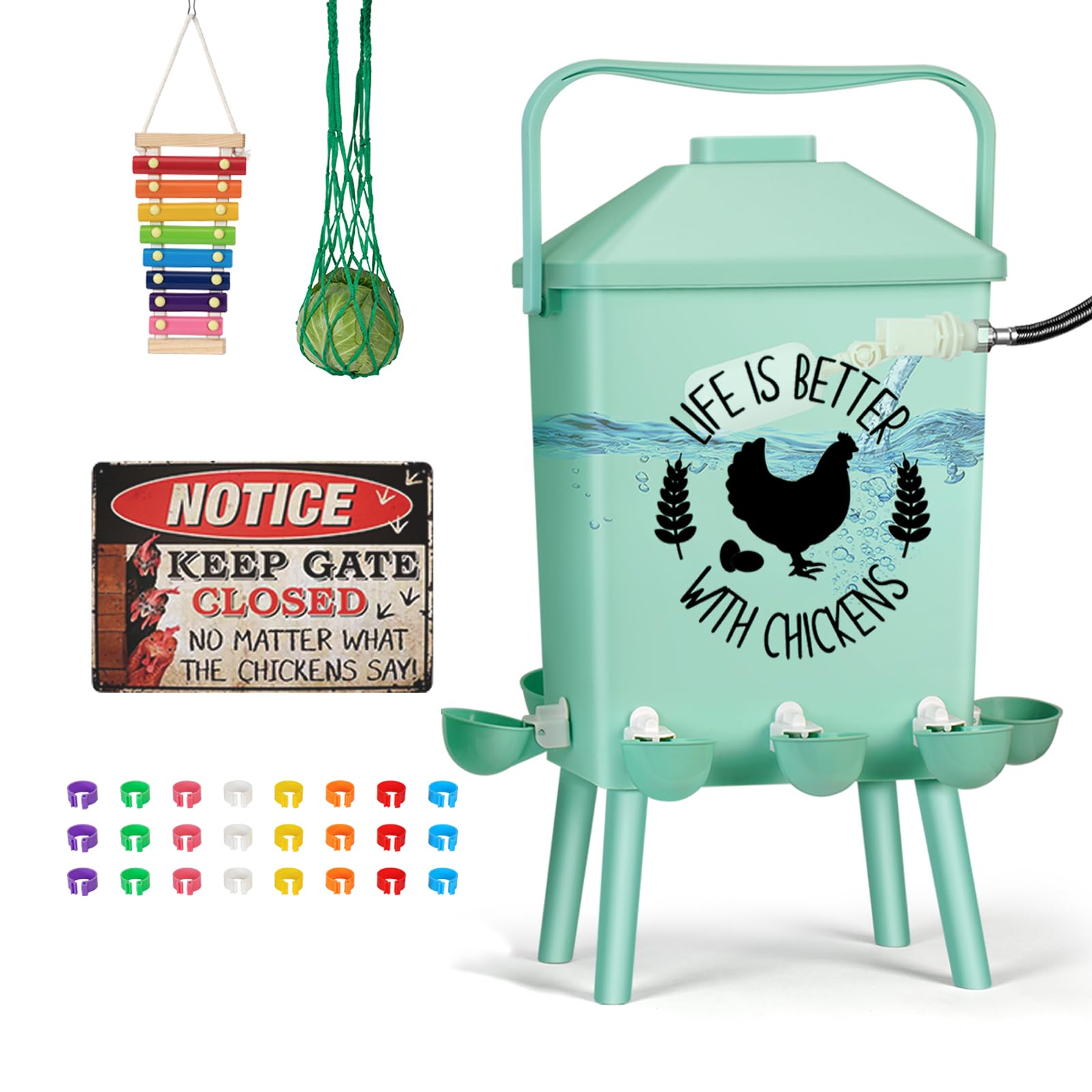
3. TGEYD 4.2Gal Hanging Chicken Waterer, Wall Mountable
The big gravity tank that hangs on wire or mounts to a wall and stays there.
Capacity is the headline here, and it is a real gap. This holds 4.2 gallons — 2.8 times what the Omlet carries — so a flock that would drain the small jug in a day keeps drinking here for days. It is a gravity-fed unit: you top the reservoir, the water drains down as the birds drink, and the anti-roost cone on top stops hens from perching and fouling the supply. Raised legs keep the bowl off the ground so bedding and dirt stay out, and it hangs by the handle on wire mesh or mounts to a wall with the included S-hooks.
Before you buy, know how the nipples fit. Nipples are the small metal drinkers birds peck to release a drop of water. One buyer had to open the pre-drilled holes with a 7/16-inch drill bit or a step bit to seat the nipples — so if you plan to run nipples rather than the cups, budget five minutes and a drill. Owners who set it up as intended call it sturdy and leak-free, and the raised stance on sloped or rocky ground is the one place the legs struggle.
It’s built for outdoor coops specifically, so indoors is a stretch. Supply is still thin on this newer model, but the early verdict is warm, and the capacity-per-dollar math is the reason it sits high in this list.
Your move: pick this if you want a large reservoir you can hang out of the way and refill less often.
Different plan: skip it for a rabbit hutch or anything indoors — this one’s specified for outdoor coops only.
4. VEVOR 5 Gallon Automatic Chicken Waterer, 6 Water Ports
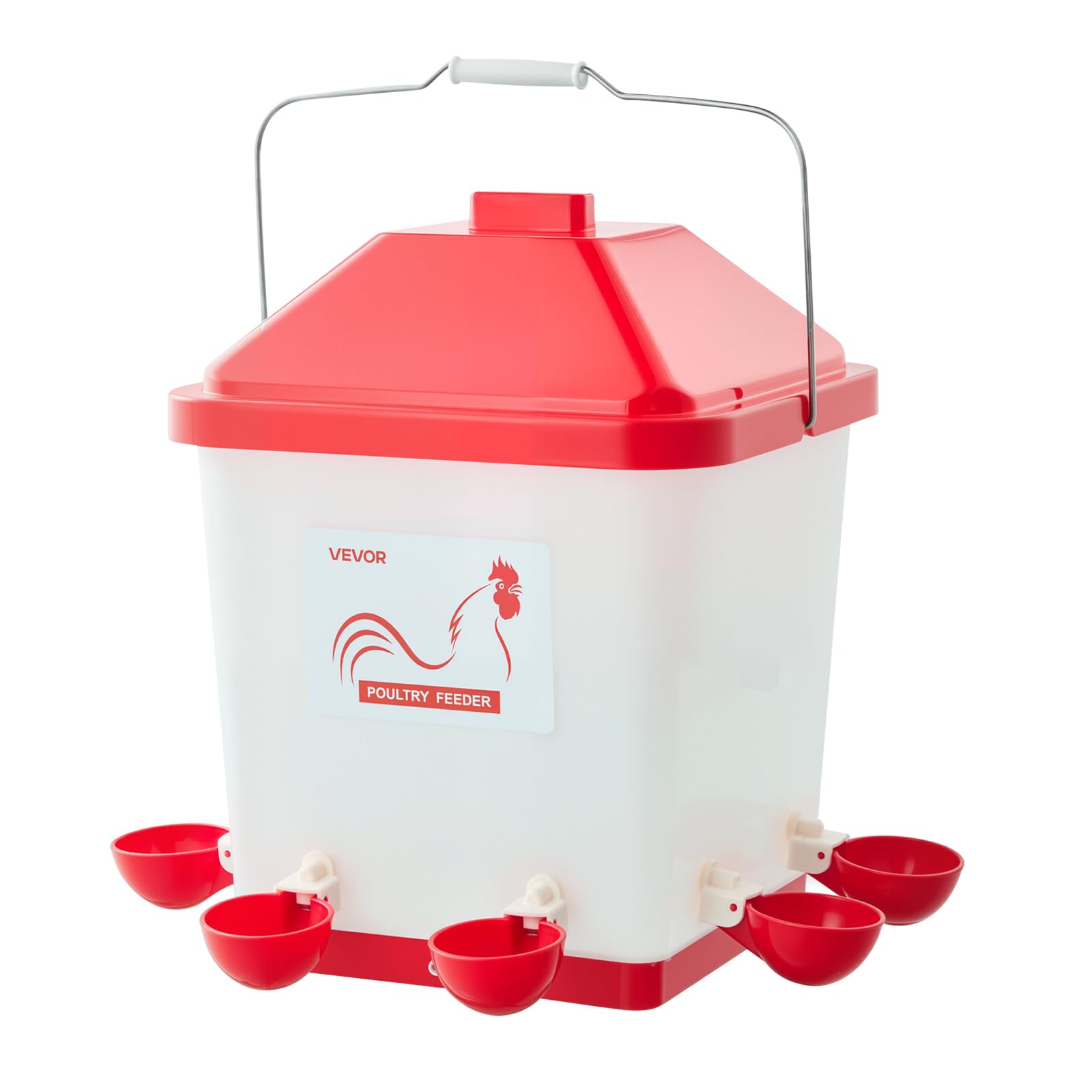
Five gallons and six ports — the pick for going a long way between fills.
If refill trips are the thing you hate, this is the one. Five gallons feeding six drinking ports means a small flock sips for a long stretch before the tank runs dry — one owner with seven hens reports it takes about two weeks for the flock to work through a full fill. The gravity-fed design (water drains down on its own as the birds drink) keeps the bowl topped up automatically, and the deep bowl lets birds drink without splashing it everywhere.
It’s also built to be moved and hung. A handle makes it easy to lift, and it can sit on the ground or hang on a wall or fence. VEVOR uses PP (polypropylene) plastic that’s waterproof with a sealed rubber ring, and the pointed top shrugs off rain so water doesn’t pool on the lid. The six ports and the no-waste design are the two things repeat buyers point to — quail, chickens, and geese all started drinking from it the day it arrived.
Polypropylene (a tough, light plastic) and a lid are not the same as insulation, so treat this as a temperate-weather workhorse rather than a freeze-proof tank. It’s a newer listing with a modest review base, and it turns up next to the Fvlotrik 3-gallon as the two float-free gravity options here — the VEVOR simply holds more per fill, though it’ll drain faster than a float-valve fed by a live hose.
Biggest reason to buy: five gallons and six ports mean fewer refill trips than almost anything else here, which is the whole point for a busy keeper.
The one caveat: it’s plastic without insulation, so a hard freeze will still reach the water — fine for mild winters, less so for deep cold.
Your pick if: you keep a moderate flock and want the longest gap between refills in the group.
Not for you if: your nights drop well below freezing — there’s no insulation in this tank.
5. 3 Gallon Automatic Chicken Waterer, Hands-Free Hydration
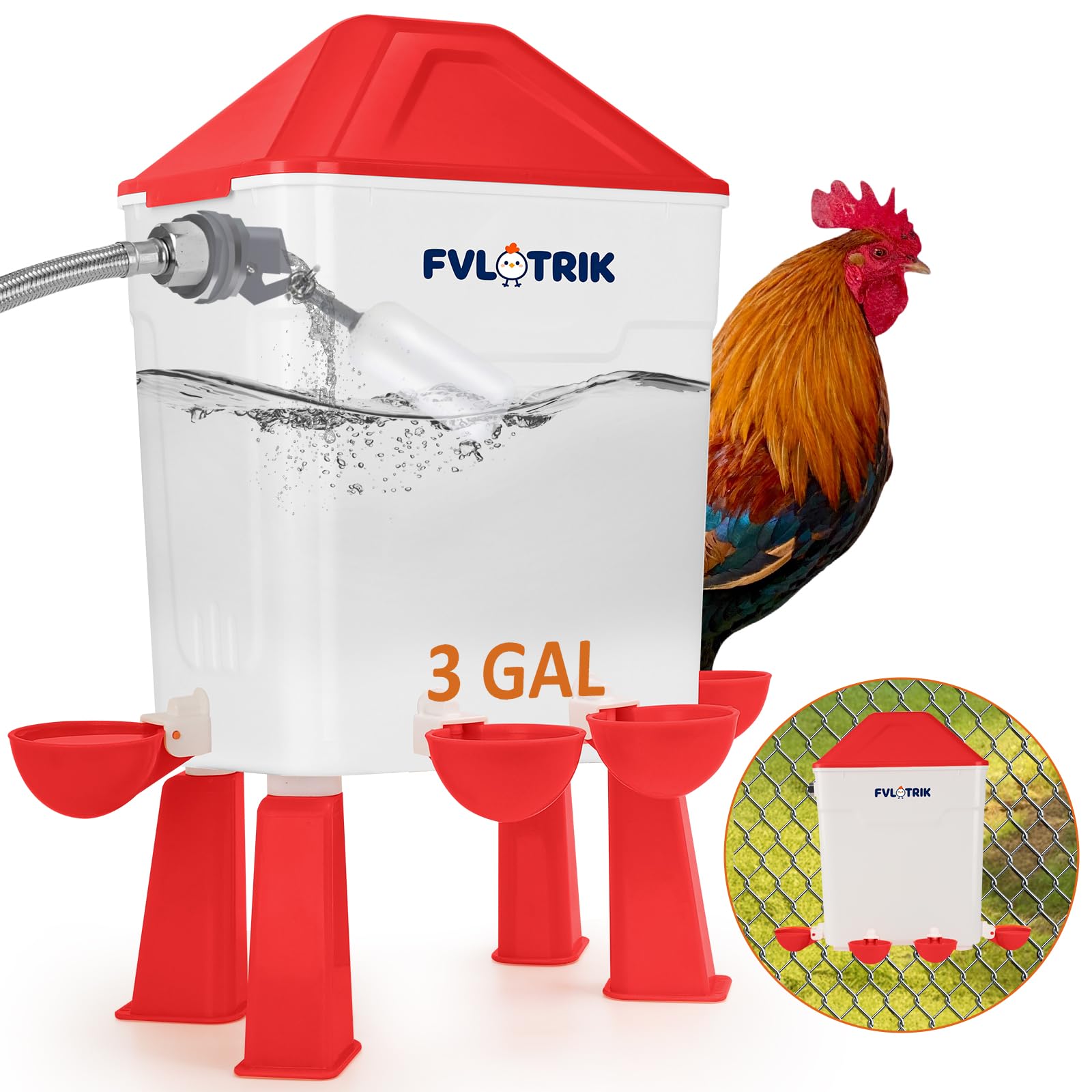
Runs off a rain barrel so the far corner of the yard gets water too.
The reason to pick this one is reach. A float valve opens and closes with the water level, so if you can plumb it to a garden hose or a rain barrel, a coop with no nearby faucet still gets a constant, hands-free supply. It stands on four tall legs or hangs, and the 45-degree anti-perch lid plus 4.7-inch legs keep dirt and roosting birds off the water.
Setup is the part buyers like most, and there’s a small chore worth naming. Assembly takes minutes with no tools, and the kit gives you a 60-inch braided hose for 3/4-inch connections plus PTFE tape for the threads. Use that tape on the external threads, because a snug seal is the difference between a dry coop floor and a slow drip. The lift-the-cup design stops the flow for cleaning, so wiping it out doesn’t dump the tank.
Two honest notes. The float can need a little adjustment to sit right, and some owners see a minor drip and find the open cups collect dirt quickly — the recurring gripe is the cups themselves, not the valve. It’s a well-liked machine overall on a small review base, and the rain-barrel compatibility is what separates it from the timer-only Lilyang.
Choose it for: out-of-the-way coops you want fed from a rain barrel or long hose run.
Lean toward: the pick above if your cups would be in constant mud — the open cups here want a clean spot.
6. FARM-TUFF Hanging Chicken Waterer, 3 Gallon
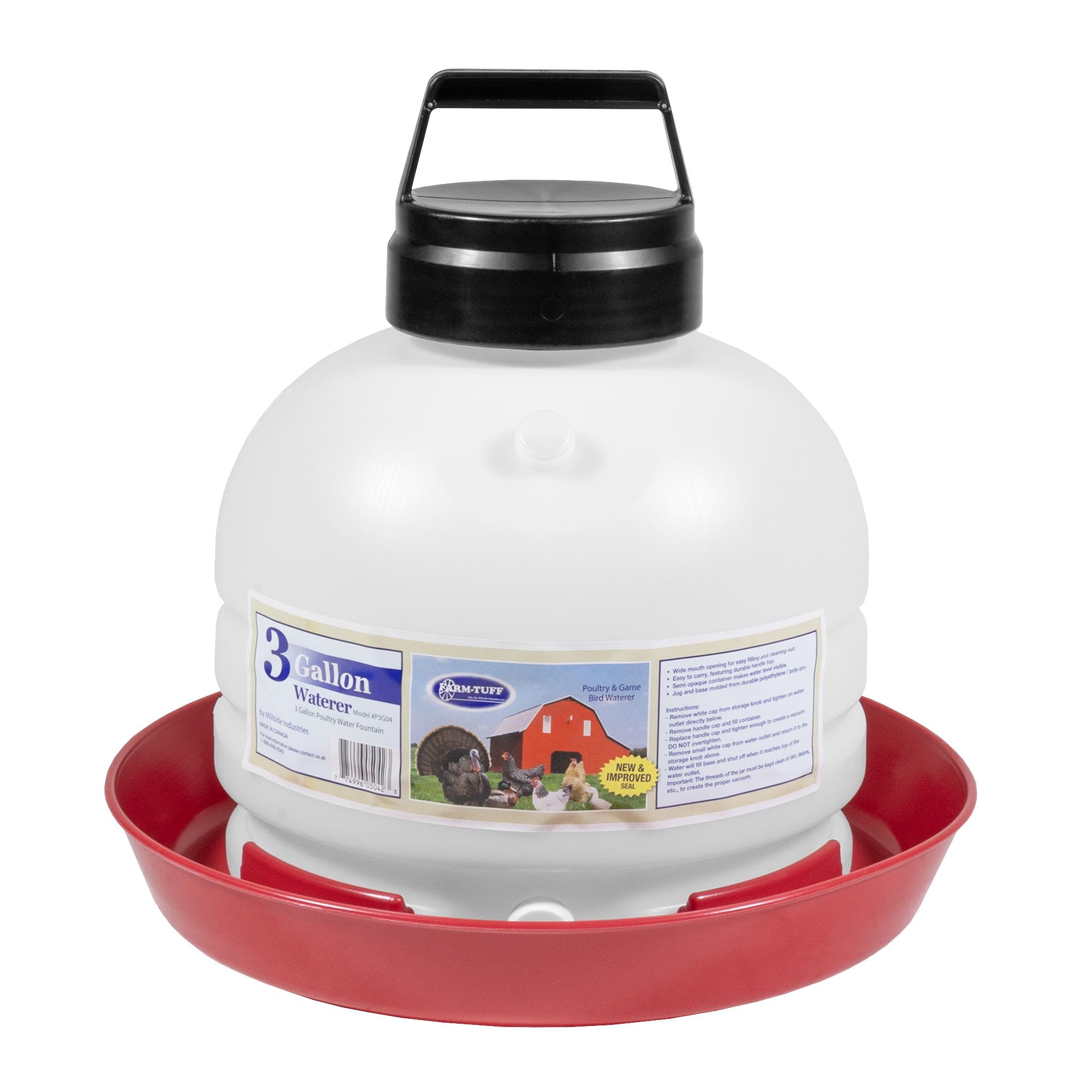
The straightforward top-fill jug that just works — no valve to fuss with.
This is the simple option: a 3-gallon translucent jug you fill from the top, with gravity doing the rest. A snap-on base seals the flow, a strong handle lets you carry or hang it to keep water off the ground and out of debris, and the BPA-free polyethylene is rust-proof and dent-resistant for outdoor life. The wide opening makes refilling and rinsing simple, and the drinking lip is 2.25 inches — plenty of room for several birds at once.
What earns it a place here is that it delivers the basic job without valves, hoses, or float adjustments. Poultry owners with a mixed flock of chickens, ducks, and turkeys find it holds enough to skip most refills, and the top-fill design means no tipping the tank to load it. It works best hung or set on a flat, level surface, since the seal depends on the base sitting square.
The trade-offs are the flip side of that simplicity. It’s a gravity jug, so it does not regulate a live water line the way the float-valve picks do, and a few owners have hit sealing trouble if the unit gets bumped off-level. With a long reviews history behind it, the overall picture is steady and unfussy rather than clever.
The Appeal
- 3-gallon translucent jug shows water level at a glance
- Top-fill with a snap-on base — no tipping, no valve to adjust
- Rust-proof, dent-resistant BPA-free polyethylene for outdoor coops
- Handle for carrying and hanging to keep water clean of debris
Weigh This First
- Gravity only — it can’t run off a hose line like a float valve
- The snap-on base wants a level surface to seal properly
- No nipples or cups — it’s an open-lip drinker
Call it the no-nonsense pick: simple, durable, and easy to refill for a hobby flock of mixed poultry.
Keep looking if: you want nipple drinkers or a hose-fed float valve — this one is gravity and open-lip only.
7. RentACoop 2 Gallon High Rise Chicken Waterer with Cups & Nipples
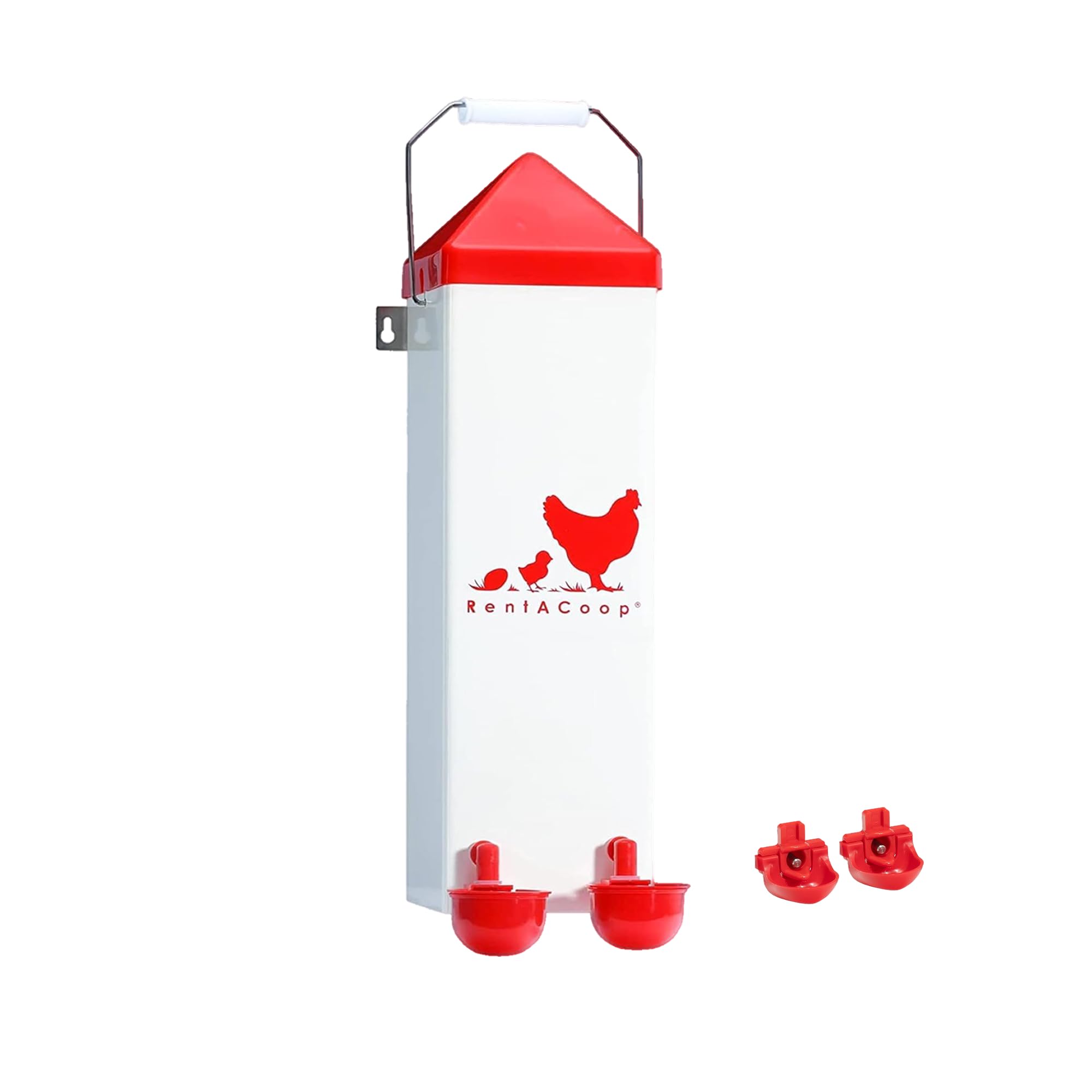
A slim vertical column that saves coop floor space and drinks two ways.
When floor space is the scarce thing, this design wins. It stands tall and narrow — the body is a hair over five inches square and 17 inches tall — so it tucks against a wall or hangs from the included S-hooks, freeing the ground for the birds to walk. It’s a 2-gallon gravity waterer, top-fill, made from thick BPA-free plastic (plastic made without the chemical BPA), with a lid that pops off for refilling.
The clever part is the twin drinking setup. It ships with two auto-fill cups with removable inserts and two horizontal nipples, so half your flock can drink from cups while the cleaner nipple option serves the rest. That includes both methods and spares, plus two dribble dishes, an anti-roost lid, a handle, and a mounting kit for wood, wire, or ½-inch hardware cloth — so indoors or out, it mounts. The full assembly kit is why it works in tight runs where a big ground tank simply won’t fit.
The honest limit is the tank size and the small fiddly bits. At 2 gallons it needs refilling sooner than the 3- and 4.2-gallon gravity picks, and the cups are spring-loaded — a cup can come apart and lose its spring, though spares are in the box. The cups lift out for cleaning, which the review pages show owners appreciate for keeping the water fresh.
Earns its keep: for a coop that’s short on floor space, the slim column plus the cups-and-nipples combo is tough to top.
Small catch: 2 gallons runs out faster than the bigger gravity tanks, and the spring-loaded cups can shed a spring — keep the spares close.
Ideal for: small runs and tight coops where every square foot of floor matters.
Step up if: you want to refill less — a 3- or 4.2-gallon gravity tank holds more.
8. FARM-TUFF Galvanized Poultry Waterer, 8 Gallon
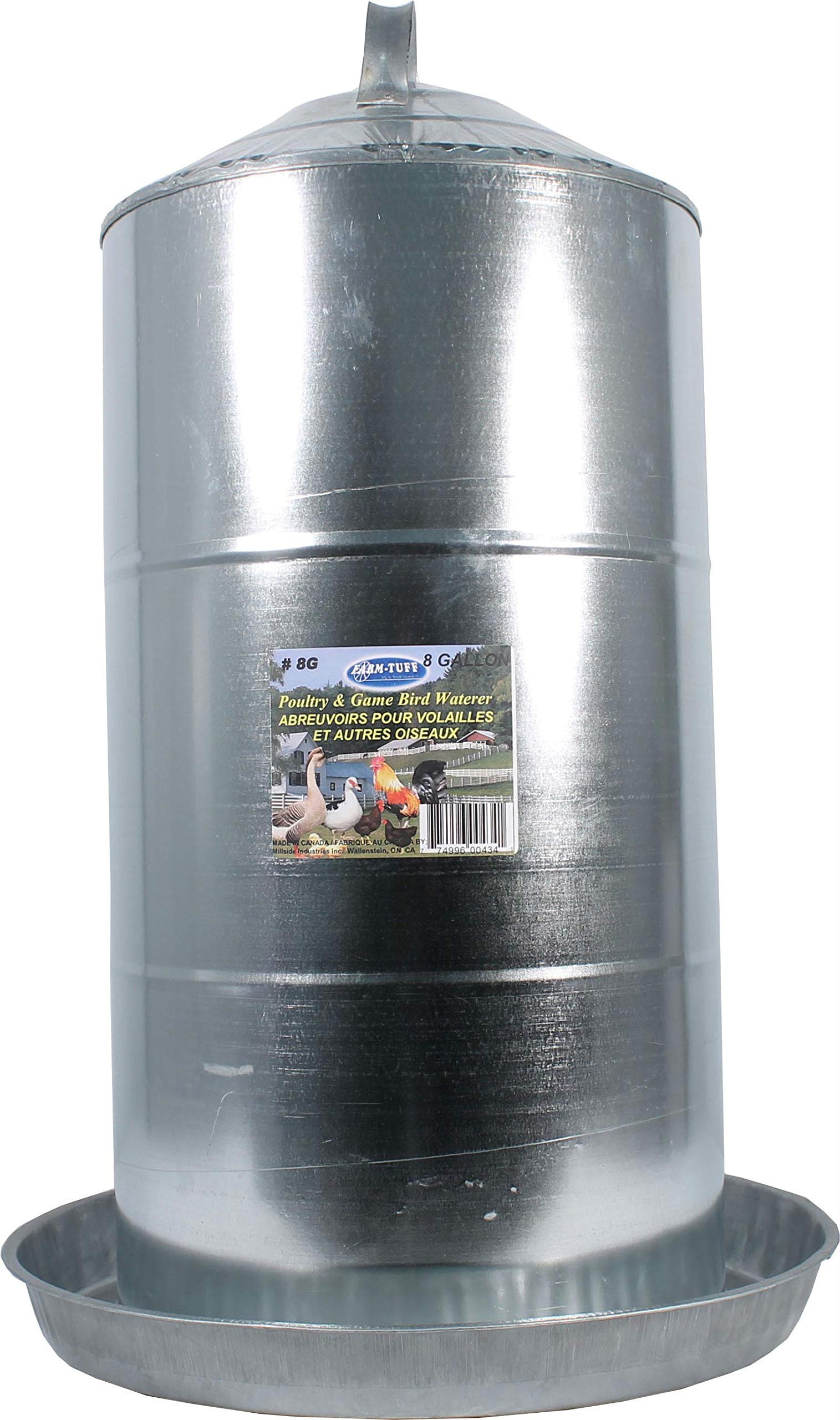
Eight gallons of galvanized steel for the flock that drinks a lot.
If you keep a serious number of birds, capacity is the whole game, and nothing else here comes close. This is an 8-gallon galvanized fountain with a vacuum-sealed double-wall body that holds a constant water level and keeps waste down. The cone-shaped top stops birds from roosting on it, so water stays cleaner, and the heavy-duty steel with rolled seams is built to shrug off dents, rust, and corrosion over years of outdoor use.
It’s a gravity-fed, ground-only unit — 24 inches tall and 15 inches wide with a 2-inch drinking lip — and it’s meant for a flat surface, not hanging. That’s a deliberate trade: the double-wall vacuum design is what lets it hold so much without leaking, but it depends on sitting level to keep its seal. The other thing to know upfront is weight — a full tank is heavy, and the inside carry handle has sharp edges, so gloves are worth keeping nearby.
Steel and plastic behave differently in winter, and this is the pick that leans into the cold. Owners mention it survives freezing without buckling where plastic units crack, and it holds enough that the refill trips drop right off. It’s the largest and priciest option in this lineup for a reason — it’s built to serve a big flock on solid ground.
Settle on this if: you run a large flock on flat ground and want the biggest tank that ignores a cold snap.
Look elsewhere if: your coop needs a hanging or hose-fed unit — this one wants a level patch of dirt.
Understanding the Specs
Capacity
Capacity is listed in gallons, and it tells you how long you can stay away, not how good the waterer is. A 2-gallon tank on a dozen hens might need topping up every couple of days, while a 5- or 8-gallon reservoir stretches that out considerably. Sizing up is tempting, but a heavier full tank is harder to carry — pick the gallon count that matches your flock and your longest trip away, and remember that open cups lose some water to splashing while nipples lose almost none.
Float Valve vs Gravity
A float valve automatically refills from a pressurized line — a hose or rain barrel — using a float that opens and closes with the water level. A gravity waterer has no connection; you fill the reservoir and the water drains down to the drinking cups as birds drink. Float valves are truer hands-off but only work where you can reach a water source, while gravity units go anywhere but need refilling. Match the type to your water access before you look at anything else.
Nipples vs Cups
Nipples are small valves birds peck to release a drop, which keeps beaks and dirt out of the reservoir and reduces waste. Cups hold a small pool birds dip into, which many hens learn faster and which helps in warm weather. Several waterers here include both so you can switch. The trade-off is simple: nipples stay cleaner, cups are easier for the flock to pick up and can collect tracked-in grime.
Light Blocking and Insulation
Water that sits in a clear or translucent container grows algae in sunlight, which means scrubbing. Opaque or light-blocking plastic slows that growth and keeps water fresher longer. Insulated or double-wall bodies go a step further and slow temperature transfer, keeping water cooler in summer heat and slowing freezing in winter. If your coop gets direct sun or hard frosts, these two features do more for water quality than any fitting.
FAQ
How do I know if my coop needs a float valve or a gravity waterer?
What size auto chicken waterer do I need for my flock?
Will the cups fit ducks and geese or only chickens?
Why does my auto waterer leak and how do I stop it?
Are nipples or open cups better for keeping water clean?
Can I use an auto chicken waterer in winter without it freezing?
Do chickens learn to use nipples quickly?
Can I hang any of these or do some need to sit on the ground?
How often do I need to refill a gravity chicken waterer?
Final Thoughts: The Verdict
For most backyard coops, the winner is the Omlet Insulated Chicken Waterer — the insulation and 99%-light-blocking walls keep water cool and clean in ways that plain plastic can’t match, and the cups-or-nipples choice keeps your flock drinking the way you prefer. If you want your routine back, grab the Lilyang Automatic Chicken Waterer, whose float valve runs off a hose timer so you stop hauling water entirely. And if it’s a big flock on solid ground, the FARM-TUFF Galvanized Poultry Waterer with its 8-gallon double-wall steel tank is the one to reach for. Whichever you pick, buy to your water source first and your flock size second — that pairing decides how hands-off your waterer really ends up being.
How We Picked
We do not accept paid placement. Every pick is matched to a real buyer and a real use-case; we do not hands-on test units.
Sources & Methodology
Specifications: manufacturer listings and product documentation. Review insights: verified customer reviews, as of September 2026. Pricing: not shown on this page (it changes often); check the current price via the retailer link.
As an Amazon Associate, Gadgets Feed earns from qualifying purchases. This does not affect which products we feature.