
Lifting a 40-pound gas can to refuel your lawn tractor, boat, or project car is a task most of us tolerate until the back pain or spilled fuel becomes the final straw. A reliable auto electric fuel pump eliminates that struggle entirely, turning a messy, physically demanding chore into a clean, button-press operation.
I’m Min — the co-founder and writer behind Gadgets Feed. My approach to this guide involved analyzing flow rate curves, auto-stop sensor reliability, hose length specifications, and adapter compatibility across seven distinct fuel pump models to separate the dependable solutions from the ones that leave you standing in a puddle of gasoline.
Whether you are topping off a diesel tractor or fueling a high-horsepower street machine, the right transfer tool makes all the difference. After hours of research, I compiled this deep dive to help you find the perfect best auto electric fuel pump for your specific setup and budget.
How To Choose The Best Auto Electric Fuel Pump
Selecting the right fuel pump means matching the pump’s design to your specific task. A high-performance in-tank pump for a modified engine is a completely different product than a portable transfer pump for moving fuel between cans. Understanding these distinctions is the first step to making a purchase you won’t regret.
Flow Rate: GPM vs. LPH
Gallons per minute (GPM) tells you how fast a transfer pump moves fuel from a source to a tank. For transferring 5-gallon cans, 2.4 to 3.8 GPM is the sweet spot. Liters per hour (LPH) is the metric used for high-pressure in-tank pumps feeding an engine. A 340 LPH pump supports high-horsepower builds, while a 97 GPH Holley Red is more than adequate for mild street engines.
Power Source: Battery, USB, or Hardwired
Portable transfer pumps typically run on 4 AA batteries, sometimes with a USB-C backup for extended use. Battery-only pumps offer maximum portability, but you need to keep spares handy. Hardwired in-tank pumps draw power directly from the vehicle’s electrical system and require proper relay and fuse installation to handle the current draw safely.
Auto-Stop Sensor: A Safety Essential
A sensor in the discharge nozzle detects when the receiving tank is full and instantly cuts the pump flow. This feature is non-negotiable for transfer pumps — it prevents messy, dangerous overflows. Some sensors are more sensitive than others, so reading real user feedback on auto-stop reliability is critical before buying.
Quick Comparison
On smaller screens, swipe sideways to see the full table.
| Model | Category | Best For | Key Spec | Amazon |
|---|---|---|---|---|
| TERA PUMP 2nd Gen | Premium Transfer | Mess-free, durable transfers | 2.4 GPM, Metal Impeller Cover | Amazon |
| VEECAP 2nd Gen | Mid-Range Transfer | Fast, universal can fit | 3.8 GPM, 4 Adapters | Amazon |
| MISFANS Transfer Pump | Mid-Range Transfer | Back-saving USB backup | 3.8 GPM, Dual Power | Amazon |
| PHILTOP HM10023 | Vehicle-Specific | Audi 2.0T replacement | 1000-2000 Bar Pressure | Amazon |
| AEM 50-1000 | Performance In-Tank | High-horsepower EFI builds | 340 LPH @ 40 PSI | Amazon |
| Fill-Rite FRH07520 | Replacement Hose | Replacing worn dispenser hose | 3/4″ x 20 ft Neoprene | Amazon |
| Holley 12-801-1 Red | External Carburetor | Street/strip carbureted engines | 97 GPH @ 7 PSI | Amazon |
In‑Depth Reviews
1. TERA PUMP 2nd Gen Gas Can Fuel Transfer Pump
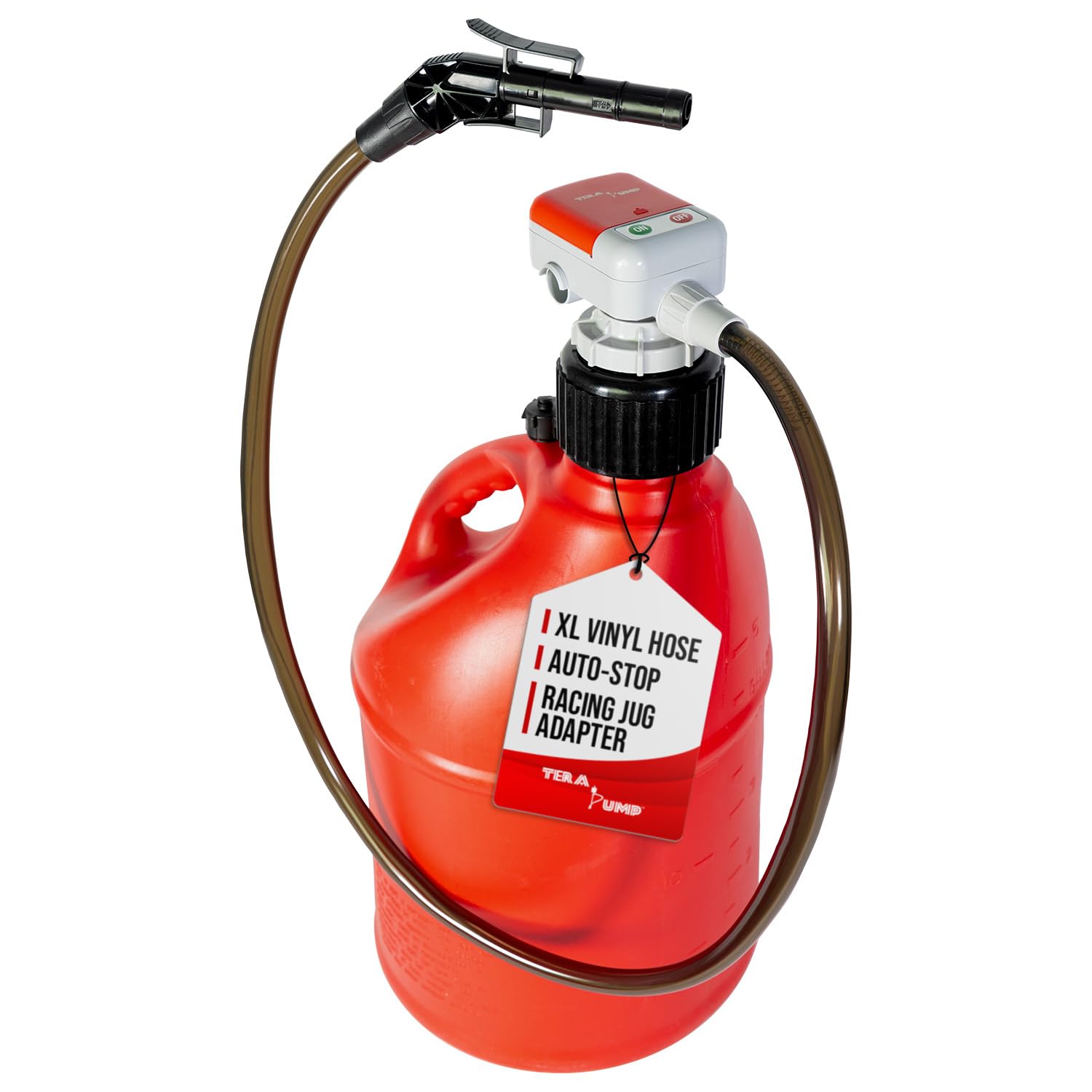
The second-generation TERA PUMP addresses nearly every common complaint about battery-powered transfer pumps. It features a metal impeller cover that protects the internal mechanism from debris in the fuel, a redesigned ergonomic nozzle that reduces hand fatigue during use, and a 39.4-inch vinyl discharge hose rated for resistance against nicks and cuts. The auto-stop sensor reliably halts flow the moment the receiving tank is full, matching the performance of pumps costing significantly more.
Flow rate is a steady 2.4 GPM, which empties a standard 5-gallon can in roughly two minutes. While this is slower than the 3.8 GPM budget pumps, the TERA PUMP compensates with superior build quality and thoughtful design. The universal gas can adapter fits most standard North American openings, and the pump handles gasoline, diesel, kerosene, and even E15 blends — though E85 should be drained afterward to protect the seals.
It runs on 4 AA alkaline batteries and delivers up to 50 refills of a 5-gallon container per set. Users consistently praise the mess-free experience and the pump’s ability to reach the bottom of a can via the XL intake hose, eliminating the need to tilt the container. For the premium build and dependable auto-stop, this is the top choice for serious garage use.
Why it’s great
- Metal impeller cover adds debris protection and durability
- Auto-stop sensor is highly reliable for overflow prevention
- Ergonomic nozzle reduces hand strain during extended use
Good to know
- 2.4 GPM flow is slower than some budget competitors
- E85 use requires pump to be drained afterward to prevent seal corrosion
2. VEECAP 2nd Gen Automatic Electric Fuel Transfer Pump
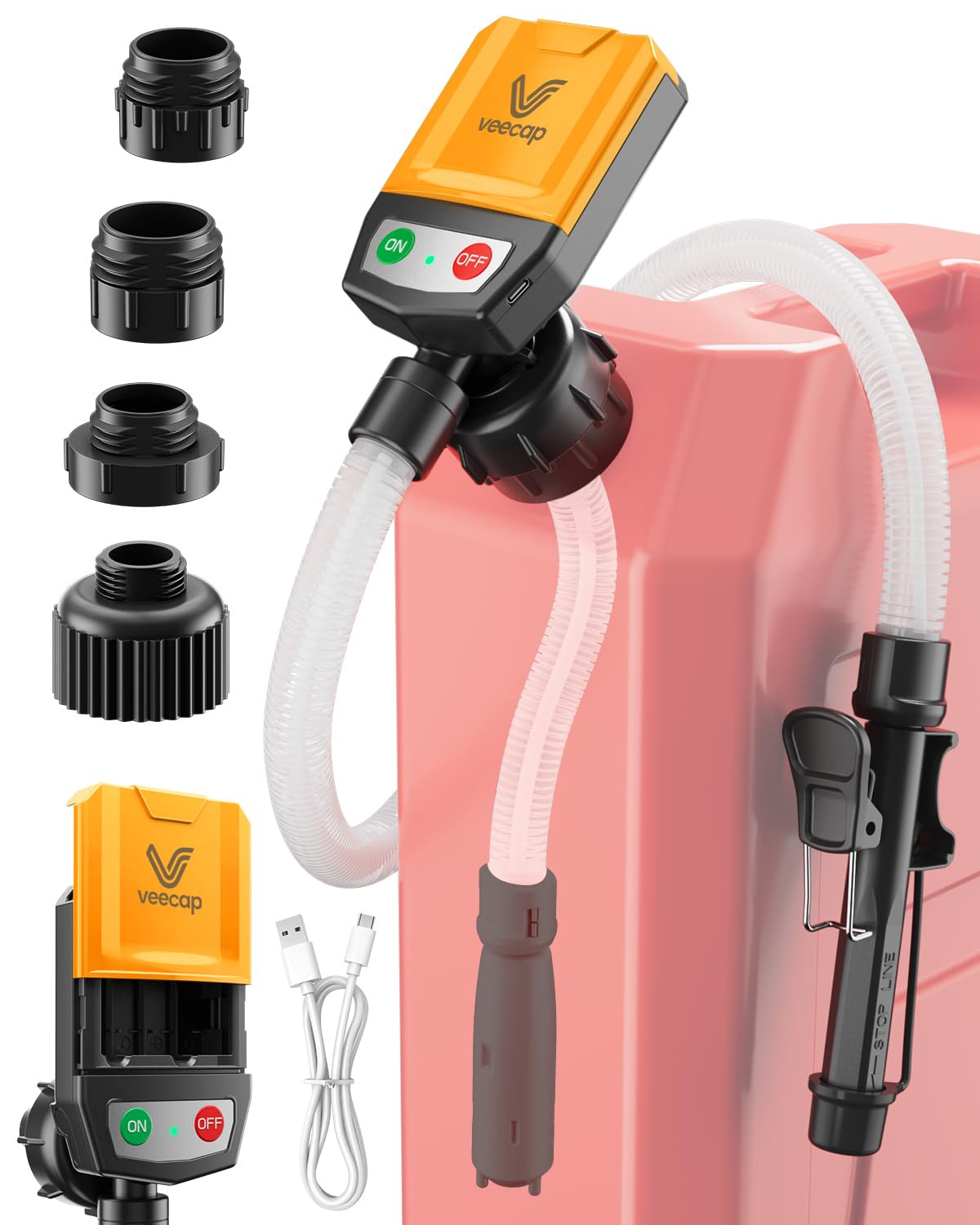
VEECAP’s second-generation pump prioritizes raw speed, pushing fuel at a brisk 3.8 gallons per minute. This makes it the fastest option for moving bulk fuel from a storage drum or large can into a vehicle or piece of equipment. The kit includes four adapters sized at 2.0, 2.1, 2.75, and 3.75 inches, covering most North American gas can openings. The 23-inch intake hose and 51-inch outtake hose provide an extended reach that works well for awkward fill positions.
Power flexibility is a standout feature here. The pump runs on 4 AA batteries or via USB-C connected to a power bank or adapter. This dual-power approach means you are never stranded mid-job with dead batteries. The patented auto-stop sensor uses a reinforced leak-proof pipeline and secure seal to prevent drips, and user reviews consistently confirm the auto-stop works effectively with gasoline and diesel.
One important note: it is incompatible with Scepter SmartControl cans due to internal filters that block pump insertion. It also will not work with barrels taller than 23 inches or openings smaller than 1.3 inches. Weighing just 1.4 lbs and packing into a drawstring bag, this is a fast, portable solution for those who prioritize speed above all else.
Why it’s great
- Class-leading 3.8 GPM flow rate for fast transfers
- Dual power via AA batteries or USB-C for job flexibility
- Ultra-light 1.4 lb design with convenient storage bag
Good to know
- Incompatible with Scepter SmartControl cans and small openings
- Some users report adapter fit issues with non-standard cans
3. MISFANS Fuel Transfer Pump with Auto-Stop
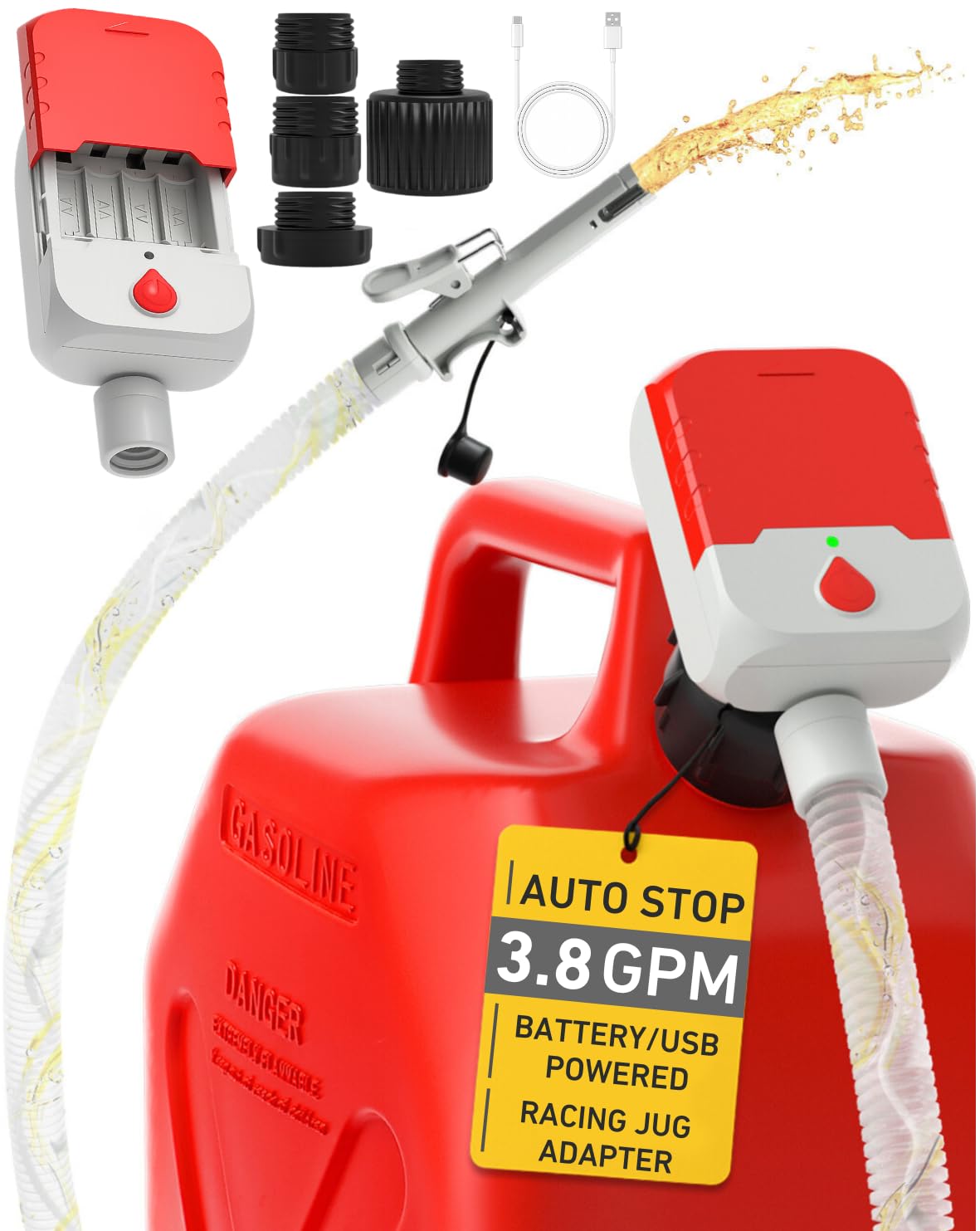
The MISFANS pump matches the VEECAP’s 3.8 GPM flow rate but simplifies the user interface with an independent button design that eliminates confusing cycling switches. Press once for flow, press again to stop — it is that straightforward. The high-impact ABS shell and kink-resistant clear PE hose allow you to monitor fuel flow visually while maintaining structural integrity during repeated use.
Its dual-power system supports 4 AA batteries or USB-C for continuous operation via a power bank. The kit includes four adapters to fit most North American plastic gas cans, including racing jugs. The auto-stop sensor is engineered with a high-sensitivity cutoff that users report works reliably, preventing messy spills even when filling equipment with small tanks. The 19-inch intake hose paired with the 51-inch discharge hose gives good flexibility for various container depths.
The pump is designed to handle gasoline, diesel, kerosene, and non-potable water. Some users noted that the USB-C charging port did not function for recharging, but the battery operation worked flawlessly. One minor downside is the lack of a battery charge indicator, but given the strong flow rate and the back-saving design that eliminates lifting heavy cans, this remains an excellent mid-range option.
Why it’s great
- Simple one-button operation with no mode cycling
- Fast 3.8 GPM flow rate with reliable auto-stop
- Kink-resistant, transparent hose for visual flow monitoring
Good to know
- USB charging function may be unreliable on some units
- No battery level indicator included
4. AEM 50-1000 High Flow In-Tank Fuel Pump
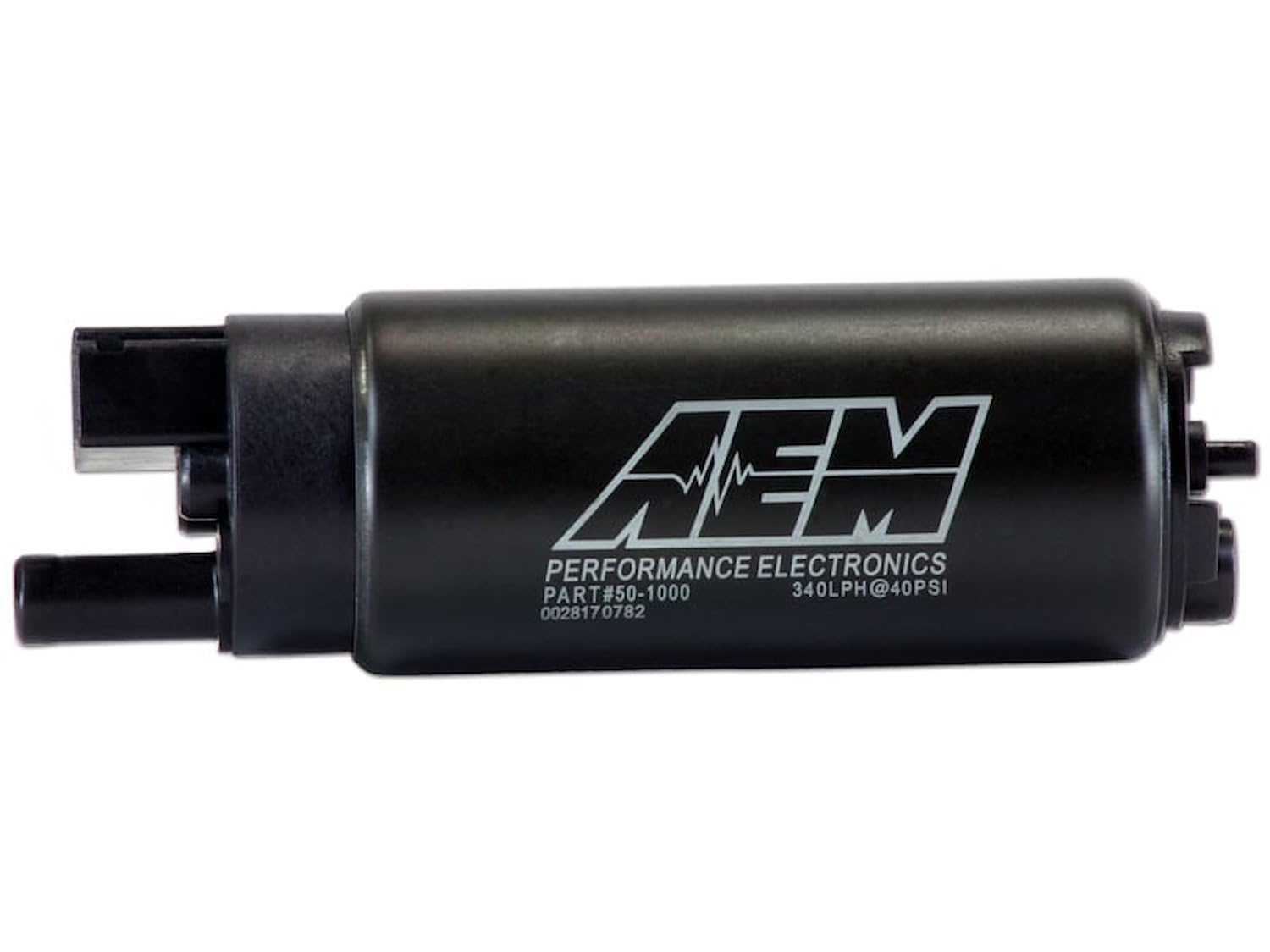
AEM’s 50-1000 is a universal in-tank pump designed for serious EFI builds. It flows 340 liters per hour at 40 PSI, making it suitable for naturally aspirated and forced induction applications alike. The 39-millimeter diameter fits most stock sending unit assemblies, and the offset inlet design eases installation in tight tank configurations. Each pump is individually tested before leaving the factory, which helps explain the legendary reliability reported by users — one running strong for a decade in a K-swap project.
The kit includes the pump, rubber sleeve, end caps, a pre-filter, hose, clamps, and flying lead for wiring. It operates on 6 to 18 volts, but the 340 LPH flow rating is benchmarked at 13.5 volts at 43 PSI. Horsepower support depends on the rest of the fuel system, but this pump comfortably supports 700-plus horsepower on gasoline. Note that E85 will diminish pump life, so it is best reserved for gasoline builds.
It is not a drop-in replacement for most vehicles — users typically need to modify the stock baffle or bracket. However, the payoff is a quiet, consistent fuel pressure supply that keeps up with high-demand engine management. For builders who value tested performance and decades of proven aftermarket support, the AEM 50-1000 is the standard.
Why it’s great
- Proven 340 LPH flow at 40 PSI for high-horsepower builds
- Individual factory testing ensures reliability out of the box
- Compact 39mm diameter fits most stock tanks
Good to know
- Universal design requires installation modifications to the tank
- Not recommended for E85 ethanol blends due to reduced lifespan
5. PHILTOP High Pressure Fuel Pump HM10023
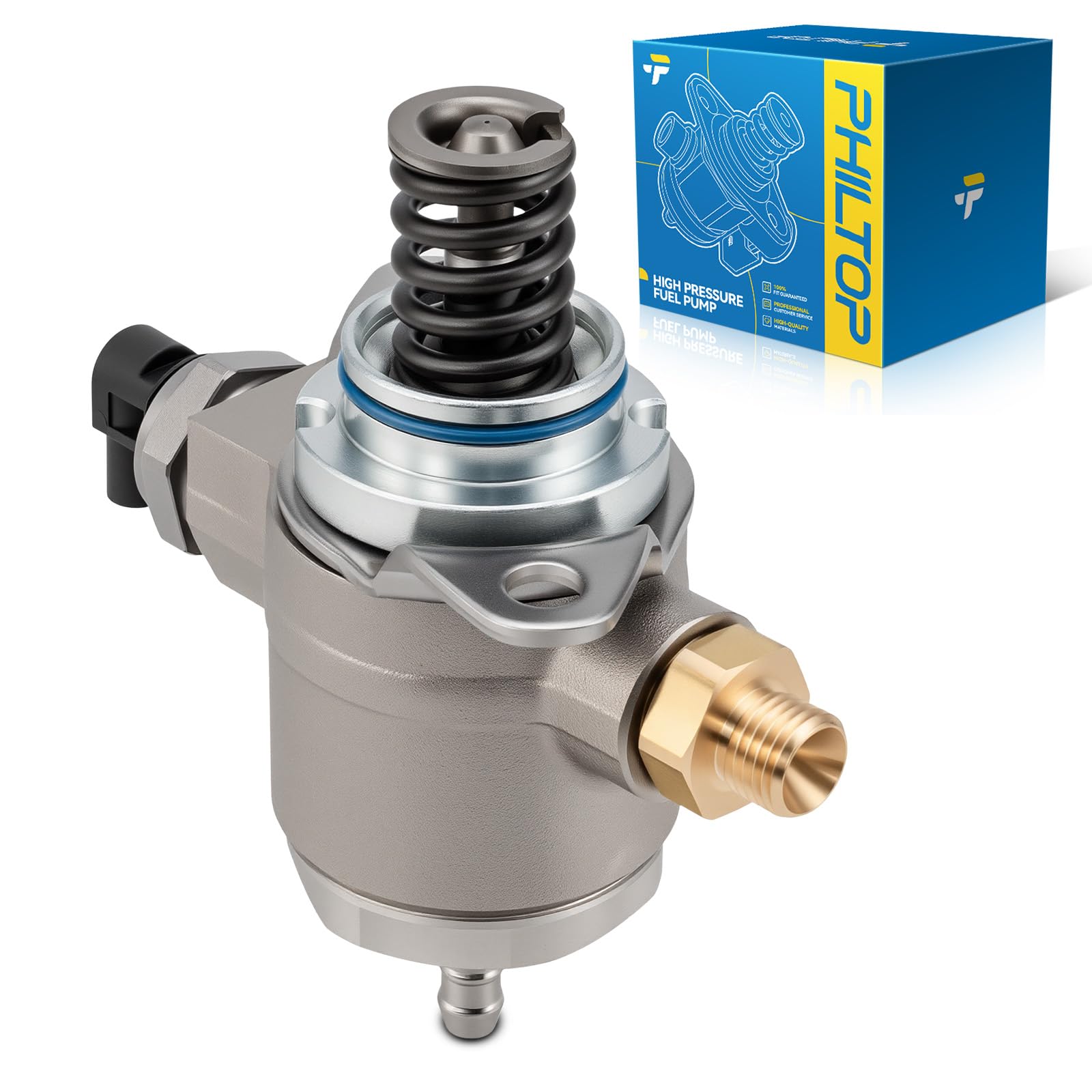
This is a vehicle-specific high-pressure fuel pump designed for Audi and Volkswagen 2.0T engines. It replaces factory units using the same OEM-style connectors and hardware, classifying it as a direct plug-and-play swap. The pump delivers between 1,000 and 2,000 bar of pressure for thorough fuel atomization, which improves combustion efficiency and is claimed to reduce fuel consumption by 5–8 percent. The built-in pressure regulator prevents overpressure conditions that can damage injectors.
The die-cast aluminum housing and reinforced plunger are built to handle extreme temperature swings from -40°C to 120°C. High-grade imported seals resist fuel leakage and extend the service life beyond 50,000 miles. For owners of 2010–2017 Audi Q5, A4, A5, A6, and TT models with the 2.0L engine, this is a direct, cost-effective alternative to a dealer part that would cost significantly more.
User feedback is generally positive, with straightforward installation on cars like the 2012 Kia Forte and 2007 Civic. However, one reviewer noted brittle plastic on the male fitting and soldered electrical connections instead of factory-style plugs, so careful handling during installation is advised. For a direct-fit high-pressure replacement that saves hundreds over OEM pricing, this is a solid choice.
Why it’s great
- Direct OEM-style replacement for Audi/VW 2.0T engines
- High 1000-2000 bar pressure improves combustion efficiency
- Durable housing and seals rated for extreme temperatures
Good to know
- Brittle plastic fitting on some units risks breakage during install
- Soldered electrical connections differ from factory plug style
6. Holley 12-801-1 97 GPH RED Electric Fuel Pump

The Holley Red is a decades-proven external electric fuel pump designed for carbureted engines. It flows 97 gallons per hour free-flow and produces a maximum of 7 PSI, which is safe for most carburetors without requiring a pressure regulator. The tumble-polished billet aluminum housing looks sharp on a street machine while the lower housing casting has been optimized for better fuel flow characteristics. The motor draws only 2 amps, keeping the electrical load minimal.
Holley recommends pairing it with their 12-753 relay kit and a 7.5 amp fuse for clean, safe installation. The pump delivers steady, non-pulsating flow, which helps maintain a consistent fuel level in the float bowl. It is designed for street/strip applications and is not to be used on aircraft of any type. Users consistently report it works flawlessly with carb conversions on classic trucks, muscle cars, and hot rods.
The trade-offs are noise and price. The pump is audibly louder than a modern in-tank setup, and the price point places it firmly in premium territory for a simple external pump. However, its reputation for reliability is unmatched, with many users running the same unit across multiple builds over years of service. For a carbureted vehicle that needs a dependable push from the tank, this is the benchmark.
Why it’s great
- Proven reliability across decades of street/strip use
- Steady non-pulsating flow at 7 PSI for carburetors
- Low 2-amp current draw simplifies wiring
Good to know
- Audibly louder than modern in-tank pumps
- Premium pricing for a basic external pump design
7. Fill-Rite 3/4 in. x 20 ft Fuel Transfer Hose
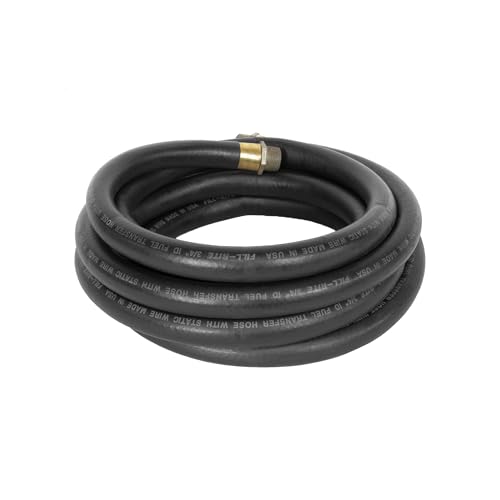
While technically a replacement hose and not a pump, the Fill-Rite FRH07520 is a critical component for anyone building a fuel transfer system with their own pump. This 20-foot, 3/4-inch hose is constructed from neoprene and nitrile rubber, making it resistant to gasoline, diesel, and oil degradation. It is rated for a maximum working pressure of 50 PSI, which exceeds the output of most transfer and low-pressure electric pumps.
The male threaded ends are machined precisely for a leak-free connection to standard dispenser fittings. Users report it fits 100-gallon bulk tanks and pairs seamlessly with 12-volt pumps like the GasBoy. The hose does not kink easily and maintains flexibility even in cooler weather. It is made in the United States and backed by Fill-Rite’s one-year warranty, adding confidence for commercial or heavy residential use.
The only downside is longevity — some users find the hose develops leaks after two to three years of regular use, though the low cost makes replacement painless. For anyone mounting a permanent or semi-permanent fuel transfer station in their shop or garage, this is the practical choice to ensure your pump setup works reliably.
Why it’s great
- Durable neoprene/nitrile construction resists fuel degradation
- 20-foot length provides excellent reach around vehicles
- 50 PSI rating exceeds transfer pump output requirements
Good to know
- May develop leaks after 2-3 years of regular use
- This is a hose only — no pump included
FAQ
Can I use a battery-powered transfer pump with E85 ethanol fuel?
What is the difference between a transfer pump and an in-tank fuel pump?
How do I know if a high-pressure fuel pump fits my specific car model?
Why does my new electric fuel pump make noise?
Final Thoughts: The Verdict
For most users, the best auto electric fuel pump winner is the TERA PUMP 2nd Gen because it combines a reliable auto-stop sensor, metal impeller durability, and a well-designed ergonomic nozzle into a premium package that will last for years of garage use. If you want the fastest possible flow rate for bulk transfers, grab the VEECAP 2nd Gen instead. And for a high-horsepower EFI build requiring proven aftermarket flow, nothing beats the AEM 50-1000.