
Owning a pool shouldn’t mean spending your weekends wrestling with a long-handled brush, a telescopic pole, and a vacuum hose that tangles the second you look away. The latest generation of cordless robotic cleaners has turned pool maintenance into a drop-in-and-walk-away task, handling everything from fine silt and sand to heavy leaves and stubborn algae on the floor, walls, and waterline without a single hose or external pump connection.
I’m Min — the co-founder and writer behind Gadgets Feed. I’ve spent years tracking the consumer robotics market, comparing navigation algorithms, battery cell chemistry, filtration micron ratings, and motor efficiency curves so you don’t have to parse spec sheets alone. (And Homer 🐱 supervised from the charging dock, unimpressed by any machine that doesn’t run on kibble.)
To help you cut through the noise, I’ve analyzed nine models spanning entry-level cordless units to premium robot vacs with app control and ultrasonic sensors. This guide breaks down everything you need to confidently choose the best auto pool cleaner for your pool’s size, shape, and debris load — without guessing.
How To Choose The Best Auto Pool Cleaner
Every cordless robotic pool cleaner promises a “smart” clean, but real-world results come down to three physical factors you can verify on the spec sheet: battery energy content, filtration fineness, and navigation hardware. A unit with a tiny filter basket but a huge battery will still leave you emptying it mid-cycle, and a robot with random-bounce navigation will miss entire sections of a freeform pool. Match these specs to your pool size and debris type, and you’ll avoid the buyer’s remorse that comes from watching a robot spin in circles.
Battery Capacity and Effective Runtime
The most honest measure of battery capacity for a pool robot is its internal energy content in watt-hours (Wh), not the number of milliampere-hours (mAh) thrown on marketing materials. A robot with 100 Wh of lithium energy will handle roughly 1,600 to 2,000 square feet of pool surface on a standard floor-cleaning cycle, while units packing 200+ Wh can cover up to 3,200 square feet in a single charge. Always check the Wh rating — it tells you how long the robot can sustain its full suction before needing to recharge.
Filtration Micron Rating and Debris Capacity
Filtration is measured in microns (µm). A 180-micron filter catches leaves, bugs, and larger debris but lets fine sand and algae spores pass through and settle back onto the floor. Look for dual-layer systems that pair a coarse 180-micron outer basket with a secondary 10-micron or even 3-micron fine filter if your pool battles dust, pollen, or silt. Filter basket volume matters just as much: a 2.5-liter basket fills fast in a leaf-heavy pool, while a 5-liter capacity lets you run multiple cycles before emptying.
Navigation System and Wall-Climbing Capability
Not all “smart navigation” is equal. Basic robots use gyroscope-guided N-path or S-path algorithms that systematically cover the floor and walls with minimal overlap. Premium units add ultrasonic sensors to detect ledges, steps, and shallow areas, and some even use a 4-core CPU to optimize cleaning routes on the fly. For wall and waterline cleaning, look for dual independently driven motors (not a single shared motor) — these deliver the climbing torque needed to scale vinyl, tile, and fiberglass surfaces without sliding back down.
Quick Comparison
On smaller screens, swipe sideways to see the full table.
| Model | Category | Best For | Key Spec | Amazon |
|---|---|---|---|---|
| Beatbot AquaSense 2 | Premium | Large pools & smart owners | 203 Wh battery, 4-hour runtime | Amazon |
| Beatbot Sora 30 | Premium | Heavy debris & large capacity | 6,800 GPH suction, 5L basket | Amazon |
| Dolphin Advantage | Mid-Range | Corded simplicity & reliability | Active scrubber brush, plug-and-play | Amazon |
| Aiper Scuba S1 | Mid-Range | Crystal-clear water & fine filtration | 3-micron filter, 180-min runtime | Amazon |
| WYBOT C2 | Mid-Range | Dual filtration & app scheduling | 180µm + 10µm filters, 180-min runtime | Amazon |
| WYBOT C1 | Mid-Range | Gyroscope navigation & app control | 3,038 GPH suction, 152-min runtime | Amazon |
| Nepturox SAT25 | Mid-Range | Dual motors & track drive traction | Two 180W motors, track drive | Amazon |
| ABNEMEN SAT25 | Value | Above-ground pools & easy retrieval | Self-parking, 2.5L filter basket | Amazon |
| Zyerch Blue | Value | Entry-level cordless on a budget | 7,800 mAh battery, 150-min runtime | Amazon |
In-Depth Reviews
1. Beatbot AquaSense 2
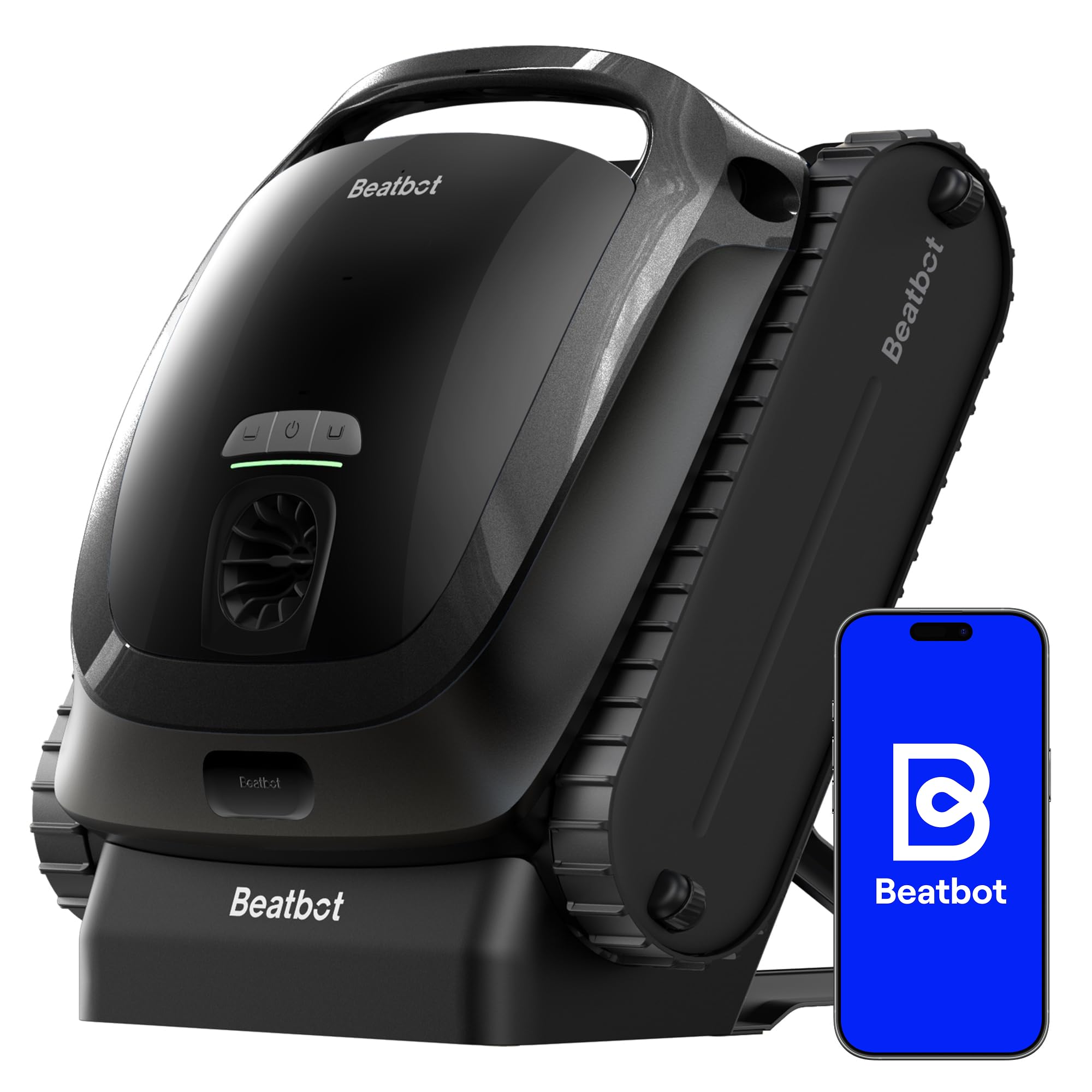
The Beatbot AquaSense 2 sets a new standard for cordless pool cleaners with its wireless charging dock — no fiddling with exposed ports or wet cables. The built-in SmartDrain system automatically releases water so the robot floats to the surface and parks at the pool edge, and you can call it back via the app even when it’s resting on the water. Its 203 Wh lithium battery delivers up to four hours of continuous floor cleaning, comfortably covering pools up to 3,230 square feet on a single charge.
Navigation is handled by a 4-core CPU paired with 16 sensors, including two ultrasonic units that detect ledges, steps, and shallow areas down to 8 inches. The robot follows an optimized S-path on the floor and an N-path on walls and waterlines, minimizing both missed spots and overlapping passes. Four side guide wheels improve edge and corner tracking, while the automotive-grade IMR coating resists UV damage and heat buildup during outdoor charging.
The double-pass waterline scrubbing is a genuine differentiator: the robot passes each waterline section twice per cleaning cycle, removing grime and calcium buildup that single-pass units often leave behind. The fine mesh filter basket captures particles down to an impressively small size, though some users report the robot can get briefly stuck on main drain covers if the pool pump is running during the cleaning cycle.
Why it’s great
- Wireless charging dock eliminates port corrosion risks
- Double-pass waterline scrubbing for streak-free edges
- 4-hour runtime with 203 Wh battery covers very large pools
- Ultrasonic sensors detect shallow ledges and steps
Good to know
- Robot goes offline when submerged, preventing early app-based stops
- Premium price reflects advanced features
- Can get stuck on main drains if pool pump is active
2. Beatbot Sora 30
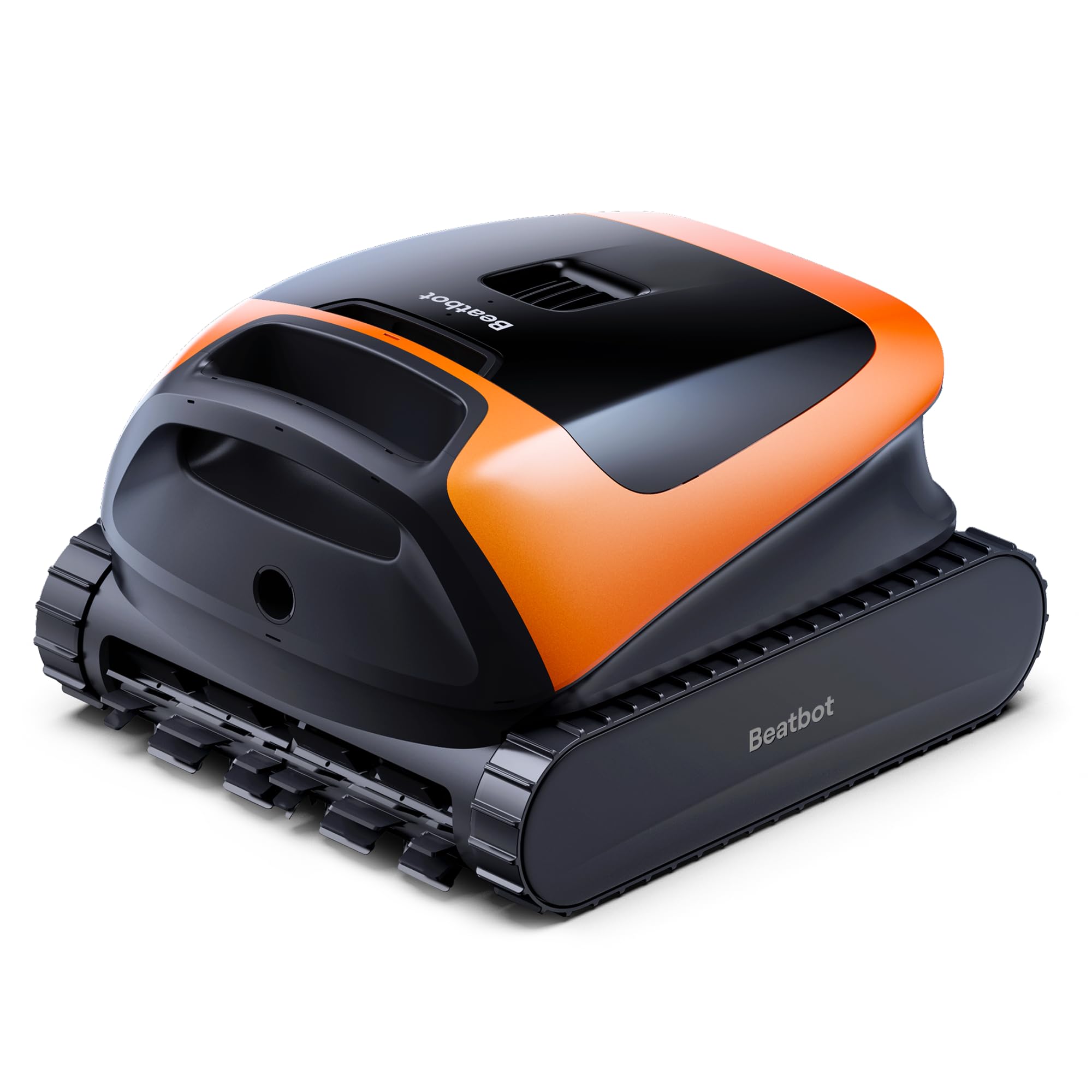
The Beatbot Sora 30 is built for pools that collect heavy debris loads — think oak leaves, acorns, and branches. Its HydroBalance structure generates 6,800 gallons per hour of suction, the highest on this list, which lets it swallow large debris in a single pass without clogging the intake path. The 5-liter filter basket is the largest capacity among these nine models, meaning you can run multiple full-coverage cycles before needing to empty it.
Battery capacity comes in at 203 Wh, translating to up to five hours of continuous floor-only cleaning or about three hours when climbing walls and scrubbing waterlines. The robot automatically surfaces and parks when the battery drops below 12%, releasing internal water through the SmartDrain valve so you don’t have to hoist a waterlogged 20-pound machine out with a pole. Ultrasonic sensors identify ledges and shallow platforms down to 8 inches, eliminating manual touch-ups on sun shelves and pool steps.
App control via Bluetooth offers stable connectivity up to 20 meters, letting you select from four cleaning modes — quick touch-up, deep clean, floor-only, and full-coverage. The 150-micron fine filter captures sand and silt effectively, though users with ultra-fine dust may still need occasional manual vacuuming. The 2-year warranty and 15 global certifications add confidence for a machine in this investment tier.
Why it’s great
- Industry-leading 6,800 GPH suction handles heavy debris effortlessly
- 5-liter filter basket reduces emptying frequency
- Ultrasonic sensors cover ledges and shallow platforms
- Automatic surface parking with SmartDrain for easy retrieval
Good to know
- Slower than booster-pump-style cleaners
- Battery takes 4.5 hours to fully recharge
- Some fine sand may still require manual touch-up
3. Dolphin Advantage

The Dolphin Advantage takes a different approach from the cordless competition: it’s a corded plug-and-play unit that connects directly to a standard GFCI outlet via a floating cable. There’s no battery to degrade over time, no charging cycle to wait for, and no risk of running out of power mid-clean. The advantage is unlimited runtime for pools up to 33 feet in length, making it ideal for owners who want consistent daily cleaning without monitoring battery status.
The active scrubber brush is the headline feature — it rotates independently from the drive system, applying mechanical scrubbing pressure to tile, concrete, vinyl, and fiberglass surfaces. This brush action dislodges algae film and calcium deposits that simple suction-only robots leave behind. The top-load filter basket is easy to access without flipping the robot over, and the unit climbs walls efficiently thanks to its rubberized track system and balanced weight distribution.
Downsides are the trade-offs inherent to a corded design: the floating cable can twist slightly during cleaning cycles, requiring occasional straightening, and there’s no app connectivity or smart navigation mapping. The Dolphin follows a random-bounce cleaning pattern rather than a systematic S-path, which means it may take longer to cover every section of the pool. At 11 kilograms, it’s the heaviest unit here and requires a caddy for transport.
Why it’s great
- Unlimited runtime with no battery degradation
- Active scrubber brush removes algae and calcium deposits
- Top-load filter basket for easy debris removal
- Proven reliability with decades of Dolphin engineering
Good to know
- Cable twists occasionally and needs manual straightening
- Random-bounce navigation leaves some areas untouched longer
- Heavy unit requires a caddy for transport from storage
4. Aiper Scuba S1

The Aiper Scuba S1 stands out for its dual-layer filtration system that pairs a standard 180-micron coarse basket with a replaceable 3-micron ultra-fine filter. That 3-micron rating is the tightest on this list — it captures fine dust, silt, and algae spores that ordinary 180-micron filters let recirculate into the water. Pool owners with sand-bottom pools or heavy pollen loads will see visibly clearer water after the first few cycles.
Navigation relies on 11 high-precision sensors with an enhanced dual-path algorithm the company calls WavePath. The robot systematically covers the floor, walls, waterline, and shallow areas above 12 inches, adapting its route based on real-time input from the sensors. The Caterpillar Treads system provides solid climbing torque on vinyl, tile, and fiberglass surfaces, though freeform pools with concave steps may still need occasional manual brushing on the hardest-to-reach ledges.
The 112 Wh battery delivers up to 180 minutes of runtime, enough to cover a 32-by-15-foot pool on a single charge. App controls let you choose from five cleaning modes, review cleaning logs, and install OTA firmware updates. Aiper backs the Scuba S1 with a 2-year warranty and responsive customer support, a meaningful safety net given the premium. The trade-off is that the microfilter requires more frequent rinsing than standard baskets to maintain good water flow.
Why it’s great
- 3-micron ultra-fine filter captures silt, dust, and algae spores
- 11-sensor navigation with WavePath dual-path algorithm
- 180-minute runtime covers large pools in one session
- 2-year warranty with responsive customer support
Good to know
- Microfilter needs frequent rinsing to maintain flow
- Struggles with concave steps in freeform pools
- App lacks a charge-limit control setting
5. WYBOT C2
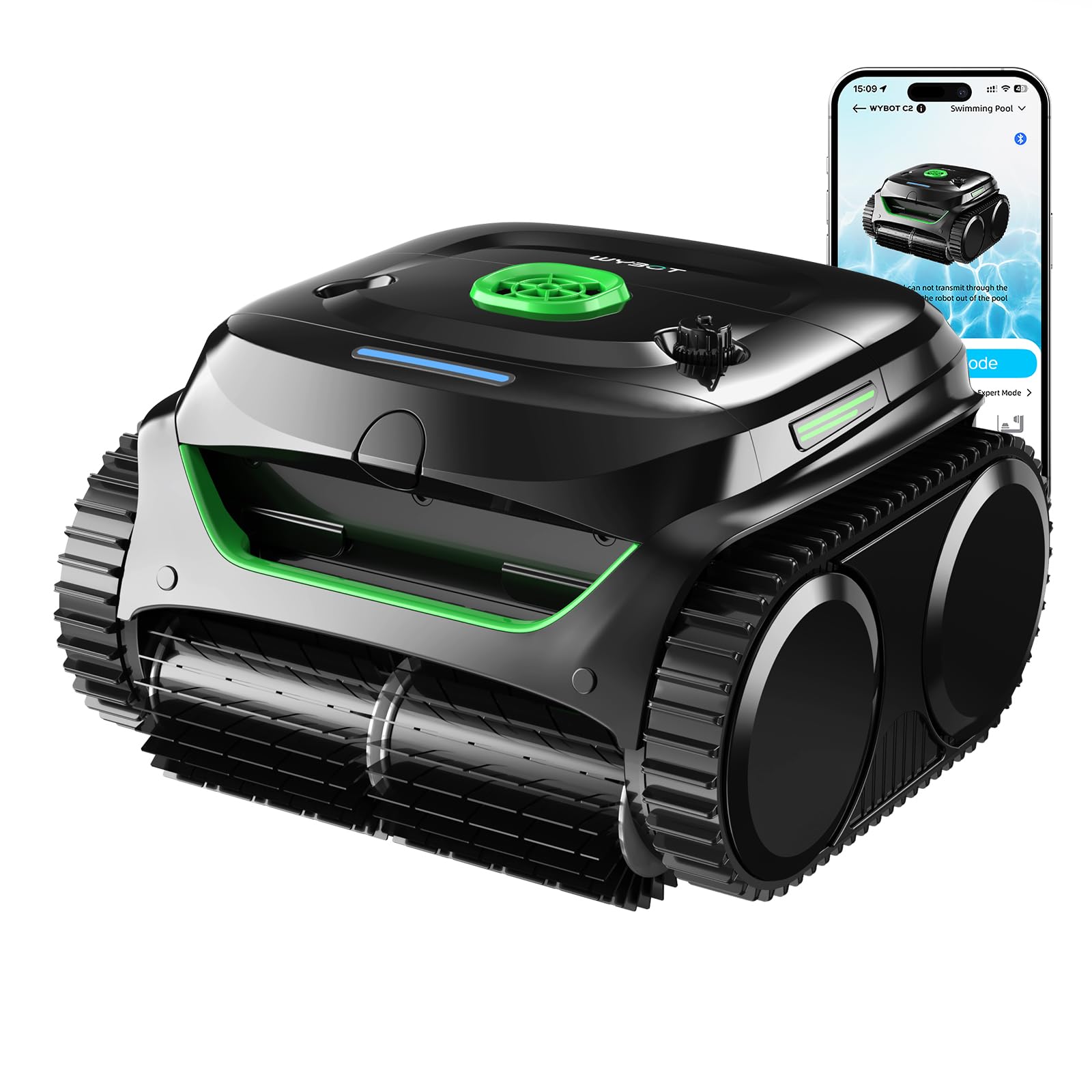
The WYBOT C2 is the only model on this list offering a dual-layer filtration system that combines a standard 180-micron coarse basket with a fine 10-micron secondary filter. This setup delivers 30% improved cleaning performance over single-layer filters, according to the company, capturing both large leaves and ultra-fine sand particles. The filters are washable and reusable, keeping operating costs low over the robot’s lifespan.
Power comes from a triple-motor system with upgraded brushless motors that push suction up to 3,593 GPH. Dual PVC rolling brushes provide mechanical scrubbing action on floors, walls, and waterlines, complementing the suction to lift stubborn debris. The gyroscope-based navigation follows planned paths rather than random patterns, covering up to 2,152 square feet per cycle. The battery provides up to 180 minutes of runtime in the energy-saving Echo mode, with a standard charge time of three hours.
App support includes seven cleaning modes and scheduling functionality, though the schedule must be preset while the robot is on shore rather than set remotely via the app. Some users report that the app interface is not the most intuitive and may require a brief learning curve. The robot skips the tightest corners, so those with rectangular pools featuring sharp 90-degree angles may need occasional manual corner touch-ups.
Why it’s great
- 10-micron fine filter catches sand and pollen
- Triple-motor system delivers 3,593 GPH suction
- 180-minute runtime in Echo mode
- Washable, reusable dual-layer filters
Good to know
- Scheduling must be set while robot is on shore
- App interface has a learning curve
- Does not clean tight corners completely
6. WYBOT C1
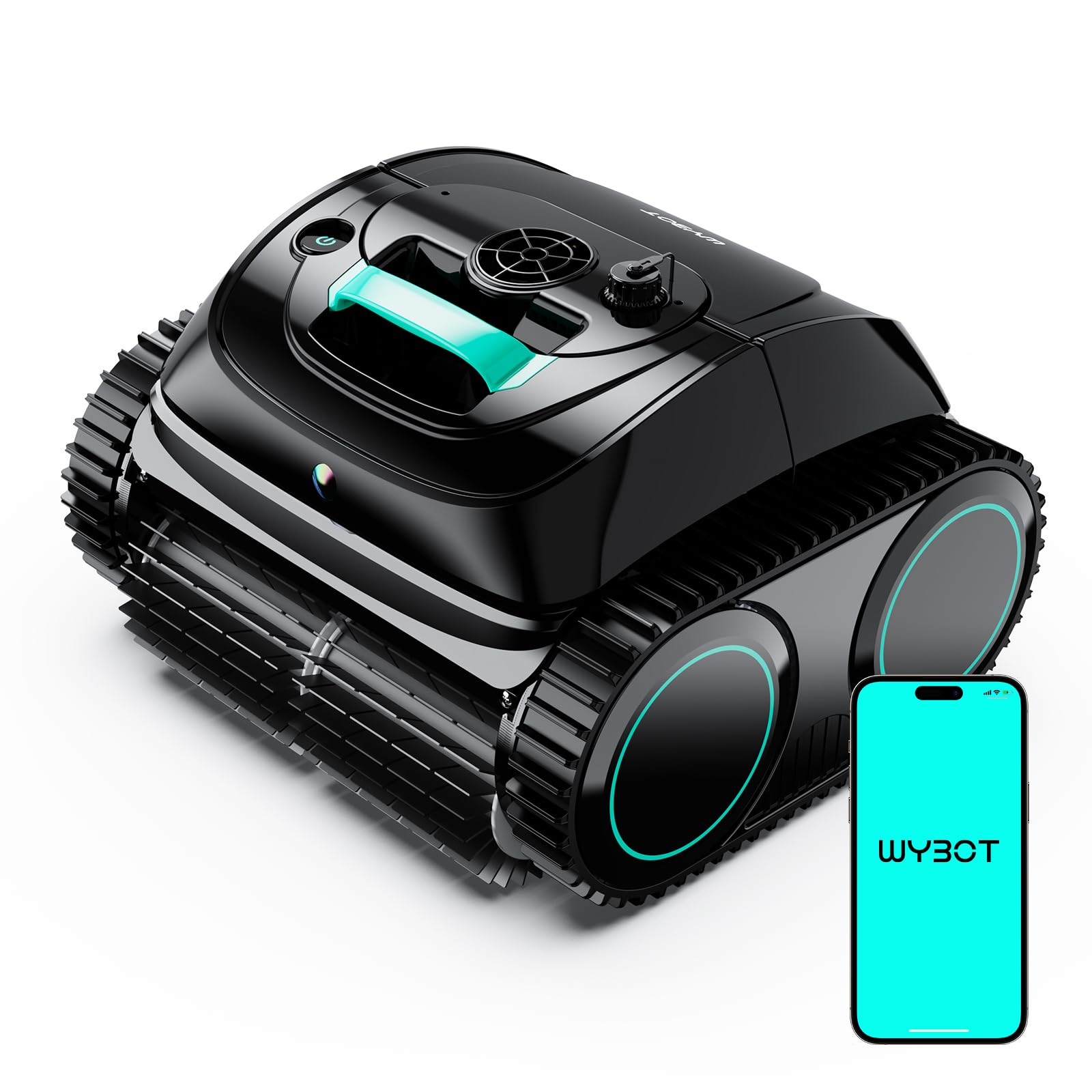
The WYBOT C1 brings gyroscope-based precision navigation to the mid-range price tier, using a high-precision gyroscope to follow optimized N-path and S-path cleaning patterns that systematically cover your pool. This reduces both missed spots and overlapping passes, a significant upgrade over random-bounce units that can leave entire sections untouched. The built-in cleaning algorithm prioritizes walls and waterlines first before transitioning to deep floor cleaning, ensuring the most visible surfaces get attention early in the cycle.
Suction is provided by an upgraded independent water pump motor rated at 3,038 gallons per hour, paired with dual high-grip PVC brushes. The 185-micron filtration system captures leaves, bugs, and typical pool debris, though the micron rating is looser than the premium dual-layer systems — fine sand may pass through and require extra cycles. The battery delivers up to 152 minutes of runtime on a 4-hour charge, covering pools up to 1,618 square feet at depths up to 9.86 feet.
App control and OTA firmware upgrades let you schedule cleaning, customize modes, and track progress remotely, adding ongoing value as the software improves. A retrieval hook is included in the box, making it easy to lift the robot from the water without bending over. Some users report that the battery stops accepting a charge after several months of heavy use, so confirming warranty coverage at purchase is advised.
Why it’s great
- Gyroscope navigation with N-path and S-path patterns
- Prioritizes walls and waterline before floor cleaning
- App control with OTA firmware upgrades
- Retrieval hook included for easy lifting
Good to know
- 185-micron filter does not capture fine sand
- Battery issues reported after extended use
- Warranty card may not be included in the box
7. Nepturox SAT25
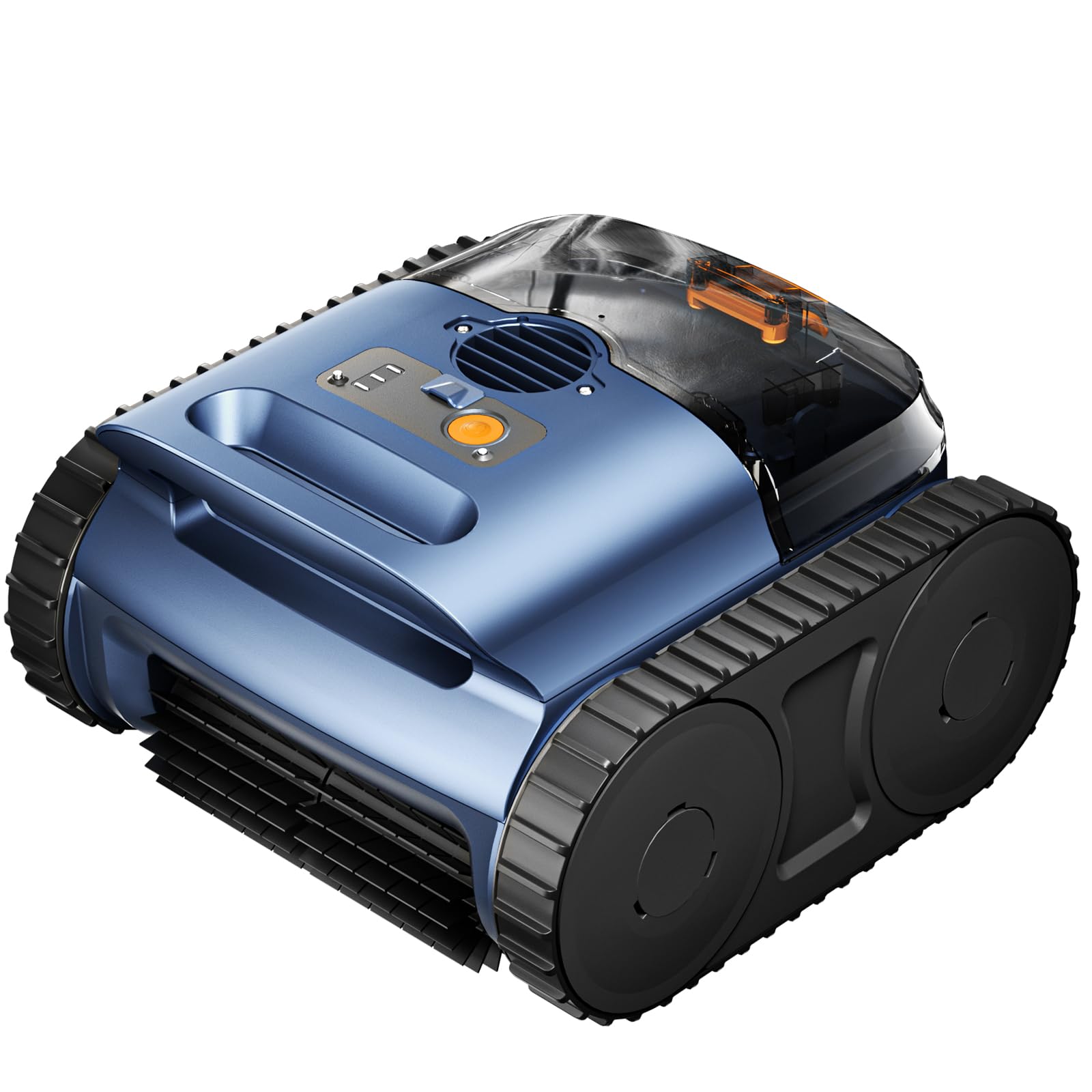
The Nepturox SAT25 distinguishes itself with two independently controlled 180-watt brushless motors — one dedicated to drive and climbing, the other to suction. This dual-motor architecture means the robot doesn’t have to sacrifice climbing torque for suction power or vice versa. The result is confident wall climbing on tile, concrete, and fiberglass surfaces, plus consistent suction to remove everything from fine dirt to heavy leaves in a single pass.
The upgraded track drive system uses wide rubber tracks rather than wheels, providing better grip on slippery surfaces and preventing the robot from sliding back down walls. The tracks also help it navigate over obstacles like drain valves and pool slopes without getting stuck. Smart navigation scans and maps the pool layout to plan efficient cleaning routes, avoiding repeated passes over the same area. The IP68-rated internal system keeps the motors and electronics sealed against water ingress even during extended submersion.
Battery capacity is 144.3 watt-hours, delivering up to 150 minutes of runtime on a 2.5-hour charge — the fastest recharge time among all nine models. The one-touch start system means you drop it in and walk away, no app pairing required for basic operation. Users praise the lightweight design and easy retrieval via the included hook, though the 180W motors produce noticeable noise compared to lower-wattage competitors.
Why it’s great
- Dual 180W brushless motors for independent climbing and suction
- Track drive system prevents wall sliding
- Fast 2.5-hour recharge time
- IP68 waterproof rating for long submersion
Good to know
- Motors produce more noise than lower-wattage units
- No app control for remote scheduling
- Basic one-touch operation lacks cleaning mode customization
8. ABNEMEN SAT25
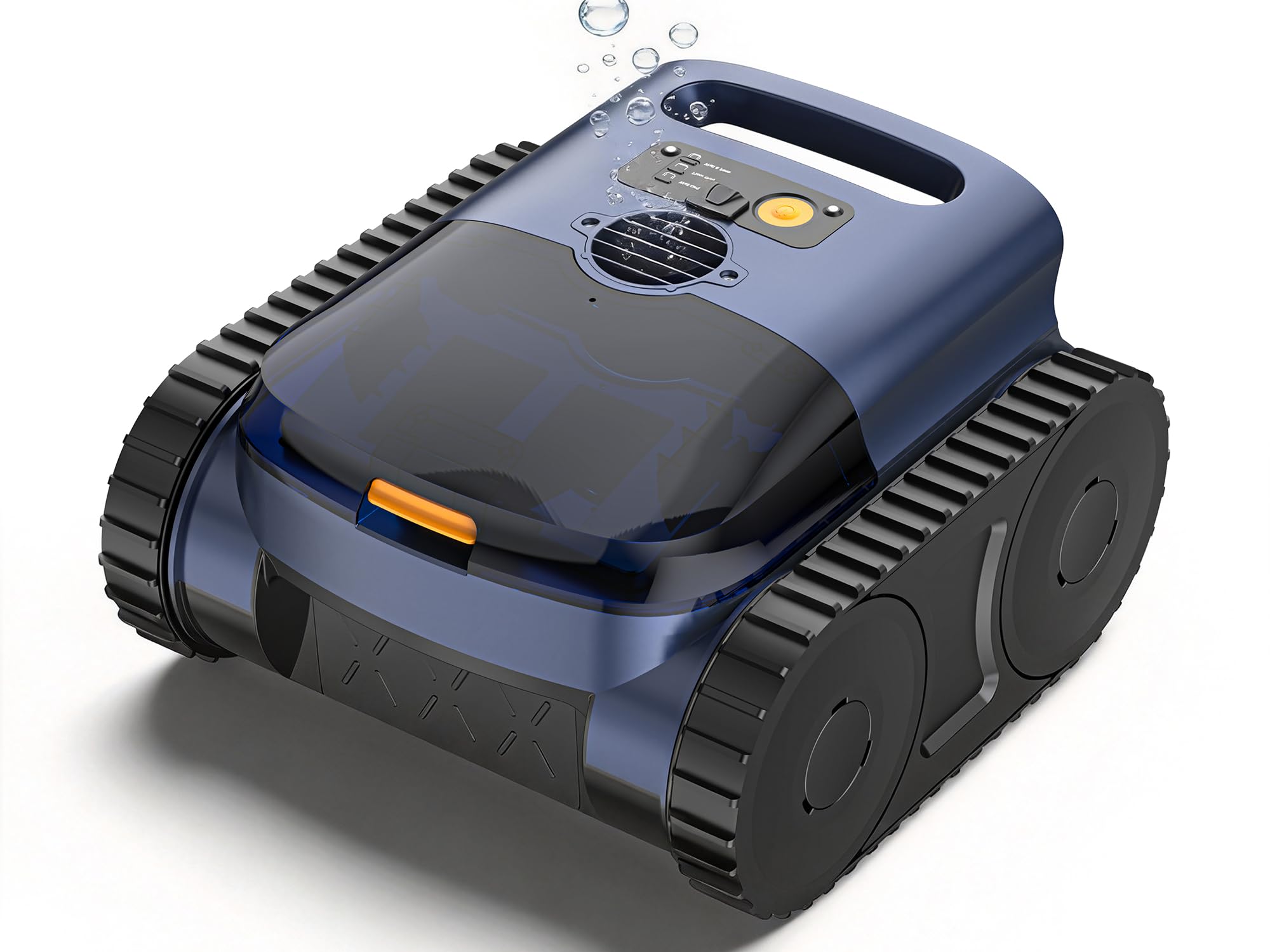
The ABNEMEN SAT25 is positioned as a value-oriented cordless robot that still delivers wall climbing, waterline cleaning, and self-parking functionality. It uses a track-driven design with LED indicator lights and voice reminders that announce when the battery is low or the filter needs cleaning — a thoughtful touch for users who don’t want to monitor an app. The 144.3 Wh battery provides up to 2.5 hours of runtime, enough for most above-ground pools up to 2,150 square feet.
The self-parking feature automatically parks the robot by the poolside when the battery is low, making retrieval straightforward. Hooks on the unit let you lift it out without touching the water. The 300-micron filter basket with 2.5-liter capacity captures hair, sand, leaves, and small stones, though the larger micron rating means it won’t trap fine silt as effectively as tighter-filtration competitors. Multiple cleaning modes — floor, wall, and automatic — let you tailor the cycle to current pool conditions.
Build quality is solid at 14.33 pounds, and the track system handles obstacles like drain valves and slopes without getting stuck. Some users report that the robot can leave up to a quarter of the pool untouched if the navigation algorithm doesn’t map the pool shape correctly, particularly with irregularly shaped inground pools. The included app support adds scheduling and mode selection, though customer service responsiveness has been inconsistent in some reported cases.
Why it’s great
- Self-parking with LED and voice alerts
- Track drive overcomes obstacles like drain valves
- 2.5-hour runtime for above-ground pools
- App support for scheduling and mode selection
Good to know
- 300-micron filter is too coarse for fine silt
- Navigation may miss sections of irregular pools
- Customer service responsiveness is inconsistent
9. Zyerch Blue

The Zyerch Blue is the most accessible entry point into cordless robotic pool cleaning, packing a 7,800 mAh lithium battery that delivers up to 150 minutes of runtime for inground pools up to 1,614 square feet. The 180-watt brushless motor provides strong suction for a unit at this level, efficiently picking up leaves, dirt, sand, and small debris from the floor, walls, and waterline. The 300-micron filter captures typical pool debris, though it’s not designed for ultra-fine particle filtration.
Navigation relies on more than 20 sensors using precise positioning technology to follow an N-shaped cleaning path. This systematic approach is a step above basic random-bounce robots, increasing cleaning efficiency significantly compared to older designs at similar price points. The four-wheel drive system with upgraded motor handles PVC, tile, mosaic, and glass pool surfaces, and the robot weighs just 12.12 pounds — the lightest on this list — making it easy to lift out and store.
One-button operation is genuinely simple: press the button, drop it in, and let it run. The filter cartridge can be turned on or off with a button press for quick cleaning maintenance. Multiple cleaning modes (overall, floor-only, and wall-only) let you match the cycle to current pool needs. Build quality is good for the price point, though some units have reported quality-control issues such as premature battery failure or poor wall-climbing performance.
Why it’s great
- Very affordable entry point for cordless cleaning
- 20-sensor N-path navigation for systematic coverage
- Lightweight 12-pound design for easy handling
- Multiple cleaning modes for different pool conditions
Good to know
- 300-micron filter does not capture fine silt or sand
- Quality control issues reported with battery and wall-climbing
- 4-hour charge time is long relative to runtime
FAQ
How often should I run my auto pool cleaner?
Can a cordless robot clean a freeform or kidney-shaped pool?
Will my robot get stuck on the main drain or pool steps?
What is the real-world lifespan of a cordless pool robot battery?
Final Thoughts: The Verdict
For most pool owners, the auto pool cleaner winner is the Beatbot AquaSense 2 because it combines wireless charging, double-pass waterline scrubbing, ultrasonic navigation, and a 4-hour runtime in a single polished package. If you want massive suction for heavy debris and a 5-liter filter basket that rarely needs emptying, grab the Beatbot Sora 30. And for corded simplicity with unlimited runtime and proven reliability, nothing beats the Dolphin Advantage.