
That groaning whine when you turn the wheel at a stop? That’s the sound of your power steering pump working against fluid that has lost its chemical integrity. Over time, heat and shear stress break down the base oil and deplete the anti-wear additives, turning a perfectly capable hydraulic fluid into a frothy, corrosive mess that chews through seals and expensive steering racks. Choosing the correct fluid isn’t about brand loyalty—it is about matching the viscosity, friction modifiers, and seal compatibility to the specific demands of your car’s pump and rack design.
I’m Min — the co-founder and writer behind Gadgets Feed. I spend my time sifting through lab-test datasheets and viscosity charts to find the formulations that actually hold up under sustained hydraulic load, so you don’t have to guess which bottle belongs in your car.
Whether you are flushing worn-out mineral oil or topping off a finicky modern rack, the right fluid keeps the feel consistent from -10°F to 250°F. After sorting through seven of the most common options on the shelf, here is everything you need to confidently pick the best auto power steering fluid for your specific vehicle.
How To Choose The Best Auto Power Steering Fluid
Modern power steering systems range from simple hydraulic racks to complex electro-hydraulic units that also feed suspension and convertible-top circuits. Picking the wrong fluid can cause pump cavitation, seal shrinkage, or a permanently vague on-center feel. Focus on these three variables before you pour anything into the reservoir.
Viscosity & Base Oil Type
Most modern Asian and European systems use a thin, full-synthetic fluid (often in the 5W-20 viscosity range) to circulate through tight pump clearances. Older domestic vehicles and some heavy-duty applications use thicker mineral-based ATF or universal PSF. If your pump whines when cold, you likely need a lower pour point synthetic. If it leaks past worn seals, a slightly thicker mineral fluid with seal conditioners may buy you more time.
Seal Compatibility
Some fluids contain aggressive “seal swellers” that soften old, brittle O-rings to stop drips temporarily. Others use elastomer protectors that keep pliable seals pliable without changing their dimensions. If you flush a system that originally used a low-swelling fluid (many Honda/Acura racks are sensitive here), introducing a seal-sweller can cause the O-rings to swell too much, leading to binding or stuck valves. Always check whether the fluid lists “no seal swellers” on the label if you own an Asian vehicle.
OEM-Specific Formulations
A “universal” fluid that claims to work in everything often compromises friction modifiers to hit the widest compatibility range. An OEM-specific fluid (like ACDelco for GM or Nissan genuine for Nissan) is blended to match the exact additive package the rack was designed around. For modern luxury and German cars that specify Pentosin CHF 11S or equivalent, using a generic ATF can destroy the pump in a few hundred miles — those systems require a specific low-viscosity, high-film-strength hydraulic fluid rated for electro-hydraulic pumps.
Quick Comparison
On smaller screens, swipe sideways to see the full table.
| Model | Category | Best For | Key Spec | Amazon |
|---|---|---|---|---|
| TRIAX Powerfluid 450 CHF 11S | Full Synthetic | European / Luxury cars | -76°F pour point, 266°F high-temp stability | Amazon |
| Royal Purple 01320 Max ATF | Full Synthetic | High-mileage auto transmissions & PS | High film strength, reduces heat | Amazon |
| Lubegard 24242 COMPLETE Synthetic PSF | Full Synthetic | Honda / Acura & Ford Super Duty | No seal swellers; 440°F flash point | Amazon |
| TRIAX Asian Car PSF | Full Synthetic | Asian vehicles (Honda, Toyota, Kia) | 5W-20 viscosity; -50°F pour point | Amazon |
| ACDelco GM Original 10-5074 | Mineral-Based | GM vehicles & older domestics | Non-foaming, anti-corrosive additive package | Amazon |
| Lucas Oil 10019 Hydraulic Oil Booster | Additive / Thickener | Stopping small leaks in old systems | Conditions seals; thick gel-like viscosity | Amazon |
| Nissan Genuine 999MP-AG000P | Mineral-Based | Nissan / Infiniti rack & pinion systems | Detergent and stabilizer additives; 12 oz | Amazon |
In‑Depth Reviews
1. TRIAX Powerfluid 450 CHF 11S

This full-synthetic PAO and ester formulation is the closest you can get to Pentosin CHF 11S without paying the dealership premium. It is arctic-grade with a -76°F pour point, meaning it stays fluid enough to circulate even in deep winter starts where mineral fluids turn to sludge. The 266°F high-temperature stability ensures it resists thermal breakdown in high-load scenarios like tight autocross runs or extended highway driving in hot climates.
Compatibility is the headline here — it covers everything from Audi and BMW to Mercedes-Benz, VW, Mini, and even some GM and Ford applications that specify CHF 11S or equivalent. The zero-shear viscosity claims are backed by real-world reports of quieter pumps and immediate steering response after a flush. If you own a German luxury car or a modern Land Rover, this is the drop-in replacement that keeps the rack happy.
The quart bottle is enough for most passenger car systems after a full flush, and the price undercuts the Pentosin equivalent by a significant margin. Owners of older Mini Coopers report that this fluid eliminated the notchy, stiff steering feel that develops when the stock fluid degrades. For anyone maintaining a European vehicle with a CHF 11S requirement, this is the smart buy.
Why it’s great
- True full-synthetic PAO/ester blend delivers extreme cold-flow and high-temp stability
- Compatible with a huge range of European, Asian, and US vehicles using CHF 11S spec
- Eliminates notchy steering and pump whine at a fraction of OEM cost
Good to know
- Does not work in systems requiring ATF or standard PSF — only CHF 11S applications
- Only sold in 1-quart bottles; need multiple for a full flush on larger systems
2. Royal Purple 01320 Max ATF
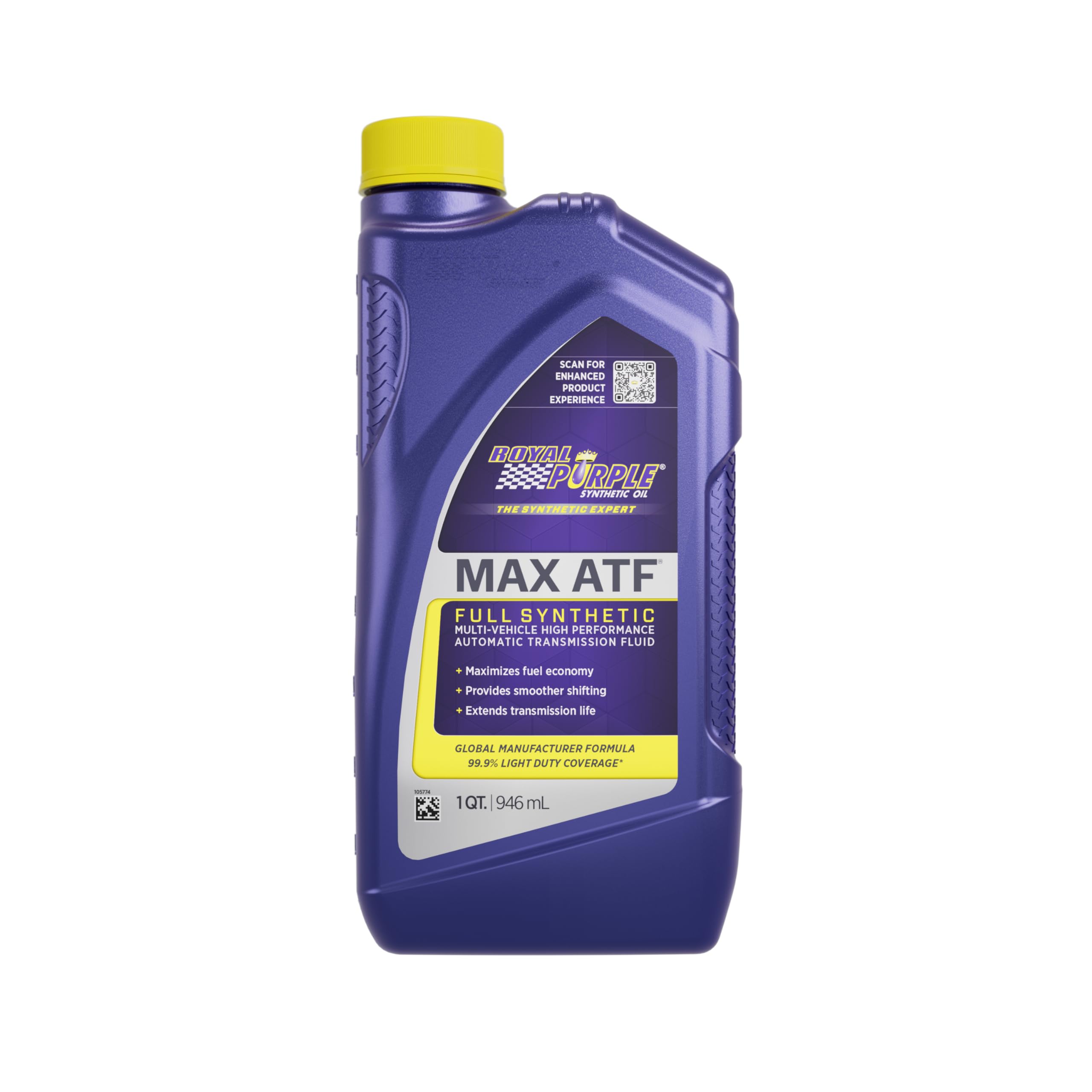
While labeled as an automatic transmission fluid, the high film strength and extreme heat resistance of Royal Purple Max ATF make it a popular choice for power steering systems that call for Dexron or Mercon spec fluids. The synthetic formulation dramatically reduces operating temperature, which directly addresses the pump wear that causes that low-speed groan. Many high-mileage vehicles see restored steering smoothness after a single drain-and-fill.
The base oil is engineered for shear stability, so it does not thin out as quickly as conventional ATF when exposed to the constant pressure cycles inside a rack-and-pinion unit. Real-world data from owners of neglected transmissions show that this fluid can revive slipping shifts, and the same friction-modifier chemistry applies to power steering pumps that rely on ATF for lubrication. It works particularly well in Ford, GM, and Chrysler systems that specify ATF+4 or Mercon V.
One quart is typically enough for a top-off or a single drain-and-fill on most passenger cars, but a full flush requires multiple quarts. The purple dye also makes it easy to spot leaks. If your owner’s manual lists a standard ATF as the approved power steering fluid, this is a meaningful upgrade in longevity and thermal protection.
Why it’s great
- High film strength reduces pump wear and heat in ATF-based systems
- Shear-stable synthetic formula resists viscosity breakdown over time
- Works in Ford, GM, and Chrysler power steering that takes ATF
Good to know
- Not compatible with Honda/Acura or European CHF 11S systems
- Primarily an ATF; confirm your PS system accepts ATF before using
3. Lubegard 24242 COMPLETE Synthetic PSF
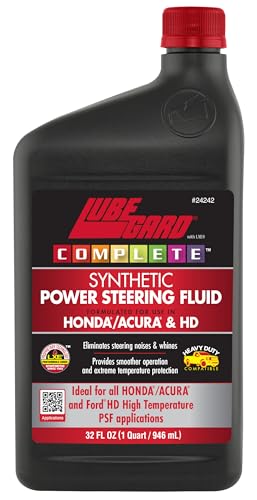
Lubegard designed this specifically for Honda and Acura systems, and the key differentiator is the absence of seal swellers. Honda racks are notoriously sensitive — aggressive additives can cause seals to expand, leading to valve binding and erratic assist. This fluid uses a seal-protector approach instead, keeping the O-rings pliable without dimensional change. It also meets the full-synthetic requirement for 2007-and-up Honda models, which demands a higher flash point (440°F here) to resist foaming under high-pressure pump operation.
The 32-ounce bottle is larger than the standard quart, giving you enough volume to do a full flush or at least two drain-and-fill cycles on most Honda and Acura sedans. Owners of 2003-2007 Accords and CR-Vs report that it immediately eliminates the moaning noise after reservoir cleaning and a fluid swap. It is also cross-compatible with 2012-and-up Ford Super Duty trucks that require Motorcraft XL-22 (high-temperature PSF), which adds versatility for households with mixed fleets.
The additive package includes anti-wear chemistry that significantly reduces friction on the pump vanes and rack pistons. For anyone who wants to keep a high-mileage Honda steering system feeling tight without risking seal damage, this is the reference fluid. The only catch is that it is not ideal for older GM or Asian vehicles that expect a mineral-based fluid — stick to Honda/Acura or Ford Super Duty applications for best results.
Why it’s great
- Specifically formulated with no seal swellers — safe for sensitive Honda racks
- Large 32 oz bottle covers a full flush on most sedans
- High 440°F flash point prevents foaming and oxidation
Good to know
- Designed primarily for Honda/Acura and Ford Super Duty — not a universal fluid
- Some users report the bottle can arrive with a loose seal; check before use
4. TRIAX Asian Car PSF
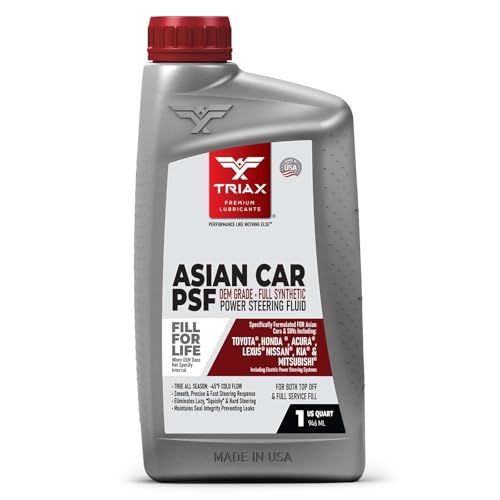
This full-synthetic OEM-grade fluid covers the widest Asian vehicle range we have seen in a single bottle — Honda, Toyota, Lexus, Nissan, Infiniti, Mazda, Hyundai, Kia, Subaru, and Mitsubishi are all listed on the label. The 5W-20 viscosity grade is carefully chosen to match the pump clearances and cold-flow requirements of late-model Asian racks, delivering consistent assist from arctic winter starts up to extreme heat. The pour point of -50°F ensures reliable flow when the thermometer drops below zero.
The special seal elastomer additive works to prevent cracking and hardening common in older Asian vehicles, reducing the chance of leaks without the aggressive swell chemistry that can cause binding. Owners of multiple Honda and Toyota models report a noticeable improvement in steering smoothness and reduced whine after just one drain-and-fill cycle. The fluid pours clear and stays transparent, making it easy to monitor condition on the dipstick.
One quart is sufficient for a standard drain-and-fill on most sedans and crossovers, though a full flush on a larger SUV may require two bottles. It meets or exceeds OEM specs for the brands listed, making it a legitimate alternative to the dealership’s overpriced bagged fluid. For anyone with a mixed garage of Asian vehicles, this simplifies inventory to a single shelf bottle.
Why it’s great
- Full synthetic 5W-20 formula matched to Asian OEM pump tolerances
- Seal protectors prevent leaks without aggressive swelling
- Extreme cold performance down to -50°F
Good to know
- Not recommended for European CHF 11S systems or older domestic ATF-based racks
- Bottle packaging can sometimes arrive without a factory seal
5. ACDelco GM Original Equipment 10-5074
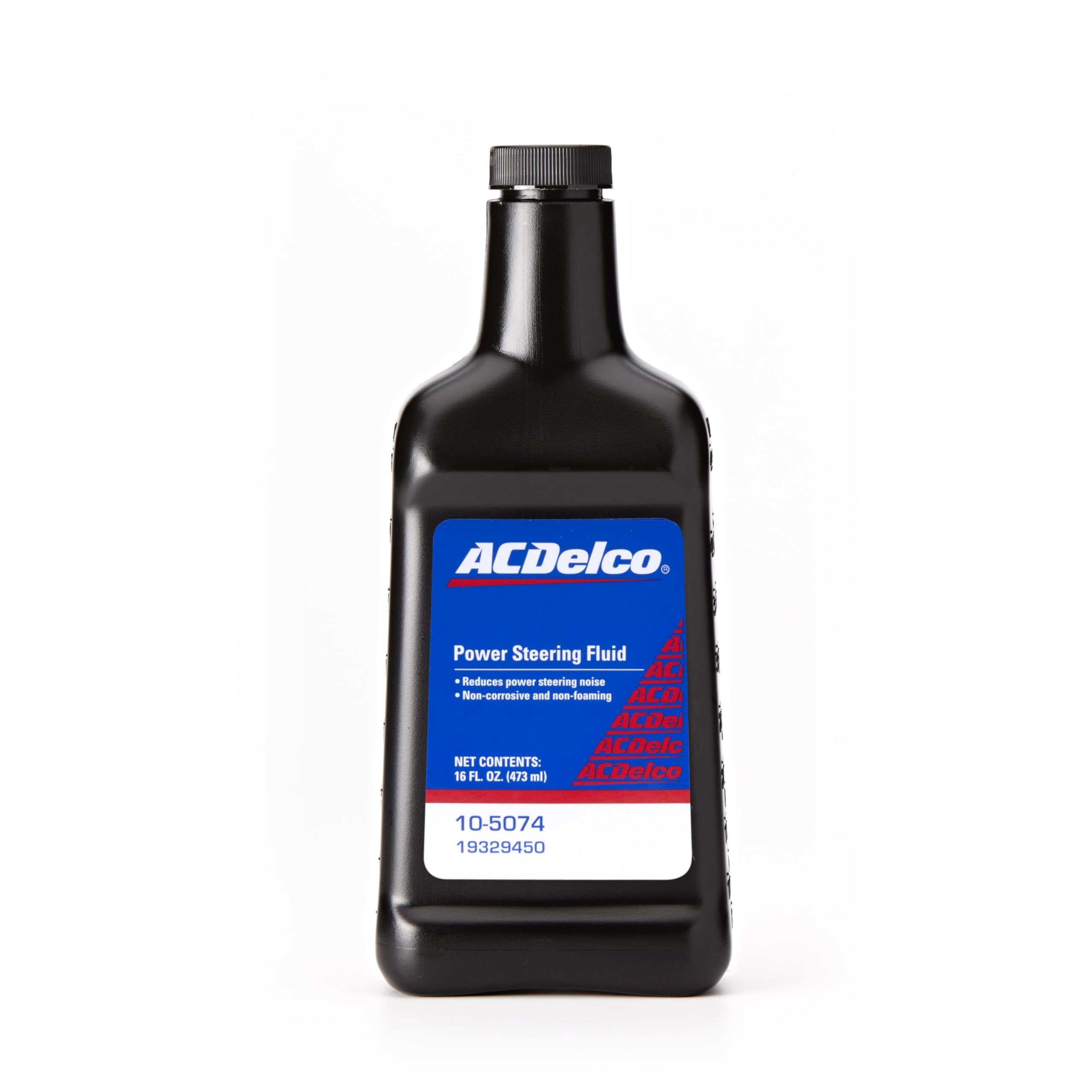
The ACDelco 10-5074 is the factory-fill for a wide range of General Motors vehicles, and it follows the traditional mineral-based formulation with a carefully balanced additive package. It is non-foaming and anti-corrosive, which is critical for pumps that sit idle for long periods and develop moisture condensation inside the reservoir. The special friction modifiers are tuned to reduce the gear-whine noise common in GM racks, especially on Silverados, Sierras, and Tahoe models that use the same hydraulic architecture.
Being the OEM specification fluid, it guarantees that the viscosity and seal compatibility match what was originally put in at the factory. Owners of 2000s-era GMC and Chevy trucks report that a simple drain-and-fill with this fluid restores the steering feel to like-new condition, eliminating the low-speed moan that develops as the original fluid oxidizes. It is also a safe choice for anyone who simply wants the exact fluid the dealership would use, without the markup.
The 16-ounce bottle is small but usually enough for a single drain-and-fill on most GM passenger cars and light trucks. For a full system flush you will need multiple bottles. It does not offer the extreme cold-flow performance of full synthetics, but for a daily-driven GM vehicle operating in moderate climates, it delivers exactly the right baseline protection. If your vehicle is a GM product and the manual says to use GM PSF, this is the fluid to pick.
Why it’s great
- Factory original fluid for GM vehicles — perfect fit and performance
- Non-foaming formula prevents pump cavitation and aeration noise
- Anti-corrosive package protects the rack from moisture damage
Good to know
- 16-ounce bottle is small; multiple bottles needed for a full flush
- Mineral-based; not ideal for extreme cold climates or modern synthetic-only systems
6. Genuine Nissan Fluid 999MP-AG000P
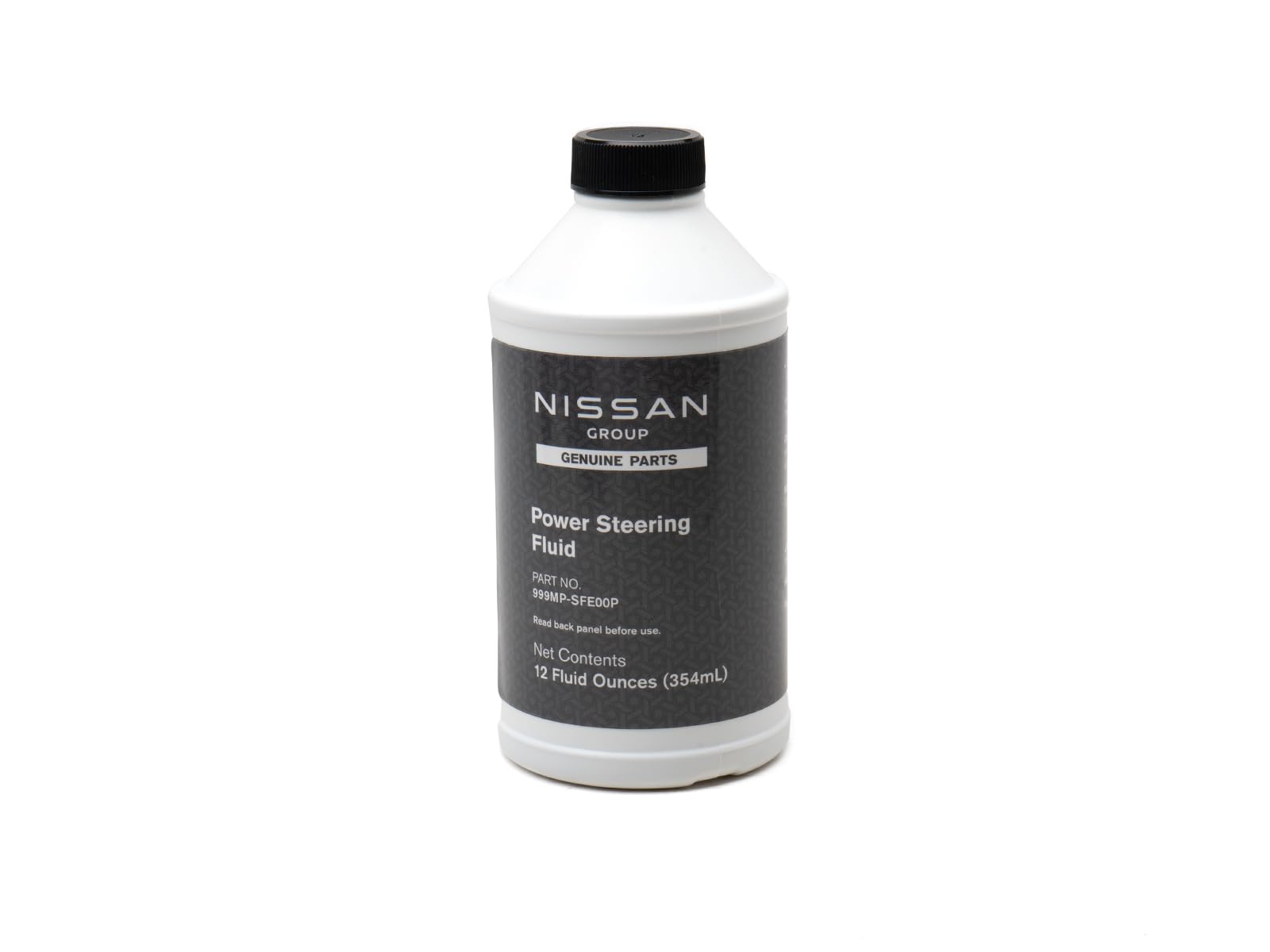
This is the exact fluid that Nissan ships in every new Altima, Maxima, Pathfinder, and Infiniti model with a conventional hydraulic rack. It contains a specific detergent and stabilizer package designed to reduce bearing wear and valve wear inside the Nissan rack, while preventing the hardening and shrinkage of the internal shaft seals. For Nissan and Infiniti owners, this is the zero-guesswork choice — no cross-referencing needed, no compatibility charts to consult.
The formula is mineral-based with a deep red dye that makes checking fluid color easy — fresh fluid is a bright cherry red, while degraded fluid darkens to a murky brown. Owners of high-mileage Nissans report that a drain-and-fill with this fluid noticeably improves steering response and reduces the “sticky” feel that develops as the original additive package depletes. It is also suitable for many other foreign and domestic vehicles that call for a standard PSF, but its primary strength is the precise Nissan additive match.
The 12-ounce bottle is the smallest volume on this list, which is fine for a simple top-off but means you will need at least two or three bottles for a proper flush. The price per ounce is higher than generics, but for a Nissan that still has the factory rack, the added seal protection and detergent action are worth the premium. It is the closest you can get to the dealership fill without the service bay labor charge.
Why it’s great
- Factory-matching detergent and stabilizer additives for Nissan/Infiniti racks
- Prevents seal hardening and shrinkage that cause internal bypass leaks
- Easy-to-read red dye helps monitor fluid condition
Good to know
- 12 oz bottle is very small; multiple bottles required for any substantial fluid change
- Higher price per ounce compared to universal alternatives
7. Lucas Oil 10019 Hydraulic Oil Booster and Stop Leak

The Lucas Oil 10019 is less a standalone fluid and more a conditioning additive that thickens existing hydraulic oil and conditions seals to stop leaks. It is a thick, gel-like concentrate that blends with both synthetic and conventional hydraulic fluids, raising the viscosity just enough to slow seepage past worn O-rings and pump shaft seals. It also contains varnish removers that can restore pressure by cleaning sticky valve spools inside the rack, which is why it has a strong following among owners of hydraulic jack systems and older power steering racks alike.
Real-world reports show it takes about three days to a week to fully condition a seal — it is not an instant fix. Owners of older GM trucks and Jeep models with slow-developing power steering leaks report a significant reduction in drip rate, though large leaks from damaged seals still require mechanical replacement. It also reduces the operating temperature of the hydraulic system by improving lubricity, which can extend the life of a marginal pump that is on the verge of whining.
The 1-quart bottle is enough to mix with 2-3 quarts of existing fluid, making it a cost-effective band-aid for high-mileage systems. It is not recommended as a complete replacement for conventional PSF, and it should not be used in modern electronic power steering pumps that require a thin, low-viscosity synthetic. For a work truck or a beater car where a rack replacement is not yet worth the investment, this is a practical stopgap that demonstrably buys time.
Why it’s great
- Conditions and swells seals to stop or slow small fluid leaks
- Removes varnish and restores hydraulic pressure in aged systems
- Compatible with both synthetic and conventional hydraulic oils
Good to know
- Not a standalone fluid — intended to be mixed with existing hydraulic oil
- Thick gel viscosity can interfere with modern low-viscosity EPS systems
FAQ
Can I use automatic transmission fluid in my power steering system?
How often should I change my power steering fluid?
What does it mean if my power steering fluid is foamy?
Is it safe to mix synthetic and mineral power steering fluid?
Why does my power steering pump whine after I replaced the fluid?
Final Thoughts: The Verdict
For most users, the best auto power steering fluid winner is the TRIAX Powerfluid 450 CHF 11S because it delivers true full-synthetic protection, extreme cold-flow, and broad European/Asian/US compatibility at a fraction of the Pentosin price. If you need a fluid specifically for a Honda or Acura rack that refuses to tolerate seal swellers, grab the Lubegard 24242 COMPLETE Synthetic PSF. And for a high-mileage Nissan or Infiniti where you want zero guesswork, nothing beats the Genuine Nissan Fluid 999MP-AG000P.