
Painting bare metal without the right foundation is a gamble that almost always ends in peeling paint and rust bloom. A dedicated auto primer for bare metal chemically etches the surface or forms a hard epoxy barrier, giving your topcoat something real to cling to while sealing out moisture.
I’m Min — the co-founder and writer behind Gadgets Feed. My research process for this guide involved cross-referencing dozens of technical data sheets and analyzing hundreds of verified buyer reports on adhesion, corrosion resistance, and sandability across different metal substrates.
After combing through the chemistry, coverage claims, and real-world results, I’ve narrowed the field to the seven formulations that actually deliver on their promise. These are the models that define the auto primer for bare metal category for DIY restorers and shop professionals alike.
How To Choose The Best Auto Primer For Bare Metal
The wrong primer on bare metal is worse than no primer — it can trap moisture against the substrate and accelerate corrosion. Your choice depends on the metal type, the environment the part will live in, and the topcoat system you plan to use.
Etching vs. Epoxy: The Two Chemical Families
Self-etching primers use phosphoric acid to microscopically bite into the metal, creating a mechanical anchor for paint. They work best on steel and aluminum that is clean and lightly sanded. Epoxy primers, especially 2K catalyzed versions, create a thick, solvent-resistant barrier that seals the metal completely. Epoxy is the stronger choice for long-term moisture protection and for sealing fiberglass repairs or body filler underneath.
Aerosol vs. Gun-Applied (Quart Kits)
Aerosol cans are convenient for small panels, touch-ups, and DIYers who don’t own a spray gun. The tradeoff is less control over film build and a higher cost per square foot. Quart kits require a primer gun and compressor but deliver a thicker, more uniform coating and significantly better value when priming an entire car or large truck bed.
Pot Life and Sandability Windows
2K primers begin curing the moment you activate the hardener. A 48-hour pot life (like the Eastwood AeroSpray) gives you flexibility for multiple coats across a weekend. Single-stage aerosols remain ready until the can empties but typically cure softer. Check the recoat window — some epoxy primers require topcoating within 24 hours or after a full cure and sanding.
Quick Comparison
On smaller screens, swipe sideways to see the full table.
| Model | Category | Best For | Key Spec | Amazon |
|---|---|---|---|---|
| SprayMax 2K Epoxy Primer | 2K Epoxy Aerosol | Professional-grade adhesion on steel/aluminum | 15-min dust-dry time | Amazon |
| Eastwood 2K Epoxy Gray Primer | 2K Epoxy Aerosol | Small panels with 48-hr pot life | 10-16 sq ft coverage | Amazon |
| SEM 39683 Grey Self Etching Primer | Self-Etching Aerosol | Aluminum and bare steel prep | Fast-drying formula | Amazon |
| Custom Shop Black Epoxy Primer Kit | 2K Epoxy Quart Kit | Direct-to-metal on full panels | 1:1 mix ratio, 4-hr pot life | Amazon |
| Raptor Acid Etch Primer 1K | Acid Etch Aerosol | Galvanized steel and aluminum | Phosphoric acid ester formula | Amazon |
| Transtar 4603 Gray 2-in-1 Primer | 2-in-1 Aerosol | Budget-friendly sandable base | Wet-sands after 20 min | Amazon |
| Acme Sherwin-Williams FP410 High Build | 2K Urethane Quart Kit | High-build filling on body panels | 2K urethane, easy-sand | Amazon |
In‑Depth Reviews
1. SprayMax 2K Epoxy Primer Black
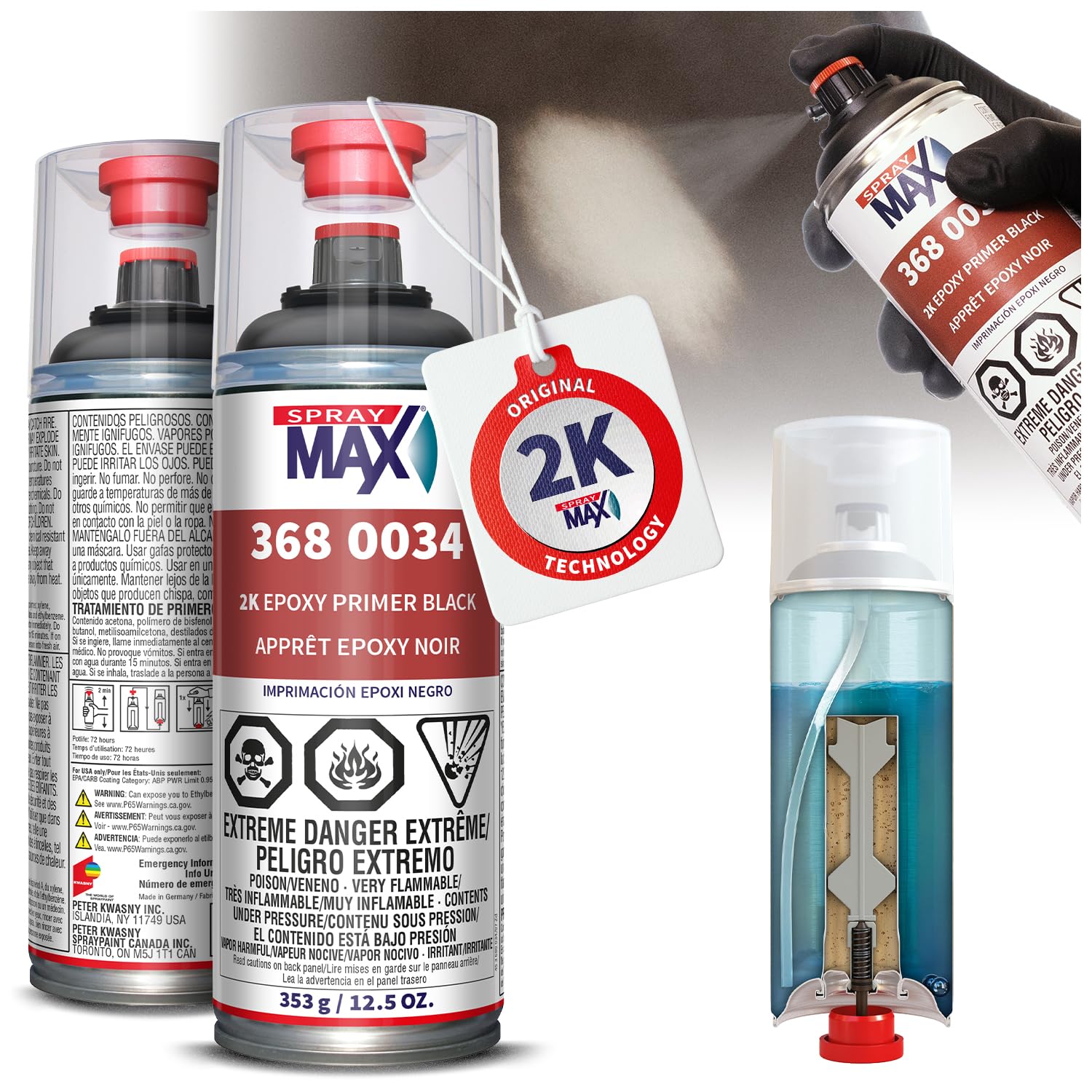
The SprayMax 2K Epoxy Primer sits at the top of the aerosol category because its catalyzed two-component formula delivers genuine professional-grade epoxy chemistry without needing a spray gun. The internal activator is released when you press the bottom of the can, giving you a 2K system that cures hard and chemically resists solvents from your topcoat. This isn’t a shelf-stable single-stage primer — it forms a true epoxy film that seals bare metal against moisture intrusion.
The variable nozzle lets you switch between a focused stream and a wide fan pattern, which matters when you’re walking the line between a motorcycle tank and a flat hood panel. Buyers consistently report dust-dry results in about 15 minutes and the ability to sand within a few hours. Coverage is the main limitation — expect one can to handle a door and a rocker panel, not an entire vehicle. For a 12.5-ounce can, the film hardness rivals gun-applied epoxy.
Long-term adhesion reports from users who topcoated with urethane paint show zero lifting or delamination after two years of outdoor exposure. The gloss black color works well as a sealer under dark topcoats, though you’ll want gray if you plan to spray a light metallic base. The price per can sits in the premium aerosol bracket, but the chemical performance justifies the jump for any repair where failure is not an option.
Why it’s great
- Genuine 2K epoxy cures hard enough to block solvent penetration
- Fan-tip nozzle provides spray-gun-like pattern control
- Exceptional corrosion resistance on steel and aluminum substrates
Good to know
- Single can covers limited area — budget two cans for a hood and two fenders
- Once activated, the can must be used within the pot life window
2. Eastwood 2K Epoxy Gray Primer AeroSpray

Eastwood’s AeroSpray system delivers the longest usable pot life in the aerosol epoxy segment at a full 48 hours after activation. That means you can spray the first coat on Friday evening and still have usable primer Saturday afternoon without mixing fresh material. The engineered fan nozzle produces a pattern closer to a production HVLP gun than a standard rattle can, reducing orange peel and dry spots on vertical panels.
At 12 ounces per can with a stated coverage of 10 to 16 square feet, this primer is sized for targeted panel work rather than full-vehicle applications. The gray color provides a neutral foundation that works equally well under light and dark topcoats. Buyer feedback consistently highlights the smooth application and the fact that it sands easily without gumming up paper — a common frustration with cheaper single-stage primers.
One tradeoff is the 48-hour full-cure time before you can wet-sand or apply heavy coats of urethane. If you need to move faster, the SprayMax dries harder quicker. The price per can is slightly below the SprayMax, making it a better value for small-scale restorers who want professional 2K chemistry without rushing the job.
Why it’s great
- 48-hour pot life gives you multi-day application flexibility
- Specialized fan nozzle eliminates common aerosol streaking
- Sands clean without loading up sandpaper grit
Good to know
- Full cure takes 48 hours before sanding is recommended
- Can size is best for smaller jobs rather than full-vehicle coverage
3. SEM 39683 Grey Self Etching Primer

SEM’s self-etching primer is a go-to for shops that need a reliable acid-etch formula that doesn’t require mixing or activation. The 15.5-ounce can delivers generous coverage for its size, and the etch primer chemistry works by depositing a zinc-phosphate layer that gives paint a mechanical anchor. This is the right choice for bare steel that is clean and lightly abraded, especially on interior structures where epoxy’s solvent resistance isn’t necessary.
Buyers report excellent adhesion on aluminum substrates, including outboard lower units and motorcycle engine cases. The grey color lays down opaque in one medium coat, and the dry time is fast enough that you can scuff-sand and topcoat within 20 to 30 minutes. Unlike some etching primers that leave a powdery surface, SEM’s formulation dries to a smooth, sandable film that doesn’t clog abrasives.
The main consideration with any self-etching primer is that it provides less moisture barrier thickness than an epoxy system. If the primed part will sit for weeks before topcoating, or if it lives in a wet environment, you’re better off with a 2K epoxy sealer over the etch coat. For immediate topcoating on clean metal, though, this is as reliable as aerosol etching gets.
Why it’s great
- Phosphate etching provides tenacious mechanical bond to bare metal
- Fast dry allows sanding and topcoating within the same hour
- Does not clog sandpaper like cheaper self-etching competitors
Good to know
- Thinner film build means less corrosion barrier than epoxy primers
- Must be topcoated promptly to prevent moisture absorption
4. Custom Shop Black Epoxy Primer/Sealer Kit

The Custom Shop KEP Series kit is a true 1:1 mix epoxy primer designed for Direct-to-Metal application through a spray gun. The quart kit includes one pint of primer and one pint of hardener, yielding a full quart of sprayable material with a 4-hour pot life. This is significantly more material per dollar than any aerosol option, making it the logical pick for anyone painting a car body, truck bed, or multiple panels.
The anti-corrosive resin package includes zinc-phosphate additives that provide excellent salt-spray resistance. Users report that the primer lays down smooth and builds film thickness quickly, allowing you to block-sand out minor imperfections before topcoat. The black color works well as a sealer under dark paints, though some buyers note that the solids at the bottom of the can require aggressive mechanical stirring — a drill-mounted mixer is strongly recommended.
One important detail: this primer can be used as a sealer by adding reducer, which lets you spray a thin, glossy barrier coat before color. The 1:1 ratio simplifies mixing compared to 4:1 epoxy systems, reducing waste. The downside is that for someone without a spray gun and compressor, the entry cost includes equipment. But if you already have a gun, this kit delivers more performance per square foot than any aerosol.
Why it’s great
- 1:1 mix ratio is the simplest epoxy mixing on the market
- Excellent anti-corrosive package for long-term metal protection
- Can double as a sealer with reducer, saving an extra product purchase
Good to know
- Requires a spray gun and compressor — not aerosol convenient
- Solids settle hard; expect 10 minutes of mechanical stirring
5. Raptor Acid Etch Primer 1K Aerosol

Raptor’s acid etch primer uses a phosphoric acid ester formula specifically engineered to bite into difficult-to-adhere surfaces like galvanized steel and aluminum. If you’ve ever watched paint peel off a galvanized panel, you know why this chemistry matters — standard primers simply can’t create a mechanical bond on the zinc layer. Raptor’s etch formula modifies the surface at a microscopic level so your topcoat actually sticks.
The flat-fan nozzle delivers a wide, even pattern that reduces overspray compared to standard conical aerosol nozzles. Users report that one 13.2-ounce can covers a pair of running boards or a set of bumpers with enough film build to scuff-sand and paint. The primer dries to a matte gray finish that sands easily, and it accepts urethane, enamel, and bed liner topcoats without compatibility issues.
Customer feedback is consistent on one point: this primer works best when you follow the instructions precisely. Clean the metal with a wax-and-grease remover, apply the etch coat, and don’t skip the topcoat window. Users who primed and then stored parts for months reported rust breakthrough because the etch film alone isn’t a moisture barrier. It’s an adhesion promoter first, not a sealer.
Why it’s great
- Formulated specifically for galvanized steel where other primers fail
- Flat-fan nozzle gives wide, even coverage per pass
- Compatible with urethane, enamel, and two-part bed liners
Good to know
- Thin film offers limited corrosion protection without topcoat
- Must topcoat within a reasonable window to prevent moisture pickup
6. Transtar 4603 Gray 2-in-1 Primer
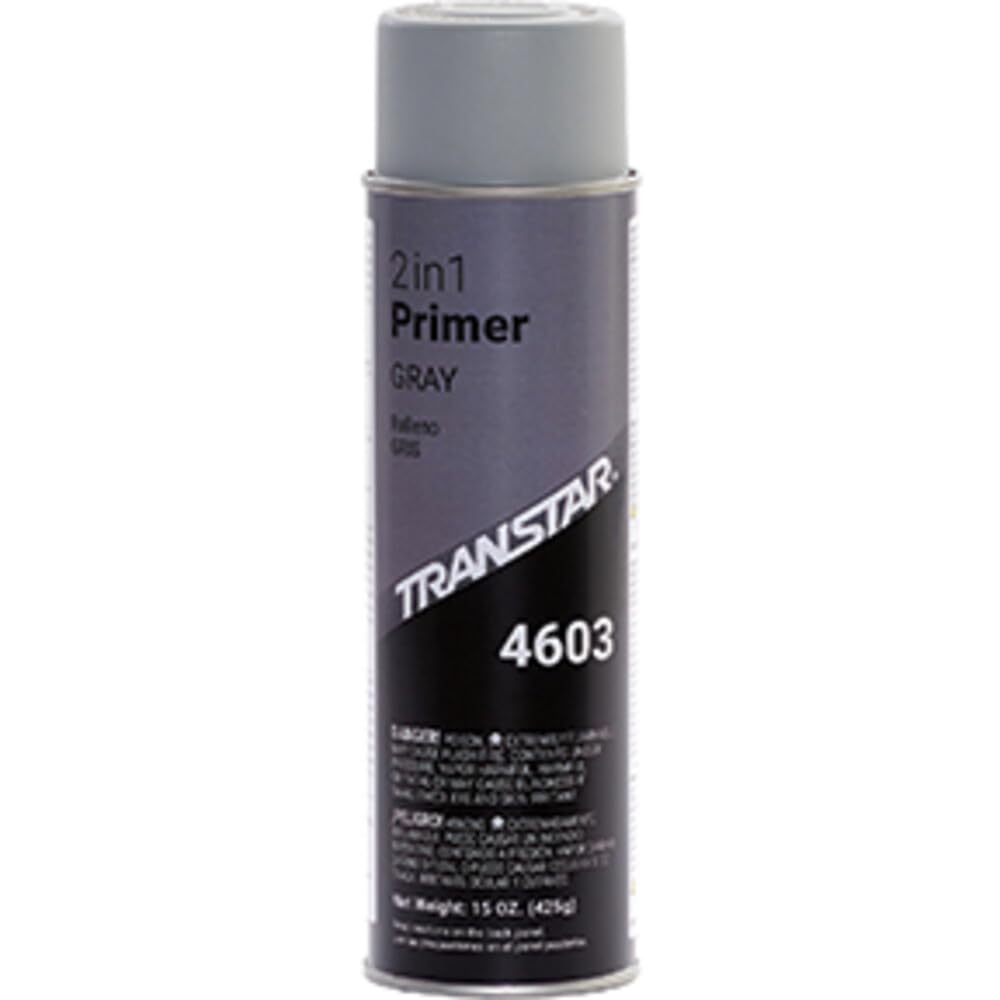
Transtar’s 2-in-1 primer is a budget-conscious single-stage option that fills the gap between a basic etch coat and a proper high-build primer. It lays down smoothly, sands easily after 20 minutes, and doesn’t clog sandpaper — a major advantage over the cheapest hardware-store primers that gum up as soon as you touch them with 400-grit. Users report it works well under single-stage urethane on hoods, fenders, and other small panels.
The 15-ounce can provides competitive coverage for the price point, and the gray color gives a neutral base that hides color changes from repairs better than red or black primers. One experienced buyer noted that it sprays and sands like a much more expensive product, making it a smart choice for DIY painters who want decent results without stepping up to 2K chemistry. It also wetsands cleanly, which is rare at this price tier.
The limitation is that this is not a 2K catalyzed product, so it cures softer and provides less chemical resistance. If you plan to use aggressive solvents in your topcoat or if the part will see fuel or brake fluid exposure, you need an epoxy. But for a daily-driver restoration or a budget hot-rod project, the Transtar delivers more than its price suggests.
Why it’s great
- Sands and wetsands cleanly without gumming up paper
- Excellent coverage for the cost per can
- Wetsands after just 20 minutes for fast workflow
Good to know
- Single-stage formula cures softer than catalyzed 2K primers
- Not suitable under aggressive solvent-based topcoats
7. Acme Sherwin-Williams Finish 1 FP410 High Build 2K Urethane Primer

Sherwin-Williams brings its industrial coatings expertise to the automotive refinish market with the Finish 1 FP410 high-build urethane primer. This is a 2K system designed specifically to fill minor sand scratches, pinholes, and surface imperfections in a single heavy coat, reducing the amount of body filler needed before paint. The quart kit includes the primer and a dedicated hardener with simplified mix ratios that are easy to measure even without a mixing cup.
The high-build formulation lays down thick without sagging on vertical panels, and users consistently describe it as easy to sand — a critical feature when you’re blocking a whole car. The primer offers excellent resistance to sand-scratch swelling, a common failure mode where primer absorbs moisture and causes visible scratches to reappear after topcoating. For show-car quality work, this feature alone saves hours of re-sanding.
Being a urethane rather than an epoxy, this primer is not a direct replacement for an anti-corrosive DTM coating on bare steel. It’s best applied over an epoxy sealer or over properly prepared bare metal that will be painted immediately. The value proposition is strong: you get professional-grade high-build urethane chemistry at a price that undercuts most body-shop supply stores.
Why it’s great
- High-build formula fills minor imperfections without heavy sanding
- Resistance to sand-scratch swelling saves rework on show cars
- Simplified mix ratios reduce waste and measurement errors
Good to know
- Urethane primer is not a standalone anti-corrosive for bare metal
- Requires a spray gun; not available in aerosol format
FAQ
Can I use self-etching primer on aluminum without sanding?
Why does my primer peel off bare steel after a few months?
Do I need a separate sealer over epoxy primer before color?
Final Thoughts: The Verdict
For most users, the auto primer for bare metal winner is the SprayMax 2K Epoxy Primer because it delivers true catalyzed epoxy chemistry in a convenient aerosol with a fast 15-minute dust-dry time and a fan nozzle that mimics a spray gun. If you want a self-etching aerosol that bites into the metal quickly, grab the SEM 39683 Grey Self Etching Primer. And for large-scale panel work where gun application makes sense, nothing beats the Custom Shop Black Epoxy Primer Kit for coverage and anti-corrosive performance.