
Our readers keep the lights on and my morning glass full of iced black tea. As an Amazon Associate, I earn from qualifying purchases.
Specs are compiled from manufacturer listings and verified buyer reviews and can change over time — please confirm the key details on the product page before buying.
The single most important mistake new racers make is buying a helmet that fits “well enough” from the start. A helmet that wants to rotate backwards or move when you shake your head is not just uncomfortable — it’s a safety liability on track. This guide compares four certified full-face auto racing helmets on fit, materials, and the real-world details owners actually care about after months of track days.
I’m Min — the founder and writer behind Gadgets Feed. This guide is built by comparing the manufacturers’ published specifications and the patterns across verified customer reviews, so you get each pick’s real strengths and trade-offs instead of marketing spin.
Your head’s safety depends on the shell, the strap, and how snugly the liner holds. Here is how to pick the right auto race helmet without getting fooled by specs alone.
Our Picks at a Glance
How To Choose The Best Auto Race Helmet
Picking a racing helmet is not like picking a bike helmet. Your head, your neck, and your racing license all depend on three things: the certification, the shell material, and the fit system. Get those right and the rest is details.
Start with the Snell sticker, not the brand
The Snell Foundation sets the safety bar for auto racing. A Snell SA2020 or SA2025 sticker means the helmet passed impact and penetration tests. The newest SA2025 standard is the current one for racing, but an SA2020 helmet is still legal for many clubs — just check your series rules before you buy.
Match the shell to your neck strength
Shell material controls weight. A 4-pound fiberglass helmet feels heavier over a long race weekend than a 3.4-pound one. Lighter helmets reduce neck fatigue, which is why fiberglass and FRP (fiber reinforced plastic) shells are popular on the grid.
Never buy a helmet that moves on your head
A helmet that rotates when you shake your head is a serious fit failure. Internal chin pads and a snug cheek fit keep the shell locked in place. If a helmet wants to tilt backwards, it means the liner does not hold you correctly — that is a dealbreaker, not a quirk.
Quick Comparison
| Model | Best For | Certification | Shell Material | Weight | Amazon |
|---|---|---|---|---|---|
| ILM SA2020 Model 760★ Best Overall | Value + quality balance | Snell SA2020 | FRP | 2.25 kg | Amazon |
| Typhoon SA2020 DOT | Entry-level certified | Snell SA2020 + DOT | Fiberglass | 4 pounds | Amazon |
| Conquer SA2025 | True-to-size fit | Snell SA2025 | Fiberglass | 3.4 pounds | Amazon |
| ILM SA2025 Model 890 | Latest cert + vents | Snell SA2025 | GFRP composite | 2.25 kg | Amazon |
In‑Depth Reviews
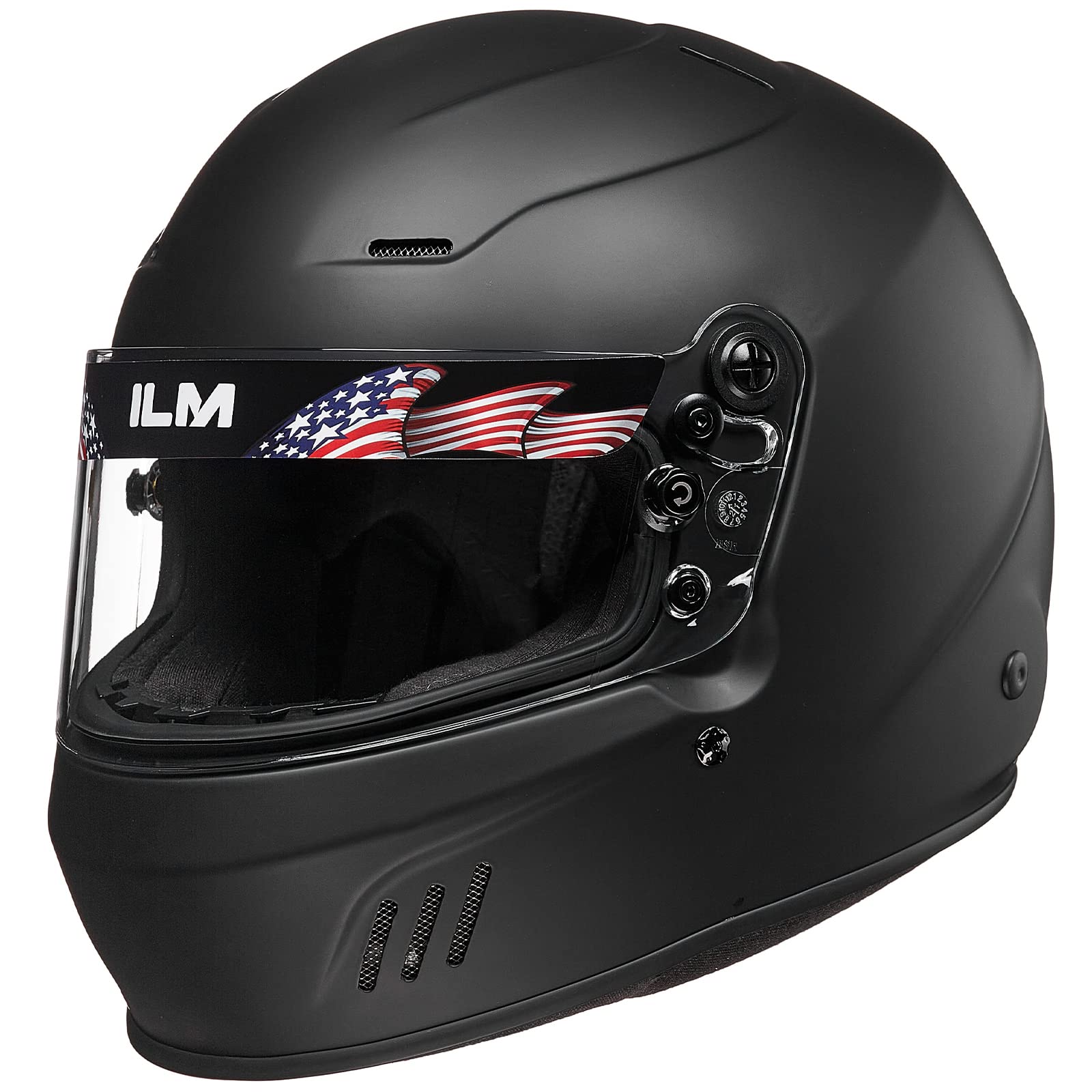
1. ILM Snell SA2020 Full Face Model 760
Our pick — over 4.5★ from 150+ verified ratings; the strongest balance of quality and price.
The balanced all-rounder that pairs a fire-retardant liner with a genuinely race-ready fit.
The ILM 760 earns its spot at the top because it nails the value-quality ratio without cutting corners on safety. Its shell is fiber reinforced plastic (FRP), a material that keeps weight down at 2.25 kg while the high-density Expanded Polystyrene (EPS) fire retardant inner pads handle the impact absorption. That combination makes it a confident choice for casual road course racing and autocross ride-alongs alike.
You get a snug, secure fit that stays put at speed, and if it is too tight, the brand sends a free padding kit one size up — buyers report it arrived “no questions asked.” That after-sale support is rare in this category.
It also prepares you for the next step up in safety gear. The Double D-ring closure is race-standard, and the helmet is compatible with HANS/HNR M6 Threaded Inserts (not included), so you can add a head-and-neck restraint later without buying a new lid. A 40 mm sunshade film on the visor top cuts glare on bright track days.
Grid-Ready Strengths
- Quality is what owners praise most — the build feels solid and comfortable for the money.
- Snug, secure fit with a padding-kit option if you land between sizes.
- 16 vents keep airflow moving during hot laps.
Pit-Lane Caveats
- Certified to Snell SA2020, not the newer SA2025 standard.
- Return process can drag — one owner waited weeks for a refund on a too-small unit.
The pick for: weekend racers and autocross riders who want a certified, comfortable helmet with top-tier customer service.
Think twice if: your series mandates the newest SA2025 spec — this one holds the previous certification.
2. Typhoon Snell SA2020 DOT Certified Full Face

The entry-level certified lid that skips the frills but keeps the safety sticker.
The Typhoon is the budget pick for one clear reason: it carries both Snell SA2020 and DOT certifications, so you are not gambling on safety to save money. It is built for automobile racing and meets the DOT Federal Motor Vehicle Standard 218 (FMVSS 218) as a bonus. For autocross events and HPDE days, that dual cert is a strong starting point.
Weight is the trade-off you feel. At 4 pounds, this fiberglass-shelled helmet is noticeably heavier than the 3.4-pound Conquer in this list — an 18% gap that translates to more neck fatigue on a long day. Owners say it runs a little big, which is exactly what you want if you plan to wear fire protection underneath.
The details show real thought for the money. A Kevlar chin strap with D-ring closure slides easily, and the 3mm optically correct hard coated face shield has eyeport gaskets to keep out dust and debris. HANS threaded inserts are built into the shell, so you can add a head restraint system later.
Entry-level buy: the easiest way to get a certified racing helmet without overspending.
Know the limits: the extra heft and the “funny chin lip” some owners mention are the compromises at this price tier.
Reach for this if: you need a legally certified helmet for your first autocross season and plan to wear fire protection underneath.
Look elsewhere if: you want the lightest shell possible — the fiberglass keeps price down, not weight.
3. Conquer Snell SA2025 Full Face
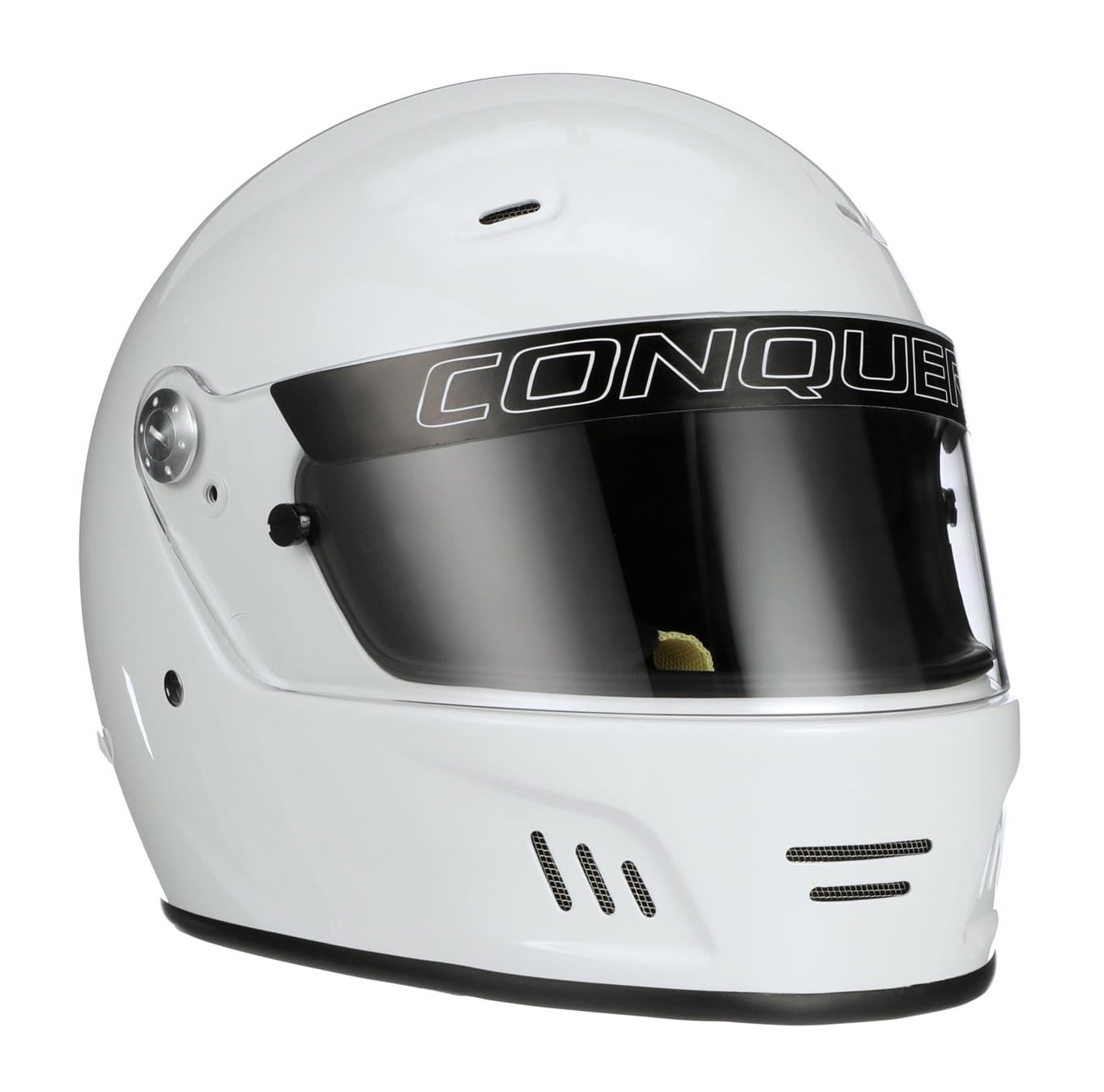
The featherweight fiberglass shell that fits true to size straight off the shelf.
The Conquer is the pick for racers who prioritize fit and the newest certification. Its Snell SA2025 approval means it meets the latest impact standard, and the lightweight fiberglass composite shell drops the weight to 3.4 pounds — the lightest in this comparison. That matters when you are fighting neck fatigue on a hot race day.
Fit is the headline, and owners backup the claim. Owners mention it fits as well as a Simpson full-face helmet in the same medium size, with a snug feel that stays comfortable even in summer heat. The fire retardant padded interior and airflow venting do double duty, keeping you cool while adding a layer of protection.
One honest warning: this is a pure auto racing helmet. It is certified to Snell SA2025 and explicitly not intended for motorcycle road use or FMVSS 218 compliance. For track days, that is exactly what you want — just do not reach for it on a street bike.
Why Owners Stay
- Quality is the most-praised aspect — owners call it solid, sturdy, and well-finished.
- The 3mm anti-scratch, flame resistant shield pushes up easily for quick on-and-off.
- A soft carry bag is included for transport between events.
Fit Check Before You Buy
- Without the internal chin pads, the helmet can want to rotate backwards — a fit issue to fix with the right liner.
- Round shell shape means glasses wearers should double-check clearance.
The pick for: racers who want the newest SA2025 certification in the lightest shell and a fit that mirrors premium brands.
skip it if: you need a motorcycle-legal lid — this one is race-car only by design.
4. ILM Snell SA2025 Full Face Model 890

The premium sibling that trades vent count for the newest Snell certification.
The ILM 890 is the upgrade path for racers who want the SA2025 sticker with the same supportive liner philosophy as the 760. Its shell is a GFRP composite — fiberglass reinforced plastic — which keeps the weight at 2.25 kg while offering what the brand calls higher safety. The Double D-ring closure is race standard, and the HANS/HNR M6 threaded inserts (not included) are built in for future head-and-neck restraint.
Compared to its SA2020 sibling, the 760, this helmet has 10 vents versus 16 — a 60% gap in airflow surface area, so on hot days the 760 keeps you cooler. The 890 makes up for it with the newer certification and a 40 mm sunshade film on the visor to cut glare.
Owner feedback points to a strong shell with a few fit quirks. Quality and fit are the most-praised aspects, and it is a favorite for go-karting. But glasses wearers be warned: one owner found it very hard to wear prescription glasses inside and switched to an open-face design. Visibility is a recurring concern, with some noting a reduced field of view.
Premium upgrade: the newest certification and a comfortable, well-ventilated shell for go-kart and track use.
Read the fine print: the Snell certification drew some mixed owner reactions, and the reduced field of view is a real consideration for cars with tight sight lines.
Choose this for: the SA2025 standard and a comfortable shell that shines in go-karting.
Pass it up if: you wear glasses or want maximum airflow — fewer vents and a tighter visor opening work against you.
Understanding the Specs
Snell Certification: SA2020 vs SA2025
The Snell Foundation tests helmets for impact and penetration resistance. SA2025 is the newest auto racing standard, while SA2020 is the previous one. Both are common on the grid, but your racing series may require one specific version — check your rulebook before buying.
Shell Material and Weight
Fiberglass and FRP (fiber reinforced plastic) shells keep weight down compared to older polycarbonate designs. Lighter helmets mean less neck fatigue over a long race weekend. A 3.4-pound helmet beats a 4-pound one in comfort, but heavier shells sometimes cost less.
FAQ
What does the Snell SA2025 certification mean for auto racing?
Is a heavier helmet safer than a lighter one?
How do I know what helmet size to buy?
Can I wear glasses with a full-face racing helmet?
What is the difference between a Snell SA2020 and SA2025 helmet?
What are HANS threaded inserts and why do I need them?
Why does a racing helmet need a Double D-ring closure?
Can I use a motorcycle helmet for auto racing?
Final Thoughts: The Verdict
For most racers, the winner is the ILM Snell SA2020 Model 760 because it balances certified safety, a snug fit, and outstanding customer service at a sensible price. If you want the newest certification in the lightest shell, grab the Conquer SA2025. And if you are genuinely budget-bound and need a certified entry point, the Typhoon gets you on the grid without cutting safety corners.
How We Picked
We do not accept paid placement. Every pick is matched to a real buyer and a real use-case; we do not hands-on test units.
Sources & Methodology
Specifications: manufacturer listings and product documentation. Review insights: verified customer reviews, as of August 2026. Pricing: not shown on this page (it changes often); check the current price via the retailer link.
As an Amazon Associate, Gadgets Feed earns from qualifying purchases. This does not affect which products we feature.