
Our readers keep the lights on and my morning glass full of iced black tea. As an Amazon Associate, I earn from qualifying purchases.
Specs are compiled from manufacturer listings and verified buyer reviews and can change over time — please confirm the key details on the product page before buying.
Replacing your car’s factory speakers is the single biggest sound upgrade you can make without adding an amplifier. Factory paper cones are the weakest link in most car audio systems, and swapping them for aftermarket drivers immediately reveals buried detail. We’ve focused on drop-in replacements that improve clarity, bass, and highs while prioritizing value and reliability.
I’m Min — the founder and writer behind Gadgets Feed. This guide is built by comparing the manufacturers’ published specifications and the patterns across verified customer reviews, so you get each pick’s real strengths and trade-offs instead of marketing spin.
Here is the definitive roundup of the best auto replacement speakers for upgrading your ride’s sound system in 2025.
Our Picks at a Glance

How To Choose The Best Auto Replacement Speakers
Before you buy, you need to know what will physically fit in your car and what your stereo can actually drive. These three rules will prevent the most common upgrade mistakes.
Size and Fit Are Non-Negotiable
Measure your factory speaker’s cutout diameter and mounting depth before ordering. A speaker that is too deep will hit your window mechanism. The most common sizes are 6.5″, 6″x9″, and 5.25″. If you are unsure, your car’s model year and trim level will usually tell you which size fits.
Match Power to Your Setup
Buying a speaker rated at 250W RMS when you are running a factory head unit delivering 15W is a waste of money. The speaker will play, but quietly. Look at the RMS (root mean square) rating — this is the continuous power a speaker can handle. Higher sensitivity (around 90 dB or more) means the speaker gets louder with less power, which is ideal for stock stereos.
Coaxial vs. Component Systems
Coaxial speakers have the tweeter built into the same frame as the woofer, making them a true drop-in replacement. Component systems separate the tweeter and woofer, which allows for better sound staging but requires more installation work. For most first-time upgraders, coaxial is the right choice.
Quick Comparison
| Model | Best For | Type | Max Power | RMS Power | Amazon |
|---|---|---|---|---|---|
| ORION Cobalt CM654★ Best Overall | Mid-range focus | Bullet Midrange | 1000W | 250W | Amazon |
| HERTZ UNO K-165Premium Pick | Natural sound | 2-Way Component | — | — | Amazon |
| JBL GTO629Best Bass | Bass response | 2-Way Coaxial | — | — | Amazon |
| Kenwood KFC-1666R | Factory replacement | 2-Way Coaxial | 300W | 30W | Amazon |
| Kenwood KFC-6966S | 6″x9″ upgrade | 3-Way Coaxial | 800W | 90W | Amazon |
| Rockford Fosgate Prime R165-S | OEM compatibility | 2-Way Component | 80W | 40W | Amazon |
| DS18 PRO-GM6.4PK | Pro audio power | Midrange + Tweeter | 480W | 140W | Amazon |
| KICKER DS Series | Complete package | 2 x 3-Way, 2 x 2-Way | — | — | Amazon |
| Rockford Fosgate T1650 | High-end performance | 2-Way Coaxial | 150W | 75W | Amazon |
In-Depth Reviews
1. ORION Cobalt CM654
Our pick — over 4.5★ from 800+ verified ratings; the strongest balance of quality and price.
The loudest voice in this lineup, built for listeners who like their music heard.
For pure output, nothing here touches the ORION Cobalt CM654. It handles a massive 1000W Max and 250W RMS, a massive jump over the Kenwood KFC-1666R’s 300W Max and 30W RMS. That headroom lets you crank the volume without distortion. The bullet tweeter design stretches the high frequencies while keeping the mid-range punch, so you get a dynamic soundstage instead of a flat one.
This is a pro car audio driver, not a simple factory swap. It needs an amplifier to shine, and the data is clear that tuning it wrongly has consequences. Buyers report that “Bridging on 4ch amp fried voice coils in ~2 min,” so run one channel per speaker and set your gains carefully. It’s a high-efficiency design at 96.67 dB, meaning it converts power into volume very effectively.
Despite that power appetite, reviews are overwhelmingly positive. It replaced older 6.5″ Alpine units in one truck and the owner heard a clear difference. The 2.75″ mounting depth is shallow enough for most doors, and riders have even strapped them into motorcycle fairings and Jeep roll bars, reporting ear-ringing volume with a good aftermarket head unit.
What Owners Love
- Sound quality is the biggest praise — nearly 100 owners call it out for clear, strong output.
- Build quality follows close behind, with over 95 owners impressed by the construction.
- Value for money is strong; loud for the price is how many describe it.
Where You Need Care
- Fit is mixed — some factory enclosures, like a Jeep JK’s, need trimming for the magnet.
- Durability is a point of disagreement, and they absolutely demand an amplifier.
Who it’s for: Anyone building a system with a real amplifier who wants maximum mid-range output.
Heads up: Skip these if you plan to power them with a factory stereo — you’ll never open up their potential.
2. HERTZ UNO Series K-165
Audiophile-grade clarity that flatters vocals and acoustic instruments alike.
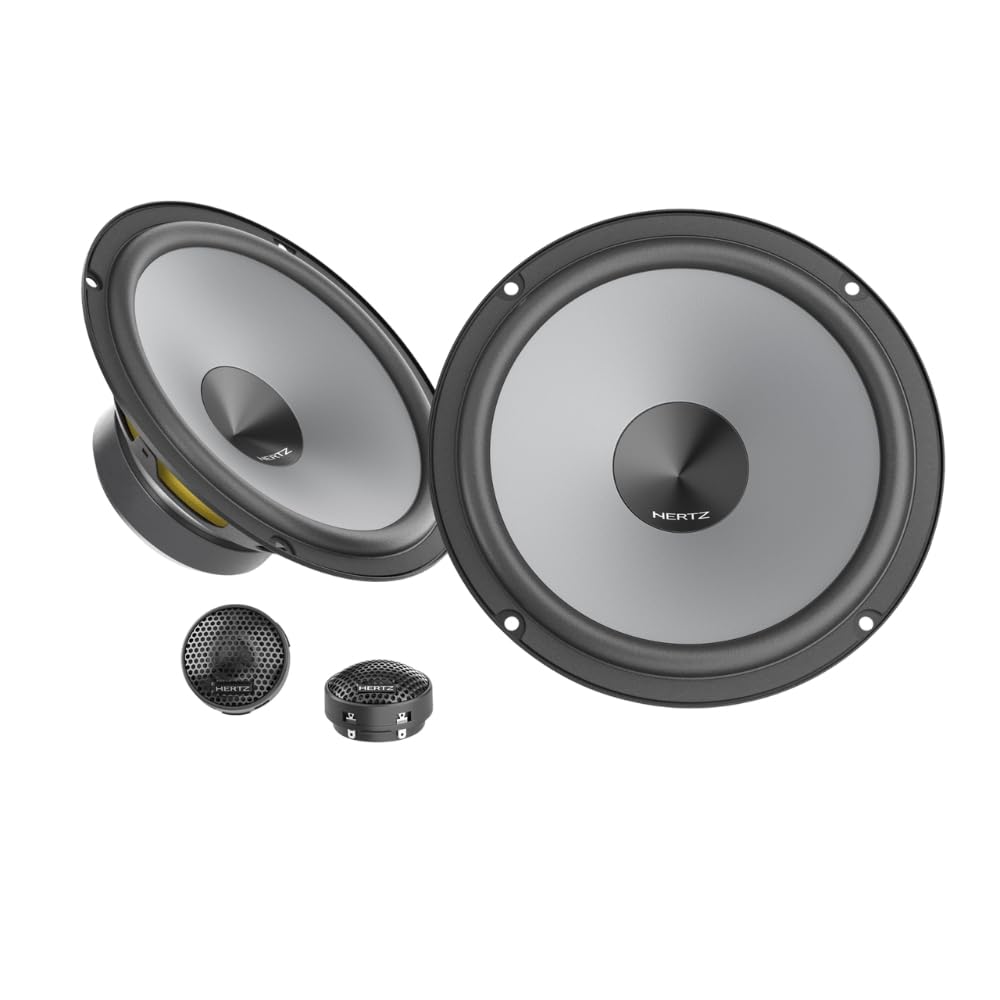
If your taste runs to natural, uncolored sound, the HERTZ UNO K-165 is your speaker. This is a true two-way component system, separating the 6.5″ woofer from its tweeter for better imaging. The woofer uses a water-repellent pressed paper cone and a ferrite magnet, while the tweeter uses a lighter neodymium magnet and a PEI dome. In practice, that translates to clean, articulate bass and crisp highs that don’t get harsh.
If you want richer sound without replacing your whole system, HERTZ speakers deliver—owners consistently call them excellent value. The catch: they need decent power to shine, so they “require power to sound good.” One buyer who swapped factory speakers in a 2019 Honda Accord Hybrid reported louder output and tighter bass control than the stock units.
There is one important installation quirk to know about. If your car has a 10-speaker system with a factory amplifier, you may need to remove the included tweeter crossovers because the signal is already filtered. This small step makes a big difference in the final sound. The highs can also run slightly bright on a stock head unit.
The High Points
- Clear, loud sound that plays above its wattage class — “plays louder at any given wattage” is a common note.
- Build quality impresses, with the heavy magnet and solid materials getting repeated praise.
- Price-performance ratio wins people over, often chosen over Infinity or MB Quart.
What To Expect
- They want an amplifier or a strong head unit to sound their best.
- In cars with factory amps, you’ll do extra wiring work to bypass the crossovers.
Reach for this if: You prioritize sound quality and don’t mind a more involved component install.
Look elsewhere if: You need a simple single-frame drop-in that runs fine on low factory power.
3. JBL GTO629
Patented tweeter aiming and big cones put the soundstage right at ear level.
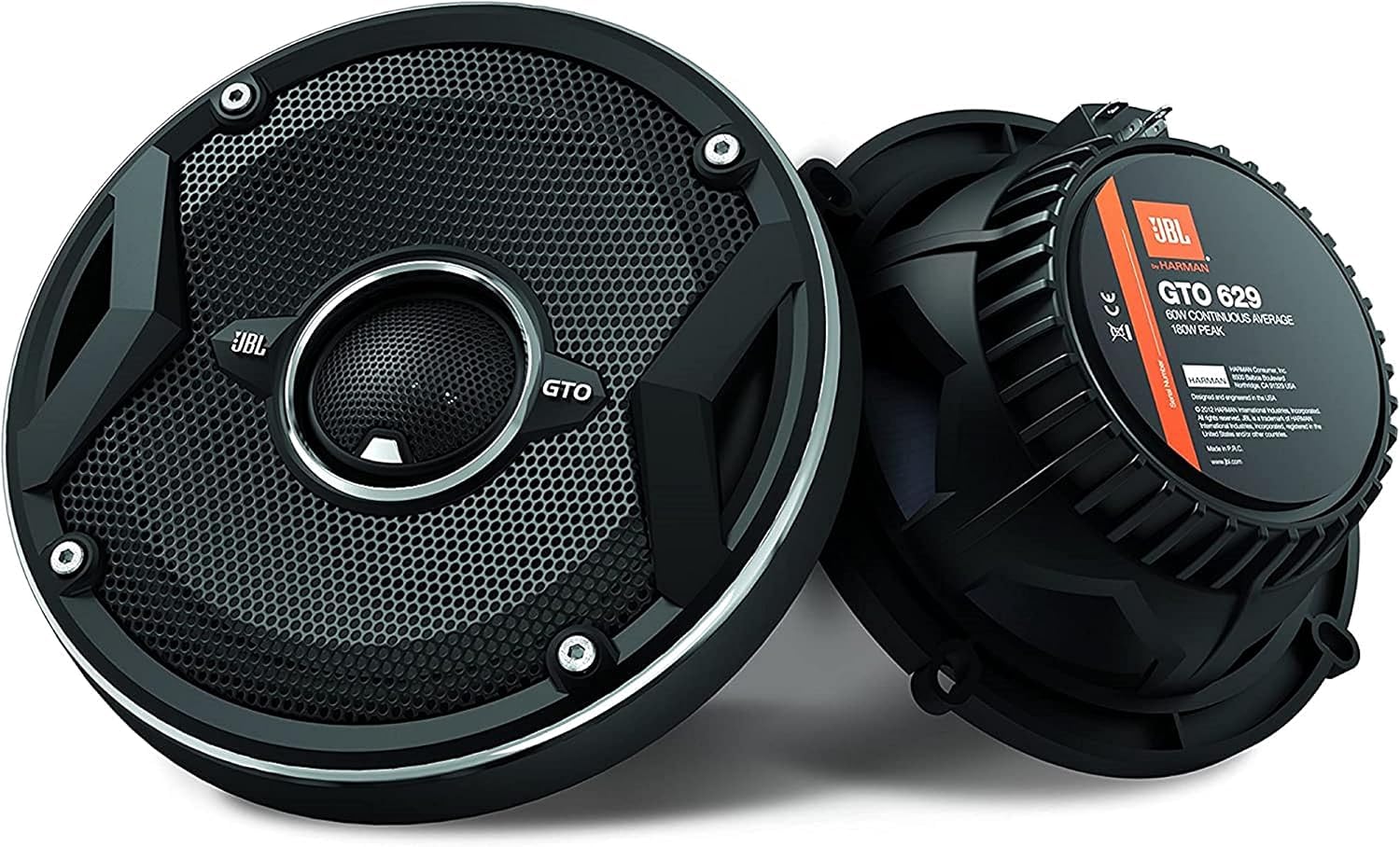
The JBL GTO629 is the smartest design here for one big reason: its patented UniPivot tweeter. You can physically angle the tweeter to point at your ears, even when the speaker is mounted low in the door. That solves one of the classic problems of car audio — sound firing at your shins instead of your head — and it makes the music feel far more lifelike.
Bass is the other headline. JBL’s carbon-injected Plus One cones are physically larger than other speakers in the same size class, moving more air. That extra cone area directly translates to stronger low-end. The GTO629 also runs at a low 3-ohm impedance, which lets it pull more current from your stereo and squeeze more volume out of under-sized factory wires.
Fit is the variable here. It’s a true drop-in for some vehicles, but a Honda Element needed small modifications to the covers. Definitely measure your mounting depth against the 2-inch spec before ordering. Owners say the sound quality outweighs the fit work, making the effort worthwhile for the rich, full-range response.
Why It Wins Over
- Sound quality is the clear highlight, with 70 owners praising the output.
- Value for money and easy installation both get consistent positive mentions.
- The adjustable tweeter offers placement flexibility no other pick here matches.
The Honest Catch
- Durability is the recurring concern, with some reports of them not lasting a full year.
- Fit is mixed, so always dry-fit before trimming your door panels.
Grab these for: Bass lovers who will take the time to aim the tweeters for a custom soundstage.
Think twice if: You want the simplest possible bolt-in swap with zero fit adjustments.
4. Rockford Fosgate T1650

The refined daily-driver speaker — honest power ratings and smooth aluminum highs.
The Power T1650 is the grown-up choice for someone who wants high-end sound without the complexity of a component system. It’s a 2-way coaxial rated at 75W RMS and 150W Max, but unlike some brands that overstate their numbers, owners confirm this one handles its rating honestly. The 1″ treated aluminum dome tweeter delivers “crisp clean highs” that never turn brittle.
You don’t need a massive amp to enjoy these. A motorhome owner swapped out factory 6.5″ speakers and got a night-and-day improvement running straight off the head unit’s built-in amp. The sound is full-bodied — rich mids, strong bass, and detailed highs. That makes them a high-quality replacement that plays nicely with stock electronics.
The build quality is a huge part of the story. The enclosure uses carbon fiber filled polypropylene with a stamp-cast aluminum frame, which keeps the driver rigid and reduces unwanted resonance. You’ll need a 5.51″ mounting diameter and 2.52″ depth, so measure twice. A pair of 1″ spacers was needed in one install to clear obstacles.
Standout Qualities
- Build quality is the #1 praise, with 65 owners impressed by the solid construction.
- Sound quality follows with 62 mentions of crisp highs and rich lows.
- They outperform other big names like Orion and Kenwood in direct listening, per the data.
Real-World Notes
- Fit gets mixed feedback — one motorcycle owner flagged compatibility issues with a 2016 Electra Glide.
- Reliability is a point of disagreement among owners, so check your mounting space carefully.
The verdict: A premium-feeling coaxial that sounds great on factory power and even better with an amp.
Tip: If your car has tight mounting depth, confirm 2.52″ works before you buy.
5. DS18 PRO-GM6.4PK

A complete high-power front stage with screaming aluminum bullet tweeters.
The DS18 PRO-GM6.4PK is not a speaker set; it’s a full front-stage kit. You get two 6″ midrange drivers and two 1″ aluminum super bullet tweeters with built-in crossovers. This is the serious SPL (sound pressure level) setup, rated to handle 480W Max and 140W RMS at 4 ohms. The separate tweeters let you mount the highs wherever they image best.
Vocal reproduction is this kit’s a neat extra. The midrange driver is designed to handle the most significant part of the audible spectrum, and it shines with vocals and instrumentals. One builder used them in a custom Bluetooth speaker tower and raved about how far the vocals travel. They also fit neatly into an 02 Suburban’s front doors.
The 1″ PRO-TW120 ferrite tweeters are powerhouses in their own right, rated at 200W RMS and 300W Max. They feature a built-in capacitor filter to protect them. The main caveat from owners is shipping — one unit arrived with a bent basket that didn’t affect sound. Reliability also gets mixed feedback, so inspect your delivery carefully.
What Wins People Over
- Sound quality leads, with 44 mentions of crisp, loud output.
- Build quality is praised by 30 owners for solid components.
- They handle high power easily — a 5-channel JP95 amp drives them cleanly.
Things To Watch
- Reliability is the mixed bag, with some perfect units and some early failures.
- This is a pro-audio kit, so it really wants a proper amplifier behind it.
Best for: The basshead who wants a loud, dedicated mid/high stage feeding off a big amp.
Not for: Anyone wanting a discreet as-is factory replacement without extra wiring.
6. Rockford Fosgate Prime R165-S

Down-to-earth component sound that works with your factory head unit.
The Prime R165-S is the entry point into Rockford Fosgate’s component world, and it’s a smart one. Rated at 40W RMS and 80W peak, it’s designed specifically as a factory replacement. The kit bundles two 6.5″ woofers with grilles, two 1″ tweeters with integrated crossovers, and all the mounting hardware. The Mica-injected polypropylene cone extends the frequency response nicely.
The best part is how well it plays with stock electronics. An owner replaced 8 factory speakers in a 2004 Monaro/GTO, kept the factory head unit, and needed no amplifier at all. The tweeters were mounted in the original channels with zero modifications to the main speaker. That’s about as painless as a component upgrade gets.
Sound quality is crisp and clear, with a strong treble and midrange presence. The honest note is that bass is not its strong suit — “not much bass” is how one review put it. If you’re a bass lover you’ll want a subwoofer alongside. Also, some owners mention the 6.5″ frame runs slightly smaller than expected, so check your fit.
Crisp and Compatible: Sound quality is the top praise (96 mentions), with build quality close behind.
The Trade-Off: It’s a mid-forward speaker, so pair it with a sub if you like low-end thump.
Choose this if: You want true component separation without buying an amplifier.
skip it if: Your priority is deep bass from the door speakers alone.
7. Kenwood KFC-1666R

The friendly upgrade that turns factory speakers into a real listening experience.
The Kenwood Road Series KFC-1666R is what most people actually need. It’s a 6.5″ 2-way coaxial speaker with a 300W peak and a modest 30W RMS power rating. That 30W RMS is a perfect match for a factory head unit, which means you get a clear improvement without adding any extra gear. Customers note a “huge upgrade” over stock door speakers.
The speaker’s design is all about making installation painless. It uses a shallow depth and lower tweeter height so it slips into tight factory locations. The multiple hole patterns mean it often bolts in without any drilling — it fits a Honda Element’s stock 4-door locations with no modifications. The grilles provide protection while maintaining a clean look.
Sound quality leans toward the bright side, which brings out details in vocals and cymbals. The 40Hz-22kHz frequency response keeps things balanced, though bass is not its strong point. You’re trading some low-end for a speaker that sounds far better than factory and is genuinely easy to live with.
The Easy Wins
- Sound quality is the top praise (89 mentions) for clear, natural output.
- Value for money is a close second, with 48 owners calling it a great deal.
- Universal fit — standard mounting holes and wiring connectors make it a true drop-in.
Set Your Expectations
- Durability gets the most negative mentions, with a few early failures reported.
- Bass is modest, so pair them with a sub for serious low-end.
Perfect for: First-time upgraders on factory stereos who want a bigger, clearer sound.
Trade-off: Not the speaker for high-power builds or listeners who demand heavy bass.
8. Kenwood KFC-6966S

Big oval drivers that pack a surprising amount of clarity into a classic size.
Few things say “car audio upgrade” like a pair of 6″x9″ speakers, and the Kenwood KFC-6966S delivers on that tradition. This is a 3-way coaxial design handling 800W peak and 90W RMS. The polypropylene mid-woofer with its foam/rubber surround gives you that classic 6×9 punch, moving plenty of air in rear decks and truck doors.
Installation is fast for a speaker this size. One owner swapped out factory units and “took 30 min to replace both sides,” even with the need to rewire. A 1995 Dodge Ram 1500 owner dropped them straight into the stock location. Even on a 78 Dodge, they fit behind the factory grilles without modification.
The frequency response spans 35Hz to 20kHz, which covers the musical spectrum well. Owners consistently call the sound quality great for the money, with good highs and mids. The main thing to watch is physical fit — the cutout needs to be 6-1/16″ x 8-3/4″, and a 2003 Camry required drilling new mount holes and adding spacers.
Big Sound, Fair Price: Sound quality (89) and value for money (42) are the standout aspects, with easy installation close behind.
Fit First: Always check your factory cutout — some vehicles like the 2005 Dodge 2500 quad cab report compatibility issues.
Ideal for: Vehicles with factory 6×9 openings that want a loud, full-range upgrade.
Measure it: Verify your exact cutout dimensions, as fit is the one recurring headache.
9. KICKER DS Series Bundle

The whole-car solution — a matched set of 6x9s and 6.5s meant to work together.
The KICKER DS bundle is for anyone who wants to replace every speaker in the car at once. You get two 6″x9″ 3-way coaxials for the rear deck and two 6.5″ 2-way coaxials for the doors. Buying them together guarantees your front and rear stages have matching voicing, which keeps the sound cohesive from every seat.
In a 2014 Silverado 1500, the speakers delivered great sound and value, though the install required some custom work — sawing stock adapters and using steel zip ties to secure the 6x9s. In a Toyota Highlander, they were plug-and-play using a Metra 72-8104 connector. That range of experience is typical; your install difficulty depends heavily on your car.
The sound quality consistently earns praise for being clear and crisp across the board. Reviews highlight “crisp mids and highs” and call them a big upgrade from factory units. The recurring note is that you should buy mounting adapters separately, as they aren’t included in the package.
Why The Bundle Works
- Sound quality is top-rated with 56 mentions of clear, solid output.
- Value for money is strong — one set covers the whole vehicle.
- Fit and functionality both get positive marks.
What To Budget For
- No mounting brackets are included, so plan to buy adapters.
- Fit is not universal — the rear speakers had a screw pattern mismatch in a 2002 Dodge Ram.
Grab this: If you want a coordinated 4-speaker upgrade in one box, saving the effort of matching speakers separately.
Be ready for: Some vehicle-specific fabrication, especially if your car has unusual mounting points.
Understanding the Specs
RMS vs. Max Power
RMS (root mean square) is the continuous power a speaker can handle safely. Max power is the brief peak it can survive. Match the speaker’s RMS to your stereo or amp’s RMS output. If your head unit delivers 20W RMS per channel, a 30W RMS speaker is a perfect fit. A 250W RMS speaker would never reach its potential on that same head unit.
Impedance and Sensitivity
Impedance is the electrical load a speaker presents, measured in ohms. Most car audio runs at 4 ohms, but some speakers like the JBL GTO629 use a lower 3-ohm design to pull more power from a stock stereo. Sensitivity, measured in dB, tells you how efficiently the speaker converts power into volume. A 96.67 dB speaker is louder at the same wattage than an 88 dB one.
FAQ
Will 6.5-inch speakers fit in my car?
What does RMS power mean and why does it matter?
Do I need an amplifier for new car speakers?
What is the difference between coaxial and component speakers?
How long does it take to install replacement speakers?
Is a 3-way speaker better than a 2-way speaker?
What does speaker impedance (4 ohms vs 3 ohms) mean?
Why does mounting depth matter for car speakers?
Can I keep my factory head unit with new speakers?
Final Thoughts: The Verdict
For most people, the auto replacement speakers winner is the ORION Cobalt CM654 because it offers the biggest power handling and highest efficiency in the group, making it the undisputed volume champion. If you want premium clarity without the need for a heavy amp, grab the Rockford Fosgate T1650. And for the most natural, audiophile-grade sound in a component setup, the HERTZ K-165 is the one to reach for.
How We Picked
We do not accept paid placement. Every pick is matched to a real buyer and a real use-case; we do not hands-on test units.
Sources & Methodology
Specifications: manufacturer listings and product documentation. Review insights: verified customer reviews, as of August 2026. Pricing: not shown on this page (it changes often); check the current price via the retailer link.
As an Amazon Associate, Gadgets Feed earns from qualifying purchases. This does not affect which products we feature.