
An auto tiller pilot frees you from constant helm duty, holding a precise course so you can set sails, manage lines, or simply enjoy the cruise. These small but powerful marine autopilots attach directly to your boat’s tiller arm, using internal fluxgate compasses and smart algorithms to keep you on track even when conditions shift under the hull.
I’m Min — the co-founder and writer behind Gadgets Feed. My guides are built on hundreds of hours of cross-referencing technical datasheets, studying real-world user feedback from saltwater and freshwater skippers, and isolating the key specs like thrust force in pounds, power draw in milliamps, and NMEA 0183 compatibility that separate reliable units from frustrating ones.
The decision comes down to matching the right unit to your vessel’s weight and your sailing style. This guide cuts through the spec clutter to deliver the best auto tiller pilot options for boats of every size and budget.
How To Choose The Best Auto Tiller Pilot
Choosing the right auto tiller pilot means matching the unit’s mechanical thrust to your boat’s weight and steering resistance. Under-speccing leads to poor course holding in wind, while over-speccing adds unnecessary cost and weight. Start with your vessel’s displacement and the typical conditions you sail in.
Match Thrust to Boat Weight
Manufacturers rate tiller pilots by maximum boat displacement, usually in pounds or tons. A unit designed for 6,600 lbs works well on smaller daysailers and pocket cruisers, while a 10,000 lbs unit handles heavier mid-sized yachts. If you sail in exposed coastal waters or regularly encounter 15+ knot winds, lean toward the next size up.
Check Power Draw for Battery Life
Most tiller pilots consume 40 to 250 mA when actively steering. On a weekend trip with house batteries, a 40 mA unit can run continuously for days without draining power. For longer passages or if you rely on solar charging, a low-power model becomes critical to keep your electronics alive.
Consider Connectivity and Remote Options
Basic tiller pilots hold a heading using an internal fluxgate compass. Units with NMEA 0183 or SeaTalk interfaces can integrate with your chartplotter for wind-angle sailing or waypoint tracking. Wireless remotes let you adjust course from anywhere on the boat, which is a game-changer for solo skippers who need to work the deck.
Quick Comparison
On smaller screens, swipe sideways to see the full table.
| Model | Category | Best For | Key Spec | Amazon |
|---|---|---|---|---|
| Raymarine ST2000+ | Premium | Mid-size sailboats up to 10,000 lbs | 5.0-ton thrust / 40 mA draw | Amazon |
| Raymarine ST1000+ | Premium | Smaller sailboats up to 6,600 lbs | 3.3-ton thrust / pushbutton control | Amazon |
| Simrad TP10 | Mid-Range | Coastal solo sailing on 33-ft boats | Ultra-quiet operation / 2-pin plug | Amazon |
| Simrad AP44 Rotary | Premium | Boat owners with existing Simrad networks | Rotary knob control / NMEA 2000 | Amazon |
| Raymarine EV-150 | Premium | Hydraulic steering powerboats | 1.0L pump / ACU-150 | Amazon |
| Panther T5 Electrosteer | Mid-Range | Steering kicker motors from anywhere | 24-ft cable / saltwater-ready | Amazon |
| Panther T-4 Electro Steer | Mid-Range | Universal kicker motor steering | Wireless option available / 24-ft cable | Amazon |
| SeaStar 1.4 BayStar Helm | Mid-Range | Adding hydraulic steering to outboards | 5.2 turns lock-to-lock / compact splashwell fit | Amazon |
| SeaStar 1.7 Classic Tilt Helm | Premium | Upgrading to tilt steering on powerboats | 48° tilt articulation / 4.9 turns lock-to-lock | Amazon |
| TrollMaster PRO Angler | Budget | Anglers needing wireless trolling control | Strike Mode / AAA battery-powered remote | Amazon |
| Lewmar Axis Anchor | Premium | Shallow water anchoring up to 7 ft | 12V electric actuator / remote control | Amazon |
In‑Depth Reviews
1. Raymarine ST2000+ Tiller Pilot

The Raymarine ST2000+ is the benchmark for tiller pilots on sailboats up to 10,000 lbs. Its 5-ton thrust handles a Catalina 27 or similar vessel with authority, moving tiller board-to-board in roughly 4 seconds — about half the time of the smaller ST1000+. The 40 mA power consumption means you can leave it on for multiple days without worrying about house battery levels, a critical advantage when passages stretch into the weekend.
Interface options include NMEA 0183 and SeaTalk, giving you the ability to wire it into a chartplotter for wind-angle or waypoint steering. Owners consistently report that calibration is straightforward, and once set, the unit holds course without wandering or hunting. The internal fluxgate compass handles interference well, though users in heavy salt air note that the control board can fail after 3-4 years, a known trade-off for this class of autopilot.
Replacement is easy because the mounting socket and power plug are identical to the ST1000, so upgrading skippers can swap units in minutes. If your boat is in the mid-weight range and you want the standard that others are measured against, this is the tiller pilot to start with.
Why it’s great
- Twice the drive speed of the ST1000+ for faster response
- Ultra-low 40 mA power draw for extended battery cruising
- NMEA 0183 and SeaTalk integration for advanced steering modes
Good to know
- Salt air can shorten control board lifespan to 3-4 years
- Must be calibrated away from magnetic interference
- Waves on heavy days can confuse the basic fluxgate sensor
2. Raymarine ST1000+ Tiller Pilot
The ST1000+ is designed for vessels up to 6,600 lbs, placing it squarely in the pocket cruiser category. It delivers the same 40 mA low-power advantage as its bigger sibling but with a slower drive speed — expect about 8 seconds to sweep from one side to the other. For many sailors on boats under 25 feet, this is perfectly adequate, and the trade-off is a more affordable entry point into reliable autopilot steering.
The 2-inch LCD is clear in daylight, and the pushbutton interface is intuitive enough that most users skip the manual. The internal fluxgate compass and 10° course adjustment buttons let you make fine heading changes without constantly reaching for the tiller. Multiple owners note that it holds bearing well under motor power while prepping sails, and the optional wireless remote adds significant convenience for single-handed deck work.
Some units have shown heading drift or intermittent beeping when voltage drops, so a stable electrical supply — often supplemented by a solar panel — makes a real difference. For smaller boats where every pound and amp matter, the ST1000+ is a proven workhorse.
Why it’s great
- Excellent power efficiency for small house battery banks
- Easy installation with included tiller pin and mounting socket
- Holds course well under power for hands-off sailing
Good to know
- Slower drive speed than the ST2000+ in heavy conditions
- Voltage sensitivity can cause heading beeping/loss
- Plastic housing does not tolerate salt spray indefinitely
3. Simrad TP10 Tiller Pilot

The Simrad TP10 is engineered for silent operation, making it a favorite among sailors who value the tranquility of the water. At 5.3 pounds, it is one of the lighter units in its class, and the low power draw lets you run it for extended periods without taxing your battery bank. The simple keypad interface is refreshingly direct — no menus to dive through, just set your heading and go.
Reviewers consistently praise its course holding ability compared to competing brands. Real-world feedback from solo sailors on boats up to 33 feet shows the TP10 outperforms Raymarine units when it comes to maintaining a steady bearing, even in lumpy coastal conditions. The waterproof sealing gives decent protection from spray, though prolonged freshwater submersion tests have shown the unit can survive if dried out quickly.
A notable weak point is the lack of reverse polarity protection. A single momentary reverse connection can blow the internal fuse and potentially damage the control board, which is frustrating given the price point. Wiring deliberate polarity marks and adding an inline fuse are smart precautions. For the silent, accurate steering experience, the TP10 is a compelling choice.
Why it’s great
- Near-silent operation preserves the peace of sailing
- Excellent heading accuracy in coastal conditions
- Lightweight at 5.3 lbs for small boat installations
Good to know
- No reverse polarity protection — add an inline fuse
- 2-pin connector limits compatibility with larger systems
- Wiring harness not bundled with the autopilot unit
4. Simrad AP44 Rotary Control Head

The Simrad AP44 is a networked control head, not a standalone tiller pilot — it works with an ACU-150 or NEC-2 computer to manage hydraulic or mechanical steering on powerboats and large sailboats. The rotary knob makes course adjustments smooth and immediate, a significant upgrade from button-pushing on smaller units. Installers working with existing Simrad networks find the setup nearly plug-and-play on the hardware side.
Once paired with the appropriate drive unit, the AP44 delivers precise steering across varying conditions. Trawler owners on 36-foot boats report that the system requires little commissioning and holds course well in wind and current. The NMEA 2000 backbone allows it to share data with your chartplotter, radar, and wind instruments, enabling fully automated route following.
The AP44 is strictly the display and controller — buyers must ensure they have the correct compatible pump and sensor core. Some users have faced frustrating return policies when the complete system did not meet expectations. If you already have Simrad infrastructure or are building a new network, the AP44 is the right brain for the job.
Why it’s great
- Rotary knob control is intuitive and fast for course changes
- Seamless NMEA 2000 integration with existing Simrad gear
- Holds course well in all conditions with proper setup
Good to know
- Only a control head — requires separate drive and sensor unit
- Costs add up quickly when building a full system
- Defective unit return policies can be restrictive
5. Raymarine EV-150 Power Pilot
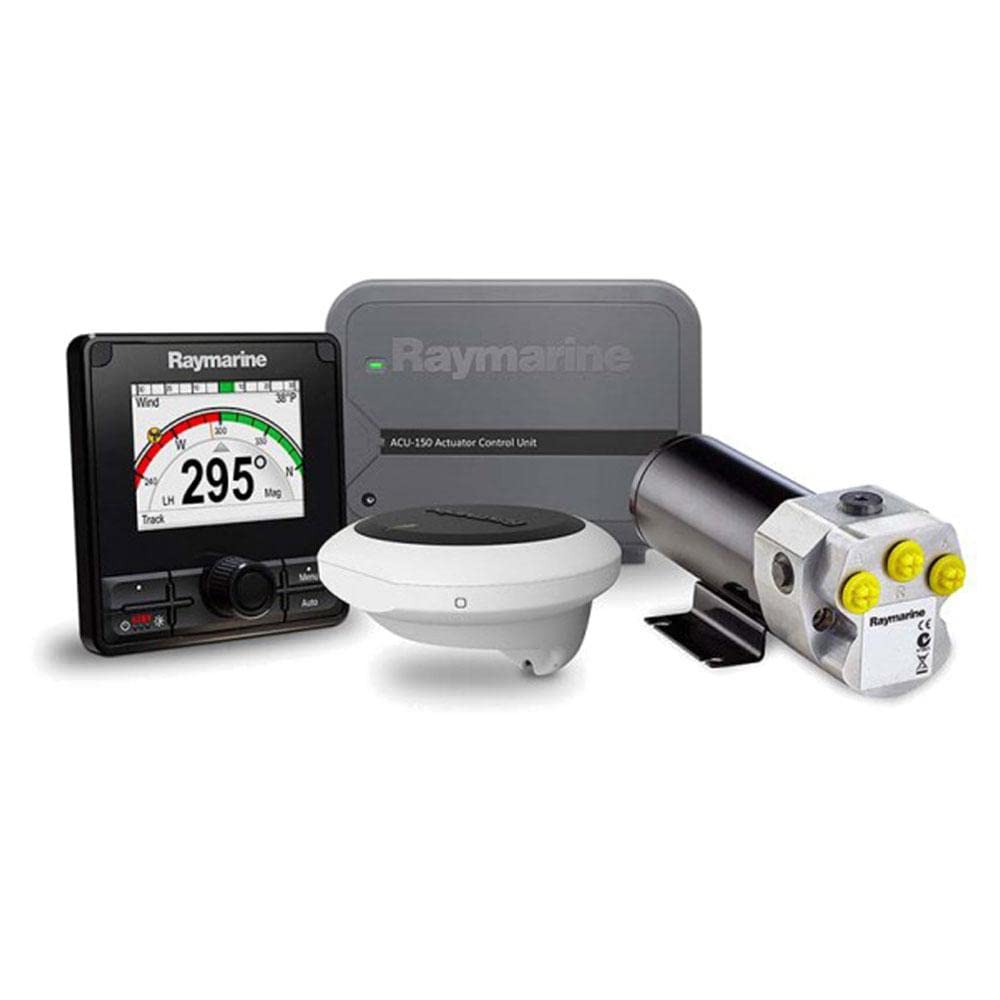
The EV-150 is a full power-pilot kit designed for hydraulically steered powerboats and larger sailboats. It includes the p70Rs control head, ACU-150 actuator drive, EV1 sensor core, and a 1.0L hydraulic pump — everything needed for a complete installation. The EV1 sensor core uses advanced rate-sensor technology for superior track-keeping compared to older fluxgate compasses, maintaining a straighter course through wind shifts and following seas.
Integrates natively with Raymarine Axiom chartplotters and Quantum radar, allowing you to control the autopilot from your phone or tablet as well. Owners of Hewescraft and similar aluminum hulls report that bleeding the hydraulic system is the trickiest part of installation — moving the pump to the helm position helped resolve issues. Once dialed in, the EV-150 handles trolling speeds of 2-3 mph without wandering, a major plus for anglers.
The kit does not include pump hoses or heavy-gauge tinned wire for the power supply, which frustrates some first-time installers. However, the 3-year warranty with product registration provides real peace of mind. If you need a complete hydraulic autopilot system with modern sensor accuracy, the EV-150 is the integrated solution.
Why it’s great
- Full kit includes p70Rs, ACU-150, EV1 sensor, and 1.0L pump
- Advanced EV1 rate-sensor core for superior track-keeping
- 3-year warranty with product registration for long-term confidence
Good to know
- Bleeding the hydraulic system can be tricky on long runs
- Pump hoses and tinned power wire not included
- Installation instructions can be vague for first-timers
6. Panther Marine T5 Electrosteer
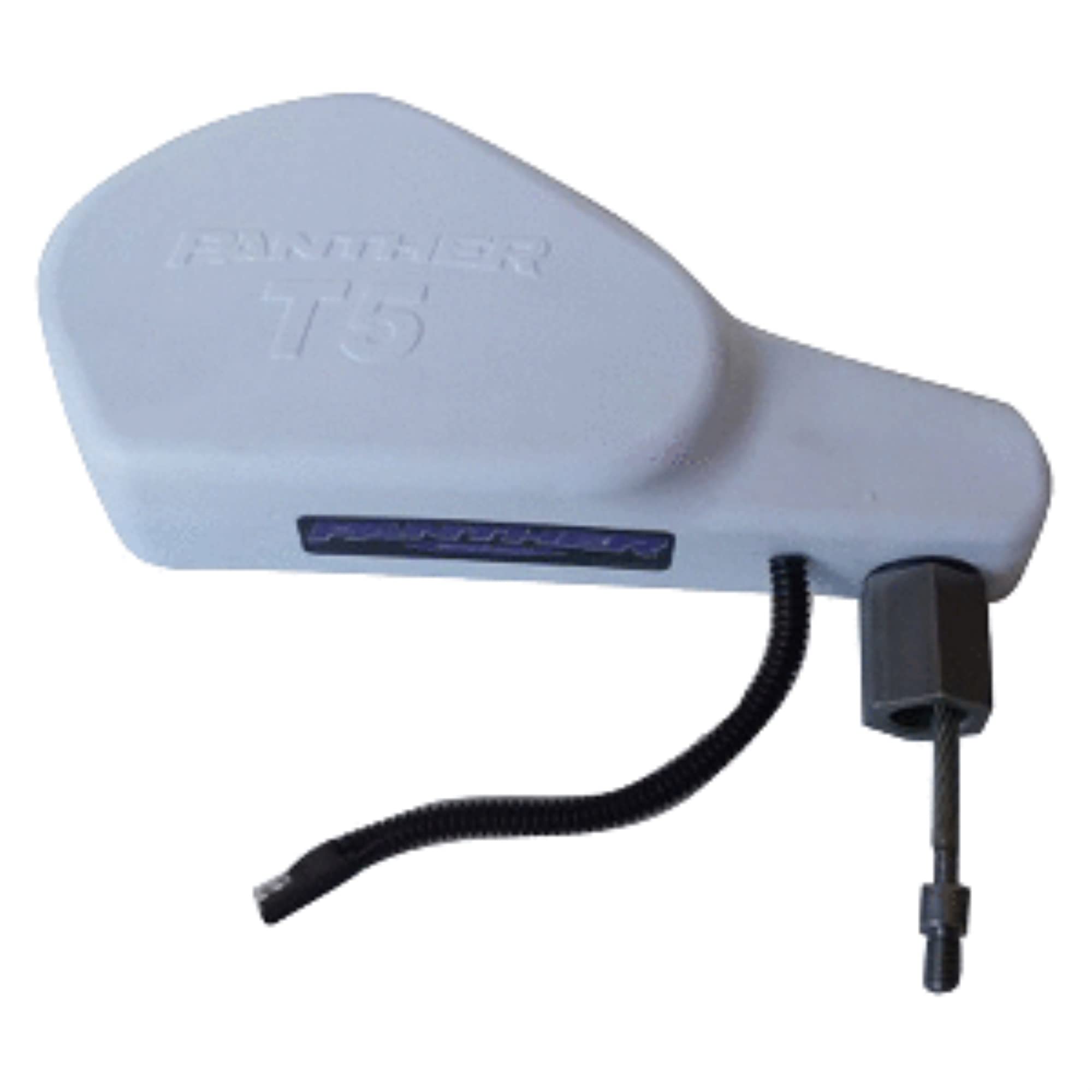
The Panther T5 Electrosteer is purpose-built for remote kicker motor steering on saltwater boats. It replaces the tiller handle with an electric actuator that connects to a control box mounted on your transom, allowing you to steer from anywhere on board. The 24-foot cable gives real flexibility for center console and walk-around layouts, and the universal fit means it works with most 4-stroke and 2-stroke kicker motors up to 5 horsepower.
Users on fishing boats report that installation is relatively straightforward, though some have noted the instructions could be clearer. The wireless remote option is available, which adds convenience for solo anglers who need to work the deck while keeping the boat tracking straight. The unit weighs 8.8 pounds and is built with a mix of metal and plastic components intended to withstand marine environments.
Customer feedback is mixed on reliability — some units have delivered years of trouble-free service, while others developed clicking noises or failed after limited use. The limited warranty provides some coverage, but long-term saltwater exposure is tough on any electro-mechanical system. For anglers who need remote kicker control, the T5 does the job when well-maintained.
Why it’s great
- Universal fit for most kicker motors up to 5 hp
- 24-foot cable supports flexible boat layouts
- Wireless remote option for hands-free steering
Good to know
- Reliability concerns in heavy salt spray environments
- Some units develop internal clicking or fail early
- Installation instructions could use better exploded views
7. Panther Marine T-4 Electro Steer

The Panther T-4 Electro Steer is an earlier iteration of the remote steering concept for kicker motors, using a wired 24-foot cable to connect the actuator to a control switch near the helm. It mounts directly to the motor in minutes and does not take up any transom space, a neat design advantage for boats with limited room. The wireless remote upgrade path is available, so you can start wired and upgrade later.
Feedback from owners highlights that installation can be done quickly — some complete it in under an hour — and the left/right steering response works reliably. The wired remote saves the cost of the wireless option for budget-conscious anglers. However, some buyers found the battery cords too short for their layout and needed to fabricate an extension.
Not all experiences are positive. Some units arrive with a remote that fails within the first hour of use, and poor customer service from the manufacturer has frustrated some owners. The universal fit works for basic installations, but performance and longevity appear inconsistent. The T-4 makes sense as an entry-level kicker steering solution if you are ready to handle potential quirks.
Why it’s great
- Mounts directly to the motor without transom space
- Wired remote works reliably for basic steering needs
- Quick installation for DIY owners
Good to know
- Remote failure reported within first hour of use
- Battery cord length may require extension for some boats
- Customer support noted as unhelpful by some buyers
8. SeaStar 1.4 BayStar Helm
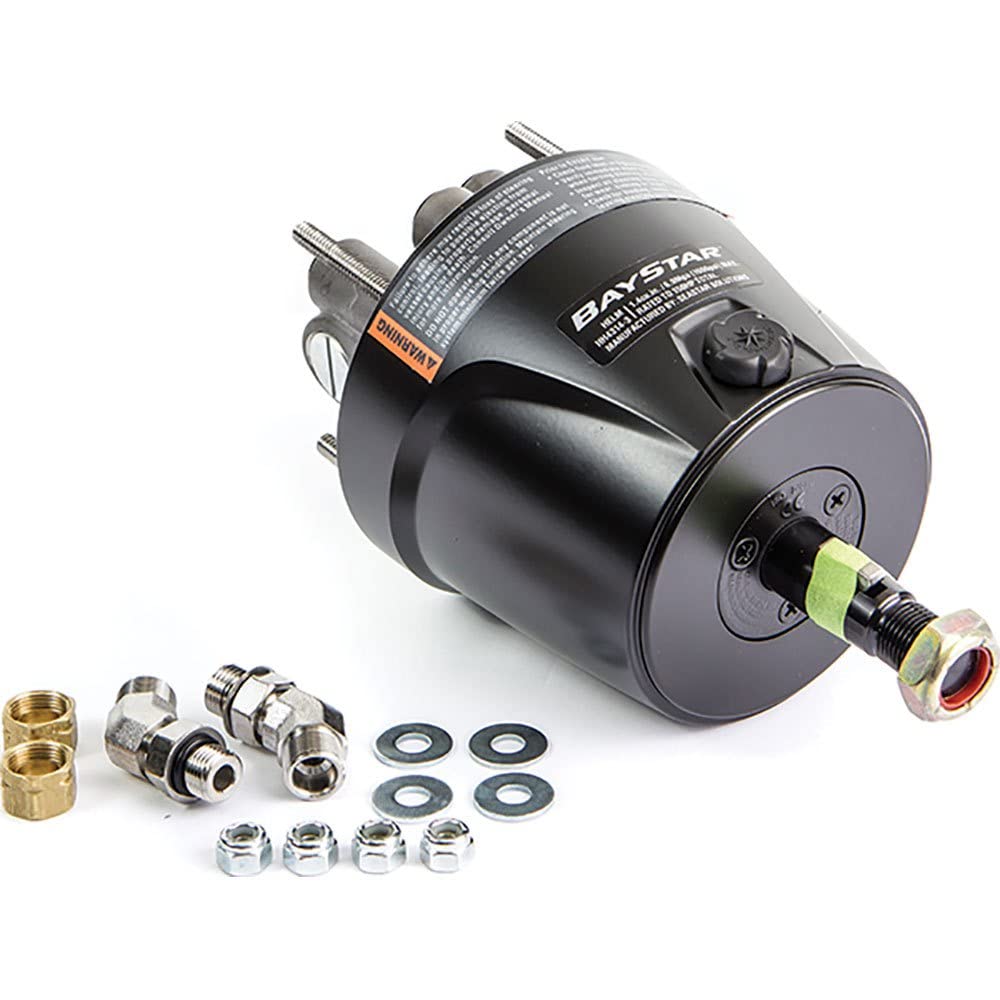
The SeaStar 1.4 BayStar Helm is a hydraulic steering helm pump designed for outboard boats up to moderate sizes. With 5.2 turns lock-to-lock and 1.4 cubic inches of displacement, it provides smooth and responsive steering when paired with BayStar outboard cylinders. The compact footprint fits well in most splashwells, and the positionable stainless steel ORB fittings make hose routing easier during installation.
Certified by ABYC and ISO standards, the build quality uses metal components where it counts, while the outer cover is tough ABS plastic. Owners replacing older helms report perfect fitment on Key West and similar center consoles, with straightforward bleeding procedures. The low-friction internal design delivers a comfortable steering feel that reduces arm fatigue during long runs.
A small number of buyers have faced restocking fees when returning unopened units, as some sellers charge 100% for open-box returns. This is less a product issue than a purchasing policy one, so confirm the return terms before ordering. For converting cable steer to hydraulic on a smaller outboard, this helm is a well-engineered starting point.
Why it’s great
- Compact splashwell-friendly design at 6.8 lbs
- ABYC and ISO certified build quality
- Positionable stainless steel fittings simplify routing
Good to know
- Some sellers enforce 100% restocking fees on returns
- 1.4 cu in displacement limits application to smaller cylinders
- Requires compatible BayStar cylinder for full system
9. SeaStar 1.7 Classic Tilt Helm
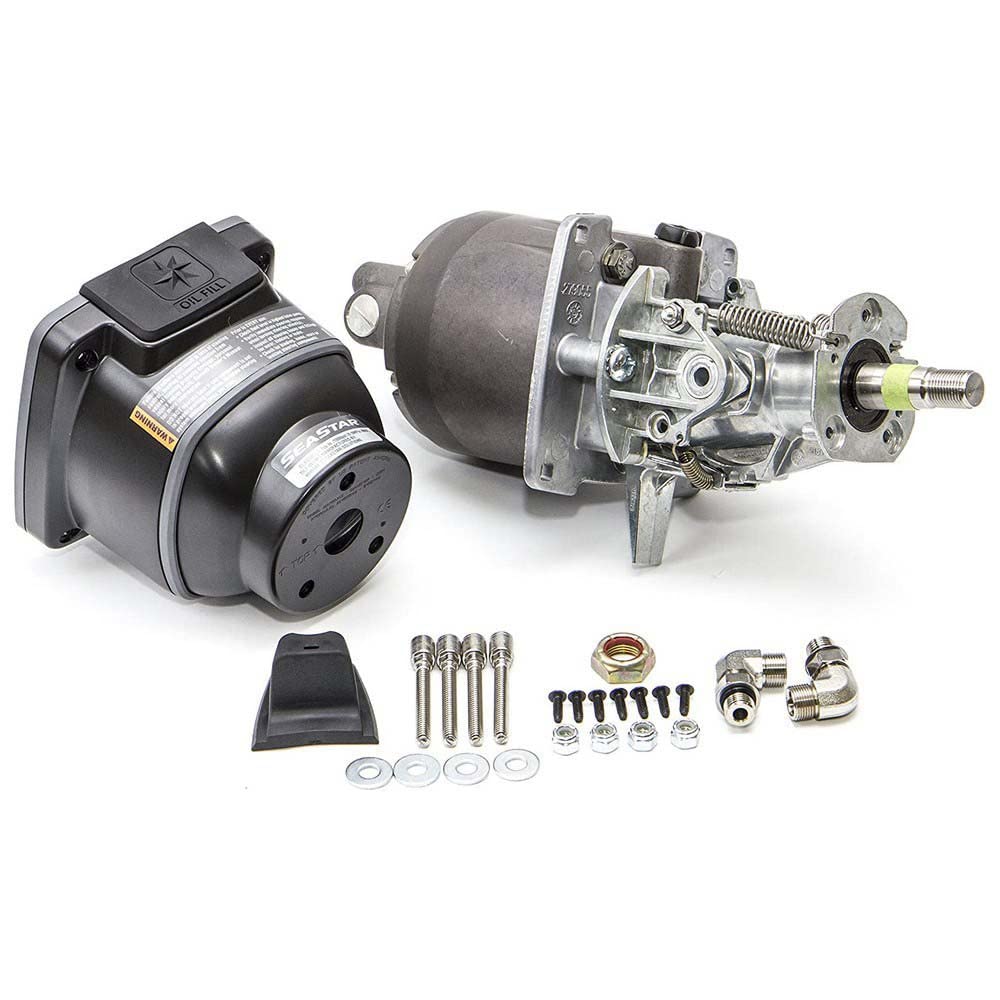
The SeaStar 1.7 Classic Tilt Helm brings 48 degrees of tilt articulation with 5 positive lock positions, allowing you to find the perfect steering wheel angle whether sitting or standing. The front-of-dash fill port is designed to retrofit into old SeaStar 4.5-inch hole cutouts, making it a direct upgrade for older boats. With 4.9 turns lock-to-lock, it delivers No Feedback steering that stays smooth even in rough water.
Owners replacing 20- to 30-year-old helms report that the 1.7 model fits perfectly and restores steering performance to like-new condition. The metal internal components and stainless steel fittings inspire confidence, and installation typically takes under an hour including bleeding the system. Trawler and sportfish owners appreciate the reduced effort at the helm on longer runs.
Some users note that the small screws holding the plastic cover are prone to stripped threads, so careful torquing during installation is recommended. The price reflects the precision manufacturing, but for boats that require tilt steering for ergonomic comfort, the 1.7 Classic is the right helm pump choice.
Why it’s great
- 48° tilt articulation with 5 lock positions for ergonomic driving
- Retrofits into older SeaStar 4.5-inch cutouts
- No Feedback design for comfortable long-distance cruising
Good to know
- Plastic cover screws can strip easily
- Premium price reflects quality manufacturing
- Requires bleeding after installation
10. TrollMaster PRO Angler Wireless Remote

The TrollMaster PRO Angler is a wireless throttle and steering control system for trolling motors and small kicker engines. Its defining feature is Strike Mode, which provides pre-programmed micro speed adjustments and momentary full-throttle bursts for quick hooksets or maneuvering. The ergonomic remote runs on AA batteries for simple replacement without needing to charge a built-in pack.
Installation is straightforward for anyone with basic mechanical experience, and the included YouTube video guide helps clarify the process. The detachable lanyard adds security while fishing. Owners using it on 6.6 hp Yamaha kickers report reliable operation over months of use, with the precision throttle control making it easy to dial in exactly the right trolling speed.
Some users observe a slight hesitation in response time between the remote command and the motor reacting — likely a deliberate safety feature rather than a flaw. The initial unit received by one reviewer was defective, but the replacement worked perfectly, highlighting the importance of testing before permanent installation. For anglers wanting wireless throttle and steering on a budget, the PRO Angler delivers meaningful function.
Why it’s great
- Strike Mode gives instant full-throttle burst for hooksets
- AA battery remote eliminates charging worries
- Easy installation with YouTube video support
Good to know
- Slight throttle response lag may feel unnatural at first
- Some units arrive defective and need replacement
- May require thru-tube extension for some motors
11. Lewmar Axis Shallow Water Anchor

The Lewmar Axis is an electric shallow water anchor that deploys up to 7 feet deep using a quiet 12V linear actuator — no hydraulic pumps, hoses, or complex fluid systems. The powder-coated aluminum finish is corrosion-resistant, and the four-bar articulating arm provides strong downward pressure to hold your boat securely in current or wind. The RF remote module allows hands-free deployment and retrieval from the deck or helm.
At 35 pounds, it is significantly lighter than hydraulic equivalents, making installation a one-person job in most cases. The bolt pattern matches existing Power Pole accessories, so upgrading or adding accessories is simple. Owners report easy installation with clear instructions, and the ability to pair multiple remotes works well for boats with multiple anglers.
Not every assembly is perfect — some units arrived with loose bolts that needed tightening, and a few experienced plastic knuckle breakage on the first deployment. Replacement remote service has been slow for some customers. For powerboats up to 26 feet that need quiet, simple, shallow-water anchoring, the Axis is a functional electric alternative to hydraulic spikes.
Why it’s great
- All-electric actuator means no hydraulic maintenance
- Lightweight 35 lbs for easy solo installation
- Quiet operation for stealth anchoring
Good to know
- Plastic knuckle can crack on first deployment
- Loose bolts reported on some units — check before use
- Customer service response times can be slow
FAQ
Can an auto tiller pilot be used on any sailboat?
How do I calibrate a new tiller pilot?
What happens if my tiller pilot loses GPS signal?
How long do tiller pilot batteries last on a typical installation?
Final Thoughts: The Verdict
For most sailors, the best auto tiller pilot winner is the Raymarine ST2000+ because it offers the right balance of thrust, power efficiency, and integration options for the widest range of mid-size sailboats. If you want ultra-quiet operation and coastal performance, grab the Simrad TP10. And for a complete hydraulic system with modern sensor accuracy on a powerboat, nothing beats the Raymarine EV-150.