
Our readers keep the lights on and my morning glass full of iced black tea. As an Amazon Associate, I earn from qualifying purchases.
Specs are compiled from manufacturer listings and verified buyer reviews and can change over time — please confirm the key details on the product page before buying.
Faded grey bumpers and chalky door moldings make an otherwise solid car look tired, and the wrong rattle can makes it worse. The trap most people fall into is grabbing a generic black spray paint, because trim and bumpers need a coating built for flexible plastic and bare metal. This guide helps you pick a can that actually restores the factory look instead of flaking off in a season.
I’m Min — the founder and writer behind Gadgets Feed. This guide is built by comparing the manufacturers’ published specifications and the patterns across verified customer reviews, so you get each pick’s real strengths and trade-offs instead of marketing spin.
You will see how dry times, gloss level, and surface adhesion separate a quick touch-up from a proper refinish, and which can suits your job. Read on to find the right auto trim paint for your garage project.
Our Picks at a Glance


How To Choose The Best Auto Trim Paint
Trim paint is not the same job as body paint. Your bumpers, mirror caps, and door moldings flex, bake in the sun, and take road grit, so the coating has to bend with the plastic instead of hardening and cracking. A can built for flexible plastic gives you a factory-looking finish that survives car washes and summer heat.
Match the coating to the material
Bare steel and aluminum accept paint readily, but treated plastics and rubber need a coating formulated to grab them. A can that lists urethane, rubber, or treated olefin plastics in its coverage is telling you it was built for flexible trim. If your part is raw plastic and the can does not name plastic, plan on an adhesion promoter first.
Pick your gloss before you spray
Factory trim usually wears a satin or matte look, not a wet gloss. Satin hides light scratches and reads as original equipment, while semi-gloss suits interior pieces that were shinier from the factory. Spray a test card first, because gloss level is the one thing you cannot adjust once the can is empty.
Respect the dry and cure times
A fast dust-dry tempts you to lay on a second coat too soon. Read the full-cure figure on the can and wait it out, because recoating during the cure window is a common cause of wrinkling. Fast-curing cans suit spot repairs, while slow-cure epoxy coatings reward patience with a harder shell.
Quick Comparison
| Model | Best For | Finish | Dry Time | Can Size | Amazon |
|---|---|---|---|---|---|
| SEM 49143 Trim Black Ultra★ Best Overall | Overall factory-look refinish | Satin | 24 hours | 14.5 oz | Amazon |
| LAUCO Texture Coating BlackTexture Match | Restoring textured bumpers | Matte | — | 14.5 oz | Amazon |
| Dupli-Color Trim and Rocker GuardRock Guard | Rock chip protection | Textured matte | 0.16 hours | 14.5 oz | Amazon |
| VHT SP652 All-Weather Epoxy | Weather-beaten metal and trim | Satin | 24 hours | 11 oz | Amazon |
| SprayMax 1K Trim Paint Black Satin | Spot repairs with quick cure | Satin | 15 minutes | — | Amazon |
| NADAMOO Trim Black Spray Paint | Beginner DIY trim revival | Satin | — | 13 oz | Amazon |
| Transtar 4653 Satin Black 2-in-1 | Flexible trim without primer | Satin | 0.29 hours | 15 oz | Amazon |
| SEM 15013 Landau Black Color Coat | Interior vinyl and plastic color | Semi-gloss | 1 hour | 12 oz | Amazon |
In‑Depth Reviews
1. SEM 49143 Trim Black Ultra
Our pick — 4.5+★ from 450+ verified ratings; the strongest balance of quality and price.
The body-shop standard in a can: a true jet-black that lays down like factory paint.
Body shops reach for it when a bumper has to match the rest of the car, and it is OEM recommended. A 14.5 oz can covers 4-5 square meters, which is enough for a full bumper wrap plus mirror caps if you spray light coats. The dark, true black hides swirl scratches instead of highlighting them the way a cheap grey-black does.
The spray quality wins people over: the can atomizes finely and lands smooth. The satin finish sits flat and correct against factory trim, and the coating grips steel, aluminum, TPO, and PP (the acronyms for the treated plastics most modern bumpers are molded from). That broad grip means you are not locked into one part of the car. Unlike the Dupli-Color rocker guard, which sprays a coarse texture, this one is built to disappear into the body line.
Patience is the entry fee. The can lists a 24-hour dry time, so you are not driving the car the same afternoon. For a weekend project that is fine; for a same-day repair it is a nuisance. The cost side is the one place a few buyers push back, calling it pricier than a basic black aerosol, but that premium buys a finish that does not need a redo.
Where It Shines
- True jet-black satin that matches factory trim rather than fighting it
- Grips steel, aluminum, TPO and PP plastics without a separate primer
- Fine atomization gives an even, OEM-style lay-down
- Enough coverage in one 14.5 oz can to finish a full bumper set
The Honest Cost
- 24-hour dry time rules out a same-day drive-away
- Pricier than commodity black aerosols, which some buyers notice
Made for: anyone restoring a bumper or molding who wants it to look untouched by the repair.
Think twice if: you need the part back on the car within hours, since the 24-hour dry time will hold you up.
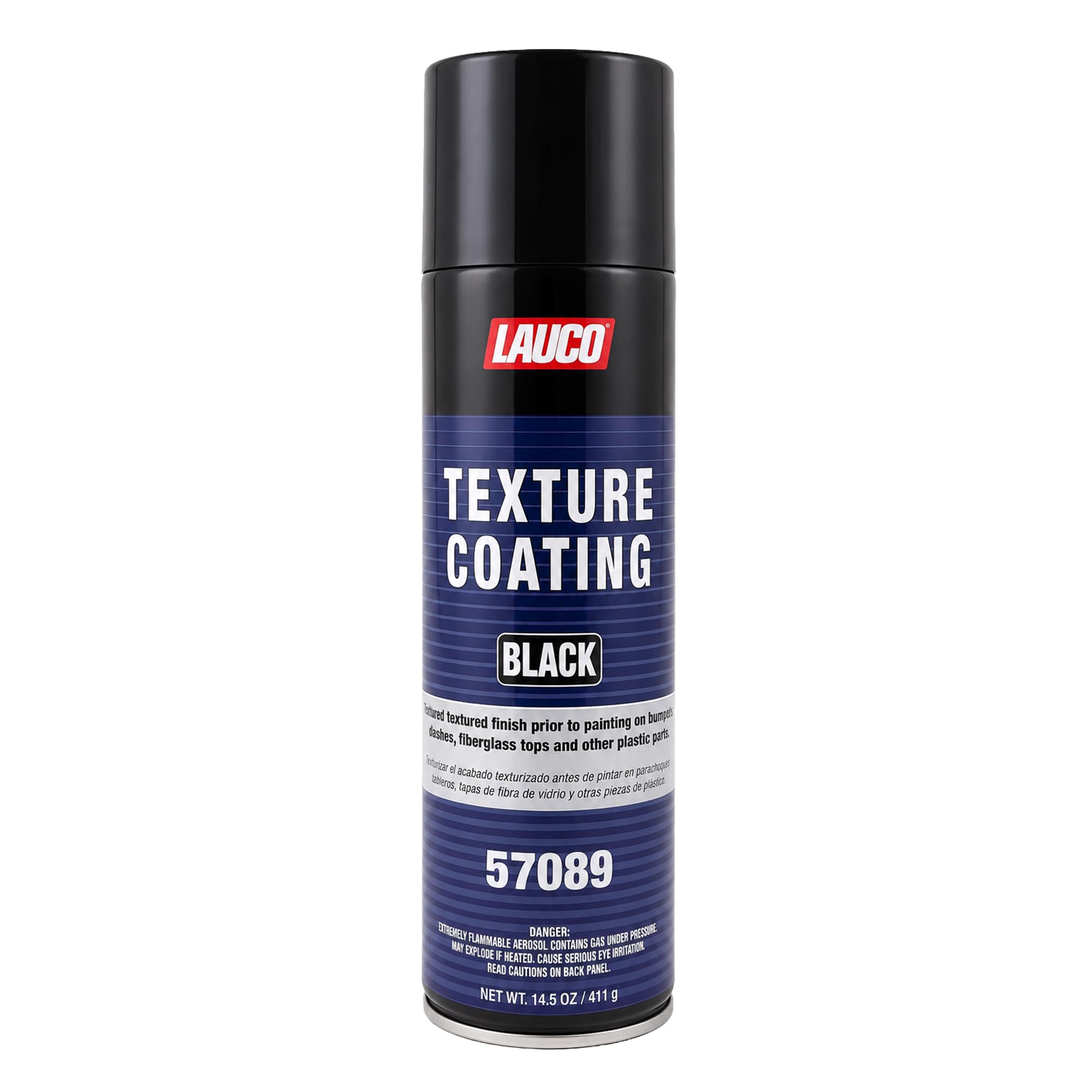
2. LAUCO Texture Coating Black
For bumpers that were never smooth to begin with, this puts the grain back.
Original plastic bumpers and dash panels wear a pebbled grain, and spraying over faded trim with a smooth paint leaves a telltale flat rectangle. This 14.5 oz aerosol re-lays that grain as it sprays, so the repaired part keeps the OEM pattern. It bonds to plastic, fiberglass, steel, aluminum, and existing coatings, which makes it useful across a whole truck rather than one panel.
Owners rave about the texture, saying the finish reads better than factory. The subtle pattern hides sanding marks and small imperfections so you spend less time perfecting the surface under it. A flexible acrylic formula stays with the plastic instead of cracking when the bumper flexes, and it carries UV and weather resistance against fading, chalking, and discoloration.
The catch is the trade-off of any textured coating: you cannot polish a scratch out of a grain. Once it is on, repairing damage means re-spraying that area, not buffing it. It is also a smaller-review product, so expect the odd can that sprays unevenly near the end.
Best fit: a bumper, dashboard, or molding that had a grain from the factory and needs it back.
Trade-off: textured finishes can’t be buffed, so later touch-ups mean another spray pass on that panel.
Reach for this: when matching the pebbled look of original plastics matters more than a glass-smooth panel.
Pick the SEM instead: if you are spraying a smooth steel or painted surface where texture would look wrong.
3. Dupli-Color Trim and Rocker Guard
The fastest can here by a wide margin, and the toughest-looking option on a rocker panel.
Dry time is where this one separates itself. It flashes off in 0.16 hours against the SEM Trim Black Ultra’s 24-hour dry, a stretch best described as a different category of speed. Spray it in the morning and it is ready to handle by lunch. A 14.5 oz can covers 12 to 14 square feet, which is a realistic run down both rocker panels of a sedan.
The finish leans toward a bed-liner look, and owners who want that rugged, pebbled protection on lower body panels are happy with how it reads. It is built for the parts that eat gravel, and the textured surface is the point rather than a cosmetic afterthought. The textured finish shrugs off chips and scratches better than a smooth coat would.
The trade-off is honest and worth seeing clearly: this is a textured protective coating, not a color-match trim paint. Durability and coverage land as the most-discussed topics, with opinions split on both, and some buyers find small scratches still show through the texture. Treat it as armor for a low panel, and match your gloss expectations to that job.
What it is good at: rapid turnaround and a rugged, chip-resistant surface on rocker panels that take daily abuse.
Set expectations: it will not disappear into a smooth body line, and shallow scratches can still show in the grain.
Good call for: protecting the lower panels of a truck or daily driver where speed and toughness matter.
Wrong tool for: a mirror cap or door handle where you want an invisible, factory-smooth repair.
4. VHT SP652 All-Weather Epoxy Paint
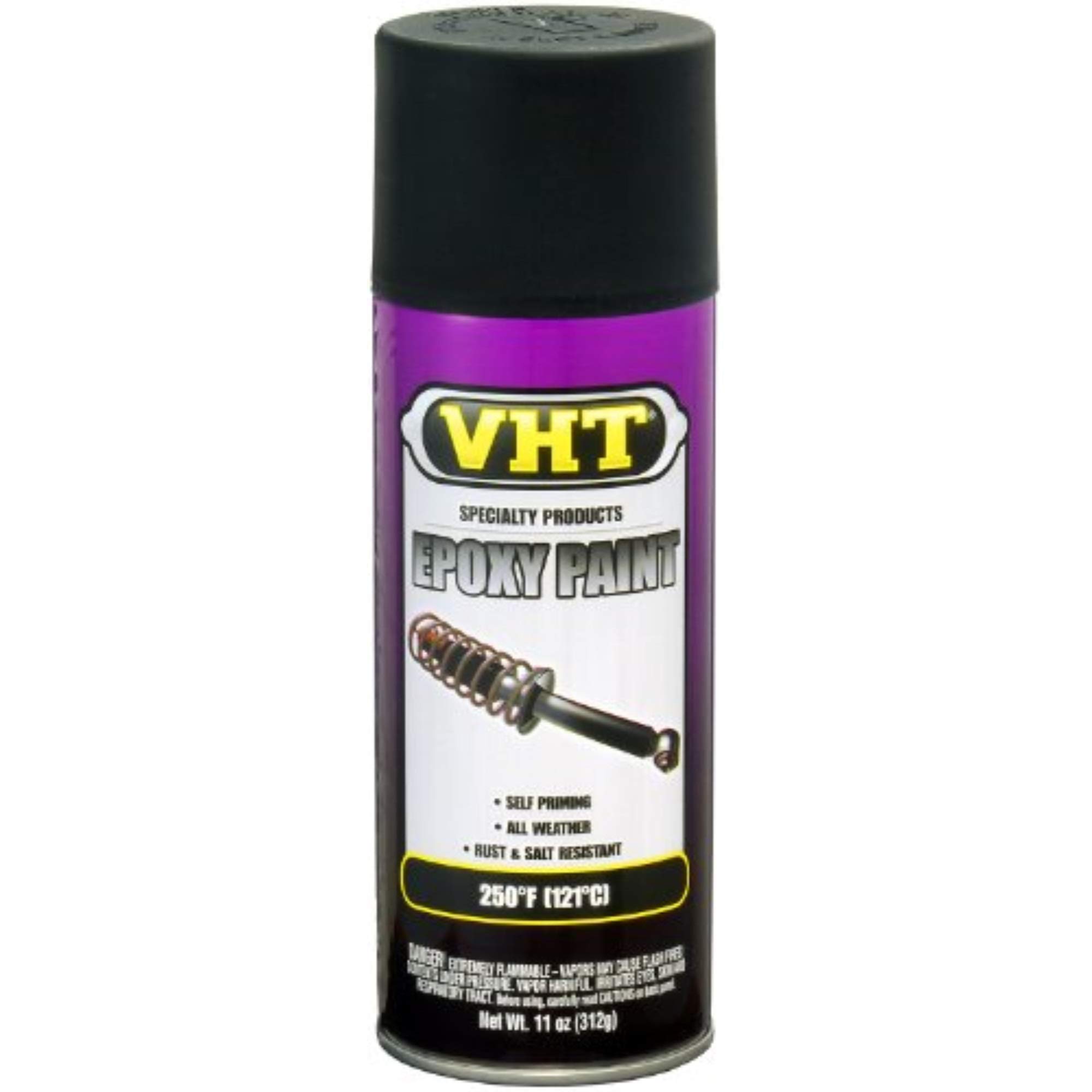
Epoxy durability for the trim that bakes in sun and soaks in rain.
Not every trim job is a bumper. Grilles, mirror housings, and metal trim sit in the weather year-round, and an epoxy coating is formulated for that. This 11 oz can lays a satin black with a 24-hour dry and a 24-hour full cure, so it rewards a patient, unhurried weekend. It carries a waterproof rating, which matters on parts that see standing water and road spray.
Reviewers praise the application and finish, and the epoxy lays out to a glossy look that mirrors the original equipment. The 850+ reviews on this listing make it one of the more heavily vetted cans in the category. That depth of feedback is useful, because coverage and spray performance land as the split points, and both are down to technique as much as the can. Shake hard and spray light, even passes to get the best from it.
One fair note is sizing. At 11 oz it is the smaller can among the main picks, so plan coverage before you start a large panel. Buyers who expect a single can to wrap a whole front bumper may come up short and need a second.
Why It Works
- Epoxy formula rated waterproof for weather-exposed trim
- Satin black finish that mirrors the factory look
- Deep review history makes it a well-vetted choice
- 24-hour full cure leaves a hard, durable shell
What To Know
- 11 oz is the smaller can of the main picks, so large panels may need a refill
- Coverage is the mixed topic in reviews, and spray technique matters
For the weather-beaten job: grilles, metal trim, and parts that live outdoors and need to fend off moisture.
Check your coverage first: a big bumper on 11 oz may want a second can on hand.
5. SprayMax 1K Trim Paint Black Satin
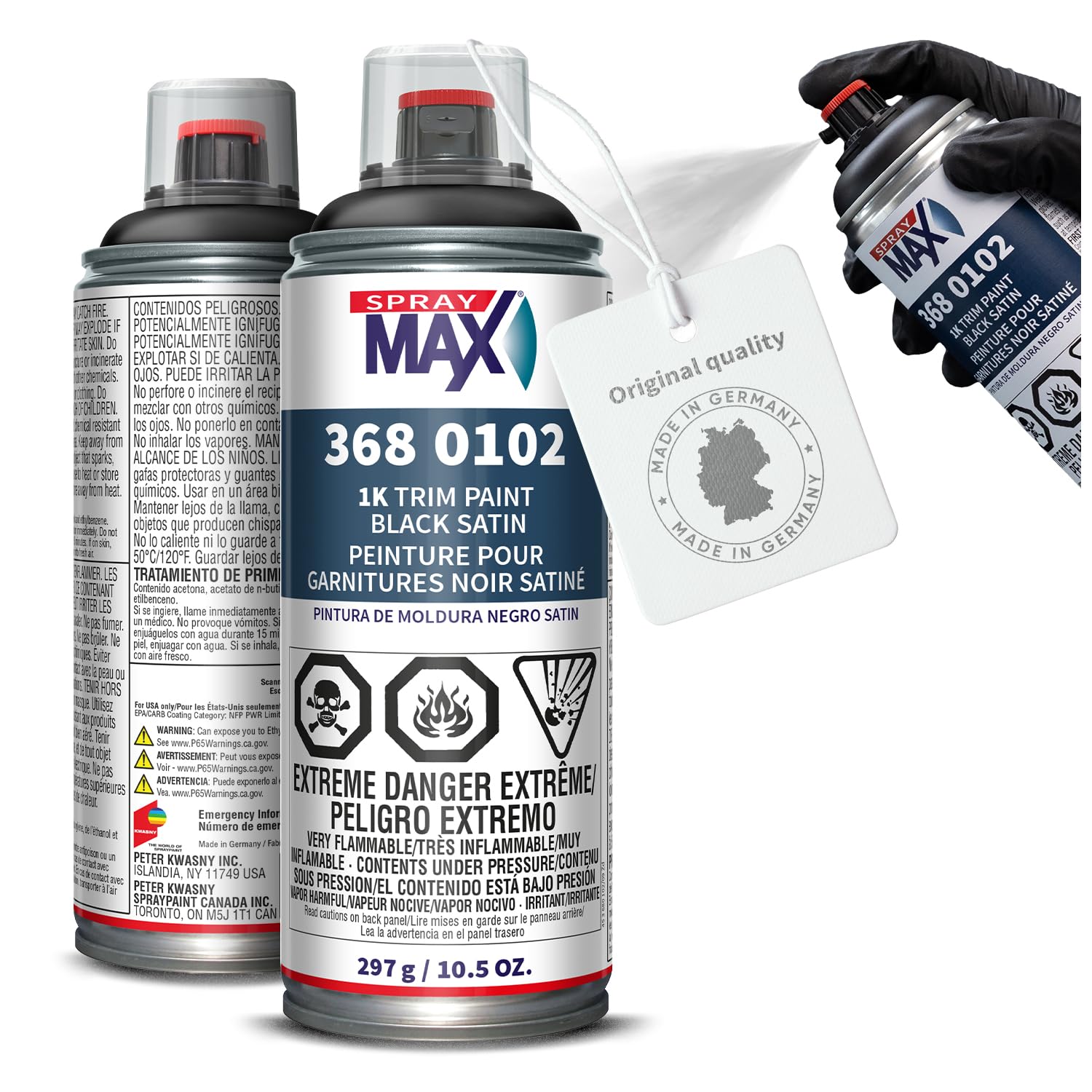
A spot-repair can built around speed, with a nozzle you can dial in tight.
If your job is a scuffed mirror cap rather than a whole bumper, the timeline matters more than can size. This single-component 1K aerosol dust-dries in 15 minutes and fully cures within 3 hours at room temperature, so a morning repair can be back on the car by afternoon. The variable nozzle lets you narrow the fan for tight spots and widen it for a flat panel, which is a real advantage on detailed trim work.
The high-solid formula gives strong adhesion across metal, wood, glass, and most plastics, and the satin black levels out evenly. It is a topcoat, so think of it as the finishing layer over prepared trim rather than a texture-restoring coating. Drying speed is the bright spot in the feedback, with the finish curing fast and holding up well in daily use.
What splits opinion is overall quality, with some buyers calling it the best trim paint they have used and others landing disappointed. That spread often traces back to surface prep and expectations, so spray a test card and clean the part properly before committing. It is a smaller-listing can, so approach it as a precise spot-repair tool.
Great for speed: 15-minute dust dry and a 3-hour full cure let you finish a spot repair in a single session.
Plan around it: opinion on quality is divided, so prep the surface carefully and test the gloss first.
Choose it when: you are chasing quick turnaround on a small, detailed part like a mirror cap or trim strip.
Look elsewhere if: you need a texture-restoring coating for a whole grained bumper instead.
6. NADAMOO Trim Black Spray Paint
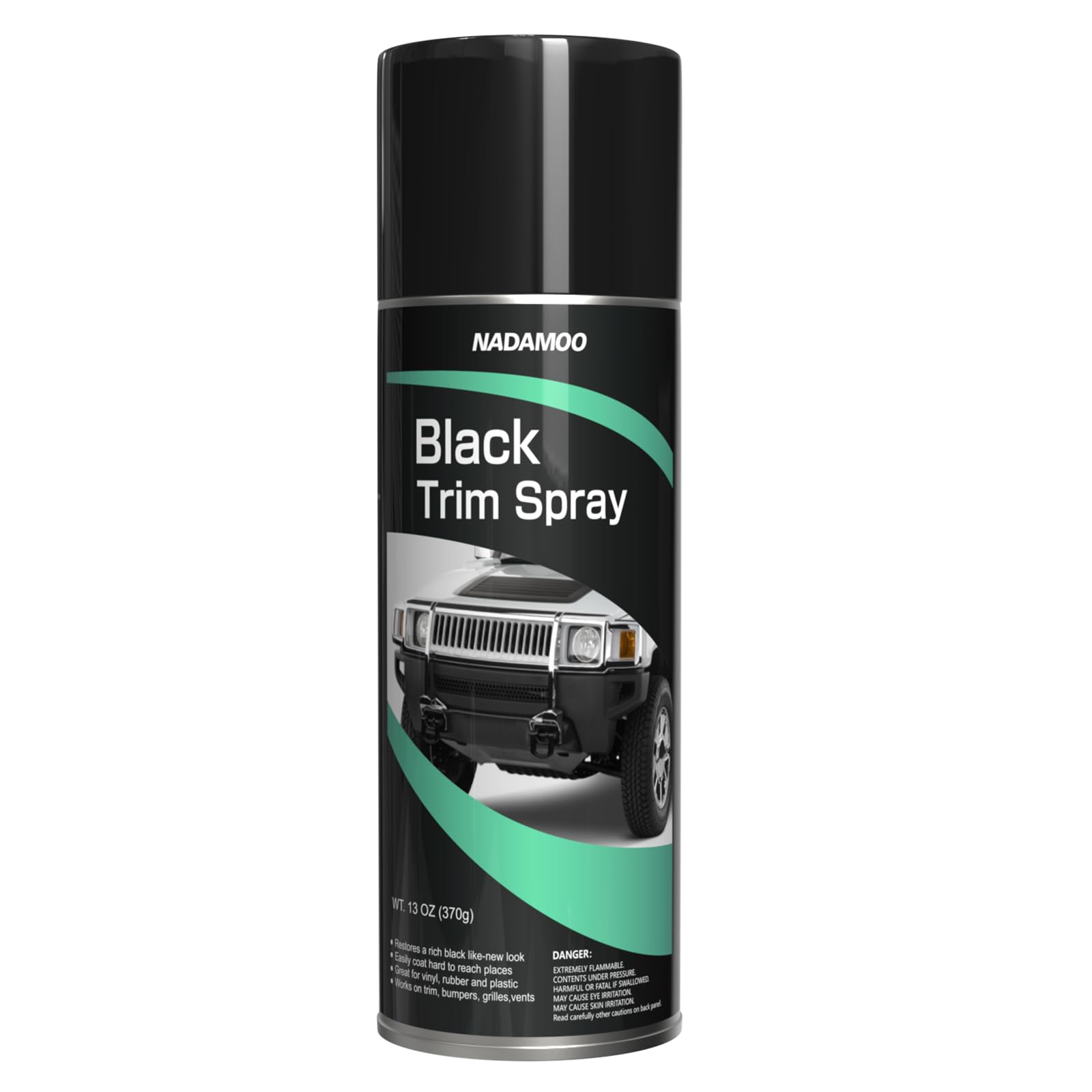
A forgiving 13 oz can that revives faded plastic without needing tools or a spray gun.
Beginners get the most out of this one. It sprays from a plain aerosol with no mixing or gun setup, and the can reaches tight spots like grilles and bike frames where a spray gun would fight you for an angle. A 13 oz can lays about 10 to 12 square feet across two light coats, which is a sensible amount for a set of trim pieces. It bonds to rubber, vinyl, and plastic, and also to metal, wood, and ceramic.
Weather resistance is a strong suit, since the finish is rated to survive from -40°F to 150°F and resists fading in strong sun. The quality and performance earn the loudest praise, and owners describe car trim coming back to a factory-fresh look after a coat. It also fends off cleaners, oils, salt, and acidic grime, so a bumper hit by road salt does not dull overnight.
Value is the honest sticking point. Some buyers feel the price is high for the can size, and durability draws a mixed read depending on how the part is prepped and used. Prep the surface and it does its job, but do not expect one can to be a long-term armor coating on a rocker panel that eats gravel.
What Buyers Love
- Bonds to rubber, vinyl, plastic, metal, wood, and ceramic
- Rated to hold up from -40°F to 150°F without fading
- No tools or spray gun, ideal for a first-time DIY trim refresh
- Resists cleaners, oils, salt, and acidic contaminants
Worth Weighing
- Some buyers consider the can pricey for the size
- Durability splits opinion depending on prep and how hard the part is used
Ideal first can: freshening faded plastic on bumpers or patio furniture with no spray gear.
Not for hard abuse: a gravel-blasted rocker panel that needs a dedicated armor coating.
7. Transtar 4653 Satin Black 2-in-1 Trim Coating

A flexible polymer coating that skips the primer step entirely.
Urethane bumpers and rubber trim are the parts that defeat ordinary paint, and this coating is built for exactly them. It is a tough, flexible polymer designed to restore bumpers and rigid or flexible trim to OEM condition, with excellent adhesion to urethane, rubber, metal, and treated olefin plastics. The 15 oz can is the largest of the rigid-plastic specialists here.
Two features set it apart. First, no priming is required, which saves a step and a can on a job where you want to spray and be done. Second, it dries quickly at 0.29 hours, so a bumper can be handled the same day. It comes in three gloss levels — matte, satin, and gloss — so you can match whatever the factory laid down instead of settling for the closest option.
The VOC content sits at 50.6%, which is a spec worth knowing before you spray in a closed garage. Ventilation matters with any aerosol, and this figure just makes it explicit. Review data is thin on this listing, so treat it as a specialist tool chosen on its adhesion spec rather than on a long track record.
Standout spec: no-primer flexible polymer that grabs urethane, rubber, metal, and treated olefin plastics.
Plan for it: VOC content at 50.6% means spray with good airflow, and review history is limited.
Built for: urethane and rubber bumpers where a flexible, no-primer coating is the deciding factor.
Skip the shortcut: if you spray in an enclosed space, the 50.6% VOC figure calls for open ventilation.
8. SEM 15013 Landau Black Color Coat

For interiors, not bumpers — a color coat that brings faded vinyl back to factory black.
This is the pick for the cabin rather than the exterior. Landau Black is a semi-gloss color coat meant to refresh vinyl seats, dash panels, and plastic interior trim, and it is the smaller 12 oz can of the group with a 1-hour dry. It works indoors and outdoors, and it matches Honda black interiors especially well. For a faded steering wheel or scuffed door card, a color coat like this is the right tool.
Performance earns the loudest praise on this listing, and the color and appearance come next. Owners describe parts looking brand new again, with faded vinyl seats and upholstery coming back to life under a coat. The finish holds up over time in their experience, and that durability is what keeps it a repeat purchase for interior work.
The honest boundary is that a semi-gloss color coat is not a flexible bumper coating. Adhesion and value land as the split points, and spray performance draws a mixed read, so test a hidden spot and build light coats. At 12 oz it is also on the smaller side, worth checking before a full interior job.
Where it belongs: vinyl seats, dash panels, and interior plastic that need a factory-black refresh.
Keep it inside: semi-gloss and 12 oz suit cabin work, not a flexible exterior bumper.
Perfect match for: a tired interior with Honda-style black vinyl and plastic wanting its color back.
Not your can for: a flexing exterior bumper that needs a dedicated flexible coating.
Understanding the Specs
Finish Type
The finish is how shiny the cured coating looks, and it is the detail that decides whether a repair blends in. Satin is the closest match to most factory exterior trim, sitting flat with a soft sheen that hides light scratches. Matte is duller and suits textured plastics, while semi-gloss is brighter and fits interior panels that were shiny from the factory. Spray a test card first, because once a can is emptied you cannot change its gloss.
Dry Time vs Full Cure
Dry time is when the surface stops being wet and is safe to touch, while full cure is when the coating reaches its final hardness. A quick dust dry tempts you to lay a second coat too soon, and recoating inside the cure window can wrinkle the finish. Fast cans suit same-day spot repairs, and slower epoxy coatings reward patience with a harder shell that holds up longer.
Adhesion and Substrate
Substrate means the material you are spraying, and the coating has to be built for it. Steel and aluminum accept paint readily, but flexible bumpers molded from treated plastics like TPO and PP need a coating formulated to grip them. If the can does not name your material, plan on an adhesion promoter. A coating that flexes with the plastic survives; one that hardens and cannot bend will crack.
Coverage Per Can
Coverage tells you how much surface one can handles, and it is the easiest way to buy the wrong amount. A larger can may cover a full bumper set across light coats, while a smaller can suits detail work and needs a refill for big panels. Always spray two thin coats rather than one heavy pass, because thin coats build evenly and dry faster.
FAQ
Can auto trim paint go over faded grey plastic without sanding?
How long does auto trim paint last on a bumper?
What is the difference between satin and semi-gloss trim paint?
Do I need an adhesion promoter for plastic bumpers?
Can I spray auto trim paint on vinyl seats inside the car?
Is textured rocker guard the same as trim paint?
How many coats should I spray on a faded bumper?
Will trim paint work on metal grille trim as well as plastic?
Does trim paint need a clear coat on top?
Can I use auto trim paint outdoors in cold weather?
Final Thoughts: The Verdict
For most people freshening up faded trim, the winner is the SEM 49143 Trim Black Ultra. It holds the highest rating of the main picks and the broadest adhesion across steel, aluminum, TPO and PP, so a bumper, mirror cap, and trim strip all get a factory-matching satin black from one can. If you need textured protection on a low panel, grab the Dupli-Color Trim and Rocker Guard, which dries in 0.16 hours and lays a rugged finish. And for an interior refresh on vinyl and plastic, the SEM 15013 Landau Black Color Coat is the one to reach for.
How We Picked
We do not accept paid placement. Every pick is matched to a real buyer and a real use-case; we do not hands-on test units.
Sources & Methodology
Specifications: manufacturer listings and product documentation. Review insights: verified customer reviews, as of November 2026. Pricing: not shown on this page (it changes often); check the current price via the retailer link.
As an Amazon Associate, Gadgets Feed earns from qualifying purchases. This does not affect which products we feature.