
Securing a vehicle’s broken side glass or sealing drafty house windows calls for a material that balances thickness with conformability, adhesion without residue, and optical clarity without glare. Auto window plastic is not a single product — it spans thin collision wrap for emergency repairs, heavy polyethylene sheeting for insulation, and ceramic tint film for heat rejection, each engineered for a specific strain.
I’m Min — the co-founder and writer behind Gadgets Feed. My research for this guide parsed hundreds of verified buyer reports on tear resistance, adhesive behavior at highway speeds, and long-term UV stability across the most commonly purchased rolls and sheets.
Whether you are sealing a shattered sunroof before a road trip or covering an entire car for a fresh paint job, finding the right best auto window plastic means matching material thickness, width, and release properties to the exact pressure your plastic will face.
How To Choose The Best Auto Window Plastic
Buyers often grab the cheapest roll without checking whether the plastic is designed for automotive clear coat, household insulation, or temporary crash protection. Each scenario demands a specific thickness range and either static cling, edge adhesive, or full self-adhesion. A 6-mil vapor barrier works fine on crawl spaces but peels off a car hood within an hour at freeway speeds. The three factors below filter out the mismatch.
Match Thickness to the Job
Plastic sheeting for auto window plastic is measured in mils (thousandths of an inch) or microns. Thin 0.31-mil film wraps easily around complex curves but tears under wind load above 50 mph. 3.5-mil crash wrap holds a cracked windshield at highway speeds for days without puncturing. 6-mil polyethylene is overkill for windows but essential as a vapor barrier under a parked vehicle’s body panels during paint prep. For most temporary car window fixes, 2 mil to 4 mil provides the best balance of conformability and structural integrity.
Adhesive Type and Clean Removal
The adhesive backing determines whether the plastic stays planted overnight or leaves a gummy residue that requires a razor blade to remove. Self-adhesive crash wrap (like TapeManBlue) is engineered for clean release on painted surfaces — most models peel away without marring the clear coat. Edge-adhesive sheeting (like 3M Hand-Masker) relies on separate masking tape and is better for stationary paint booths than moving vehicles. Ceramic tint film uses a permanent pressure-sensitive adhesive that bonds to glass, not paint, so it should never be used as a temporary broken-window cover.
Environmental Resistance: UV, Solvent, and Temperature
Auto window plastic exposed to direct sunlight needs UV stabilization to prevent embrittlement and yellowing within two weeks. Polyethylene sheeting degrades rapidly under UV unless it is labeled as treated; 3M’s automotive-grade sheeting is solvent-resistant and resists bleed-through from lacquer and enamel overspray. Crash wrap must handle temperature swings from freezing mornings to hot afternoons without adhesive failure. If you are applying the plastic during winter, verify the working temperature range — some adhesives lose tack below 40°F.
Quick Comparison
On smaller screens, swipe sideways to see the full table.
| Model | Category | Best For | Key Spec | Amazon |
|---|---|---|---|---|
| TapeManBlue Crash Wrap | Self-Adhesive Collision Wrap | Emergency broken glass cover at highway speeds | 3.5 mil thickness, clean removal | Amazon |
| 3M Automotive Repair Sheeting 06723 | Overspray Sheeting | Whole-car paint prep with solvent resistance | Tear-resistant, static cling | Amazon |
| PAMAGOO Ceramic Window Tint | Ceramic Tint Film | Permanent UV/heat rejection on side windows | ≥95% UV block, scratch-resistant | Amazon |
| 3M Hand-Masker Painter’s Plastic Plus | Non-Adhesive Masking Film | Covering large interior surfaces from overspray | 0.31 mil, edge adhesive only | Amazon |
| Frost King P350/3 Polyethylene Sheeting | Lightweight Sheeting | Draft-proofing single house windows in winter | 3 mil, 3 ft x 50 ft roll | Amazon |
| Frost King P1025/3 Polyethylene Sheeting | Mid-Weight Sheeting | Larger window insulation and indoor drop cloths | 3 mil, 10 ft x 25 ft roll | Amazon |
| Farm Plastic Supply Clear Sheeting 6 mil | Heavy-Duty Barrier Film | Vapor barrier under vehicle during paint work | 6 mil, 10 ft x 100 ft roll | Amazon |
In‑Depth Reviews
1. TapeManBlue Crash Wrap, 36 in x 100 ft
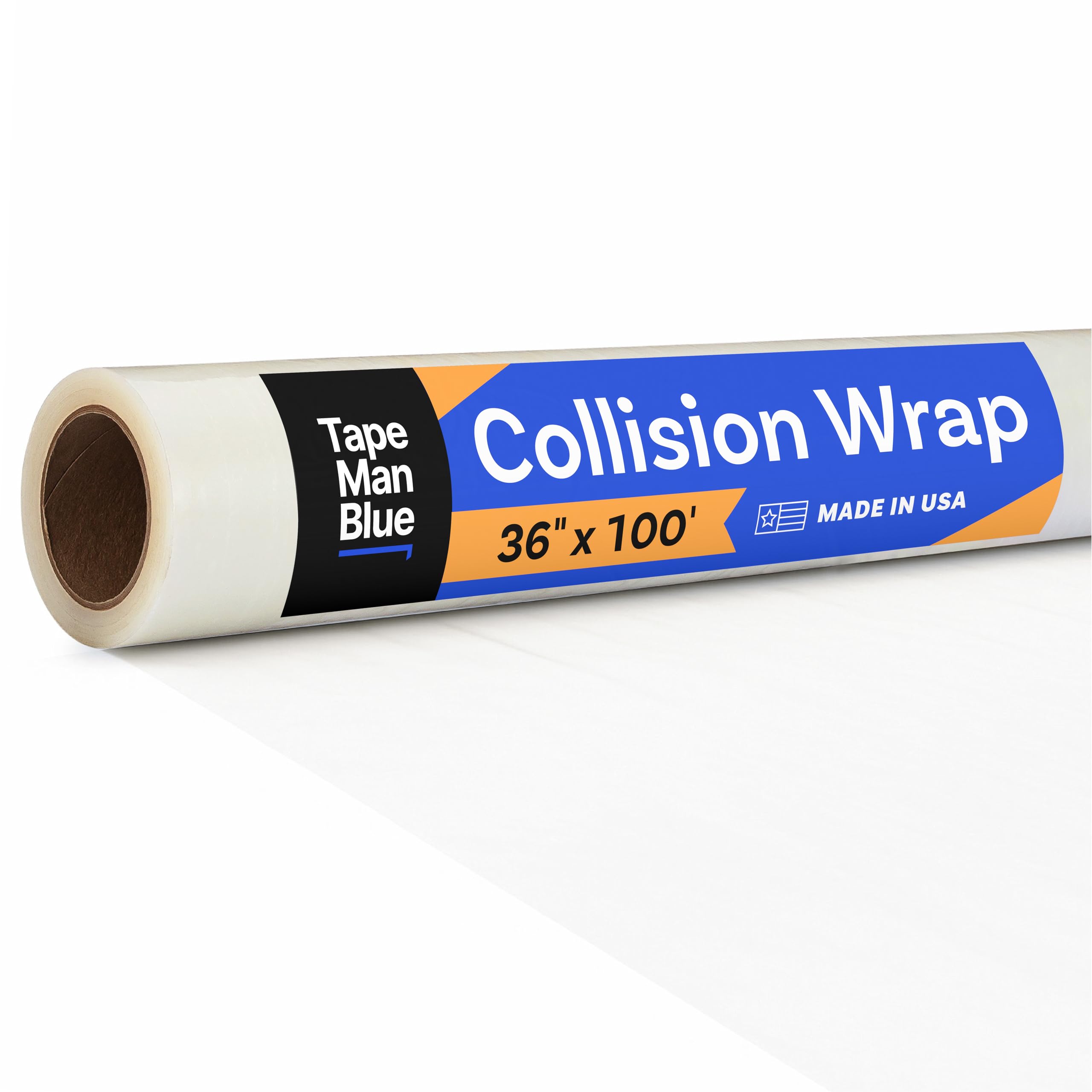
The TapeManBlue Crash Wrap is the most practical emergency auto window plastic on the market because it balances adhesive grip with clean releasability. At 3.5 mils, it resists tearing during application across a cracked windshield or sprung door panel without being so stiff that it refuses to conform to compound curves. Customer tests confirm it holds at highway speeds for multiple days, outperforming the typical duct-tape-and-trash-bag bodge that flaps loose at 45 mph.
The self-adhesive side bonds to both glass and painted body surfaces without damaging the clear coat when peeled off — a critical advantage over generic polyethylene sheeting that either lacks adhesive or leaves a sticky mess. One reviewer used a single roll to reseal a food truck window daily for a month and still had material left. The 36-inch width covers most passenger-side windows in a single pass, and the length (100 feet) covers half a dozen emergency repairs before you need to reorder.
Some users report minor adhesion loss in small areas after extended exposure, particularly on dusty surfaces that were not wiped clean before application. The material is also slightly more expensive per square foot than standard painting plastic, but the engineered adhesive and tear resistance justify the premium for anyone who needs a temporary broken-car-window cover that actually stays on during a tow or highway drive.
Why it’s great
- Holds at highway speeds without lifting for days
- Peels off painted surfaces with no residue
- Thick enough to resist punctures from debris
Good to know
- Adhesion drops if the surface is not clean and dry
- Higher cost per foot compared to basic sheeting
2. 3M Automotive Repair Plastic Sheeting 06723, 12 ft x 400 ft

3M’s 06723 is the gold standard for auto body painters who need a drop cloth that does not flake, drip, or infuse solvent bleed-through into the finish. The plastic is specially treated so overspray clings to the film rather than beading up and falling off onto freshly painted panels. That property alone saves hours of sanding and recoat work when you are laying down multiple coats of clear coat.
The static cling allows a single person to drape the 12-foot-wide sheet over a car body without needing a helper to hold corners — the plastic grabs the metal panels and stays in place while you tape edges. It cuts cleanly with scissors and resists tearing even when you accidentally snag it on a side mirror or hood ornament. Customer reports confirm it held up through four coats of urethane clear without any transfer or tearing.
The 06723 is designed for industrial/occupational use, meaning it is ideal for shops and dedicated DIYers rather than casual home users. It is also thin enough that it can be tricky to handle in windy outdoor conditions without extra weights. If your project is a single small panel, the 400-foot length is excessive — consider the 3M Hand-Masker roll for smaller jobs.
Why it’s great
- Overspray flakes are virtually eliminated
- Static cling simplifies one-person car-wide draping
- Resists solvent bleed-through during clear coat application
Good to know
- Intended for professional auto body use rather than basic household tasks
- Large roll size is overkill for small repair jobs
3. PAMAGOO Ceramic Window Tint, 35% VLT, 24 in x 15 ft

This ceramic tint film is the standout choice for anyone seeking permanent auto window plastic that rejects heat and glare rather than temporary coverage. The nano-ceramic coating blocks over 95 percent of UV rays and 88 percent of infrared radiation, keeping the cabin noticeably cooler even on unshaded summer days. The 35% VLT option balances privacy with nighttime visibility — you can see outward clearly while passersby see a darkened reflection.
The five-layer construction gives the film a thickness that resists scratching during installation and everyday window operation. Buyers report it shrinks well with a heat gun around tight rear-window curves without creasing or lifting. The pressure-sensitive adhesive bonds permanently to glass, so it will not peel off at high speed like a temporary wrap would. One reviewer applied the 5% VLT (limo tint) variant to an Escalade and noted it withstood automatic car washes without edge lifting.
The installation requires the wet-squeegee method and a heat source for curing — this is not a peel-and-stick solution for a cracked window that needs covering in five minutes. A small number of users experienced difficulty separating the liner from the adhesive film during the first attempt. The tint is also permanent; removing it from glass later requires heat and adhesive remover, so this product is only suitable for windows you intend to keep tinted long-term.
Why it’s great
- Exceptional heat rejection keeps cabin much cooler
- Scratch-resistant surface holds up to daily use
- One-way privacy without blocking outward visibility at 35%
Good to know
- Permanent adhesive — not for temporary broken-window repairs
- Requires wet install and heat gun for best results
4. 3M Hand-Masker Painter’s Plastic Plus MFB-12, 12 ft x 400 ft
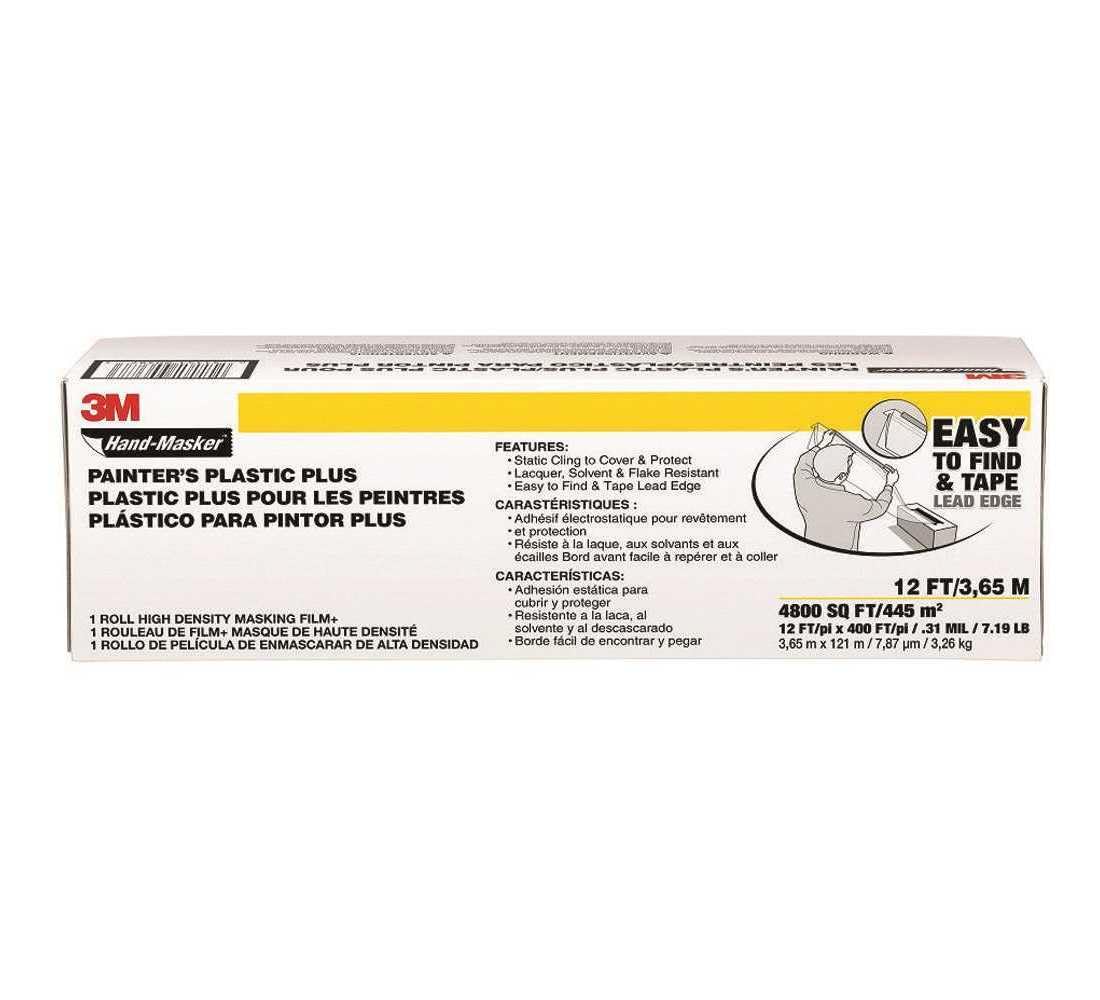
The 3M Hand-Masker Plus is the most efficient choice for covering large interior surfaces — floors, furniture, and entire walls — during a painting project. The plastic is extremely thin at 0.31 mil, which makes it lightweight enough to drape without pulling tape off the wall, yet it is water-, lacquer-, and solvent-resistant so paint splatters wipe off rather than soak through. The integrated edge adhesive is pre-applied to one side, but it is designed to work with a separate masking tape dispenser rather than sticking directly to surfaces.
Customers consistently praise the tear resistance relative to its thinness, and the included starter tab makes it easy to unroll from the hand-masker tool without the plastic bunching up. The roll covers 4,800 square feet — enough to protect four average-sized rooms with plenty leftover for touch-ups. Several reviewers noted that the plastic clings to walls via static when draped, which helps hold it in place while you finish taping edges.
Because the plastic has no full-surface adhesive, it cannot be used as a direct wrap for broken car windows — you would need to add tape around the entire perimeter, and the thin film tears easily in wind if not fully secured. Some users also reported that the plastic is not chemically treated for automotive paint overspray, so solvent-based spray paint may cause the film to become brittle and flake within hours.
Why it’s great
- Massive 400-ft roll covers entire rooms quickly
- Solvent-resistant surface prevents bleed-through
- Lightweight drape stays in place with minimal tape
Good to know
- Not strong enough for direct car window crash coverage
- No full-surface adhesive — relies on perimeter tape
5. Frost King P350/3 Polyethylene Sheeting, 3 ft x 50 ft

The Frost King P350/3 is the go-to budget auto window plastic for winter window insulation and light garage tasks. At 3 mils thick, it is sufficiently rigid to cut cleanly and tape around standard residential window frames without sagging. Multiple seasonal buyers report reusing the same sheet across consecutive winters by simply retaping the edges each year. The 3-foot width and 50-foot length provide enough coverage for about 10 average-sized double-hung windows.
Customer feedback highlights that the plastic blocks drafts noticeably — rooms that previously felt cold near the glass become livable once the sheet is sealed with double-sided tape. The material is transparent enough to allow natural light through, so you are not living in darkness during the cold months. The polyethylene composition also makes it suitable for light dust containment during small renovation projects.
Some users found the plastic too thick to adhere properly with standard double-sided tape, requiring staples or specialized window insulation tape for a secure seal. The clarity is not perfectly optical; looking through the plastic introduces a slight haze that obscures fine outdoor details. For applications that demand pristine visibility — such as a temporary car window during inspection — this sheeting is functional but not optically clear.
Why it’s great
- Affordable roll covers many windows for winter
- Lets in natural light while blocking drafts
- Reusable across multiple seasons
Good to know
- Too thick for standard double-sided tape without reinforced seal
- Slight optical haze — not perfectly see-through
6. Frost King P1025/3 Polyethylene Sheeting, 10 ft x 25 ft

The Frost King P1025/3 provides the same 3-mil polyethylene material as the smaller P350/3 but in a wider, shorter format — 10 feet by 25 feet — making it better suited for covering larger single surfaces like patio doors, garage windows, or the front of a vehicle during light paint prep. The width allows you to drape it over a car’s hood and windshield without needing to seam multiple strips together.
Buyers have used this sheeting successfully as a plant cover during Texas freezing events, as a drop cloth for indoor painting, and as a vapor barrier in crawl spaces. The thickness at 3 mil provides enough durability to resist tearing from mild snags while remaining flexible enough to fold into tight corners. The manufacturing quality from Frost King is consistent — the plastic unrolls without static-clinging to itself excessively, which speeds up installation.
The 3 mil rating means it is not suitable for high-wind outdoor applications without significant taping at every edge. Some customers noted that the plastic is not treated for UV resistance, so it becomes brittle after a few weeks of direct sun exposure. If your use case is a permanent greenhouse or long-term car cover, step up to a thicker, UV-stabilized film.
Why it’s great
- Wide 10-ft sheet covers large openings in one piece
- Flexible enough to fold and tape into tight corners
- Consistent quality from a trusted budget brand
Good to know
- Not UV-stabilized — degrades in direct sunlight
- Requires comprehensive taping for outdoor wind resistance
7. Farm Plastic Supply Clear Sheeting, 6 mil, 10 ft x 100 ft

Farm Plastic Supply’s 6-mil sheeting is the thickest auto window plastic in this roundup, engineered for jobs that demand puncture resistance and structural integrity rather than optical clarity or adhesive convenience. The low-density polyethylene formulation handles repeated folding, dragging across concrete, and exposure to rain and wind without tearing. It is the right choice for creating a vapor barrier under a car during bodywork, covering a workspace floor against oil drips, or wrapping equipment for long-term outdoor storage.
The 100-foot length and 10-foot width yield 1,000 square feet of coverage — enough to completely drape a full-sized SUV or cover an entire garage floor. Buyers report using the sheeting successfully as a dust barrier during drywall sanding and as a plant protector during frost warnings. The material is opaque enough that it blocks light completely, which is useful for privacy when covering workshop windows.
The extreme thickness makes this roll heavy — nearly 30 pounds — and difficult to handle without a second person. The return policy has drawn complaints about high restocking fees, so double-check your measurements before ordering. For basic window insulation or a temporary cracked-glass cover, this sheeting is overbuilt; the weight alone makes it impractical for quick taped repairs.
Why it’s great
- Near-indestructible 6-mil thickness resists punctures
- Covers 1,000 sq ft for large-scale protection jobs
- Excellent vapor barrier for under-vehicle paint booths
Good to know
- Heavy roll — requires effort to handle and cut
- Not suitable for temporary see-through window repair
FAQ
Can I use house window insulation plastic on a car window?
How long does self-adhesive crash wrap stay secure on a broken window?
Will ceramic window tint work as a temporary cover for shattered glass?
Final Thoughts: The Verdict
For most users, the best auto window plastic winner is the TapeManBlue Crash Wrap because it delivers the adhesive grip, tear resistance, and clean release that temporary car window repairs demand at a thickness that handles highway wind without bulk. If you need professional-grade overspray protection for a full paint job, grab the 3M Automotive Repair Sheeting 06723. And for permanent heat rejection on intact side glass, nothing beats the PAMAGOO Ceramic Window Tint.