
Commuting in a car that feels like a convection oven isn’t just uncomfortable — it accelerates dashboard cracking, leather fading, and upholstery breakdown. The right window film acts as a selective barrier, reflecting infrared radiation before it transforms your cabin into a greenhouse while preserving outward visibility for safe driving.
I’m Min — the co-founder and writer behind Gadgets Feed. I spend hundreds of hours each year analyzing the technical specifications of automotive accessories, cross-referencing spectral data with user installation reports to determine which films deliver real-world heat reduction versus marketing hype.
The best auto window tint for heat reduction combines a high Total Solar Energy Rejection (TSER) percentage with durable adhesive chemistry that won’t degrade under sustained thermal load.
How To Choose The Best Auto Window Tint For Heat Reduction
Heat-rejecting window film works by reflecting or absorbing solar radiation across three bands: ultraviolet (UV), visible light, and near-infrared (IR). The film’s effectiveness at reducing heat inside your vehicle depends on its Total Solar Energy Rejection (TSER) percentage — a cumulative metric that combines UV, IR, and visible-light rejection into one number. A film with a TSER below 40% will provide only modest thermal relief on hot days.
Film Construction: Carbon vs. Ceramic vs. Dyed
Dyed films use a layer of colorant that absorbs light but degrades over time, often turning purple after a few summers of direct sun exposure. Carbon-based films embed carbon nanoparticles that block infrared heat without fading, and they don’t interfere with radio or GPS signals because no metal is used. Ceramic films push that further — they use nano-ceramic particles that reject a higher percentage of infrared radiation while maintaining excellent optical clarity and zero signal interference. For dedicated heat reduction, ceramic films consistently post the highest TSER numbers.
Visible Light Transmission and Legal Limits
VLT measures the percentage of visible light that passes through the film — a 20% VLT film lets through 20% of visible light, creating the “limo” look that enthusiasts often want. Each state enforces specific VLT minimums for front side windows, rear side windows, and the rear windshield. Choosing a film that violates your local VLT regulations can result in citations and forced removal. A high-performance heat-rejecting film with a 50% VLT still blocks more solar energy than a budget dyed film with a 5% VLT because its construction targets the invisible infrared spectrum where most solar heat energy resides.
Adhesive Quality and Shrinkability
Films that shrink well under heat conform to curved rear windshields without creasing or lifting. Low-quality films often crack or delaminate when a heat gun is applied, leaving permanent wrinkles that can’t be removed. High-melt polyester films with pressure-sensitive adhesives allow the film to be lifted, repositioned, and squeegeed multiple times during installation. Check customer feedback about adhesive consistency — a film that works perfectly in one roll but fails in the next indicates a quality-control problem that will show up as peeling edges after a few months in direct sunlight.
Quick Comparison
On smaller screens, swipe sideways to see the full table.
| Model | Category | Best For | Key Spec | Amazon |
|---|---|---|---|---|
| MotoShield Pro Carbon | Carbon Premium | Vehicle-specific precut fit | 1.5 Mil thickness, 5-50% VLT options | Amazon |
| BDF NSN70 | Near-Clear Premium | Minimal visibility change with high heat rejection | Near-clear shade, 7 ft x 36 in roll | Amazon |
| Precut Kit by JNK NETWORKS | Precut Premium | Zero-trim DIY install for specific makes | Korean polyester, Heat shrink compatible | Amazon |
| United Window Tint Nano Carbon | Bulk Carbon Value | Large surfaces and home windows | 24 in x 100 ft roll, 20% VLT | Amazon |
| ARANA Ceramic 70% | Ceramic Mid-Range | Signal-friendly ceramic with high VLT | Ceramic construction, 70% VLT | Amazon |
| RockRose Carbon Tint | Carbon Budget Champion | Large roll (36x20ft) for multi-window projects | 35% IR rejection, 45% TSER | Amazon |
| TRUE LINE Nano Carbon | Entry-Level Carbon | Budget-friendly starting point | 18.33 sq ft coverage, 20% VLT | Amazon |
In‑Depth Reviews
1. MotoShield Pro Professional Carbon Window Tint Film
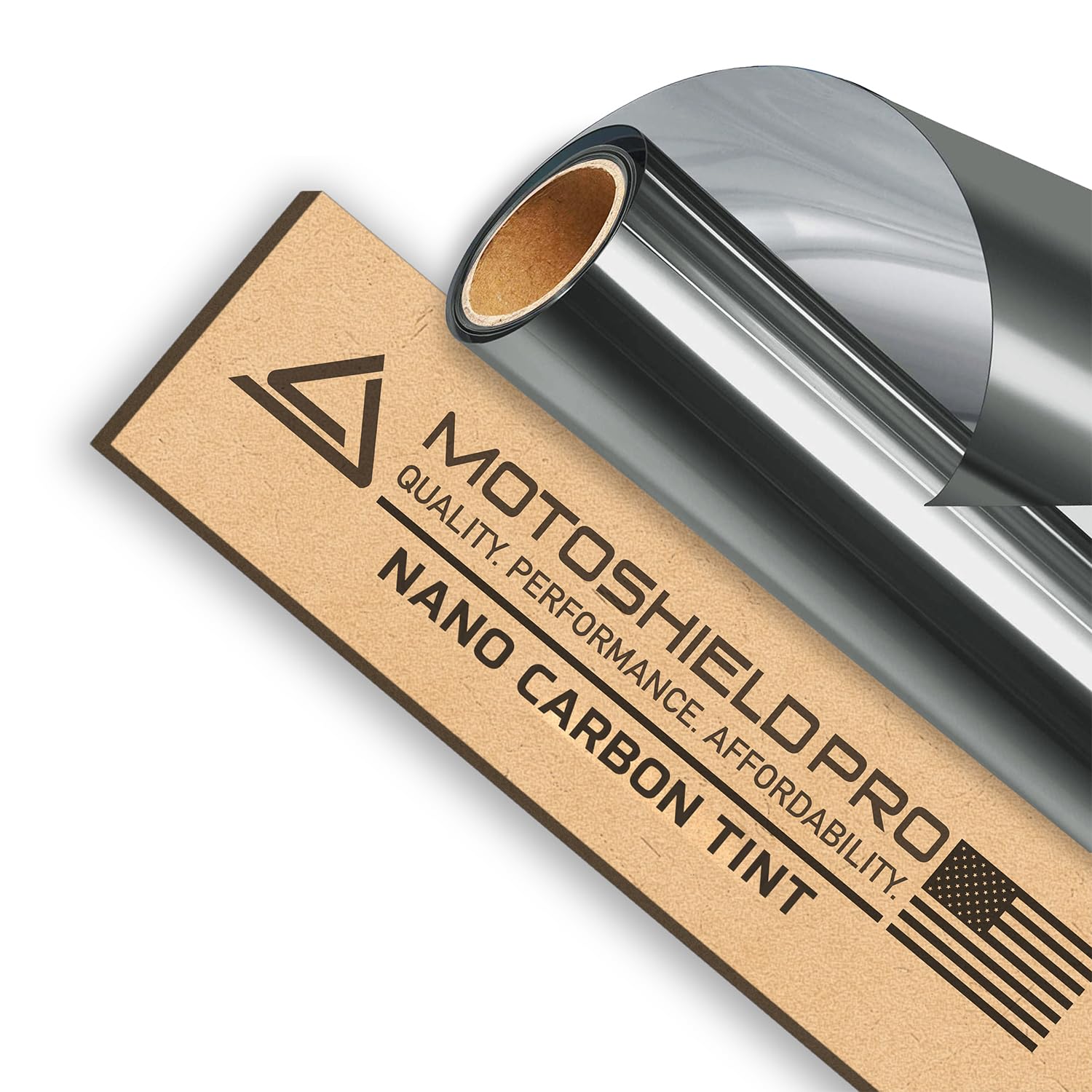
MotoShield Pro’s Nano Carbon formula delivers 99% UV blockage and substantial infrared heat reduction in a 1.5-mil-thick film that remains pliable enough for curved window applications. The film is hand-assembled in the USA and offered in five VLT options from 5% to 50%, so you can select a shade that complies with your state’s front-window regulations while still achieving meaningful cabin cooling. Buyers who used the “Customize Now” feature received rolls pre-cut to their exact vehicle’s dimensions — a time-saver that eliminates the precision trimming required by universal rolls.
User reports indicate that the film shrinks well under heat, conforming to the compound curves of rear windshields without creasing or edge lifting. One certified installer noted the material was forgiving enough for beginners yet responsive enough for professional-grade results. Customers who applied the film to home windows also reported measurable temperature drops of several degrees on the sun-facing side, which speaks to the material’s genuine IR rejection capability rather than just optical darkness.
The few negative reviews centered on packaging inconsistencies where rolls arrived with loose ends or creases, and one buyer measured the actual VLT at roughly 35% instead of the advertised 25%. These issues appear to affect a minority of units, but the premium price point makes quality control a legitimate consideration. For the heat-focused buyer, the key metric is clear: this film blocks 99% of UV rays and visibly reduces infrared buildup, making it the strongest all-around performer among standard carbon films.
Why it’s great
- Precut to vehicle dimensions eliminates trimming guesswork
- Five VLT options from 5% to 50% for legal compliance
- Nano carbon construction resists fading and doesn’t interfere with GPS or radio signals
Good to know
- Some rolls arrived with creases or loose film ends
- A few users measured VLT higher than advertised
- Professional-grade shrinkability may still require heat gun practice
2. BDF NSN70 Window Film (Near-Clear)

The BDF NSN70 is the outlier pick for buyers who want maximum heat rejection without changing the appearance of their windows. This near-clear film allows nearly all visible light through while reflecting infrared and UV radiation, making it ideal for windshields (where dark tints are illegal) or for homeowners who want thermal relief without sacrificing the view. The PET-based construction includes a scratch-resistant hard coating that withstands wiper contact better than most soft films, and the release liner allows wet-slide positioning during installation.
Field reports from users who applied this film to storm doors and skylights documented interior temperature reductions of 3–5°F after installation. One user layered four pieces of NSN70 under a diffusing panel and reported a 95% heat reduction from the skylight. The film’s transparency means it blocks heat without the “cave-like” interior effect that dark tints create, though the trade-off is zero daytime privacy — passersby can see directly into the cabin. The 36-inch-by-7-foot roll size is relatively small, suitable for two side windows or one rear window rather than a full vehicle wrap.
Installation demands are notably higher than typical car tints. The film is “sensitive by nature,” as the manufacturer warns — a single fold creates a permanent wrinkle that cannot be removed. Several users reported persistent bubbles even after following the supplied guide, with some taking 7–10 days to fully clear as the moisture evaporated. For buyers willing to tolerate a trickier install in exchange for invisible heat protection, the NSN70 delivers TSER numbers that most dark films can’t match at this thickness.
Why it’s great
- Near-clear appearance maintains factory window look
- Scratch-resistant hard coating protects against wiper wear
- High heat rejection without reducing outward visibility
Good to know
- Permanent crease if folded during handling
- Small 36x7ft roll covers limited window area
- Bubbles may persist for over a week after installation
3. Precut Window Tint Kit for Car, Truck, SUV, Minivan
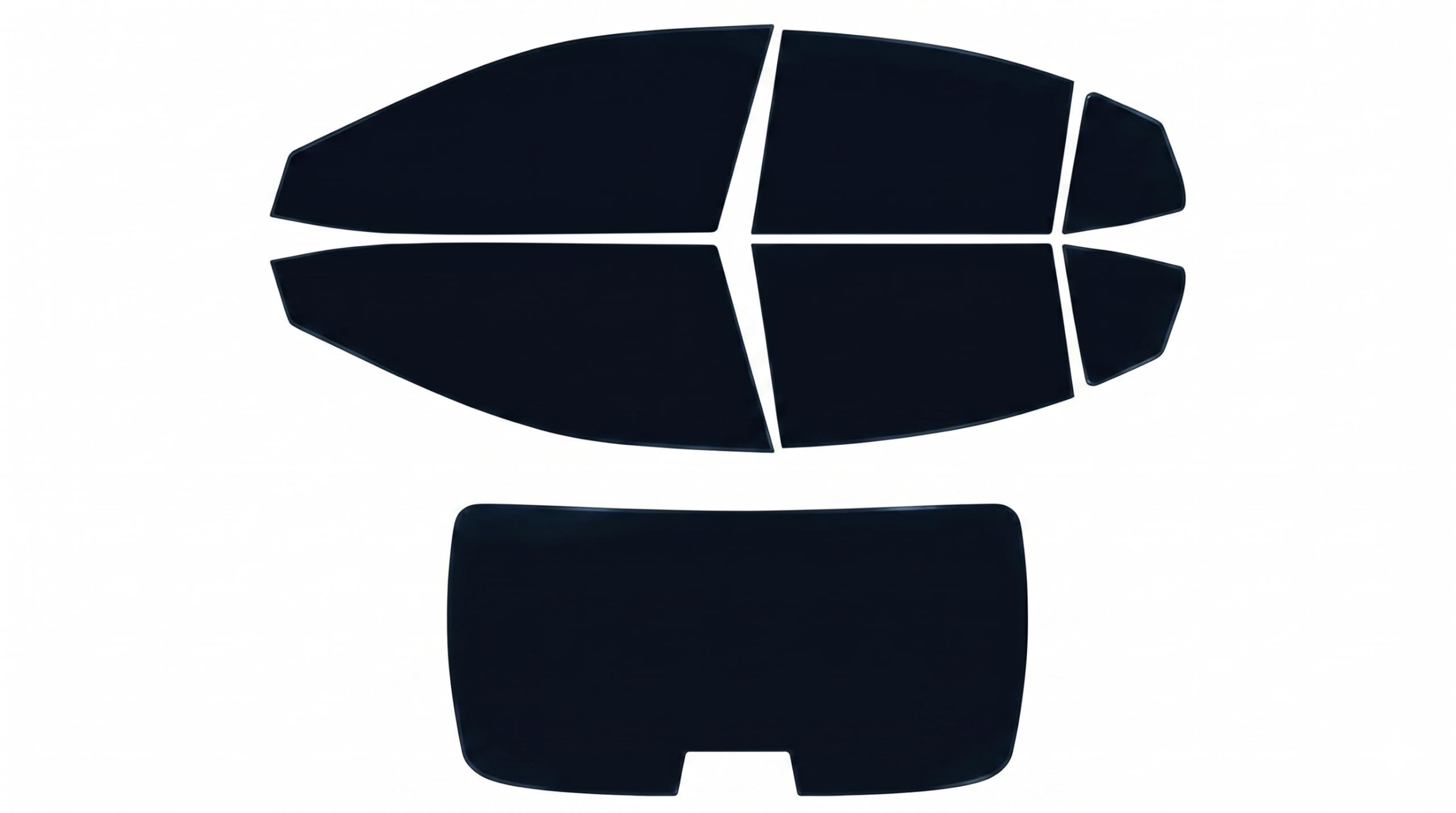
The JNK NETWORKS precut kit eliminates the most frustrating step of window tinting — cutting a universal roll to fit your specific vehicle’s window contours. Each piece is laser-cut for a specific year, make, and model, covering the back windshield and all side windows. You choose between 5%, 15%, or 30% VLT configurations, with combo options that apply a darker shade to rear windows for enhanced privacy. The Korean-sourced polyester film supports heat shrinking, allowing it to stretch around curved rear windows without lifting off the glass.
Experienced tinters praised the precision of the cuts on vehicles like the Ford Explorer and Jeep Wrangler, noting that the pieces aligned with window edges so closely that removing door trim was optional. The 5% VLT option delivers limo-level darkness that offers exceptional daytime privacy, though it becomes hazardous for front-side windows at night due to severely reduced visibility. The kit includes clear labeling on each piece so you don’t confuse which window gets which shade — a small detail that saves significant installation time.
Quality concerns appeared in a subset of reviews: some rear window pieces arrived oversize and caused creasing during heat shrinking, and a few buyers reported adhesion failure after several days of desert heat exposure that caused peeling or cracking. The manufacturer’s refund policy resolved these complaints without resistance, but the inconsistency suggests that quality control varies between production batches. For the DIY installer who values perfect fit above ultimate material longevity, this kit offers a compelling shortcut to a professional look at a fraction of shop pricing.
Why it’s great
- Precut pieces fit specific vehicle models precisely
- Made in South Korea with fade-resistant polyester construction
- Heat shrink compatible for curved rear window applications
Good to know
- Some rear window pieces arrived oversized, causing creases
- A few reports of adhesive failing in extreme heat
- Very dark VLT (5%) is illegal for front windows in most states
4. United Window Tint Nano Carbon Film 24″ x 100′
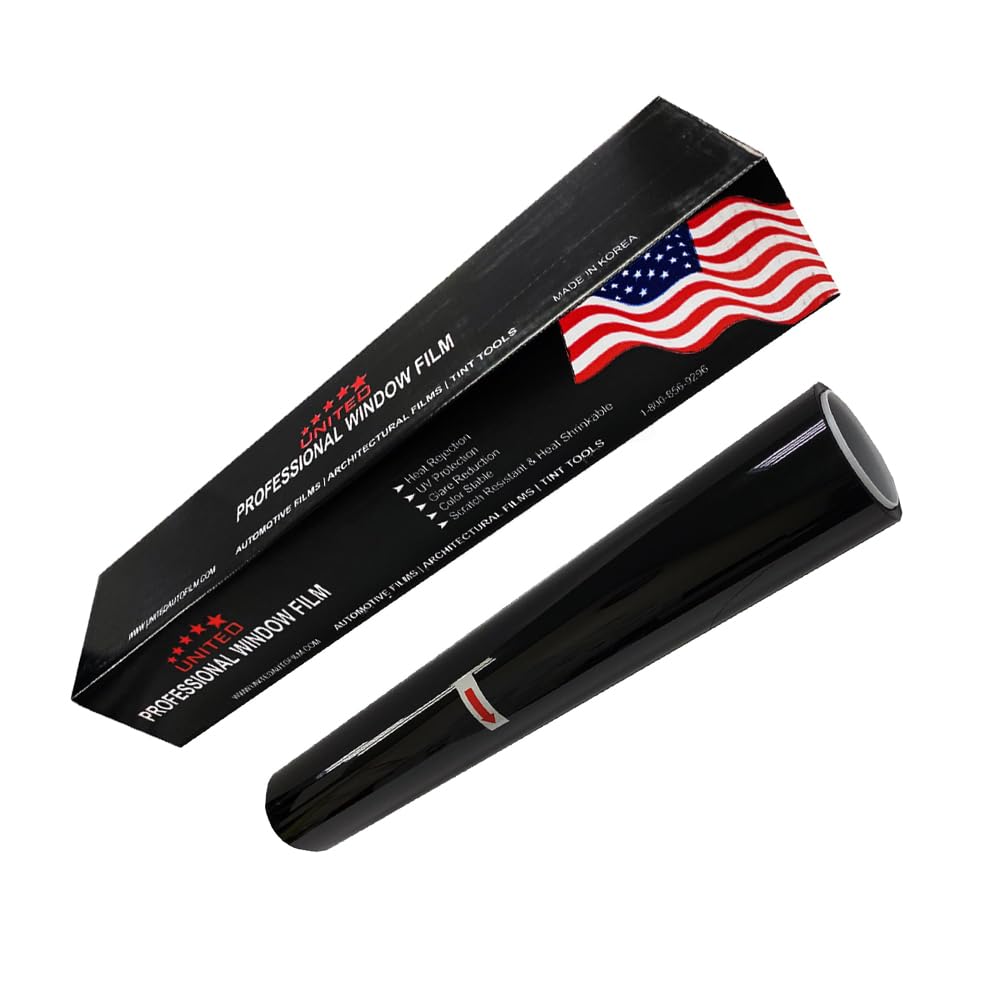
United Window Tint’s 24-inch-wide, 100-foot-long roll provides 200 square feet of carbon film — enough to tint multiple vehicles, home windows, and still have material left over for practice cuts. The 2-ply carbon construction uses a clear PET top layer over a dyed charcoal base, giving it a non-reflective matte finish that resists the purple discoloration common in budget tints after UV exposure. The 20% VLT shade strikes a balance between daytime privacy and usable nighttime visibility, making it legal for rear windows in most states while still blocking substantial heat.
User feedback consistently highlights the film’s forgiving nature during installation. The material is thinner than some competitors but resists creasing during handling and shrinks predictably under a heat gun. Multiple reviewers reported successful application on curved sedan and SUV windows using only a squeegee, a heat gun, and a soapy water solution. The “wet / dry heat shrink” capability means you can lift and reposition the film during the wet stage without destroying the adhesive layer — a critical feature for beginners who don’t have the luxury of professional installation tools.
A small number of users noted that the film is thinner than the Gila brand they had used previously, which could make it marginally more susceptible to tearing if stretched aggressively. The adhesive is tacky enough to hold firmly once set, but one user reported that a freshly laid piece shifted when wiped with a towel before the film had fully bonded. For large-scale projects where coverage per dollar is the primary consideration, this roll delivers the lowest cost per square foot among nano carbon films.
Why it’s great
- 200 sq ft of film covers multiple vehicles or large home windows
- forgiving installation profile with wet repositioning
- 2-ply carbon construction prevents purple fading over time
Good to know
- Film is thinner than some competitors, may tear if over-stretched
- Adhesive can shift before fully set if wiped too early
- 24-inch width requires seam lines on very tall windows
5. ARANA Ceramic Car Window Tint Film 70% VLT
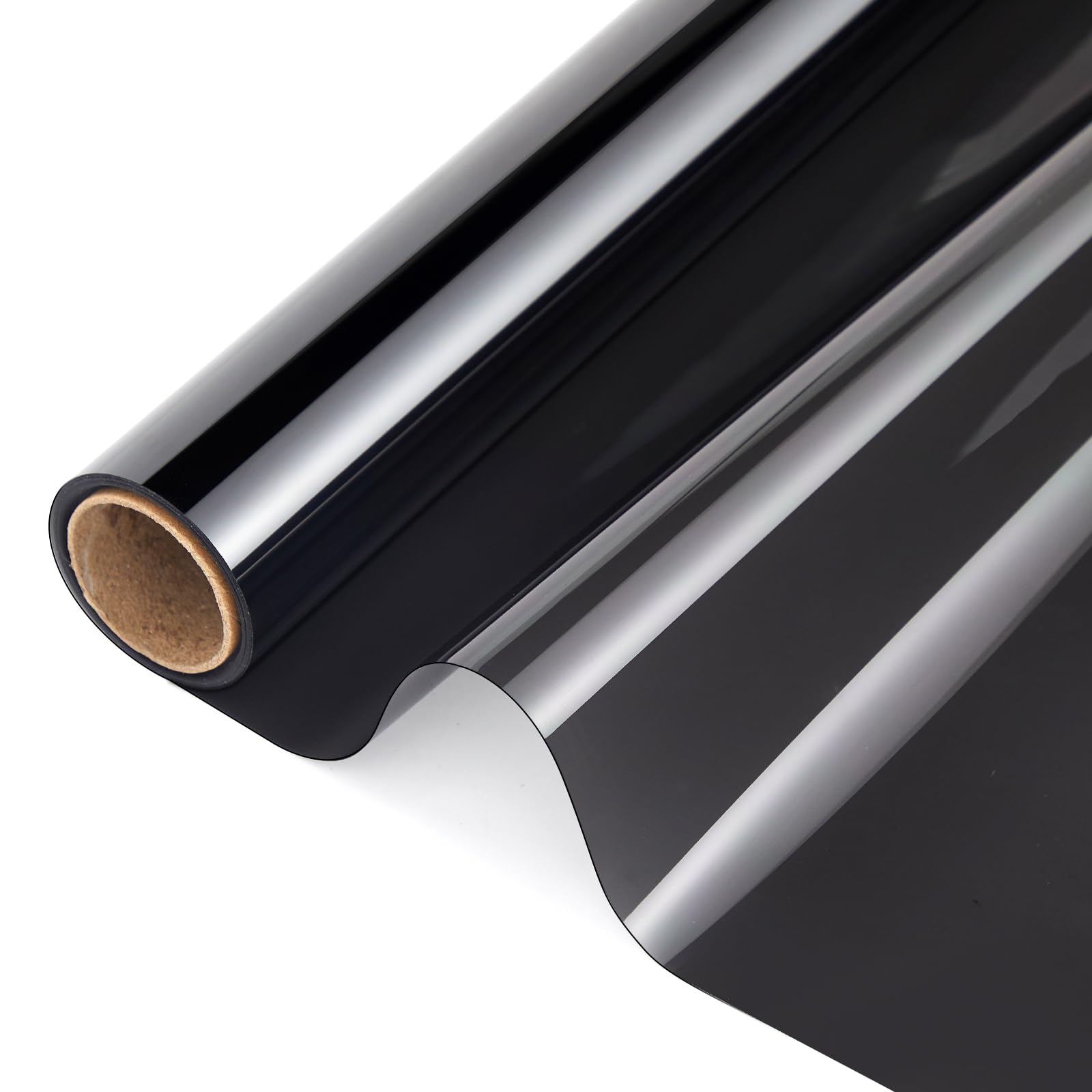
ARANA’s 70% VLT ceramic film is one of the lightest ceramic tints on the market, designed specifically for drivers who cannot legally reduce light transmission on front windows but still want nano-ceramic heat rejection. The ceramic construction blocks 99% of UVA and UVB radiation without the metallic content that interferes with GPS, cellular, or toll-pass signals. The scratch-resistant hard coating protects the film from minor abrasions during window operation, addressing a common failure point of softer budget films that develop lines after a few months of daily use.
Customer installations show that the film’s 70% VLT allows near-factory visibility while still providing a measurable reduction in solar heat buildup. Buyers reported using the film on home windows to reduce glare during afternoon sun hours, with one user noting a multi-degree temperature drop in rooms with east-facing windows. The 36-inch-by-15-foot roll provides enough material for two side windows and a rear windshield on most sedans, with leftover for trimming mistakes. The manufacturer includes an 18-month after-sales support window, which adds a layer of confidence for first-time ceramic buyers.
Several users noted that the film is thicker than standard carbon or dyed alternatives, which makes it harder to conform to severe curvatures during installation. One reviewer described the installation as “a PITA” due to the film’s stiffness — it requires generous soap application and careful heat gun work to prevent lifting at sharp corners. The thickness also makes bubbles more persistent, often requiring 2-3 days of passive drying before the film fully clarifies. For buyers who want ceramic-grade heat rejection with a light tint that complies with strict front-window laws, the ARANA offers a performance-to-VLT ratio that dyed carbon films can’t match.
Why it’s great
- 70% VLT is legal for front windows in nearly all states
- Ceramic construction blocks UV without metal interference
- Scratch-resistant coating extends service life
Good to know
- Thick film is difficult to install on highly curved windows
- Bubbles require several days to fully clear
- Higher cost per square foot than carbon alternatives
6. RockRose 20% Car Window Tint 36 in x 20 FT
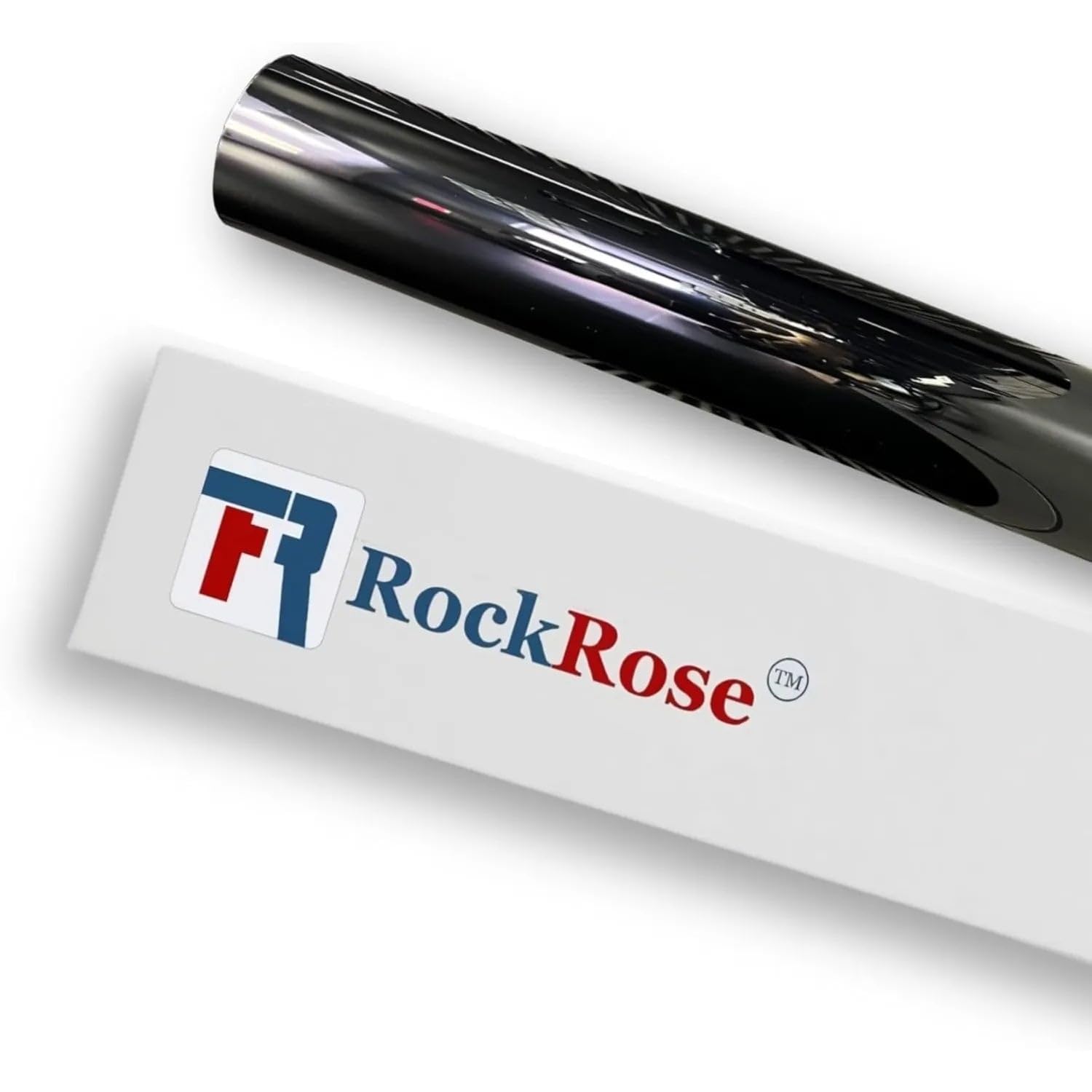
RockRose’s carbon auto tint posts a 45% Total Solar Energy Rejection with 35% infrared rejection — numbers that place it squarely between entry-level dyed films and premium ceramic options in thermal performance. The 36-inch-wide roll provides 60 square feet of material, enough to cover a full sedan with rear windshield, door windows, and a small sunroof section. The 20% VLT offers substantial daytime privacy and a sleek charcoal finish that enhances the vehicle’s visual profile without the shiny reflective look of metallic films.
Buyers repeatedly praised the film’s tackiness and ease of installation on side windows, with one user noting that it “has the right tackiness” for an amateur to apply without professional tools. The PET-based film supports heat shrinking, allowing it to conform to the curved rear glass of most modern sedans and hatchbacks. The material resists peeling and bubbling under normal exposure, though long-term durability beyond two summers is still unverified in the user review corpus due to the film’s relative newness to the market.
A notable batch-quality issue surfaced in customer reports: one buyer received a roll with an unfixable warp that created permanent bubbles in the windshield application, and the company declined to replace the defective product. Other users reported that the film shrinks well and performs reliably when the roll arrives in pristine condition. The low entry cost makes it a viable testing material for anyone learning to tint, but the inconsistent quality control and limited customer service response mean it’s better suited for side windows than for a high-exposure rear windshield that requires flawless clarity.
Why it’s great
- 45% TSER provides solid heat rejection at a low price point
- Large 36x20ft roll covers an entire sedan with extra material
- Good tackiness allows for beginner-friendly wet installation
Good to know
- Some rolls arrived with irreparable warping or creasing
- Company reportedly refuses replacement for defective product
- Long-term UV stability less tested than established brands
7. TRUE LINE Automotive Nano Carbon Window Tint Film 20%

TRUE LINE’s Nano Carbon film brings sub-budget entry pricing to a nano carbon category that normally demands a higher investment. The 22-inch-wide by 10-foot-long roll covers approximately 18.33 square feet — enough material for two front windows or one rear window on a compact sedan. The non-reflective matte finish uses hybrid nano-carbon manufacturing to maintain color stability over time, avoiding the purple tint shift that plagues cheap dyed films after prolonged sun exposure.
User reviews indicate that the film shrinks and adheres comparably to films at twice the per-square-foot cost. One returning buyer reported that the film “shrank well and looks almost as good as the other tint on my car, that I presume was professionally installed.” The straightforward peel-and-stick installation process works well on flat side windows, though the film’s moderate flexibility means curved rear windshields require careful heat gun work to avoid lifting at the edges. The multiple shade options — 5%, 20%, 35%, and 50% — allow buyers to select a VLT that matches their local regulations and privacy preferences.
Consistency is the primary drawback across the review corpus. One buyer received two rolls in the same order — the first performed perfectly, while the second had poor adhesive that would not lay down even with application promoter. Another user reported that the film cracked near the end of an otherwise flawless installation, suggesting that the material’s tensile strength varies between production lots. For the price-conscious buyer who needs a small roll for a single-window project and is willing to accept batch variability, this film provides legitimate nano carbon performance at entry-level pricing.
Why it’s great
- Nano carbon construction at entry-level pricing
- Multiple VLT options from 5% to 50%
- Non-reflective finish maintains stable color over time
Good to know
- Adhesive quality varies between production lots
- Small 18.33 sq ft roll limits coverage to compact vehicles
- Some units exhibited cracking at the end of installation
FAQ
Does a darker window tint always mean better heat reduction?
What is the difference between nano carbon and ceramic window film for heat rejection?
How many square feet of film do I need to tint my entire car?
Will window tint film interfere with my GPS, phone, or radio reception?
Final Thoughts: The Verdict
For most users, the best auto window tint for heat reduction winner is the MotoShield Pro Carbon Film because it combines a high-rejection nano carbon formula with vehicle-specific precut precision that eliminates the most error-prone step of DIY installation. If you want invisible heat protection that preserves your car’s factory-clear appearance, grab the BDF NSN70 near-clear film. And for covering multiple vehicles or large home windows on a tight budget, nothing beats the per-square-foot value of the United Window Tint Nano Carbon roll.