
Our readers keep the lights on and my morning glass full of iced black tea. As an Amazon Associate, I earn from qualifying purchases.
Rolling down your car windows on a hot day should cool you down, not blast you with a furnace blast from the sun. Choosing a window tint that actually blocks heat, looks good, and stays put is where most people get stuck between confusing specs and price tags. This guide breaks down seven real auto window tint options, explaining exactly what each one does for your car and your comfort.
I’m Min — the founder and writer behind Gadgets Feed. This guide is built by comparing the manufacturers’ published specifications and the patterns across verified customer reviews, so you get each pick’s real strengths and trade-offs instead of marketing spin.
We’ll cover everything from ceramic films that keep your cabin cool to budget-friendly rolls that offer a dark, private look, so you can pick the right auto window tint for your car, skill level, and local legal limits.
Quick Picks
- IAQWE 20% VLT Ceramic Car Window Tint Film 20 in x 20 ft Roll — Best Value
- United Window Tint 20″ in 100’Ft Nano Carbon Film 2Ply Charcoal 5% VLT — Top Performer
- Bloss Window Tint Car One Way Privacy Film, 20% VLT Ceramic (23.6″ x 78.7″) — Compact Pick
- True Line Automotive Custom Size Precut Window Tint (Full Kit) — Best for Beginners
- United Professional 1Ply Window Tint Film – 24″ x100′, 15% VLT — Best Overall
- Car Window Tint Film-20% VLT Premium Cabon Tinting Roll | 24IN x 15FT (TOYOCO) — Budget Champion
- 2PLY Premium Carbon 5% VLT Window Tint Film for Cars 20″ X 100FT & 8 Pcs Tools Kit — High-Performance
How To Choose The Best Auto Window Tint
Buying window tint isn’t just about picking the darkest roll you can find. The wrong choice can mean poor visibility at night, legal trouble during inspections, or a film that starts peeling after a few months. Here are the key factors to keep in mind.
VLT — Visible Light Transmission
This is the single most important spec. VLT is a percentage that tells you how much visible light the film lets through. A lower number means a darker tint. For example, a 5% VLT (often called “limo tint”) is very dark and offers maximum privacy, but it also makes it harder to see out at night. A 20% VLT is a popular middle-ground that balances daytime privacy with night-time visibility. Many states have legal limits, so checking local laws before you buy is a good idea.
Film Type: Ceramic vs. Carbon vs. Dyed
The material the film is made from determines how well it blocks heat and how long it will last. Ceramic films use nano-particles to block infrared heat without interfering with signals like GPS or cell service, making them a top-tier choice for performance. Carbon films use carbon particles embedded in the adhesive to provide a matte finish and good heat rejection without fading. Dyed films are the most affordable option, but they block heat mostly by absorbing it, which means they may not last as long or perform as well in extreme sun.
DIY Installation vs. Precut Kits
You have two main routes: a large roll of film you cut yourself, or a precut kit tailor-made for your exact car model. Rolls are more flexible and often cheaper per square foot, but they require patience, a sharp blade, and the skill to shrink the film around curved windows using a heat gun. Precut kits remove the hardest part of the job by matching your windows exactly, making them a much safer bet for a first-timer. The catch is less flexibility and a higher upfront cost.
Quick Comparison
On smaller screens, swipe sideways to see the full table.
| Model | Best For | VLT | Size | Material | Amazon |
|---|---|---|---|---|---|
| IAQWE 20% VLT Ceramic | Best value ceramic performance | 20% | 20 in x 20 ft | Ceramic | $20.49$23.99Amazon |
| TOYOCO 20% VLT Carbon | Budget-friendly carbon roll | 20% | 24in x 15ft | PET (Carbon) | $22.95Amazon |
| Bloss 20% VLT Ceramic | Home and car daytime privacy | 20% | 23.6″ x 78.7″ | Vinyl (Ceramic) | $26.99Amazon |
| 2PLY 5% VLT Carbon | Maximum privacy limo tint | 5% | 20″ X 100FT | Carbon | $49.99$55.99Amazon |
| True Line Precut Tint Kit | Hassle-free custom fit | N/A (varies) | Full Kit | PET/PVC/Vinyl | $59.99Amazon |
| United Professional 15% 1Ply | Deep shade on a budget | 15% | 24″ x 100′ | PET (Dyed) | $65.00Amazon |
| United Window Tint 5% Nano Carbon | Professional-grade 2-ply film | 5% | 20″ x 100′ | PET (Nano Carbon) | $70.00Amazon |
In‑Depth Reviews
1. IAQWE 20% VLT Ceramic Car Window Tint Film 20 in x 20 ft Roll
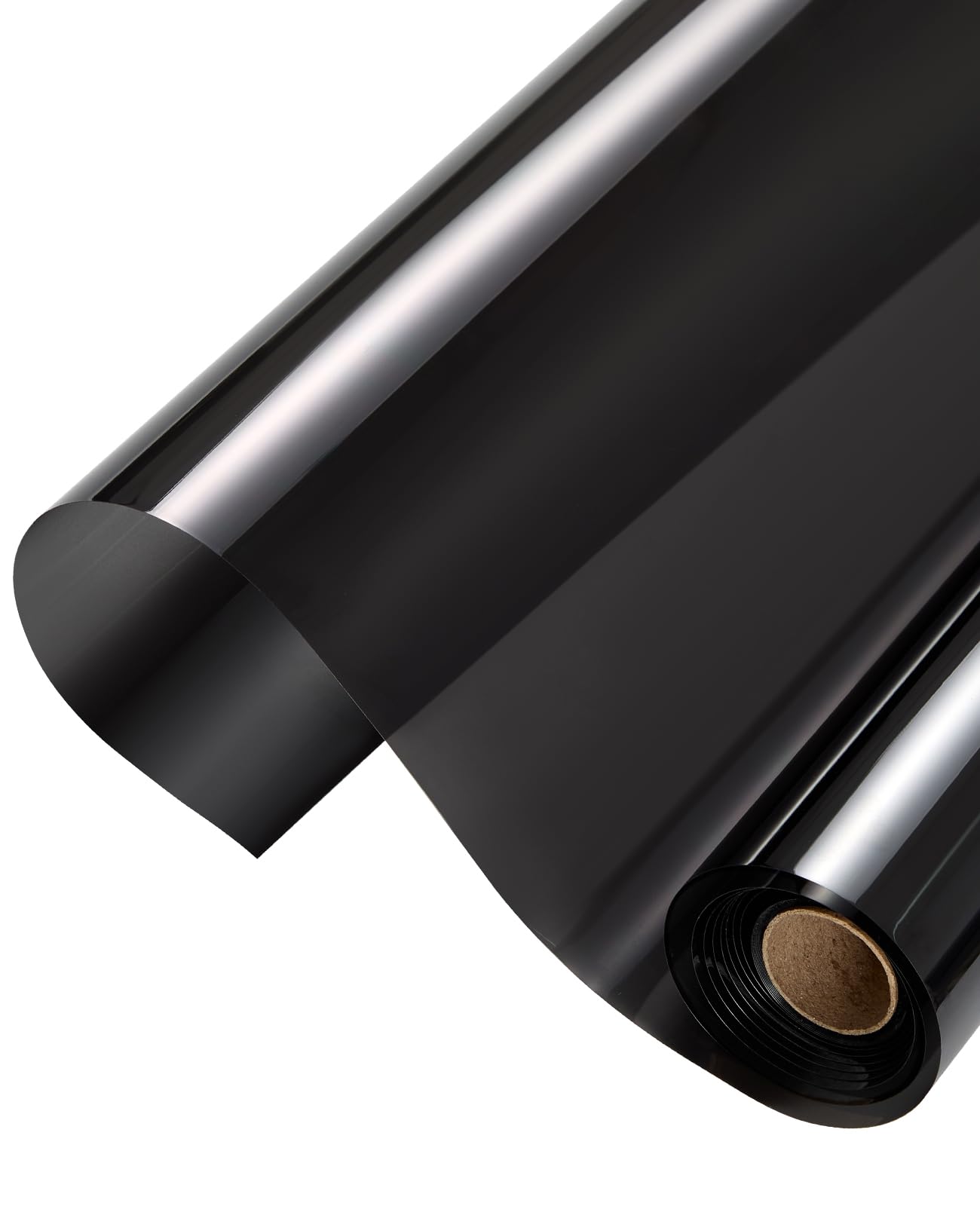
Ceramic heat rejection at a price that undercuts most basic films.
The IAQWE is a ceramic car window tint that focuses on keeping your cabin cooler without the steep price tag of premium brands. The 20% VLT (Visible Light Transmission—how much light the tint lets through from outside) gives you a solid balance of daytime privacy and decent night vision. It also blocks 99% of UV rays, which helps protect your dashboard and upholstery from fading.
At 20 inches by 20 feet, this roll has plenty of material for a sedan or small SUV. However, note that the film is thin—some buyers report it can tear easily if your blade is not perfectly sharp. One reviewer noted that their first-time install took 5 hours on a 15-passenger van, so this is not a quick job for a beginner. The 20 in x 20 ft size here is 20% more material than the TOYOCO 24in x 15ft roll below, giving you extra working room for larger windows or mistakes.
The case for it: You get genuine nano-ceramic heat rejection and 99% UV protection for a price that sits near the bottom of the market.
The downside: The thin construction requires a careful, experienced hand during installation, especially on curved glass, or you risk tearing the film.
Best for: Budget-conscious owners who want real ceramic performance on a car with mostly flat side windows.
Skip if: You are a first-time installer or working on a vehicle with complex rear window curves.
2. United Window Tint 20″ in 100’Ft Nano Carbon Film 2Ply Charcoal 5% VLT
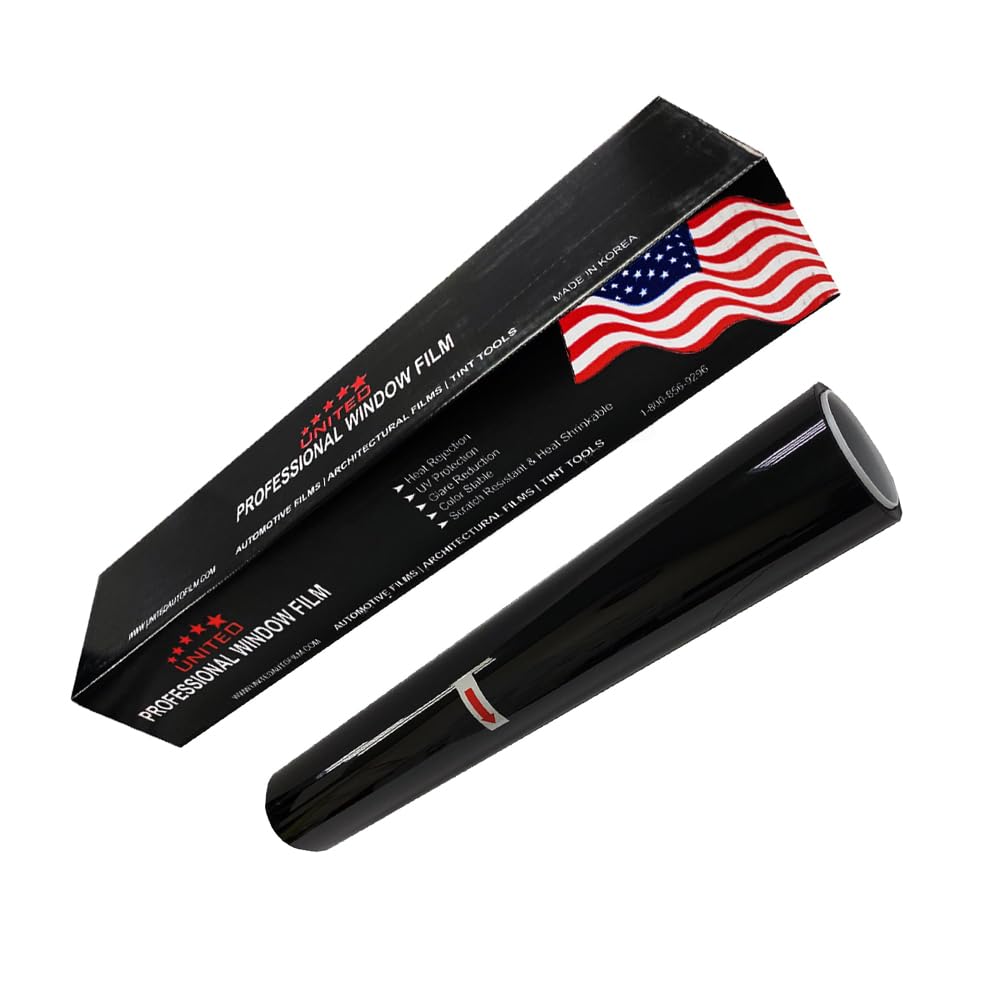
A professional-grade 2-ply film that shrinks tight around tricky curves.
The United 5% Nano Carbon film is built for those who want maximum privacy (limo tint) without sacrificing optical clarity. The 2-ply construction uses a clear PET (polyethylene terephthalate) layer with carbon-infused adhesive, which gives it a durable build that resists fading. It also claims to block UV and IR rays to cut down on cabin heat and sun glare.
Where this film earns its top spot is in its installation behavior. It is designed for wet/dry heat shrinking, which means you can use a heat gun to mold it around a rear window’s curves without distortion. Reviewers praise it for being easy to work with and for its strong adhesive that holds up well once set. At 20 inches by 100 feet, you get a massive roll—enough for a large SUV or truck plus some extra for home windows.
The case for it: The nano-carbon construction provides consistent heat-shrink performance that professionals love, and the 2-ply film does not crease easily during installation.
The trade-off: At 5% VLT, this tint is extremely dark; nighttime visibility is very limited, and it is illegal for front side windows in many states.
Best for: Experienced DIYers who want a long-lasting, ultra-dark tint for rear and passenger windows.
Skip if: You need a legal tint for your front windows or regularly drive at night in unlit areas.
3. Bloss Window Tint Car One Way Privacy Film, 20% VLT Ceramic (23.6″ x 78.7″)
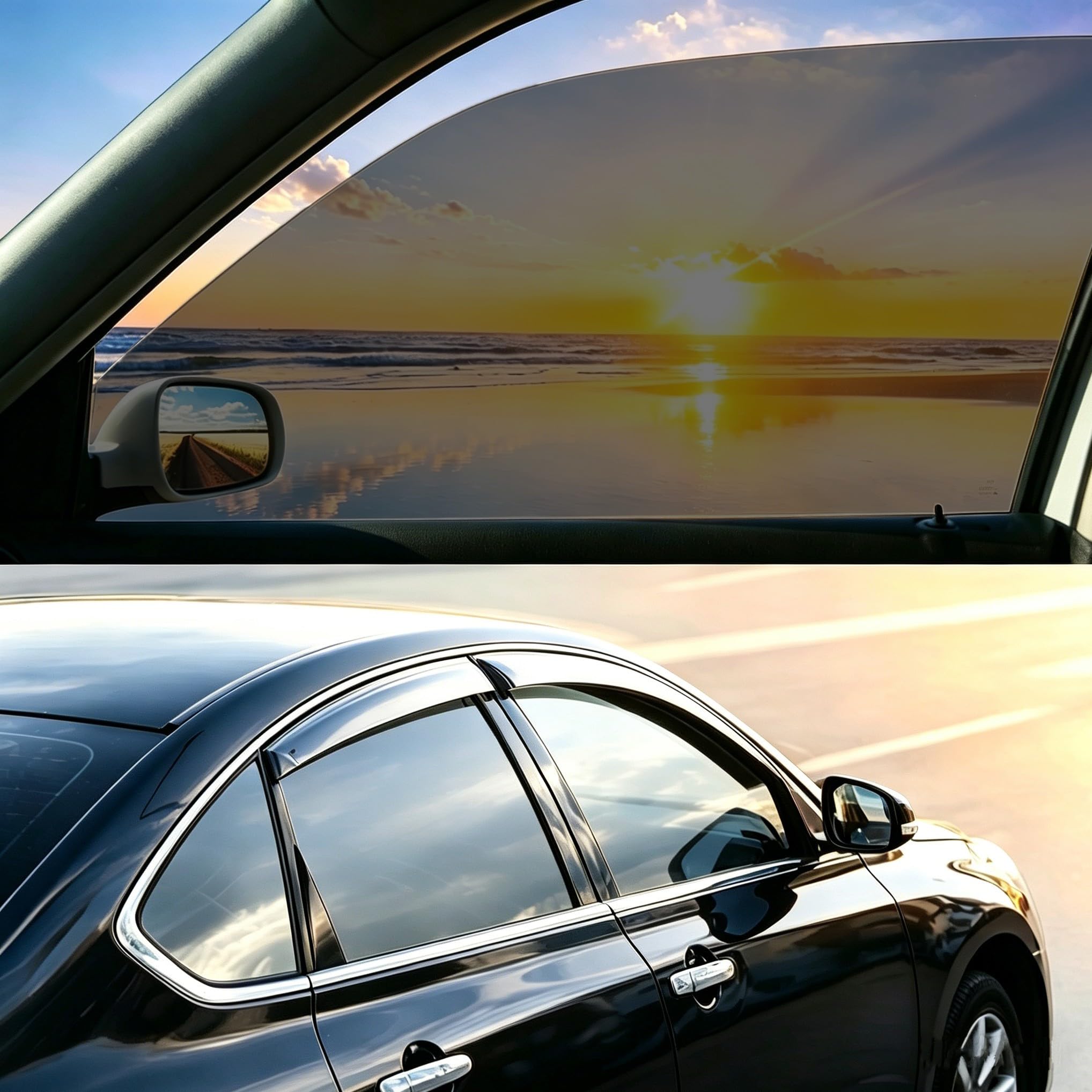
A daytime privacy specialist that turns glass into a mirror when the sun is out.
The Bloss film is a one-way privacy film that uses a reflective, mirror-like finish to block views into your car or home during the day. It blocks 97% of UV rays and 85% of infrared light, which means it significantly cuts down on the heat that pours through the glass. This 20% VLT (20% visible light transmission) ceramic tint keeps your interior cooler and protects your skin.
One thing to know upfront: this privacy effect works best when it is brighter outside than inside. At night, the film becomes more transparent from the outside, so you would need curtains if you want total privacy after dark. The peel-and-stick installation includes a squeegee and a utility knife in the box, and it is comparatively easier to work with than some thinner films. At 23.6 inches by 78.7 inches, this roll is shorter than most—best for a couple of car side windows or a small home window.
The case for it: Excellent daytime privacy with a thick, durable film that feels high-end, plus it comes with all three essential tools for installation.
One limitation: The one-way mirror effect flips at night if interior lights are on, and the small roll size limits your coverage to just a few windows.
Best for: Creating daytime privacy and reducing glare on specific side windows or a home office window.
Skip if: You need to tint your entire car or rely on privacy after dark without using curtains.
4. True Line Automotive Custom Size Precut Window Tint (Full Kit)
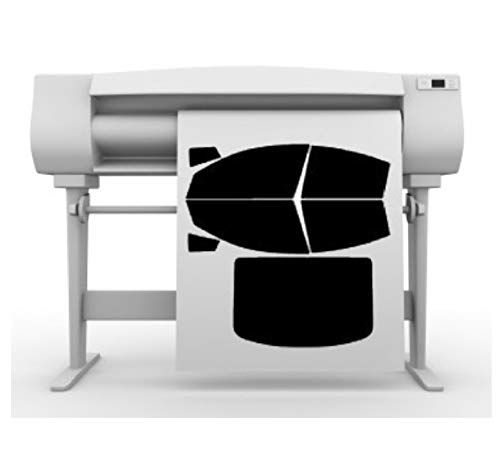
A precut kit that removes the hardest part of tinting—cutting the film to shape.
True Line takes a different approach by cutting the tint to your exact car model at the factory. You provide your car’s make and model, and they ship a set of films that match your side and back windows perfectly, so you do not have to measure or cut a single curve. This is a huge time-saver for people who want a professional-looking tint without years of practice.
Buyers on a 2023 Honda CR-V reported that the side windows were easy, though the rear windshield was a challenge due to its curve, and one mentioned that the company sent a free replacement film quickly when their first one tore. The compromise is that you sacrifice the ability to customize the cut or choose your exact VLT percentage—you are buying whatever the factory provides for your car. Also, some users found the tint scratched easily during installation, so using a soft squeegee is key.
The case for it: Custom-fit films eliminate the most difficult, error-prone step of DIY tinting, saving you time and wasted material.
The drawback: You cannot choose a specific VLT percentage, and some users reported the film scratches easily during the installation process.
Best for: First-time tinters who want a clean, custom look without spending hours cutting film.
Skip if: You prefer to choose your exact VLT level or have an older, less common car model.
5. United Professional 1Ply Window Tint Film – 24″ x100′, 15% VLT
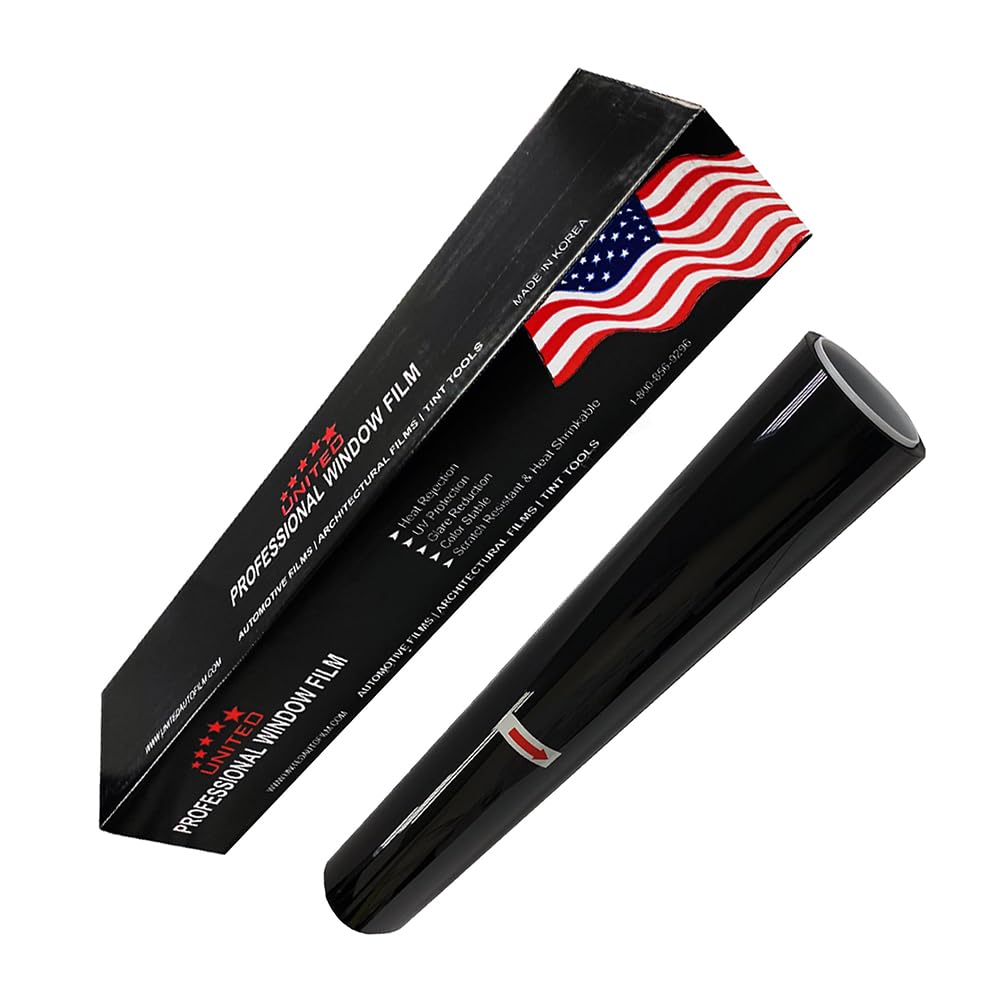
A deep, affordable shade that beginners can install without fear.
The United Professional 15% VLT tint is a dyed PET (polyethylene terephthalate) film that sits in a balance between the ultra-dark 5% and the moderate 20% tints. It provides a deep shade that offers great privacy and glare reduction while still allowing you to see out reasonably well at night. The film blocks 99% of UV rays, protecting your interior from sun damage.
What stands out here is how beginner-friendly it is. At just 1 mil (one thousandth of an inch) thick, the 1-ply dyed film is lightweight and conforms easily to flat windows without much effort. One reviewer praised it as great for a beginner, noting you should go slow and take your time. The catch is that dyed films absorb heat rather than reflecting it, so they are less effective at keeping the cabin cool compared to ceramic films. At 24 inches by 100 feet, you get a generous 200 square feet of material, enough for a full-size truck and then some.
Why it’s great
- 15% VLT provides a deep, private look that is still usable at night.
- Large roll (24″ x 100′) gives you 200 square feet for multiple vehicles or home use.
- Very forgiving installation, ideal for a first-time DIY tinter.
Good to know
- Dyed PET film absorbs heat rather than reflecting it, so it is less effective in extreme sun than ceramic films.
- Some users report the clear cover is difficult to separate from the tint during application.
Best for: First-time DIYers who want a forgiving, budget-friendly film for a deep, private tint.
Skip if: You live in a very hot climate and need maximum heat rejection from your tint.
6. Car Window Tint Film-20% VLT Premium Cabon Tinting Roll | 24IN x 15FT (TOYOCO)
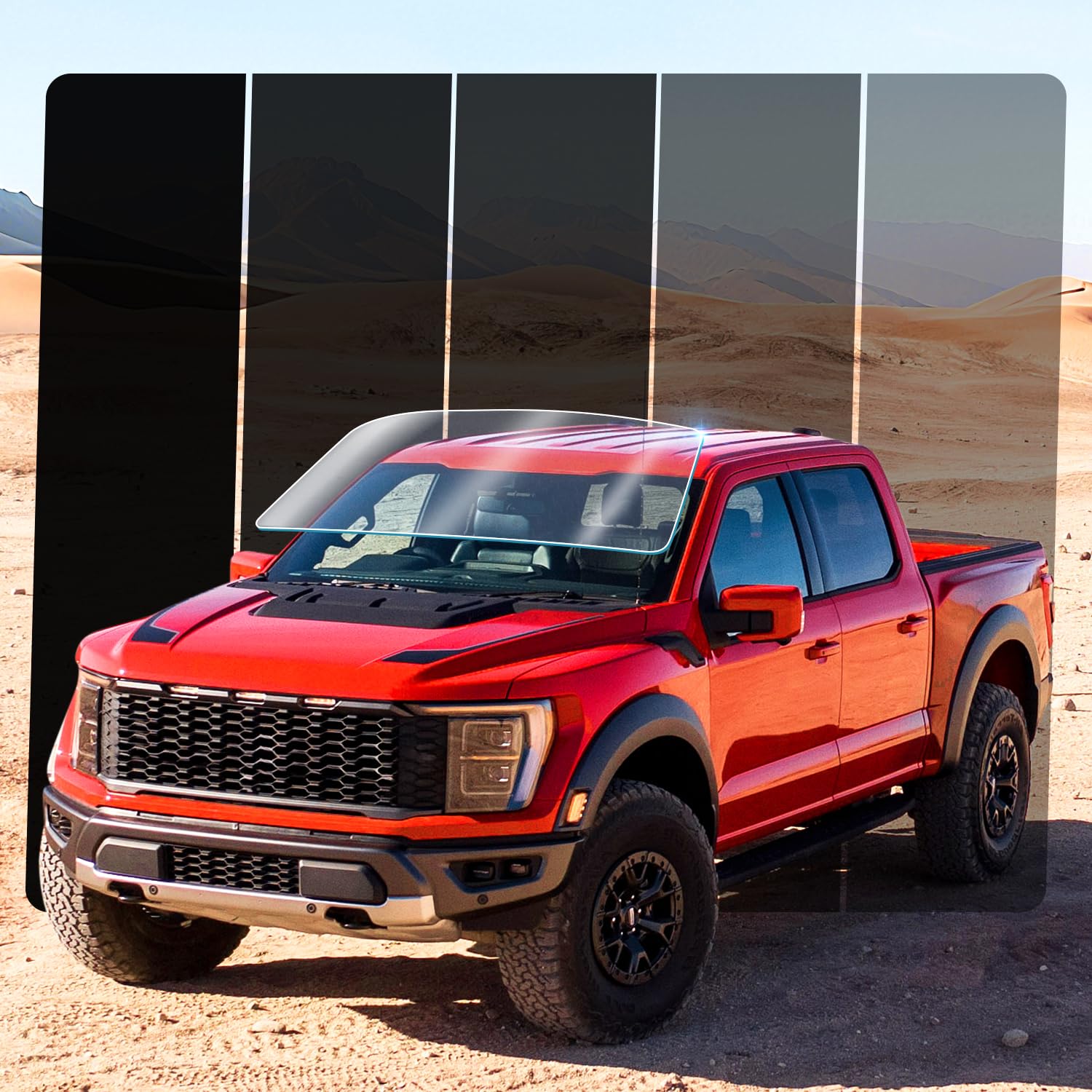
A no-frills carbon roll that nails the basics without the premium price.
The TOYOCO Premium Cabon Tinting Roll is a solid entry-level option for anyone who wants a matte, non-reflective finish. The 20% VLT film uses polyethylene terephthalate (PET) material with a carbon-infused adhesive layer, which gives it good scratch resistance and blocks UV light from aging your car’s interior. It also promises no interference with mobile or GPS signals—useful if you rely on a dashboard navigation unit.
At 24 inches by 15 feet, this is a smaller roll. It is 20% smaller than the IAQWE’s 20-inch by 20-foot roll, so you get less material for mistakes. It works great for a compact car or just the front windows—one buyer installed it on the front windows of a 2004 Dodge Dakota and reported it works great on a hot day. The downside is that the film is a little hard to peel, and it requires careful alignment to avoid a redo.
Why it’s great
- Carbon film offers a scratch-resistant, matte finish that resists fading.
- Does not interrupt cell phone or GPS signals.
- UV protection helps keep your interior from fading.
Good to know
- Small roll (24in x 15ft) limits you to a compact car or a few windows only.
- The backing can be difficult to separate from the adhesive layer during installation.
Best for: Tinting the side windows of a compact car or an older, smaller vehicle on a budget.
Skip if: You need a large roll for a full-size SUV or want a ceramic heat-rejecting film.
7. 2PLY Premium Carbon 5% VLT Window Tint Film for Cars 20″ X 100FT & 8 Pcs Tools Kit
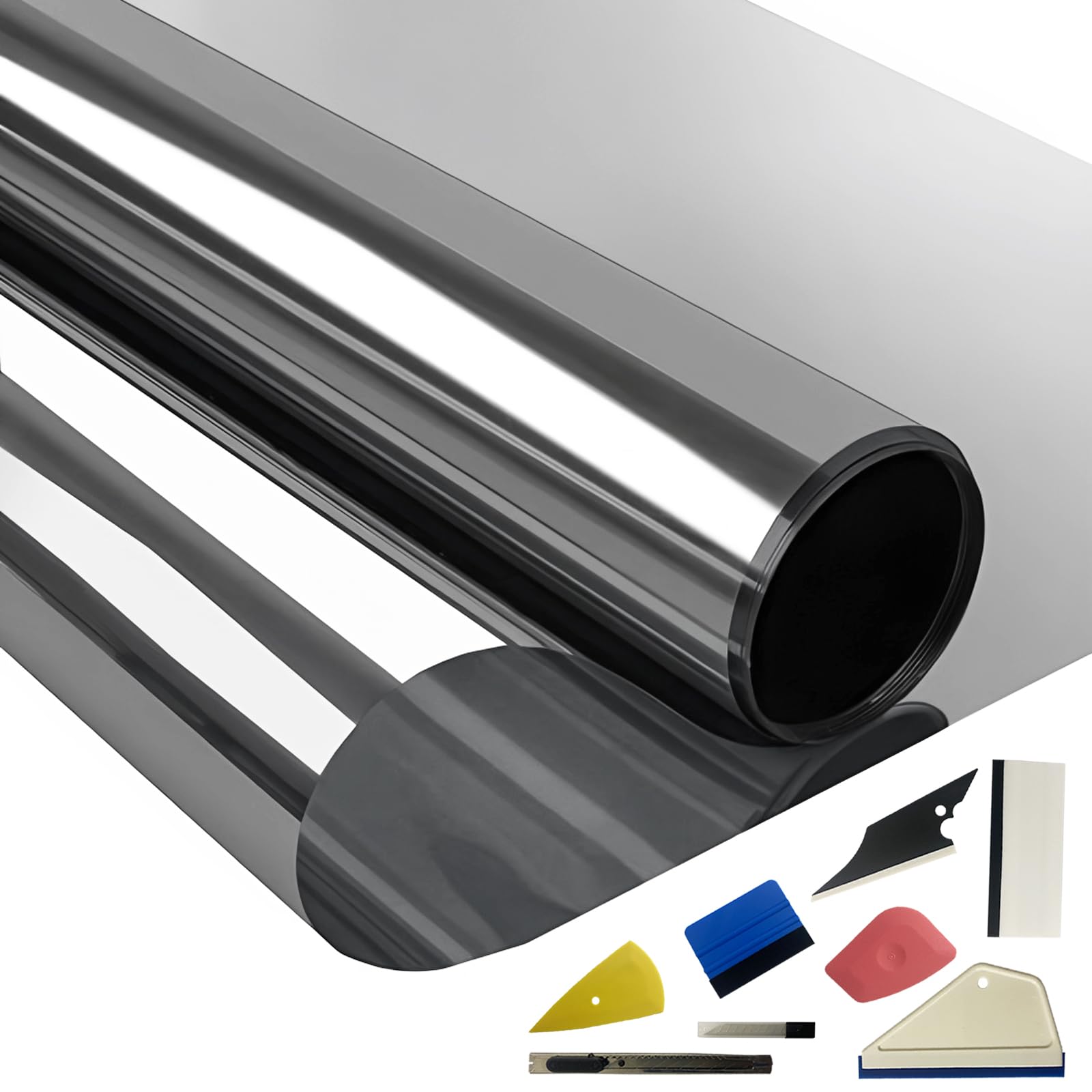
A dark, 1.5mil 2-ply film that prioritizes privacy above all else.
The YIFUOK 2PLY Premium Carbon tint is a high-roll-count option (20 inches by 100 feet) built for maximum darkness. At 5% VLT, this film is often called “limo tint” because it is very difficult to see into during the day, creating a powerful privacy barrier. The 2-ply (double-layer) carbon construction makes the film 1.5 mils thick, which feels more robust than the budget single-ply options. It also claims to block 99% of UV rays.
One very important catch appears in the reviews. A buyer reported buying the 35% VLT version (a lighter tint) but measuring it at 27-28% on two separate gauges, which caused them to fail their state inspection. This means the actual light transmission might not match the listed percentage, a serious consideration for legality. It does come with an 8-piece installation tool kit, including a squeegee, making it a convenient all-in-one purchase. The thickness helps it resist scratches during installation.
Why it’s great
- Very large 100-foot roll with 8 installation tools included in the package.
- Thick 1.5mil 2-ply construction resists scratches and creases.
- Offers maximum privacy with a 5% VLT limo tint look.
Good to know
- Some owners mention the actual VLT is significantly darker than advertised, risking failed inspections.
- Static-cling installation requires a tint solution and does not rely on traditional adhesive.
Best for: Experienced users who want a massive roll of ultra-dark film and already have a separate tint solution.
Skip if: You need a precise VLT level for legal compliance or prefer a traditional adhesive film.
Understanding the Specs
VLT — Visible Light Transmission
This is the percentage of visible light that passes through the tint film. A lower number means a darker tint. A 5% VLT lets in very little light for maximum privacy, but it makes seeing out at night much harder. A 20% VLT is a popular middle-ground choice that offers good privacy and decent night vision. Understanding VLT is crucial because most states have legal limits for front side windows.
Film Material: Ceramic vs. Carbon vs. Dyed
The material determines how the film blocks heat. Ceramic films use nano-ceramic particles to block infrared heat without blocking radio or GPS signals, offering top-tier performance. Carbon films use carbon particles in the adhesive, giving a matte finish and good heat rejection without fading over time. Dyed PET films are the most budget-friendly and block heat by absorbing it, which is less effective in extreme climates.
FAQ
What does VLT percentage mean for my car?
Is 5% or 20% window tint better for night driving?
What is the difference between ceramic and carbon window tint?
Will window tint mess up my car’s GPS or cell signal?
How long does a DIY window tint installation take?
Can I tint my car windows if I have no experience?
What tools do I need to install car window tint?
Is precut window tint better than a roll?
How can I avoid bubbles in my window tint?
Final Thoughts: The Verdict
For most buyers, the best auto window tint winner is the IAQWE 20% VLT Ceramic Film because it delivers genuine ceramic heat rejection and 99% UV protection at a price that is hard to beat. If you want a deep, private tint that beginners can install easily, grab the United Professional 15% VLT. And for a hassle-free, custom-fit solution without the cutting, the standout is the True Line Precut Tint Kit.
How We Picked
We do not accept paid placement, and we did not hands-on test every unit. Instead, we match each pick to a real buyer and use-case by comparing the manufacturers’ published specifications against the patterns in verified customer reviews — so you get each pick’s real strengths and trade-offs instead of marketing copy.
Sources & Methodology
Specifications: manufacturer listings and product documentation. Review insights: verified customer reviews, as of July 2026. Pricing: not shown on this page (it changes often); check the current price via the retailer link.
As an Amazon Associate, Gadgets Feed earns from qualifying purchases. This does not affect which products we feature.
Product prices and availability are accurate as of the date/time indicated and are subject to change. Any price and availability information displayed on Amazon at the time of purchase will apply to the purchase of this product. As an Amazon Associate I earn from qualifying purchases.
CERTAIN CONTENT THAT APPEARS ON THIS SITE COMES FROM AMAZON. THIS CONTENT IS PROVIDED "AS IS" AND IS SUBJECT TO CHANGE OR REMOVAL AT ANY TIME.
Amazon and the Amazon logo are trademarks of Amazon.com, Inc. or its affiliates.