
An auto wire stripper eliminates the guesswork of manual gauges and the frustration of nicked conductors. Whether you’re terminating control panels, building automotive harnesses, or recycling scrap copper, the right tool turns a tedious two-handed process into a one-squeeze operation that delivers consistent strip lengths without damaging the wire.
I’m Min — the co-founder and writer behind Gadgets Feed. I’ve spent hundreds of hours cross-referencing torque specs, insulation thickness tolerances, and blade-material data across dozens of automatic wire strippers to isolate the models that actually deliver on their AWG-range claims.
This guide breaks down the specific cam mechanisms, adjustment dials, and chassis materials that separate a precision instrument from a wire-chewing disappointment, so you can confidently pick the best auto wire stripper for your workbench or tool pouch.
How To Choose The Best Auto Wire Stripper
Not all automatic wire strippers handle the same wire types or environments. The wrong choice can lead to constant blade replacements, inconsistent strip lengths, or damaged conductors. Here are the key factors to evaluate before buying.
AWG Range and Wire Type Compatibility
Check the stated AWG range closely — many strippers handle stranded wire down to 32 AWG but struggle with solid THHN below 12 AWG. If you work primarily with automotive wiring (14–18 AWG stranded), a model like the Jokari 20050 or Felo 583 covers that range well. For solar installations with PV wire from 6 to 12 AWG, the Klein 11069S has dedicated precision-machined holes. If you need a single tool covering 8 to 32 AWG for control panels and telecom, the KNIPEX EvoStrip offers the widest usable span.
Blade Material, Replaceability, and Adjustment
The blades are the only part that touches the conductor. Premium units use oil-hardened tool steel that stays sharp through thousands of strips and are replaceable when dull. The KNIPEX EvoStrip and NexStrip both offer user-replaceable blade sets. Many budget tools use hardened stainless that dulls faster. Also look for a fine-adjustment dial — the KNIPEX EvoStrip’s red dial lets you dial in cutting depth for different insulation materials like silicone, PVC, or rubber without overshooting into the wire.
Build Quality: Chassis and Ergonomics
A stripped-down plastic housing flexes under heavy use, leading to misaligned blades and inconsistent strips. The IDEAL Stripmaster uses a die-cast zinc frame that resists deflection after years of daily squeezing. The Klein 11069S uses a cast alloy chassis with an Ecoat finish for corrosion resistance. For a lightweight option, the fiberglass-reinforced polymer bodies on KNIPEX models offer a good balance of durability and carry weight. Also consider grip texture and handle-span — the Jokari 20050 is noted for fitting larger hands well.
Quick Comparison
On smaller screens, swipe sideways to see the full table.
| Model | Category | Best For | Key Spec | Amazon |
|---|---|---|---|---|
| KNIPEX EvoStrip | Mid-Range | Wide AWG stranded range | 8–32 AWG, fine-adjust dial | Amazon |
| Klein 11069S | Mid-Range | Solar/PV wire 6–12 AWG | Precision-machined stripping holes | Amazon |
| IDEAL Stripmaster | Mid-Range | Durable daily use | Die-cast zinc frame, 10–22 AWG | Amazon |
| Felo 0715762681 | Mid-Range | Compact automotive work | 24–10 AWG, cam mechanism | Amazon |
| Jokari 20050 | Mid-Range | Stranded wire 14 AWG and smaller | Adjustable length stopper | Amazon |
| KNIPEX NexStrip | Premium | All-in-one stripping + crimping | 0.03–10 mm², ratcheting crimp | Amazon |
| VEVOR Electric | Premium | High-volume scrap recycling | 60 W motor, 0.06″–0.98″ diameter | Amazon |
In‑Depth Reviews
1. KNIPEX 12 40 200 EvoStrip Automatic Wire Stripper
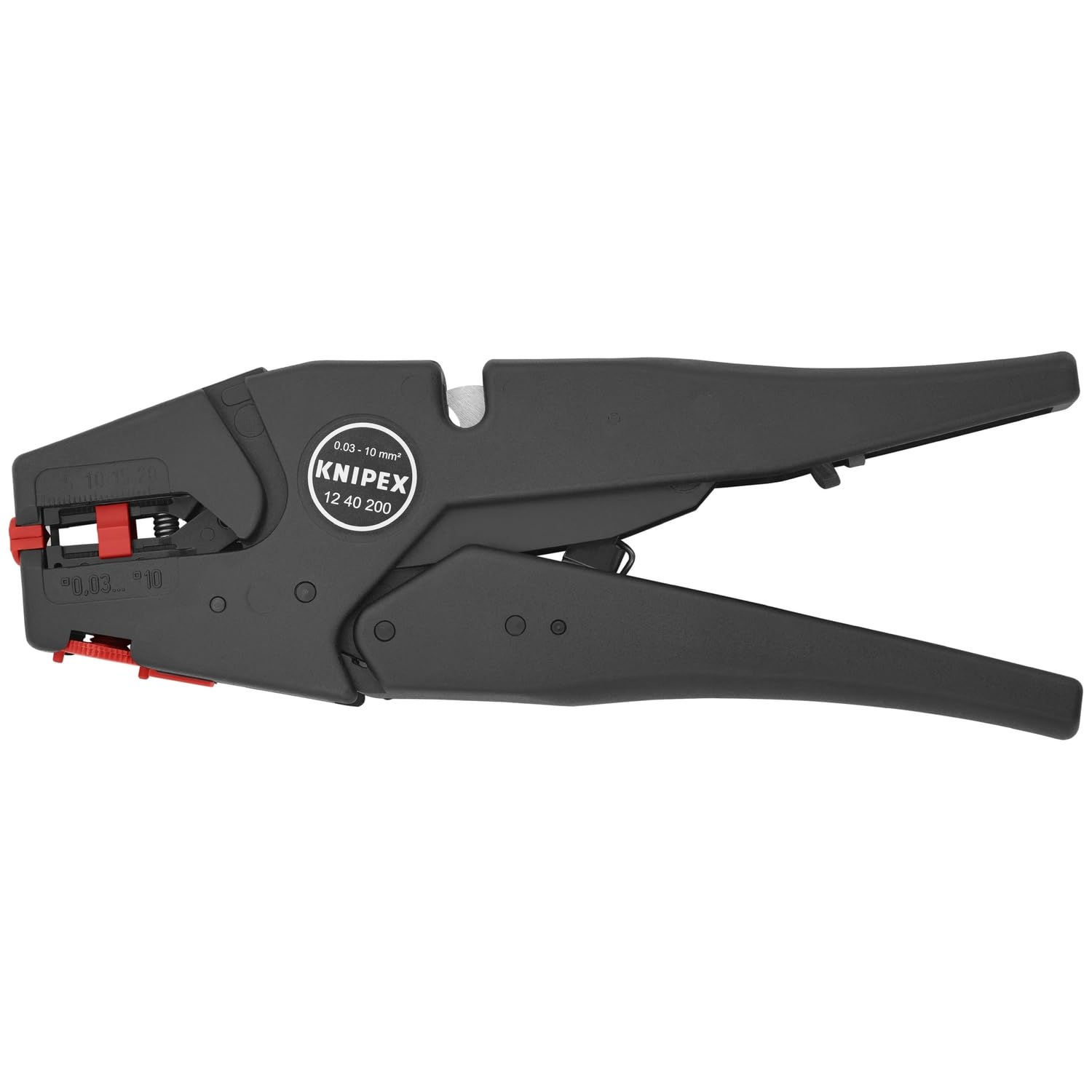
The KNIPEX EvoStrip covers the widest usable AWG span in this roundup — from 32 AWG fine-stranded to 8 AWG multi-stranded — and adapts automatically via a cam mechanism that adjusts to the cable diameter without any lever swapping. The fine-adjustment dial lets you fine-tune cutting depth for different insulation durometers, which is critical when switching between soft silicone jackets and stiffer PVC or rubber insulations without nicking the conductor.
The body is fiberglass-reinforced plastic, keeping the tool at only 6.8 ounces, and the replaceable tool-steel blades are oil-hardened for long edge retention. An adjustable length stop (3.0–22.0 mm) enables consistent repetitive stripping for production work, and the integrated tether attachment point meets ANSI drop-protection standards. The built-in wire cutter handles copper and aluminum up to 8 AWG stranded and 10 AWG solid.
Some users report that the red adjustment dial can shift when stored in a crowded pouch, and a small number of units have experienced the dial snapping under moderate use. The tool is optimized for stranded wire; solid THHN can cause more blade wear and occasional strand separation if the dial isn’t set precisely. For technicians working across 8 to 32 AWG stranded wire daily, however, this is the most versatile handheld option on the list.
Why it’s great
- Widest AWG range of any handheld model tested
- Replaceable oil-hardened tool-steel blades
- Ansi-compatible tether point for drop safety
Good to know
- Fine-adjust dial can drift in storage
- Best performance on stranded wire only
2. IDEAL Electrical Stripmaster Wire Stripper, 10–22 AWG

The IDEAL Stripmaster has been the industry standard for hand-held precision stripping for decades, and the current 45-292 model keeps that legacy intact. Its die-cast zinc frame provides rigidity that prevents blade misalignment even after thousands of cycles, supporting a one-step mechanical action that opens, grips, strips, and releases with a single squeeze. The precision-ground knife-type blades produce clean, accurate strips on 10 through 22 AWG solid and stranded wire.
The high-leverage spring-action design reduces operator fatigue during repetitive work, and the ergonomic grip allows one-handed operation. At 14.24 ounces, it’s heavier than plastic-bodied alternatives, but that weight directly contributes to the tool’s long-term durability — many users report getting 35+ years from a single unit before replacement. The handle material is metal, and blade replacement is user-serviceable with readily available parts.
Some users note that it won’t handle every specialty wire type, such as very thick solar PV insulation or ultra-fine magnet wire below 22 AWG. The fixed-gauge mechanism means you must select the correct hole for each wire size rather than relying on a self-adjusting cam. For general electrical work, house wiring, and AV installation where precision and durability matter more than speed on unconventional cables, this is the gold standard.
Why it’s great
- Rigid die-cast zinc frame resists deflection
- Precision-ground blades for clean strips
- Proven 30+ year lifespan in heavy use
Good to know
- Heavier than plastic auto-strippers
- Not self-adjusting; requires hole selection
3. Klein Tools 11069S Automatic Solar Wire Stripper

Klein’s 11069S is purpose-built for solar PV wiring, stripping 6 to 12 AWG solid conductors and 8 to 14 AWG stranded wire. The precision-machined stripping holes are engineered to remove thick solar-grade insulation in a single pass without damaging the copper. A tension-loaded wire-grip mechanism retains the cable geometry while the tool strips, preventing insulation bunching or snagging.
The cast alloy chassis with heavy-duty Ecoat finish resists corrosion from moisture and UV exposure common in solar installation environments. A wire stopper attachment clips onto the tool to deliver consistent strip lengths up to 1 inch, which speeds up repetitive terminations on long rows of panels. The single-action compound mechanism reduces hand strain during extended overhead or tight-accessible work.
This tool is highly specialized — its range tops out at 6 AWG and bottoms at 14 AWG stranded, so it won’t replace a general-purpose stripper for smaller control wiring or telecom work. Users report excellent results on 12, 10, and 8 AWG PV wire but note it’s overkill for non-solar tasks. For solar installers or anyone regularly terminating thick-jacketed PV cable, this is the most efficient dedicated tool available.
Why it’s great
- Purpose-built for thick solar PV insulation
- Corrosion-resistant cast alloy chassis with Ecoat
- Wire stopper for repeatable strip lengths
Good to know
- Limited AWG range for general use
- Replacement stopper sold separately
4. Felo 0715762681 Automatic Wire Stripper

Felo’s Series 583 automatic wire stripper uses a self-adjusting cam mechanism that bites and pulls sheathing off in a single squeeze, covering 24 to 10 AWG. It’s a lightweight tool at only 0.13 pounds, with a fiber-reinforced plastic housing that feels durable despite the low mass. The built-in cutter handles smaller wire sizes, and the integrated ruler gives you a reference for strip length without needing a separate measuring tool.
The cam design works particularly well on Deutsch connectors and automotive wiring — reviews confirm it strips 14 AWG stranded wire cleanly without nicking conductors, even for military-spec wrap terminations. The plastic body has some flex, but the tool’s compact profile (6.25 inches long) makes it easy to stash in a tool pouch for field work. The nose shape provides good visibility of the stripping point.
A common complaint is that the spent wire casing tends to get stuck in the mechanism after stripping and requires manual removal, which slows down repetitive work. It also lacks an adjustable length stop, so achieving consistent strip lengths requires practice using the ruler as a guide. For automotive electricians who need a no-fuss, budget-friendly auto stripper for 14–18 AWG stranded wire, this Felo delivers surprising precision.
Why it’s great
- Very lightweight at 0.13 pounds
- Self-adjusting cam prevents conductor nicking
- Compact size for tight work spaces
Good to know
- Cut insulation can get stuck inside
- No adjustable length stop included
5. Jokari 20050 Ergonomic Super 4 Plus Automatic Wire Stripper
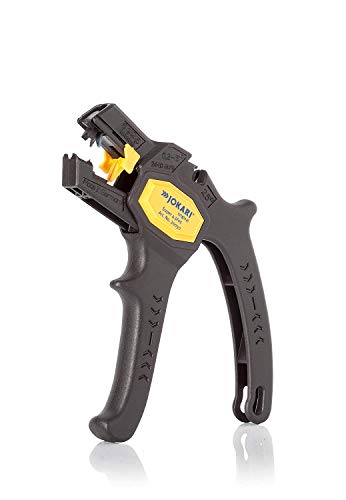
The Jokari 20050 is a German-made ergonomic stripper designed for stranded wires from 0.2 mm to 6 mm (roughly 32 AWG to 10 AWG), with an adjustable length stopper that lets you dial in precise strip lengths for repetitive work. The handle uses a stainless steel and rubber construction that fits large hands comfortably, and the plier-style grip locks closed for easy storage. Spare blades are available for replacement when the originals dull.
The tool is compact at 6.5 inches long, and its mechanism precisely removes outer cable jackets without damaging the inner copper strands — a common failure point on cheaper auto strippers. Users report excellent results on 14 AWG and smaller stranded wire, with fast operation ideal for control panel wiring or light automotive harness work. The wire cutter integrated into the tool handles cross sections up to 14 AWG (2.5 mm²).
Some users find the tool struggles with 12 AWG wire and cannot reliably handle 10 AWG as claimed, which limits its usefulness for larger gauge wiring. The plastic body, while ergonomic, doesn’t inspire the same confidence as a metal-framed tool for daily professional work. For anyone who primarily works with smaller stranded wires and wants a comfortable, compact tool with a handy strip-length stop, the Jokari is a strong entry-level pick.
Why it’s great
- Adjustable length stopper for consistency
- Ergonomic handle fits larger hands well
- Prevents damage to inner copper strands
Good to know
- Struggles with 12 AWG and above
- Plastic body lacks rigidity of metal frames
6. KNIPEX NexStrip Multi-Tool for Electricians, 12 72 190

The KNIPEX NexStrip combines an automatic wire stripper with a square-crimp ferrule tool in a single housing, covering 0.03 to 10 mm² (32 AWG to 8 AWG) for stripping and 0.25 to 4 mm² for single-wire ferrule crimping. The crimp mechanism uses a ratcheting action that ensures a complete crimp cycle, with self-adjusting jaws for ferrule sizes. The stripping side includes a fine-adjustment dial similar to the EvoStrip, allowing precise depth control for different insulation materials.
The high-quality glass-fiber-reinforced plastic housing keeps the weight down to 170 grams (6 ounces), making it comfortable for a full day on a panel. The tool cuts conductors up to 10 mm² cleanly. It consolidates two common electrician tasks into one tool, reducing the number of items you need to carry to a job site. The non-slip plastic grips provide secure handling even with oily or sweaty hands.
Some users report that the mechanism can feel slightly sticky or require manual return to its original position after crimping, which slows down high-speed work. As a combined tool, it doesn’t specialize in either function as well as dedicated strippers or crimpers — the stripping adjustment is effective but the crimp self-adjustment can be imprecise on less common ferrule sizes. For panel electricians who want a single tool that strips and crimps ferrules without carrying a separate crimper, the NexStrip is an elegant solution.
Why it’s great
- Combines stripping and ratcheting ferrule crimping
- Self-adjusts for ferrule sizes 0.25–4 mm²
- Lightweight glass-fiber-reinforced body
Good to know
- Crimping mechanism can feel sticky
- Less specialized than dedicated tools
7. VEVOR Electric Wire Stripping Machine, 60 W

The VEVOR electric wire stripper shifts from handheld to benchtop operation, using a 60 W gear motor that drives a feed mechanism capable of processing wires from 0.06 inches (1.5 mm) to 0.98 inches (25 mm) in diameter. It has seven stripping channels — six round and one flat — to accommodate different cable shapes, including hard cover, soft cover, multi-conductor, and mono-filament wires. The cast iron chassis keeps the machine stable at 33 pounds, absorbing vibration during extended use.
A clear acrylic panel lets you observe the stripping process in real time, and the hole-size markings eliminate the need for repeated blade adjustments when switching between common wire diameters. The blade is made from 65 Mn spring steel, which holds an edge longer than standard steel on high-friction insulation. The hands-free design frees up both hands to feed wire, significantly increasing throughput compared to manual stripping. VEVOR includes a pair of gloves and detailed angle-setting tips.
The machine is noticeably noisy during operation, and some users note the blades could be sharper out of the box for thicker cable jackets. It’s clearly designed for scrap copper recycling and cable manufacturer settings, not for precision electrical work — the stripping depth visibility is good, but the machine strips length rather than a precise 5/8-inch strip. For anyone processing large volumes of scrap wire to sell at higher recycling rates, this unit pays for itself quickly.
Why it’s great
- High-throughput benchtop operation
- Wide diameter range from 1.5 mm to 25 mm
- Cast iron chassis reduces vibration
Good to know
- Noisy during operation
- Not for precise electrical termination work
FAQ
What causes an auto wire stripper to nick the copper conductor?
Can an automatic wire stripper handle both solid and stranded wire?
Does an electric wire stripping machine work for precision electrical work?
How often should I replace the blades on an automatic wire stripper?
Final Thoughts: The Verdict
For most users, the best auto wire stripper winner is the KNIPEX 12 40 200 EvoStrip because it offers the widest AWG range, replaceable tool-steel blades, and a fine-adjustment dial that handles diverse insulation materials without nicking. If you need a rigid, decades-lasting workhorse for regular electrical work, grab the IDEAL Stripmaster. And for solar installations or high-volume scrap processing, nothing beats the specialized Klein 11069S or the VEVOR Electric Machine, respectively.