
Whether you are tracking a bird in flight, a sprinter crossing the finish line, or a toddler’s unpredictable sprint across the room, a camera’s autofocus system is the single most decisive factor between a sharp, frame-worthy image and a frustrating blur. The modern mirrorless market is flooded with claims of lightning-fast phase detection and AI-driven eye tracking, but the real-world performance varies wildly between models, from the number and coverage of AF points to the processor that drives the algorithm.
I’m Min — the co-founder and writer behind Gadgets Feed. I’ve spent countless hours analyzing the technical specifications, customer feedback, and comparative benchmarks to determine which mirrorless bodies truly deliver on their autofocus promises, and which fall short when the pressure is on.
For photographers and videographers who demand precision, this guide meticulously evaluates the top contenders to help you find the best autofocus mirrorless camera for your specific shooting style and budget.
How To Choose The Best Autofocus Mirrorless Camera
The autofocus system in a mirrorless camera is a complex interplay of hardware and software. Understanding a few core specifications will empower you to make a choice that aligns with how you actually shoot, whether that’s fast-paced sports, quiet wildlife, or professional video production.
AF Point Coverage and Density
The number of autofocus points, often ranging from a few hundred to nearly a thousand, dictates how much of your frame the camera can focus on. More points, especially when they cover a high percentage of the sensor area, allow you to track subjects that stray to the edges of the composition. A dense array of cross-type or dual-pixel phase-detection points ensures the camera can lock focus even in low contrast or low-light situations, preventing that frustrating moment when the lens hunts back and forth.
Subject Recognition and AI Processing
Modern cameras do more than just detect edges. They employ advanced algorithms and dedicated AI processors to recognize specific subjects — human eyes and faces, animal eyes, and even vehicles like cars, trains, and planes. A camera with strong subject recognition will automatically prioritize the intended target, freeing you to compose the shot without manually selecting a focus point. The secret lies in the processing power; a dedicated BIONZ XR or DIGIC X processor, for instance, allows for near-instantaneous calculations and uninterrupted tracking.
EV Sensitivity and Low-Light Performance
Autofocus systems are rated for their sensitivity, often expressed as EV (exposure value). A camera rated to -4 EV or -6 EV can achieve focus in near-darkness where the human eye struggles to see. If you shoot events like weddings, indoor sports, or astrophotography, a system with high low-light AF sensitivity is non-negotiable. This spec directly impacts whether your camera can reliably lock onto a subject in dimly lit environments or whether every shot will be plagued by focus hunting.
Continuous Shooting Speed with AF
The fastest autofocus is useless if the camera can’t keep up with the action. Look for a camera’s continuous shooting speed with continuous autofocus. A camera capable of 15 to 30 frames per second (fps) allows you to capture the peak moment of a swing, a jump, or a fleeting expression. However, the camera must also be able to calculate and re-focus between each frame. A high burst rate combined with deep buffers is the hallmark of a camera that can handle the fastest-moving subjects.
Quick Comparison
On smaller screens, swipe sideways to see the full table.
| Model | Category | Best For | Key Spec | Amazon |
|---|---|---|---|---|
| Canon EOS R6 Mark III | Full-Frame | Pro Hybrid Shooting | 40fps / 32.5MP / 8.5-stop IBIS | Amazon |
| Nikon Z 8 | Full-Frame | Pro Stills/Video Hybrid | 45.7MP / -9 EV AF / 8K60p | Amazon |
| Panasonic LUMIX S5IIX | Full-Frame | Unlimited Video Recording | Phase Hybrid AF / 5.8K ProRes | Amazon |
| Sony Alpha 7 IV | Full-Frame | Versatile Hybrid Work | 33MP / Real-time Eye AF / 4K60p | Amazon |
| Sony Alpha 6700 | APS-C | AI-Powered Tracking | 759 AF Points / 26MP / 4K120p | Amazon |
| Canon EOS R7 | APS-C | Action & Wildlife | 32.5MP / 15fps / 7-stop IBIS | Amazon |
| Canon EOS R10 | APS-C | Travel & Everyday | Dual Pixel AF II / 23fps | Amazon |
| Canon EOS R50 V | APS-C | Content Creation / Vlogging | Dual Pixel AF II / 4K Crop 59.94p | Amazon |
| Canon EOS R50 | APS-C | Entry-Level Hybrid | 24.2MP / 4K Video / Dual-lens Kit | Amazon |
In‑Depth Reviews
1. Canon EOS R6 Mark III
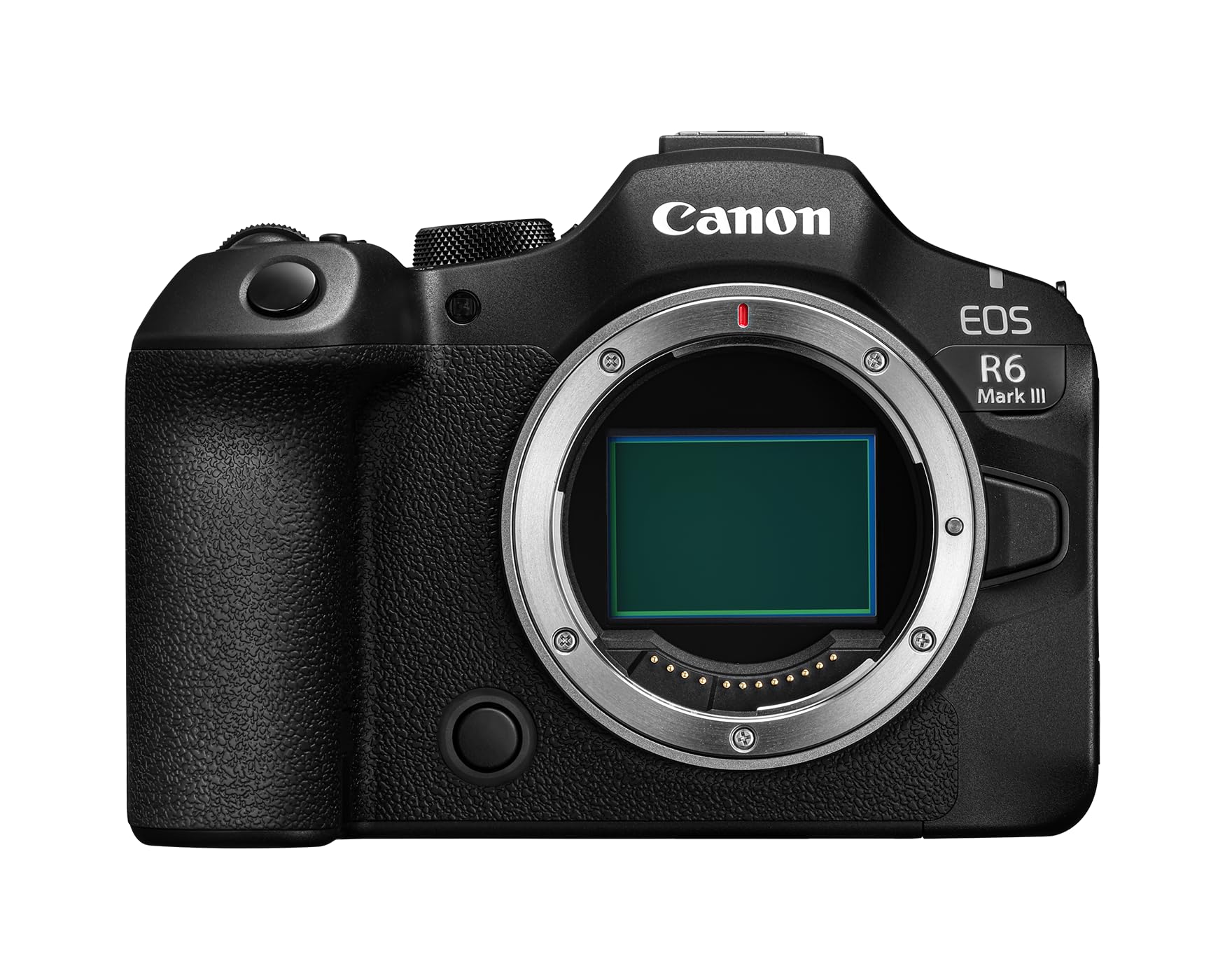
The Canon EOS R6 Mark III is a powerhouse of speed, boasting a 40fps electronic shutter with a pre-continuous shooting buffer of 20 frames. This makes it exceptionally capable of capturing that split-second peak of action, from a basketball dunk to a bird taking flight, and its Dual Pixel CMOS AF II ensures every frame is locked on target.
Its in-body image stabilization (IBIS) provides up to 8.5 stops of correction, allowing for incredibly sharp handheld shots in very low light. The 32.5MP full-frame sensor paired with the DIGIC X processor delivers excellent high-ISO performance, making it a versatile tool for event photographers who need to shoot in challenging conditions without a flash.
The inclusion of both a CFexpress Type B and a UHS-II SD card slot offers flexibility and redundancy for professional workflows. While the video capabilities are robust, some users note potential for overheating during extended 4K recording, a factor to consider for videographers who require long takes without interruption.
Why it’s great
- Blistering 40fps burst with pre-capture is a game-changer for action.
- Dual Pixel AF II with exceptional subject tracking, including Register People Priority.
- Industry-leading 8.5-stop IBIS for sharp hand-held shots in dim light.
Good to know
- Overheating can be a concern during prolonged 4K video sessions.
- As a body-only option, you need to budget for RF lenses.
2. Nikon Z 8

The Nikon Z 8 packs the 45.7MP stacked sensor and EXPEED 7 engine into a relatively compact full-frame body, offering a resolution and speed combination that rivals the flagship Z9. Its autofocus system, developed using deep learning, sets a new benchmark for subject detection, reliably tracking everything from a bird’s eye to a motorcycle racer even in extremely low light down to -9 EV.
For videographers, the Z 8 is a monster, capable of internal 8K/60p and 4K/120p recording with 12-bit N-RAW and ProRes RAW. The absence of a mechanical shutter (using a sensor shield instead) makes it perfectly silent and reduces the risk of shutter shock, while the robust, weather-sealed build instills confidence in the harshest shooting environments.
The combination of high-resolution stills and cinema-grade video makes it a powerful hybrid tool. However, the massive data output demands high-performance CFexpress Type B cards, and the battery life can be a limitation when pushing 8K video, often requiring multiple batteries for a full day of dedicated shooting.
Why it’s great
- Unparalleled 45.7MP resolution combined with 20fps RAW shooting.
- Deep-learning AF with bird, car, and plane detection for extreme accuracy.
- Advanced internal video capabilities including 8K/60p and ProRes RAW.
Good to know
- High data throughput leads to significant power consumption and heat generation.
- Requires expensive, fast CFexpress Type B cards for full performance.
3. Panasonic LUMIX S5IIX

The Panasonic LUMIX S5IIX is a revelation for videographers, marking the brand’s successful transition to a phase-detection autofocus system with its Phase Hybrid AF. This system offers reliable, fast subject tracking that finally rivals Sony and Canon, paired with an internal cooling fan that enables unlimited 4:2:2 10-bit recording and live streaming without any risk of overheating.
Its video specifications are extensive, including internal 5.8K ProRes and RAW over HDMI, along with 14+ stop V-Log/V-Gamut for professional color grading. The 24.2MP full-frame sensor delivers excellent image quality, and the inclusion of a 20-60mm kit lens provides a wide, versatile starting point for creators.
The active I.S. (Image Stabilization) is outstanding for smooth walking shots. The primary compromise is battery life, which is notably short, requiring the purchase of spare batteries or USB-C power delivery for extended shoots, but the core image quality and feature set at this level are exceptional.
Why it’s great
- Built-in fan allows for truly unlimited internal video recording.
- New Phase Hybrid AF provides fast and reliable subject tracking.
- Excellent active I.S. for smooth, gimbal-like walking footage.
Good to know
- Battery life drains quickly, especially during video recording.
- The body is slightly heavier than some competitors due to the cooling system.
4. Sony Alpha 7 IV

The Sony Alpha 7 IV is the quintessential hybrid camera, striking a nearly perfect balance between high-resolution stills and versatile video. Its 33MP Exmor R sensor delivers gorgeous 4K 30p oversampled from 7K, and with the BIONZ XR processor, its Real-time Eye AF for humans and animals is incredibly sticky and accurate, even tracking subjects that briefly leave and re-enter the frame.
The camera features a comfortable, weather-sealed body with an intuitive, redesigned menu system and a fully articulating screen. It now supports the S-Cinetone color profile, making it easy to achieve a cinematic look straight out of camera, and the dual card slots (one CFexpress Type A / SD) offer flexible workflow options for professional use.
Its 693-point phase-detection AF system covers a vast majority of the sensor, providing confident focus across the frame. The main video annoyance is the crop when shooting 4K 60p, which requires using a Super 35mm mode, a trade-off for the full-frame form factor that some users find limiting.
Why it’s great
- Real-time Eye AF is one of the most reliable tracking systems available.
- Excellent 33MP resolution with beautiful S-Cinetone color science.
- Robust, weather-sealed build with a comprehensive feature set for its price tier.
Good to know
- 4K 60p recording is restricted to a 1.5x crop, using a smaller portion of the sensor.
- Buffering can be an issue when shooting at high continuous burst rates with RAW files.
5. Sony Alpha 6700

The Sony Alpha 6700 brings the full-frame AF intelligence down to an APS-C body, featuring a dedicated AI processing chip that dramatically improves Real-time Recognition for subjects. This allows it to lock onto a human eye, an animal, or a bird with an uncanny level of confidence, making it arguably the best autofocus system in a crop-sensor camera.
Its 26MP BSI CMOS sensor delivers excellent dynamic range, and the BIONZ XR processor enables 4K/120p high-frame-rate video. The camera is compact and lightweight, making it an ideal travel companion or a stealthy street photography tool, while still offering a deep feature set including a 759-point phase-detection AF array.
The menu system remains complex, a common Sony trait, and the single SD card slot is a limitation for serious backup. The small body also means smaller controls and a less substantial grip, which can be a minor ergonomic trade-off for users with larger hands, but the AF performance is simply class-leading.
Why it’s great
- Dedicated AI processor for exceptional subject recognition and tracking.
- Supports 4K 120p high frame rate for silky-smooth slow motion.
- Compact and lightweight design ideal for travel and everyday carry.
Good to know
- Single SD card slot offers no backup or overflow security.
- Sony’s menu system, while improved, still has a steep learning curve.
6. Canon EOS R7

The Canon EOS R7 is built for speed and reach, offering a high-resolution 32.5MP APS-C sensor that provides a 1.6x crop factor, effectively extending the reach of telephoto lenses for wildlife and sports photographers. Its Dual Pixel CMOS AF II is highly responsive, with 651 AF points and sophisticated subject detection for people, animals, and vehicles.
A standout feature is the 7-stop in-body image stabilization, the best in its class, which when combined with an IS-equipped lens allows for incredibly sharp long-telephoto shots. It also includes dual UHS-II SD card slots, a rarity at this price point, and a high-speed mechanical shutter that can fire at up to 15 frames per second.
The R7 is a fantastic upgrade for DSLR users with a collection of EF-S lenses, thanks to the excellent EF-to-RF adapter compatibility. While its low-light performance isn’t quite as clean as a full-frame sensor, its speed, stabilization, and reach make it a formidable tool for action-oriented photographers on a budget.
Why it’s great
- Dual SD card slots provide professional-grade backup recording.
- Excellent 7-stop IBIS for sharp hand-held shots at long focal lengths.
- High-resolution sensor with a 1.6x crop factor for extended reach.
Good to know
- Low light performance is a compromise compared to full-frame sensors.
- Battery life is moderate, requiring spare packs for long shooting days.
7. Canon EOS R10
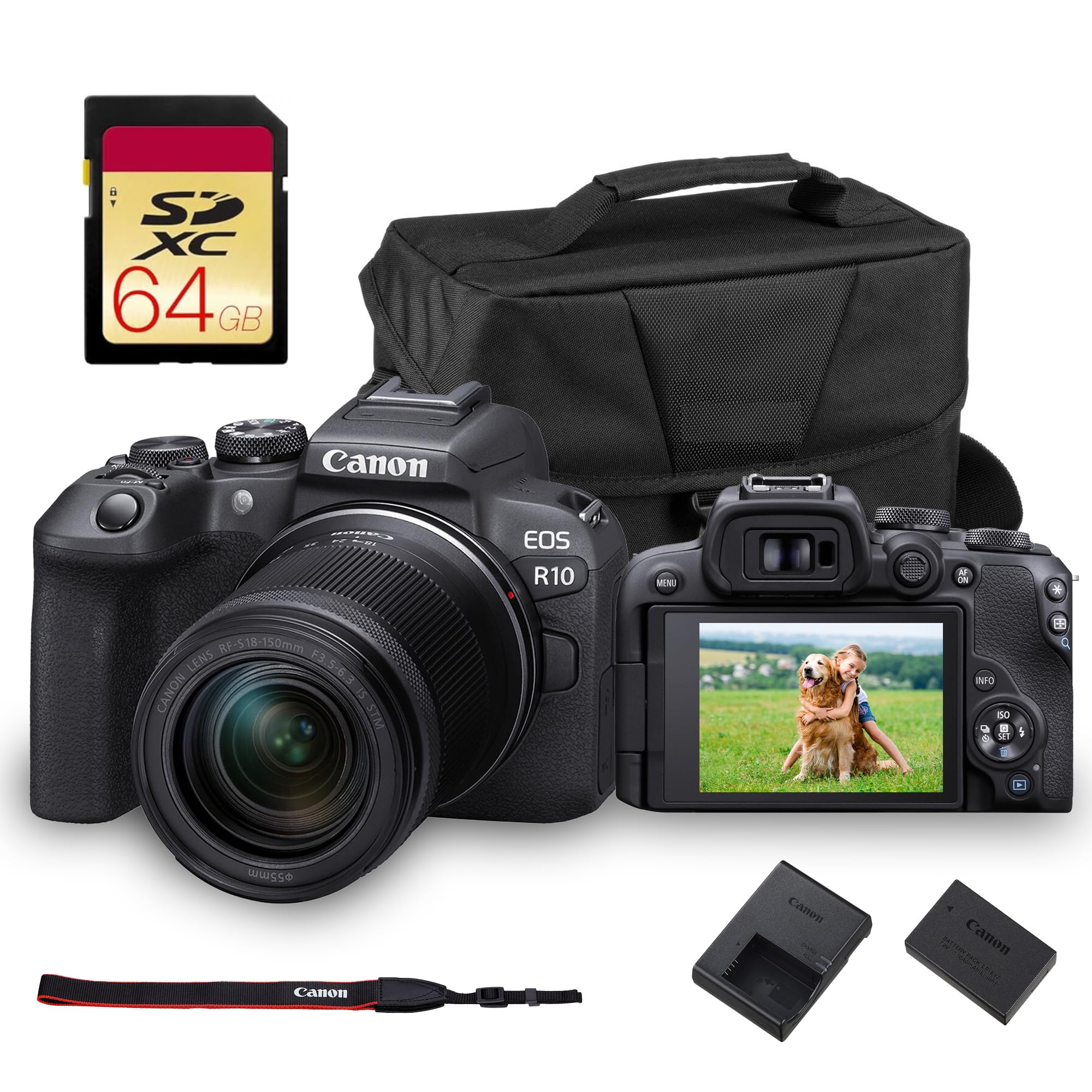
The Canon EOS R10 packs the same advanced Dual Pixel CMOS AF II found in Canon’s higher-end RF models into a compact, travel-friendly body. This system provides lightning-fast autofocus with subject tracking for people, animals, and vehicles, ensuring sharp results even as you explore new environments and capture spontaneous moments.
It offers impressive speed for its class, with the ability to shoot up to 23 fps in electronic shutter mode. The included RF-S 18-150mm lens is a perfect all-in-one travel companion, covering everything from wide landscapes to close-up portraits, making it an extremely versatile kit for the everyday photographer or vlogger.
The camera’s compact size and intuitive interface make it easy to use for beginners stepping up from a smartphone. However, it lacks in-body image stabilization, relying on the lens’s IS, and the small buffer can fill up quickly when shooting high-speed bursts, which is its main limitation for serious sports photography.
Why it’s great
- Dual Pixel CMOS AF II brings high-end tracking to an entry-level price.
- Compact body and versatile 18-150mm lens make a great travel kit.
- Fast burst speeds of up to 23fps for capturing action on the go.
Good to know
- No in-body image stabilization; relies entirely on lens IS.
- Buffer memory is limited, slowing down during continuous RAW bursts.
8. Canon EOS R50 V
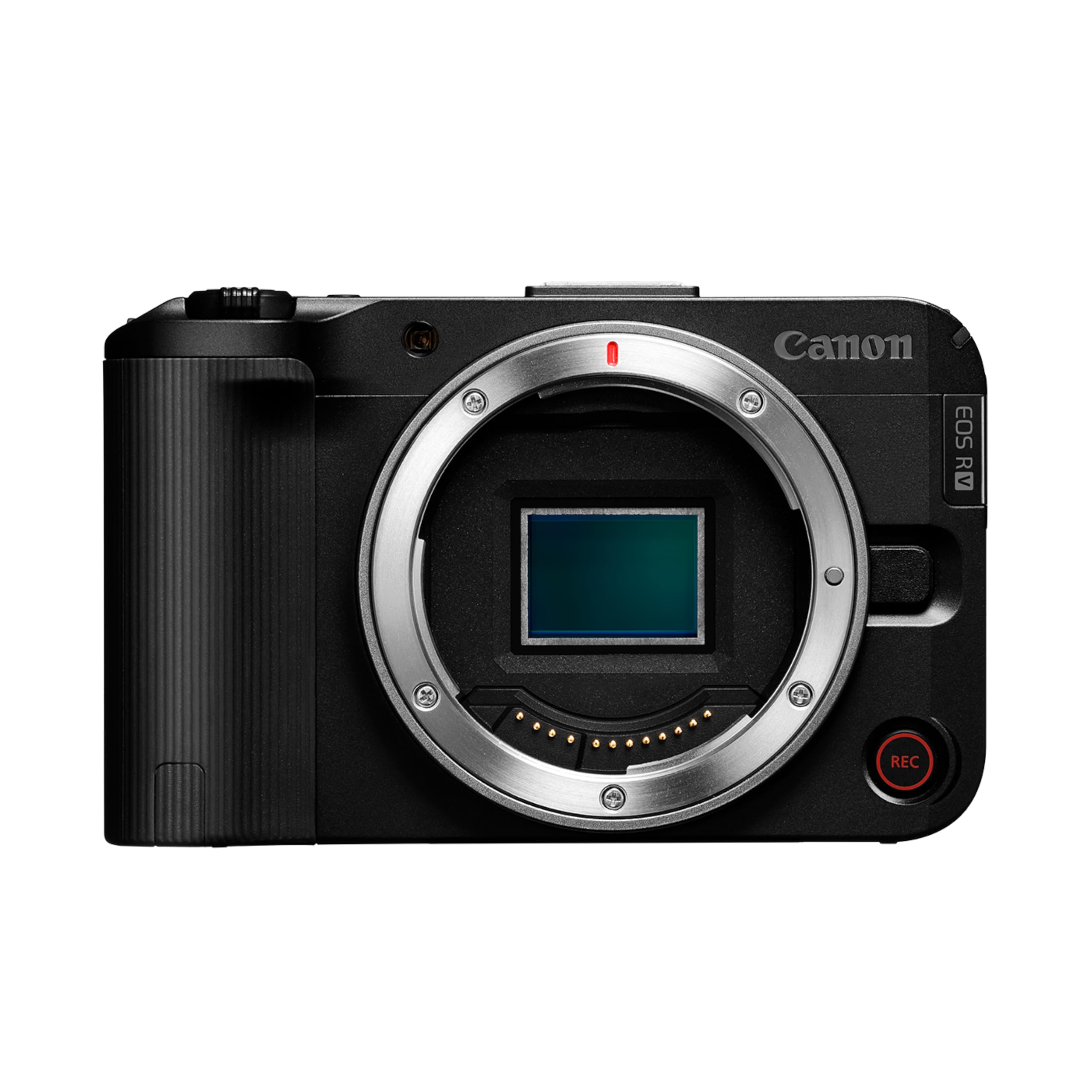
The Canon EOS R50 V is a purpose-built video-first camera, optimized for content creators. Its design includes a vertical video tripod mount and a front record button, making it incredibly intuitive for vloggers and social media creators. It inherits Canon’s excellent Dual Pixel CMOS AF II, providing reliable autofocus for talking-heads and product demos, with Register People Priority for consistent face tracking.
The camera offers impressive video specs, including 4K 59.94p with a crop and full-width 4K 29.97p, plus support for CLog3 and 10-bit recording for flexible grading. Despite its video focus, it can also capture 24.2MP stills, making it a great compact tool for creators who need a simple, powerful camera without breaking the bank.
A clear omission is the lack of a viewfinder, which constrains its use strongly to the rear screen. Its small size makes it very pocketable, but this also means smaller ergonomics and a battery that may not last through a full day of heavy video production, though its value for video-first work is undeniable.
Why it’s great
- Designed specifically for vertical shooting with a dedicated tripod mount.
- Excellent Dual Pixel AF II with face tracking perfect for vlogging.
- Compact and very lightweight for easy carry and gimbal mounting.
Good to know
- Lacks an electronic viewfinder (EVF), limiting its use in bright sun.
- Battery life is modest, requiring spare batteries for long recording days.
9. Canon EOS R50
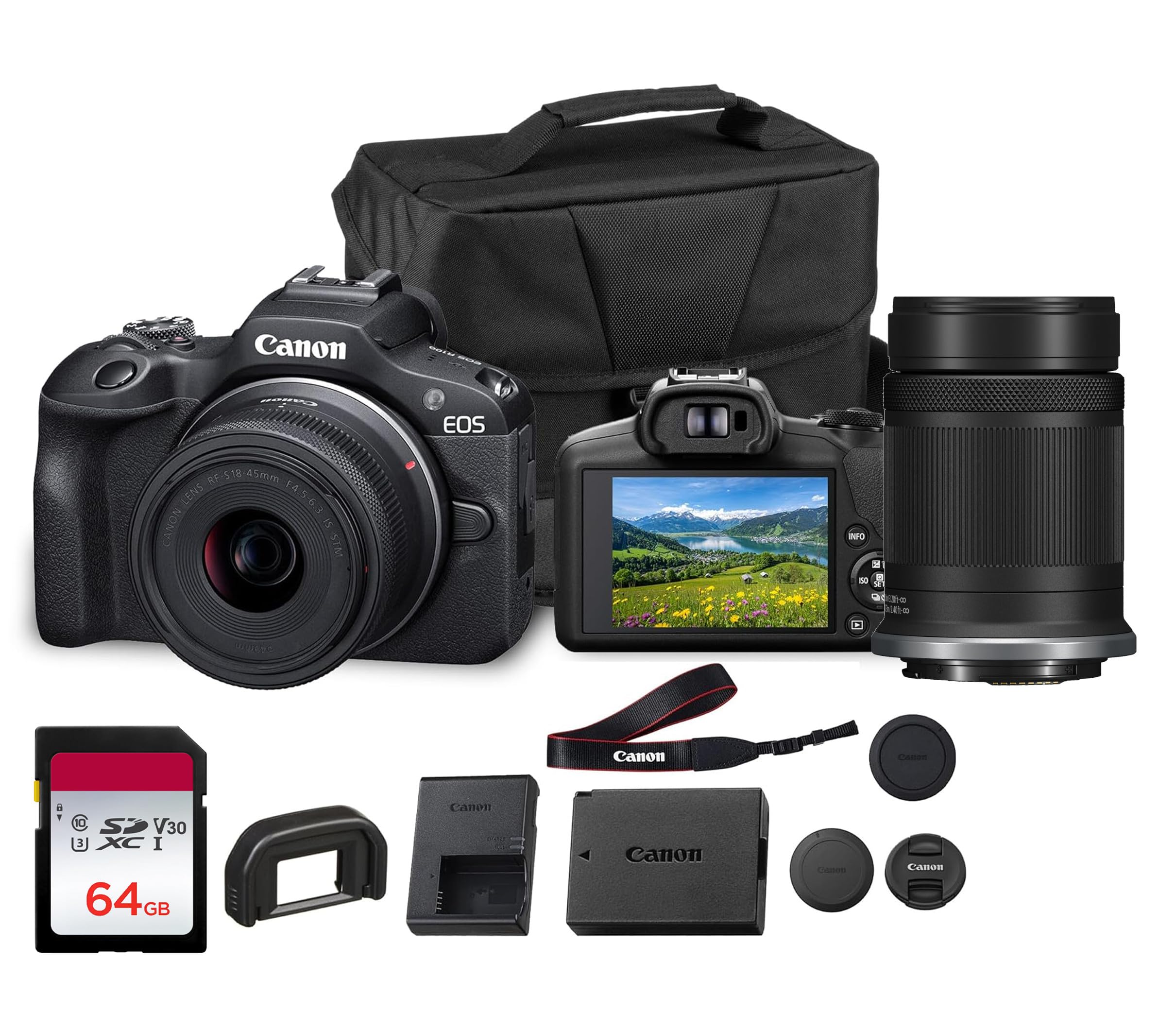
The Canon EOS R50 is the most accessible entry point into Canon’s RF mount, offering a compact body with a reliable 24.2MP APS-C sensor. This kit is bundled with two lenses: the standard 18-45mm and a useful telephoto 55-210mm, giving a beginner everything they need to explore a wide range of photography genres, from landscapes to portraits and wildlife.
Its Dual Pixel CMOS AF II is a significant step up from previous entry-level DSLRs, providing responsive and accurate subject tracking that simplifies shooting for new users. The camera is lightweight, intuitive, and features a flip-out screen for easy selfies and vlogging, plus Wi-Fi and Bluetooth for seamless image sharing to a smartphone.
As an entry-level model, it lacks certain professional features, such as in-body stabilization and a hotshoe flash. The plastic build, while functional, does not feel as premium as the R10 or R7. However, as a complete, low-cost system to learn on and grow with, the EOS R50 kit is an outstanding value proposition that doesn’t compromise on core autofocus performance.
Why it’s great
- Outstanding value with a two-lens kit that covers wide to telephoto.
- Dual Pixel AF II delivers reliable autofocus far above its price point.
- Very lightweight and user-friendly, perfect for absolute beginners.
Good to know
- Body is primarily plastic and does not feel as robust as higher-tier models.
- Lacks in-body image stabilization and a dedicated flash hotshoe.
FAQ
What is the real-world difference between 600 and 750 autofocus points?
Can a good autofocus system compensate for an inexpensive lens?
Why is low-light AF sensitivity (EV rating) important?
Final Thoughts: The Verdict
For most users, the best autofocus mirrorless camera winner is the Canon EOS R6 Mark III because its combination of 40fps burst speed, super sticky Dual Pixel AF II, and excellent low-light performance makes it the most complete all-around action tool. If you prioritize ultimate resolution and professional video with deep-learning AF, grab the Nikon Z 8. And for the best value in high-end video features with unlimited recording, nothing beats the Panasonic LUMIX S5IIX.