
An erratic reading from an ill-fitting cuff or a noisy pump can spike your anxiety faster than the number itself. The right automated blood pressure cuff should fade into the background, delivering consistent systolic and diastolic data without you wondering if the arm cuff slipped or the sensor misfired. This category lives and dies on one thing: trust in the number on the screen.
I’m Rikta — the co-founder and writer behind Gadgets Feed. I’ve spent years digging into consumer health-device engineering, comparing inflation algorithms, cuff sizing tolerances, and Bluetooth data pipelines to separate clinically validated designs from gimmicky shelf-fillers. (And Homer 🐱 nervously watched the first inflation cycle from behind the couch).
The most reliable home health tools don’t just measure pressure; they remove the guesswork from positioning, sizing, and logging. This guide breaks down the best choices available today for the best automated blood pressure cuff across different needs and budgets.
How To Choose The Best Automated Blood Pressure Cuff
Selecting a home monitor means weighing measurement accuracy, cuff compatibility with your arm circumference, and how the device stores or shares your data. The wrong cuff size alone can skew your systolic reading by ten points or more.
Cuff Size Range
Most units ship with a single cuff that covers a standard range (roughly 8.7 to 16.5 inches). If your upper arm circumference falls outside that window, look for models offering an additional large or extra-large cuff. A properly snug fit is the single biggest variable in reading consistency.
Memory and Multi-User Support
Check the total reading capacity and whether the device separates data for two users. Budget models often cap at 60–90 total readings, while premium units may store nearly 200 per user. Dual-user switches prevent your morning data from mixing with your partner’s.
Connectivity and Power
Bluetooth-enabled monitors let you export trends to a smartphone app, useful for sharing with a doctor. On the power side, decide between traditional AA batteries or a rechargeable lithium cell with USB-C charging. Rechargeable options reduce long-term waste but require remembering to plug the unit in after several weeks of use.
Quick Comparison
On smaller screens, swipe sideways to see the full table.
| Model | Category | Best For | Key Spec | Amazon |
|---|---|---|---|---|
| OMRON Gold BP5360 | Premium | AFib detection & app tracking | 9″–17″ cuff, 100 readings per user | Amazon |
| FDA-Cleared URION 4.5″ LED | Premium | Bright display & dual-user storage | 4.5″ LED, 199 readings per user | Amazon |
| BBLOVE AES-U632 | Premium | Rechargeable & voice announcement | Type-C recharge, 200+ readings per charge | Amazon |
| Microlife BPM2 | Mid-Range | Clinically proven accuracy | 8.7″–16.5″ cuff, 60 readings total | Amazon |
| iHealth Track 550BT | Mid-Range | Bluetooth syncing & Apple Health | 8.7″–16.5″ cuff, 99 on-device readings | Amazon |
| COCACIS U80BH | Budget-Friendly | Two cuff sizes for varied arms | 9″–21″ dual-cuff kit, 199 per user | Amazon |
| Medline MDS4001 | Budget-Friendly | Simple no-frills operation | 8.6″–11.8″ cuff, 90 readings total | Amazon |
In‑Depth Reviews
1. OMRON Gold Blood Pressure Monitor BP5360
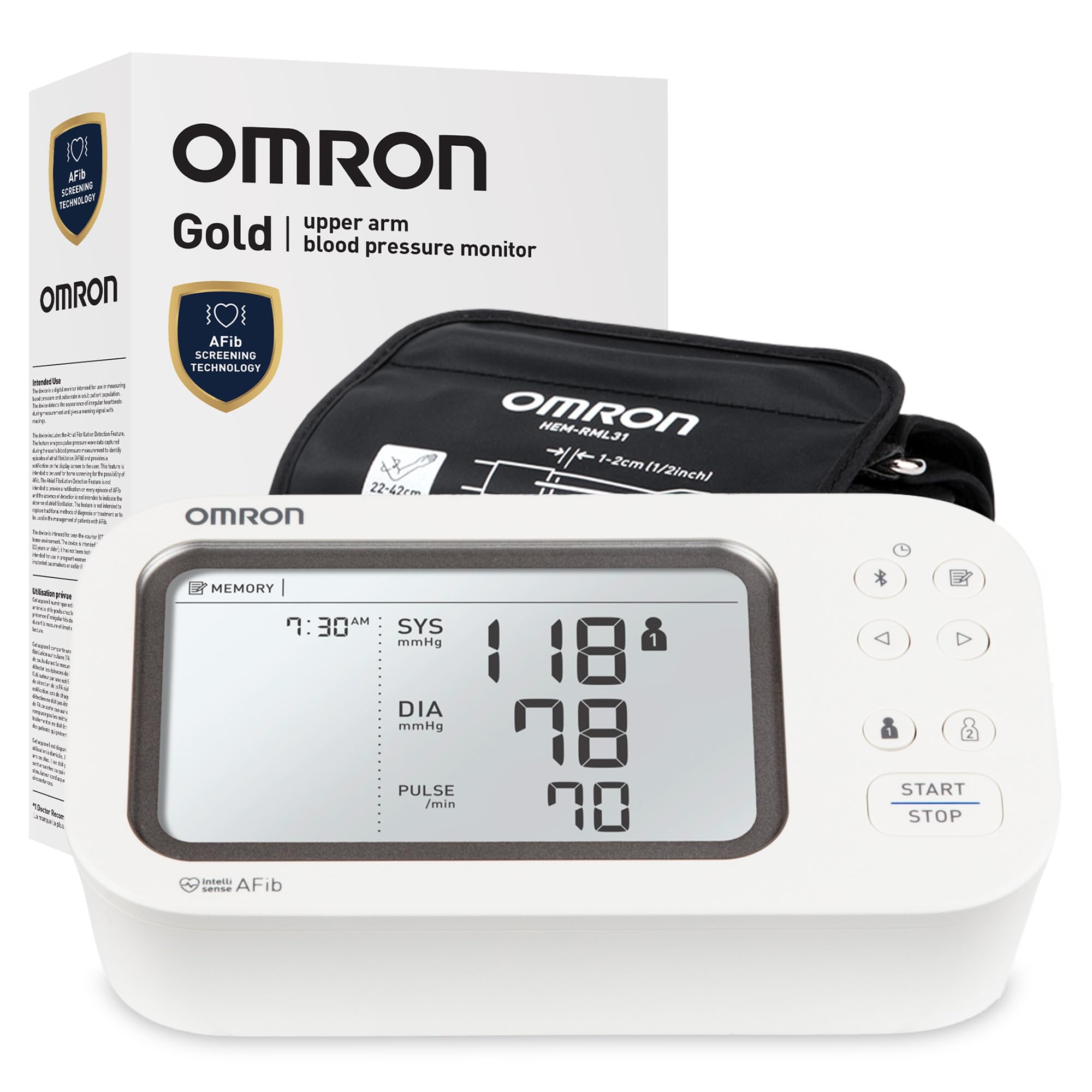
The OMRON Gold BP5360 is the most clinically capable unit in this roundup, offering atrial fibrillation screening during every measurement — a feature that sets it apart from standard monitors. The wide-range D-ring cuff accommodates arms from 9 to 17 inches, and the High Morning Average Indicator flags potentially dangerous morning spikes. Bluetooth pairing with the free OMRON connect app enables unlimited data storage and trend sharing with your physician.
Users report consistent readings that align with doctor-office measurements, and the dual-user mode keeps data neatly separated. The display is clear but lacks a backlight, which some users find surprising at this tier. The unit runs on four AA batteries, with no USB charging option.
A crucial caveat: the AFib detection algorithm is designed to notify users of irregular rhythms, but if it detects an arrhythmia, the monitor may decline to display a blood pressure reading altogether. This behavior, confirmed by multiple reviewers, can frustrate users who already know they have atrial fibrillation and just want a consistent pressure number.
Why it’s great
- Clinically validated AFib screening built into every reading.
- Unlimited cloud storage via the OMRON app.
- Doctor-recommended brand with proven accuracy.
Good to know
- Screen has no backlight for low-light use.
- AFib detection can block pressure readings entirely.
- No rechargeable battery — uses included AAs.
2. FDA-Cleared URION 4.5-Inch LED Monitor
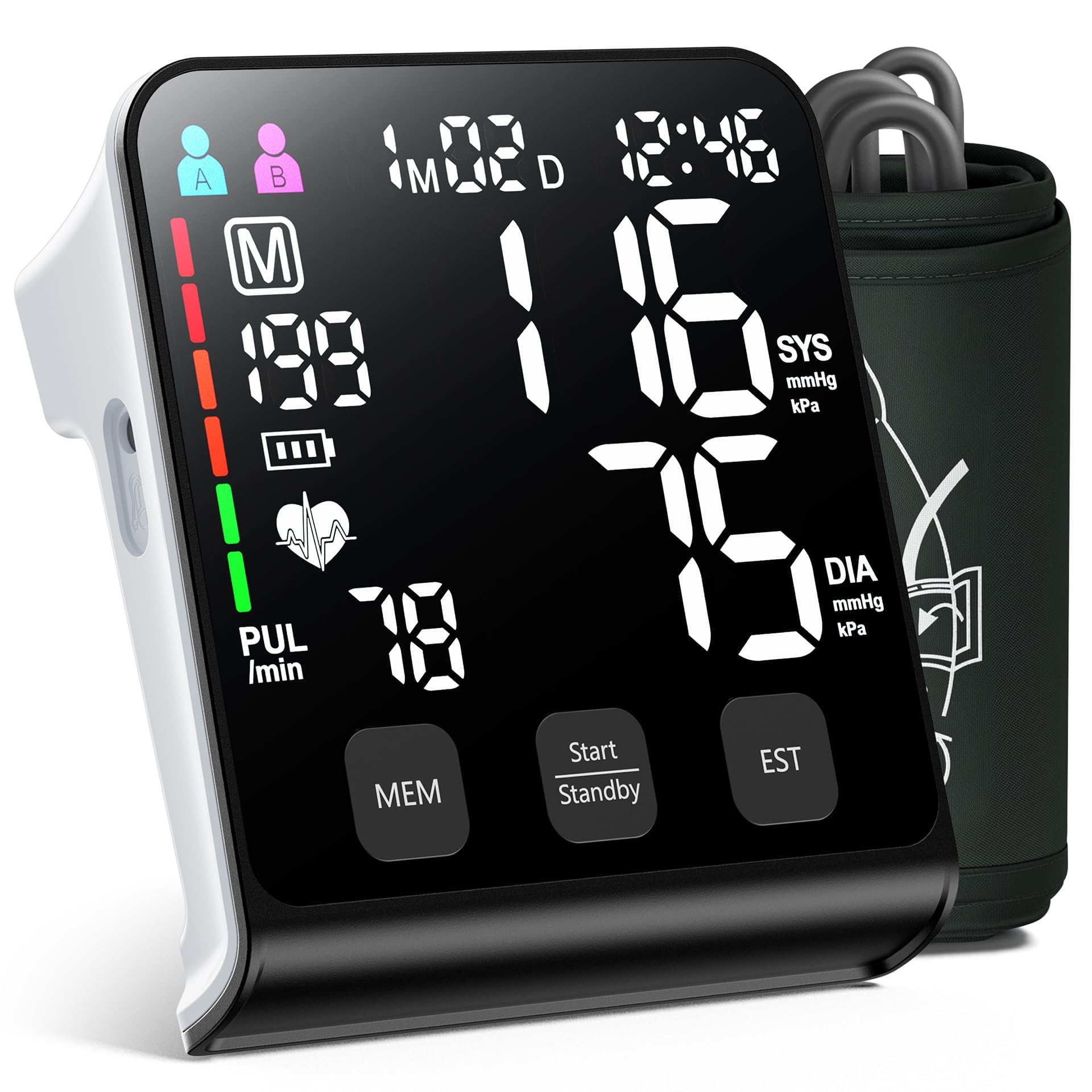
The URION unit centers on a massive 4.5-inch backlit LED that displays systolic, diastolic, and pulse data in oversized digits readable from across the room. It stores up to 199 readings per user for two separate individuals, which is generous for a device at this level. The cuff fits a standard range and the one-button start simplifies operation for anyone who prefers not to navigate complex menus.
Owners consistently praise the bright, color-coded WHO indicator that turns green, orange, or red depending on the reading. The monitor can run on batteries or via USB-C, adding flexibility for travel. The scratch-resistant acrylic front panel adds durability for daily handling.
A few reviewers noted slight variation between consecutive readings, which is common with oscillometric monitors. The adjustable cuff algorithm does compensate for positioning errors better than entry-level models, but sitting still with the arm at heart level remains essential for consistency.
Why it’s great
- Extra-large backlit screen ideal for low-light conditions.
- High 199-reading capacity per user, two-user support.
- Dual power: USB-C or battery operation.
Good to know
- Cuff size is standard range, not extra-large.
- No Bluetooth or smartphone app connectivity.
- Some users report minor reading variability.
3. BBLOVE AES-U632 Blood Pressure Monitor
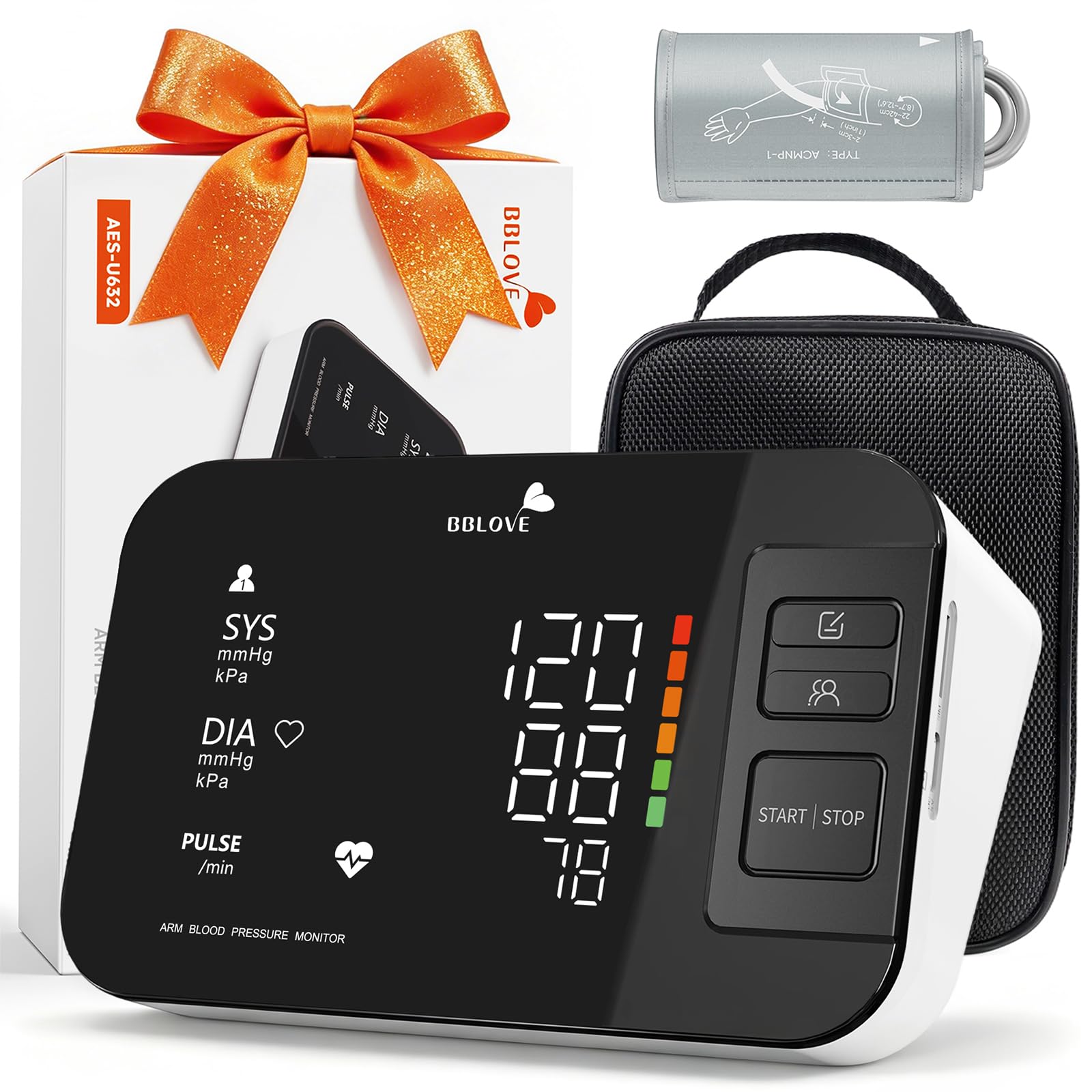
The BBLOVE AES-U632 packs a rechargeable battery — good for over 200 measurements per charge — and a clear LED display with voice announcement, making it especially useful for users with visual impairments. The one-touch automatic measurement detects irregular heartbeats and displays a three-color WHO indicator. It supports dual users with 90 readings each, and the Type-C charging port eliminates the need for disposable batteries.
Reviewers describe it as “favorite among three tested” for its consistent readings that match clinic equipment. The universal cuff fits arms 8.7 to 16.5 inches, and the unit is FSA and HSA eligible. The included carrying bag adds convenience for travel.
The voice feature, while helpful, cannot be disabled on all units. A small number of users found the cuff tube connection slightly stiff initially, which eased after a few uses. The monitor lacks Bluetooth, so all data logging is manual.
Why it’s great
- Rechargeable battery eliminates battery waste.
- Audible voice announcement for visually impaired users.
- Compact build with travel bag included.
Good to know
- No Bluetooth or app connectivity.
- Voice announcement cannot be silenced on some units.
- Standard cuff range only, no XL option.
4. Microlife BPM2 Automatic Digital Monitor
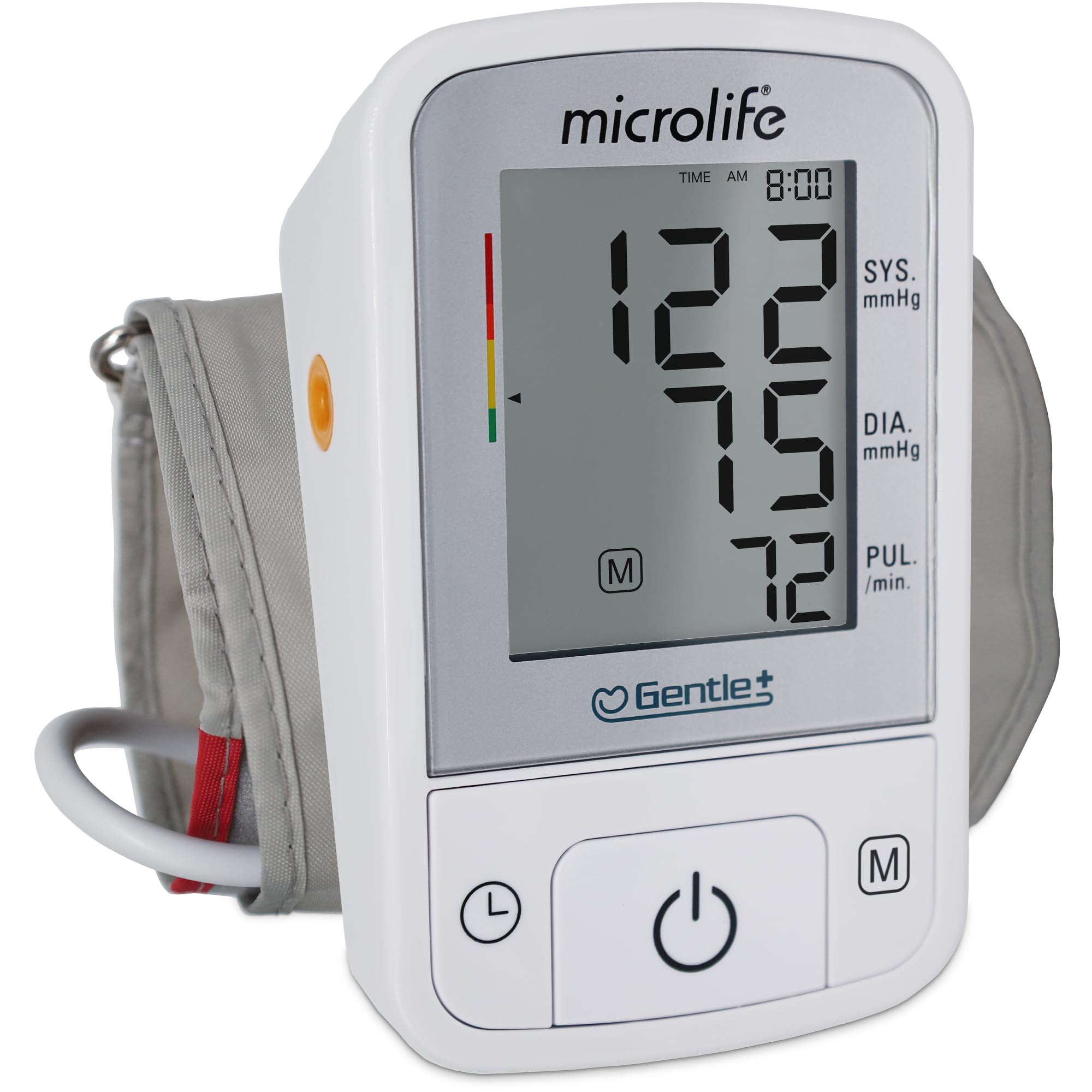
Microlife holds a rare AA accuracy rating from the British and Irish Hypertension Society, making the BPM2 one of the most independently validated monitors on the consumer market. Its Gentle+ Technology inflates the cuff more gradually, reducing discomfort during measurement. The wide-range cuff fits 8.7 to 16.5 inches, and an optional XL cuff extends that to 20.5 inches for larger arms.
The device stores 60 readings — modest by modern standards — and displays an average based on all stored memories. The irregular heartbeat detector and hypertension risk indicator add clinical context without requiring a smartphone. Users frequently report that readings align closely with their doctor’s office equipment, even after a year of daily use.
The 60-reading cap feels restrictive for dual-user households, and the monochrome LCD lacks the backlighting found on newer competitors. The monitor requires four AA batteries with no rechargeable option, though battery life is solid. An AC adapter is sold separately.
Why it’s great
- BIHS AA accuracy rating — gold standard validation.
- Gentle+ inflation reduces cuff discomfort.
- Optional XL cuff extends to 20.5 inches.
Good to know
- Only 60-reading memory, no dual-user separation.
- No backlight on the LCD display.
- No Bluetooth or app connectivity.
5. iHealth Track 550BT
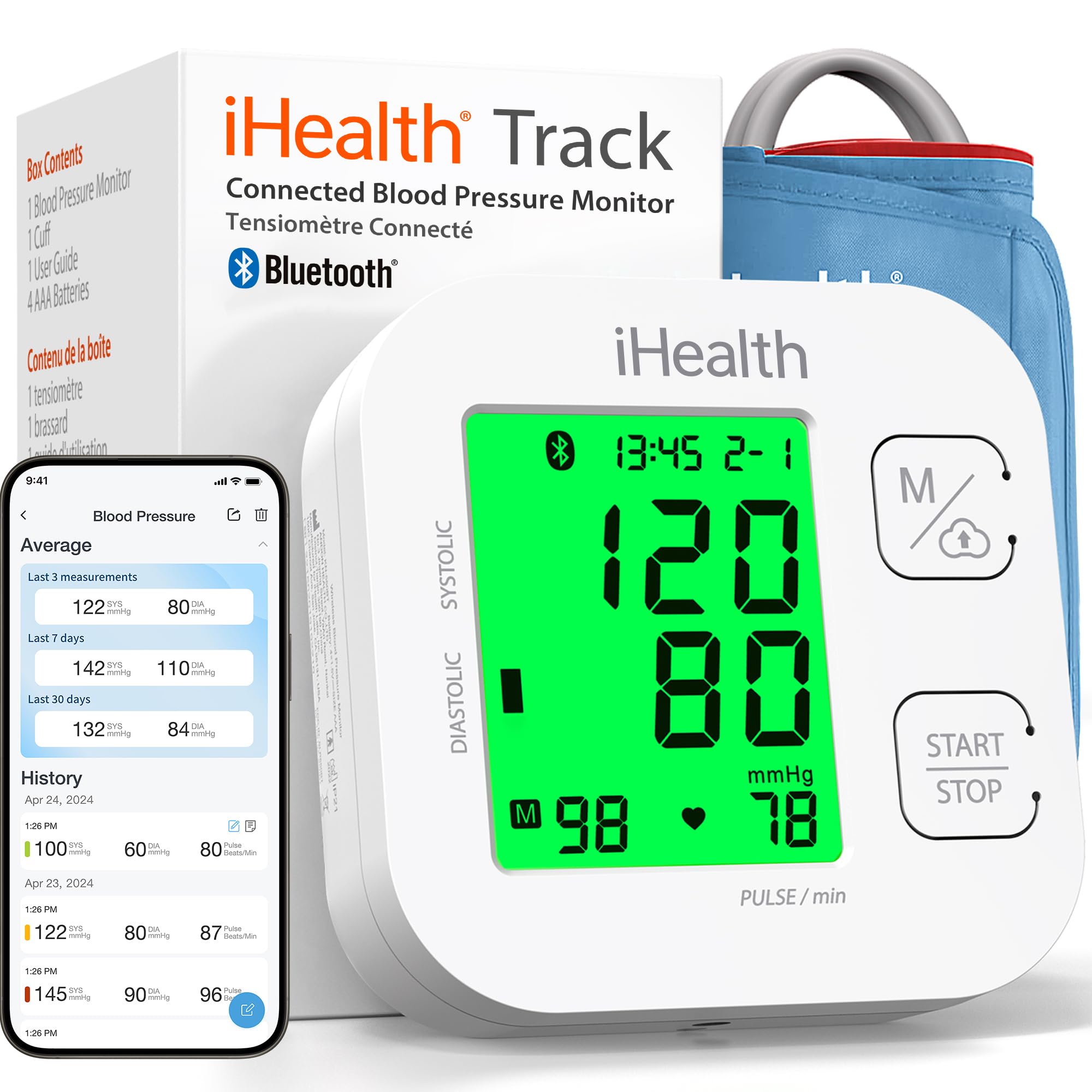
The iHealth Track 550BT brings reliable Bluetooth syncing to a mid-range price point, pairing seamlessly with both iOS and Android devices. The large multi-color backlit display shows readings in oversized numbers, and the coded green, yellow, or red indicator offers instant context. It stores up to 99 readings on the device and unlimited readings when synced to the iHealth app, which also supports Apple Health and Google Fit.
The wide-range cuff fits arms 8.7 to 16.5 inches. The unit automatically detects heart rhythm disturbances and displays a warning symbol if irregularities are found. Users consistently note that readings match their doctor’s equipment within a few points, and the one-button operation makes self-measurement straightforward.
The iHealth app has drawn criticism for persistent advertisements and a pushy interface. Several reviewers recommend logging readings manually or using a third-party health app instead. The monitor lacks a rechargeable battery, relying on four AAA batteries.
Why it’s great
- Flawless Bluetooth sync with Apple Health.
- Large backlit display with color-coded readings.
- Detects and flags irregular heart rhythms.
Good to know
- App contains persistent ads and pop-ups.
- No rechargeable battery, uses AAA cells.
- Cuff size is standard only.
6. COCACIS U80BH Blood Pressure Monitor
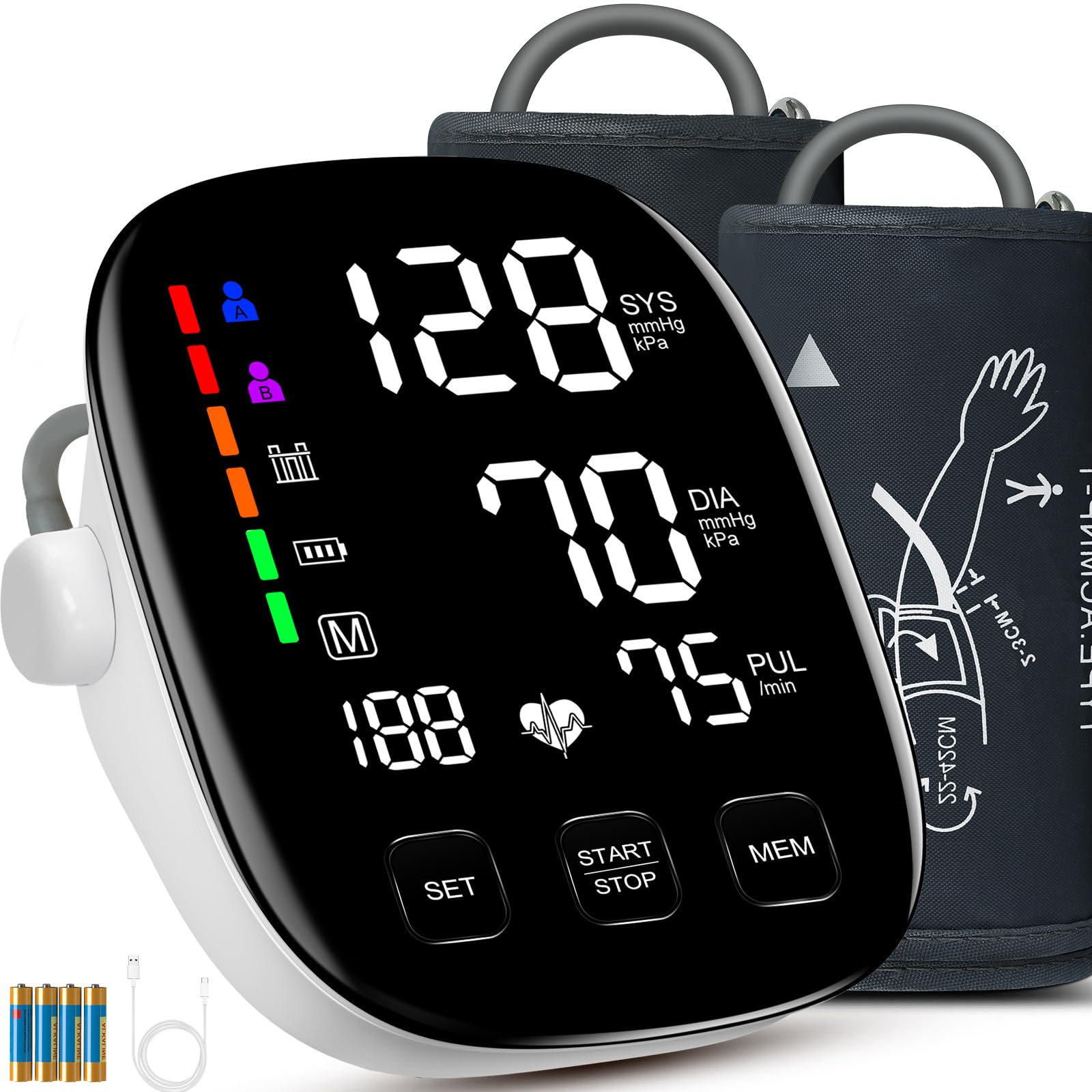
The COCACIS U80BH is the only monitor in this lineup that ships with two cuffs: a medium-large option for 9 to 17 inches and an extra-large option for 13 to 21 inches. This dual-cuff approach solves the single biggest source of inaccurate home readings — an improperly sized cuff — without requiring a separate purchase. The 6-inch backlit color screen displays large fonts and a three-color WHO indicator for quick interpretation.
It stores 199 readings per user for two separate users, which is competitive even at higher price points. The dual power model works with the included AAA batteries or a Type-C cable, giving flexibility for home or travel. The unit comes in a nylon carry bag, making it easy to pack.
A small number of users reported initial error codes that resolved after adjusting cuff placement, which is a common learning curve with upper-arm monitors. The build feels lightweight but functional, and some reviewers wished the screen brightness was adjustable.
Why it’s great
- Two cuff sizes included for wider arm range.
- Large 6-inch backlit color display.
- 199-reading memory per user, dual-user support.
Good to know
- No Bluetooth or app connectivity.
- Occasional error codes from improper cuff placement.
- Screen brightness is not adjustable.
7. Medline MDS4001 Automatic Digital Monitor

The Medline MDS4001 is a straightforward, no-appliance-required monitor from a brand that supplies clinical equipment to hospitals. The large digital LCD shows systolic, diastolic, and pulse readings alongside a colored reference scale. A single-button start initiates the inflation cycle, and the device automatically deflates after measurement. It stores up to 90 readings for each of two users, which is sufficient for weekly monitoring.
The adult cuff fits arms 8.6 to 11.8 inches, which is narrower than most competitors — users with larger arms will find it restrictive. Reviewers emphasize its consistency, with one noting that readings matched manual checks performed by a home health nurse. Battery life is excellent, and the four included AA batteries last many months with daily use.
The limited cuff range is the main drawback, effectively excluding users with arm circumferences above 12 inches. The display lacks a backlight and Bluetooth, so all tracking is manual. It is best suited for someone who wants a simple, trustworthy reading without any extras.
Why it’s great
- Medical-grade brand with reliable consistency.
- Easy one-button operation.
- Dual-user memory with 90 readings each.
Good to know
- Cuff only fits arms up to 11.8 inches.
- No backlight or Bluetooth connectivity.
- No rechargeable battery option.
FAQ
How do I know which cuff size I need for my arm?
Can I use an automated cuff if I have atrial fibrillation?
Why do my readings vary between consecutive measurements?
How many readings can typical home monitors store?
Is Bluetooth connectivity worth paying extra for?
Final Thoughts: The Verdict
For most users, the best automated blood pressure cuff winner is the URION FDA-Cleared Monitor because it pairs a massive, easy-to-read 4.5-inch backlit display with generous 199-reading dual-user memory at a reasonable price. If you need clinical-grade validation and AFib screening, grab the OMRON Gold BP5360. And for users with larger arms who need an extra-large cuff included out of the box, nothing beats the COCACIS U80BH dual-cuff kit.