
An automatic air vent solves one of the most persistent comfort problems in any home with forced-air HVAC: rooms that stubbornly run too hot or too cold because the ductwork delivers uneven airflow. These powered register boosters sense temperature changes and automatically kick their built-in fans into action, pulling more conditioned air through problem vents so the far bedroom or the sun-baked home office finally reaches the same temperature as the rest of the house.
I’m Min — the co-founder and writer behind Gadgets Feed. This guide comes from weeks of cross-referencing user experiences, airflow specifications, noise measurements, and control features across seven automatic vent models so you can pick the one that actually fixes your specific hot or cold spot.
Every product below was assessed on real-world performance data and verified user feedback to compile the definitive list of the best automatic air vent options that deliver measurable comfort improvements and long-term reliability.
How To Choose The Best Automatic Air Vent
Choosing the right automatic air vent starts with understanding your specific problem room and the physical constraints of your ductwork. These factors determine which size, control type, and airflow capacity you actually need.
Measure Your Duct Opening — Not the Vent Cover
The single most common buying mistake is measuring the visible floor or wall register instead of the actual duct opening underneath. Remove the existing cover and measure the length and width of the hole. A fan that fits a 4-inch by 10-inch duct opening will not work in a 6-inch by 12-inch opening, and vice versa. Most specification tables list the required duct opening size, so verify this measurement before you purchase.
Temperature Sensing vs. Airflow Sensing
Automatic air vents use one of two trigger methods. Duct temperature sensors detect when the HVAC system is actively blowing hot or cold air and activate the fan accordingly. Room temperature sensors measure ambient air and run the fan to reach a target temperature. The former is more energy-efficient because the fan runs only when needed, while the latter can provide more consistent room-level control. Decide which logic better matches your home’s duct layout.
Noise Level and Speed Control
All booster fans produce some noise, but the character of that noise varies. Models with PWM motors and broader blade designs often produce a smoother sound profile that blends into background white noise. Look for fans with at least 8 to 10 speed settings so you can dial in the minimum effective speed for your room. A fan running at speed 3 or 4 is often nearly silent while still providing meaningful airflow improvement.
Quick Comparison
On smaller screens, swipe sideways to see the full table.
| Model | Category | Best For | Key Spec | Amazon |
|---|---|---|---|---|
| AC Infinity AIRTAP T4 | Smart Booster | Bluetooth control & data logging | 130 CFM / 17 dBA | Amazon |
| VELLEE 6″x12″ Quiet Booster | Performance | High CFM & low noise balance | 200 CFM / 18 dBA | Amazon |
| SANYCASA Manhattan Smart | App Control | Smartphone management & style | 140 CFM / 18 dBA | Amazon |
| Suncourt Equalizer EZ8 | Reliable Auto | Simple plug-and-play auto operation | 200 CFM / 8 speeds | Amazon |
| MATULSA 4″x10″ Booster | Value | Budget-friendly remote control | 10 speeds / Thermostat | Amazon |
| Honeywell Home X2S | Central Control | Whole-home smart thermostat | WiFi / Matter / App | Amazon |
| Quietcool AFG SMT PRO-3.0 | Attic Venting | Whole-attic temperature reduction | 2940 CFM / Two-speed | Amazon |
In‑Depth Reviews
1. AC Infinity AIRTAP T4 White

The AC Infinity AIRTAP T4 combines an anodized aluminum frame with CNC-machined detailing for a flush installation that looks built-in rather than added on. It fits standard 4-inch by 10-inch duct openings and delivers 130 CFM of boosted airflow through dual 92mm fans that operate as quietly as 17 dBA at lower speeds. The Bluetooth app unlocks alarm notifications, climate data history, and advanced programming cycles that go beyond what the included remote offers.
Users report that the AIRTAP T4 effectively solves temperature differentials of 8 to 10 degrees Fahrenheit between the thermostat location and distant rooms. The app allows easy adjustments without walking to the vent, and the memory function retains settings after power loss. The aluminum construction resists bending and rusting better than all-plastic competitors, though the faceplate is slightly larger than a standard vent cover and may overhang certain openings.
The ten-level speed control lets you find the quietest effective setting for your room, and the heating and cooling trigger modes ensure the fan only runs when the HVAC is active. This model is ideal for homeowners who want granular control and data tracking without sacrificing build quality or noise performance.
Why it’s great
- Premium aluminum frame with CNC detailing looks refined and resists wear
- Bluetooth app provides climate data logging and advanced scheduling
- Dual 92mm fans operate as low as 17 dBA for whisper-quiet performance
Good to know
- Fits only 4-inch by 10-inch duct openings, limiting compatibility
- Faceplate overhang may not sit flush on all floor registers
2. VELLEE Quiet Register Booster Fan 6″x12″

VELLEE’s Quiet Register Booster Fan targets the 6-inch by 12-inch duct opening market with a high-static-pressure PWM motor that pushes up to 200 CFM while maintaining noise levels as low as 18 dBA. The 22-year engineering experience behind the design shows in the refined installation steps and the minimalist remote that avoids the confusing button layouts common in cheaper models. The 12-foot power cord gives flexibility in outlet placement.
Users consistently report a 3 to 5 degree Fahrenheit improvement in problem rooms, with several reviewers noting that running the fan continuously on speed 1 or 2 keeps the distant bedroom within 1 degree of the thermostat setting. The temperature sensor reads duct air temperature rather than room ambient temperature, which means the fan activates only when the HVAC is actively heating or cooling — a more efficient approach that reduces unnecessary runtime.
The matte white finish and painted construction blend with most decor, and the included installation kit makes mounting straightforward if you follow the measurement instructions carefully. Some users find the settings logic initially confusing because setting the target to the desired room temperature causes the fan to shut off prematurely when it reads cooler duct air, but this behavior is consistent with duct-temperature sensing once understood.
Why it’s great
- 200 CFM airflow from a high-static-pressure PWM motor delivers strong boost
- As low as 18 dBA for truly quiet operation in bedrooms
- 12-foot cord and refined setup instructions simplify installation
Good to know
- Duct-temperature sensing logic can confuse users expecting room-temperature control
- Higher speeds produce noticeable fan noise, though not disruptive
3. SANYCASA Manhattan Smart Register Vent
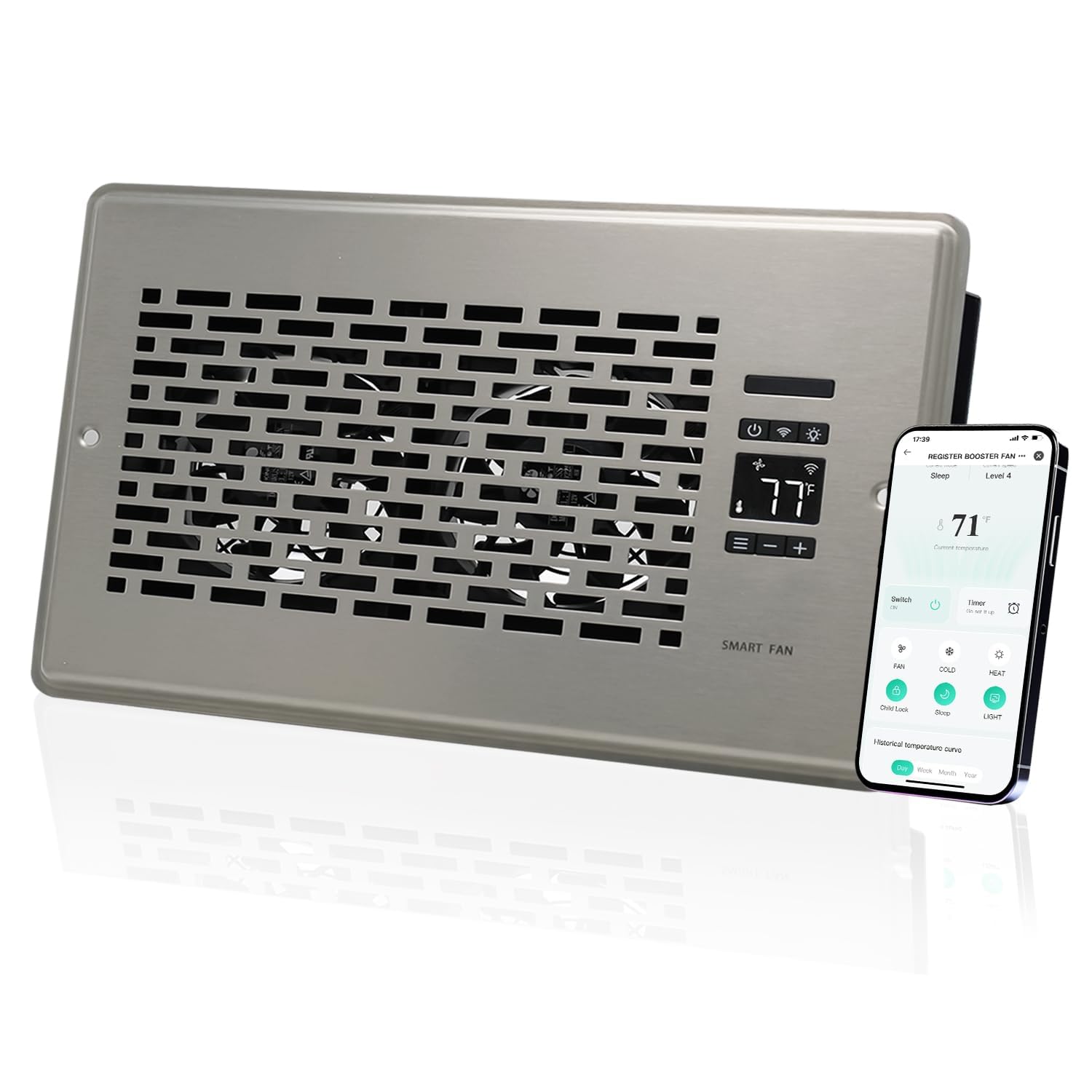
The SANYCASA Manhattan Smart Register Vent brings app-based control to the automatic air vent category with the ability to manage multiple units simultaneously from your phone. Its metal panel and satin nickel finish are inspired by modern Manhattan design, making it one of the more visually distinctive options available. The fan delivers 140 CFM of airflow with hydro-mechanical blades that keep noise under 18 dBA at lower speeds.
Buyers report effective cooling improvements of 7 to 10 degrees Fahrenheit in top-floor bedrooms, with particular praise for customer service responsiveness when issues arise. The app allows remote speed and scheduling adjustments, though some users note that the fan operates more like a thermostat-controlled step-speed system rather than a gradual ramp, and settings are lost during power outages. The fan needs line of sight for the remote and does not pair via Bluetooth for reliable through-wall operation.
Installation is straightforward for floor or wall mounting, and the included USB power cord with cable clips helps maintain a clean look. The Manhattan Smart Vent works best in small to medium rooms where 140 CFM is sufficient, as users with large master bedrooms report minimal temperature impact compared to higher-CFM competitors.
Why it’s great
- Satin nickel metal panel looks more premium than standard plastic vents
- App allows remote control and scheduling of multiple units
- Ultra-quiet hydro-mechanical blade design at low speeds
Good to know
- Settings reset on power loss, requiring reconfiguration
- Remote requires direct line of sight, limiting placement flexibility
4. Suncourt Equalizer EZ8 Floor Register Booster Fan
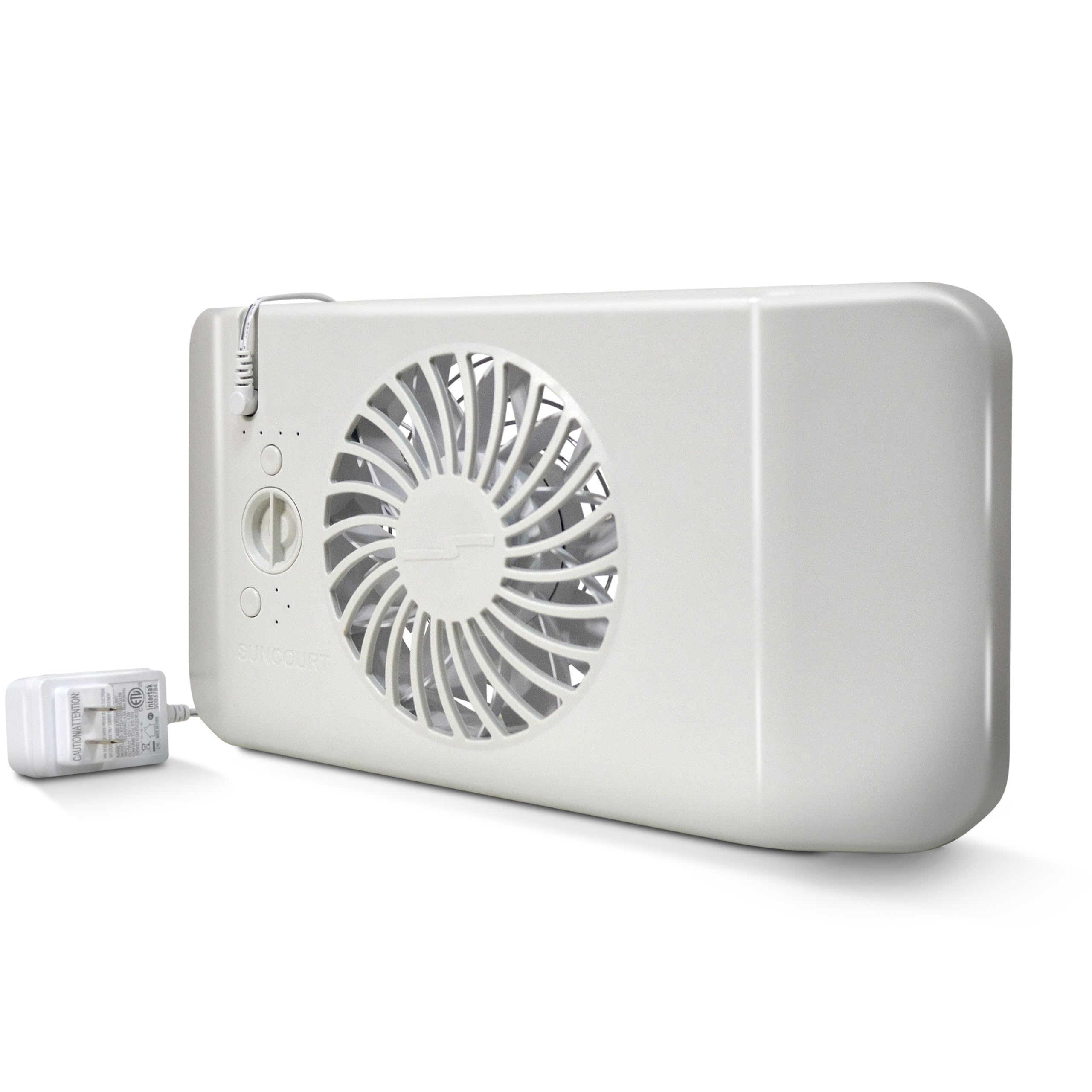
Suncourt Equalizer EZ8 is an automatic air vent that emphasizes pure simplicity and reliability. Made in the USA and backed by a three-year warranty, this model uses patented smart technology to detect HVAC airflow and automatically turn the fan on and off without any manual seasonal adjustments. It fits any floor register 6 inches by 12 inches or smaller and boosts airflow by up to 300 percent with its 200 CFM rating.
The auto mode senses airflow within 15 to 25 seconds of the HVAC turning on and runs the fan for several minutes after the system shuts off to capture lingering conditioned air. The eight-speed control lets you balance noise and performance, with most users finding speed 4 to be the sweet spot for noticeable improvement without intrusive sound.
The flame-retardant, thermally protected materials add a safety layer that matters when installed in floor vents. Some users note that the bright blue LED is annoying in bedrooms and that the auto mode resets on power loss, requiring manual re-selection. Overall, the EZ8 is a dependable workhorse for anyone who wants set-it-and-forget-it operation without an app or complex programming.
Why it’s great
- Patented auto-sensing technology turns on/off with HVAC without manual settings
- Up to 200 CFM boosts airflow by 300 percent for problem rooms
- Three-year warranty and flame-retardant materials for long-term reliability
Good to know
- Auto mode resets on power loss, requiring manual re-selection
- Bright blue LED can be distracting in dark bedrooms
5. MATULSA Register Booster Fan 4″x10″

The MATULSA Register Booster Fan offers ten adjustable speeds and dual control via built-in button and included remote, all at a price that undercuts most competitors. It fits standard 4-inch by 10-inch vent openings with a plug-and-play power cord that requires no tools or wiring. The triangular hollowed-out surface design prioritizes finger safety while maintaining good ventilation flow for small homes or individual room fixes.
Users report measurable cooling improvements of around 5 degrees Fahrenheit in sun-exposed rooms and west-facing spaces. The smart temperature detection feature works in both heating and cooling modes, adjusting airflow based on the registered vent temperature. The ten-speed range allows fine-tuning, with most users finding speeds 6 through 8 provide the best balance of noticeable boost and tolerable noise for daytime use.
Some buyers experienced unit failure after several months, suggesting variable long-term reliability. The corded design eliminates battery concerns but means you need a nearby outlet, which can look cluttered. For the price, the MATULSA delivers functional automatic boosting with the most important features — remote control, thermostat logic, and multiple speeds — making it a solid entry point for testing whether a booster fan solves your comfort issue before investing in higher-tier models.
Why it’s great
- Ten speed settings and remote control provide flexibility at a budget-friendly price
- Smart temperature detection works for both heating and cooling modes
- Triangular finger-safe grille design adds safety for households with children
Good to know
- Some units have reported failure after several months of use
- Corded design requires a nearby outlet, which can look messy
6. Honeywell Home Smart Thermostat X2S
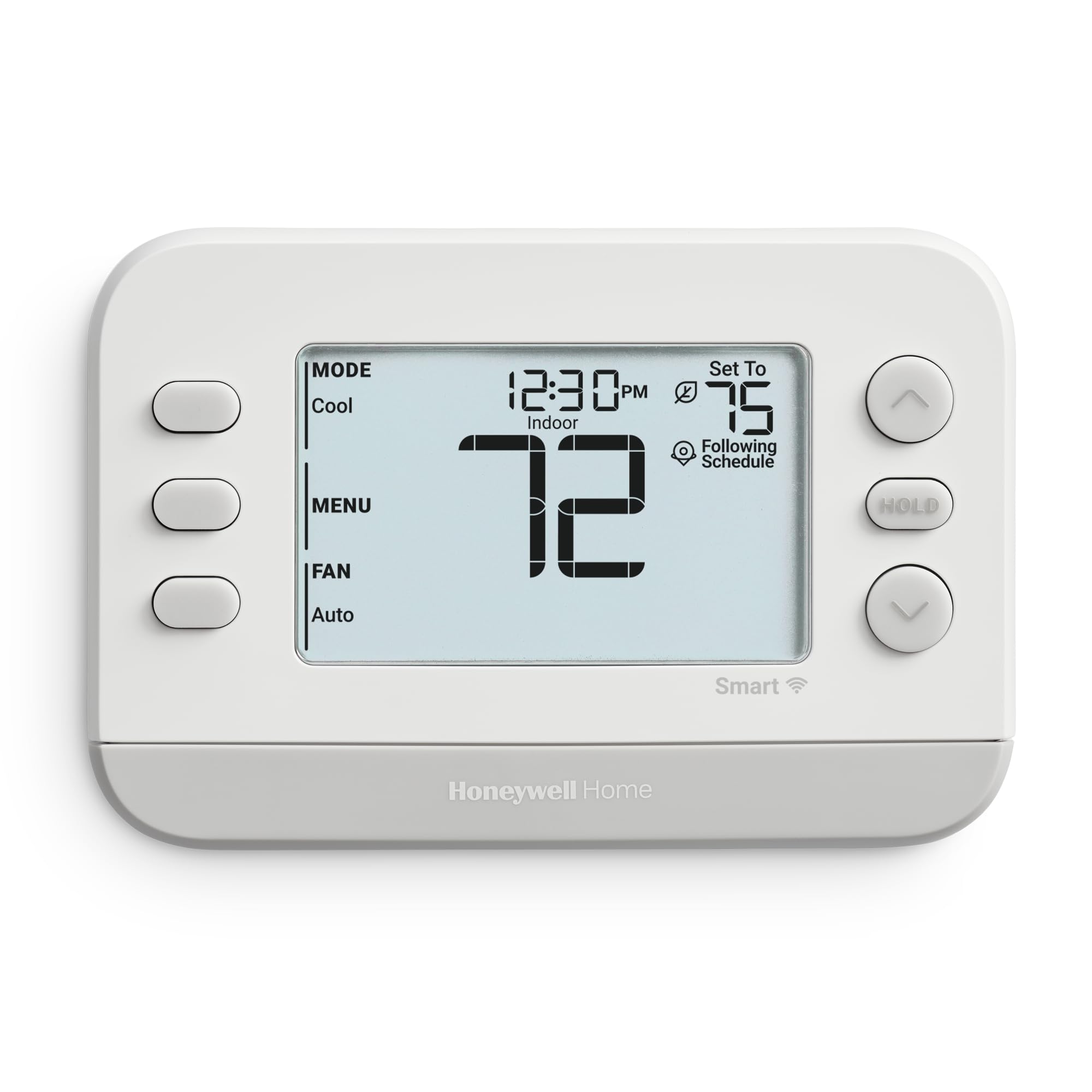
The Honeywell Home Smart Thermostat X2S is not a register booster fan but rather the central control system that can coordinate with automatic air vents to achieve whole-home temperature balancing. Matter certified and compatible with Amazon Alexa, Google Assistant, and Apple HomeKit, this WiFi thermostat allows remote temperature adjustments, scheduling, and energy monitoring through the First Alert app. It supports conventional systems up to 2 heat/2 cool and heat pumps up to 2 heat/1 cool.
Users find the X2S easy to set up via Bluetooth without needing to reduce 5G to 2.4GHz networks, which simplifies the initial configuration. The Energy Star certification and auto-away technology help reduce energy consumption, and the change filter reminder and humidity display are practical features. The five-button interface and LCD display are straightforward for users who find Nest-style learning thermostats overly complex.
The X2S requires a C-wire for proper operation, which may necessitate an adapter in older homes without a common wire. The clicking sound when the system switches on or off is more audible than premium options, and the lack of remote sensors means it only measures temperature at the thermostat location. For users combining a whole-home smart thermostat with targeted register boosters, the X2S provides reliable WiFi control at a practical price point.
Why it’s great
- Matter certified for seamless integration with major smart home platforms
- Bluetooth setup eliminates complicated WiFi configuration steps
- Energy Star certified with auto-away for energy savings
Good to know
- Requires a C-wire for operation, which may need an adapter in older homes
- No remote room sensors, so temperature reading is limited to thermostat location
7. Quietcool AFG SMT PRO-3.0 Smart Attic Fan

The Quietcool AFG SMT PRO-3.0 addresses a different scale of automatic air venting: the entire attic. Designed for gable vents, this two-speed fan moves up to 2940 CFM on high speed with a 264-watt permanent split capacitor motor. The smart app control lets you set temperature and humidity thresholds, schedule operation, and monitor attic conditions remotely, while the built-in fire safety shut-off provides critical protection in an emergency.
Users report dramatic attic temperature reductions of 30 to 40 degrees Fahrenheit, which directly reduces air conditioning runtime by pulling hot air out of the attic before it radiates into the living space below. The plug-and-play design with a 20-foot power cord eliminates the need for professional wiring, though the unit is heavy and requires two people for installation. The included vent covers prevent air from backdrafting into the attic when the fan is off.
High speed produces significant noise measured around 74 dB at three feet, comparable to a truck idling, which makes placement away from bedroom windows essential. Some users have addressed this by installing two slower PRO-2.0 units instead, which move more total CFM at lower noise. The Bluetooth smart hub requires pairing and re-pairing if the sensor is moved, and the app lacks peak temperature logging. For homeowners whose comfort problem stems from attic heat gain, the Quietcool PRO-3.0 addresses the root cause rather than treating individual vent symptoms.
Why it’s great
- 2940 CFM moves massive amounts of air, reducing attic temperature by 30-40 degrees
- Smart app control with thermostat and humidistat for automated operation
- Built-in fire safety shut-off adds critical protection
Good to know
- High speed is very loud (74 dB), unsuitable near bedrooms
- Heavy unit requires two people for installation
FAQ
Will an automatic air vent work with my existing HVAC system?
How do I measure my duct opening correctly?
Can I use a register booster fan with a room that already has good airflow?
Final Thoughts: The Verdict
For most users, the best automatic air vent winner is the AC Infinity AIRTAP T4 because its anodized aluminum build, Bluetooth app integration, and 17 dBA noise floor offer the best combination of durability, control, and quiet operation. If you want the highest raw airflow for a standard 6-by-12 duct opening, grab the VELLEE Quiet Booster Fan. And for the simplest plug-and-play solution that requires zero app setup or programming, nothing beats the Suncourt Equalizer EZ8.