
Our readers keep the lights on and my morning glass full of iced black tea. As an Amazon Associate, I earn from qualifying purchases.
Specs are compiled from manufacturer listings and verified buyer reviews and can change over time — please confirm the key details on the product page before buying.
You want a camera that nails focus, exposure, and settings on its own, so you just point and shoot. The real choice is how much control you keep, and if you need a pocket-sized travel buddy or a full-frame workhorse for serious shots. Here are the best automatic cameras across every price tier, from beginner point-and-shoots to professional mirrorless bodies, so you can match the camera to how you actually shoot.
I’m Min — the founder and writer behind Gadgets Feed. This guide is built by comparing the manufacturers’ published specifications and the patterns across verified customer reviews, so you get each pick’s real strengths and trade-offs instead of marketing spin.
This breakdown of the best automatic cameras cuts straight to the models that nail focus, capture clean video, and fit your lifestyle.
Our Picks at a Glance

How To Choose The Best Automatic Cameras
Automatic cameras range from tiny pocket models to professional full-frame bodies, so the first step is deciding where you’ll use it. A compact model with a flip screen suits vlogging and travel, while a mirrorless or DSLR body gives you room to grow with interchangeable lenses. Think about what you shoot most—selfies, family moments, wildlife, or video—and let that guide your choice.
Autofocus: the heart of an automatic camera
An automatic camera’s defining feature is its autofocus, and not all systems are equal. More autofocus points generally mean the camera can track subjects across more of the frame, which helps with moving subjects like kids or pets. Phase-detection autofocus is the faster, more reliable type for action, while contrast detection can struggle in low light. For a truly hands-off experience, look for a camera with strong subject detection that can lock onto eyes or faces automatically.
Sensor size: the hidden spec that shapes every photo
The sensor is the light-gathering heart of the camera, and its physical size matters more than pixel count. A full-frame sensor is the largest common type, and it excels in dim conditions by capturing more light and producing cleaner images. Smaller APS-C and 1-inch sensors are more compact and affordable, but they’ll show more grain when the lights go down. If you shoot indoors often or want that creamy background blur, a larger sensor is worth the extra bulk and cost.
Video features for content creators
If you plan to vlog or create social media content, look for 4K video capture, a flip screen for framing yourself, and a microphone input for decent audio. Some cameras offer uncropped 4K, meaning the full sensor width is used, which gives a wider field of view. Battery life varies widely between models, and video recording drains batteries much faster than stills, so check whether the camera uses a common battery type you can stock up on.
Quick Comparison
| Model | Best For | Sensor Resolution | Autofocus Points | Video Specs | Amazon |
|---|---|---|---|---|---|
| Nikon Z 6II★ Best Overall | Versatile hybrid shooting | 24.5MP full-frame | 273 | 4K UHD 60p | Amazon |
| AUREAPIX 4K CameraBudget Champion | Beginner vlogging | 64MP | 19 | 4K Ultra HD | Amazon |
| Canon PowerShot ELPH 360 HSCompact Pick | Pocket travel zoom | 20.2MP CMOS | — | Hybrid Auto | Amazon |
| Nikon D7500 | Action and sports DSLR | 20.9MP APS-C | 51 | 4K UHD | Amazon |
| Canon EOS R8 | Lightweight full-frame entry | 24.2MP full-frame | 1,053 zones | 4K 60p | Amazon |
| Sony Alpha a7 III | Balanced full-frame all-rounder | 24.2MP full-frame | 693 | 4K HDR | Amazon |
| Nikon D850 | High-resolution studio work | 45.7MP full-frame | 153 | 4K UHD | Amazon |
| Sony Alpha 7 IV | Pro hybrid photo and video | 33MP full-frame | 759 | 4K 60p 10-bit | Amazon |
| Canon EOS R5 | 8K video and wildlife | 45MP full-frame | — | 8K RAW, 4K 120p | Amazon |
In‑Depth Reviews
1. Nikon Z 6II
Our pick — over 4.5★ from 400+ verified ratings; the strongest balance of quality and price.
The hybrid full-frame that makes fast action and low-light stills feel easy.
The Z 6II is the top pick because it balances professional-grade image quality with genuinely automatic operation. Its 24.5MP BSI sensor excels in dim conditions, and the 273-point phase-detection autofocus locks onto subjects with speed and precision — a big jump up from the original Z 6, with noticeably faster continuous shooting. Owners coming from older Nikon DSLRs describe it as “light years beyond,” and the consensus is that out-of-camera JPEGs look excellent.
This camera shoots 4K UHD 60p using full pixel readout, meaning the video is sharp and detailed straight out of the sensor. It also gives you dual card slots (CFexpress/XQD plus UHS-II SD), which is a lifesaver for weddings or events where you don’t want a single card failure to ruin the day. The USB-C port supports constant power and charging, so long livestreams and timelapses won’t die on you mid-shoot.
The versatility extends to lenses: it works with the growing line of NIKKOR Z lenses and roughly 360 F-mount lenses via the FTZ adapter (sold separately). The main trade-off is that the screen doesn’t flip forward for self-filming, so vloggers will need a workaround app. It’s a mid-range-plus investment, but buyers consistently call it worth the price for the performance jump.
What wins people over
- Outstanding image quality, especially in low light
- 273-point autofocus is fast and accurate
- Dual card slots for confidence
- Deeper buffer at 14 frames per second
The honest trade-offs
- Screen doesn’t flip forward for selfie framing
- Same 24.5MP sensor as the original Z 6
- Battery life draws mixed feedback from owners
Reach for it if: you want one camera that nails both stills and video, with autofocus you can trust for moving subjects.
Look elsewhere if: you’re a self-shooting vlogger who needs a forward-facing screen for framing.
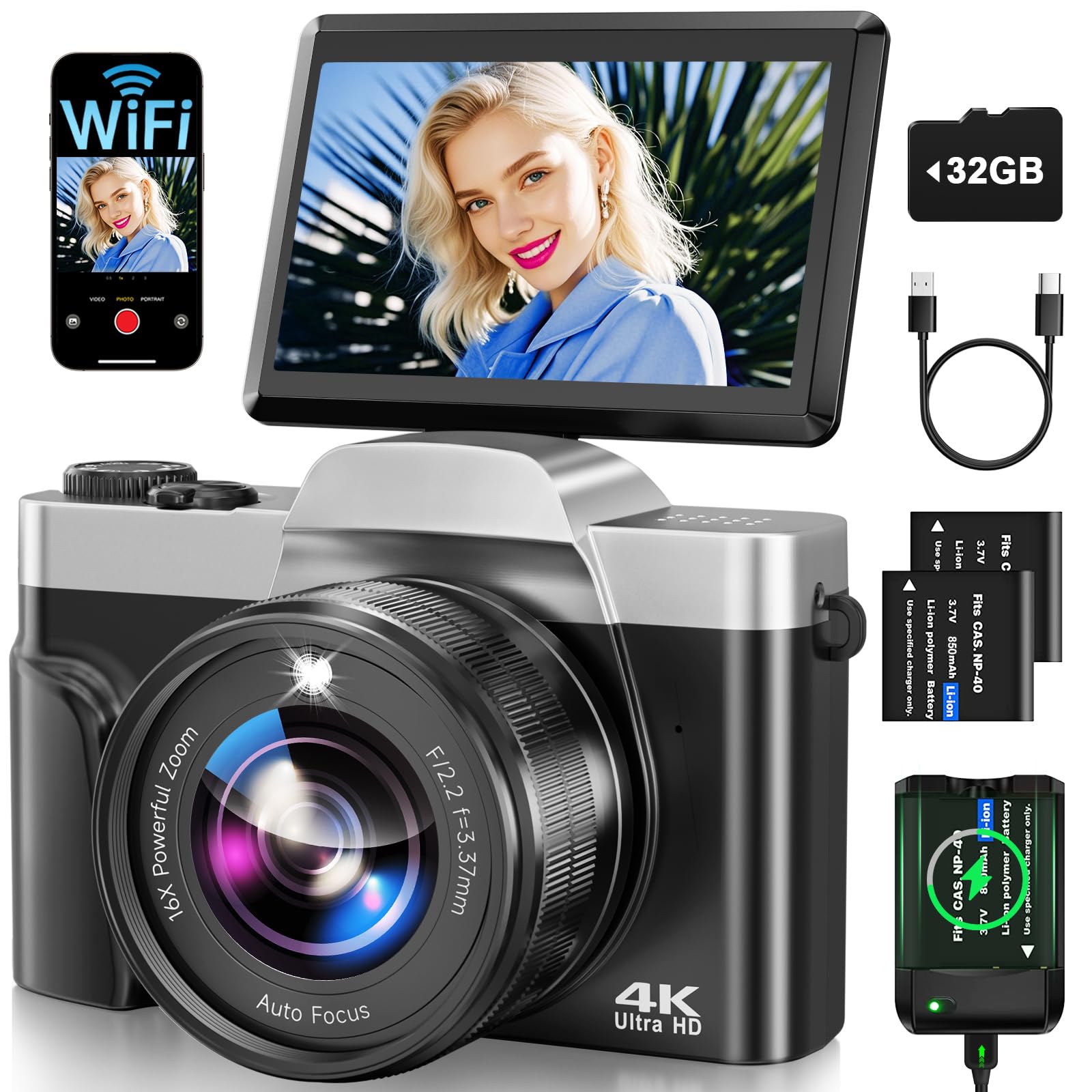
2. AUREAPIX 4K Digital Camera
The flip-screen vlogging starter kit that fits in a jacket pocket.
This AUREAPIX model is the entry-level pick that punches far above its budget tag, built specifically for beginners who want to jump straight into content creation. It captures 64MP images and 4K video, and its 3-inch 180° flip screen makes selfie framing and vlogging genuinely easy — the thing buyers rave about most. The camera includes a 19-point hybrid autofocus system, which is plenty for novice shooters capturing everyday memories.
Wi-Fi transfer is a standout here: download the “Viipulse” app and you can push photos and videos to your smartphone in seconds for sharing on YouTube, Instagram, or TikTok. It also works as a webcam for livestreaming, and its 16X digital zoom lets you get closer to a subject, though digital zoom does reduce image quality as you push in. Two batteries come in the box, plus a charging stand and USB charging, so extended shooting sessions won’t leave you stranded.
The 16-bit depth here is richer than many budget models, and buyers consistently praise the crisp, vibrant colors for the price. The honest catch is the included SD card — one owner reported it “fills in 3 min at 4K,” so you’ll want a larger card. Some also found the video format needs converting for Windows editing. For the money, it’s a complete, lightweight kit that gets you creating immediately.
What owners love: The 64MP photos come out “crisp and vibrant,” and the Wi-Fi transfer is nearly instant — a real workflow win for social media creators.
The practical catch: The bundled SD card is too small for 4K recording, so budget for a bigger card right away.
Grab it for: a first camera for vlogging, travel, or kids’ content, where easy controls and a flip screen matter more than raw specs.
Think twice if: you need long-form 4K recording sessions without buying extra storage.
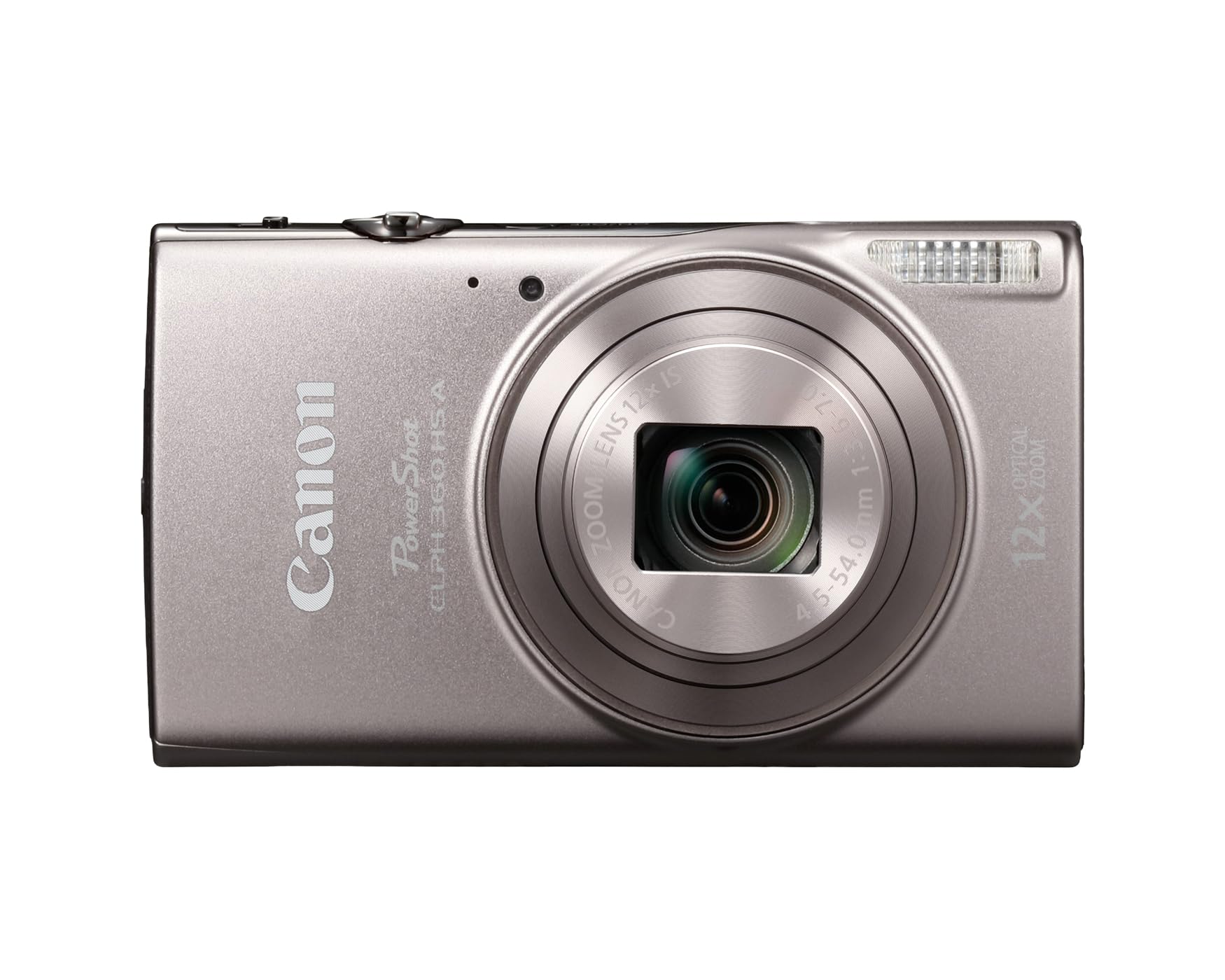
3. Canon PowerShot ELPH 360 HS
The pocket Canon whose 12x zoom reaches across a concert hall.
If you want a camera that slips into a small bag but still reaches far, the ELPH 360 HS gives you a 12x optical zoom with image stabilization (a lens that magnifies 12 times and reduces shake)so you can capture stage shots from deep in a crowd without blur. Its 20.2MP CMOS sensor (a 20.2-megapixel image chip) and DIGIC 4+ processor (Canon’s image engine) work together to keep photos clean in dim light, and buyers specifically praise its performance in bright sunlight.
Built-in Wi-Fi and NFC (near-field communication, a tap-to-connect wireless standard) let you send images to your phone without cables, and the 3.0-inch LCD (liquid crystal display) stays viewable from wide angles. The fun standout is Hybrid Auto mode, which records up to four seconds of video before each still and then stitches the day’s clips into a quick recap reel — a neat automatic feature for capturing the vibe of a day without editing. Owners describe it as “the perfect affordable camera” with cute, user-friendly results.
The catch is that this model includes no memory card, and it uses a microSD format that isn’t compatible with older ELPH cards. Battery life draws mixed feedback, with some reporting it drains quickly, and it charges the battery in about 15-20 minutes. It’s a mid-range compact that’s best for someone who wants Canon quality in a truly portable body.
Why it stands out: The 12x zoom with stabilization is a rare reach for a body this small, making it the go-to for concerts and travel.
Know before you buy: No memory card is included, and you’ll need a microSD card plus patience with the battery’s quick drain.
Best suited to: travelers and casual shooters who want a true zoom in a pocketable body without learning manual controls.
Not ideal for: long video sessions or anyone who expects a card in the box.
4. Nikon D7500 DSLR

The action-ready DSLR that pairs a legendary kit lens with a 51-point focus grid.
For shooters who want to capture fast-moving kids, sports, or wildlife, the D7500 brings class-leading image processing and metering equivalent to Nikon’s award-winning D500. Its 51-point autofocus system includes 15 cross-type sensors and group-area AF, paired with up to 8 frames per second continuous shooting — a combination that keeps moving subjects sharp. The bundled 18-140mm f/3.5-5.6G ED VR lens is widely praised as outstanding, offering a versatile range for everything from wide landscapes to tighter portraits.
The camera’s 20.9MP APS-C sensor delivers sharp, low-noise images even in challenging light, and the large 3.2-inch tilting touchscreen LCD makes composition easy from odd angles. It records 4K Ultra HD video with stereo sound and offers extras like power aperture control and 4K UHD time-lapse. Buyers upgrading from older Nikons call it a big leap, with one noting it performs well specifically for indoor photography where light is scarce.
The D7500 is a physically larger body than compacts, and it’s heavier, so it’s not a pocket camera — it’s a purpose-built tool. The design is from 2017, so the tech is dated by modern standards, but owners consistently call it a great value, especially bought at a discount. It’s a mid-range DSLR that rewards a bit of learning with exceptional capability.
The standout strength: The 18-140mm kit lens is genuinely excellent, and the fast autofocus makes it a joy for action shots.
A fair warning: It’s bulkier and heavier than mirrorless rivals, and beginners will face a learning curve in the menu system.
Choose it for: indoor sports and family action, where the fast AF and 8 fps burst earn their keep.
Pass if: you want a lightweight travel camera — this one demands a proper bag and strap.
5. Canon EOS R8

Canon’s lightest full-frame RF body, packing R6 II internals at a friendlier price.
The EOS R8 is the smart path into full-frame photography, sharing its sensor, autofocus, and video capabilities with the pricier R6 II. It shoots uncropped 4K video at up to 60 fps, oversampled from 6K for extra sharpness, and can capture slow-motion Full HD at up to 180 fps. The 24.2MP full-frame CMOS sensor and DIGIC X processor deliver excellent low-light performance, which buyers describe as “magic in your hands” when shooting dim scenes.
Its Dual Pixel CMOS AF II system is the real star, covering up to 100% x 100% of the frame with 1,053 AF zones. It automatically detects people, animals, and vehicles using deep learning, and it now recognizes aircraft, trains, and horses — so it tracks a moving subject and keeps it sharp without you touching a dial. The built-in 0.39-inch OLED viewfinder offers up to 120 fps refresh, and the 3.0-inch vari-angle touchscreen is handy for video and vlogging.
The trade-offs are real: there’s a single SD card slot (not dual), a smaller battery than the R6 II, and no in-body image stabilization. Owners accept these because the camera is so lightweight and affordable for a full-frame, calling it a bargain and “R6 Mark II without the price.” It’s a premium-tier pick that lands above the mid-range crowd for good reason.
The full-frame wins
- 1,053-zone autofocus with deep-learning subject tracking
- Uncropped 4K 60p oversampled from 6K
- Very lightweight for a full-frame body
- Excellent high-ISO, low-light image quality
Where it cuts corners
- Single SD card slot only
- Smaller battery than the R6 II
- No in-body stabilization for stills
Best for: content creators and photographers stepping up from crop-sensor cameras who want full-frame quality without the bulk.
Keep in mind: the small battery and single card slot are the trade-offs for the featherweight body.
6. Sony Alpha a7 III

The full-frame benchmark that set the standard for hybrid cameras.
The a7 III is a legendary pick because it made full-frame quality accessible, pairing a 24.2MP back-illuminated sensor with a 693-point phase-detection autofocus system covering 93% of the image area. It shoots up to 10 fps with either silent or mechanical shutter while tracking focus and exposure, so it handles action smoothly and quietly. Its 15-stop dynamic range and ISO range from 50 to 204,800 mean it’s a low-light powerhouse that keeps detail in shadows and highlights.
This camera comes complete with a 28-70mm lens kit, which owners find sharp and capable for everyday and portrait shooting. The autofocus is fast, the touch controls are responsive, and the battery life is a standout — buyers switching from other mirrorless systems are consistently impressed by how long a single charge lasts. It delivers 14-bit uncompressed RAW for maximum editing flexibility, and its 4K video is stunning when paired with a fast UHS-II memory card.
The menus are famously complex, though customizable, and the camera lacks 10-bit video that newer models offer. The kit lens is solid but you’ll eventually want a wider-aperture lens for low-light work. Buyers call it “pro level at an accessible price,” and it remains a top recommendation for anyone wanting serious full-frame capability with strong automatic features.
The core appeal: A 693-point AF array and 10 fps burst make this an exceptional all-rounder for both stills and video.
The fine print: The menu system is deep and complex, and the kit lens benefits from an upgrade for demanding low-light shots.
Ideal for: photographers who want a do-everything full-frame body with fantastic battery life and proven reliability.
skip it if: you need 10-bit color depth for professional video grading.
7. Nikon D850
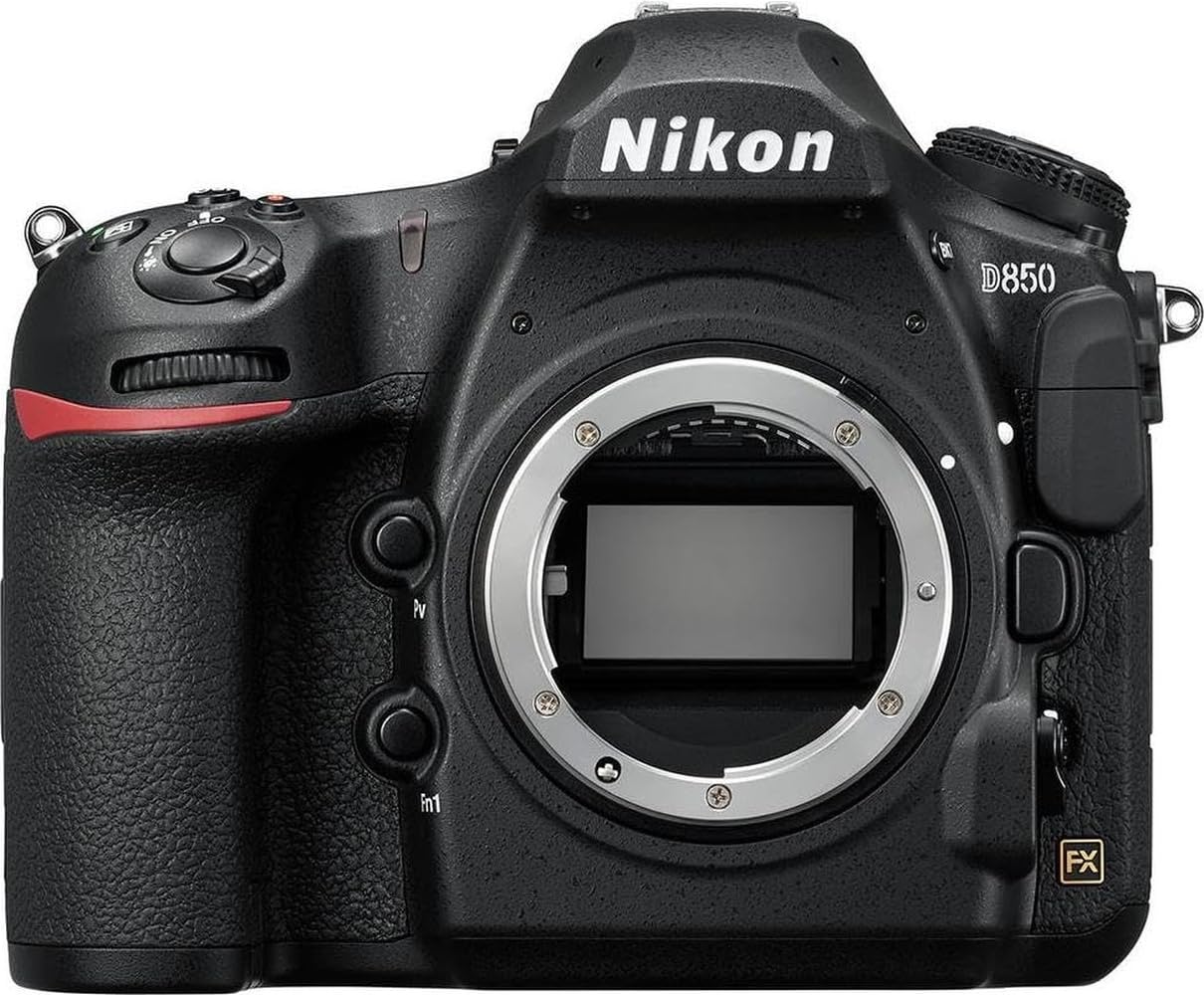
The 45.7-megapixel DSLR that pairs studio-grade resolution with outstanding dynamic range.
For stills photographers who demand maximum detail, the D850 is the reference point. Its back-side-illuminated full-frame sensor (a light-capturing chip that’s the same size as 35mm film) has no optical low-pass filter (a blurring layer that reduces fine detail), so it captures extraordinary resolution with virtually no moiré patterning (a wavy color artifact) — the thing owners praise most, with many calling its results “shockingly good.” It shoots up to 9 fps (frames per second) at full resolution with full autofocus, so you’re not sacrificing speed for those 45.7 megapixels.
The D850 is a hybrid workhorse too, recording 4K Ultra HD video and 8K and 4K time-lapse with impressive sharpness. Its 153-point autofocus system is industry-leading for a DSLR, and the tilting touchscreen makes focus-point selection intuitive. Features like focus shift shooting and a built-in intervalometer make it a favorite among studio and landscape photographers who want precise control.
The trade-off is that this is a premium, pro-level investment that’s heavier than expected and produces large RAW files that demand serious storage. Video autofocus is weaker than mirrorless rivals, and battery life drains faster with live view. It’s also not a beginner’s camera — the menu is deep and it will expose any weak lens in your bag. Owners call it “best of the DSLR” for those who commit to it.
The case for it: The 45.7MP resolution and dynamic range rival medium-format quality, making it a studio and landscape staple.
The honest ask: Large files, a heavy body, and a steep learning curve mean this is for committed photographers.
Pick it for: studio work, landscapes, and any shoot where maximum resolution and dynamic range are non-negotiable.
Look past it if: you want a lightweight camera or you’re just starting out — this rewards experience.
8. Sony Alpha 7 IV

The 33-megapixel hybrid that switches easily between photo and video modes.
The a7 IV is the pick for creators who split their time between stills and video, thanks to its 33MP full-frame sensor and powerful BIONZ XR image processor. It shoots 4K 60p in 10-bit 4:2:2 with full pixel readout, and its 7K oversampling for 4K 30p delivers stunning detail with no pixel binning. The S-Cinetone color profile makes beautiful color expression simple — a feature that owners love for video work.
Autofocus here is exceptional, with 759 phase-detection points and fast, accurate face and eye tracking that performs even in tricky light. The in-body image stabilization is effective for handheld shooting, and the camera is praised for its amazing amount of customization. Buyers report it’s “very intuitive to use” and delivers immaculate out-of-box images, making it approachable even while offering pro-level depth.
The dual card slots accept CFexpress Type A and SD cards, giving flexible storage options for long shoots, and owners mention over 2,000 shots per battery charge. The main compromises are a 60-120p crop in high-frame-rate modes and a learning curve from the sheer number of settings. It’s a premium-tier body that buyers consistently describe as delivering pro-level performance.
The hybrid edge
- 33MP resolution with stunning detail and dynamic range
- 4K 60p 10-bit 4:2:2 with full pixel readout
- Fast, accurate eye AF for people and animals
- Excellent battery life at 2,000+ shots
What to weigh
- High-frame-rate video modes have a crop
- Massive menu system takes time to master
- Battery and performance draw mixed feedback from some owners
Reach for it if: you’re a hybrid creator who wants one body that excels at both photography and videography.
Hold off if: you want a simple point-and-shoot experience — this camera invites you to dig into its settings.
9. Canon EOS R5

The full-frame flagship that shoots 8K RAW and tracks wildlife eyes with eerie precision.
The EOS R5 is the pinnacle pick for those who want the absolute best, combining a 45MP full-frame sensor with the DIGIC X processor and an ISO range of 100-51200, expandable to 102400. It’s a true hybrid that records 8K RAW internally and 4K up to 120fps, making it a stellar video camera for those who need resolution headroom for cropping or cinematic delivery. Owners describe it as “a true beast” and note the image quality is “really great shots” at a 5% keeper rate.
Autofocus is this camera’s a neat extra: fast, accurate eye and face detection with high-speed performance, and it’s remarkably good for wildlife, tracking bird eyes with minimal misses. The in-body image stabilization lets owners shoot handheld at low ISOs that previously required ISO 6400 on older bodies. It shoots up to 12 fps with the mechanical shutter and up to 20 fps with the silent electronic shutter, so action is covered.
The R5 is a premium investment and buyers have mixed opinions on value, though most agree it’s worth it for pros. Large 8K files fill cards fast, the battery drains quicker than previous EOS models, and video overheating concerns are “overblown in real use” per owners, but it’s still a consideration for long clips. It’s the camera for photographers and videographers who want flagship capability in one body.
The headline spec: 8K RAW and 4K 120p internal recording, plus 45MP stills, make this the most versatile pro hybrid here.
The price of power: Expect high storage demands, heavier battery drain, and a serious budget outlay.
Get it for: professional wildlife, landscape, and video work where resolution and AF speed justify the premium.
pass on it if: your budget is tight or you only shoot casual stills — the simpler R8 covers that ground for far less.
Understanding the Specs
Autofocus points and subject tracking
The autofocus point count tells you how many areas of the frame the camera can use to lock focus. A higher number, like 693 points on the Sony a7 III, means better coverage across the whole scene, so a moving subject stays in focus even at the edge of the frame. Modern cameras also add subject detection that recognizes eyes, faces, or animals and tracks them automatically — this is what makes a camera feel truly automatic in real-world shooting.
Sensor size and megapixels
Sensor size is the single biggest factor in image quality, especially in low light. Full-frame sensors are the largest common format and gather the most light, producing cleaner images with less noise than smaller APS-C or 1-inch sensors. Megapixels determine how much detail you can crop into, but more pixels on a small sensor can mean more noise — so a 24.2MP full-frame sensor often beats a 64MP compact sensor in dim conditions.
FAQ
What’s the difference between optical zoom and digital zoom?
How many autofocus points do I really need?
Is a full-frame camera worth the extra cost?
Do cheaper 4K cameras still give good video quality?
What does 10-bit video mean and why does it matter?
Can I use my old lenses on a new mirrorless camera?
Is a DSLR better than a mirrorless camera for automatic shooting?
How long does battery last on these automatic cameras?
Final Thoughts: The Verdict
If you want one dependable pick, the automatic cameras winner is the Nikon Z 6II because it balances professional image quality, fast 273-point autofocus, and versatile 4K 60p video in a single durable body. If you want a lightweight way into full-frame shooting with deep-learning subject tracking, grab the Canon EOS R8. And for a budget-friendly start to vlogging and content creation, the AUREAPIX 4K Camera is the one to reach for.
How We Picked
We do not accept paid placement. Every pick is matched to a real buyer and a real use-case; we do not hands-on test units.
Sources & Methodology
Specifications: manufacturer listings and product documentation. Review insights: verified customer reviews, as of August 2026. Pricing: not shown on this page (it changes often); check the current price via the retailer link.
As an Amazon Associate, Gadgets Feed earns from qualifying purchases. This does not affect which products we feature.