
Your automatic transmission is a hydraulic computer of precisely machined valves, clutches, and planetary gearsets, and the only thing keeping those components from grinding themselves into scrap metal is about four to twelve quarts of specialized hydraulic fluid. Use the wrong viscosity or friction modifier, and you trade crisp engagement for shuddering shifts, slipping clutches, and premature pump wear that leads to a rebuild bill that exceeds the value of most used cars.
I’m Min — the co-founder and writer behind Gadgets Feed. I’ve spent hundreds of hours reverse-engineering OEM fluid specifications, cross-referencing viscosity charts, and analyzing field-test reports from DIYers and professional transmission shops to build this guide on the most critical consumable your drivetrain will ever consume.
Every modern automatic transmission requires a fluid engineered to its exact clutch material, hydraulic circuit design, and friction curve. The wrong quart can cost you thousands in repairs, which is why identifying the best automatic car transmission fluid for your specific vehicle is the single most important maintenance decision you will make for your gearbox.
How To Choose The Best Automatic Car Transmission Fluid
Selecting the wrong ATF is not like picking the wrong motor oil, where you have a few viscosity grades of wiggle room. Transmission fluids are engineered with specific static and dynamic friction coefficients that clutches rely on to engage at the exact millisecond the valve body commands. Deviating from the OEM specification disrupts shift timing, induces shudder, and accelerates wear on friction plates and the torque converter clutch.
Match OEM Fluid Type Exactly
Every automatic transmission has a fluid type stamped on the dipstick or printed in the owner’s manual — DEXRON VI, MERCON V, ATF+4, Type T-IV, SP-IV, or CVT-specific fluid. These are not interchangeable. DEXRON VI is backward-compatible with DEXRON III in many GM units, but MERCON V and MERCON LV have different viscosity profiles and should never be swapped. Using ATF+4 in a transmission designed for DEXRON can cause clutch chattering and seal swelling.
Consider Synthetic vs. Conventional Base Stocks
Full-synthetic ATFs like Royal Purple Max ATF or Mobil 1 Synthetic ATF offer superior thermal stability, lower pour points for cold-weather startup, and extended drain intervals compared to conventional fluids. If you tow heavy loads, live in extreme climates, or plan to keep the vehicle past 150,000 miles, a synthetic formulation provides better shear stability and reduces the risk of varnish buildup on valve body passages.
Verify Friction Modifier Compatibility
Transmissions designed for older Type F fluid require a higher static friction coefficient than modern DEXRON or MERON formulations. Some late-model performance transmissions, especially in Ford and GM platforms, demand a specific friction modifier additive package for torque converter clutch lock-up. If your manufacturer specifies a friction modifier additive (like GM’s limited-slip additive or Ford’s XL-8), ensure your chosen ATF either contains it or is compatible with it.
Quick Comparison
On smaller screens, swipe sideways to see the full table.
| Model | Category | Best For | Key Spec | Amazon |
|---|---|---|---|---|
| Royal Purple 01320 Max ATF | Premium Synthetic | Restoring shift quality in high-mileage transmissions | Full synthetic base; high film strength for thermal reduction | Amazon |
| Mobil 55221 3309 ATF | Synthetic Blend | Volvo, Toyota, and Aisin-Warner transmissions | Meets JWS 3309 spec; controlled friction properties | Amazon |
| Motorcraft XT10QLVC MERCON LV | OEM Specification | Ford/Mercury/Lincoln six-speed transmissions | Low-viscosity formulation; dyed red for leak detection | Amazon |
| Valvoline MERCON V ATF | Conventional | Older Ford/Mazda and select GM applications | Anti-shudder protection; anti-wear technology | Amazon |
| Chrysler 68218057AC ATF+4 | OEM Genuine | Jeep, Dodge, Ram, Chrysler transmissions | Genuine Mopar factory fill; synthetic formulation | Amazon |
| Toyota 00279-000T4-0 ATF T-IV | OEM Genuine | Lexus and Toyota Type T-IV applications | Factory-specified for Aisin A transmission families | Amazon |
| ACDelco Gold 10-9240 Type III | OEM Alternative | GM trucks and SUVs with DEXRON III/MERCON requirements | DEXRON III(H) formulation; enhances cooling function | Amazon |
In‑Depth Reviews
1. Royal Purple 01320 Max ATF
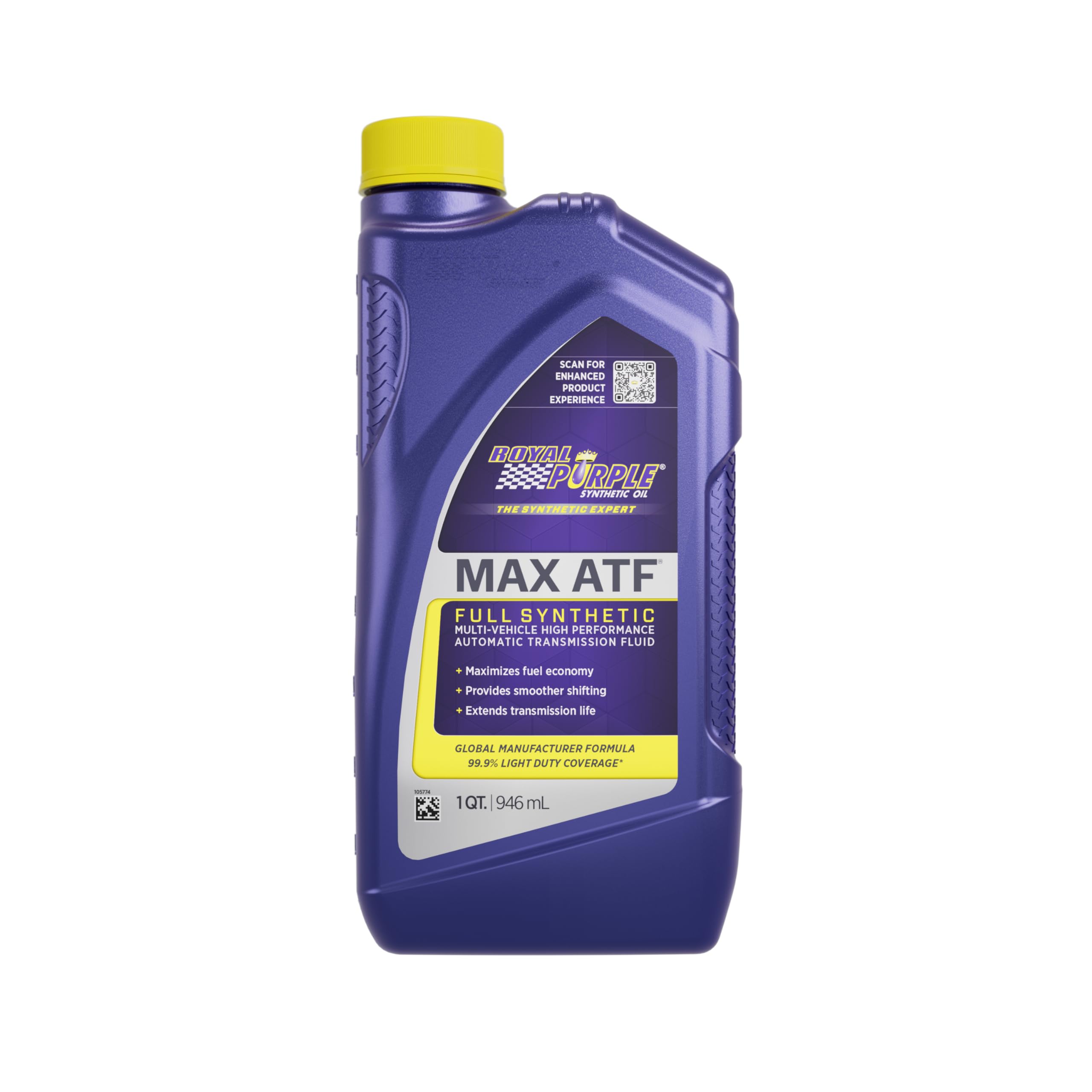
Royal Purple’s Max ATF uses a proprietary Synerlec additive technology that bonds to metal surfaces at a molecular level, dramatically reducing operating temperatures by as much as 30°F compared to conventional fluids. The 1.7-billion-dalton average molecular weight of its film-strength polymers provides a sacrificial layer that protects clutch plates and planetary gears even under high-torque loads from towing or stop-and-go traffic.
Real-world reports from owners of high-mileage vehicles — including a 2003 Mitsubishi Eclipse at 117,000 miles and a 2000 Jaguar Vanden Plas — consistently describe the same outcome: rough, delayed shifts smoothing out within 200 miles of a drain-and-fill. One user documented a 3-4 mpg fuel economy gain after a six-quart change, likely from reduced parasitic drag in the torque converter. The fluid’s cold-flow properties at -40°F allow immediate hydraulic pressure build-up on winter startups.
Royal Purple Max ATF is compatible with most DEXRON and MERCON applications, but users must verify it meets their specific OEM friction requirement — it is not recommended for CVT transmissions or Ford MERCON V-only units where MERCON LV is specified. The 1-quart bottle is sufficient for top-offs, while a full flush for most rear-wheel-drive trucks requires 12 to 16 quarts.
Why it’s great
- Synerlec additive reduces transmission operating heat by up to 30°F
- Restores crisp shift feel in high-mileage transmissions with clutch wear
- Excellent low-temperature fluidity down to -40°F for cold climate starts
Good to know
- Premium pricing per quart compared to conventional or semi-synthetic ATFs
- Not compatible with CVT, Ford Type F, or some specific MERCON LV applications without cross-reference
2. Mobil 55221 3309 ATF

Mobil 55221 is a synthetic-blend ATF built to the JWS 3309 specification, which makes it a direct equivalent to Toyota Type T-IV and the fluid required by Aisin-Warner transmissions used in Volvo, Toyota, and some Ford platforms. The controlled friction modifier package is calibrated to the exact static-to-dynamic friction ratio that these transmissions need for smooth torque converter lock-up without shudder on highway cruise.
Users with Volvo P2-platform cars (2004 V70R, 2007 XC90 V8) report that a full 12-quart flush using Mobil 3309 eliminated a third-to-fourth-gear shudder that MaxLife ATF had failed to fix. The fluid’s oxidation resistance is a key differentiator here — Aisin six-speed units run hot in towing applications, and Mobil’s additive package resists varnish formation on valve body spools up to 300°F. One user logged 138,000 miles on a single flush with no shift degradation.
The 1-quart bottle format is ideal for the multiple drain-and-fill cycles required to fully exchange fluid in a sealed transmission. Mobil 55221 is not recommended for DEXRON VI, MERCON V, or ATF+4 applications, as the friction curve is incompatible with those clutch materials. Check your owner’s manual for a JWS 3309 or T-IV specification before purchasing.
Why it’s great
- Direct JWS 3309/T-IV specification match for Volvo and Aisin transmissions
- Eliminates transmission shudder reported by users switching from generic ATFs
- Excellent thermal stability for towing and high-temperature operation
Good to know
- Not cross-compatible with DEXRON, MERCON, or ATF+4 transmissions
- Single-quart bottles require multiple purchases for a full flush on larger trucks
3. Motorcraft XT10QLVC MERCON LV
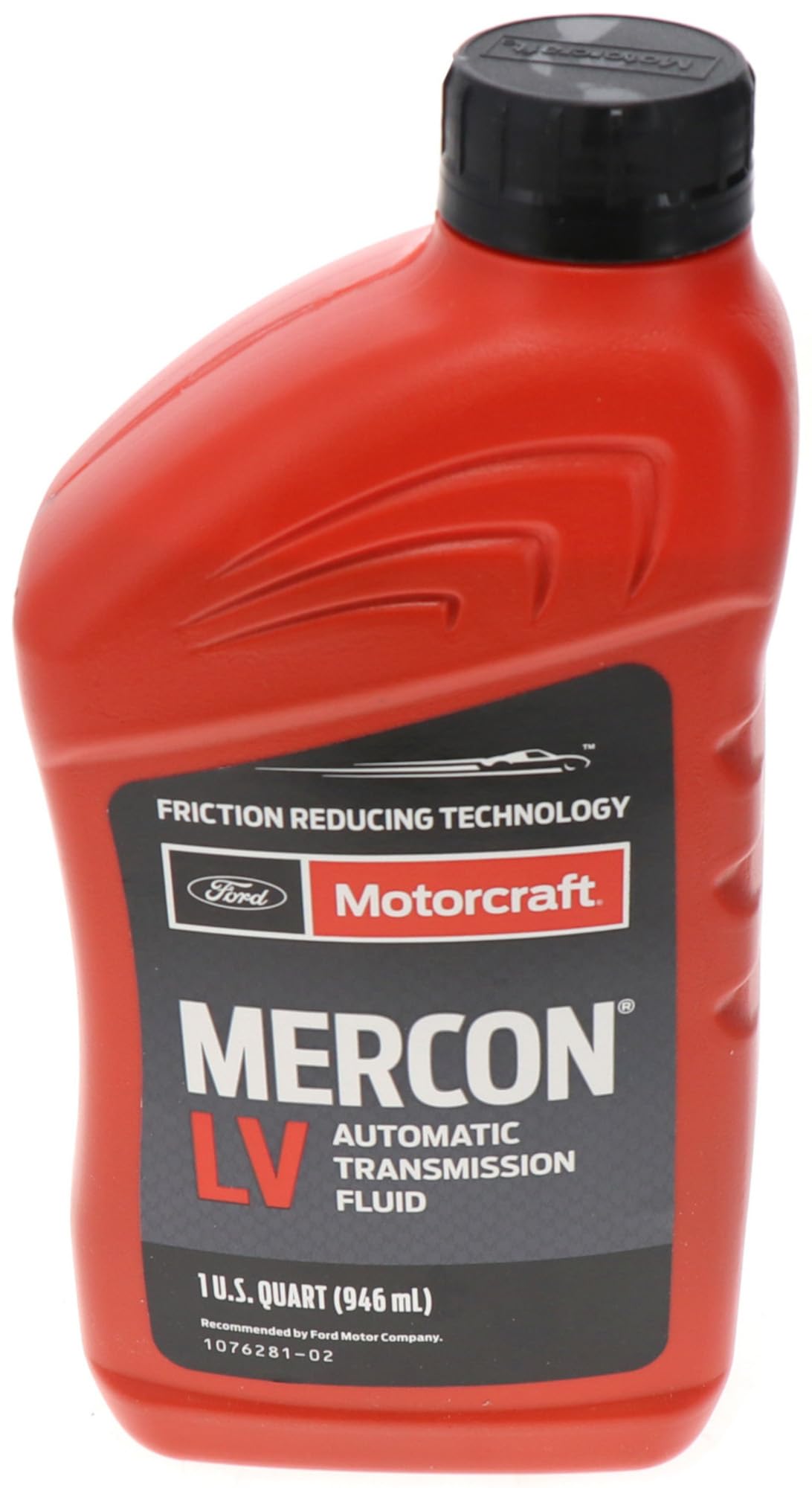
Motorcraft XT10QLVC is the factory fill for Ford’s 5R55, 6R60, 6R80, and 6F-series automatic transmissions, and its low-viscosity formulation — roughly equivalent to a 5W-30 hydraulic fluid — is essential for the tight hydraulic passages in modern Ford six-speed units. The fluid is dyed red to make leak detection straightforward, and its high-viscosity-index base stocks maintain consistent thickness across a temperature range of -40°F to 300°F.
Ford/Mercury/Lincoln owners consistently report that using anything other than MERCON LV in electronically controlled six-speed transmissions leads to delayed engagement and harsh downshifts. One 2016 Ford Explorer Limited owner running XT10QLVC noted no shift degradation after 50,000 miles, while a user replacing it for transfer-case duty in a 2000 F-150 confirmed the fluid’s compatibility with Ford’s XL-12 specification for that application.
Do not use MERCON LV in applications requiring MERCON V, MERCON SP, or Type F — the low viscosity lacks the film strength for those clutch packs and can cause rapid slippage. Each 1-quart bottle is individually sealed, and a full transmission flush for a Ford F-150 typically requires 12 to 15 quarts, so buy the six-pack or 12-pack for cost efficiency on a full service.
Why it’s great
- OEM factory-fill specification for Ford six-speed automatic transmissions
- Low-viscosity formulation ensures rapid hydraulic circuit pressurization at cold startup
- Red dye simplifies leak detection compared to amber or brown competitor fluids
Good to know
- Explicitly incompatible with MERCON V, MERCON SP, and Type F applications
- Only cost-effective when purchased in a multi-pack for full transmission flushes
4. Valvoline MERCON V ATF

Valvoline’s MERCON V ATF is a conventional-base formulation that meets Ford MERCON V specification for older transmissions, including the 4R70W, 4R75W, and 5R55S units found in mid-2000s Ford, Lincoln, and Mercury vehicles as well as some Mazda applications. The fluid uses a proprietary anti-shudder additive package that keeps the torque converter clutch from cycling on and off during steady-state cruise, which is the primary cause of the “torque converter shudder” complaint common to that era.
Users running this fluid in high-mileage Ford Ranger pickup trucks with the 5R55E transmission report smoother gear changes after a full drain-and-fill, with one owner noting that a vibration at 55 mph disappeared entirely after switching from a generic ATF to Valvoline MERCON V. The fluid’s flash point of 190 degrees Celsius indicates robust thermal stability for its conventional base stock, though it still falls short of full-synthetic fluids in extreme-cold pour-point performance.
Valvoline MERCON V is not backward-compatible with MERCON or MERCON SP, and it is not suitable for low-viscosity MERCON LV applications. The 6-quart case is the practical choice for a full service — a typical Ford sedan needs 8 to 10 quarts for a complete exchange, while a 4R70W transmission in a full-size truck requires about 14 quarts. Do not use this in CVT or DEXRON-only transmissions.
Why it’s great
- Anti-shudder additive package eliminates torque converter clutch cycling vibration
- Proven track record in Ford 4R70W, 5R55, and Mazda transmissions
- 6-quart case offers significant per-quart savings over individual bottles
Good to know
- Conventional base stock has lower thermal and shear stability than full synthetics
- Not compatible with MERCON LV, MERCON SP, DEXRON, or CVT applications
5. Chrysler 68218057AC Mopar ATF+4
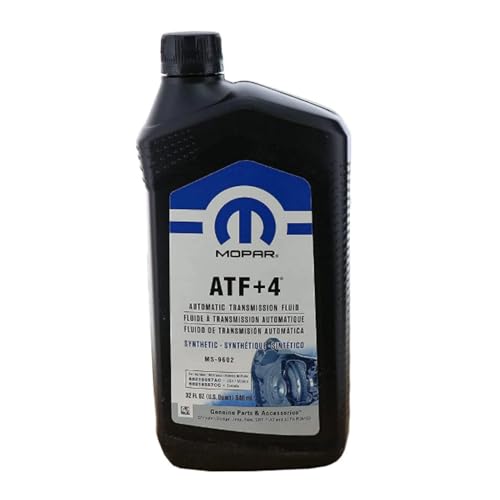
Chrysler 68218057AC is the genuine Mopar factory-fill ATF+4 synthetic fluid required by all Jeep, Dodge, Ram, and Chrysler transmissions after 2003 — including the 42RLE, 45RFE, 545RFE, 62TE, and 68RFE units. ATF+4 is a unique specification with a higher static coefficient of friction than DEXRON or MERCON, calibrated for the lock-up clutch strategy in Chrysler’s torque converters. Using a non-ATF+4 fluid will cause the transmission control module to detect slip and illuminate the check engine light.
Owners of Ram 2500 trucks with the 68RFE transmission report that only Mopar-labeled ATF+4 provides consistent lock-up without shudder when towing near the GCWR. The fluid is factory-sealed and branded with the OEM Mopar label, eliminating any concern about counterfeit aftermarket bottles. Users consistently note that the peace of mind of an OEM fill is worth the premium over generic “ATF+4 compatible” fluids, especially for transmissions with over 150,000 miles.
ATF+4 is not interchangeable with DEXRON, MERCON, or any earlier Chrysler ATF+3 specification, as the additive package changed significantly between the two. The 1-quart bottle is adequate for top-offs, but a full flush on a Ram 3500 with the 68RFE requires approximately 20 quarts. Always verify that your transmission calls for ATF+4 before purchasing — some pre-2003 Chrysler units still use ATF+3.
Why it’s great
- Genuine Mopar factory-fill for all Chrysler/Dodge/Jeep/Ram ATF+4 transmissions
- Prevents check-engine-light diagnostic trouble codes from incorrect fluid chemistry
- Factory-sealed bottles ensure product integrity and eliminate counterfeit risk
Good to know
- Higher per-quart cost than generic ATF+4-compatible alternatives
- Not compatible with DEXRON, MERCON, or pre-2003 ATF+3 applications
6. Toyota 00279-000T4-0 ATF T-IV

Toyota 00279-000T4-0 is the official OEM ATF for Toyota and Lexus vehicles requiring Type T-IV fluid, covering the Aisin A140E, A245E, A541E, and A750F families of transmissions found in Corolla, Camry, Avalon, Tundra, and Lexus ES/GS models from the late 1990s through the 2010s. The fluid is formulated with polytetrafluoroethylene (PTFE) friction modifiers that provide a specific static-to-dynamic friction curve unique to Toyota’s lock-up clutch calibration.
Users servicing 2006 Corollas and 2000 Avalons with deferred maintenance — fluid turned dark black from oxidation — report that four sequential drain-and-fill cycles with genuine Toyota T-IV restored full shift quality without the hesitation or flaring that aftermarket fluids caused. The fluid is also compatible with many Aisin transmissions used outside Toyota, including some Volvo and early Ford models, though the Mobil 55221 is a more cost-effective alternative for non-Toyota applications.
Type T-IV is not the same as WS (World Standard) fluid used in later Toyota transmissions beginning around 2012. Using T-IV in a WS-equipped transmission can cause harsh engagement and eventual transmission failure due to incompatible friction coefficients. Each 1-quart bottle is Toyota-bagged and gasket-sealed to prevent moisture absorption during storage.
Why it’s great
- Genuine Toyota-specified Type T-IV fluid for Aisin transmissions in Lexus/Toyota vehicles
- PTFE friction modifiers restore shift quality in high-mileage transmissions with dark fluid
- Factory-sealed bottles ensure correct chemistry vs. counterfeit aftermarket ATFs
Good to know
- Not compatible with Toyota WS (World Standard) fluid for 2012+ transmissions
- Price per quart is typically higher than comparable JWS 3309 aftermarket fluids like Mobil
7. ACDelco Gold 10-9240 Type III (H) ATF
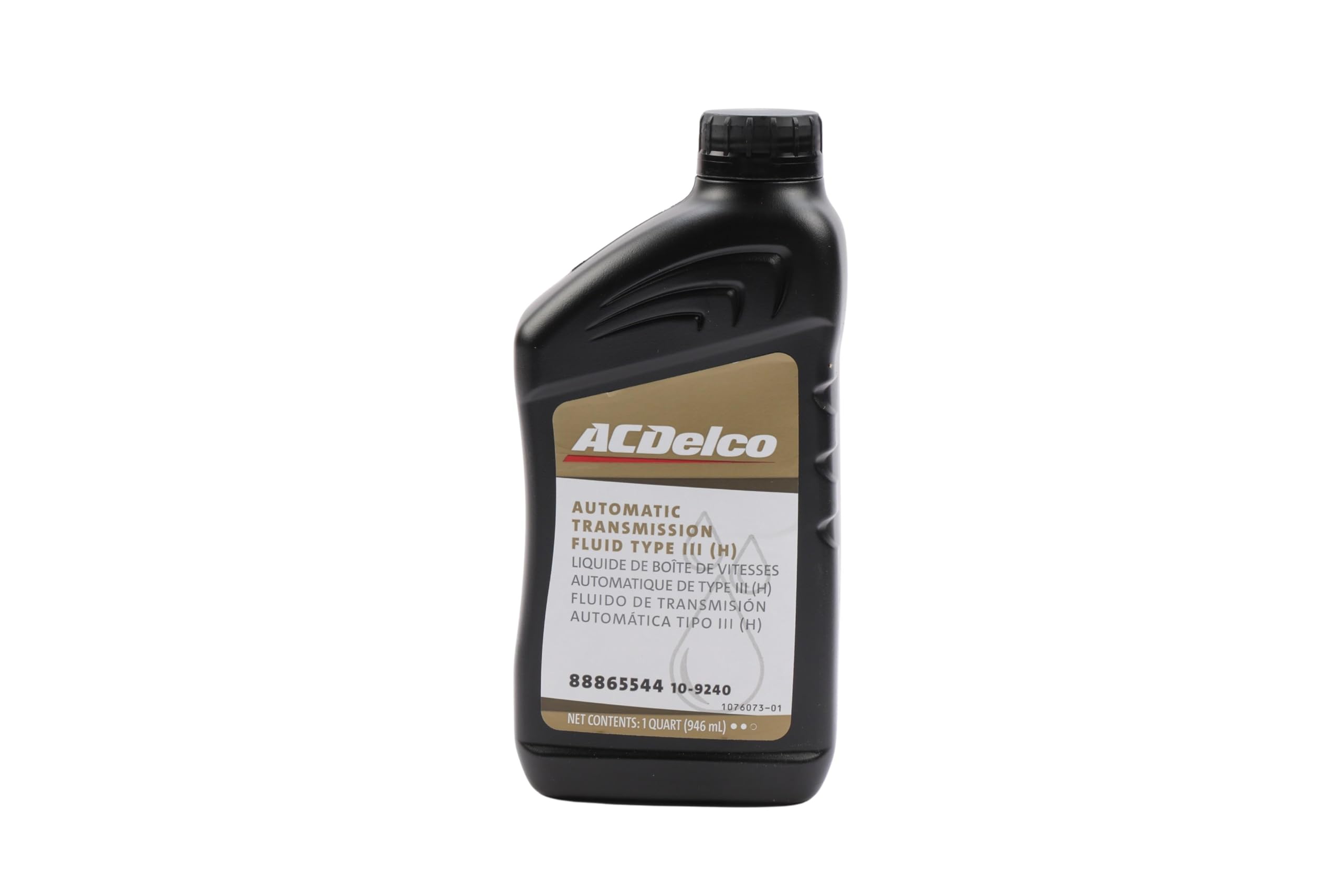
ACDelco Gold 10-9240 is a DEXRON III (H) fluid designed for General Motors vehicles from the 1990s through the mid-2000s, including the 4L60E, 4L80E, 4T65E, and 6T40 families of transmissions. The “H” suffix indicates a revised friction modifier package that improves torque converter clutch engagement smoothness compared to earlier DEXRON III formulations, making it a legitimate OEM-grade replacement for applications that do not require DEXRON VI.
Users have successfully used this fluid in applications beyond GM transmissions — one 2004 Lexus ES330 owner confirmed it is the OEM power steering fluid for that model, while a 2004 Toyota Corolla owner used it for power steering system flushing. The fluid’s foam material specification in the parts listing is likely a data entry error, as the actual product is a liquid with the same viscosity and thermal properties as factory-fill DEXRON III.
ACDelco Gold 10-9240 is not approved for DEXRON VI applications, as DEXRON VI has a lower viscosity and different friction modifiers for newer 6L45/6L80 and 8L90 transmissions. Each bottle is 0.95 quarts, so plan for slight underfill — purchase 2-3 additional bottles for a standard 12-quart flush. The price per quart makes it an attractive option for older GM trucks and SUVs where premium synthetic ATF provides no measurable benefit.
Why it’s great
- OEM-grade DEXRON III(H) fluid for GM 4L60E/4L80E and similar transmissions
- Compatible with multiple non-transmission applications including power steering systems
- Cost-effective option for older GM trucks without DEXRON VI requirements
Good to know
- Not compatible with DEXRON VI or late-model GM transmissions requiring low-viscosity fluid
- 0.95-quart bottle size means slightly less fluid than listed — plan for multiple bottles
FAQ
What is the difference between DEXRON III, DEXRON VI, and MERCON V?
Can I mix synthetic ATF with conventional ATF in my transmission?
When should I use a power flush machine vs. a drain-and-fill?
Final Thoughts: The Verdict
For most users, the best automatic car transmission fluid winner is the Royal Purple 01320 Max ATF because its full synthetic base and Synerlec additive technology deliver measurable temperature reduction and shift restoration across a wide range of transmissions without sacrificing cold-weather performance. If you want an exact OEM match for a Volvo or Aisin Toyota application, grab the Mobil 55221 3309 ATF — it is chemically identical to the factory fill at a fraction of the dealer price. And for a Ford six-speed transmission that demands MERCON LV, nothing beats the Motorcraft XT10QLVC as the certified low-viscosity fluid that keeps hydraulic circuits flowing and torque converters locking smoothly.