
Our readers keep the lights on and my morning glass full of iced black tea. As an Amazon Associate, I earn from qualifying purchases.
Specs are compiled from manufacturer listings and verified buyer reviews and can change over time — please confirm the key details on the product page before buying.
You bought a mini fridge for convenience, not for a chore. But if you have ever chipped a crust of ice off the back wall or spent Sunday morning defrosting a freezer compartment, you know the one feature that saves you: automatic defrost (a system that melts frost on its own). An automatic defrost compact refrigerator does that job for you, so you never have to unload everything or scrape a frozen wall again. The challenge is finding a model that balances quiet operation, consistent cooling, the right size, and low energy use.
I’m Min — the founder and writer behind Gadgets Feed. This guide is built by comparing the manufacturers’ published specifications and the patterns across verified customer reviews, so you get each pick’s real strengths and trade-offs instead of marketing spin.
If your space is tight but you still want frost-free convenience, the right automatic defrost compact refrigerator balances size, noise, and efficiency without emptying your wallet.
Our Picks at a Glance
How To Choose The Best Automatic Defrost Compact Refrigerator
The ice-free convenience depends on noise, energy consumption, and storage layout. Here is what to look for when narrowing down your options.
Noise: The Office and Bedroom Decider
Not all compact refrigerators hum at the same level. Some run at a whisper (about 36 decibels/dB, roughly a quiet library), while others produce a constant gurgle that can drive you crazy in a small room. If the fridge is going under your desk or next to your bed, check buyer feedback about noise carefully. A low decibel rating in the specs is a solid starting point, but real-world experience matters more here.
Energy Use: The Hidden Yearly Cost
Annual energy consumption is measured in kilowatt-hours per year (kWh/year – the amount of electricity a 1,000-watt device uses in one hour). A model that uses 180 kWh eats far less electricity than one burning 320 kWh — a difference that adds up over a year of running 24/7. Look for Energy Star certification (a government-backed label for efficiency) and compare that kWh number to keep your monthly bills low.
Storage and Door Swing
Decide if you need a freezer compartment (which cuts into the fresh-food space) or want all room for drinks and snacks. Check the number of adjustable glass shelves, door bins for 2-liter bottles, and whether the door hinges are reversible — that last one lets you flip the opening direction so the fridge fits your exact layout.
Quick Comparison
| Model | Best For | Capacity | Annual Energy | Noise Level (dB) | Amazon |
|---|---|---|---|---|---|
| Antarctic Star 130 Can★ Best Overall | Beverage lovers, home bars | 3.2 cu. ft. | 180 kWh/year | 36 dB | Amazon |
| Danby DAR033A6BDBTop Performer | Offices, general purpose | 3.3 cu. ft. | 259 kWh/year | — | Amazon |
| Avanti 3.1 cu. ft. | Budget backup, small dorms | 3.1 cu. ft. | 320 kWh/year | — | Amazon |
| roomwell E-Star 3.3 Cu Ft | Quiet reliability, dorms | 3.3 cu. ft. | 259 kWh/year | — | Amazon |
| Smeg FAB5 | Style statement, small spaces | 1.2 cu. ft. | 210 kWh/year | — | Amazon |
In‑Depth Reviews
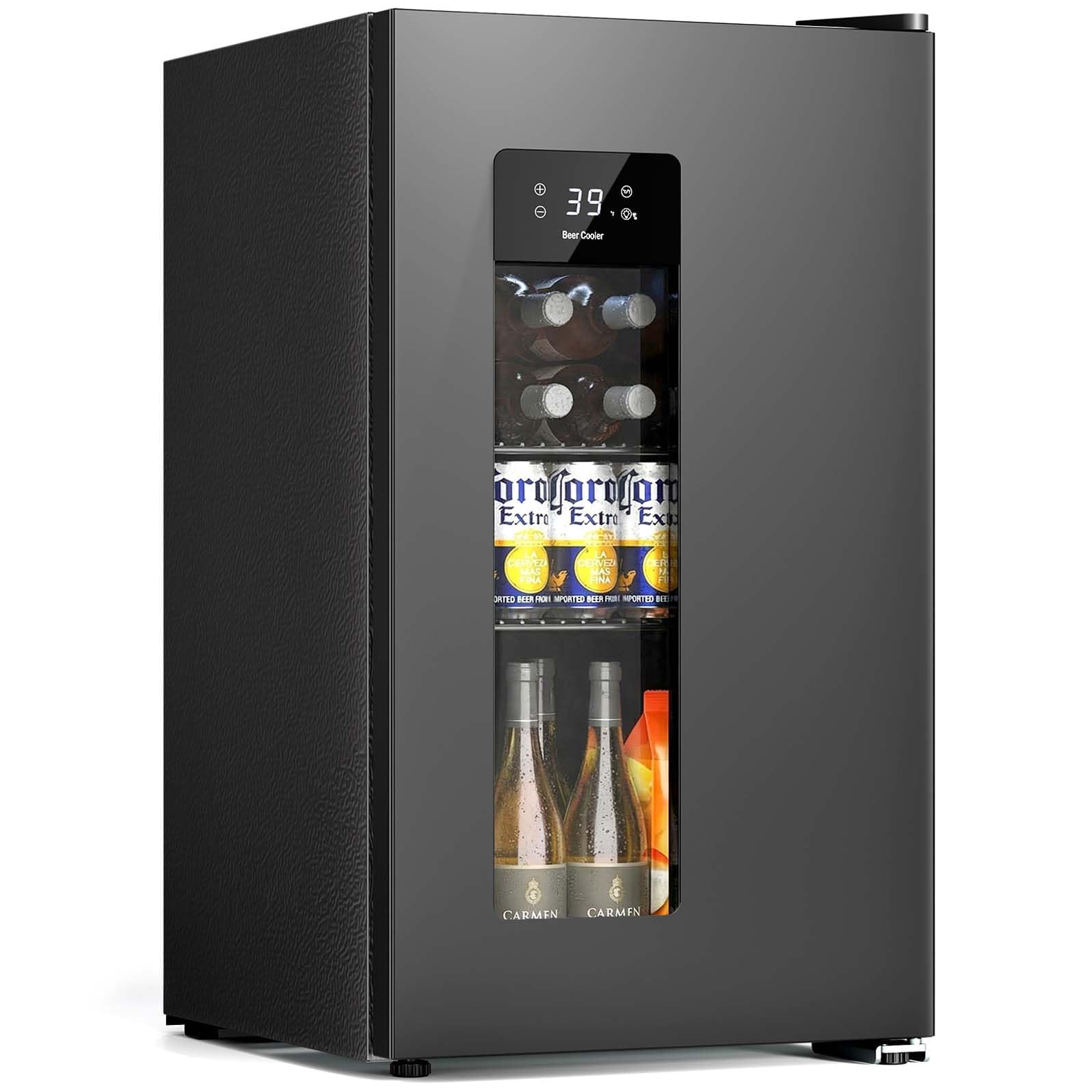
1. Antarctic Star Auto Defrost Beverage Refrigerator, 130 Can
Our pick — over 4★ from 650+ verified ratings; the strongest balance of quality and price.
This fridge saves you from scraping ice and uses the least electricity of any pick here — just 180 kWh per year.
You press and hold a button for six seconds, and the Antarctic Star completes its automatic defrost cycle in 90 minutes. The water evaporates on its own — no draining, no chipping. At 3.2 cubic feet (cu. ft.), it holds up to 130 cans of soda or beer, and adjustable shelves let you swap between cans and wine bottles. It runs at 36 dB (decibels — as quiet as a library), so it fits under a desk or on a nightstand without being the annoying hum in the room. The annual energy consumption is just 180 kilowatt-hours per year (kWh/year), which is the lowest in this lineup — noticeably better than the Danby and roomwell at 259 kWh/year, and far below the Avanti at 320 kWh/year. Reviewers confirm the temperature holds steady across multiple thermometers, though a few note a “tiny bit noisy” character, so it is not dead silent for everyone.
The trade-off is that this is a beverage-only fridge — there is no freezer compartment. If you need to store ice cream or frozen meals, look at the Avanti instead. Owners also mention an occasional ice buildup inside, but the auto-defrost handles the bigger frost issues. For a dedicated drink fridge that sips power and keeps the ice-pick in the drawer, this is the one.
What Wins People Over
- One-touch auto defrost in 90 minutes with self-evaporating water — set and forget.
- Only 180 kWh per year, making it the most energy-sipping fridge here.
- Quiet library-level operation at 36 dB.
The Only Downsides
- No freezer compartment — drinks and snacks only.
- A handful of buyers report minor ice buildup despite the auto-defrost.
- Not dead silent for everyone; some hear a slight compressor noise.
Reach for this if: you want the best balance of capacity, energy savings, and true frost-free operation for a dedicated beverage cooler in a home bar, office, or game room.
Skip it for: anything that needs freezer space or if absolute silence is your non-negotiable.
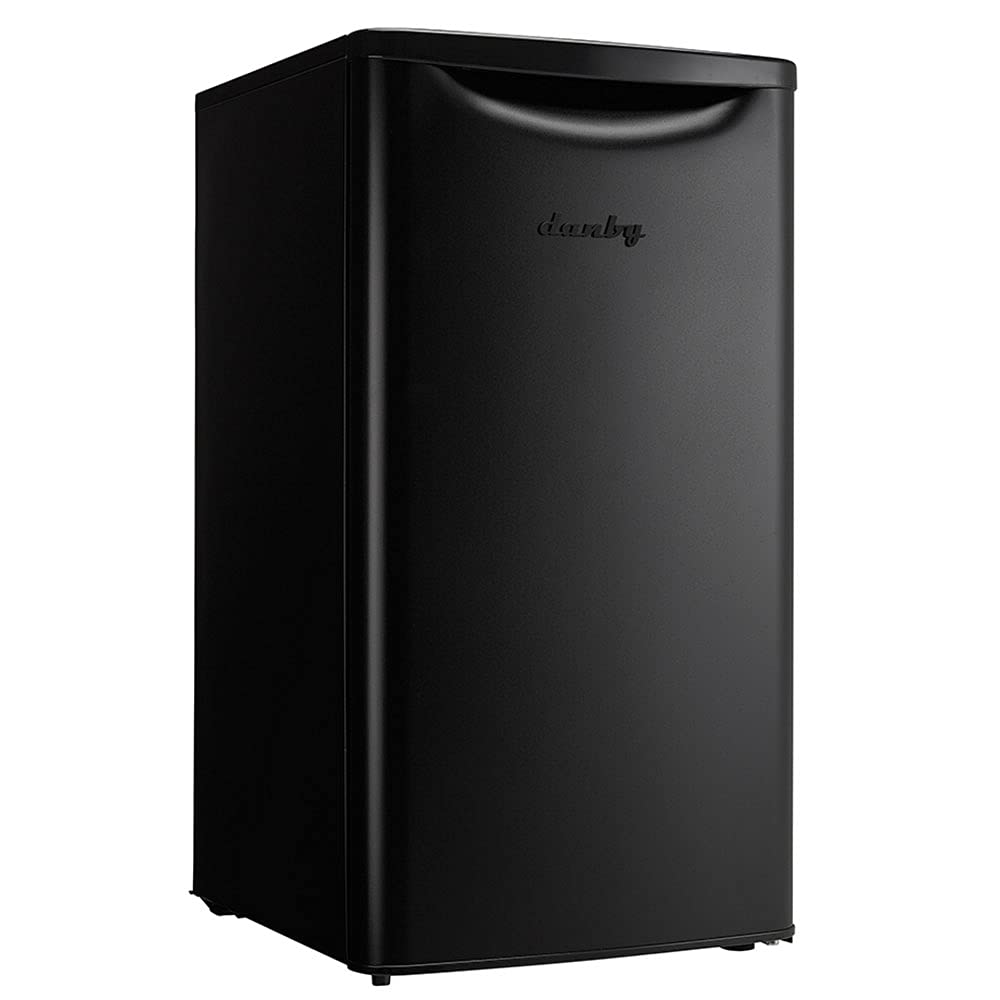
2. Danby 3.3 cu. ft. Compact Fridge DAR033A6BDB
The spacious 3.3-cu-ft workhorse with a tall-bottle dispenser and a debated noise profile.
The Danby’s patented CanStor beverage dispensing system on the door lets you grab cans without opening the main shelves. Owners praise the adjustable glass shelves, the reversible door hinge (so you can open from left or right), and the scratch-resistant worktop that doubles as extra counter space. The fit and finish draw consistent praise, with size and temperature control being the most-discussed positives.
The catch is the noise. One buyer says: “Was looking for a fridge to keep in my office, love the style and size but the thing ‘gurgles’ 24/7….. if you’re not worried about noise this little guy is great – if you need something quiet i would keep shopping.” The “gurgling” sound from the cooling system is a recurring point — some call it “quiet” while others find it distracting. It also lacks a freezer, so it is strictly for chilled drinks and fresh food. For a garage or kitchen where ambient noise hides the gurgle, this is a solid value pick that earned a following over years of service. Unlike the Antarctic Star, which focuses on energy efficiency (180 kWh/year), the Danby uses 259 kWh/year — a moderate bump for the extra storage cleverness.
Real-world trade-off: You get the most storage space and clever can-dispensing for the money, but the compressor gurgle is the price of admission. Best for a busy kitchen or garage; think twice for a silent dorm room or bedroom.
Best for: anyone who needs room for half-gallon jugs and wine bottles and does not mind a little refrigerator chatter.
Not for: light sleepers or anyone placing this next to a bed or desk.
3. Avanti 3.1 Cu. Ft. Compact Refrigerator with Freezer
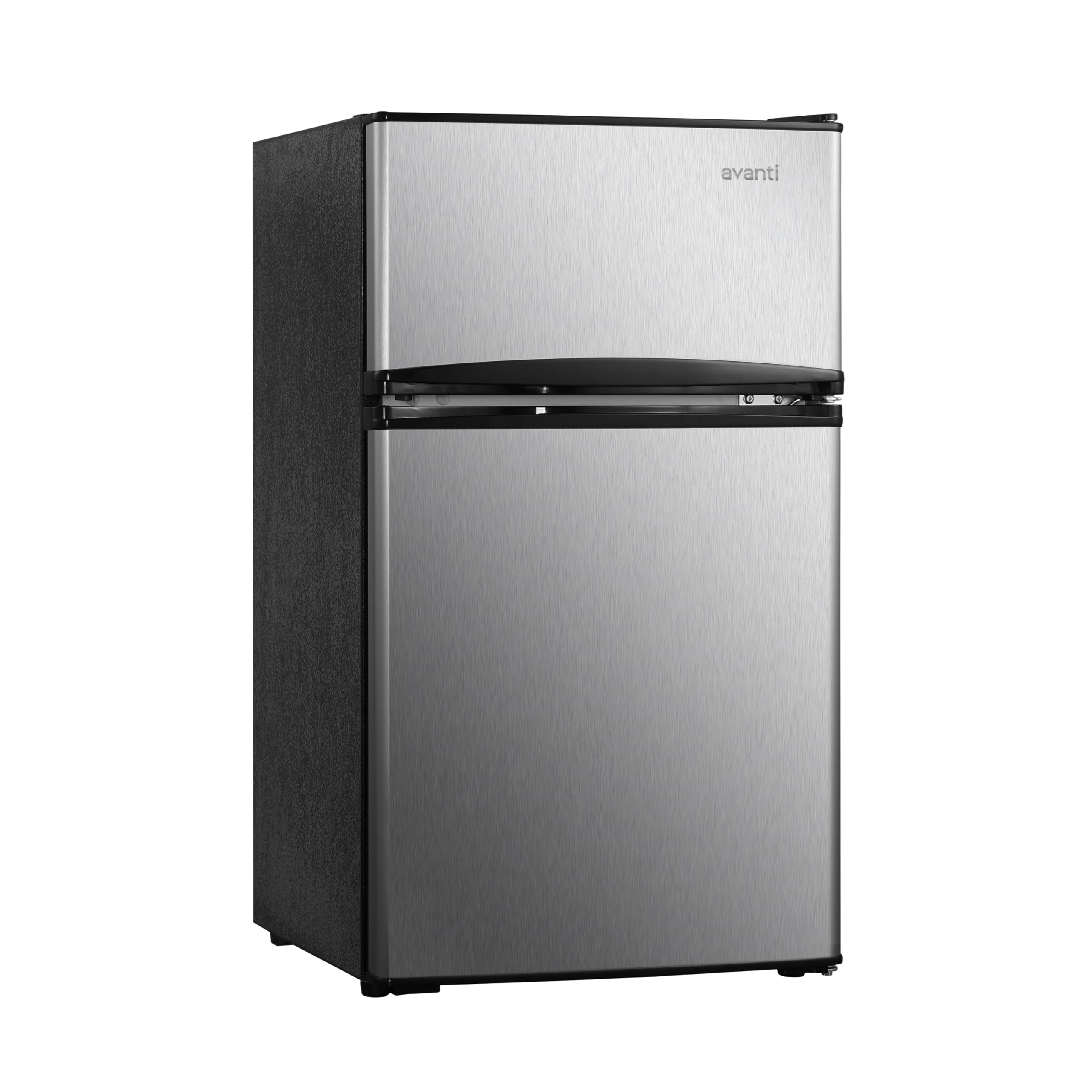
The only compact here with a separate freezer compartment — and the highest energy appetite at 320 kWh per year.
The Avanti splits its 3.1 cubic feet (cu. ft.) into 2.1 cu. ft. of fresh-food space and a full 1.0 cu. ft. freezer, which is rare among automatic-defrost compacts. That freezer gives you room for ice cream or frozen meals, and the automatic defrost system keeps both sections frost-free. It includes two adjustable glass shelves, a crisper drawer (a separate bin for fruits and vegetables), and door bins that hold 2-liter bottles alongside six 12-ounce cans. The reversible door and flush back design make it easy to wedge into tight spots. At 320 kWh per year, however, it uses more electricity than the Antarctic Star, which consumes 180 kWh per year, so the freezer convenience comes with a noticeably higher energy bill.
The biggest caution is packaging damage. Multiple owners mention the unit arriving dented, with scratched doors or cracked crisper drawers. Functionally it works — one owner uses it “as back up with a solar generator” and confirms it runs fine. The noise is minimal, according to those same owners. If you absolutely need a compact with a freezer and can tolerate higher power draw, this is your only automatic-defrost option here. The roomwell and Danby have the same 3.3 cu. ft. capacity but lack a freezer; the Avanti gives you frozen storage at the cost of higher energy use and shipping fragility.
Honest assessment: The only automatic-defrost compact with a real freezer, but the high energy consumption (320 kWh/year) and shipping fragility are real concerns.
Choose this if: you need a small freezer compartment in an automatic-defrost package — the Avanti is the sole option for that combo.
Think twice if: energy efficiency is a priority or you cannot risk receiving a dented unit (the shipping damage is a recurring theme).
4. roomwell E-Star 3.3 Cu Ft Mini Fridge without Freezer

A quiet, well-insulated 3.3-cu-ft fridge that owners call “well-engineered and reliable” — and it comes with a 2-year replacement warranty.
The roomwell stands out for its consistent build quality and near-universal praise in the reviews. It offers the same 3.3 cubic feet (cu. ft.) as the Danby, but without the noise complaints — buyers describe it as quiet, with reliable temperature control that holds steady even when full. The automatic defrost system removes the maintenance headache, and the mechanical thermostat lets you set the temperature between 32°F and 50°F by turning a knob. The three full-width glass shelves are removable, and the door includes a can-dispenser plus two racks that fit 2-liter bottles. At 259 kWh per year, its energy consumption matches the Danby, and it carries a 5-star BEE energy rating (a Bureau of Energy Efficiency label for efficiency). It also comes with a 2-year replacement warranty, doubling the coverage typical for a compact fridge.
The trade-off is the same as the Antarctic Star and Danby: no freezer compartment. This is a drink-and-snack fridge. Owners praise its “small footprint” and note it is “perfect for someone that isn’t able to get up and go to the kitchen.” The flat back and reversible door make placement flexible. If quiet operation and solid build are your top priorities, this edges out the Danby on noise and outlasts the Antarctic Star on warranty length. But for rock-bottom energy use, stick with the Antarctic Star at 180 kWh/year.
Strengths
- Quiet, steady cooling that earns consistent positive feedback.
- 2-year replacement warranty covers any early failure.
- Flat-back reversible door design fits tight spaces easily.
Limitations
- No freezer compartment — chilled storage only.
- 259 kWh/year is middle-of-pack for energy use.
Best for: quiet-zone rooms where constant gurgling would drive you crazy — dorms, bedrooms, and home offices.
Not for: anyone who wants a freezer or the absolute lowest yearly energy use (the Antarctic Star beats it there).
5. Smeg FAB5 Retro Mini Fridge
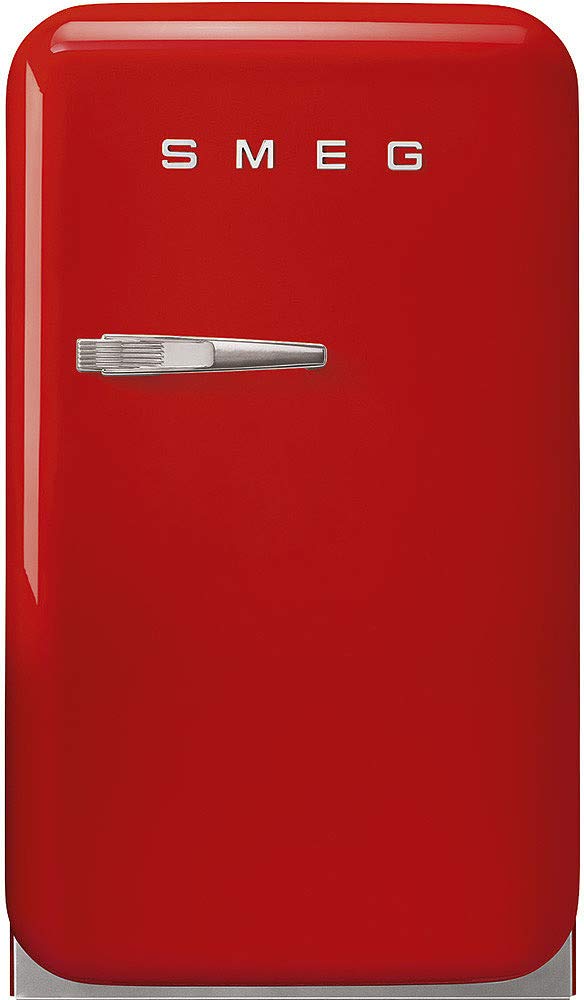
The 1.2-cu-ft Italian style piece looks like a hotel minibar but costs far more than any pick here.
You buy the Smeg FAB5 for the way it looks, not for what it holds. The 1.2 cubic feet (cu. ft.) of capacity is the smallest here by a wide margin — at 1.2 cu. ft. vs. the Antarctic Star (3.2 cu. ft.). It fits a few drinks and snacks, salads for a lunch, or skincare products. The automatic defrost, two adjustable glass shelves, and LED lighting are genuinely functional, and the 210 kWh per year energy consumption is respectable for a premium unit — better than the Danby (259 kWh) and Avanti (320 kWh). The retro 1950s red design is unmistakable, and owners who love it call it “sexy” and “professional-looking.” It runs quiet enough for a bedroom or office.
The hard truths: at this premium price, you get a tiny interior, a non-reversible door (hinged on the right only — unlike the Danby, Avanti, and roomwell which all offer reversible hinges), and a history of mixed reliability. One owner reported the fridge stopped cooling after 72 hours and that Smeg customer service was unresponsive. Another describes “weird and loud noises.” The small capacity means you cannot store a gallon of milk or a large pizza box — this is strictly a minibar-sized appliance. If the look is worth the premium and you only need space for a six-pack and some leftovers, the Smeg delivers that specific pleasure. Otherwise, the practical picks above give you far more for your money.
Design achievement, not a storage solution: The Smeg FAB5 is a conversation piece first, a refrigerator second. Buy it for the retro curves and Italian pedigree; just know that the Antarctic Star or roomwell will hold 3.2 and 3.3 cubic feet, respectively, compared to the Smeg’s 1.2 cubic feet, for a fraction of the cost.
Who it is for: style-driven buyers who want a statement piece in a bedroom, office, or bar and only need to chill a few items.
Who should skip it: anyone who needs real storage, reversible door flexibility, or reliable warranty support — look at the roomwell or Danby instead.
Understanding the Specs
Automatic Defrost (Frost-Free)
An automatic defrost system periodically warms the cooling coils to melt frost, then drains the water away. An automatic defrost system periodically warms the cooling coils just enough to melt any frost buildup, then drains the water away. You never have to unplug the fridge, empty it, and chip away ice. By contrast, a manual defrost fridge demands that exact chore every few months. Auto-defrost uses slightly more energy than manual models, but the convenience is worth it for daily use.
Annual Energy Consumption (kWh/Year)
This number tells you how much electricity the fridge uses over a full year of 24/7 operation. A lower kWh/year number saves money and reduces environmental impact. In this group, the range runs from 180 kWh (the Antarctic Star) to 320 kWh (the Avanti). The difference works out to roughly a noticeable gap on your annual bill. Energy Star certification means the fridge meets strict efficiency guidelines set by the US government — it is a reliable shortcut to finding a power-sipping model.
FAQ
Does automatic defrost mean the fridge never has ice?
Can I use an automatic defrost compact refrigerator in a bedroom?
Is a compact fridge with a freezer always automatic defrost?
How much electricity does a 3.2-cu-ft automatic defrost fridge use?
Are reversible doors standard on compact refrigerators?
How long does an auto-defrost cycle take?
Can I store wine bottles in a beverage cooler?
Is it safe to put a mini fridge on carpet?
What refrigerator configuration is best for drinks only?
How many cans fit in a 3.2-cubic-foot beverage fridge?
Final Thoughts: The Verdict
For most people, the automatic defrost compact refrigerator winner is the Antarctic Star 130 Can Beverage Cooler because it delivers the lowest energy draw (180 kWh/year), a genuinely hands-off defrost cycle, and a whisper-quiet 36 dB that fits any room. If you want even quieter operation with a longer 2-year warranty, grab the roomwell E-Star 3.3 Cu Ft. And for the rare need of a compact freezer with automatic defrost, the Avanti 3.1 Cu. Ft. is the one to reach for — just expect a higher electric bill at 320 kWh/year.
How We Picked
We do not accept paid placement. Every pick is matched to a real buyer and a real use-case; we do not hands-on test units.
Sources & Methodology
Specifications: manufacturer listings and product documentation. Review insights: verified customer reviews, as of July 2026. Pricing: not shown on this page (it changes often); check the current price via the retailer link.
As an Amazon Associate, Gadgets Feed earns from qualifying purchases. This does not affect which products we feature.