
Every split-second moment — a child’s first step, a bird taking flight, a winning goal — lives or dies by autofocus speed. A camera that hunts for focus will cost you the shot. The best automatic focus cameras lock onto moving subjects with lethal precision, using hybrid or phase-detection systems that leave contrast-only methods in the dust. This guide cuts through the marketing noise to find the bodies and lenses that actually deliver tack-sharp results when it counts.
I’m Min — the co-founder and writer behind Gadgets Feed. I’ve spent hundreds of hours analyzing the autofocus algorithms, focus-point coverage, and subject-tracking capabilities that separate pro-level mirrorless cameras from the rest, distilling what actually matters for real-world shooting.
Whether you are capturing fast action, candid portraits, or cinematic video, best automatic focus camera models from Sony, Canon, Nikon, Fujifilm, OM SYSTEM, and Panasonic all offer distinct strengths that this guide will help you match to your specific needs.
How To Choose The Best Automatic Focus Camera
Autofocus performance is the single most important factor separating a keeper from a blurry mess. Knowing how many focus points, the type of system, and the subject detection capabilities affect your keeper rate will help you pick the right body without paying for features you don’t need.
Phase Detection vs. Contrast Detection vs. Hybrid
Phase detection autofocus (PDAF) measures light split across paired sensors to calculate distance instantly, making it the fastest method for moving subjects. Contrast detection (CDAF) hunts by seeking maximum contrast, which is slower and prone to pulsing in low light. Hybrid systems combine both — using PDAF for initial acquisition and CDAF for fine-tuning — delivering the balance most modern cameras adopt for reliable performance across conditions.
Autofocus Points and Coverage Area
The number of AF points and their spread across the frame determines how well the camera can track subjects that move off-center. A system like the Sony a7 III’s 693 phase-detection points covering 93% of the image area will rarely lose a bird in flight, while a camera with fewer, centrally clustered points will struggle with erratic framing. Aim for at least 100 points with wide-area coverage for action or wildlife work.
Subject Detection and Eye Autofocus
Modern AI-driven subject detection locks onto human eyes, animal eyes, or vehicle shapes and tracks them in real time. This is the feature that turns a frustrating panning session into a simple press of the shutter. Sony’s Real-Time Eye AF, Canon’s Dual Pixel CMOS AF with deep learning, and Nikon’s nine-subject detection are the gold standards here — ideal for portrait, event, and wildlife photographers who need consistent focus on the most critical part of the frame.
Quick Comparison
On smaller screens, swipe sideways to see the full table.
| Model | Category | Best For | Key Spec | Amazon |
|---|---|---|---|---|
| Sony a7 IV | Premium Full-Frame | Hybrid Stills & Video | 33MP / 693 AF Points | Amazon |
| Canon EOS R5 | Flagship Full-Frame | Pro Stills & 8K Video | 45MP / 1,053 AF Points | Amazon |
| Panasonic LUMIX S5II | Premium Full-Frame | Hybrid Video & Stills | 24.2MP / Phase Hybrid AF | Amazon |
| Fujifilm X100VI | Premium Compact | Travel & Street | 40.2MP / Fixed 23mm Lens | Amazon |
| OM SYSTEM OM-3 | Premium Micro Four Thirds | Weather-Sealed Adventure | 20MP / Stacked BSI Sensor | Amazon |
| Sony a7 III | Mid-Range Full-Frame | Action & Low-Light | 24.2MP / 693 AF Points | Amazon |
| Nikon Z50 II (Two-Lens Kit) | Mid-Range APS-C | Travel & Everyday | 20.9MP / 231 AF Points | Amazon |
| Nikon Z 5 | Mid-Range Full-Frame | Enthusiast Stills | 24.3MP / 273 AF Points | Amazon |
| Canon EOS RP | Mid-Range Full-Frame | Entry Full-Frame | 26.2MP / Phase Detection | Amazon |
| Fujifilm X-T30 III | Mid-Range APS-C | Film Simulation Lovers | 26.1MP / Hybrid AF | Amazon |
| OM SYSTEM E-M10 Mark IV | Entry-Level Micro Four Thirds | Beginner & Selfies | 20MP / 121 AF Points | Amazon |
In‑Depth Reviews
1. Sony Alpha 7 IV

The Sony a7 IV balances high-resolution 33-megapixel stills with robust video features backed by the BIONZ XR processor. Its 693-point phase-detection system with Real-Time Eye AF for humans, animals, and birds locks focus with the kind of tenacity that makes shooting moving subjects feel effortless. The 4K 60p 10-bit 4:2:2 video with 7K oversampling in 30p mode delivers cinematic clarity straight from the body.
Dual card slots — one CFexpress Type A, one UHS-II SD — give professionals redundant storage, while the S-Cinetone color profile reduces grading time for video work. The 33MP sensor offers more cropping room than the a7 III, but the larger files demand faster cards for sustained bursts.
This is the strongest hybrid proposition in the premium tier for shooters who split their time equally between stills and video. The autofocus system rarely misses, and the color science is among Sony’s most filmic.
Why it’s great
- Exceptionally accurate Real-Time Eye AF across humans and animals
- 33MP sensor retains more detail and crop flexibility than 24MP rivals
- 4K 60p with 10-bit internal recording and oversampled 4K 30p
Good to know
- 4K 60p has a slight APS-C crop factor
- Battery life is good but heavy 4K shooters will want spares
2. Canon EOS R5

The Canon EOS R5 is a 45-megapixel powerhouse with a stacked, back-illuminated CMOS sensor that keeps noise low up to ISO 12800. Its Dual Pixel CMOS AF II covers 100% of the frame with 1,053 points, and the deep-learning subject tracking locks onto people, animals, and vehicles with remarkable consistency. Eye Control AF even lets you select focus targets by looking — a feature unique to Canon.
8K RAW internal recording and 4K up to 120 fps make it a video beast, though the 8K mode requires careful heat management for extended clips. The 12 fps mechanical and 20 fps electronic bursts give sports shooters the speed needed to catch peak action. Paired with an RF 24-105mm f/4 L, the R5 delivers the sharpest images in this lineup.
For professionals needing the highest resolution and fastest autofocus lock available, the R5 sets the benchmark. The menu system is intuitive, and the IBIS works seamlessly with adapted EF lenses.
Why it’s great
- 45MP sensor resolves extreme detail for cropping and large prints
- 100% frame coverage with 1,053 AF points and Eye Control
- 8K internal recording and 4K 120 fps with Dual Pixel AF
Good to know
- 8K video recording can trigger thermal limits after prolonged use
- Battery life is moderate at roughly 650 shots per charge
3. Panasonic LUMIX S5II
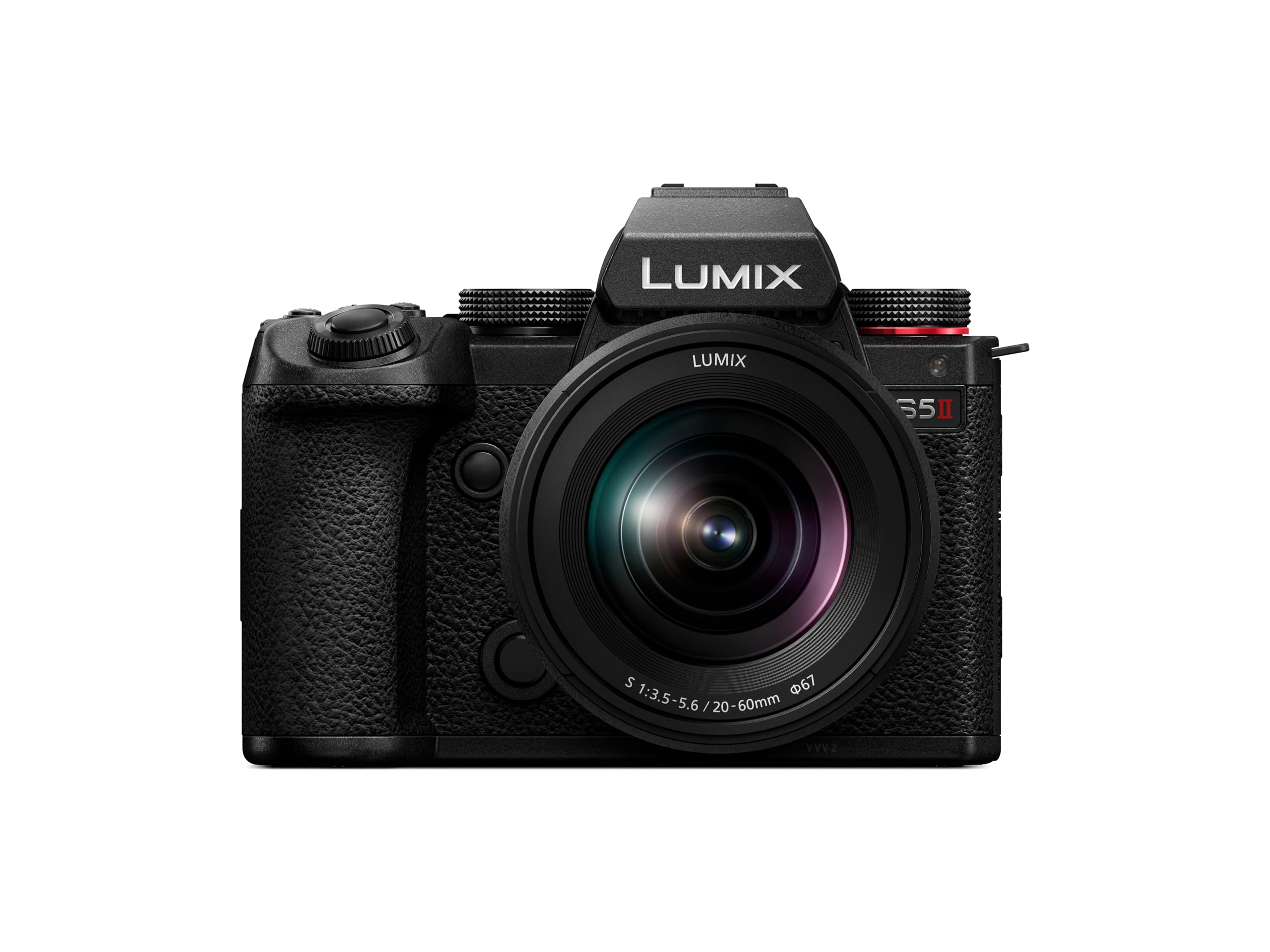
Panasonic finally solved its autofocus reputation by introducing Phase Hybrid AF in the S5II, combining phase-detection pixels with the company’s renowned DFD contrast system. The result is fast, confident tracking suitable for both photo and video. The Active I.S. system supports walking shots with gimbal-like smoothness — a boon for run-and-gun shooters.
Unlimited 4:2:2 10-bit recording, 14+ stops of dynamic range with V-Log, and REAL TIME LUT in-camera color grading put it ahead of many competitors for video-centric workflows. The 24.2MP full-frame sensor is class-leading in base ISO color rendering, and the L-mount opens access to Sigma, Leica, and Blackmagic glass.
Battery life is on the shorter side for extended video sessions, but the heat-dissipation fan keeps recording going for as long as the card holds out. This is the best option for content creators who prioritize video over stills without sacrificing either completely.
Why it’s great
- Phase Hybrid AF finally matches Sony and Canon for reliability
- Active I.S. produces stabilizes walking video effectively hand-held
- Unlimited 4K 10-bit recording with in-camera LUT support
Good to know
- Battery life is below average for full-frame mirrorless
- High ISO performance degrades noticeably above 12800
4. Fujifilm X100VI

The 23mm f/2 lens (35mm equivalent) delivers the classic Fujifilm look, and the 20 Film Simulation modes produce stunning JPEGs straight out of camera.
Its hybrid optical-electronic viewfinder is a joy for street photographers who want to frame without screen glare, and the built-in 4-stop ND filter lets you shoot wide open in bright sunlight. The autofocus uses contrast detection on a single point, which is noticeably slower than phase-detection rivals for moving subjects. For posed street and travel work, it is nearly perfect.
This camera rewards patience and deliberate composition. It is not for action shooters, but for those who embrace the fixed lens as a creative constraint, the X100VI is indispensable.
Why it’s great
- 40.2MP APS-C sensor resolves excellent detail and tones
- 20 film simulations deliver gorgeous out-of-camera JPEGs
- 6-stop IBIS and built-in ND filter add versatility
Good to know
- Autofocus is contrast-only and lags behind phase-detection systems
- Fixed lens offers no zoom range — you must zoom with your feet
5. OM SYSTEM OM-3

The OM SYSTEM OM-3 is the most affordable camera with a stacked 20-megapixel Micro Four Thirds sensor, delivering fast readout speeds that eliminate rolling shutter for electronic bursts. Its IP53 dustproof, splashproof, and freezeproof design withstands downpours and sub-zero conditions, making it the go-to choice for adventurous photographers.
In-body 5-axis stabilization is excellent, and computational features like Live ND, High Res Shot, and Focus Stacking allow you to simulate long exposures and tripod-only effects without extra gear. The vintage metal body looks striking, though the flat front lacks a pronounced grip, requiring a thumb rest for secure handling with larger lenses.
Phase-detection autofocus with subject detection keeps fast-moving wildlife in focus, and the 4K video with S&Q mode covers creative slow-motion needs. It is a niche camera, but for photographers who prioritize ruggedness and portability over full-frame shallow depth of field, it is a superb choice.
Why it’s great
- Stacked sensor nearly eliminates rolling shutter for action bursts
- IP53 weather sealing works in extreme outdoor conditions
- In-body computational tools reduce the need for filters and tripods
Good to know
- Flat front design lacks a substantial grip for larger hands or lenses
- 20MP MFT sensor offers less resolution than full-frame rivals
6. Sony a7 III

Years after its release, the Sony a7 III remains a benchmark for full-frame value because its 693-point phase-detection AF and 425 contrast points cover 93% of the frame with zero hesitation. The 24.2MP back-illuminated sensor offers 15 stops of dynamic range, and the 10 fps burst with AE/AF tracking catches sports and wildlife reliably.
Battery life is exceptional for mirrorless — roughly 710 shots per charge — and the 4K video from the full-frame readout is clean enough for semi-professional work. The menu system is denser than Sony’s newer designs, and the kit 28-70mm lens is basic, but the body’s core autofocus capability competes with cameras costing twice as much.
For stills photographers and hybrid shooters on a budget, the a7 III is the safest bet in the mid-range full-frame category. It lacks the resolution and video frame rates of the a7 IV, but its autofocus chops remain top-tier.
Why it’s great
- 693-point phase-detection AF covers 93% of the frame
- Outstanding battery life at ~710 shots per charge
- 15-stop dynamic range provides excellent shadow/highlight latitude
Good to know
- Menu system is less intuitive than newer Sony bodies
- Kit lens is functional but not sharp at wider apertures
7. Nikon Z50 II (Two-Lens Kit)

The Nikon Z50 II delivers a compact, lightweight APS-C kit with two lenses covering 16-50mm and 50-250mm, giving you wide-angle to telephoto reach in a single purchase. Its 231-point hybrid AF system with nine subject detection modes — including dedicated bird and airplane tracking — punches well above the camera’s price bracket.
The 20.9-megapixel DX sensor paired with the EXPEED 7 processor delivers lifelike colors and solid low-light performance. The Picture Control button gives access to 31 built-in presets, and the built-in flash works nicely for indoor portraits. Sharing photos via SnapBridge is quick, and the 4K 60p video with electronic VR is adequate for casual creators.
Menus take some time to learn, and the two-lens kit adds swapping breaks, but the combination of wide and telephoto zoom for under a premium price makes this the best travel bundle for photographers stepping up from a smartphone or entry-level DSLR.
Why it’s great
- Two-lens kit covers 16-250mm zoom range for travel versatility
- Nine subject detection modes include bird and airplane tracking
- 31 in-camera Picture Control presets for creative JPEGs
Good to know
- Menu layout requires time commitment to learn thoroughly
- Kit lenses are not optically superior to premium primes
8. Nikon Z 5

The Nikon Z 5 is the most compact full-frame Z-series body, offering a 24.3-megapixel sensor with 273-point hybrid AF detection that includes eye detection for people, cats, and dogs. The 5-axis in-body stabilization compensates for up to 5 stops, letting you shoot handheld at shutter speeds as slow as 1/9 second.
Dual SD UHS-II card slots provide critical redundancy for paid work, and the weather-sealed magnesium alloy body feels solid in hand. The SnapBridge app enables easy wireless transfers, and the Z 5 accepts Nikon’s growing Z-mount lens lineup or F-mount lenses via the FTZ adapter. Its 4.5 fps burst rate is slow compared to rivals, limiting its utility for fast sports or wildlife bursts.
This body is built for portrait, landscape, and event photographers who prioritize image quality, color reproduction, and stabilization over high-speed action. It is the most affordable entry point into Nikon’s full-frame Z system.
Why it’s great
- 5-axis IBIS enables sharp handheld shots in very low light
- Dual SD slots provide reliable backup for professional use
- Weather-sealed build offers durability in adverse conditions
Good to know
- 4.5 fps burst is slow compared to most full-frame competitors
- 4K video is cropped and lacks high frame-rate options
9. Canon EOS RP

The Canon EOS RP paired with the RF 24-105mm f/4-7.1 IS STM lens provides a lightweight full-frame entry point that shoots above its price. The 26.2-megapixel sensor captures excellent color and detail, and Dual Pixel CMOS AF is fast and accurate for stills, particularly with eye detection tracking people.
At under 1 pound for the body, it is one of the lightest full-frame cameras available. The 1080p video is excellent with face-tracking AF, though the 4K mode introduces a crop factor and a 30-minute limit. The flip-out touchscreen and clean HDMI output make it a functional hybrid for streaming and vlogging. The kit lens is decent in the center but soft toward the edges.
Upgraders from smaller sensors will notice the giant leap in dynamic range and low-light clarity. For photographers who want full-frame sensor quality without the cost or bulk of pro bodies, the RP remains a compelling entry-level option.
Why it’s great
- Extremely lightweight full-frame body ideal for travel
- Dual Pixel CMOS AF provides fast, reliable face tracking
- Excellent JPEG color science straight out of camera
Good to know
- 4K video is cropped and limited to 30 minutes
- Kit lens is soft at edges and lacks an AF/MF physical switch
10. Fujifilm X-T30 III
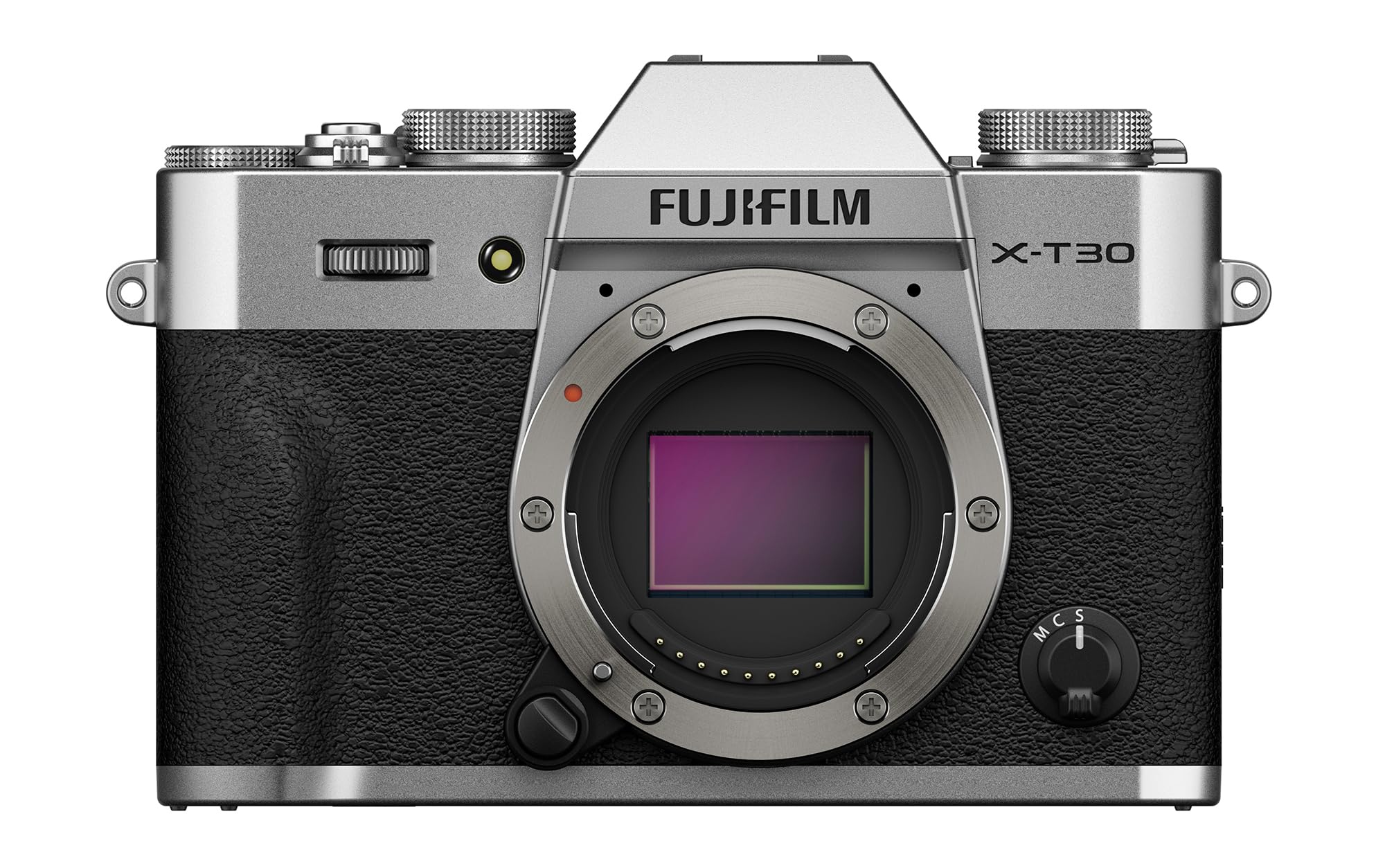
The Fujifilm X-T30 III pairs the company’s renowned 20 Film Simulations with a 26.1-megapixel X-Trans CMOS 4 sensor and a hybrid autofocus system that combines phase and contrast detection across 179 points. Its AI-powered subject detection locks onto faces and eyes reliably, making portrait sessions remarkably consistent.
The compact retro body fits easily into a jacket pocket with the included XC13-33mm kit lens. The full Auto mode lets beginners hand the camera to anyone without confusion. Enthusiasts will appreciate the physical dials for ISO and shutter speed, while the film simulations (Velvia, Classic Chrome, Acros, etc.) produce JPEGs that often require zero editing.
Battery life is adequate for a day of casual shooting, and the camera connects easily to a phone for quick sharing. The lack of a built-in flash may disappoint indoor shooters, but the X-T30 III is one of the most fun and capable APS-C cameras for creative photographers.
Why it’s great
- 20 film simulations produce stunning out-of-camera JPEGs
- Compact, retro body fits easily into a coat pocket
- Hybrid AF with AI subject detection works well for portraits
Good to know
- No built-in flash limits indoor low-light snapshots
- Battery life is modest for sustained shooting sessions
11. OM SYSTEM Olympus E-M10 Mark IV

The OM SYSTEM E-M10 Mark IV is the most affordable interchangeable-lens camera in this guide, yet it packs a 20-megapixel Live MOS sensor with 121 contrast-detection AF points and 5-axis in-body stabilization that delivers 4.5 stops of compensation. For beginners, this means sharp handheld shots in light where a phone would blur.
The flip-down touchscreen activates a dedicated selfie mode for vloggers, and the 16 Art Filters (including Instant Film) allow creative JPEGs without post-processing. The compact body with the 14-42mm EZ pancake zoom collapses small enough to slide into a jacket pocket. Autofocus is contrast-only, which is snappy in good light but hunts more than phase-detection systems in dim conditions.
This camera excels as an entry-level mirrorless learning tool or a lightweight travel companion. It is cheaper than most rivals and still delivers the signature Olympus stabilization and image quality that made Micro Four Thirds famous.
Why it’s great
- 5-axis IBIS at 4.5 stops enables sharp handheld photos in low light
- Flip-down screen and dedicated selfie mode for vloggers
- Smallest and lightest body in this guide for maximum portability
Good to know
- Contrast-detection AF hunts more in low-light than phase-detect
- No external charger included and uses micro-USB, not USB-C
FAQ
What is the difference between phase detection and contrast detection autofocus?
How many autofocus points do I need for wildlife photography?
Does IBIS improve autofocus performance?
Why does subject detection matter for autofocus?
Final Thoughts: The Verdict
For most users, the best automatic focus camera winner is the Sony a7 IV because its 693-point autofocus, 33MP sensor, and hybrid video features make it the most versatile camera on this list — equally capable for portraits, events, and content creation. If you want the highest resolution and fastest AF lock available, grab the Canon EOS R5. And for video creators who need unlimited 4K recording and gimbal-like stabilization, nothing beats the Panasonic LUMIX S5II.