
Our readers keep the lights on and my morning glass full of iced black tea. As an Amazon Associate, I earn from qualifying purchases.
Specs are compiled from manufacturer listings and verified buyer reviews and can change over time — please confirm the key details on the product page before buying.
A robot lawn mower that actually finishes the job without you touching a handle sounds like a luxury. In reality, picking the wrong one means more time spent untangling boundary wires, rescuing a stuck machine, or buying a second battery halfway through the season. The right one frees your weekends, keeps the grass consistent, and handles the tricky spots—slopes, narrow paths, and that strip behind the shed—without drama. This guide sorts out which automatic models genuinely deliver on that promise and which ones will leave you standing in the yard with a trimmer in your hand.
I’m Min — the founder and writer behind Gadgets Feed. This guide is built by comparing the manufacturers’ published specifications and the patterns across verified customer reviews, so you get each pick’s real strengths and trade-offs instead of marketing spin.
Below you’ll find the ten best automatic robot lawn mowers for 2025, ranked by real-world capability from simple drop-and-mow units to premium wire-free machines with LiDAR navigation, all chosen to help you find the perfect automatic robot lawn mower for your yard.
Quick Picks
- Segway Navimow X430 — Top Performer
- ECOVACS Goat A3000 LiDAR PRO — Premium Pick
- MOVA LiDAX Ultra 1000 — Editor’s Choice
- ANTHBOT RTK+4-Eye Vision Mower (Genie3000) — Great Value
- WORX Landroid Vision Cloud WR320 — Smartest Nav
- YARDCARE M800Plus — Magnetic Zone Pick
- ECOVACS Goat O1000 RTK CARE — CARE Bundle
- ANTHBOT M9 — Best Entry Wire-Free
- YARDCARE N1600 PRO — Striped Cut Pro
- LawnMaster OcuMow VBRM601YCM MAX — Best Value
How To Choose The Best Automatic Robot Lawn Mower
Not all robot mowers are built the same. The first big choice is if you want a model that uses boundary wires, magnetic strips, or a fully wire-free system with satellite and camera navigation. Wire-free setups are easier to install but often cost more. The second key factor is how the mower covers your lawn—random bouncing will miss patches, while systematic path planning (like straight lines or a U-shaped pattern) gives you an even cut with no stripes left behind. Battery life, slope rating, and cutting height range will tell you if a particular mower can handle your yard’s size and shape. The right pick is the one that matches your lawn’s specific challenges, not just the flashiest spec sheet.
Navigation System: Wires, Magnetic Strips, or Satellites?
Traditional robot mowers rely on a buried perimeter wire to know where the lawn ends, which requires digging and careful planning. Newer models skip the wire entirely by using RTK GPS satellite positioning (centimeter-level accuracy from the sky), dual-camera vision systems, or advanced LiDAR that maps the yard in 3D. Magnetic strips are a middle ground—you lay them on the surface to create “no-go zones” without any digging. For most buyers today, a wire-free system with RTK and vision is the gold standard because you can set up, remap, and adjust boundaries right from your phone without ever touching a shovel.
Battery Life and Charging
A mower that runs for 45 minutes won’t cut a half-acre in one go unless it returns to the charging station and resumes automatically (a feature called “auto-return and resume”). Larger yards need longer runtimes or faster charging cycles. The key number is not just the battery life in minutes but whether the mower can cover your entire lawn on a single charge or needs a mid-session recharge. Look for models with a stated coverage area (like 0.25 acre or 0.5 acre) and check if real-world reviews confirm that number in practice.
Slope Capability and Terrain
If your yard has any incline at all, the slope rating matters. Most residential mowers handle up to 35% (roughly 20 degrees). Premium models climb 45% slopes or even extreme 84% grades. A mower that can’t manage your hill will get stuck repeatedly, which defeats the purpose of automation. Also consider the wheel design—deep tread wheels and rear-wheel drive systems provide better traction on uneven or wet grass than standard wheels on two-wheel-drive machines.
Cutting Height and Width
The cutting height range determines what grass types you can maintain. Cool-season grasses like fescue prefer taller cuts around 3-4 inches, while warm-season Bermuda can go as low as 1 inch. A wider cutting deck finishes faster, but it also means the mower may struggle in tight corners or narrow pathways. the balance for most yards is a cutting width between 7 and 9 inches, which balances speed and maneuverability.
Multi-Zone and No-Go Zones
If your lawn has separate areas—front yard, back yard, a side strip—you need a mower that supports multi-zone management. This lets you map each area independently and schedule different mowing times. “No-go zones” are virtual fences you draw on the app to keep the mower away from flower beds, patios, or a child’s playset. Without these features, a robot mower will either avoid the entire side yard or drive right into your pet’s water bowl.
Quick Comparison
On smaller screens, swipe sideways to see the full table.
| Model | Best For | Navigation Type | Cutting Width | Slope Max | Amazon |
|---|---|---|---|---|---|
| Segway Navimow X430 | Large, steep, complex lawns | RTK + 360° Vision | 17 in | 84% (40°) | $2,099.00$2,499.00Amazon |
| ECOVACS Goat A3000 LiDAR PRO | Mid-to-large yards, thick grass | Dual-LiDAR | 12.99 in | Moderate | $1,849.00$2,499.99Amazon |
| MOVA LiDAX Ultra 1000 | Precision edge cutting | 360° LiDAR + AI Vision | 8 in | 45% | $996.00$1,299.00Ends inAmazon |
| ANTHBOT RTK+4-Eye Vision | Detailed multi-zone management | RTK + 4-Eye Vision | 7.9 in | High | $899.00$1,589.00Limited time dealAmazon |
| WORX Landroid Vision Cloud WR320 | Tech-savvy users, varied terrain | RTK Cloud + Vision AI | 8.7 in | 30% | $1,264.50Amazon |
| YARDCARE M800Plus | Magnetic strip no-go zones | GPS + 3D Vision | 7.1 in | 35% (20°) | $866.99Amazon |
| ECOVACS Goat O1000 RTK CARE | Reliable brand, flat to moderate lawns | RTK Precision | 8.66 in | Moderate | $698.99$999.99Amazon |
| ANTHBOT M9 | Entry-level wire-free setup | Dual Vision + RTK | 7.9 in | 45% | $649.00$899.00Amazon |
| YARDCARE N1600 PRO | Professional striped cuts | RTK + Vision | 7.09 in | 20° (approx) | $659.99Amazon |
| LawnMaster OcuMow VBRM601YCM MAX | Small, simple lawns | Optical | 6.0 in | 35% | $403.94$549.99Amazon |
In‑Depth Reviews
1. Segway Navimow X430
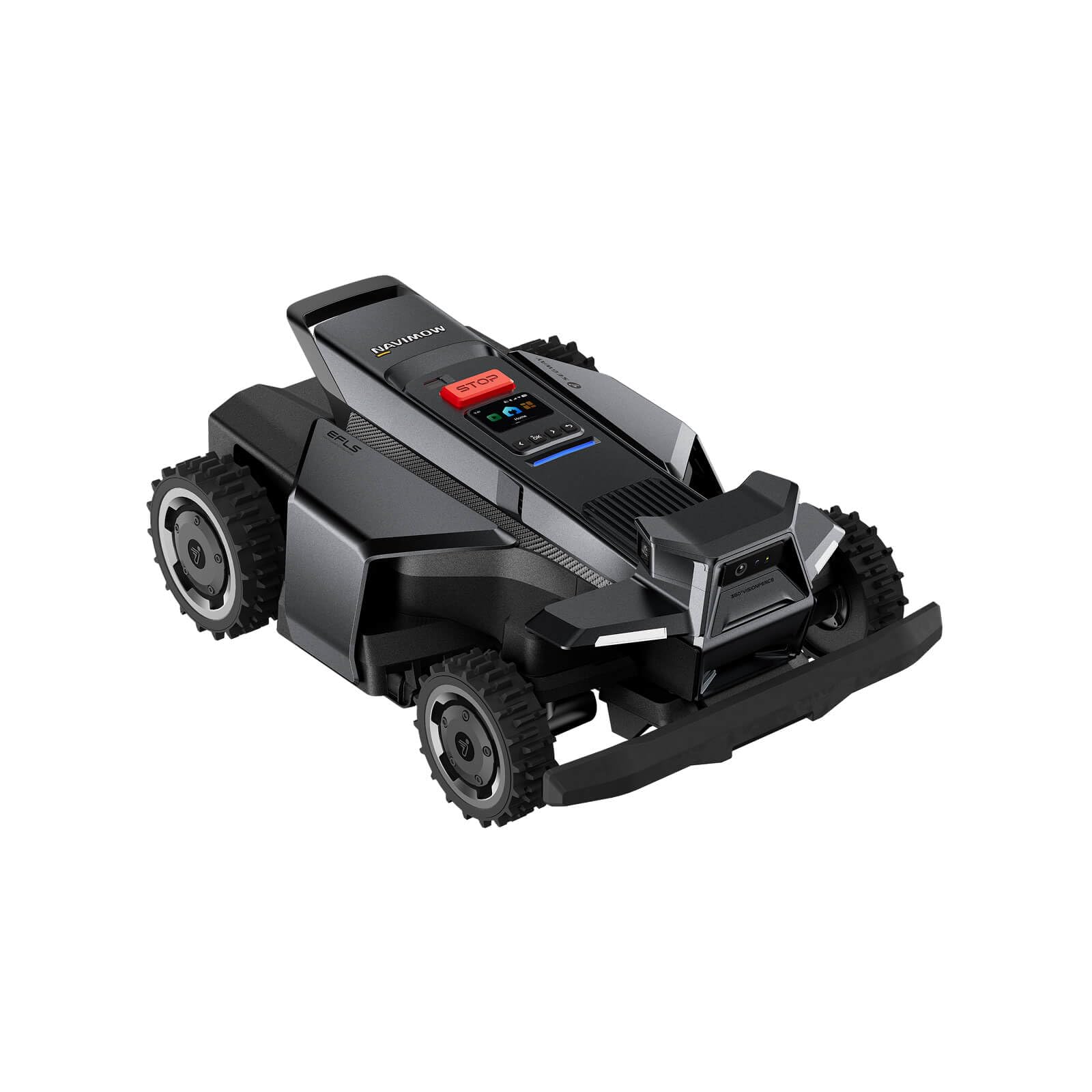
The all-wheel-drive beast that climbs what no other robot dares to approach.
If your lawn looks more like a mountain goat’s training ground, the Segway Navimow X430 is the mower that doesn’t back down. It uses EFLS tri-frequency Network RTK combined with 360° Vision and VIO (visual-inertial odometry) to keep centimeter-level accuracy even under dense tree cover. The real standout, however, is its four-wheel drive (4WD) with an ORV-tuned dual suspension system that lets it climb extreme 84% (40°) slopes and roll over obstacles up to 2.8 inches high. The cutting width is a massive 17 inches, powered by dual 180W motors and 12 blades, which means it finishes a full acre faster than any other model on this list. The EdgeSense feature trims margins to under 2 inches, so you rarely need a string trimmer behind it.
Buyers report that after a tricky initial setup (one reviewer had a defective charging dock that was replaced), the mower’s navigation is “impressive” on slopes and obstacles, and its zero-turn steering—using eccentric front-wheel drive—protects the turf from scuffing or tearing. It handles a half-acre in one session and runs quietly enough for nighttime operation. The catch is its weight: at 63.71 pounds it is noticeably heavier than most rivals, and a few owners note that low-hanging branches can confuse the vision system until you prune them. It also costs more than any other pick here, but for a steep, uneven yard it is the one that actually works without daily rescues.
Built for the extreme lawn: The X430 is the only model here that can handle 84% slopes and a full acre in one go, making it the top choice for serious hills and large properties.
Buy this if: you have a steep, large yard (0.5-1 acre) and want the most capable machine on the market—no boundary wires, no mid-mow rescues.
Consider something else if: your lawn is small, flat, and under 0.25 acre—you are paying for capability you will never use.
2. ECOVACS Goat A3000 LiDAR PRO
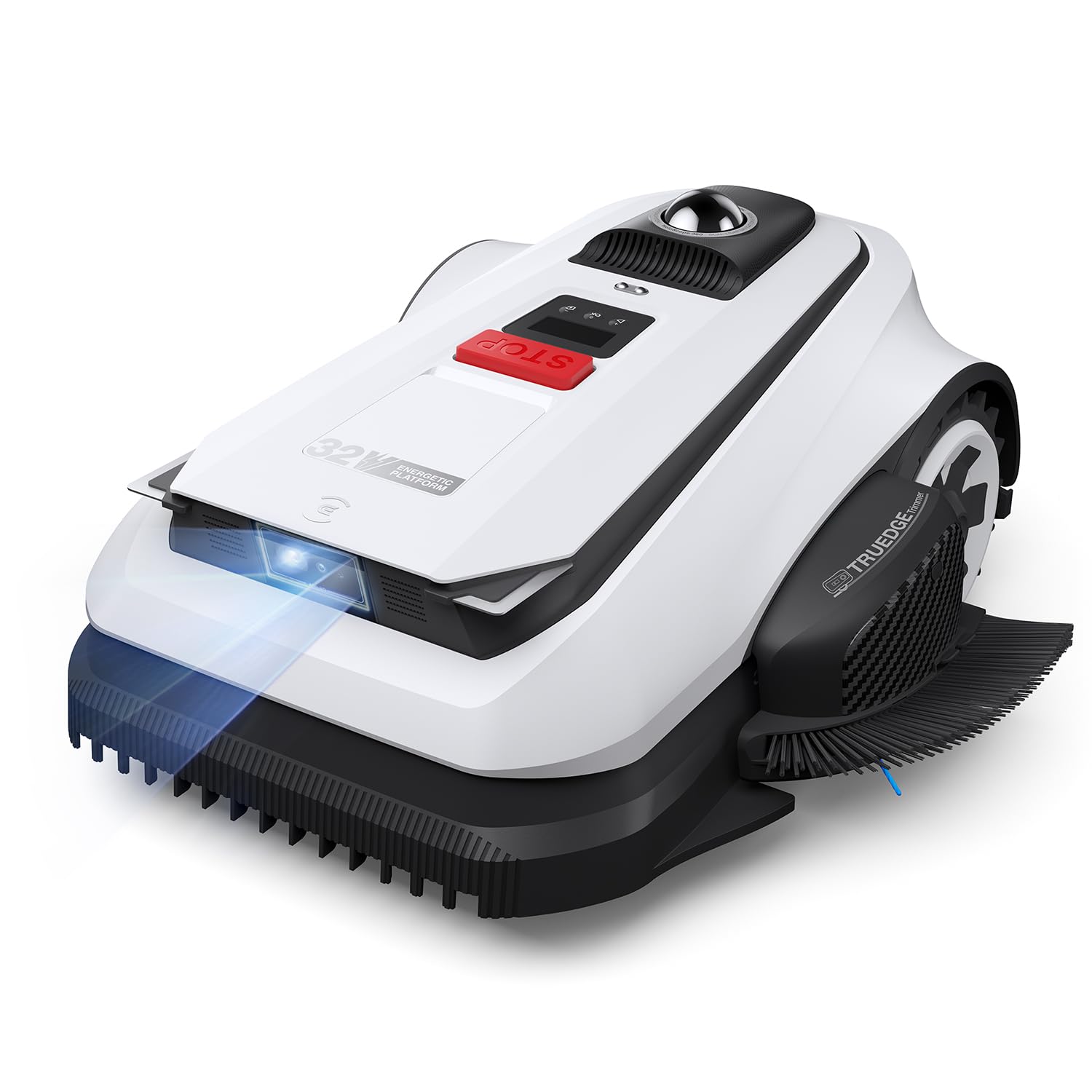
Wire-free Dual-LiDAR navigation that mows thick American grass without a single satellite signal.
Unlike mowers that rely on GPS, the ECOVACS Goat A3000 LiDAR PRO uses a HoloScope 360° Dual-LiDAR system to build a centimeter-accurate 3D map of your yard without needing an antenna or an RTK reference station. This means it navigates flawlessly under dense trees, along wooden fences, and in shaded alcoves where GPS-based units often lose their fix. Its 32V high-power dual-blade disc system is specifically engineered for tough American grass types—Bermuda, Zoysia, Fescue, and St. Augustine—and the integrated TruEdge trimmer cuts right along sidewalks and driveways to reduce manual string-trimming. The 7500 mAh battery with 189W fast charging fully recharges in approximately 70 minutes, so downtime is minimal.
Buyers consistently praise the wire-free LiDAR setup as “easy” and the cut quality as “consistent,” with one review noting that it saves over an hour per week on mowing. Owners mention it handles up to 3/4 acre and produces straight-row patterns that look professional. The primary trade-off is that the built-in TruEdge trimmer, while effective, still leaves some edges needing a quick manual pass, and a few users mention that the app-controlled mapping works best on level surfaces rather than steeply undulating terrain. At 30.24 inches deep and 22.83 inches high, it also takes up more garage space than compact models.
One reviewer noted an issue with the mower flipping near a curb, but ECOVACS covered the LiDAR damage under warranty—a sign of solid post-purchase support.
Strongest advantages
- Dual-LiDAR works perfectly in full shade and under trees
- 32V system cuts thick Bermuda and St. Augustine easily
- 7500 mAh battery with 189W fast charging recharges in ~70 minutes
A couple of real-world limits
- Built-in edge trimmer still needs occasional manual touch-up
- Large footprint (30.24″D) requires dedicated storage space
Reach for this if: your yard has lots of trees, shaded areas, or thick Southern grass and you want a wire-free setup that doesn’t depend on satellite signals.
Look elsewhere if: you have a very tight budget or a tiny lawn under 0.2 acre—the A3000 is built for mid-to-large properties.
3. MOVA LiDAX Ultra 1000
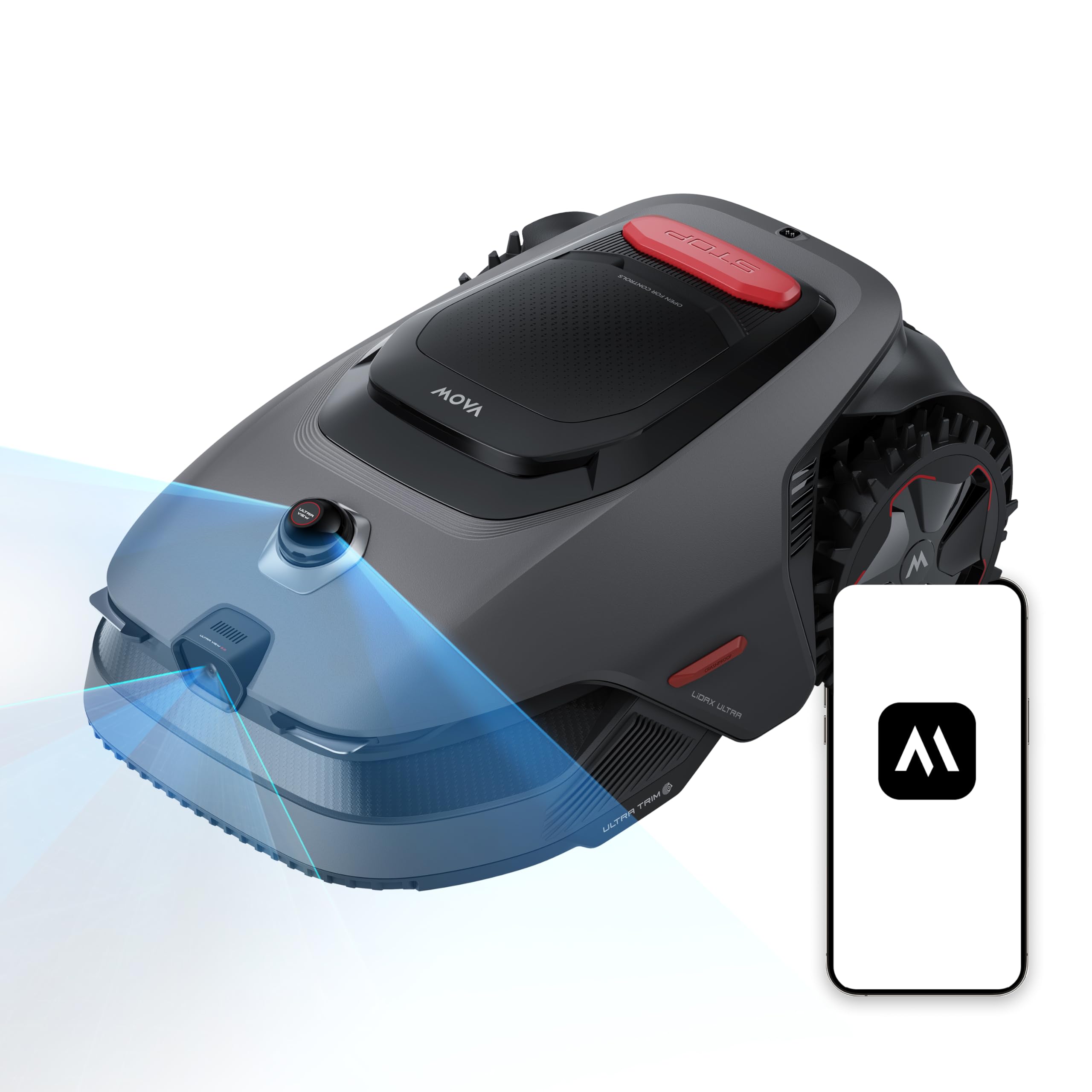
The wire-free mower that trims within 2 inches of edges using a movable disc.
The MOVA LiDAX Ultra 1000 does not need an RTK antenna station, which simplifies setup significantly. Instead, it combines a 360° 3D LiDAR sensor with AI vision to auto-map your yard in 20 minutes, achieving centimeter-level accuracy even in dim or harsh light. Its signature feature is UltraTrim 1.0, a movable cutting disc that reaches within 2 inches of walls, hedges, and raised edges—covering the gaps that most robot mowers leave behind. The cutting height adjusts from 1.2 inches to 3.9 inches, the widest range outside the Segway, making it versatile for both short Bermuda and tall fescue. It handles 45% slopes and manages up to 150 managed zones across two independent maps, which is ideal if you have a separate front and back yard or even two properties.
Customers note that the LiDAR and AI object detection accurately avoid hoses, toys, and dog droppings, and the mower’s 30-pound weight makes it easy to lift and move when needed. One review noted that the dock contacts occasionally misalign, requiring a nudge, but the overall experience is “ready for a stress-free summer.” The 3-year manufacturer warranty is the best on this list, which adds confidence for a premium purchase. The trade-off: manual mapping requires driving the mower with the phone joystick for best accuracy, and a few owners encountered a “failed to start” error early on that required a reset.
Edge-mowing champion: The movable disc design cuts within 2 inches of borders, drastically reducing the need for a string trimmer—a rare feature in this category.
Best for: homeowners who want the closest possible edge cutting without buying a separate trimmer, and who have complex multi-zone yards up to 0.25 acre.
skip it if: you prefer a “set and forget” experience with zero app interaction—manual mapping may frustrate you.
4. ANTHBOT RTK+4-Eye Vision Mower (Genie3000)
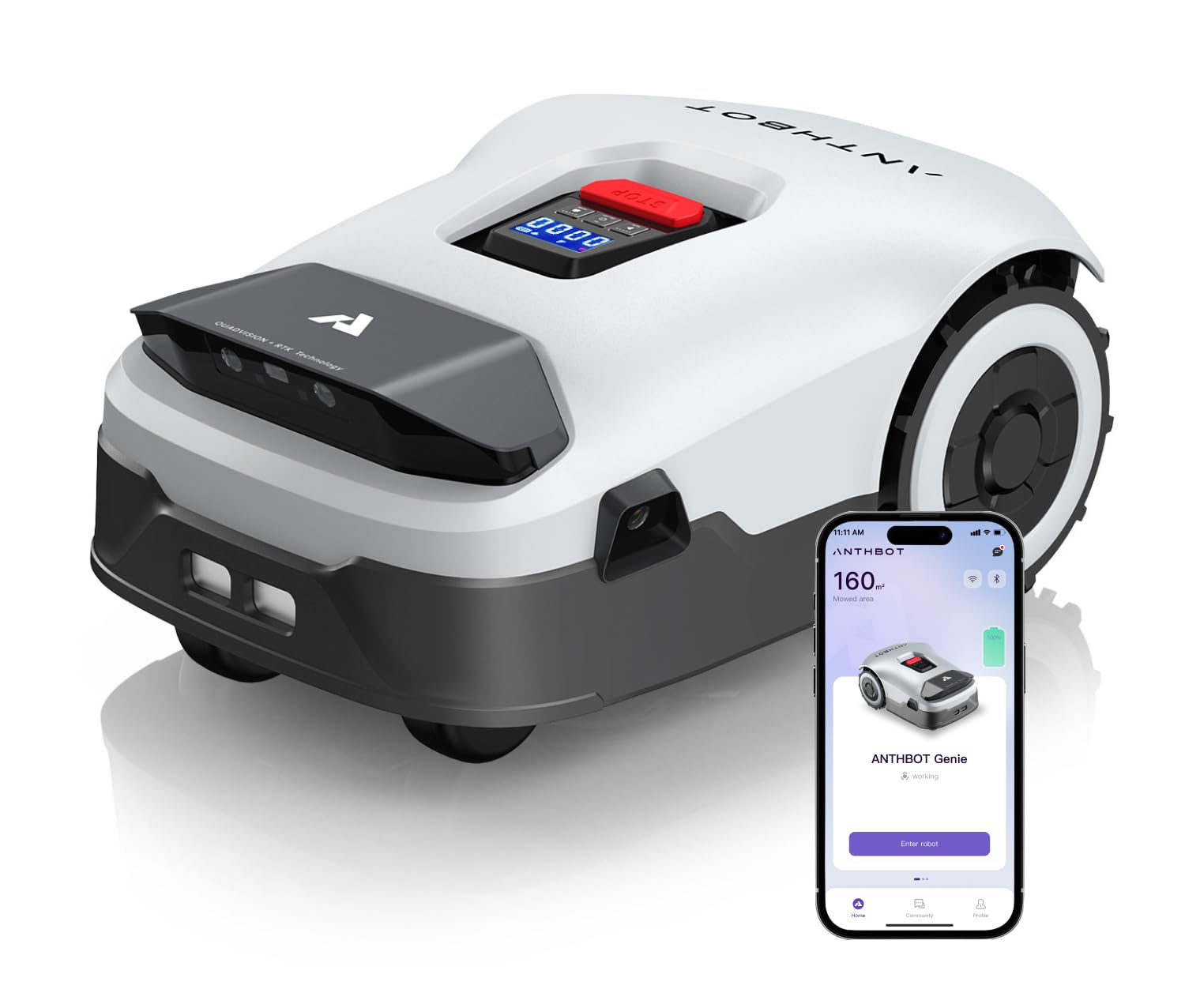
Four cameras and full-band RTK to handle dense tree cover and tricky shadows.
The ANTHBOT Genie3000 uses a Full Band RTK system paired with a human-like 3D vision positioning technology that uses four cameras to maintain precise navigation even in areas with weak or no GPS, such as under dense trees, eaves, or near buildings. It offers 30+ multi-zone management with custom no-go zones (useful for swimming pools or flower beds) and a 300° field-of-view camera that detects over 1,000 types of objects for obstacle avoidance. Cutting width is 7.9 inches, and the cutting height adjusts from 1.18 inches to 2.76 inches. The machine weighs 46 pounds and its ACC (Adaptive Cruise Control) hands-free auto-mapping creates a map automatically in about 10 minutes.
Buyers love the value proposition—one owner noted that at under it was “cheaper than lawn service” and converted skeptics. Another review from an “extreme use case” with steep, uneven terrain and spotty GPS reported that the mower handled most terrain well, avoided obstacles like a rake, and only got stuck on the steepest slopes. The key criticisms are that the app lacks some basic features (like zone splitting and a pause button) and that the mower tends to get stuck in dense bushes if you don’t set no-go zones. A long-term owner reported that after one year, the mower required a subscription for full function and displayed degraded battery performance, which is note for anyone planning to keep it for several seasons.
Value highlights
- 4-camera vision + full-band RTK works in deep shade
- 30+ zones for complex yards
- Under and cheaper than lawn service
Things to watch
- App lacks zone splitting and a simple pause button
- Subscription required after one year for full functionality
Pick this if: you want a high-end wire-free mower with multi-camera navigation at a price well below the top-tier brands.
Pass on it if: you dislike subscriptions or want a mower that is fully functional without ongoing payments.
5. WORX Landroid Vision Cloud WR320
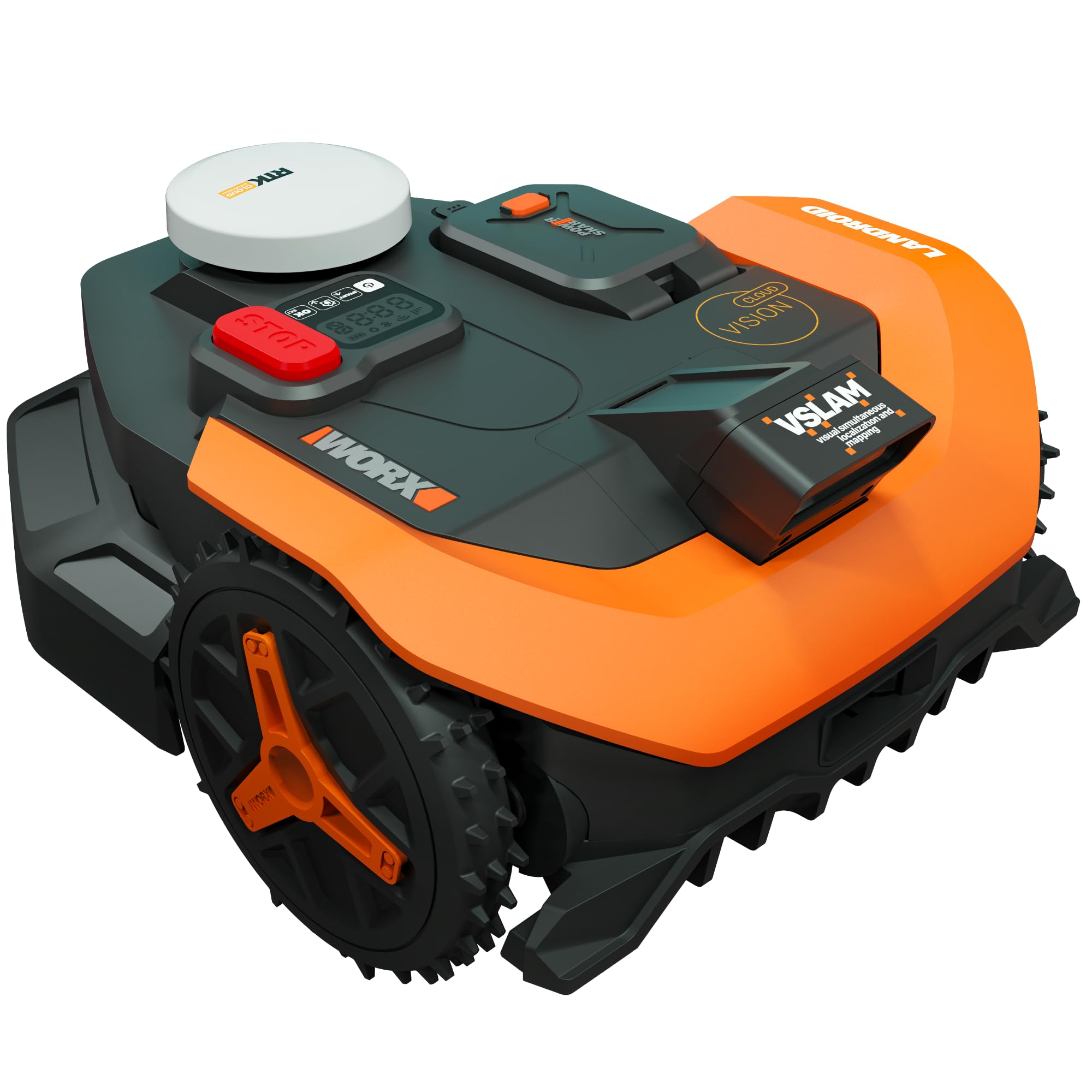
A cloud-connected brain that does 10 trillion operations per second to understand your yard.
The WORX WR320 replaces the local RTK antenna with a cloud-based RTK system, so you get centimeter-level accuracy without installing a satellite dish in your yard. Its Vision AI runs a neural network capable of “up to 10 trillion operations per second” to recognize objects and boundaries, and it uses V-SLAM sensor fusion to maintain precision even in shaded areas where pure RTK would drift. The cutting width is 8.7 inches, and the mower supports infinite mowing zones with custom pathways—a huge advantage for irregularly shaped properties. It offers four mowing patterns (Parallel, Checkerboard, Diamond, and Natural), and the Cut-to-Edge feature crosses ridable edges while trimming close along fixed borders.
Reviewers point out that the AI obstacle avoidance “reliably avoids dog toys” and that the edge-cutting system leaves a “professional striped pattern” requiring very little manual touch-up. The 2WD (two-wheel drive) model, however, struggles for traction on moderate inclines, so if your yard has significant hills, you may want to consider the 4WD version. One owner noted that after three months, the mower “repeatedly skips certain patches” for an undiagnosed reason, and the edge routine sometimes misses spots. The RadioLink connectivity extends range beyond standard Wi-Fi, which is helpful for larger lawns where Bluetooth drops out.
Best for complex layouts: The infinite zone management and cloud RTK let you map every strip of grass independently without worrying about perimeter wires or signal loss near the house.
Reach for this if: you have a large, multi-section yard and want the most intelligent path planning available—the cloud RTK eliminates the need for an antenna station.
Consider something else if: your lawn has steep slopes above 30%—the 2WD version simply does not have enough traction.
6. YARDCARE M800Plus
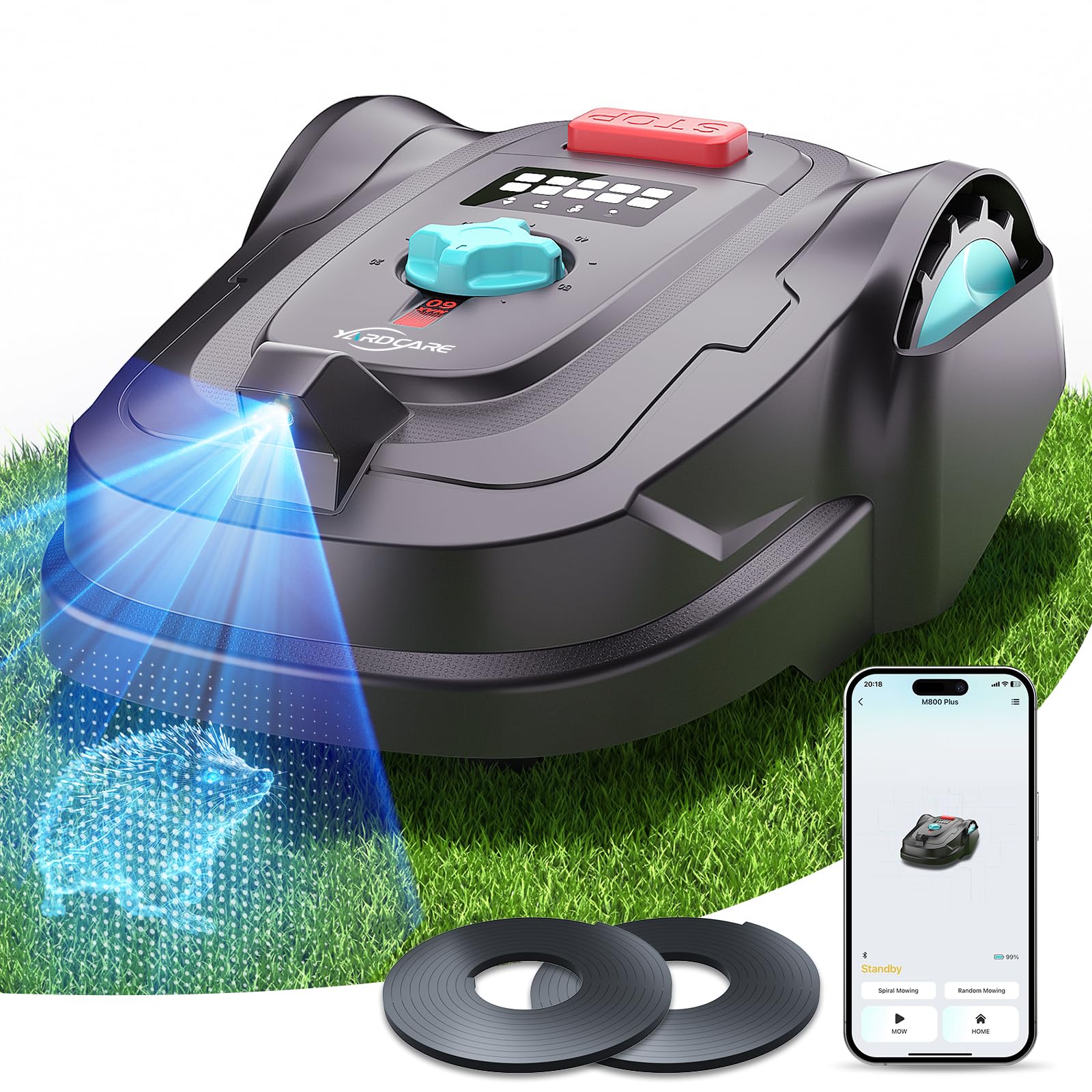
A magnetic-strip no-go system that keeps the mower away from flower beds without apps.
If the idea of drawing virtual fences in an app sounds like extra work, the YARDCARE M800Plus offers a simpler path: a 32.8-foot magnetic strip that you lay on the ground to define restricted areas. No digging, no power source—just lay the strip in a line and the mower treats it as an invisible wall. It uses a GPS and 3D vision system to identify grass versus non-grass areas, allowing fully cordless operation. The cutting height adjusts from 0.8 inches to 2.4 inches, with a 7.1-inch cutting width and a “Spiral Spot Mowing” mode that targets thicker patches of grass. It handles slopes up to 35% (20 degrees) and weighs 28.7 pounds, making it easier to carry around the yard than some of the heavier machines.
Buyers consistently report that the M800Plus saves about 3 hours per week on a half-acre property, and that the app-controlled scheduling and obstacle avoidance work well. One review mentions that “initially, if grass height exceeds 2.6 inches, manual trimming is recommended” before the first robotic cut. The mower’s U-shaped mowing path creates even coverage, but the magnetic strip can be tripped over by children or pets if it is not pegged down securely. It also lacks the self-docking feature found on some other models—no auto-return to charge, so it runs until the battery drains and then stops in place.
Why it stands out
- Magnetic strip no-go zones are simple and don’t need an app to set up
- Spiral spot mowing mode targets thicker grass patches
- GPS + 3D vision eliminates boundary wires
Limitations
- No auto-return to charging station—battery dies in place
- Magnetic strip can become a tripping hazard if not properly secured
Best for: anyone who wants a simple, wire-free mower with physical no-go zones and doesn’t mind manually returning the mower to charge.
pass on it if: you want a completely hands-off experience with automatic docking and charging.
7. ECOVACS Goat O1000 RTK CARE
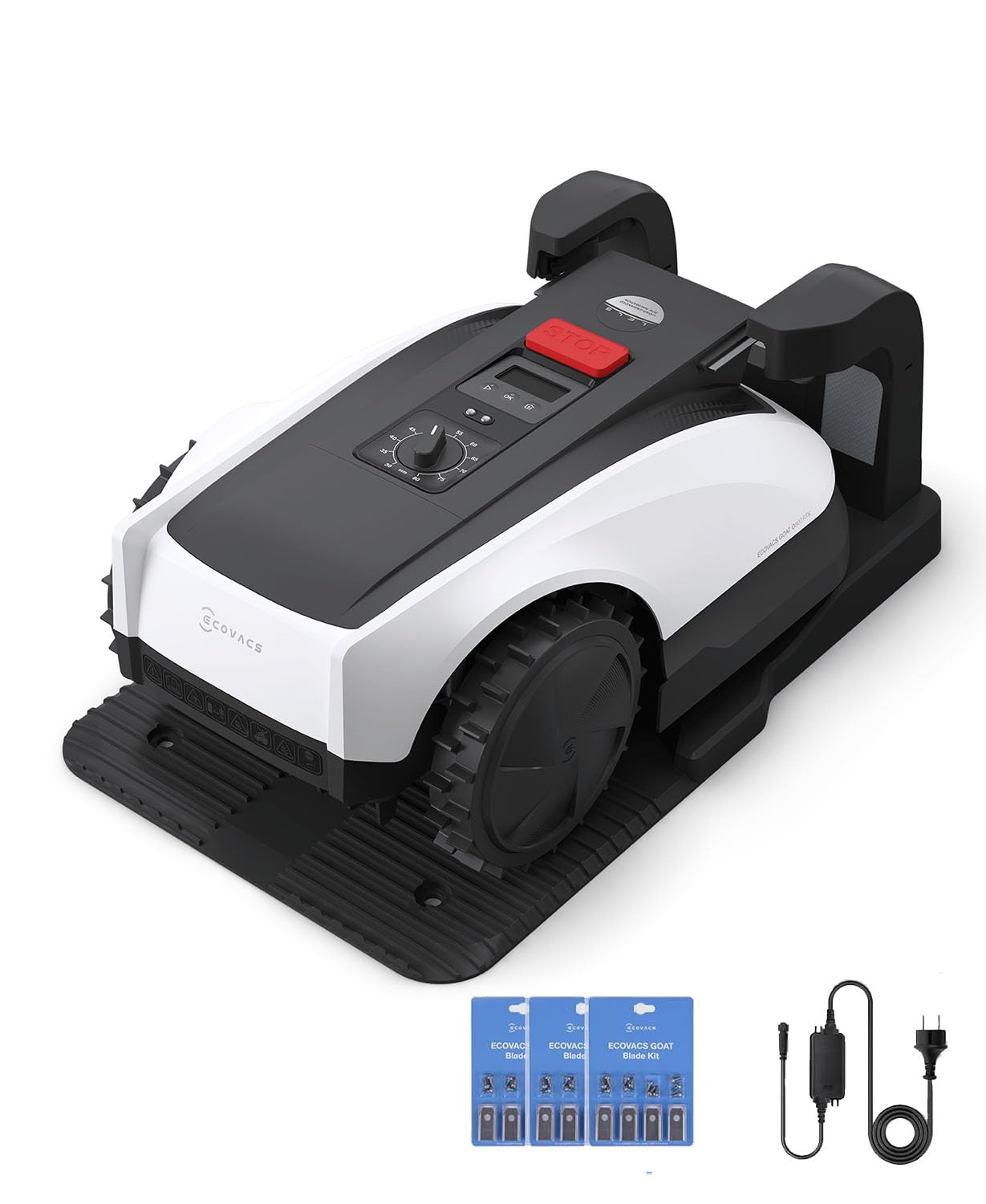
A plug-and-play RTK mower that comes with 36 extra blades so you don’t buy spares for two seasons.
The ECOVACS Goat O1000 RTK CARE bundle includes 36 additional replacement blades, which significantly extends maintenance cycles and lowers long-term cost. The mower itself uses RTK precision navigation—no perimeter wires required—and follows systematic mowing paths rather than random patterns, producing cleaner lines and even coverage. Its cutting width is 8.66 inches, with a cutting height range from 1.2 inches to 3.2 inches. The 90-minute battery life covers up to a quarter-acre per charge, and the included RTK extension cable allows you to position the antenna for optimal satellite reception, improving accuracy in yards with trees or obstacles. The ECOVACS app supports auto mapping and multi-zone management, letting you customize schedules for the front yard, backyard, and side zones separately.
Shoppers say that the setup is straightforward—one owner said “easy setup via quick guide” but noted that the auto-mapping failed due to many edges, requiring a manual map that then worked “perfectly.” The mower finishes the yard “on one charge with 15% battery left” and never falls or strays from the map. However, some users point out major gaps: there is no “path to yard” function, meaning the charging station path is confusingly added to the mowing area, and the app occasionally shows notifications in Chinese with vague error messages. Customer support is reportedly slow, with no response within 1-2 business hours during the day. The Goat O1000 does not feature LiDAR, so it relies entirely on RTK satellite signals, which can struggle in very deep shade.
Long-term value: The 36 spare blades alone save you roughly -50 in the first year, making this bundle a smart buy for anyone who hates buying consumables.
Reach for this if: you want a reputable brand with a simple RTK setup and prefer buying a bundle that includes two seasons’ worth of blades.
Look elsewhere if: your yard has lots of deep shade or complex edges—the Goat O1000 needs clear sky for optimal RTK performance.
8. ANTHBOT M9
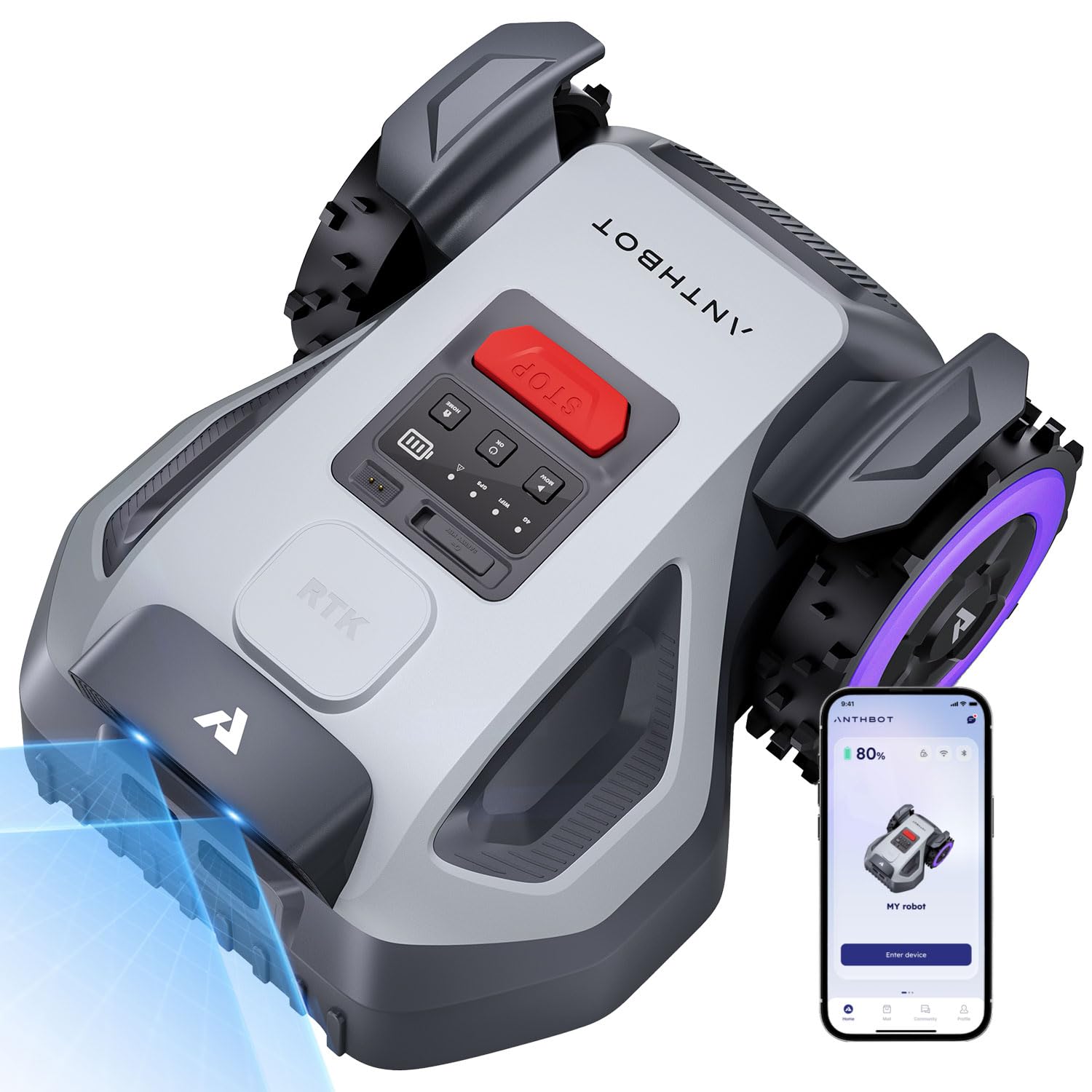
A budget-friendly wire-free mower that handles 45% slopes and auto-maps in 10 minutes.
The ANTHBOT M9 is one of the more affordable ways to get into wire-free robot mowing. It uses a Dual AI Vision system combined with NRTK (Network RTK) technology for centimeter-level precision, and it auto-maps your lawn via the app in about 10 minutes without needing you to manually drive it around. The cutting width is 7.9 inches, and the height adjusts from 1.2 inches to 2.7 inches via a 5-position system. It climbs slopes up to 45%, making it suitable for over 99% of residential yards. The five free-rotating blades create a carpet-like finish, and the mower can manage up to 30 work zones with customizable no-go areas. Operating noise is ≤58 dB, so it is quiet enough to run while you are on the patio.
Buyers report that the M9 “handles 1/2 acre easily” despite the conservative 1/4 acre rating, and that the obstacle avoidance reliably avoids objects. One buyer mentioned that the setup took about an hour but that the app was “intuitive” for scheduling zones. However, several reviews mention persistent network and communication errors—one owner said the mower “gets lost, spins in circles” and “never fully mowed yard in 3 weeks,” ultimately returning it for a refund. The M9 lacks the 4-camera system of its bigger brother (the Genie3000), so its vision is slightly less sturdy in deep shade. This is a solid entry-level wire-free option, but the reliability complaints suggest it is not yet as polished as the premium models.
What we like
- Wire-free with automatic mapping in 10 minutes
- 45% slope capacity for most hills
- ≤58 dB noise level—very quiet
What gives us pause
- Some units suffer persistent navigation errors and “spinning” behavior
- Vision system struggles in deep shade compared to the Genie3000
Best for: first-time robot mower buyers who want to try wire-free navigation without spending, and have a relatively open lawn with good GPS visibility.
Pass on it if: you have a heavy shade lawn or zero tolerance for occasional malfunctions—the reliability track record here is mixed.
9. YARDCARE N1600 PRO
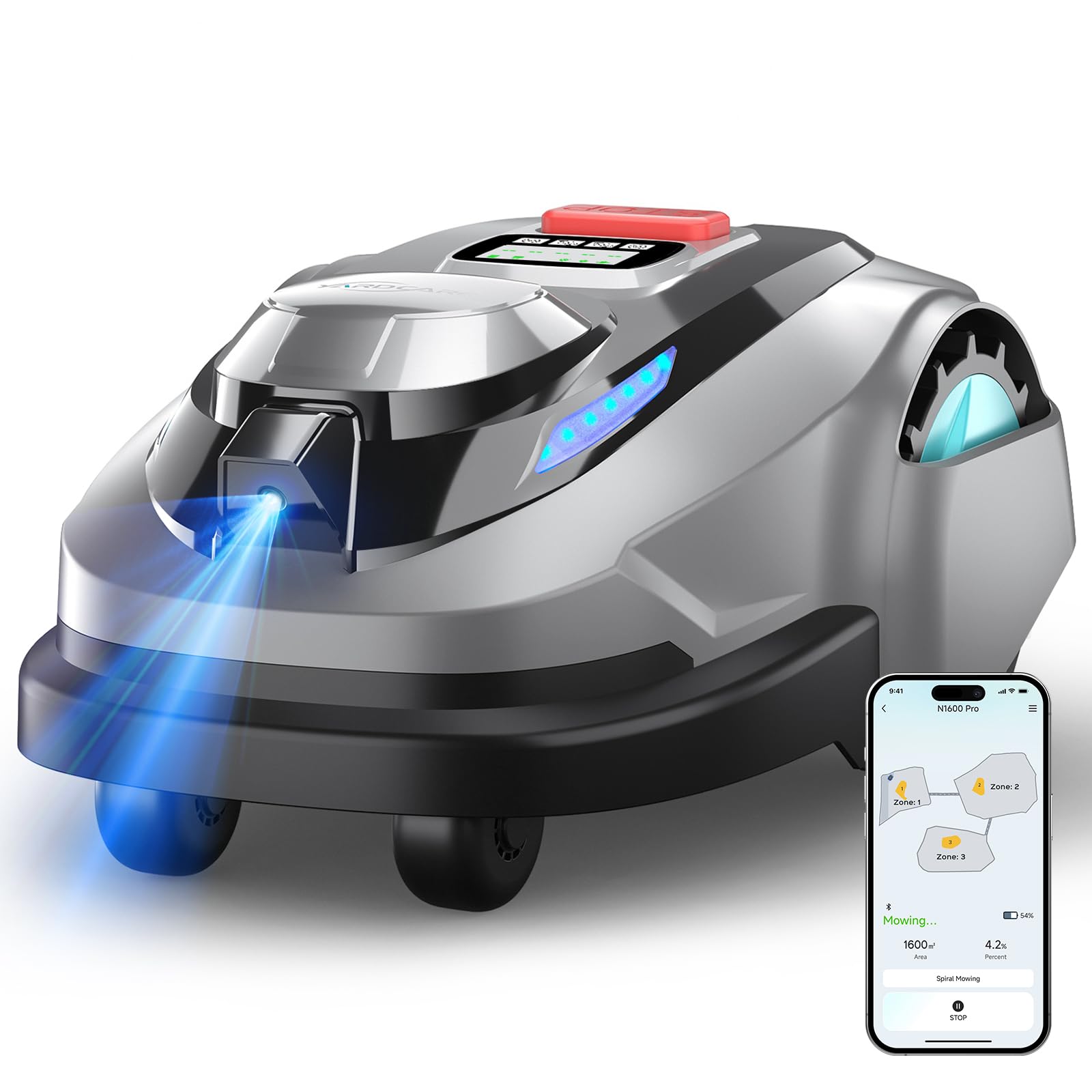
The mower that creates professional striped lawn patterns with RTK and vision accuracy.
The YARDCARE N1600 PRO pairs RTK positioning with AI visual navigation to achieve centimeter-level accuracy for systematic mowing that creates consistent, straight-line “striped” patterns across your lawn. It has the widest cutting height adjustment range on this list—from 0.8 inches at the minimum up to 2.4 inches at the maximum, across 17 positions—so you can fine-tune the grass length more precisely than with any other model reviewed here. The cutting width is 7.09 inches. It handles slopes up to 20°, and its brushless motor and strong traction deliver clean edges even on uneven terrain. At 39.5 pounds and 23 inches deep, it is a solid, substantial machine.
Owners mention that the app control is intuitive, allowing remote start, stop, scheduling, and real-time status checks. One owner reported it “produces systematic, professional-looking striped cuts.” However, the negative reviews are severe and consistent: multiple customers note that the app mapping fails repeatedly and that YARDCARE customer support is nearly impossible to reach. One buyer wrote, “Setup easy, but app mapping failed; no troubleshooting or support number in manual; customer support hard to understand with background noise; issue widely reported with no resolution.” Another owner called it a “waste of money,” saying the mower “constantly gives error messages” and that the support team sent a Chinese-language video that was useless. Compared to the ANTHBOT M9, the N1600 PRO is heavier (39.5 lbs vs 21.6 lbs) and has a smaller cutting width, but it offers more cutting height positions—a trade-off that only matters if you obsess over grass length.
For the perfectionist: The 17-position cutting height adjustment is class-leading, but the widespread customer support complaints make this a risky buy for anyone who values low-maintenance ownership.
Buy this if: you are willing to gamble on setup and support for the unique ability to dial in 17 different cutting heights for that perfect striped look.
Avoid it if: you want a reliable, support-backed product—the pattern of unresolved mapping failures is a serious red flag.
10. LawnMaster OcuMow VBRM601YCM MAX
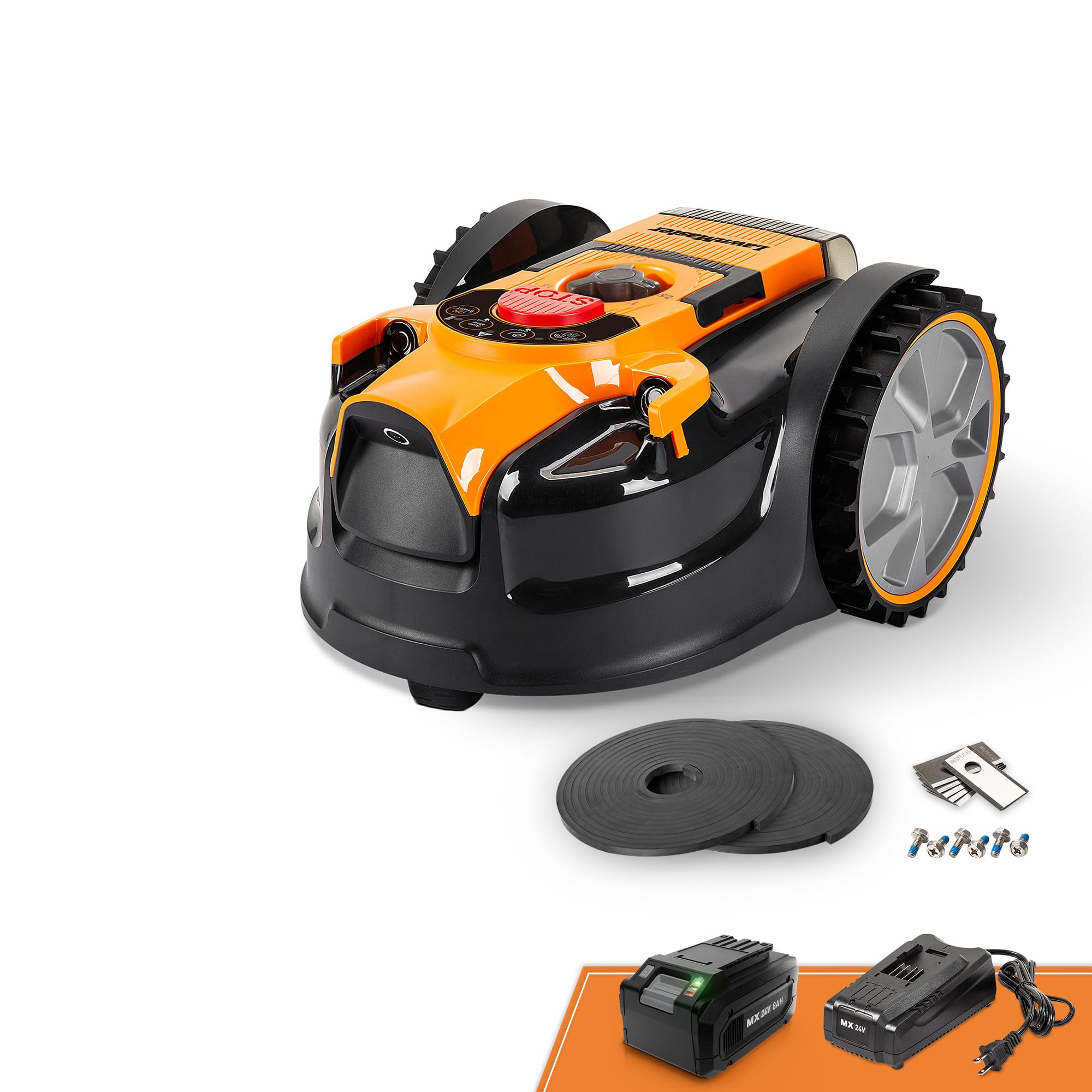
A simple, app-free drop-and-mow robot for small yards that costs less than a decent trimmer.
If you have a small lawn between 2000 and 3500 square feet and do not want to mess with apps, Wi-Fi, or satellite antennas, the LawnMaster OcuMow VBRM601YCM MAX is the most straightforward option here. It uses optical navigation (a wide-angle camera and ultrasonic sensors) to identify grass and avoid objects as small as 6 inches, and a “Drop-N-Mow” function so you just place it on the lawn, push start, and let it run. The included 32-foot magnetic strip creates no-go zones without any power source. It climbs up to 35% slopes and runs for up to 4 hours on a single charge with the included MX 24V 8.0Ah battery. The cutting width is 6.0 inches, which is the narrowest on this list—33% narrower than the ANTHBOT M9’s 7.9-inch cutting width—so it takes longer to cover the same area but navigates tighter gaps.
Reviewers point out “excellent battery life (two batteries needed for all-day use), handles slopes well, blades last all summer” and that the magnetic strips work perfectly to keep it off the driveway. However, the OcuMow uses a random mowing pattern rather than systematic path planning, so it can miss patches. One review noted that it “cuts only 6 inches, avoids tall weeds, produces uneven zigzag pattern.” It is best suited for flat, simple yards with clear rectangular shapes. There is no charging dock—the mower stops when the battery dies and you must manually bring it back to charge. At 10.71 pounds, it is 3.7 times lighter than the YARDCARE N1600 PRO (39.5 pounds), making it easy to carry. The trade-off: you give up all smart features, which is fine if you just want a cordless mower that drives itself.
Simple and cheap
- No app, no phone, no Wi-Fi—just drop and mow
- 3.7x lighter than the YARDCARE N1600 PRO at 10.71 lbs
- 32-foot magnetic strip works without power
The trade-offs
- Random mowing pattern misses patches
- 6-inch cutting width is narrow—slower on larger lawns
- No auto-return to charging station
Perfect for: small, simple lawns up to 3500 square feet, budget-conscious buyers, or people who want a robot mower that works entirely offline.
Not for you if: your yard has complex shapes, you want a professional-looking striped pattern, or you need a hands-off experience with automatic docking.
Understanding the Specs
RTK vs LiDAR vs Vision Navigation
RTK (Real-Time Kinematic) is a GPS-based system that uses a fixed reference station to achieve centimeter-level accuracy from satellites. It works great in open yards but can lose signal under thick tree cover or near buildings. LiDAR (Light Detection and Ranging) bounces laser beams off surfaces to build a 3D map of the yard, working perfectly in full shade and even indoors—no satellite needed at all. Vision navigation uses cameras and AI to recognize grass, obstacles, and boundaries, often relying on visual patterns rather than lasers. Some premium mowers combine all three (RTK + LiDAR + Vision) for redundant positioning. For most buyers, LiDAR or a dual RTK+Vision system offers the best real-world reliability without wire installation.
Cutting Width and Mowing Pattern
The cutting width (measured in inches) determines how wide a swath the mower cuts in a single pass. A wider width, like the Segway’s 17 inches, finishes faster but produces a more visible stripe pattern. Narrow widths (6 to 8 inches) are slower but fit through tight gates and between flower beds. Mowing patterns matter just as much: “random bouncing” leaves missed patches and requires more runtime to achieve full coverage, while “systematic” patterns (parallel zigzags, U-shapes, or checkerboards) cover every square inch in fewer passes. Every mower reviewed here that costs more than a budget model uses systematic path planning, which is the feature most likely to save you from running a trimmer afterward.
FAQ
Will a robot mower work on a steep slope?
Do I need to bury boundary wires for a robot mower?
How long does a robot mower battery last?
Can a robot mower cut wet grass?
How often do I need to replace the blades on a robot mower?
Does a robot mower need Wi-Fi to work?
What is the difference between RTK and LiDAR in a robot mower?
Can a robot mower handle flower beds and garden borders?
How heavy is a typical robot mower?
Will a robot mower scare my pets or children?
Final Thoughts: The Verdict
Across the board, the automatic robot lawn mower winner is the Segway Navimow X430 because its 4WD, 17-inch cutting width, and extreme 84% slope capability cover the most ground with the least effort. If you want the closest edge cutting and a 3-year warranty at a lower price, grab the MOVA LiDAX Ultra 1000. And for the best value on a small, simple lawn that does not need an app, the standout is the LawnMaster OcuMow VBRM601YCM MAX for sheer affordability and ease.
How We Picked
We do not accept paid placement, and we did not hands-on test every unit. Instead, we match each pick to a real buyer and use-case by comparing the manufacturers’ published specifications against the patterns in verified customer reviews — so you get each pick’s real strengths and trade-offs instead of marketing copy.
Sources & Methodology
Specifications: manufacturer listings and product documentation. Review insights: verified customer reviews, as of July 2026. Pricing: not shown on this page (it changes often); check the current price via the retailer link.
As an Amazon Associate, Gadgets Feed earns from qualifying purchases. This does not affect which products we feature.
Product prices and availability are accurate as of the date/time indicated and are subject to change. Any price and availability information displayed on Amazon at the time of purchase will apply to the purchase of this product. As an Amazon Associate I earn from qualifying purchases.
CERTAIN CONTENT THAT APPEARS ON THIS SITE COMES FROM AMAZON. THIS CONTENT IS PROVIDED "AS IS" AND IS SUBJECT TO CHANGE OR REMOVAL AT ANY TIME.
Amazon and the Amazon logo are trademarks of Amazon.com, Inc. or its affiliates.