
The moment a door cracks open when it shouldn’t, the difference between confusion and action is the system you chose. A truly automatic security alarm doesn’t just make noise—it decides for you, instantly translating a breach into a specific response. That response might be a 120dB siren, a silent SMS to your phone, or a direct dispatch to a monitoring center, but it must happen without you fumbling for an app. The right system anticipates the failure points—power outages, Wi-Fi drops, and the five-second window where an intruder decides to flee or proceed.
I’m Min — the co-founder and writer behind Gadgets Feed. I’ve spent hundreds of hours combing through technical specifications, user reports, and price-tier analysis for consumer security systems to separate the reliable from the merely loud.
After analyzing seven of the most compelling kits available, this guide to the best automatic security alarms will help you cut through the noise and match a system to your actual security priorities, whether that means cellular backup or a multi-door sensor suite.
How To Choose The Best Automatic Security Alarms
Selecting the right alarm system starts with understanding that not all wireless protocols are equal, and that the most expensive system is rarely the most effective for your specific layout. The true cost of a system is not its sticker price but the monthly subscription you didn’t account for or the sensor gap that leaves a vulnerable window unwatched. Focus on three pillars: connectivity resilience, sensor granularity, and the absence of hidden fees.
Connectivity and Backup Paths
An alarm that only works on Wi-Fi is an alarm that can be silenced by a simple router jammer or a residential power flicker. Prioritize systems that offer dual-path communication—Wi-Fi for primary alerts and cellular (4G/LTE) as a hard failover. The YoLink system uses LoRa, a long-range radio protocol that bypasses your Wi-Fi network entirely for local device communication. If you live in an area with spotty broadband, look for a system with a built-in GSM module that can send SMS and place calls even when the internet is out. The OSI system even supports a SIM card for independent cellular alerts.
Sensor Ecosystem and Expansion Limits
Kit size matters less than maximum expansion capacity. A 15-piece kit is generous for a one-bedroom apartment, but if you plan to protect a three-story home, you need a base station that can handle 60, 100, or even 160 sensors. Pay attention to the sensor types included: magnetic contact sensors for doors and windows, passive infrared (PIR) motion detectors with pet immunity (typically up to 60 pounds), and the availability of specialty sensors like glass-break, smoke, water leak, or tilt sensors. Systems that lock you into a proprietary ecosystem with limited third-party expansion may trap you down the line.
Monitoring Philosophy: Self vs. Professional
Decide whether you want your alarm to simply notify you and its neighbors (self-monitoring), or whether it should initiate a police/fire dispatch chain (professional monitoring). Self-monitoring eliminates monthly fees entirely—a strong draw for budget-conscious buyers. However, if you travel frequently, work night shifts, or live alone, professional monitoring (typically –/month with no long-term contract) provides a backup human responder who can verify an alarm within seconds. Several systems, including SimpliSafe and Ring, offer both paths and let you switch between them without hardware changes.
Quick Comparison
On smaller screens, swipe sideways to see the full table.
| Model | Category | Best For | Key Spec | Amazon |
|---|---|---|---|---|
| Ring Alarm 8-Piece Kit | Premium Mid-Range | Whole-home security integration | Cellular backup; expandable ecosystem | Amazon |
| OSI Alarm Gen 2 | Premium DIY | Large homes with many entry points | 160-Sensor capacity; 4G connectivity | Amazon |
| SimpliSafe 11 Piece Gen 3 | Premium Value | Professional monitoring without contracts | 5-second agent alarm response | Amazon |
| Arlo Home Security | Premium Pick | Multi-sensing per device | 8-in-1 sensor functions | Amazon |
| tolviviov 15-Piece Kit | Mid-Range | Budget-friendly expandable setup | 120dB siren; 20-sensor max | Amazon |
| LWOHSI PG108 | Mid-Range | WiFi + 4G backup on a budget | 100-sensor capacity; GSM calling | Amazon |
| YoLink Power Fail & Cellular Hub | Budget Champion | Power loss and remote monitoring | LoRa 1/4-mile range; 110dB siren | Amazon |
In‑Depth Reviews
1. Ring Alarm 8-Piece Kit (newest model)
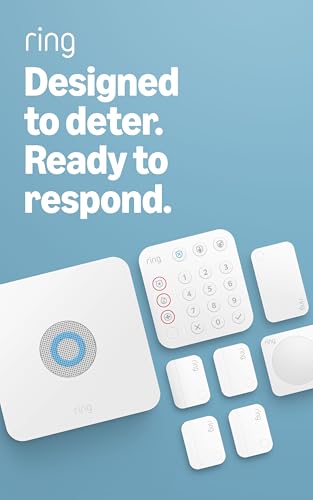
The Ring Alarm 8-Piece Kit is the most well-rounded entry point into a connected home security ecosystem. It includes a base station, keypad, four contact sensors, a motion detector, and a range extender—enough for a 1–2 bedroom home. The base station features cellular backup via AT&T, which keeps your system active even if your home Wi-Fi and power go down, a critical safety net that most budget kits skip. The keypad is intuitive, with dedicated emergency buttons for police, fire, and medical response, and the Ring app provides granular control over sensor alerts and system arming modes.
Integration with the wider Ring ecosystem is the kit’s strongest asset. Pair it with Ring cameras, a video doorbell, or smart locks (like Schlage) and you can arm or disarm the system directly from your deadbolt. The optional Ring Protect Plan (/month or /year) unlocks professional monitoring with 24/7 police, fire, and medical dispatch, plus cellular backup permanence. Without a subscription, the system still functions as a highly capable self-monitored alarm that sends push notifications and triggers the 100dB+ siren when a sensor is breached. The CR2032 batteries in the miniature sensors last roughly a year, and the thoughtful cable management in the base station makes for a clean installation.
One notable downside is that the 14-piece variant ships as individual components with staggered arrival dates, which can be frustrating. The base station cord is also shorter than ideal for some wall placements. However, the software is polished, false alarms are rare due to the lack of a glass-break sensor (which often triggers on noises like slamming cabinets), and the system integrates seamlessly with Alexa voice control. For a user who wants one app to control their entire security, camera, and lighting suite, this is the most refined option available.
Why it’s great
- Cellular and battery backup for power and internet outages
- Polished app with granular per-sensor alerts and zone control
- Seamless integration with Ring cameras, doorbells, and Schlage locks
Good to know
- Professional monitoring requires a paid subscription
- Base station power cord is relatively short
2. OSI Alarm System Gen 2 (4G), 11pc
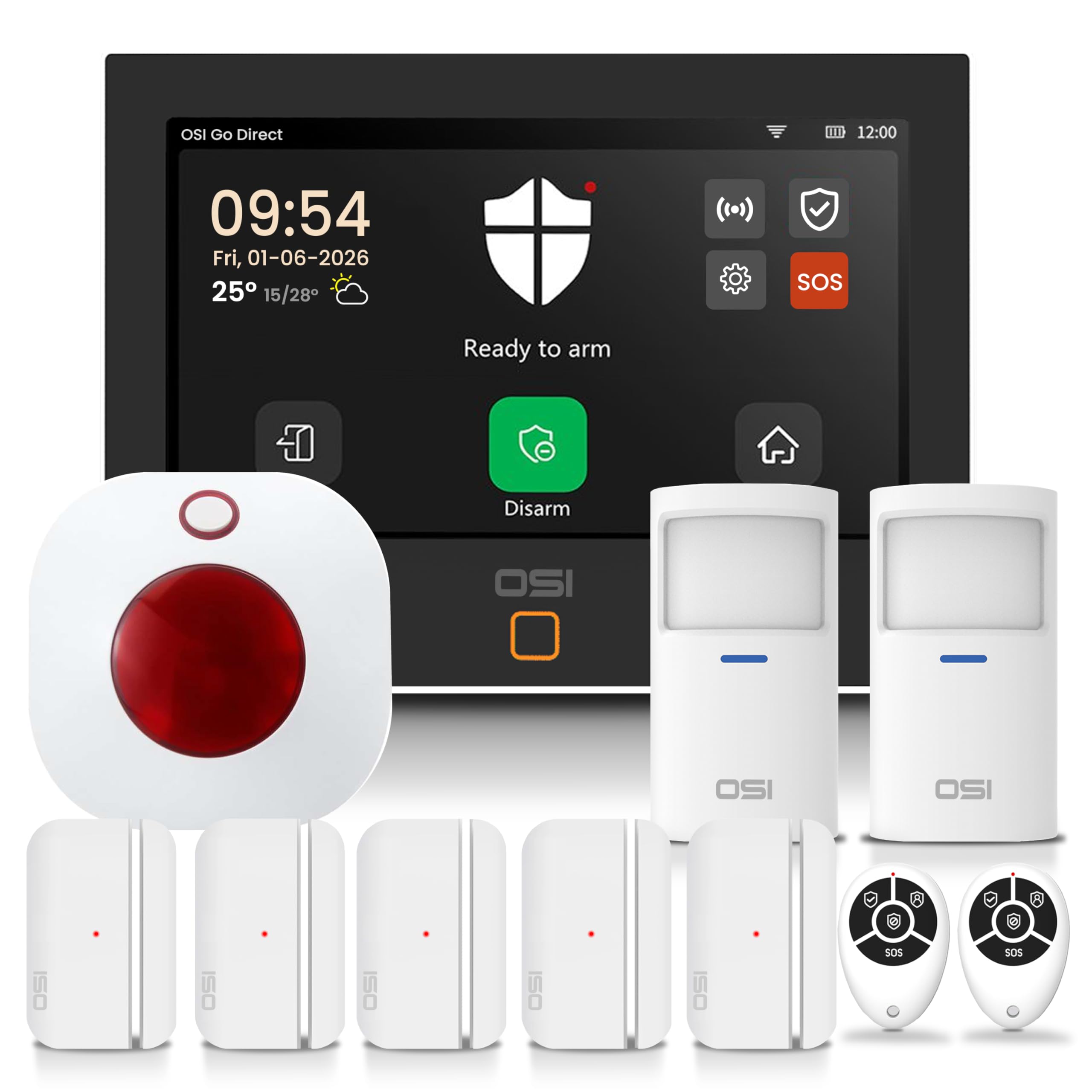
The OSI Alarm Gen 2 delivers a premium touchscreen experience rarely seen at its price point. The 7-inch HD (1024×600) anti-fingerprint control panel serves as the system’s brain and includes an intuitive setup wizard that guides you through sensor pairing step by step. The 11-piece kit includes two motion sensors, five contact sensors, a wireless strobe siren, and two remote controllers. What sets the OSI apart is its 4G connectivity: you can insert a SIM card with a standard talk/text plan (not included) to receive SMS alerts and calls independent of your home internet, or opt into full 24/7 professional monitoring for /month with no contract.
The system’s scalability is unmatched. It supports up to 160 wireless sensors, 6 keypads, 6 doorbells, and 6 remote controllers, making it suitable for sprawling homes, small businesses, or multi-unit landlords. The 433MHz radio frequency used by the sensors penetrates concrete and rebar walls effectively, which is a significant advantage over some 2.4GHz-only competitors. The backup battery is rated for 24 hours, and the SOS panic button on the panel, remote, and app triggers an immediate siren and pushes notifications to all shared users. The inclusion of multiple user access levels—one admin and five limited accounts—makes it particularly useful for Airbnb properties where you want to lock guests out of system settings.
The main compromise is software polish. The Smart Life app works reliably but doesn’t offer an event history delete function, and the plug-in siren occupies two outlet spaces. The panel’s “Disarm” text is always shown even when armed, which is a minor UX quirk. That said, the build quality is excellent for the price, the touchscreen interface is responsive, and the ability to self-monitor with zero monthly fees while retaining 4G SMS fallback is a powerful combination. Users also report excellent customer support and regular over-the-air firmware updates.
Why it’s great
- 7-inch 1024×600 touchscreen with easy setup wizard
- Supports up to 160 sensors for massive scalability
- Optional 4G cellular backup via SIM card slot
Good to know
- SIM card for SMS alerts is sold separately and requires a monthly plan
- The Smart Life app lacks an event history deletion feature
3. SimpliSafe 11 Piece Wireless Home Security System Gen 3
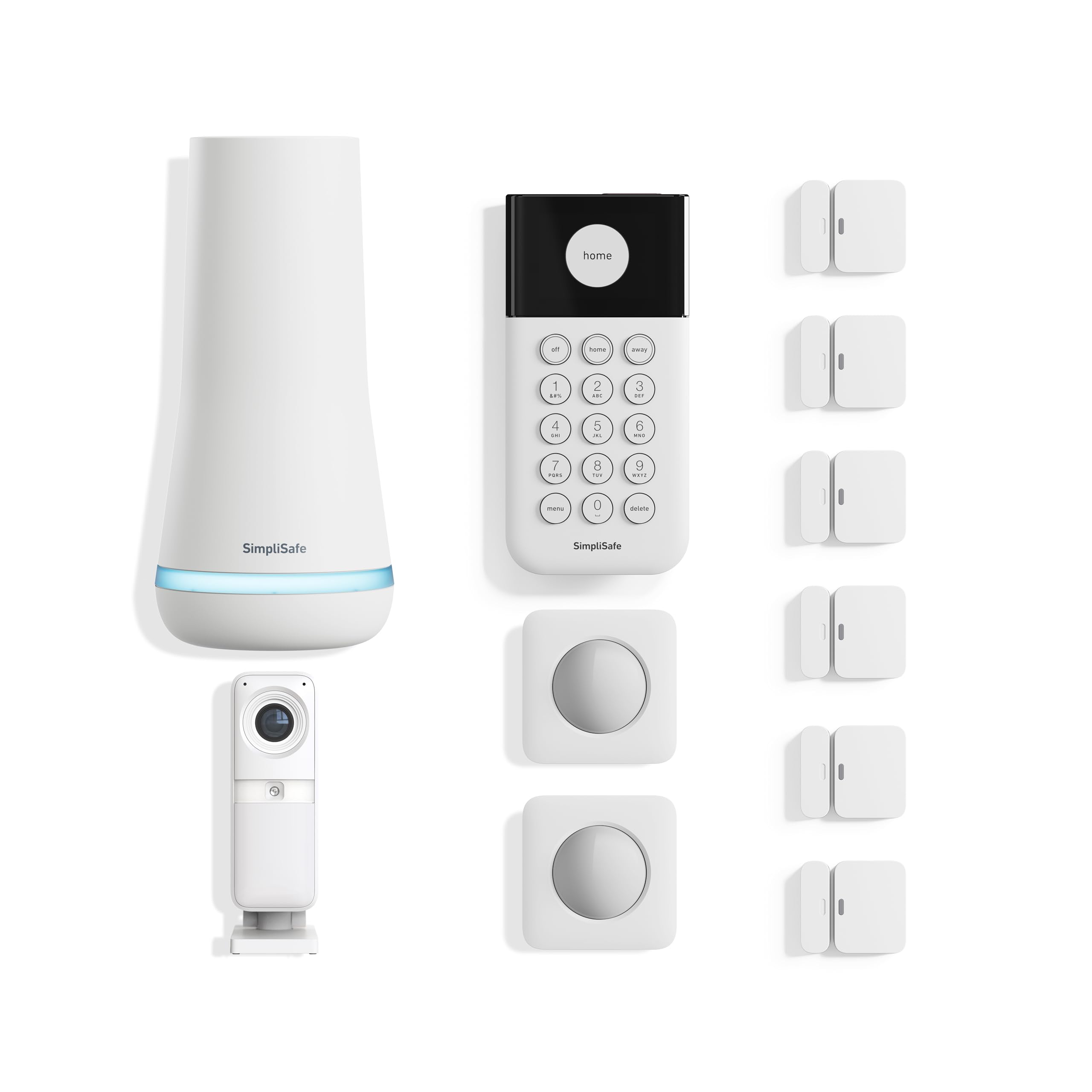
SimpliSafe’s Gen 3 system is engineered for one thing above all else: speed. The optional Fast Protect professional monitoring plan guarantees that a monitoring agent will act on an alarm within 5 seconds, using live two-way audio from the included wireless indoor HD camera to visually verify the intrusion and speak to the perpetrator. This video verification can trigger priority police dispatch, shaving critical minutes off emergency response. The 11-piece kit includes the base station, one indoor camera, a keypad, two motion sensors, and six entry sensors—sufficient for a two-bedroom apartment or small house with multiple entry points.
Installation is genuinely tool-free. The base station plugs in, sensors stick to doors and windows with pre-applied adhesive, and everything pairs automatically via the SimpliSafe app. The base station has a 24-hour backup battery and cellular backup (with a monitoring plan), so it remains operational during power and internet outages. The motion sensors have pet immunity for animals under 60 pounds with a 90-degree field of view up to 35 feet, which reduces false alarms from indoor pets. The system also supports Alexa and Google Assistant voice control, allowing you to arm and disarm hands-free.
The trade-offs are typical of the SimpliSafe ecosystem. Basic self-monitoring works without a subscription—you get push notifications and the alarm sounds—but many advanced features are locked behind a plan. Open/close event logs, camera recording, and cellular backup all require monthly payment. The included indoor camera has acceptable but not great image quality compared to dedicated security cameras. The keypad is “smash-safe,” meaning the buttons go dark when not in use, but custom sensor names do not carry over to voice announcements. Despite these limitations, the system is remarkably stable with almost zero false alarms reported by long-term users, and its modular design ensures you can add sirens, extra keypads, and glass-break sensors as needed.
Why it’s great
- 5-second professional monitoring agent response time
- Video verification triggers priority police dispatch
- Tool-free DIY installation in under an hour
Good to know
- Cellular backup and event logs require a paid subscription
- Camera resolution is lower than dedicated smart cameras
4. Arlo Home Security System SS1501
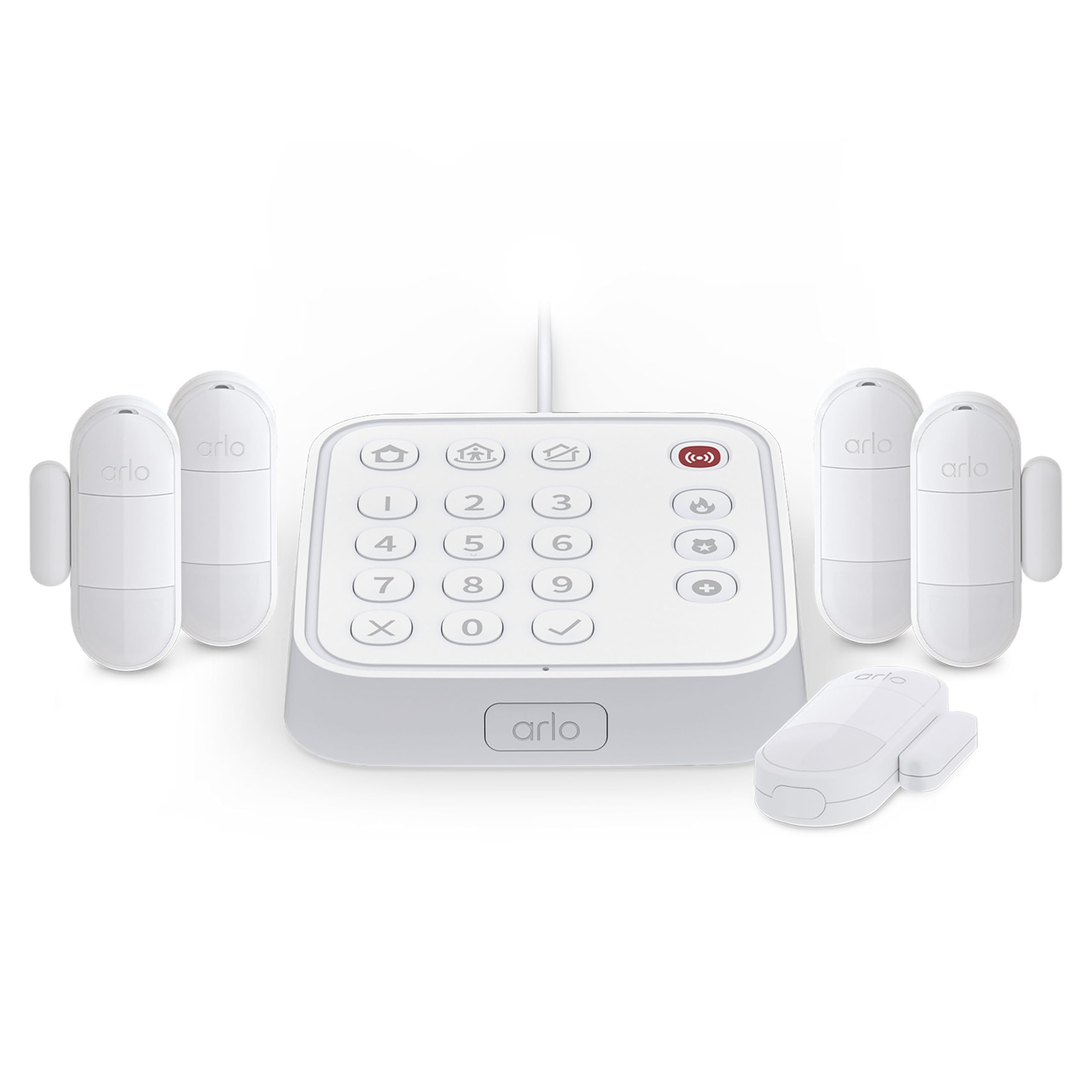
Arlo’s home security system reimagines the sensor itself. Instead of separate magnetic contact, motion, temperature, and leak sensors, the system uses five “All-In-One” sensors that each pack eight sensing functions into a single compact unit. One device can serve as a door/window sensor, motion detector, temperature monitor, water leak sensor, tilt sensor, and more—all switchable via the app without buying new hardware. The wired keypad sensor hub integrates a siren, motion detection, and smoke/CO alarm listening, and includes one-tap emergency buttons for police, fire, and medical dispatch.
The system uses Arlo’s proprietary SecureLink technology, which creates a dedicated wireless connection between the hub and sensors for extended range and improved battery life. The hub connects to your router via Ethernet, providing a stable backbone that avoids the congestion issues of crowded 2.4GHz Wi-Fi bands. The Arlo Secure App manages the entire setup, from initial pairing to arming modes (Standby, Arm Home, Arm Away). The all-in-one sensors run on lithium metal batteries that last for months, and the compact design means you can place them discreetly without the bulky look of traditional two-piece magnetic sensors.
The primary catch is that full functionality requires an Arlo Secure subscription after the free trial period. Premium features like 30-day cloud storage, object detection (people, animals, vehicles), and 24/7 professional monitoring are subscription-locked. Without a subscription, the system operates as a local self-monitored alarm with push notifications. The installation guide is lengthy and sensor placement requires careful planning—placing a sensor in the wrong orientation can miss its intended trigger. Additionally, upgrading your account to integrate the alarm system disables some older Arlo camera automation features. But for users who want maximum sensor efficiency per device and prefer Arlo’s camera ecosystem, this system offers hardware efficiency that no competitor matches.
Why it’s great
- Each sensor covers 8 functions, reducing device clutter
- Dedicated SecureLink wireless for stable, long-range communication
- One-tap emergency buttons for fire, police, and medical
Good to know
- Professional monitoring and cloud storage require a subscription
- Installing the system disables some legacy camera automations
5. tolviviov 15-Piece Alarm System

The tolviviov alarm system offers the best component-per-dollar ratio in this roundup. For a mid-range investment, you receive one base station, a keypad, a motion sensor, ten door sensors, and two remote controls. The 120dB siren is genuinely loud enough to deter casual intruders and alert neighbors from inside a closed home. The system connects via 2.4GHz Wi-Fi and works with both Alexa and Google Assistant for voice control. There are absolutely zero monthly fees for self-monitoring—all app notifications, push alerts, and sensor management are free forever.
DIY installation is straightforward with self-adhesive backing on all sensors. The base station has a simple interface and pairs with the app quickly. You can customize zone names for each sensor, label them as front door, back window, or bedroom closet, and set the system to Arm Away, Arm Home, or Disarm directly from the app or the included key fobs. The system supports expansion up to 20 sensors and 5 remote controls, which is adequate for a medium-sized home. Users report that the contact sensors have a bit of tolerance before triggering, which actually reduces false alarms from loose-fitting windows or minor vibrations.
The limitations are typical of budget-focused systems. The base station only operates on 2.4GHz Wi-Fi—it will not connect to 5GHz networks, so if your router is dual-band, you’ll need to enable a separate 2.4GHz SSID or use a range extender. The alarm is not monitored professionally by default; you are the sole responder when a notification arrives. Some users found the initial pairing sequence unintuitive until they deleted and re-linked the sensors manually. But the included two-year warranty and responsive customer service (which replaced a faulty key fob for one user) add meaningful reassurance. For a family looking to cover a dozen entry points with a loud deterrent and no subscription, the value proposition is difficult to beat.
Why it’s great
- 15-piece kit with 10 door sensors covers most entry points
- No monthly fees or subscription required for self-monitored use
- 120dB siren provides strong audible deterrent
Good to know
- Requires a dedicated 2.4GHz Wi-Fi network; no 5GHz support
- No cellular backup—system is fully dependent on home internet
6. LWOHSI PG108 Alarm System, WiFi+GSM 4G
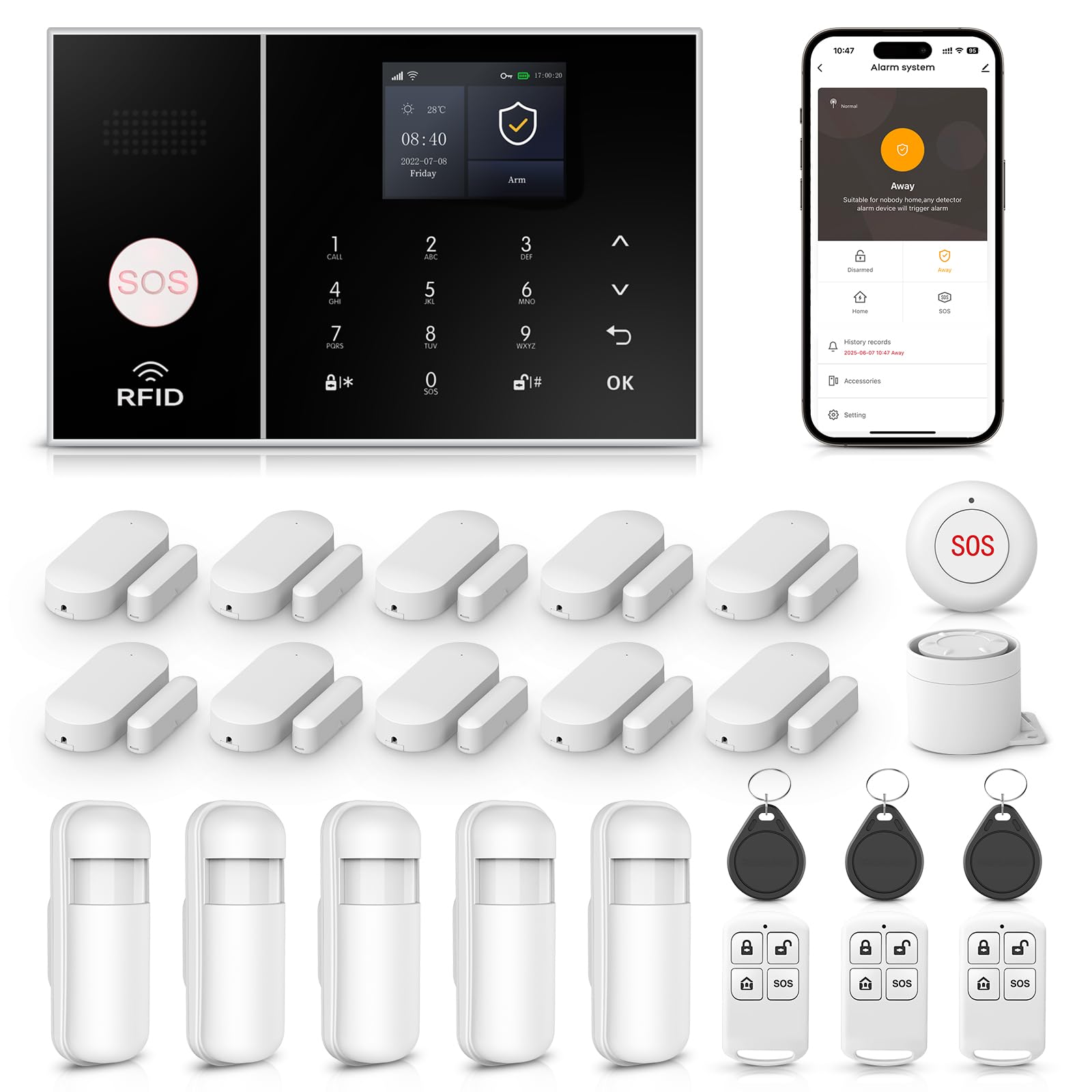
The LWOHSI PG108 brings dual-network connectivity to a price point typically reserved for Wi-Fi-only systems. The control panel has a built-in 4G GSM module that allows you to set 5 groups of telephone alarm numbers and 2 SMS alarm numbers. When an alarm triggers, the panel calls and texts the programmed numbers directly—no app required. This is a critical feature for elderly family members, vacation homes without active internet, or users who want an independent alarm path that doesn’t rely on a smartphone notification. The system also supports Wi-Fi app push via the Tuya/Smart Life platform for remote arming and status checking.
Installation is DIY-friendly with screw-in or adhesive mounting options for the sensors. The system learns up to 100 detectors, 100 RFID cards, and 100 remote controls, making it one of the most expandable options at this budget level. It integrates with Alexa and Google Assistant for voice control and supports multiple alarm zones you can label for specific locations (front door, bedroom, emergency). The built-in Cortex-M3 processor handles zone management smoothly, and the system can be armed in Away, Home, or Disarmed modes. The white control panel is unobtrusive and measures 8 x 6 x 4 inches—small enough to place on a shelf or entryway table without dominating the space.
The biggest hurdle is the user interface. The Smart Life app is functional but not as polished as Ring or SimpliSafe. The setup sequence requires a specific order—app first, then hardware—and some users found the menu navigation awkward when trying to reassign sensor zone numbers. The base siren tone is identical to the door chime, which can cause confusion during an actual alarm. The sensors work reliably once paired, but you need patience during initial configuration. The kit does not include a motion sensor or key fob as standard (these must be purchased separately depending on the variant). However, for users who prioritize GSM fallback and massive sensor expansion over app elegance, the LWOHSI delivers on its core promise: a multi-path alarm that keeps communicating even when the internet goes dark.
Why it’s great
- Built-in 4G GSM module places calls and sends SMS during alarms
- Accepts up to 100 sensors for expansive coverage
- Compatible with Tuya/Smart Life ecosystem and Alexa
Good to know
- App and menu setup is not intuitive for non-tech users
- Alarm and door chime share the same sound profile
7. YoLink Smart Power Fail Alarm & Cellular Hub Kit
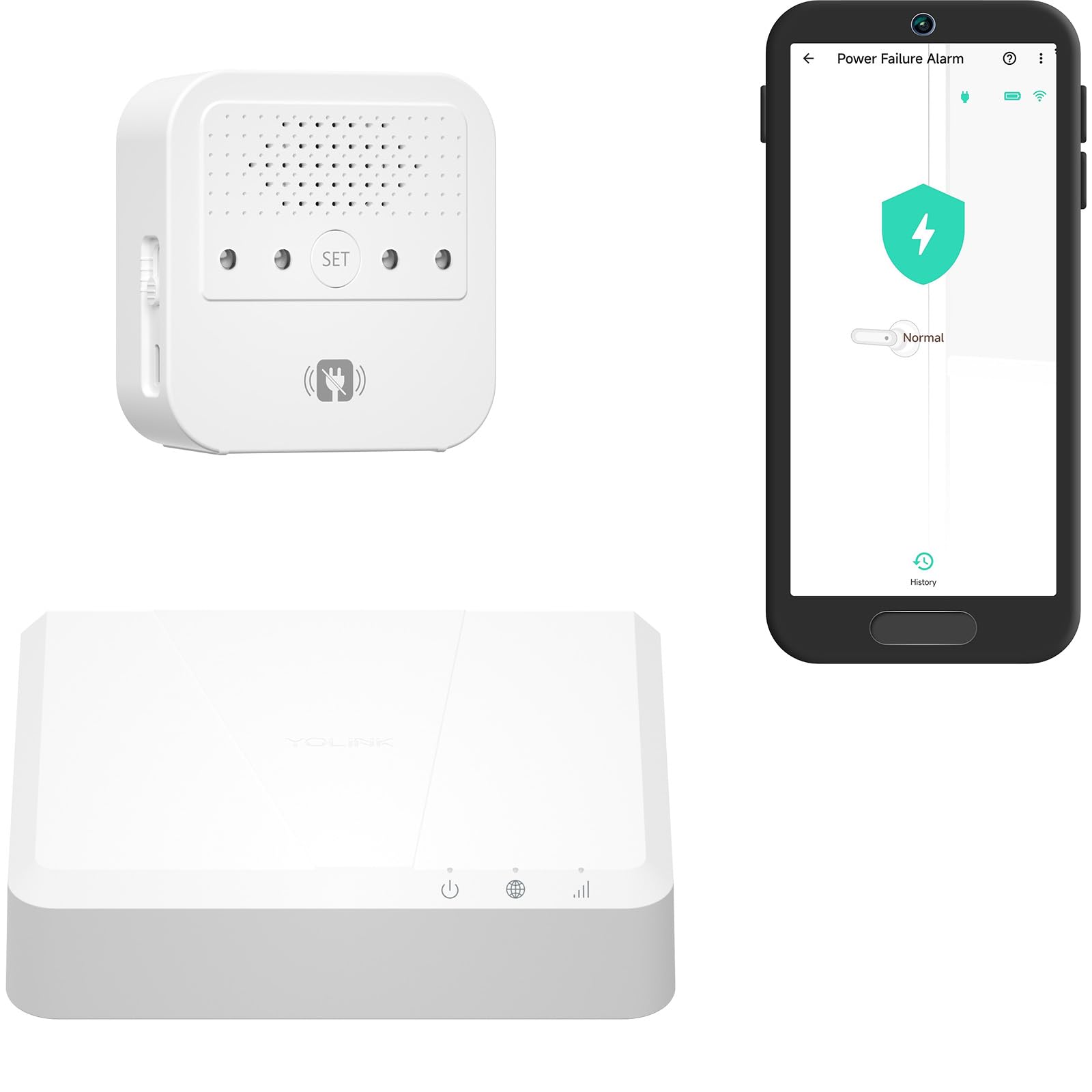
The YoLink system is designed for a very specific but critical vulnerability: power failures that go unnoticed until it’s too late. This kit pairs a Power Fail Alarm (PFA) with a Cellular Hub, creating an independent monitoring path that works even when your home Wi-Fi and electrical grid both go down. The PFA plugs into a standard outlet and detects the moment AC power is lost, then triggers a 110dB siren with four bright LED lights. Simultaneously, the Cellular Hub uses a 4G LTE connection (requires an active subscription) to send email, push notification, and optional automated voice call alerts—keeping you informed from anywhere in the world.
The secret weapon is LoRa (Long Range) radio technology. The hub and sensors communicate using a 900MHz radio signal that can penetrate walls and travel up to 1/4 mile in open air. This is fundamentally different from Wi-Fi or Z-Wave systems, as the YoLink network remains functional during internet outages (the hub stores alerts locally and forwards them via cellular). The system includes patented Device-to-Device (Control-D2D) pairing, allowing you to pair the PFA directly to one or more YoLink Siren Alarms (sold separately) without needing a hub intermediary. The battery life is exceptional—sensors last up to 5 years on alkaline batteries, and the hub has its own backup power.
The system’s narrow focus is both its strength and limitation. It is superb as a dedicated power outage and environmental monitor, but it does not replace a full entry-level security alarm. The kit includes no door/window sensors or motion detectors—you must purchase security-specific YoLink sensors separately to build out a full breach-detection suite. The siren mute setting in the app is reported as non-functional; the only way to silence the internal siren is to physically cut the wires inside the unit, which voids the warranty and requires disassembly. The cellular hub requires a paid LTE subscription for off-line notifications. That said, for anyone running a home business, a freezer full of food, a sump pump, or critical electronics (server rack, medical device), the YoLink kit provides a peace of mind that no standard alarm can deliver.
Why it’s great
- 110dB siren and LEDs activate instantly on power loss
- LoRa radio achieves 1/4-mile open air range
- Cellular hub sends alerts when home internet is offline
Good to know
- No integrated door/window or motion sensors in the kit
- Internal siren cannot be muted via software
FAQ
Why would I need 4G cellular backup if my home Wi-Fi is reliable?
What is the difference between self-monitoring and professional monitoring?
Can a pet trigger a motion sensor and cause a false alarm?
Do all automatic security alarms require a paid subscription?
Final Thoughts: The Verdict
For most users, the best automatic security alarms winner is the Ring Alarm 8-Piece Kit because it delivers the most polished integration, cellular backup, and expandable ecosystem at a price that undercuts premium competitors without cutting corners on core reliability. If you want a touchscreen panel and massive 160-sensor scalability, grab the OSI Alarm System Gen 2. And for users who need a dedicated power-failure alarm with cellular off-grid notification, nothing beats the YoLink Power Fail & Cellular Hub Kit.