
Our readers keep the lights on and my morning glass full of iced black tea. As an Amazon Associate, I earn from qualifying purchases.
Specs are compiled from manufacturer listings and verified buyer reviews and can change over time — please confirm the key details on the product page before buying.
You just want to see a nebula, not spend an hour trying to find it. That is the whole point of an automatic telescope — it does the hunting so you can do the stargazing. This guide cuts through the clutter to the nine best automatic telescopes right now, from pocket-sized marvels you take camping to observatory-class instruments that track deep-space objects all night long. Every pick here has a motorized mount that finds and follows celestial targets for you.
I’m Min — the founder and writer behind Gadgets Feed. This guide is built by comparing the manufacturers’ published specifications and the patterns across verified customer reviews, so you get each pick’s real strengths and trade-offs instead of marketing spin.
If you are looking for a telescope that handles the hard part — locating, slewing, and tracking — then the best automatic telescope is the one that matches your skill level and where you plan to use it.
Our Picks at a Glance

How To Choose The Best Automatic Telescope
An automatic telescope is a motorized scope with a computer that finds and tracks celestial objects for you. Without one, you are stuck hunting manually through a finderscope — with one, you tell it “show me the Orion Nebula” and it slews right there. Here is what to focus on.
Aperture — The Light Bucket
Aperture (the diameter of the main mirror or lens) determines how much light the telescope collects. Bigger aperture means brighter, clearer images of faint galaxies and nebulae. A 114mm aperture, for instance, pulls in noticeably more detail on deep-space objects than a 4-inch (102mm) scope. But larger aperture often means more weight, so it is a trade-off between light-gathering and portability.
Mount Type — Alt-Az vs. EQ
Most automatic beginner scopes use an Altazimuth (Alt-Az) mount, which moves up-down and left-right: simple and intuitive. Equatorial (EQ) mode, available on some smart telescopes, rotates the mount to match Earth’s rotation, letting you take longer exposures without star trails — critical for serious astrophotography. If you plan to image deep-sky objects, an EQ-capable mount is a big advantage.
GoTo Database and App Quality
The GoTo database is the telescope’s built-in catalog of celestial targets. A 40,000-object database (like the Celestron NexStar 4SE) covers everything you will ever want to see. But the real king is the companion app — a well-designed app with an interactive star map makes alignment fast and targeting intuitive, while a glitchy app can ruin a night. Look for telescopes with dedicated apps that get regular updates.
Portability and Battery Life
If you plan to take your telescope to dark-sky sites, weight and battery life are critical. A 3-pound smart telescope like the DWARFLAB Dwarf 3 fits in a backpack, while a 25-pound Dobsonian base is a car-only affair. Some scopes, like the NexStar Evolution 8, have built-in 10-hour batteries — others need a power bank or AC adapter. Know how you will use it before you choose.
Quick Comparison
| Model | Best For | Aperture | Focal Length | Mount Type | Amazon |
|---|---|---|---|---|---|
| DWARFLAB Dwarf 3★ Best Overall | Best Overall | Dual Lens | — | Alt-Az / EQ | Amazon |
| ZWO Seestar S30 ProBest Imaging | Image Quality | 4-element Apo | 160mm | Alt-Az / EQ | Amazon |
| Celestron NexStar 4SEClassic Choice | Planetary Views | 4-inch | 1325mm | Alt-Az | Amazon |
| Celestron 114LCM | Entry-Level Value | 114mm | — | Alt-Az | Amazon |
| Sky-Watcher Virtuoso GTI 150P | Light-Gathering | 150mm | 750mm | Alt-Az (WiFi GoTo) | Amazon |
| DWARFLAB Dwarf Mini | Ultra-Portability | 1/2.8″ Sensor | 150mm | Alt-Az / EQ | Amazon |
| Celestron NexStar Evolution 8 | Premium Visual | 8-inch SCT | 2032mm | Alt-Az (WiFi) | Amazon |
| Unistellar Odyssey PRO | Eyepiece & Digital | 85mm | 320mm | Motorized Alt-Az | Amazon |
| Unistellar Equinox 2 | Deep-Space Imaging | 114mm | 450mm | Motorized Alt-Az | Amazon |
In‑Depth Reviews
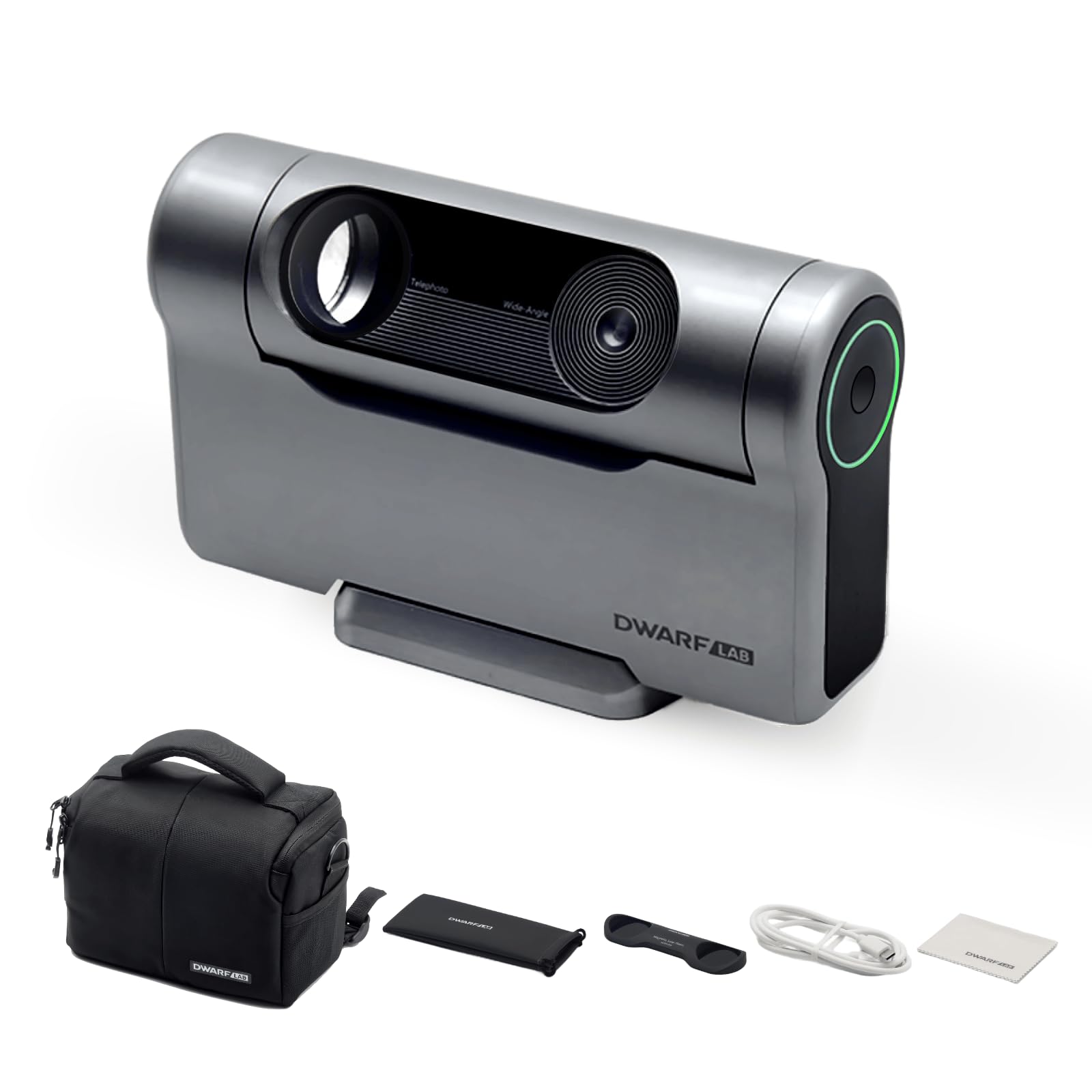
1. DWARFLAB Dwarf 3 Smart Telescope
Our pick — over 4.5★ from 150+ verified ratings; the strongest balance of quality and price.
The featherweight that shoots galaxies from a city balcony.
Weighing just 3 pounds (1.35 kg), the Dwarf 3 is the world’s most portable smart telescope — thin enough to slip into a standard backpack. Its dual imaging system pairs a telephoto lens for deep-space objects and a wide-angle lens for Milky Way panoramas, so you get two scopes in one body. The 4K auto-tracking locks onto targets and follows them smoothly, and cloud-powered image processing in the DWARFLAB app turns raw captures into shareable photos without a laptop.
What wins people over is how forgiving it is of light pollution. Buyers report that it “takes great photos of dim objects under heavy light pollution,” even in the Bay Area. The app handles alignment in minutes, and you can schedule autonomous overnight sessions — one owner captured Markarian’s Chain while the scope ran unattended. It also doubles as a wildlife and landscape camera during the day, which gives it year-round use that most telescopes lack.
The catch is that the app can sometimes glitch after a power loss, and you will want the optional DWARF tripod for stability in EQ mode. But for the sheer combination of portability, dual-purpose capability, and easy astrophotography, this is the automatic telescope that delivers the most for the broadest range of people.
What owners love
- Remarkably compact at 3 lbs — fits in a backpack for camping trips
- Dual camera system works for both deep-space and daytime wildlife
- 4K auto-tracking and cloud processing remove the technical barriers
- Performs well even under heavy light pollution
What to know
- App can have connection or processing hiccups after power loss
- A dedicated tripod is recommended for stable EQ-mode imaging
- Not a traditional eyepiece scope — images are viewed on your phone
Reach for this if: you want an ultra-portable telescope that delivers great astrophotography from your own backyard, even with light pollution, and works for daytime photography too.
Think twice if: you prefer looking through an eyepiece rather than a screen, or need a larger aperture for very faint deep-sky objects.
2. ZWO Seestar S30 Pro Smart Telescope
The smart scope that paints nebulas in 8K, one tap at a time.
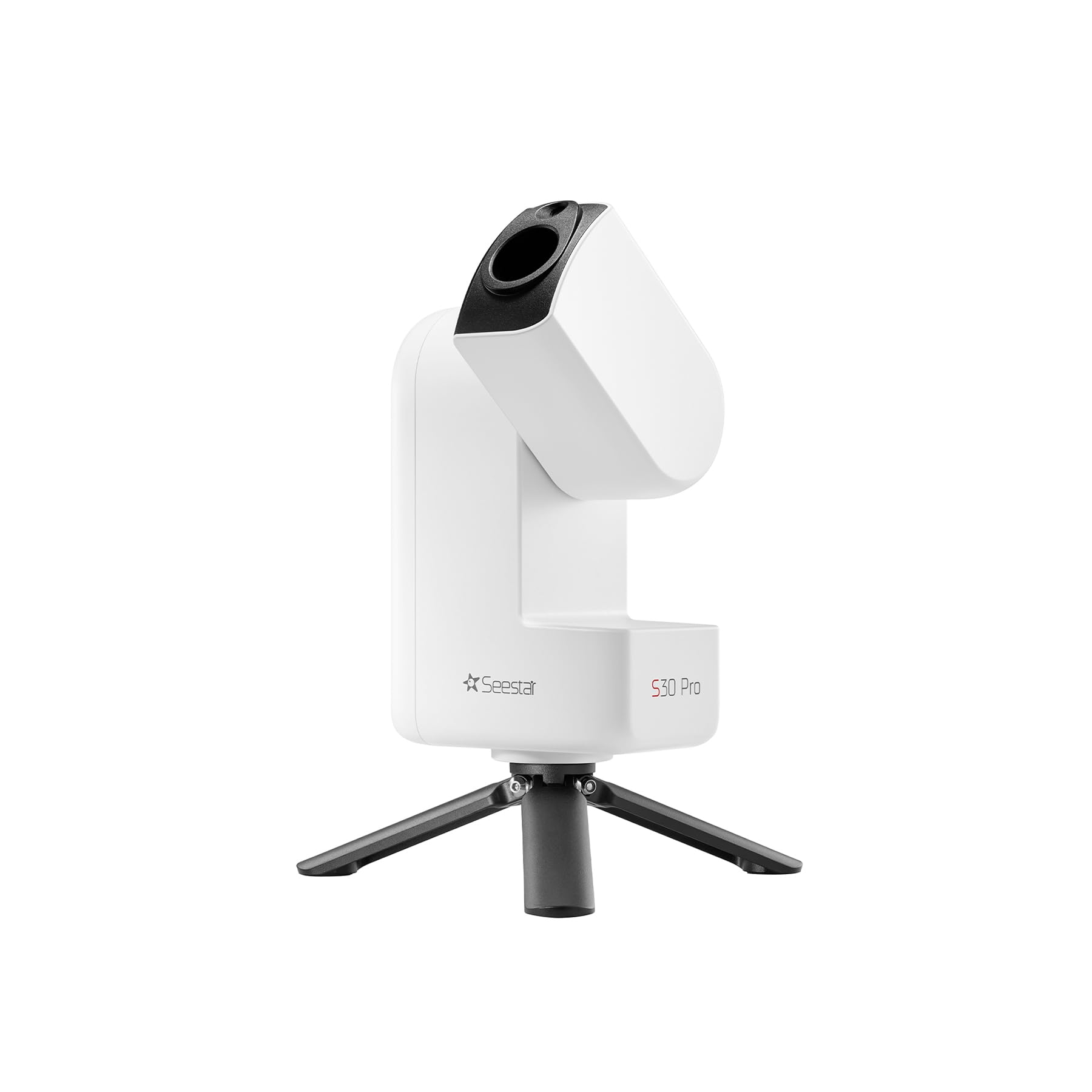
The Seestar S30 Pro pairs a 4K IMX585 telephoto sensor with a wide-angle IMX586 camera, giving you sharp deep-sky captures and expansive nightscapes in the same device. Its precision 4-element apochromatic lens cuts chromatic aberration, delivering cleaner stars and deeper contrast. Built-in light pollution filters help it cut through suburban glow, and the one-tap Milky Way mode auto-stitches frames into 8K ultra-wide images — a feature you simply do not get on other smart telescopes at this level.
Owners consistently praise the optical and image quality, with one describing a “stunning picture of the Pac-Man Nebula” shot right from a backyard. The app is intuitive enough for absolute beginners, and the anti-dew protection plus 128GB of onboard storage means you can run all-night imaging sessions without worrying about fog or memory. At 3.6 pounds, it is almost as portable as the Dwarf 3 but packs a larger sensor and that 8K mosaic capability.
The trade-off is that the scenery mode is not great for terrestrial subjects like birdwatching — it is really built for the sky. But as a dedicated astrophotography companion that makes deep-space imaging feel easy, the S30 Pro is a clear step up in image fidelity.
Image quality that impresses: the 4-element apochromatic lens and smart filters reveal nebula detail that cheaper smart scopes miss, even from suburban skies.
The honest downside: it is less versatile during the day than the Dwarf 3, and the scenery mode disappoints for wildlife or landscape work.
Perfect for: anyone who wants the best possible astrophotography images with minimal effort — the one-tap Milky Way and 8K stitch modes are a genuine advantage.
Look elsewhere if: you need a telescope that doubles as a daytime camera or you prefer traditional eyepiece viewing.
3. Celestron NexStar 4SE Computerized Telescope
The orange-tube icon that auto-slews to 40,000 targets.
Celestron’s NexStar 4SE is a traditional optical telescope with a computerized GoTo mount — no phone screen required. The 4-inch Maksutov-Cassegrain optics deliver high-contrast, long-focal-length views (1325mm) that excel on the Moon and planets. Saturn’s rings snap into focus, and Jupiter’s cloud bands show real detail. The 40,000+ object database in the NexStar+ hand control means you can type in any target, and the mount automatically slews to it and tracks.
SkyAlign technology makes setup fast: center any three bright objects (even if you do not know their names), and the system calculates your position. The built-in wedge lets you polar-align for long-exposure astroimaging, which is rare on a scope at this price. Owners consistently note the build quality and clarity — the StarBright XLT coatings are a genuine step above entry-level coatings. It is also a true eyepiece telescope, so you get that direct visual experience that smart scopes cannot replicate.
That said, the included 25mm eyepiece is just okay, and most owners end up spending on a Barlow lens and a better finderscope. The alignment procedure can be fiddly — the red dot finder is imprecise, and some units require a reticle eyepiece to center properly. Battery life is also a pain point; AA batteries drain fast, so a 12V adapter is almost mandatory. Still, as a stepping stone from beginner to serious amateur, the 4SE is the most rewarding traditional automatic telescope at this price.
Eyepiece experience: the 4-inch Maksutov optics with StarBright XLT coatings deliver crisp, high-contrast views that digital-only scopes cannot match through a screen.
Plan for extras: expect to budget for a 12V power adapter, a better finderscope, and quality eyepieces to get the full potential out of this scope.
Best for: the visual astronomer who wants computerized GoTo convenience with traditional eyepiece viewing — especially Moon and planet enthusiasts.
Think twice if: you want a grab-and-go scope that is ready immediately; the alignment and accessory costs add complexity and expense compared to smart telescopes.
4. Celestron 114LCM Computerized Newtonian
The most-reviewed beginner scope that auto-finds objects on a budget.
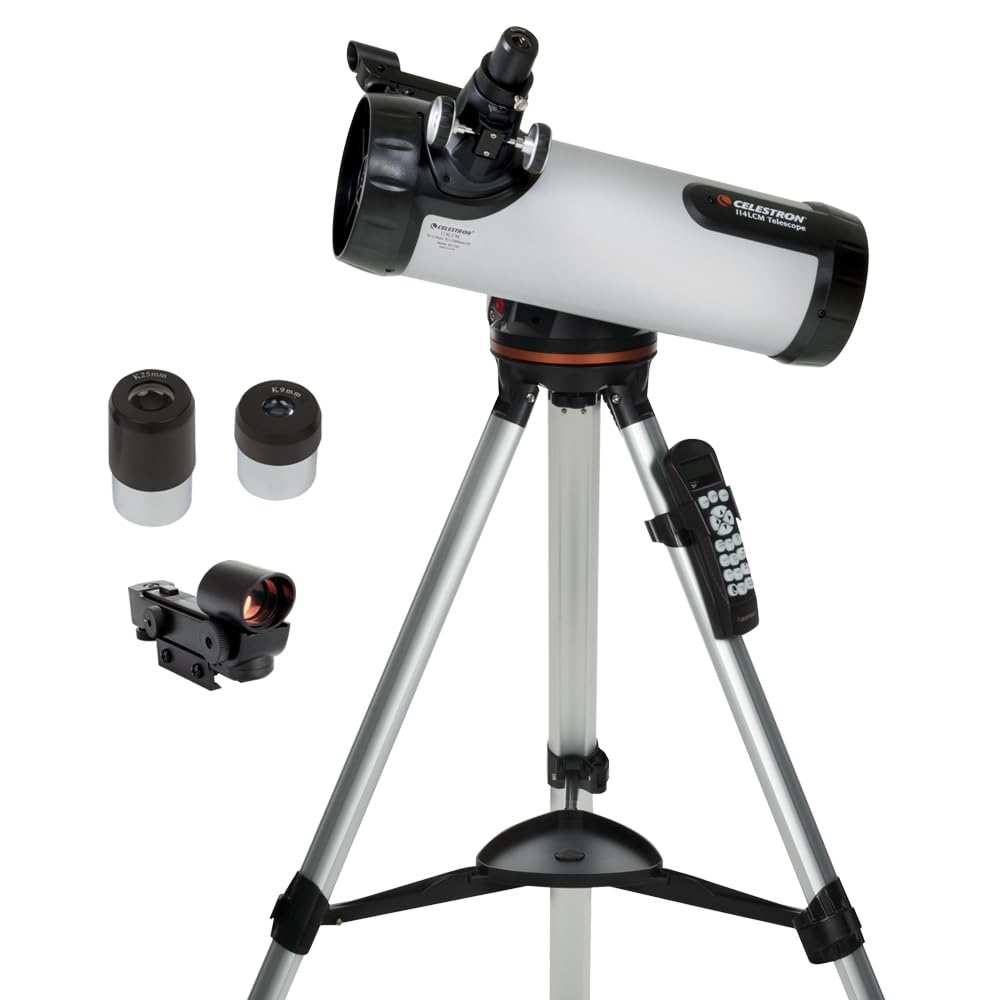
The 114LCM is the entry-level gateway into automatic telescopes — a 114mm Newtonian reflector on a motorized GoTo mount that can locate 4,000 celestial objects. Press the Sky Tour button, and the scope generates a list of the best visible objects for your time and location, then slews to each one. It is a genuinely helpful feature for a novice who does not even know what to look for. The included full-height tripod, 25mm and 9mm eyepieces, and StarPointer red dot finder mean you have everything to start your first night.
Buyers consistently call it a great starter scope that is easy to set up in about 5 minutes. Views of the Moon’s craters and Saturn’s bands are possible, and the GoTo tracking keeps objects centered at low and medium magnifications. It is one of the highest-volume telescopes on Amazon — the sheer number of positive owner experiences says something about its value proposition at this price tier.
The downsides are typical of entry-level Newtonians: collimation (aligning the mirrors) is tricky for a beginner, the stock eyepieces are mediocre, and the mount runs through AA batteries quickly. Some owners also find the finderscope awkward to use. But as a first automatic telescope that actually shows you the night sky without requiring a degree in astronomy, the 114LCM earns its place.
Why it works for beginners
- Sky Tour button picks the best targets for your exact time and location
- Full-height tripod and all accessories included — no extra purchases needed to start
- GoTo mount locates 4,000 objects automatically
- Respected brand with a 2-year US warranty and support
Where it cuts corners
- Newtonian design requires collimation that can frustrate absolute beginners
- Stock eyepieces are low-quality; budget for replacements
- AA battery drain is a known issue — rechargeable cells help
Reach for this if: you are new to astronomy and want the lowest-cost automatic telescope that actually works — the Sky Tour feature genuinely removes the “what do I look at” problem.
skip it if: you are willing to spend more for sharper optics and a better mount, or want a telescope you do not need to collimate.
5. Sky-Watcher Virtuoso GTI 150P Collapsible Dobsonian

The 150mm tabletop that pulls in faint galaxies you cannot see elsewhere.
With a 150mm (6-inch) aperture at f/5, the Virtuoso GTI 150P collects dramatically more light than the 114mm or 4-inch scopes above. Fast f/5 optics and a 750mm focal length make it ideal for viewing the Moon, planets, galaxies, and nebulae. what separates it is the built-in WiFi and full GoTo capability via the SynScan Pro app — you control everything from your phone, with no hand controller cluttering the tabletop. The patented Freedom Find technology uses dual encoders so you can still nudge the scope manually without losing alignment — a real quality-of-life feature when showing the sky to friends.
Owners praise the optical quality, with reports of seeing “faint lines on Jupiter” and Saturn’s rings with sharp clarity. At 25.8 pounds it is not a backpack scope, but the collapsible tube makes it much more portable than a full-size Dobsonian. You can take it to a dark site in a car and have it running on a picnic table in minutes. The 25mm and 10mm Super Plossl eyepieces are a cut above the budget eyepieces on the Celestron 114LCM.
The GoTo accuracy gets mixed feedback — some owners mention pointing errors of more than 2 degrees, which makes high-magnification targeting frustrating. The focuser is another weak point, described as disappointing and not easily upgradable. A light shroud is also recommended since the collapsible tube is open. But if you prioritize aperture and light-gathering over absolute GoTo precision, this is the most rewarding deep-space visual experience in the mid-range.
The light-gathering edge: 150mm of aperture at f/5 pulls in enough light to reveal galaxies and nebulae that smaller scopes simply cannot show.
The honest trade-off: the GoTo pointing can be off by a few degrees at high magnification, and the focuser needs a DIY mod to feel premium.
Best for: the visual observer who wants the biggest aperture in the mid-range for deep-sky viewing, especially from dark-sky sites.
Think twice if: you need pinpoint GoTo accuracy for high-magnification planetary work or prefer a ready-to-go setup without any modifications.
6. DWARFLAB Dwarf Mini Smart Telescope
Pocket-sized scope that squeezes deep-space imaging into 1.85 pounds.
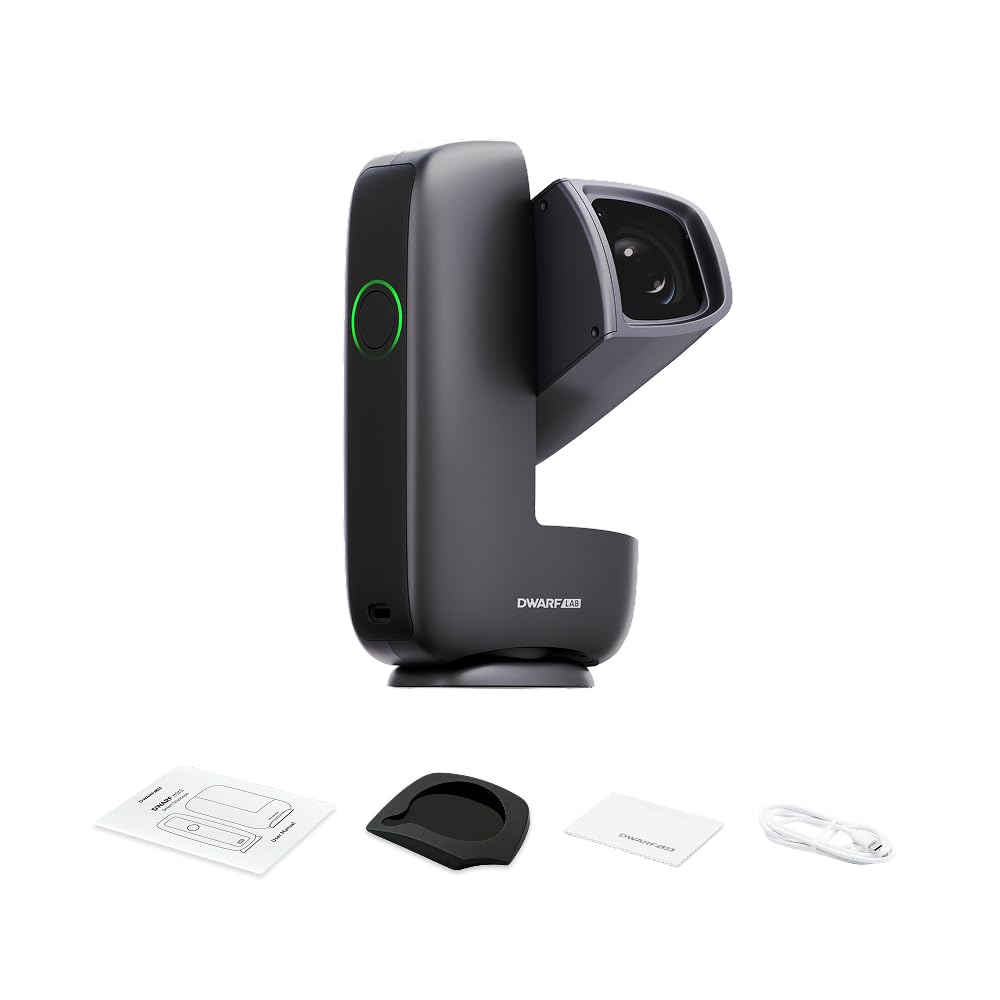
The Dwarf Mini is the smallest automatic telescope here at just 1.85 pounds (840g) — it genuinely fits in a large jacket pocket or the side pouch of a backpack. Despite the tiny body, it packs a Sony IMX662 sensor with 2.9µm pixels, 360° pivot rotation, and EQ mode that supports single-frame exposures up to 90 seconds. The built-in light pollution filter helps it cut through city glow to reveal star clusters and faint nebulas. Auto GOTO and the DWARFLAB app’s interactive star map mean you can go from unboxing to your first shot in about 3 minutes.
The consensus among owners is that this is an “excellent image quality from a tiny, affordable smart telescope.” It works especially well in high light pollution (Bortle 7 skies), and you can schedule multiple targets to be captured automatically overnight. The autofocus and integrated cloud processing produce clean, stacked images without a laptop. It is also the most affordable smart telescope on this list, making it the lowest-risk entry point into app-controlled astrophotography.
The main compromise is the lower-resolution sensor — the Dwarf Mini’s images are excellent for social media sharing but do not hold up printed large, and small deep-sky objects appear tiny in the frame. You also need a tripod for EQ mode and a power bank for all-night sessions. But as a “grab-and-go” scope that slides into any bag, it opens up astrophotography to travelers and hikers in a way no bulkier scope can.
class-leading portability: at 1.85 pounds with 90-second EQ exposures, it is the only telescope you can take on a flight without checking a bag.
Know before you buy: the sensor is lower-res than the Dwarf 3, so tiny deep-sky objects appear small; best for wide-field nebulas and sharing on screens.
Reach for this if: you travel frequently and want a telescope that fits in any bag — the portability-to-performance ratio is class-leading at this price.
Look elsewhere if: you want detailed close-ups of small galaxies or plan to make large prints of your images.
7. Celestron NexStar Evolution 8

The 8-inch WiFi powerhouse that views more in one hour than a manual scope in months.
Celestron’s Evolution 8 is the gold standard for the serious amateur — an 8-inch (203mm) Schmidt-Cassegrain optical tube with StarBright XLT coatings on a WiFi-enabled GoTo mount that you control from your phone via the SkyPortal app. The 2032mm focal length delivers jaw-dropping planetary and lunar views, and the 10-hour built-in lithium iron phosphate battery means you never need an external power supply. Brass worm gears and high-performance motors provide smooth, accurate tracking that supports astroimaging.
Owners are emphatic about how fast it transforms the observing session. One reviewer captured “more objects in one hour than months with old 8″ Newtonian.” The manual clutches let you move the scope by hand even when powered off, and the integrated carry handles make it easy to transport despite its size. The app database is vast, and the StarSense AutoAlign option (sold separately) makes setup nearly automatic.
The main frustration is a boot-load error that a small number of units experience, requiring a PC software update with a cable (RS-232 to USB) that is not included. The battery takes 4-8 hours for its first charge, which is not stated in the manual. But for the combination of aperture, build quality, and battery life, the Evolution 8 is the premium visual telescope that grows with you for years.
What makes it elite
- 8-inch Schmidt-Cassegrain with StarBright XLT coatings delivers stunning Moon and planetary views
- Built-in 10-hour LiFePO4 battery eliminates the need for a power station in the field
- WiFi and SkyPortal app control from your phone — no hand controller required
- Brass worm gears provide smooth, accurate tracking for visual and imaging
What to plan for
- Small risk of boot-load error requiring a PC firmware update with a non-included cable
- First battery charge takes 4-8 hours — plan ahead before your first night
- Heavy and not a quick-grab scope; it lives in a car or home observatory
Perfect for: the dedicated amateur who wants top-tier optical quality with the convenience of WiFi control and all-night battery life.
Think twice if: you need a portable scope for hiking or have a limited budget for accessories and eyepieces.
8. Unistellar Odyssey PRO Smart Telescope

The only smart scope that gives you both a digital view and a real eyepiece.
Unistellar’s Odyssey PRO is unique in this lineup: it is the only smart telescope that includes an eyepiece, so you can look through the scope directly in addition to viewing on your phone or tablet. The 85mm f/3.9 (320mm) optics with autofocus and self-collimation deliver crisp images, and the motorized Alt-Az mount with one-click GoTo gets you aligned and observing in under 2 minutes. The 64GB onboard storage and up to 5-hour battery make it self-contained for a full night of viewing.
Owners consistently describe it as “amazing views, zero effort” and note that the eyepiece output is ideal for sharing with friends and family — pass the scope around, and everyone sees the same image without crowding around a phone screen. The app-based control is intuitive, and the scope automatically levels, aligns, and focuses. It also supports NASA and SETI citizen-science campaigns, so you can contribute to real exoplanet and asteroid studies.
The cost is significant — this is a flagship product. The app also lacks some manual control options for advanced users (like manual star identification and tracking in cloudy conditions), and daytime use is not supported. But if you want the hybrid experience of both eyepiece and digital imaging in one polished package, the Odyssey PRO is the only telescope that delivers it.
The hybrid advantage: the eyepiece lets you see the night sky directly while still getting the benefits of automatic GoTo, image stacking, and smartphone sharing.
The price reality: this is an investment-grade tool; the app is still maturing and lacks some manual controls that experienced observers expect.
Best for: families and groups who want to share the view through an eyepiece while also capturing digital images — the hybrid design is genuinely unique.
pass on it if: you are on a budget or need a telescope that works for daytime observation and manual control.
9. Unistellar Equinox 2 Smart Telescope
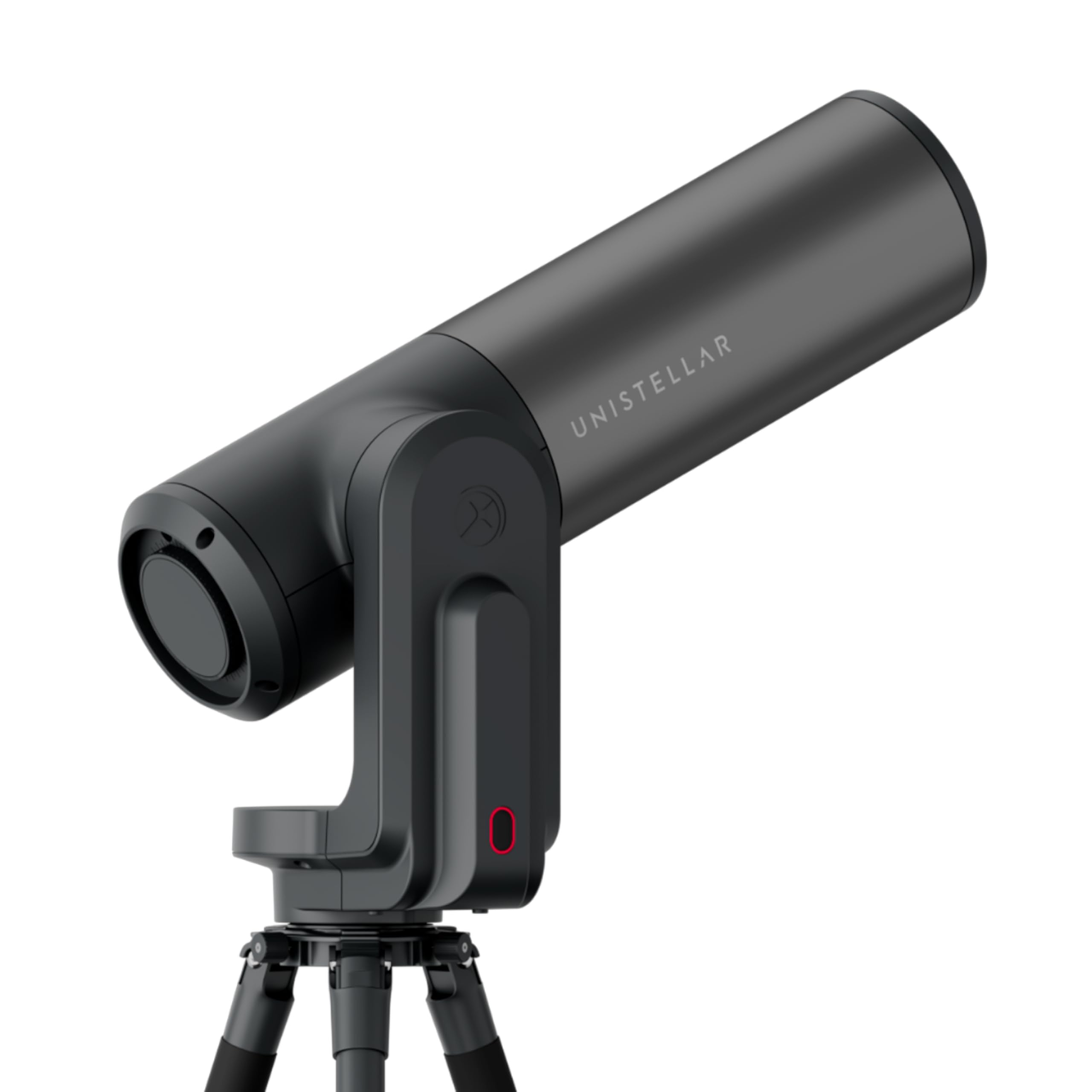
The 114mm digital telescope built for all-night citizen science.
The Equinox 2 is Unistellar’s larger-aperture digital-only telescope (no eyepiece), with a 114mm f/4 (450mm) mirror that reaches a limiting magnitude of 18.2 — enough to pull in distant galaxies and faint nebulae. The 34.2 × 45.6 arcminute field of view gives you wider framing than the Odyssey PRO, and the 11-hour battery lets you run autonomous imaging marathons or participate in NASA and SETI citizen-science campaigns (occultations, exoplanet transits) without worrying about power. The RAW/FITS export means you can process your captures in PixInsight or Photoshop for professional-level results.
Setup is genuinely fast: power on, connect to the app, and the scope auto-aligns and slews to your chosen target. Owners who get a good unit report “nice photos of several deep sky objects within 45 minutes of setup.” The motorized Alt-Az mount handles the GoTo smoothly, and the manual fine-focus control helps you sharpen planetary detail.
That said, reliability is the Equinox 2’s biggest challenge — reviews are split sharply between owners who love it and those who received units with misaligned mirrors or software issues. At this price point, that inconsistency is hard to ignore. It is also a purely app-based experience, so you never look through an eyepiece. If you are willing to roll the dice for the deepest digital reach and longest battery life, it is a powerful tool; if consistency matters more, other picks are safer.
Digital reach: the 114mm aperture and limiting magnitude of 18.2 let you capture galaxies and nebulas that are beyond smaller smart telescopes.
The risk factor: factory alignment and software quality control have been inconsistent, and there is no eyepiece — you must use the app.
Reach for this if: you want the deepest digital astrophotography reach with the longest battery life (11 hours) and plan to participate in NASA/SETI campaigns.
Think twice if: you prefer a consistent out-of-box experience or want the option of traditional eyepiece viewing.
Understanding the Specs
GoTo Mount — The Brain of the Telescope
A GoTo mount is a motorized tripod that connects to a computer or app. You tell it what you want to see — say, the Andromeda Galaxy — and it automatically rotates to point at that object, then tracks it as Earth spins. Without GoTo, you must manually scan the sky with a finderscope, which is slow and frustrating for beginners. Most automatic telescopes here have GoTo databases ranging from 4,000 to over 40,000 objects.
EQ Mode — Why It Matters for Photos
Equatorial (EQ) mode tilts the mount to align with Earth’s axis. This lets the telescope rotate one motor axis to cancel Earth’s rotation, keeping a star perfectly centered for long exposures. Without EQ mode, a star will drift out of the frame after about 30 seconds, creating star trails instead of sharp points. If you want to take long-exposure photos of nebulae and galaxies, EQ mode is essential — it is why smart telescopes like the Dwarf 3 and Dwarf Mini support both Alt-Az and EQ.
FAQ
Can an automatic telescope see planets like Saturn and Jupiter clearly?
Do I need Wi-Fi or an internet connection to use an automatic telescope?
What is the difference between a smart telescope and a traditional GoTo telescope?
How long does it take to set up an automatic telescope for a night of viewing?
Can I use an automatic telescope in a city with light pollution?
What does “aperture” mean and why does it matter?
Do I need a separate camera for astrophotography with a GoTo telescope?
What is “EQ mode” and do all automatic telescopes have it?
How do I maintain a smart telescope? Any special care needed?
Can kids use an automatic telescope?
Final Thoughts: The Verdict
For most people, the best automatic telescope is the DWARFLAB Dwarf 3 because it combines true portability — just 3 pounds — with a dual-lens system that works for both deep-sky imaging and daytime photography, all while handling light pollution better than anything else in its class. If you want the sharpest image quality and the one-tap Milky Way and 8K mosaic stitching, grab the ZWO Seestar S30 Pro. And for the traditionalist who wants to look through an eyepiece with full computerized GoTo, the Celestron NexStar 4SE is the classic choice that delivers crisp planetary views and grows with your skills. For the tightest budget, the Celestron 114LCM is the most-reviewed entry-level automatic telescope on the market — it is not perfect, but it is the most accessible way to get into GoTo astronomy.
How We Picked
We do not accept paid placement. Every pick is matched to a real buyer and a real use-case; we do not hands-on test units.
Sources & Methodology
Specifications: manufacturer listings and product documentation. Review insights: verified customer reviews, as of July 2026. Pricing: not shown on this page (it changes often); check the current price via the retailer link.
As an Amazon Associate, Gadgets Feed earns from qualifying purchases. This does not affect which products we feature.