
Our readers keep the lights on and my morning glass full of iced black tea. As an Amazon Associate, I earn from qualifying purchases.
Specs are compiled from manufacturer listings and verified buyer reviews and can change over time — please confirm the key details on the product page before buying.
You want internet in your car, truck, or RV without draining your phone’s battery. The right hotspot keeps your devices online, while the wrong one leaves you stranded with a buffering screen. Your choice depends on a router-grade powerhouse for whole-rig coverage or a pocket-sized gadget for light travel.
I’m Min — the founder and writer behind Gadgets Feed. This guide is built by comparing the manufacturers’ published specifications and the patterns across verified customer reviews, so you get each pick’s real strengths and trade-offs instead of marketing spin.
The automobile wifi hotspot options here span rugged 5G routers, dual-carrier USB sticks, and global travel pucks, so you can match the exact hardware to your driving life.
Our Picks at a Glance

How To Choose The Best Automobile WiFi Hotspot
Before you buy, think about where you drive and what you plan to connect. A commuter who just needs maps and music has different needs than a family streaming movies on a cross-country RV trip.
Speed and network generation
Your hotspot’s top speed is capped by its cellular radio, not just the WiFi it broadcasts. A 5G router can pull hundreds of megabits per second, while a 4G LTE model might max out around 150 Mbps or 600 Mbps depending on its category rating. If you only stream music and browse, 4G is plenty. If you want video calls and 4K streaming on the road, 5G makes the difference.
Carrier compatibility and SIM flexibility
Some hotspots lock you to one carrier’s network, while others let you swap a SIM card to match whoever has the strongest signal on your route. Dual-SIM models can hold two plans at once and switch automatically. This matters most for RVers who cross state lines where coverage maps change drastically.
Quick Comparison
| Model | Best For | Max Speed | WiFi Bands | Carrier Support | Amazon |
|---|---|---|---|---|---|
| GL.iNet Spitz AX★ Best Overall | Whole-RV 5G networks | 3000 Mbps | Dual-Band (5 GHz) | AT&T & T-Mobile | Amazon |
| GlocalMe Numen AirGlobal 5G | Global 5G travel | 2.5 Gbps | Dual-Band (5 GHz) | CloudSIM (No SIM) | Amazon |
| TravlFi JourneyGoRV Data Plans | RV prepaid data plans | — | Single-Band (2.4 GHz) | Multi-network e-SIM | Amazon |
| GL.iNet MUDI | Secure global travel router | 433 Mbps | Dual-Band (5 GHz) | Global (SIM slot) | Amazon |
| Verizon Inseego MiFi | US Verizon road trips | 1200 Mbps | Dual-Band (5 GHz) | Verizon & AT&T | Amazon |
| EIOTCLUB Pocket WiFi | Simple 4G plug-and-play | — | Single-Band (2.4 GHz) | US locked SIM | Amazon |
| GlocalMe UPP | Global 4G travel | — | Single-Band (5 GHz) | Global (No SIM) | Amazon |
| SCHOK Cat 12 | Budget 16-device 4G | 600 Mbps | Dual-Band (5 GHz) | Verizon, AT&T, T-Mobile | Amazon |
| Spectrum Smart USB | Plug-and-play car USB | 150 Mbps | Single-Band (2.4 GHz) | AT&T & T-Mobile | Amazon |
In-Depth Reviews
1. GL.iNet GL-X3000 (Spitz AX)
Our pick — over 4★ from 850+ verified ratings; the strongest balance of quality and price.
The mobile network hub that turns an RV into a branch office.
For anyone who lives on the road, this is the serious upgrade from a phone hotspot. It is a true 5G cellular router rather than a pocket gadget, and it delivers a combined Wi-Fi throughput of up to 3000 Mbps across its 2.4GHz and 5GHz bands. That means streaming, video calls, and gaming can run at once without the buffering wheel arriving.
It excels on open highways. With 6 detachable antennas and two SIM slots, you can point signal boosters at the nearest tower and keep a secondary carrier as automatic failover when the first one drops. The unit is AT&T and T-Mobile certified, and buyers report stable T-Mobile 5G UC connections around 150 Mbps while driving, with the router powering on automatically with the car.
The trade-off is long-term reliability. While the overwhelming praise lands on build quality — the most-cited positive by a long margin — the recurring complaint is that some units stop working after 4-6 months of constant use. You are also paying a premium for the OpenWrt software, which is powerful for tinkerers but overkill if you just want to plug in and stream.
Why it rules the road
- 5G with dual-SIM for smooth carrier failover
- 6 detachable antennas boost weak rural signals
- Supports VPN and 30+ services for secure public WiFi
Where it stumbles
- Premium price reflects pro-grade hardware
- Some units have reported failing after months of use
- Advanced setup may need guidance
Built for the full-timer: This is the pick for RVers and remote workers who need a whole coach full of devices on one fast, fail-safe network.
Think twice if: You only need weekend data for two devices — a simpler, cheaper hotspot will do the job with far less complexity.
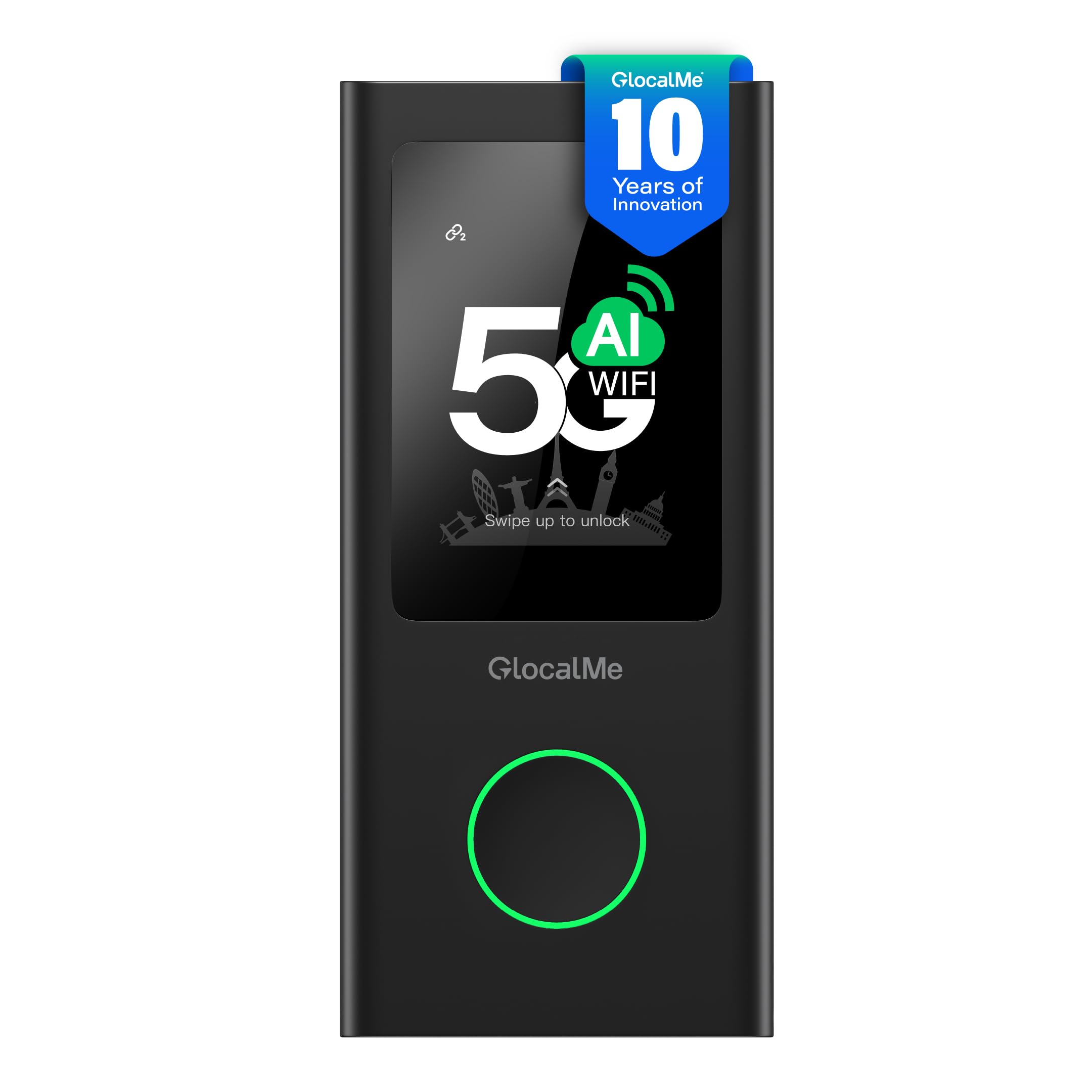
2. GlocalMe Numen Air 5G
A pocket tower with a touchscreen that beats home cable speeds.
This is the global alternative to the Spitz AX. Rather than relying on a single carrier, the Numen Air uses patented CloudSIM technology — meaning you do not need a physical SIM card to get online. It automatically picks the strongest local network from over 390 different operators across 200+ countries, and still includes a SIM slot if you prefer to use your own.
Speed is its standout feature. It supports 5G downloads up to 2.5 Gbps, and owners mention real-world downloads in the mid-200 Mbps range on T-Mobile. The large 2.4-inch LCD touchscreen shows your signal strength, data usage, and connected devices at a glance, and it can double as a power bank to top up your phone when the car is off.
Its dependable reliability and all-day battery are the most-praised aspects in owner feedback. The trade-off is its premium price. The device itself commands a premium, and the built-in pay-as-you-go data plans can add up; owners note that cheaper sub- plans are rare or nonexistent, so you will often buy data by the day, month, or GB.
Roam-ready verdict: If your driving life crosses borders — from US highways to European motorways — this is the only pick on this list that hands you 5G in over 90 countries without hunting for a local SIM. Everywhere else, its high price and data-plan costs make it a luxury rather than a necessity.
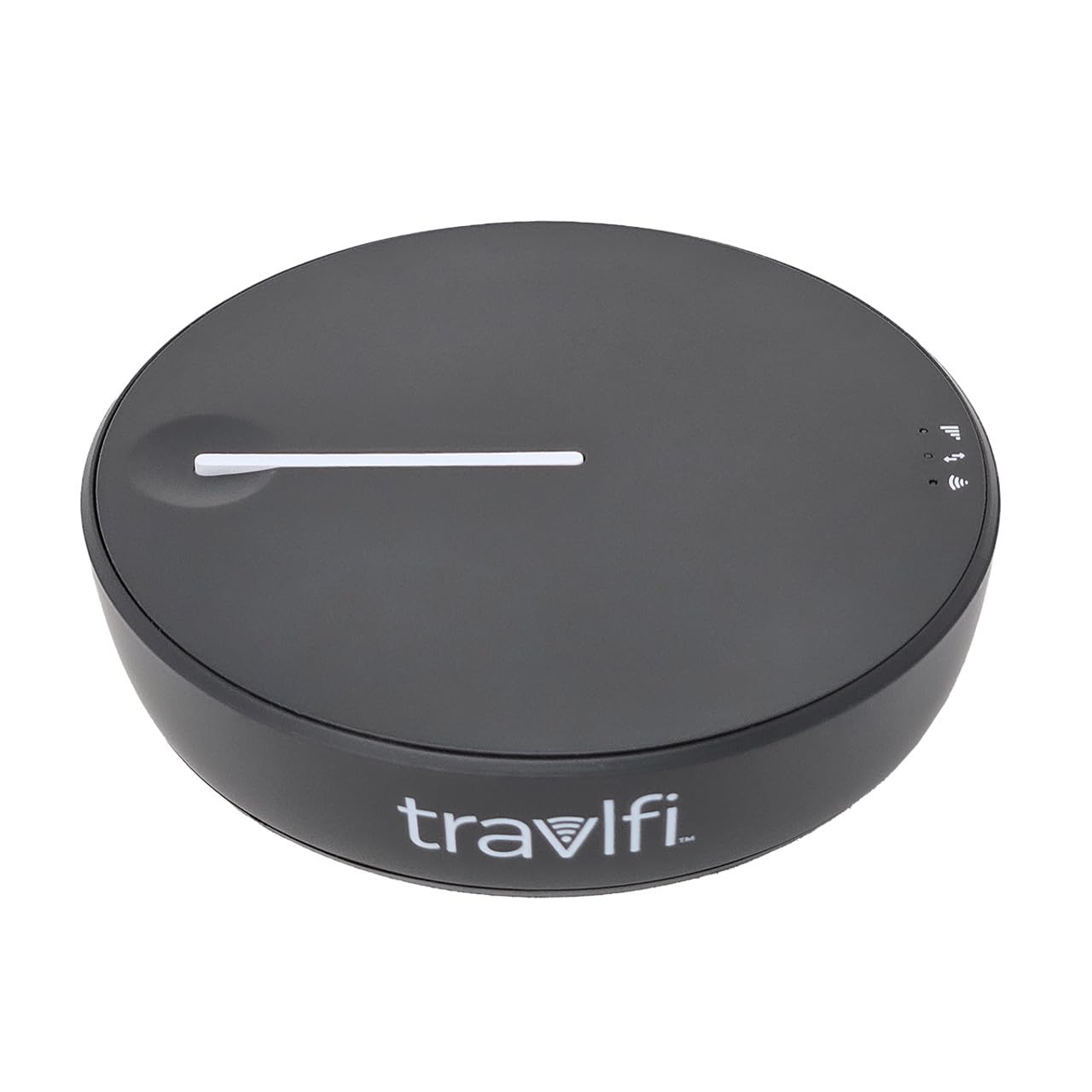
3. TravlFi JourneyGo
The campfire-ready hotspot with no SIM card to chase.
This one is built for the campground set. The JourneyGo runs on e-SIM technology, so there is no physical SIM card to swap or lose. Instead, you pick prepaid data plans from as little as 2 GB all the way to unlimited, paying month to month with zero contract obligations.
Its defining strength is how it connects. Rather than locking to one carrier, it scans the nationwide networks and latching onto whichever tower is strongest at your campsite. Customers note taking it into rural canyon camping and never losing a signal where a car-bound hotspot would have quit.
Performance is the thing people rave about here — the most-praised aspect by a wide margin — with most finding the setup takes under 5 minutes and the battery lasting a long time between charges. The honest caveat: speeds can vary dramatically depending on your plan tier and signal. One report noted that after upgrading to a larger data bucket, the speeds slowed noticeably, so customers say to match your plan carefully to your family’s actual usage.
Plan-first pick: This is the best fit for RVers and campers who want the flexibility to prepay for exactly as much data as a trip requires. If you need raw 5G speed on a daily commute, the Spitz AX or Numen Air will outrun it.
4. GL.iNet GL-E750V2 MUDI

The privacy-focused 4G router that puts a VPN in your glovebox.
If you work from your vehicle or hotel, this is the router that keeps your data safe. MUDI runs a built-in OpenVPN and WireGuard client, so you can tunnel all your traffic through a secure server with one tap — no need to set up VPNs on every laptop and phone. It also includes a 4G LTE Cat6 module with a SIM slot, ready to take a data-only SIM for your region.
Portability is what owners praise most. At just 285g and about the size of a paperback, it slides into a backpack pocket. The massive 7000mAh battery gives up to 8 hours of continuous connection, which easily covers a full day of remote work by the roadside.
The recurring gripes are heat and boot time. The unit can run warm under load, and the startup process takes a moment before you are online. While the price sits firmly in premium territory, buyers confirm the 4G connection stays stable and the flexibility of the OpenWrt software rewards anyone willing to learn it.
Reach for this if: You need secure, encrypted browsing on the road and you want a router that can also boost a weak hotel WiFi signal into your whole room.
Look elsewhere if: You want 5G speeds — this is a 4G LTE device that tops out at 433 Mbps combined, and dedicated 5G units leave it behind.
5. Verizon Inseego MiFi 8800L
The tough, dependable Jetpack that Verizon users swear by.
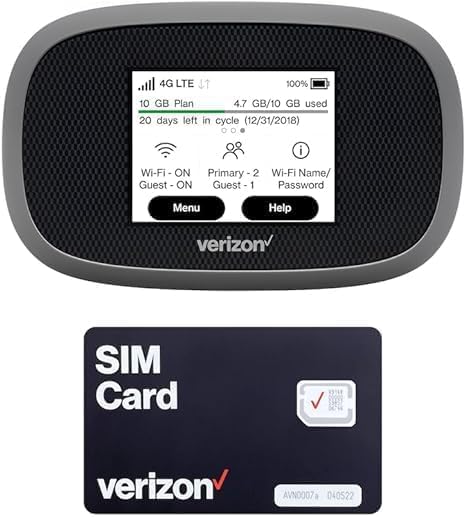
For drivers who want a dependable connection with near-5G speeds, this Jetpack delivers up to 1200 Mbps over the Verizon network. It comes bundled with a Verizon SIM card, so you can get a data plan — like 100GB for — and be up and running on a network that blankets US highways.
Durability is this unit’s superpower. Owners describe it as the “Timex” of hotspots that has survived cracked screens, hard falls, and years of daily use while still working. The 4400mAh battery delivers up to 10 hours of active use, and it doubles as a power bank to charge your phone in a pinch.
Before you buy, check your carrier. This device does not work with T-Mobile, so it is the right choice only if Verizon or AT&T is your network. Some reviewers point out occasional units arriving with charging issues, so double-check the device when it lands. For a straight-up, no-nonsense US road warrior on the Verizon network, it is tough to top.
Verizon loyalist pick: If you already trust Verizon’s coverage map, this open up Jetpack gives you a proven, rugged unit that can also work internationally. T-Mobile customers should skip it entirely.
6. EIOTCLUB 4G LTE Pocket WiFi
A 4.4-ounce answer to scattered road-trip data plans.
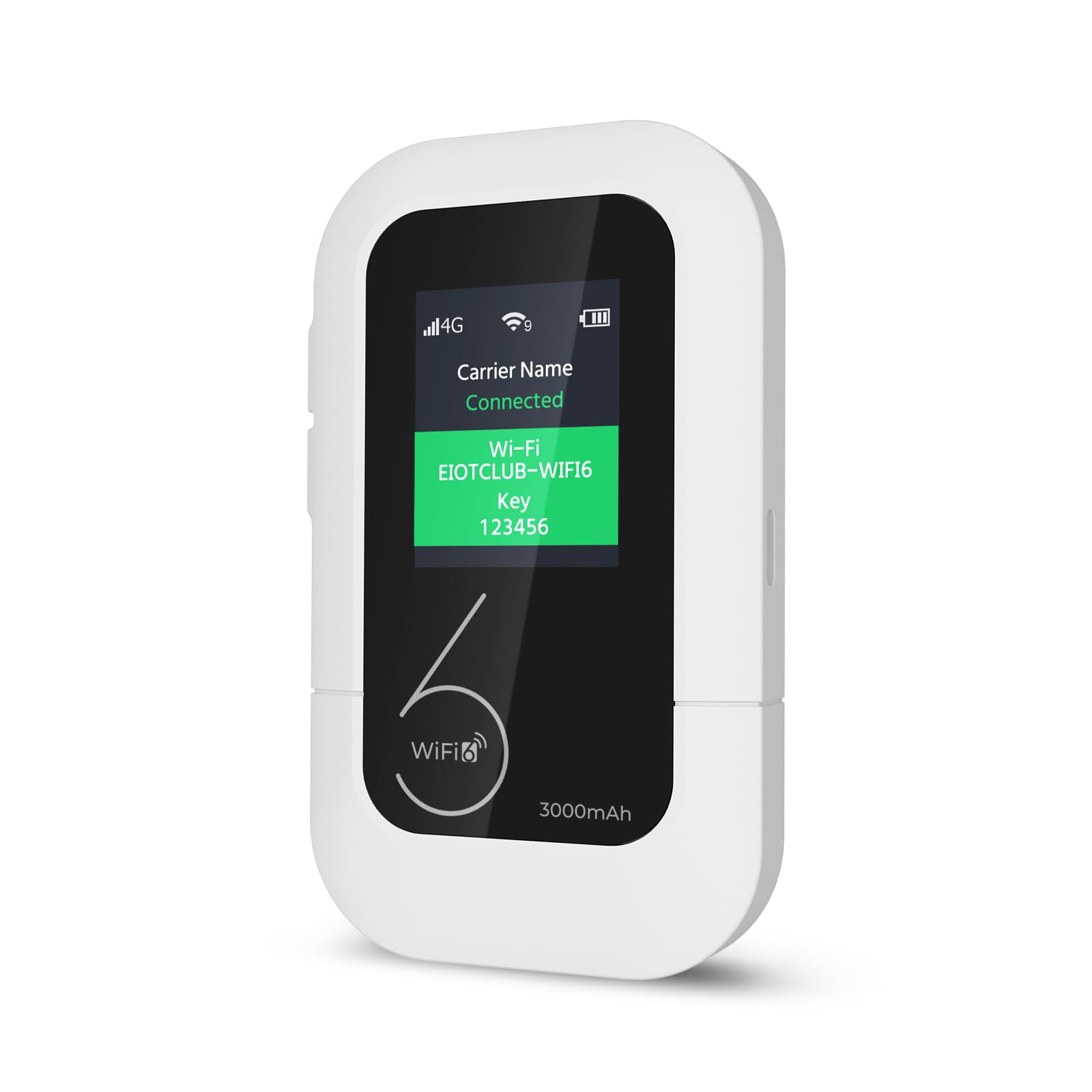
Sometimes you just want to open the box and get online. This one comes with a pre-installed, US-locked SIM card already loaded with 1 GB of trial data, so you can power it on and connect immediately. When you run low, just scan the QR code on the 1.7-inch LCD screen to buy more data as you go.
Truckers and long-haul drivers are the core fans here. Shoppers say it never losing signal on long routes, with a 3000mAh battery that stretches up to 12 hours of continuous use. A smart power-saving mode puts the device asleep when idle and wakes it with a single button push, so you don’t drain the battery between stops.
Functionality is the aspect owners value most — it simply gets the job done as a mobile router. The honest limitations are the single 2.4GHz band, which is fine for 10 connected devices but not ideal for crowded airwaves, and the locked SIM, which means you use their plans rather than your own carrier. This is a budget-friendly entry point for drivers who want simplicity over speed.
Reach for this if: You want a no-contract, pay-as-you-go device with zero SIM hunt — perfect for a dedicated work hotspot in a delivery truck or cab.
Not for power users: If you need 5G speeds or plan to run a laptop farm, the single-band, locked-SIM design will leave you wanting more.
7. GlocalMe UPP
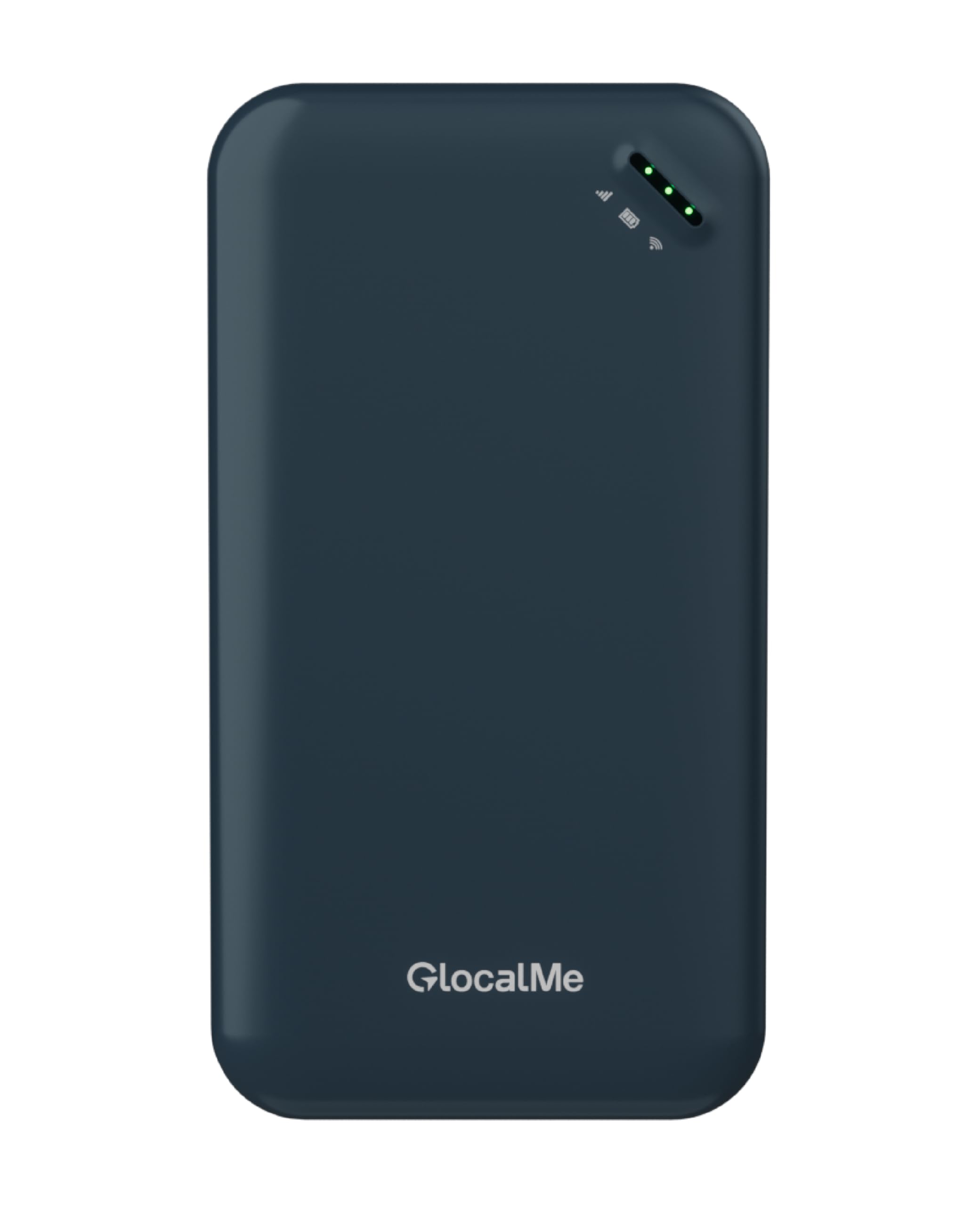
The pocket-sized 4G hub for cross-border road trips.
This is Numen Air’s more affordable 4G sibling for the international driver. It arrives with 1.1 GB of global data already loaded, valid for 90 days, and connects to 390+ carriers across 200+ countries automatically. No SIM card is required — the UPP picks the strongest local network wherever you cross a border.
Device quality is what buyers praise most, with easy setup a close second. Buyers report strong indoor and outdoor signals that can be more reliable than house WiFi, and the 3000mAh battery delivers over 13 hours of continuous use. It connects up to 8 devices, which is plenty for a family car.
The real-world caveat is connectivity consistency. While many experience steady speeds, some report frequent drops in crowded areas or when more than two devices pile on. This is best treated as a dependable travel companion rather than a heavy-duty streaming rig, and the single 5GHz band means you won’t get the range of a dual-band unit.
Border-crossing value: For drivers who vacation across multiple countries each year, the UPP’s pay-as-you-go global data beats hunting for local SIMs — just keep expectations modest for heavy multi-device use.
8. SCHOK Cat 12 4G LTE
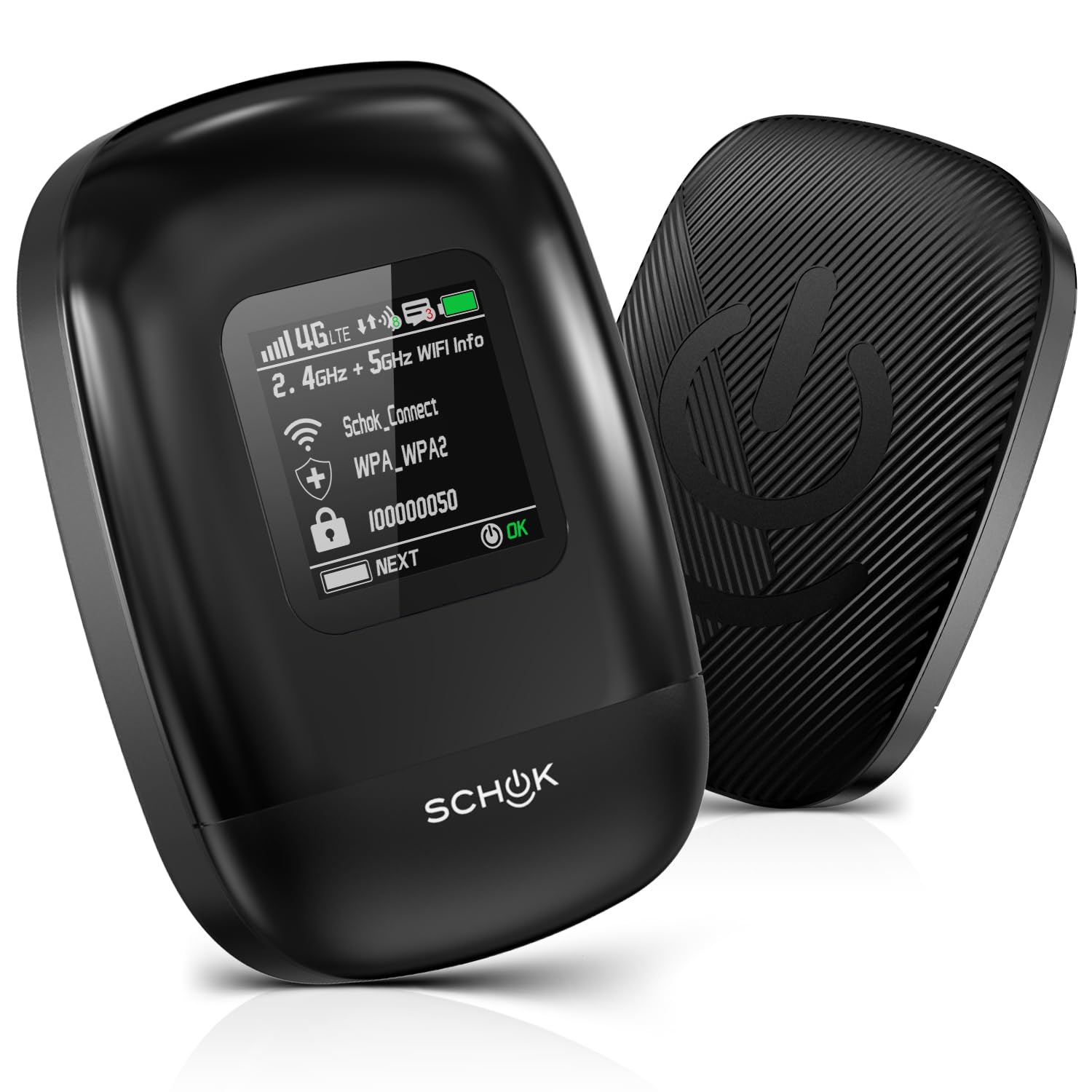
A budget box that spreads 600 Mbps across 16 screens.
If your car is full of devices — kids’ tablets, a TV, a laptop — this Cat 12 hotspot handles them all. It supports 600 Mbps theoretical downloads via 4G LTE with Quad Carrier Aggregation, and broadcasts on both 2.4GHz and 5GHz bands to keep 16 connected devices stable. It is designed for Verizon but works with T-Mobile and AT&T as well, accepting any open up Nano SIM card.
Setup is what owners find easiest — just pop in a card, power on, and connect within about a minute. The 4000mAh removable battery keeps it going all day, and the removable design means you can swap in a fresh cell when one ages out.
The honest mismatch is speed expectations. While the 600 Mbps rating looks impressive, real-world results vary wildly from blazing fast to frustratingly slow, depending on your carrier and location. The highest-volume owner feedback puts reliability as a mixed bag — some units work perfectly for years, while others arrive DOA. The catch is you must bring your own data-only SIM card, and it won’t accept locked, subsidized government cards. It is a budget-friendly option, but treat speed claims with skepticism.
Why it fits a family car
- 16-device support on dual-band WiFi
- Removable 4000mAh battery for easy swaps
- Multi-carrier compatibility including Verizon, AT&T, T-Mobile
Where to keep expectations
- Requires separate data-only SIM purchase
- Real-world speeds vary by location
- Not compatible with locked carrier cards
Best for the budget-minded family: This is the value pick for a minivan full of gadgets when you already have a data-only SIM and don’t want to overpay for a name brand.
Think twice if: You expect the full 600 Mbps promise — this is a budget 4G unit, and speeds will flex with your nearest tower’s congestion.
9. Spectrum Smart 4G LTE USB
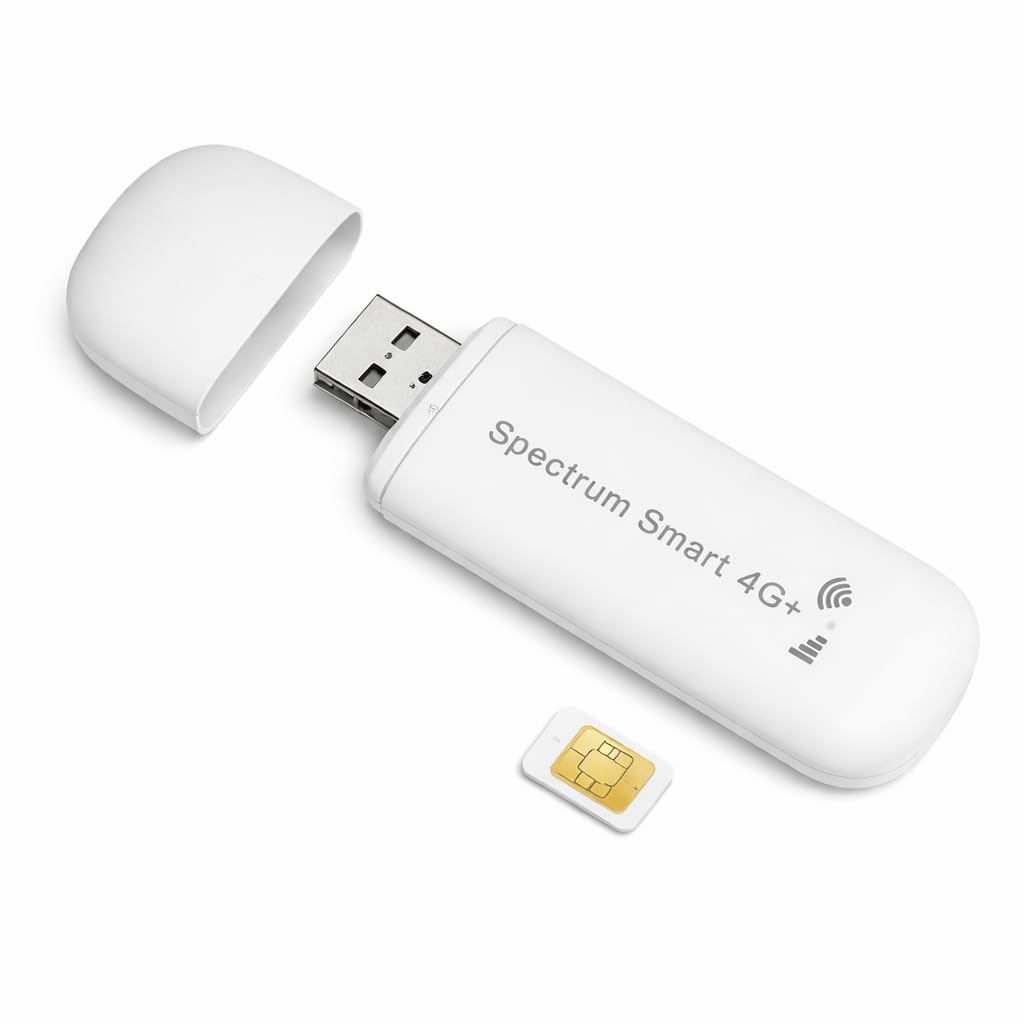
The pocket gum-stick that plugs into your car’s USB port.
This is the simplest possible answer to car internet. Smaller than a pack of gum, it plugs straight into any USB port — your car charger, laptop, or power bank — and creates a private WiFi hotspot in seconds. No software, no drivers, no setup, and it arrives with a SIM card already inside.
The smart trick here is true double-carrier coverage. It works on both AT&T and T-Mobile networks and automatically connects to whichever has the stronger signal, and it covers the US, Canada, and Mexico. With 4G LTE speeds up to 150 Mbps, it is fast enough for streaming and video calls, and supports up to 10 devices at once.
Setup earns the most owner praise, with buyers summing it up: “Works great in the car for long road trips.” The occasional negative lands on value — the included SIM’s data plans can feel pricey to some, so check the plan rates before committing. This sticks to a 2.4GHz single band, which is fine for most vehicles but not ideal in congested areas. For a zero-effort, always-ready car hotspot, this is as easy as it gets.
Instant mobility fix: The go-to for drivers who refuse to fiddle with settings and want to be online 30 seconds after plugging in. If you prefer to bring your own cheap SIM, look at the SCHOK instead.
Understanding the Specs
4G LTE vs 5G connectivity
4G LTE is the widely available standard for car hotspots, offering reliable speeds for streaming and browsing. 5G is the faster, next-generation network that delivers dramatically higher throughput — the GL.iNet Spitz AX and GlocalMe Numen Air are the 5G powerhouses here, while the others run on 4G LTE. Your choice depends on how much bandwidth you truly need.
Dual-band vs single-band WiFi
Dual-band devices broadcast on both 2.4GHz and 5GHz frequencies. The 5GHz band is faster but has shorter range, while 2.4GHz travels farther but is more crowded. Dual-band simply means the hotspot creates two separate networks so speed-hungry devices can park on the fast lane and older gadgets stick to the reliable one.
FAQ
Do I need a data plan with a carrier for these car hotspots?
Is 5G worth the extra cost over 4G LTE for driving?
How many devices can typically connect to a car WiFi hotspot?
Can I use a car hotspot outside the United States?
Will these hotspots work with any wireless carrier?
How long does the battery last on a portable car hotspot?
What’s the difference between a mobile hotspot and a cellular router?
Can I connect an external antenna to boost rural signal?
Is it safe to use public WiFi through these hotspots?
Which is better for an RV: a pocket hotspot or a router?
Final Thoughts: The Verdict
For most buyers, the automobile wifi hotspot winner is the GL.iNet Spitz AX because it is the only unit that delivers true 5G speeds with dual-SIM failover and detachable antennas — a genuine whole-RV network. If you want global reach without hunting SIMs, grab the GlocalMe Numen Air. And for the simplest plug-and-go car internet, the Spectrum Smart USB is the one to reach for.
How We Picked
We do not accept paid placement. Every pick is matched to a real buyer and a real use-case; we do not hands-on test units.
Sources & Methodology
Specifications: manufacturer listings and product documentation. Review insights: verified customer reviews, as of August 2026. Pricing: not shown on this page (it changes often); check the current price via the retailer link.
As an Amazon Associate, Gadgets Feed earns from qualifying purchases. This does not affect which products we feature.