
Prototyping a jig, printing a replacement vent clip, or tooling custom interior trim requires a machine that can handle more than just desk toys. The thermal demands, dimensional stability, and material toughness required for automotive use separates a hobbyist printer from a real workshop tool. The right choice will determine whether your parts warp under a hot hood or hold a thread in a load-bearing bracket.
I’m Min — the co-founder and writer behind Gadgets Feed. My research for this guide involved cross-referencing dozens of technical spec sheets, analyzing thousands of user-reported print experiences, and mapping the material compatibility and temperature handling of each machine against real automotive workshop conditions.
Whether you are designing functional prototypes or producing end-use jigs and fixtures, selecting the right tool means understanding heated chamber requirements, build volume, and material throughput. This guide breaks down the specifications that actually matter so you can confidently choose the best automotive 3d printer for your specific fabrication needs.
How To Choose The Best Automotive 3D Printer
An automotive application demands more from a printer than a decorative vase. The parts you create must resist heat, bear load, and fit precisely with existing assemblies. Start by prioritizing the enclosure, motion system, and material temperature ceiling, as these core specs dictate whether a printer can reliably produce functional parts for your vehicle.
Heated Chamber and High-Temperature Printing
Printing with materials like ABS, ASA, Polycarbonate (PC), or Nylon Carbon Fiber requires a controlled ambient temperature. A heated chamber (typically 50°C–70°C) prevents warping and delamination on large flat parts—think trim panels or ducting. Look for a maximum nozzle temperature of at least 300°C, and ideally 350°C or higher, if you plan to print with reinforced composites. A printer that only handles PLA is simply not suited for under-hood environments.
Build Volume for Workshop Parts
Automotive components range from small clips (20mm) to full-sized intake manifolds or fuse box covers (300mm+). A machine with a build volume under 200mm in any axis will force you to split and glue models — a weak point under stress. For versatility, consider a cubic volume around 250mm³ to 400mm³. Print farms benefit from models like the Creality Ender 5 Max at 400mm³, while a garage tinkerer might find 250mm³ sufficient for most custom brackets and repair parts.
Material Throughput and Multi-Color Capability
For rapid prototyping and small batch production, print speed matters. CoreXY machines reaching 500mm/s to 800mm/s drastically cut iteration cycles. However, speed alone isn’t enough — look at the volumetric flow rate (mm³/s). An extruder capable of 25mm³/s or higher prevents under-extrusion at high velocities. Multi-material systems (AMS, QIDI BOX, Canvas) also allow you to print soluble supports for complex undercuts or add a flexible TPU layer to vibration-dampening parts, saving post-processing time.
Quick Comparison
On smaller screens, swipe sideways to see the full table.
| Model | Category | Best For | Key Spec | Amazon |
|---|---|---|---|---|
| Flashforge AD5X | Multi-Color | Precision Prototyping | 600mm/s, 300°C nozzle | Amazon |
| Creality K1C | Enclosed | Carbon Fiber Printing | 300°C, clog-free extruder | Amazon |
| Bambu Lab A1 Combo | Open Frame | Quiet Home Workshop | ≤48 dB, auto-calibration | Amazon |
| ELEGOO Centauri Carbon 2 | Enclosed | Mid-Range Multi-Color | 350°C hotend, 256mm³ | Amazon |
| Anycubic Kobra S1 Combo | Enclosed | Reliable PETG/ABS | 600mm/s, ACE dryer | Amazon |
| Bambu Lab P1S Combo | Enclosed/Multi | 16-Color Production | 500mm/s, 20000mm/s² | Amazon |
| Creality Ender 5 Max | Large Format | Print Farm Scaling | 400mm³, 700mm/s | Amazon |
| Sovol T500 | Extra Large | Oversized Prototypes | 500mm³, Klipper | Amazon |
| Original Prusa MK4S | Open Source | Workshop Reliability | Input Shaping, 1kg PLA | Amazon |
| QIDI Max4 Combo | Industrial Pro | Engineering Filaments | 65°C chamber, 800mm/s | Amazon |
| Original Prusa XL | Professional | Multi-Material Production | 14in³, dual toolhead | Amazon |
In‑Depth Reviews
1. Flashforge AD5X Multi-Color 3D Printer
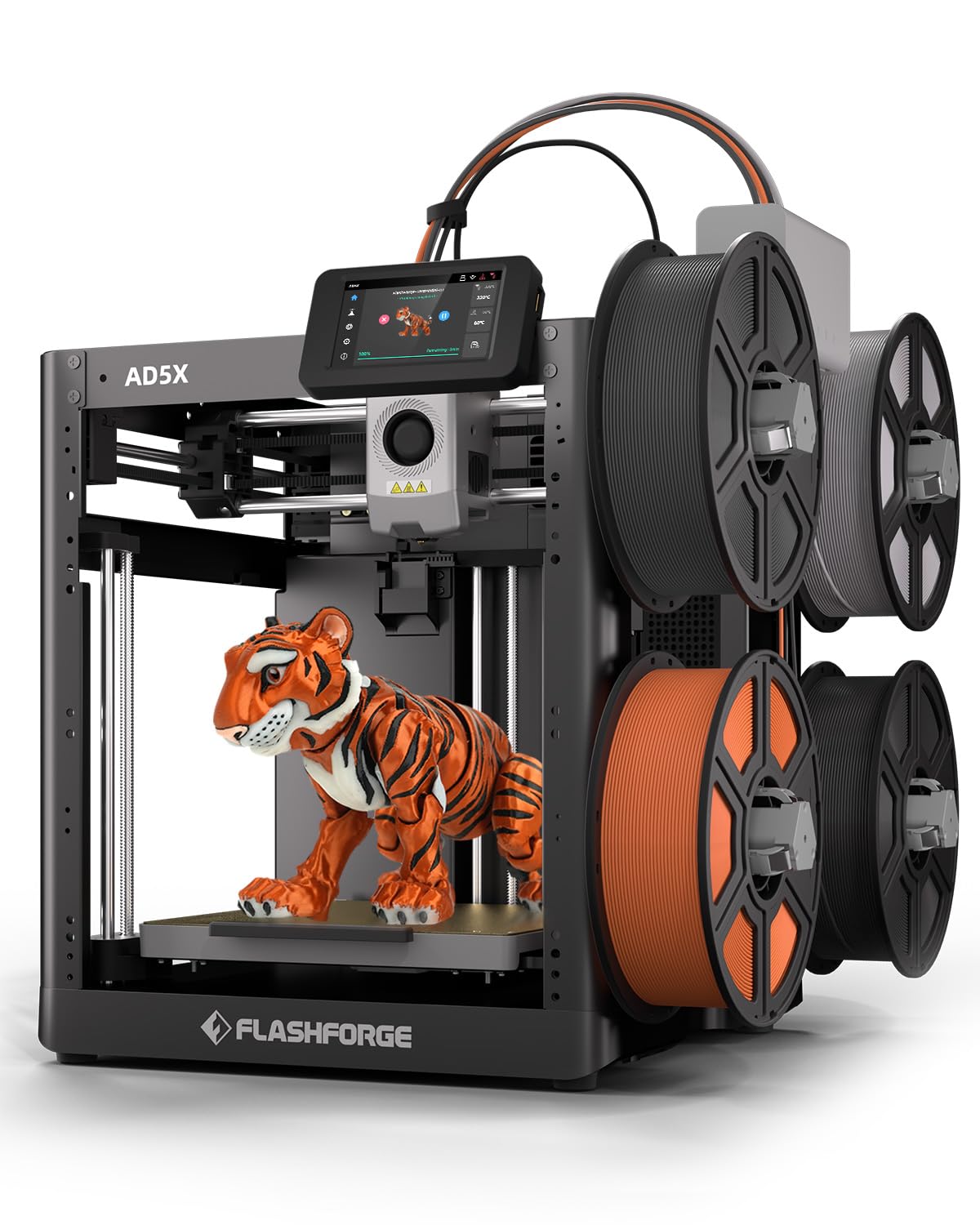
The Flashforge AD5X delivers a potent mix of speed, multi-color capability, and precision that makes it a top contender for automotive prototyping. Its CoreXY architecture pushes 600mm/s with 20,000mm/s² acceleration, meaning a complex duct or bracket can be iterated in minutes rather than hours. The 300°C direct-drive extruder handles standard PLA and PETG comfortably, while the dual-channel cooling system ensures crisp overhangs on complex geometries.
Multi-color printing via the IFS system is genuinely useful for marking different hardness zones on a prototype or printing soluble support interfaces without a separate unit. The 1-click auto leveling and vibration compensation deliver consistent first-layer adhesion across the 220mm³ bed — adequate for most single-part automotive jigs. Users report excellent reliability near 100 hours of continuous use, with the main caveat being that the software stack (a fork of OrcaSlicer) has a learning curve.
For a garage workshop or light production environment needing rapid iteration with decent material flexibility, the AD5X provides near-premium speed at a mid-range investment. The noise level is moderate in multi-color mode, but the print quality rivals machines costing considerably more. Just account for the 24.2lb weight and ensure your bench is stable.
Why it’s great
- Excellent print quality and speed at 600mm/s
- Auto-leveling and vibration compensation work reliably
- Multi-color IFS system expands prototyping capability
Good to know
- Software (OrcaSlicer fork) has a learning curve
- No heated chamber, limiting high-temp materials
- Noise increases noticeably during multi-color purging
2. Creality K1C 3D Printer

The Creality K1C is engineered for those needing to print carbon fiber reinforced filaments without breaking the bank. Its 300°C all-metal hotend with a titanium alloy heatbreak prevents heat creep, while the clog-free direct extruder with a bolster spring and ball plunger maintains consistent grip on abrasive materials. The 600mm/s speed and 20,000mm/s² acceleration keep cycle times competitive for batch jig production.
A key advantage for automotive use is the built-in AI camera that detects spaghetti failures and foreign matter, pausing the print before an entire roll of expensive CF-Nylon is wasted. The upgraded cooling system — with separate hotend, part cooling, and auxiliary chamber fans — minimizes stringing and warping on bridge-heavy parts like intake scoops. The enclosed design gives a controlled environment for ABS and ASA.
Assembly is genuinely plug-and-play, with auto bed leveling and input shaping completing calibration within minutes. Some users report needing to fine-tune Z-offset manually, and the build volume of 220 x 220 x 250mm limits production of larger single-piece items like dash trim. For a shop focused on small functional brackets and carbon fiber composite parts, the K1C delivers exceptional reliability per dollar.
Why it’s great
- Excellent for carbon fiber and abrasive filaments
- AI failure detection saves material on long prints
- Fully enclosed for ABS/ASA printing
Good to know
- Build volume (220mm³) limits large single parts
- Some users need to fine-tune Z-offset after initial setup
- Customer service response can be slow
3. Bambu Lab A1 Combo + LED Lamp Kit
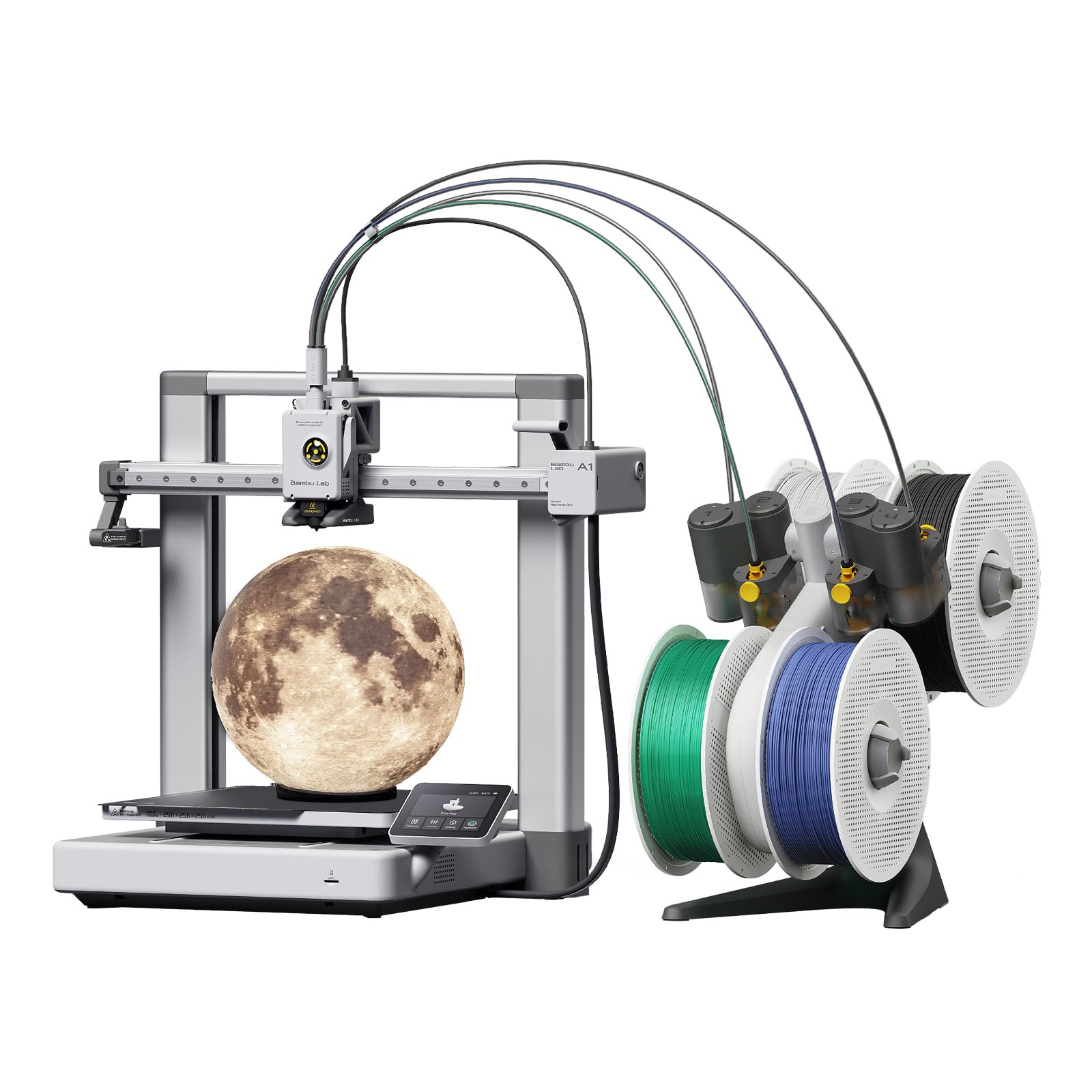
The Bambu Lab A1 Combo proves that high-speed printing doesn’t have to sound like a shop vac running in your garage. At ≤48 dB with active motor noise canceling, this open-frame machine is ideal for home workshops where noise matters. The 10,000 mm/s² acceleration is lower than the CoreXY competition, but the A1 still delivers impressively fast prints for its price tier.
The AMS Lite supports multi-color and multi-material printing, allowing you to mix tough PETG for the part body with flexible TPU for vibration damping insets — all in a single print. The active flow rate compensation algorithm adjusts extrusion dynamically based on sensor readings, ensuring accurate layer lines even at higher speeds. This is particularly useful when printing detailed brackets that need to thread-fit with existing fasteners.
Setup is exceptionally easy, with full-auto calibration handling Z-offset and bed leveling. That said, the open design means no heated chamber, limiting material selection to PLA, PETG, and TPU — ABS and Nylon will warp. The 256mm³ build volume is adequate for smaller interior trim pieces, but large intake or body parts require splitting.
Why it’s great
- Extremely quiet operation at ≤48 dB
- Active flow compensation ensures consistent extrusion
- AMS Lite enables multi-material prints easily
Good to know
- Open frame — not suitable for ABS or Nylon
- Lower acceleration than enclosed CoreXY competitors
- Small amount of filament included; order extra spools
4. ELEGOO Centauri Carbon 2 Combo
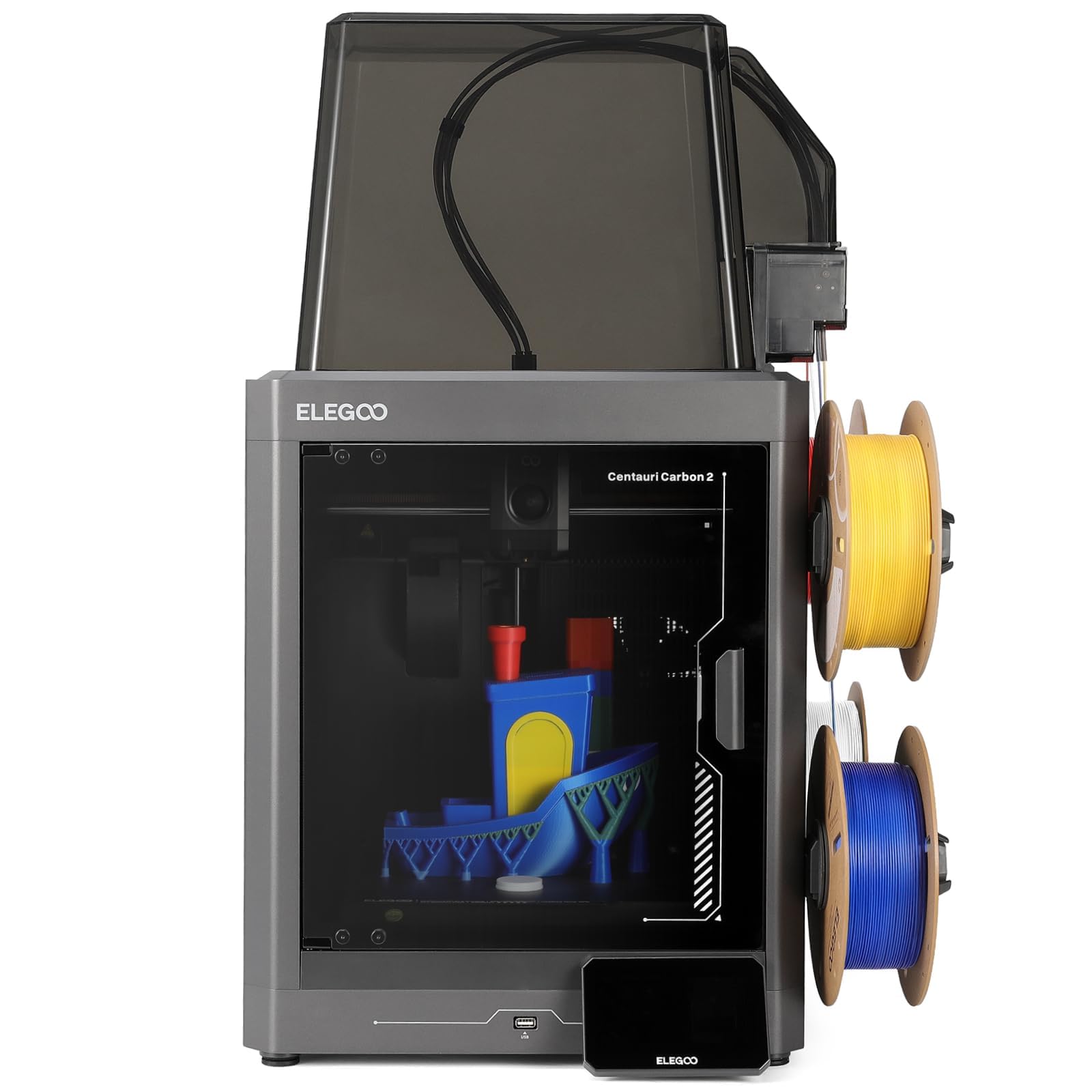
The ELEGOO Centauri Carbon 2 pushes the material envelope with a 350°C high-temp nozzle and an enclosed chamber, making it one of the most accessible machines for printing engineering-grade polymers. The CoreXY system reaches 500mm/s with 20,000mm/s² acceleration, and the CANVAS 4-color system provides auto-refill and tangle detection for hassle-free multi-material runs.
Active vibration compensation and smart calibration across 31 sensors produce smooth surface finishes that matter for aesthetic interior trim. The 256mm³ build volume offers a solid middle ground for automotive parts — large enough for a center console lid, compact enough for a standard desk. The fully automated workflow (load, tap print, walk away) reduces operator error during long overnight runs.
One concern is the closed ecosystem: firmware is not downloadable, and users are locked to the bundled slicer. Some early units had connection reliability issues, though LAN-only mode provides a more stable alternative. For shops that prioritize out-of-box functionality and high-temperature material support, the Centauri Carbon 2 is a compelling mid-range option.
Why it’s great
- 350°C nozzle handles advanced materials
- Fully automatic calibration with 31 sensors
- 4-color CANVAS system reduces filament waste
Good to know
- Closed ecosystem limits customization (no Klipper)
- LAN-only connection recommended for stability
- Some reports of firmware update issues
5. Anycubic Kobra S1 Combo
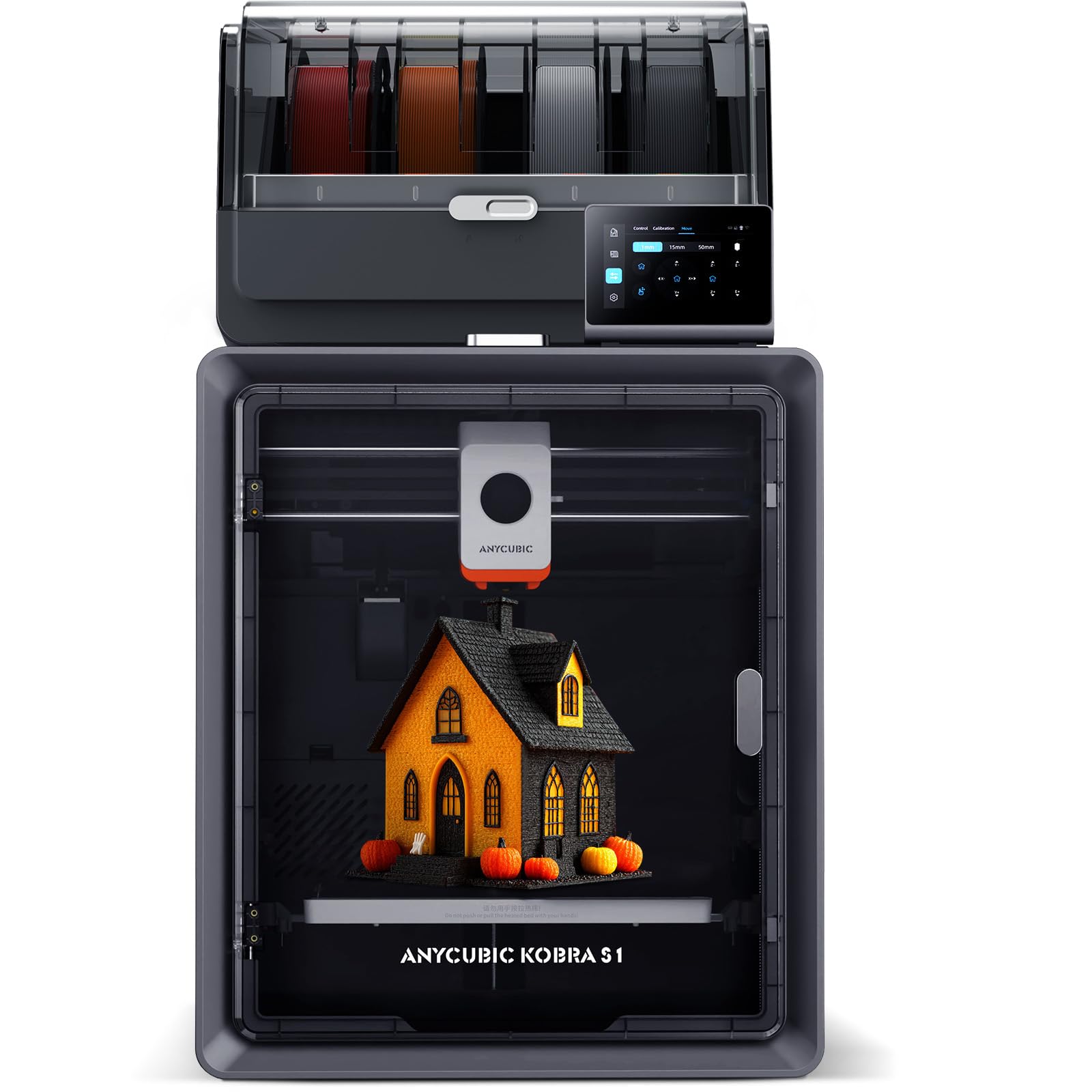
The Anycubic Kobra S1 Combo targets reliability and material preservation with its integrated ACE PRO filament dryer — a dual PTC heating module with 360° hot air circulation that keeps filaments bone-dry even in humid shop environments. This is a huge advantage for automotive garages where moisture exposure can ruin a roll of PETG or Polycarbonate mid-print.
Print speed reaches 600mm/s with 20,000mm/s² acceleration, and the Kobra OS includes flow compensation to minimize material overflow and surface blemishes. The 250mm³ build volume provides ample space for mid-sized brackets and covers. The enclosed design and 300°C hotend make it capable of ABS and ASA, while the full auto-leveling ensures consistent first layers across the entire bed.
Users with over 500 hours report no clogs and excellent print quality. The main frustration is the web-based app interface, which some find less intuitive than competitors. Initial units had sensor tab and hotend issues, but Anycubic support has been actively sending upgraded metal parts. For a reliable enclosed printer that actively manages filament quality, the Kobra S1 is a strong mid-range contender.
Why it’s great
- ACE PRO active dryer prevents moisture-related failures
- Consistent 500+ hour reliability with good support
- Enclosed for ABS/ASA with good auto-leveling
Good to know
- App interface is web-based and clunky
- Initial units had minor hardware issues
- Full speed limits highly detailed prints
6. Bambu Lab P1S Combo
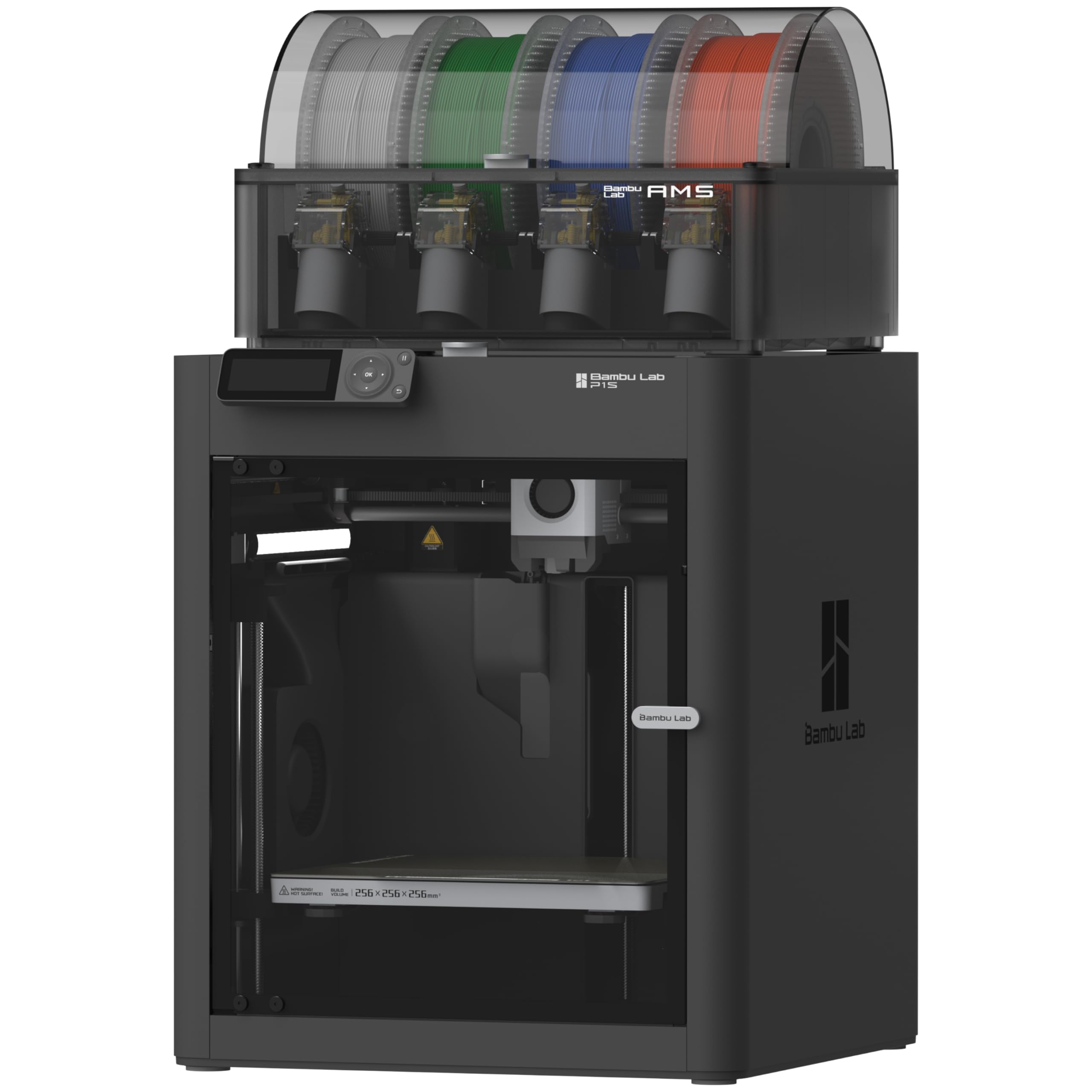
The Bambu Lab P1S Combo is a well-rounded enclosed workhorse that supports up to 16 colors through its AMS system, making it ideal for production runs that require color-coded parts or multi-material breakdown. The CoreXY motion system hits 500mm/s with 20,000mm/s² acceleration, and the fully enclosed body improves print reliability for ABS, PETG, and TPU. Auto bed leveling and a 15-minute setup mean you are printing within an hour of unboxing.
The print quality is consistently strong, with users reporting a >95% success rate over hundreds of prints. The AMS handles color swapping and material switching seamlessly, enabling soluble PVA supports for complex overhangs in one pass. The build volume of 256 x 256 x 256mm is sufficient for a wide range of automotive components — from sensor mounts to interior trim clips.
The P1S is not recommended for carbon fiber or glass fiber reinforced polymers; those abrasive materials can degrade the standard hotend. The chamber also lacks active heating beyond what the bed provides, so large ABS parts may still warp in cooler environments. For a closed-enclosure printer with excellent multi-color support and high reliability, the P1S Combo delivers professional-grade results.
Why it’s great
- Excellent multi-color via AMS (up to 16 colors)
- High reliability with >95% print success rate
- Fast 15-minute setup with auto bed leveling
Good to know
- Not recommended for carbon/glass fiber filaments
- Chamber is enclosed but not actively heated
- Nozzle clog potential with cheap filaments
7. Creality Ender 5 Max 3D Printer
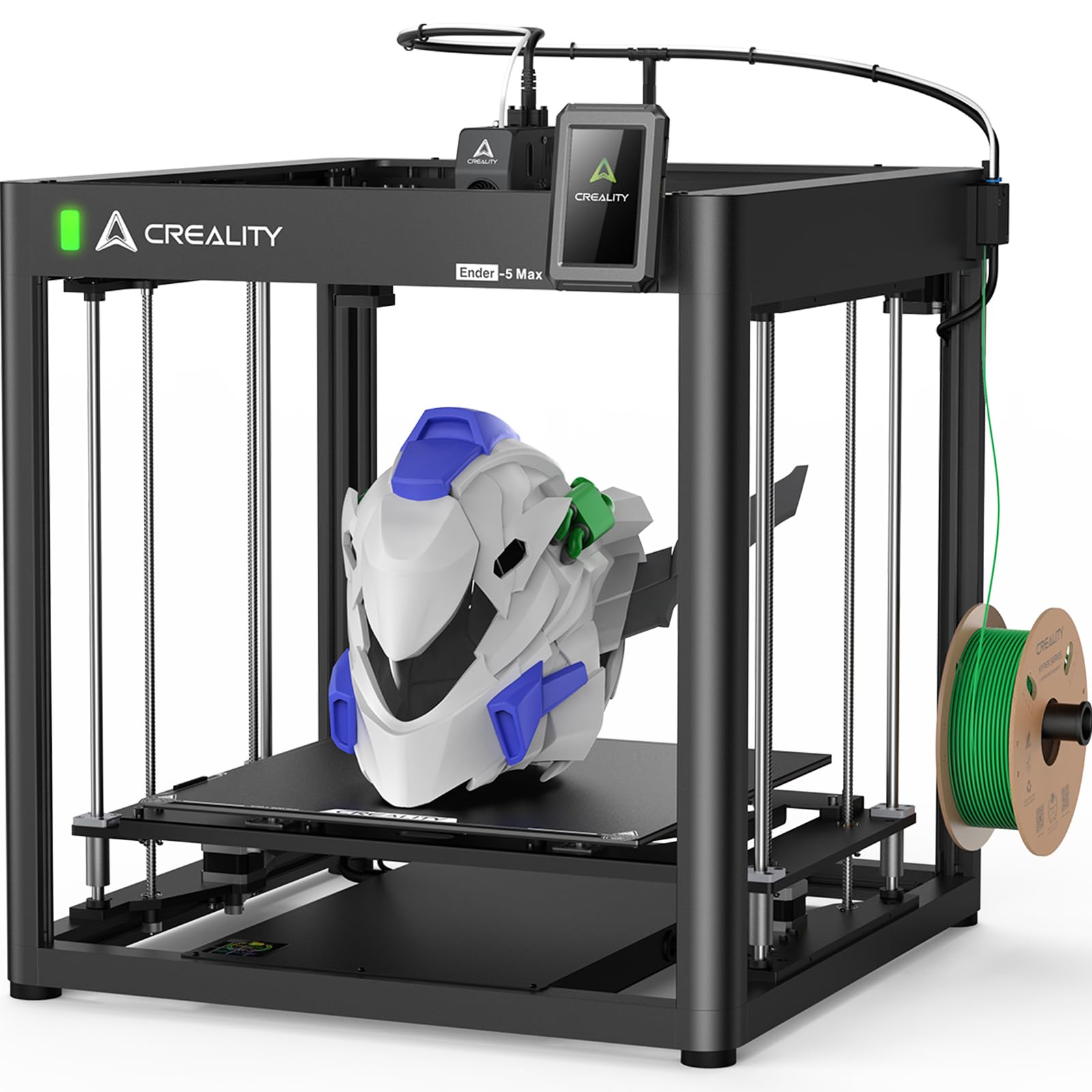
The Creality Ender 5 Max tackles the number one constraint of automotive prototyping: build volume. With a massive 400 x 400 x 400mm build area, you can print full-sized intake manifolds, custom bumper brackets, or batch-produce multiple smaller jigs in a single run. The CoreXY system provides 700mm/s print speed, and the 1000W rapid-heating bed reaches working temperature in minutes — critical for maintaining throughput.
WLAN multi-printer control and a tri-color status indicator make this a natural choice for scaling into a print farm. The reinforced die-cast aluminum frame with linear rails reduces vibration on tall prints, maintaining accuracy across the entire Z-axis. The 64-point auto leveling and automatic Z-offset remove the manual bed shimming that plagues many large-format machines.
The dual-gear direct extruder is designed for 24/7 operation, and the 300°C nozzle handles PLA, PETG, ABS, ASA, and Polycarbonate. Some users have reported inconsistent bed adhesion and quality control issues with the first units. The machine is also heavy at nearly 69 pounds, requiring a sturdy dedicated table. For a shop needing large format capability without entering industrial pricing brackets, the Ender 5 Max offers genuine cost per part advantages.
Why it’s great
- Huge 400mm³ build volume for full-size parts
- WLAN multi-printer control for print farm scaling
- 1000W rapid-heating bed for quick start
Good to know
- Quality control on early units can be inconsistent
- Enclosure may need a riser for full Z access
- Heavy (69 lbs) requires a robust workbench
8. Sovol T500 3D Printer

The Sovol T500 is the largest format machine in this guide with a 500 x 500 x 500mm build volume, enabling you to print bumpers, full dashboards in sections, or multiple large components simultaneously. Its 7-inch Klipper touchscreen with 1024×600 resolution provides responsive control, and the built-in Klipper firmware eliminates the need for a separate Raspberry Pi for remote management.
The direct drive extruder with a 6.5:1 gear ratio delivers a 25mm³/s flow rate, allowing high-quality prints at 200mm/s while still reaching 500mm/s max for rough prototypes. The all-metal hotend reaches 300°C and includes a hardened nozzle for carbon fiber and wood-filled filaments. Industrial-grade linear rails on all three axes reduce friction and improve layer alignment at scale.
Assembly is 95% pre-assembled, requiring only about 15 minutes to get printing. The magnetic flexible bed makes part removal easy, though some users have reported the surface is easily damaged. The 86.8-pound weight demands a solid stand, and the lack of an actively heated chamber means high-temp materials like ABS require an enclosure add-on. For large-scale single-part production, the T500 is unmatched in its price range.
Why it’s great
- Colossal 500mm³ build volume for oversized parts
- Built-in Klipper firmware for remote control
- High flow 25mm³/s extruder for fast production
Good to know
- No active chamber heating for ABS/Nylon
- Heavy (87 lbs) requires dedicated space
- Some initial quality control issues reported
9. Original Prusa MK4S High-Speed 3D Printer
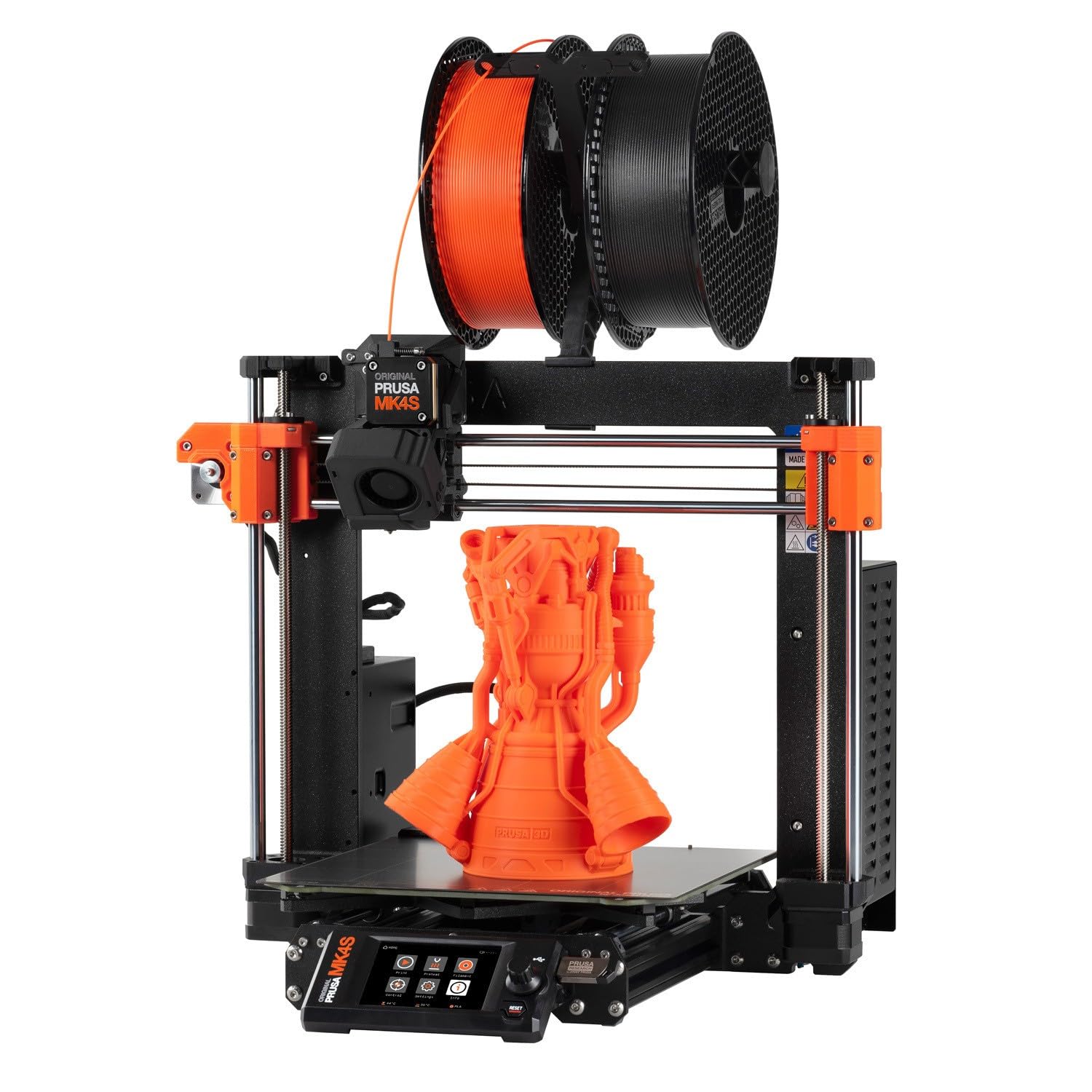
The Original Prusa MK4S is the benchmark for reliability and open-source flexibility. With input shaping reducing ringing at higher speeds, this updated model delivers noticeably faster prints than its predecessor while maintaining the dimensional consistency that Prusa is known for. The build volume (9.84 x 8.3 x 8.6 inches) is smaller than the competition, but the print quality out of the box is exceptional.
The open-source design means you can swap firmware, calibrate for exotic materials, and upgrade components as the ecosystem evolves. The 300°C hotend and direct drive extruder support a wide range of filaments, and Prusa’s profiles in PrusaSlicer provide optimized settings for dozens of materials. The self-cleaning printhead and robust part cooling produce clean overhangs and sharp details.
Assembly is either pre-built or available as a kit for those who want to understand every component. The community support is unmatched, with decades of troubleshooting knowledge available. The main limitation for automotive work is the build volume — you will need to split large parts. For a shop that values long-term serviceability and consistent quality over raw speed, the MK4S is a dependable partner.
Why it’s great
- Industry-best reliability and print consistency
- Fully open source with long-term upgrade path
- Excellent community support and slicer profiles
Good to know
- Build volume (9.84 x 8.3 x 8.6 in) is modest
- Higher upfront cost than comparable competitors
- Kit build takes multiple days for beginners
10. QIDI Max4 Combo 3D Printer
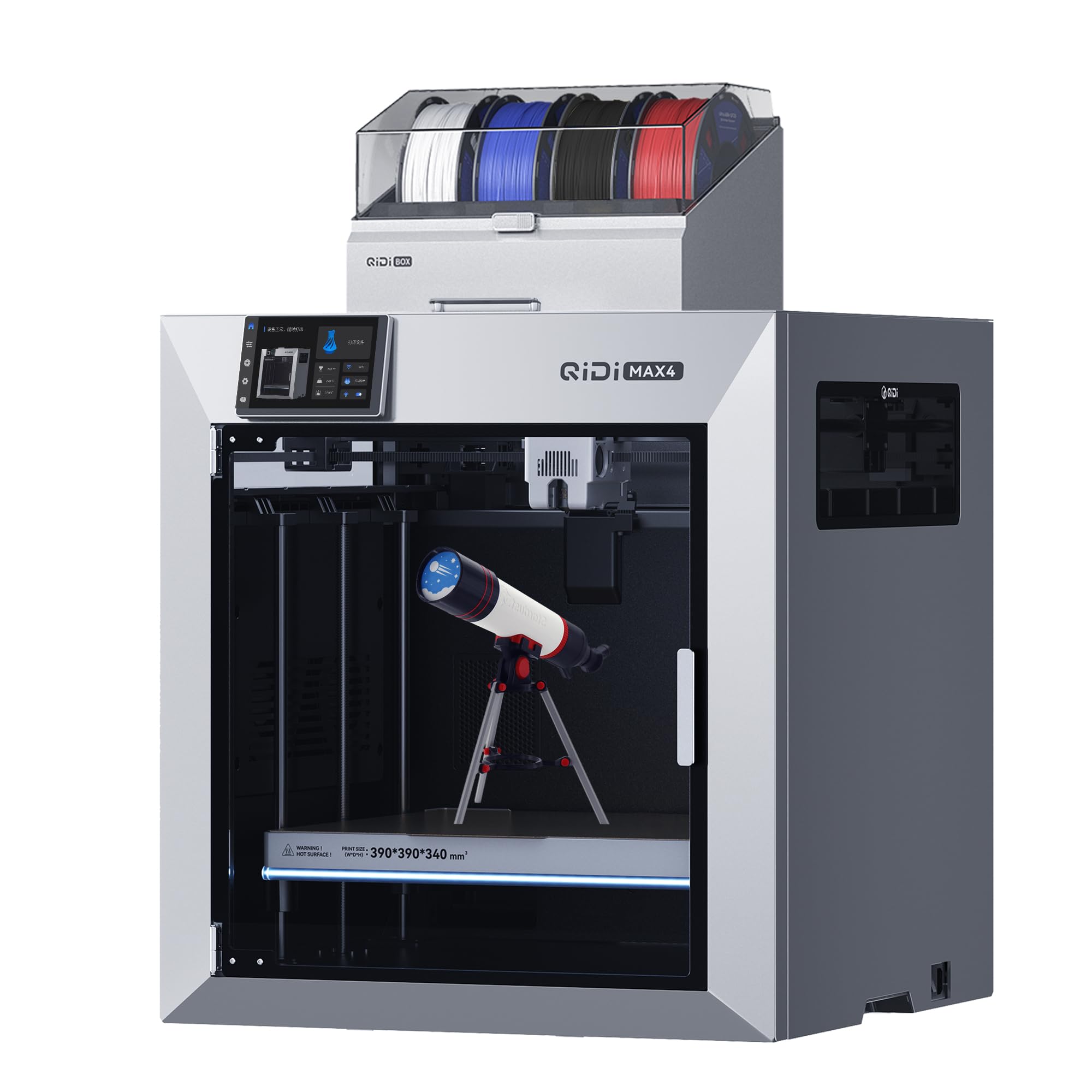
The QIDI Max4 Combo brings industrial-grade features to a professional workshop with a 390 x 390 x 340mm build volume and a 65°C actively heated chamber. This is a critical spec for printing engineering materials like ABS-CF, PC, and PPS-CF without warping. The 800mm/s maximum speed and 30,000mm/s² acceleration, driven by closed-loop motors on the X and Y axes, deliver aggressive throughput without loss of position accuracy.
The high-flow hotend achieves 40mm³/s volumetric flow, enabling thick layer prints for functional prototypes that need strength rather than surface finish. The QIDI BOX expands multi-color capability up to 16 colors, while the AI camera detects spaghetti failures and pauses automatically. The Polar Cooler system (sold separately) improves part cooling for demanding geometries.
The machine is large and heavy at 120 pounds, requiring a dedicated stand or table. Pre-print warm-up times are longer due to the chamber heat-up, but the results with high-temperature filaments justify the wait. The interface, while functional, feels less polished than Bambu Lab or Prusa options. For a garage or business regularly printing with engineering-grade materials, the Max4 Combo is a serious tool.
Why it’s great
- 65°C actively heated chamber for high-temp materials
- 40mm³/s flow rate for fast production
- Closed-loop motors on X/Y for precision
Good to know
- Very heavy (120 lbs) and requires dedicated space
- Long pre-print warm-up time for chamber
- Polar Cooler is an additional purchase
11. Original Prusa XL Assembled 2-Toolhead
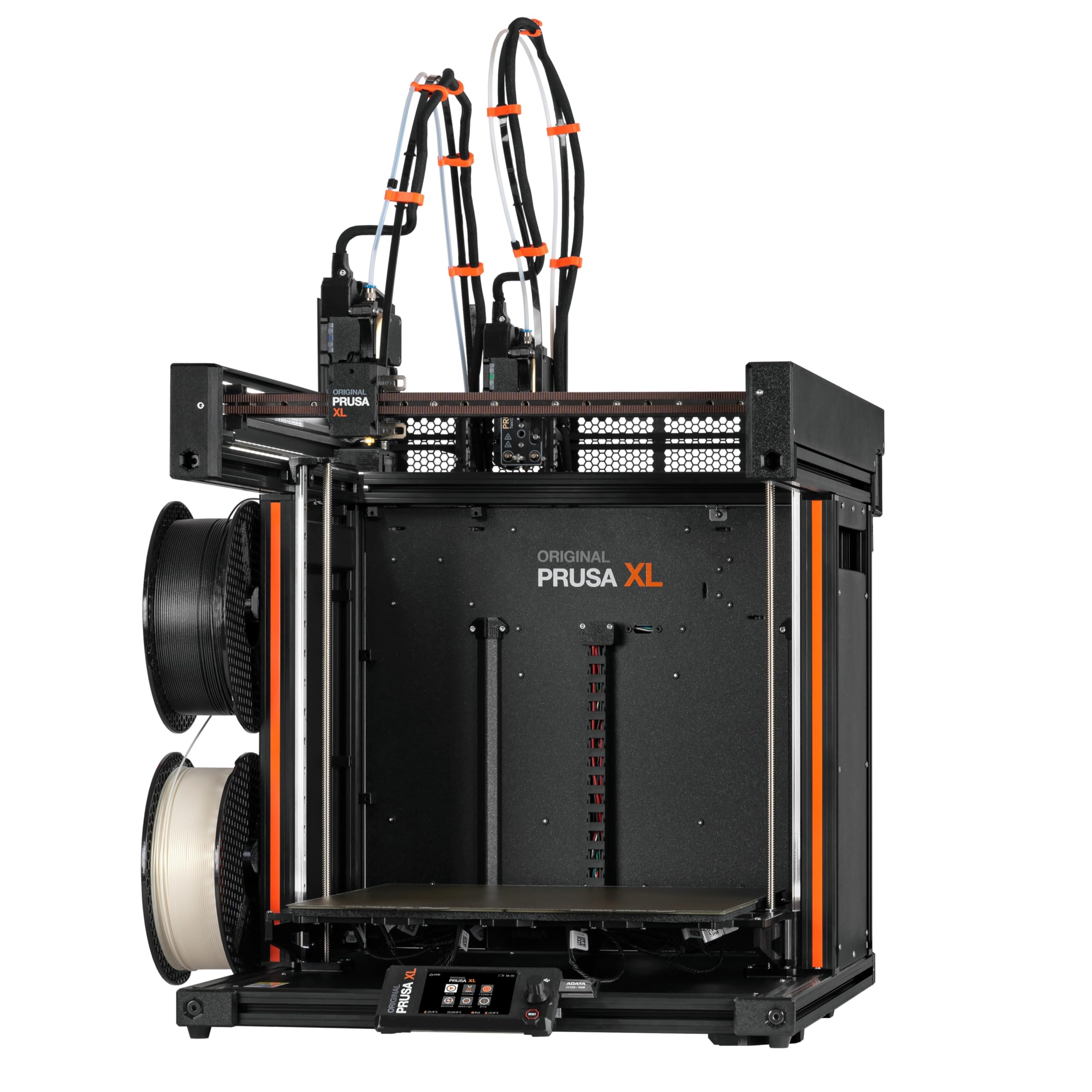
The Original Prusa XL with 2-toolhead setup is the choice for professionals who need multi-material capability with zero compromise. The dual tool system allows for seamless switching between a tough material like Polycarbonate and a soluble support material, enabling truly complex geometries without manual post-processing. The segmented heated bed heats only the zones in use, reducing energy waste and improving warping control on large prints.
The CoreXY motion system provides accuracy and speed, and the 14.17-inch cubic build volume allows for substantial single-piece production. The XL runs on fully open-source firmware with no forced updates or cloud dependencies — important for shops that need control over their hardware. PrusaSlicer integrates perfectly with the dual tool system, and the large touchscreen interface makes workflow management straightforward.
Assembly of the pre-built unit still requires some setup (installing the extruder, LCD, and antenna), and the cost is substantial. Some users report that the software experience, while powerful, lacks the polish of Bambu Lab’s ecosystem. For a serious automotive fabrication workshop producing functional, production-ready parts with complex support structures, the Prusa XL delivers unmatched reliability and material flexibility.
Why it’s great
- Dual toolhead for multi-material/soluble supports
- Segmented heated bed reduces warp on large parts
- Fully open source with no forced updates
Good to know
- High cost requires serious budget commitment
- Setup requires some assembly despite “pre-built”
- Software less polished than consumer competitors
FAQ
Can a standard PLA printer handle automotive under-hood temperatures?
What is the difference between CoreXY and bed-slinger motion for automotive parts?
Why would an automotive shop need multi-color or multi-material printing?
How important is a filament dryer for an automotive 3D printer?
Final Thoughts: The Verdict
For most users, the best automotive 3d printer winner is the Flashforge AD5X because it combines rapid 600mm/s CoreXY speed, reliable multi-color capability, and a proven track record of print consistency at a mid-range price point. If you need carbon fiber support and enclosed reliability, grab the Creality K1C. And for producing large single-piece parts like intake ducts or full brackets on an industrial scale, nothing beats the QIDI Max4 Combo with its 65°C heated chamber and engineering-grade material handling.