
The difference between a repair that looks like a repair and one that disappears under paint comes down to the filler you choose. Automotive body putty is the bridge between a dented panel and a flawless finish, and picking the wrong one means hours of extra sanding, pinholes that refuse to fill, or a repair that cracks within months.
I’m Min — the co-founder and writer behind Gadgets Feed. I’ve spent countless hours digging through technical data sheets, cross-referencing cure times, sanding characteristics, and adhesion specs to separate the fillers that actually deliver from those that just fill a can.
This guide ranks the top options by real-world performance, covering working time, sandability, and material compatibility so you can confidently pick the best automotive body putty for your next repair project.
How To Choose The Best Automotive Body Putty
Selecting the right body putty isn’t about grabbing the cheapest can on the shelf. It’s about matching the filler’s working time, cure speed, and physical properties to the specific material you’re repairing and the size of the damage.
Working Time and Cure Time
Working time is the window you have to apply and shape the putty after mixing in the hardener. Cure time is how long before you can sand. A putty with a 3-minute working time is fine for small spot repairs on a rock chip, but a large dent on a quarter panel requires at least 10-15 minutes of working time to spread evenly without rushing. Cure times range from 20 minutes to 4 hours — faster isn’t always better if you need to block-sand a large area.
Lightweight vs. Standard Fillers
Lightweight fillers use microballoons or other low-density additives to reduce sanding effort. They spread easily and feather well with 80-grit paper, but they are less impact-resistant than standard formulas. Use lightweight fillers for cosmetic repairs above the beltline. Use standard or fiber-reinforced fillers for structural areas like rocker panels, door jambs, or anywhere the repair will see vibration or flex.
Material Compatibility
Not all putties bond to every substrate. Standard polyester fillers adhere well to steel and fiberglass but require special etching primers for aluminum or galvanized steel. If you’re repairing an aluminum hood or a fiberglass boat hull, look for a putty explicitly rated for those materials. SMC (sheet molding compound) — common on modern Corvettes and some truck beds — also requires a compatible filler to avoid delamination.
Quick Comparison
On smaller screens, swipe sideways to see the full table.
| Model | Category | Best For | Key Spec | Amazon |
|---|---|---|---|---|
| Evercoat Rage Ultra | Premium | Pro-grade sanding and non-sag filling | 102.4 fl oz; EcoResin technology | Amazon |
| TotalBoat Polyester | Premium | Marine and high-strength structural repairs | Quart kit; long-strand fiberglass | Amazon |
| Evercoat Z-Grip | Premium | Clog-free sanding on aluminum and steel | 128 fl oz; Hattonite friction reducer | Amazon |
| J-B Weld Body Filler | Mid-Range | Versatile home and auto repairs | Quart; 30-minute cure | Amazon |
| U.S. Chemical Special Lite | Mid-Range | Lightweight filling on large areas | 0.8 gal; creamy non-sag formula | Amazon |
| Bondo Body Filler | Mid-Range | Original formula for fast dent repair | 6.3 lb; 20-minute cure | Amazon |
| 3M Bondo Glazing Putty | Budget-Friendly | Filling pinholes and small scratches | 4-pack; 3-minute working time | Amazon |
In‑Depth Reviews
1. Evercoat Rage Ultra – Sanding Body Filler
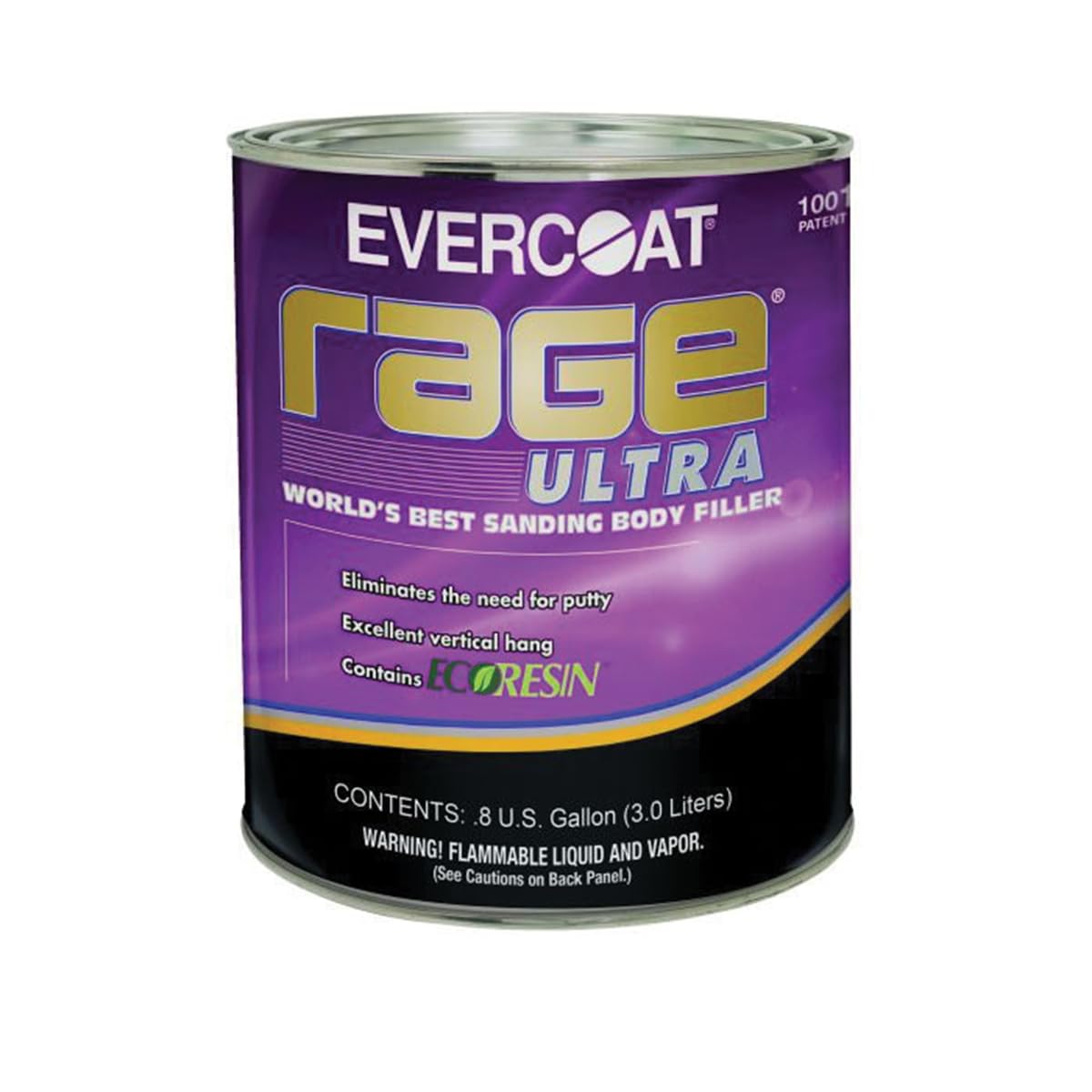
The Evercoat Rage Ultra sets the standard for professional-grade body filler. Its EcoResin formula drops the amine blush common in polyester fillers, which means less contamination when you start spraying primer. The non-sag rheology keeps it in place on vertical panels without running, and it feathers beautifully with 80-grit paper — no finishing putty required for most jobs.
At 102.4 fluid ounces (0.8 gallons), this isn’t a full gallon, but the creamy texture and low pinhole count mean you waste less material sanding away defects. Multiple users note that it sands so fast you risk over-removing filler if you’re not careful. It’s heat-sensitive above 85°F, so keep your workspace cool during application.
This is the choice for body shop professionals and serious home enthusiasts who want the shortest path from filler to primer. The price reflects its position at the top of the market, but the time saved on sanding justifies the investment for anyone doing panel-level repairs.
Why it’s great
- Non-sag formula excellent for vertical panels
- Sands fast with minimal pinholes
- EcoResin reduces blush contamination
Good to know
- 0.8 gallons, not a full gallon
- Heat-sensitive above 85°F
2. TotalBoat Polyester Structural Repair Putty

When the repair needs to hold a deck to a hull or bridge a structural gap in fiberglass, standard body filler won’t cut it. The TotalBoat Polyester Structural Repair Putty uses long-strand glass fibers suspended in premium polyester resin to deliver impact resistance and elasticity that cosmetic fillers simply can’t match.
The paste-like consistency won’t sag on vertical surfaces, and the 15-20 minute working time at 70°F gives ample time for fairing or filleting complex shapes. It cures hard enough to sand within 30 minutes and accepts gelcoat or paint without issue. One customer used it to fabricate a missing section of a 1966 Corvette rear wheel well — a testament to its structural capability.
This is a specialized tool for boat builders, RV repair, and automotive structural work. If you need a cosmetic filler for a door ding, look elsewhere. But if you’re bonding stringers or filling bolt holes in a transom, this is the correct answer.
Why it’s great
- Long-strand fiberglass for high impact resistance
- Non-sag on vertical and overhead surfaces
- Works above and below the waterline
Good to know
- Harder to sand than lightweight fillers
- Requires MEKP catalyst (included)
3. Evercoat Z-Grip Lightweight Body Filler

The Evercoat Z-Grip is engineered for one specific pain point: sandpaper clogging. The Hattonite additive reduces friction and heat during sanding, which keeps 80-grit paper cutting instead of glazing over. For anyone who has burned through a stack of sandpaper on a single repair, this alone justifies the premium over generic fillers.
The formula is lightweight and spreads easily, with superior adhesion to galvanized steel and aluminum — two surfaces that give standard polyester fillers trouble. It finishes with very few pinholes, and long-term users consistently report reliable results year after year. The 128-fluid-ounce can is a true gallon, offering solid value at the premium end of the market.
Choose the Z-Grip when you’re working on mixed-metal repairs or when sandpaper consumption is eating into your profit margin. It’s a workhorse for small collision shops and experienced DIYers who value consistency.
Why it’s great
- Clog-free sanding saves sandpaper
- Adheres well to aluminum and galvanized steel
- Minimal pinholes for a smooth finish
Good to know
- Heavier weight than ultra-light fillers
- Requires proper ventilation
4. J-B Weld Body Filler – Quart

J-B Weld brings its reputation for durable adhesives into the body filler category with a two-component system that bonds to metal, wood, fiberglass, and SMC. The 30-minute cure time is forgiving enough for beginners while still being fast enough for same-day sanding and painting.
Users consistently praise the value — the quart size covers multiple small-to-medium repairs, and the waterproof nature of the cured filler makes it suitable for areas exposed to moisture. A few users note the can appears half-full due to settling during shipping, but the product itself performs reliably when properly mixed. The clear color of the resin allows easy tinting with the included hardener for visual mixing confirmation.
This is the ideal entry point for homeowners tackling rust repairs on a pickup bed or patching a hole in a metal shed. It doesn’t have the sanding refinement of premium fillers, but for the price point, it delivers dependable results.
Why it’s great
- Works on metal, wood, fiberglass, and SMC
- Waterproof and corrosion-resistant
- Forgiving 30-minute cure time
Good to know
- Can may settle during shipping
- Not as sandable as premium fillers
5. U.S. Chemical & Plastics Special Lite Lightweight Filler

The U.S. Chemical Special Lite filler is a favorite among sculptors, mold makers, and body men who need a lightweight, easy-spreading compound for large-area repairs. Its creamy texture applies smoothly and finishes with a professional-quality surface that requires minimal blocking.
With a 4-hour full cure time, this filler gives you plenty of working time to shape and contour before sanding. It works with polyester and fiberglass resins for structural shell support, and the off-white color provides good contrast against dark primers. However, some users report that it may sag on vertical surfaces if applied too thickly, and the packaging — specifically the lack of lid clips — has been criticized for spillage during shipping.
This is the right filler for someone doing hood repairs, roof panels, or any large flat surface where sanding effort is the primary concern. The lightweight formula reduces arm fatigue during long sessions.
Why it’s great
- Lightweight and easy to sand
- Creamy texture spreads smoothly
- Works with polyester and fiberglass resins
Good to know
- May sag on vertical surfaces
- Packaging prone to spillage in transit
6. Bondo Body Filler, Original Formula

The original Bondo formula has been the go-to for DIY dent repair for decades, and it remains a solid performer for a reason. It mixes easily, spreads smoothly, and cures in 20 minutes for same-day sanding and priming. The non-shrinking formula works on wood, steel, aluminum, fiberglass, and concrete, giving it the widest material compatibility of any filler in this roundup.
Users have found creative applications beyond automotive, including repairing cast iron sewer pipes and filling gaps in house painting projects. The salmon color provides good visibility during sanding, and the pink blush from the hardener helps skim coat detection. The primary downside is the can fill level — multiple users note that the 6.3-pound can appears only three-quarters full, and the price has crept up relative to local hardware store pricing.
For the occasional user who needs a reliable filler that works on almost any surface, the original Bondo is still the benchmark. It won’t sand as fast as premium fillers, but it will get the job done.
Why it’s great
- Non-shrinking and fast-curing at 20 minutes
- Works on steel, aluminum, fiberglass, and concrete
- Salmon color aids sanding visibility
Good to know
- Can may be underfilled compared to label
- Not as smooth-sanding as lightweight options
7. 3M Bondo 907 Glazing and Spot Putty – 4.5 oz, 4 Pack

The 3M Bondo 907 glazing putty is not a structural filler — it’s a finishing tool designed to fill pinholes, scratches, and rock chips after the main body filler has been blocked. The two-part formula offers a 3-minute working time and dries ready to sand in roughly 15 seconds to 30 minutes depending on ambient temperature, making it one of the fastest-setting products in this guide.
It applies in a creamy consistency that wipes easily into tiny imperfections without bridging or trapping air. The black color provides excellent contrast on primer, so you can instantly see if the imperfection is fully filled. Users warn that the strong odor requires excellent ventilation, and the tube can leak if stored improperly. The acetone cleanup is a minor inconvenience against the quality of the finish it delivers.
If you’re chasing a mirror-smooth paint job, this is the putty that eliminates the last pinholes and grain that primer can’t hide. Use it after your main filler and before primer for professional-level results.
Why it’s great
- Ultra-fast drying for quick spot repairs
- Black color provides contrast on primer
- Excellent pinhole and scratch filling
Good to know
- Strong odor requires ventilation
- Tube can leak if not stored upright
FAQ
Can I apply automotive body putty over rust?
Why does my body filler keep pinholes after sanding?
How do I accelerate or slow down the cure time of polyester putty?
Final Thoughts: The Verdict
For most users, the automotive body putty winner is the Evercoat Rage Ultra because it combines non-sag application, fast sanding, and the lowest pinhole count of any filler tested. If you need structural strength for fiberglass or marine repairs, grab the TotalBoat Polyester Structural Repair Putty. And for budget-friendly pinhole finishing before paint, nothing beats the 3M Bondo 907 Glazing Putty.