
Peeling off a decal from your car or truck should feel like a win, not a weekend-long battle with sticky residue and scratched clear coat. The wrong approach — a sharp scraper, an aggressive solvent, or too much elbow grease — can turn a simple removal job into an expensive paint correction bill. The right automotive decal remover makes the adhesive let go without taking the finish with it, saving hours of labor and protecting the surface underneath.
I’m Rikta — the co-founder and writer behind Gadgets Feed. I’ve spent the last 15 years dissecting product specs, cross-referencing real-world user data, and tracking how chemical formulations and rubber-density metrics perform across different automotive surfaces like clear coat, vinyl wraps, and factory paint. (And Homer 🐱 inspected every rubber wheel from the comfort of the drill case).
Whether you are dealing with sun-baked pinstripes, protective film glue, or a stubborn bumper sticker, the key is matching the tool to the adhesive. This guide walks through every effective option to help you pick the very best automotive decal remover for your specific job, vehicle surface, and workflow.
How To Choose The Best Automotive Decal Remover
Deciding between a rubber eraser wheel and a chemical spray comes down to the type of adhesive, the surface material, and the scale of the job. Eraser wheels excel on flat painted panels where you can safely apply rotational friction, while solvents handle odd shapes, plastic trim, and residual glue you missed with the wheel. A solid strategy for large decals is a two-step approach: remove the decal body with an eraser wheel, then wipe away leftover adhesive with a compatible solvent.
Surface Compatibility
Not every remover is safe on every surface. Rubber eraser wheels are designed for acrylic enamel and urethane paint finishes but can damage plastic bumpers, bare fiberglass, and painted aluminum. Chemical removers like Koch-Chemie Eulex are formulated to be safe on clear coat and PPF, whereas strong solvents such as 3M Specialty Adhesive Remover can soften paint if left to dwell too long. Always test on a hidden panel first.
Adhesive Type
The chemical nature of the glue determines which removal method will work best. Standard pressure-sensitive adhesives from decals and pinstripes dissolve with citrus-based solvents or eraser-wheel friction. Reactive adhesives — epoxies, urethanes, and silicones used in PPF and trim tape — require a solvent that breaks down a cured chemical bond. For these jobs, a dedicated reactive-adhesive remover like 3M’s 38987 is necessary.
Application Scale and Efficiency
For a single bumper sticker or a few inches of pinstripe, a spray solvent and plastic scraper is often the fastest and cheapest path. For full side-panel decals, whole hood wraps, or decades-old graphics that have fused into the clear coat, an eraser wheel on a drill dramatically reduces time. The trade-off is cleanup: eraser wheels shed rubber crumbs that must be wiped down with a solvent, while chemical removers typically evaporate or wipe clean with less mess.
Quick Comparison
On smaller screens, swipe sideways to see the full table.
| Model | Category | Best For | Key Spec | Amazon |
|---|---|---|---|---|
| KOCHCHEMIE Eulex | Chemical Solvent | PPF adhesive and clear-coat-safe cleaning | 1 liter, paint-safe formula | Amazon |
| 3M Specialty Adhesive Remover | Chemical Solvent | Reactive adhesives like epoxy and urethane | 15 fl oz, solvent-based | Amazon |
| MIVIDE 4PCS Eraser Wheel Kit | Eraser Wheel | Large decals and vinyl wrap removal | 4 inch, 2 thicknesses, 4000 RPM max | Amazon |
| Goo Gone Spray Pro-Power | Chemical Solvent | Indoor surfaces and small automotive residue | 16 fl oz, includes scraper | Amazon |
| CowboyBOB 2 Pack Eraser Wheel | Eraser Wheel | Stubborn 3M tape and old graphics | 4 inch, 2-pack, 4000 RPM | Amazon |
| LIZMOF Decal Remover Eraser Wheel | Eraser Wheel | Budget-conscious decal removal on paint | 4 inch, 2-pack, 2500 RPM max | Amazon |
| Goo Gone Adhesive Remover 2-Pack | Chemical Solvent | General household and light automotive residue | 8 oz each, surface-safe | Amazon |
In‑Depth Reviews
1. KOCHCHEMIE Eulex – Adhesive Remover

Koch-Chemie Eulex is a premium, paint-safe adhesive remover that evaporates quickly without leaving a residue. It is purpose-formulated for automotive clear coat, PPF, and exterior coatings, making it one of the safest chemical options for preserving your vehicle’s finish while aggressively dissolving sticker adhesives, tar, tree sap, rubber, and even transferred paint from a sideswipe. The 1-liter bottle provides enough volume for multiple full-panel jobs.
Real-world users report it outperformed Goo Gone on old PPF glue residue and removed 20-year-old protective film adhesive with the help of a plastic scraper. The fast-evaporating formula means rags are disposable after use and the surface dries clean without attracting dust. Multiple reviews note it also works brilliantly as a tire cleaner and tar remover, making it a versatile detailing chemical beyond decal removal.
The one consistent caution is the strong odor. Users recommend a full-face respirator and nitrile gloves, and the product should only be used in a well-ventilated area or outdoors. The price per liter is higher than budget alternatives, but the efficiency and paint protection justify the premium for serious detailing work and PPF removal.
Why it’s great
- Safe on clear coat, PPF, and paint with no hazing
- Evaporates quickly, leaves zero residue behind
- Versatile — removes tar, rubber, ink, and tree sap
Good to know
- Strong chemical odor requires respirator and ventilation
- Premium price per liter compared to consumer-grade sprays
2. 3M Specialty Adhesive Remover, 38987

3M’s Specialty Adhesive Remover is a solvent-based formula engineered to dissolve reactive adhesives — epoxies, urethanes, silicones, and other two-part bonding agents that standard citrus removers cannot break down. This makes it the go-to choice when you are dealing with double-sided trim tape, structural adhesives, or paint protection film that has fully cured. The 15-fluid-ounce can is designed for controlled application.
Users consistently describe it as stronger and more effective than mild household removers, cutting through filament tape residue and decal adhesives that refused to budge with Goo Gone or mineral spirits. It works well with plastic putty knives — the solvent softens the adhesive, and the scraper does the mechanical work without scratching paint. Several reviews highlight its effectiveness on PPF film edges and trailer decals.
The trade-off is potency: 3M’s formula can remove paint if left on the surface too long or if rubbed aggressively, so it demands careful application and immediate cleanup. It is labeled for industrial and occupational use, meaning it is not a consumer-grade spray, and the smell is significant. For jobs requiring chemical muscle on structural adhesives, however, it remains the most reliable option on this list.
Why it’s great
- Dissolves reactive adhesives that citrus solvents cannot touch
- Works with plastic scraper for low-risk mechanical removal
- Time savings justify higher cost for tough residue
Good to know
- Can soften paint if left to dwell — needs careful use
- Strong fumes; not intended for casual consumer use
3. MIVIDE 4PCS Decal Remover Eraser Wheel Tool Kit

The MIVIDE 4PCS kit stands out among eraser wheel options because it includes four wheels at two different thicknesses — one 25mm (0.98 inch) and one 20mm (0.78 inch) per pack — giving you flexibility for flat panels versus contoured surfaces. The rubber compound is soft enough to be safe on factory clear coat while still aggressive enough to remove sun-baked vinyl decals and full car wrappings.
Owner experiences confirm it removes adhesive from bus door seals in 15 minutes versus 1.5 hours using solvent and a plastic razor. It also handles 15-year-old RV decals and service-vehicle lettering. The arbor fits any standard home power drill or pneumatic drill, and the recommended speed range is 1500 to 3000 RPM. One detailed review noted the arbor has a tendency to unscrew during use, especially on drills with a brake — a small amount of thread-locker resolves this.
For large projects, expect to go through one full wheel per side-panel decal. The kit’s four wheels provide enough material for a complete vehicle de-badging or a partial wrap removal. A faint yellow residue can be left behind on lighter paint, but it wipes away easily with any adhesive solvent. This is the best value proposition for anyone tackling a full decal removal job.
Why it’s great
- Four wheels with two thicknesses for flat and curved panels
- Dramatically faster than chemical soaking on large decals
- Safe on clear coat when used within recommended RPM range
Good to know
- Arbor may loosen during use on drills with brake
- Not suitable for plastic or painted aluminum surfaces
4. Goo Gone Spray Pro-Power Adhesive Remover
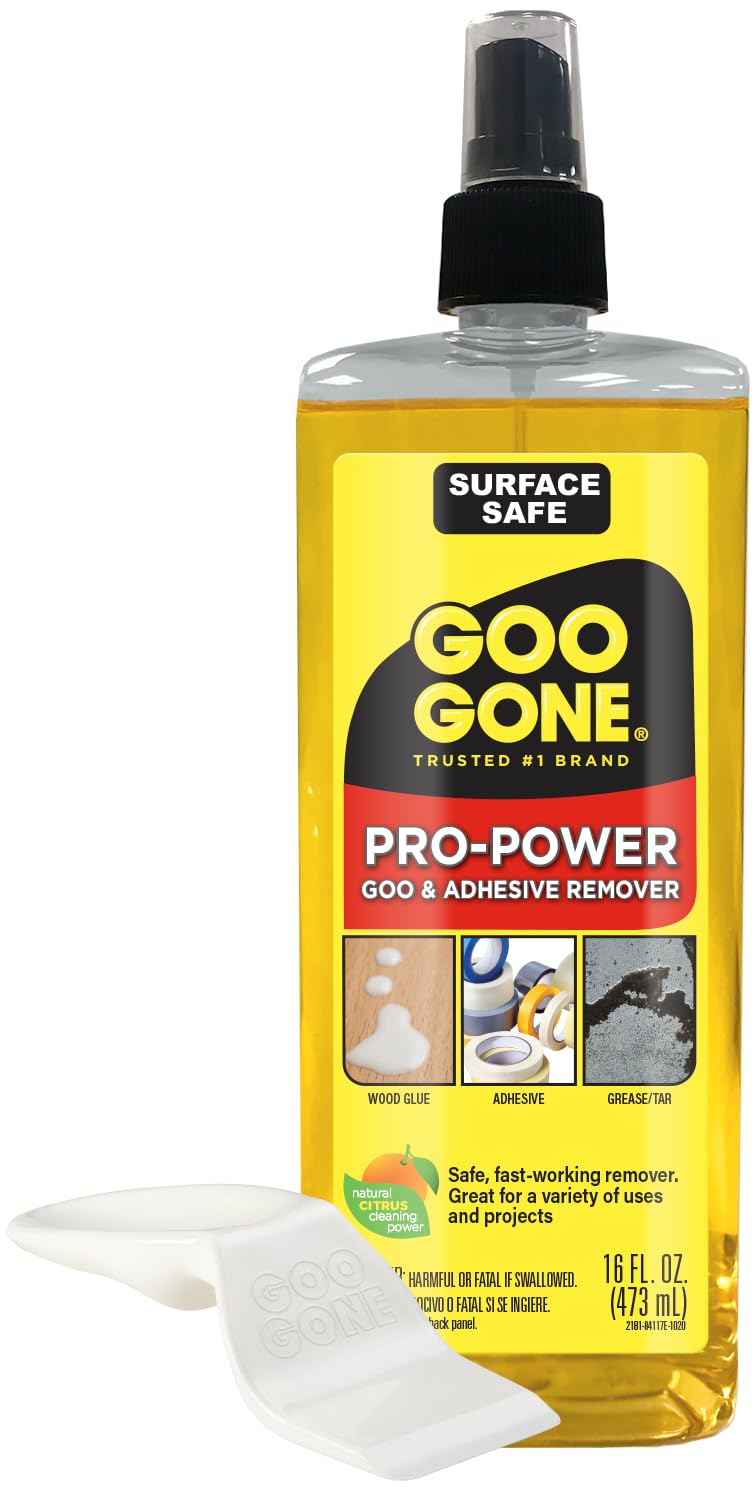
Goo Gone Pro-Power represents a meaningful step up in strength from the standard orange-citrus Goo Gone. The Pro-Power formula uses a blend of citrus and refined oils to tackle wood glue, tar, grease, bugs, permanent marker, and even wet paint spills. The 16-ounce spray bottle includes a built-in scraper in the cap, making it convenient for small jobs without reaching for separate tools.
Users report it removed ten years of dried tape adhesive from vinyl windows quickly and without damage. On laptops, it removes sticker residue without harming the plastic casing. The citrus scent is stronger than standard Goo Gone but still acceptable for indoor use. One common complaint is the spray pump occasionally failing on the first use — a defective pump can require transferring the liquid to another bottle.
For automotive decal removal, Pro-Power works best on residue left behind after peeling off the decal. It is less effective at dissolving the decal itself — for that, pairing it with a plastic razor or an eraser wheel yields the fastest results. It is surface-safe on painted metal, glass, finished wood, and fabric, but it can leave a greasy film that requires a soap-and-water wash to fully remove.
Why it’s great
- Spray format with integrated scraper for one-hand use
- Safe on a wide range of surfaces including clear coat
- Citrus-based formula with low odor compared to solvents
Good to know
- Spray pump can arrive defective
- Leaves a greasy film that needs soap and water cleanup
5. CowboyBOB 2 Pack Decal Remover Eraser Wheel
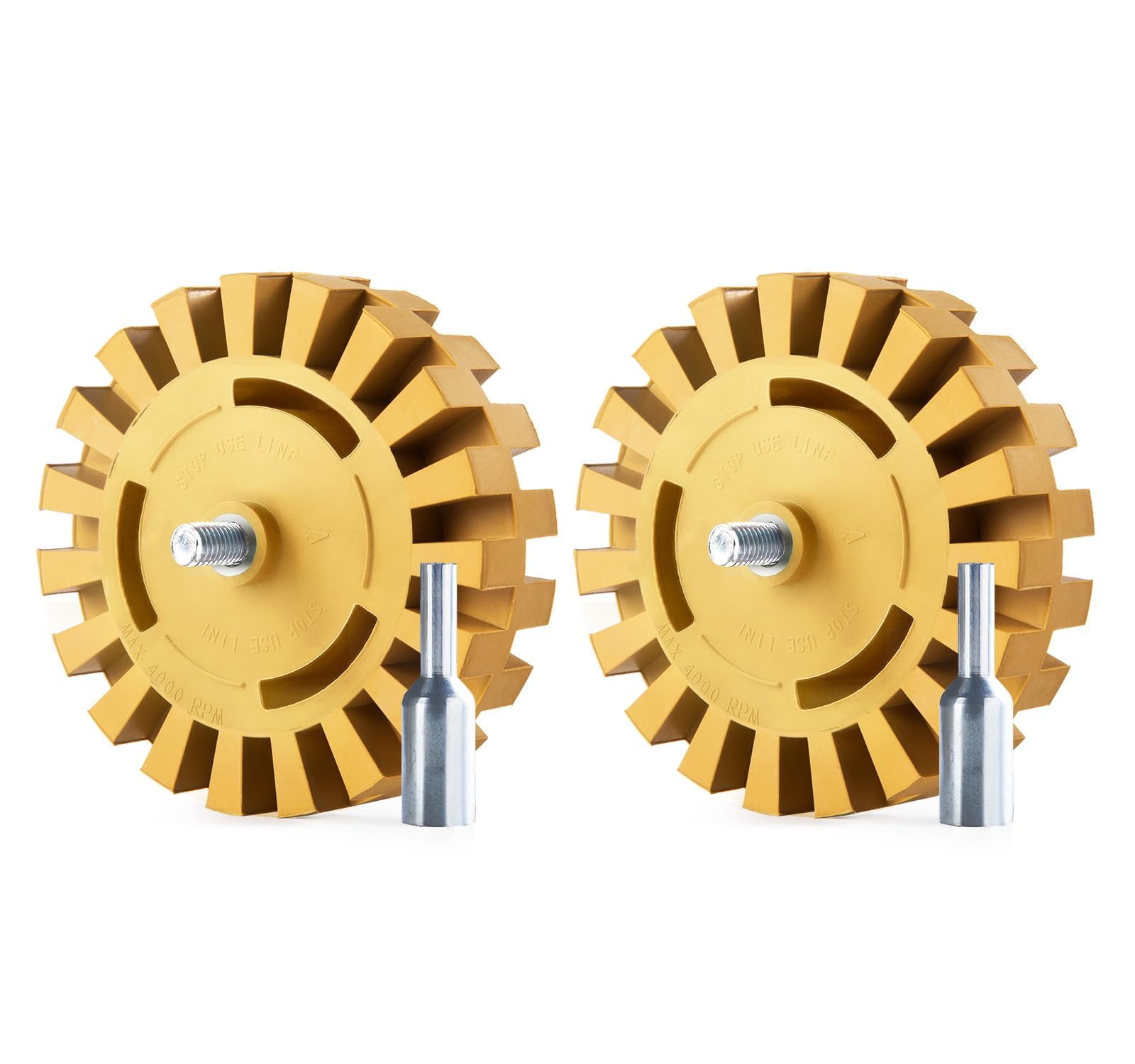
The CowboyBOB eraser wheel is a medium-density rubber drill attachment designed specifically for removing vinyl decals, adhesives, pinstriping, and stickers from painted automotive surfaces. It includes two 4-inch wheels and two drill adapters, and it can handle up to 4000 RPM with best results between 1500 and 3000 RPM. The material is soft enough to avoid damaging acrylic enamel or urethane paint.
Customer feedback reveals this wheel excels on jobs where chemical removers fail completely. One user reported it was the only tool that removed 3M trim tape from a truck exterior after Goo Gone and mineral spirits did nothing, with no resulting paint damage. Another used it to remove 20-year-old stickers from a boat. The primary downsides are the messy rubber crumb debris it generates and the physical effort required to maintain consistent pressure across large panels.
This is not recommended for plastic surfaces, fiberglass, or painted aluminum — the rubber compound can mar these softer substrates. Users also note the wheel wears down over time; for a full side decal, you may need to switch to the second wheel halfway through. It works best as a two-step method: strip the decal with the wheel, then remove leftover rubber residue with a spray solvent like carburetor cleaner or a mild adhesive remover.
Why it’s great
- Removes adhesives that solvents cannot dissolve
- Two wheels included — good value for medium jobs
- Safe on factory paint when used at correct RPM
Good to know
- Generates rubber dust that must be cleaned afterward
- Not suitable for plastic, fiberglass, or aluminum surfaces
6. LIZMOF Decal Remover Eraser Wheel (2 Packs)

LIZMOF’s eraser wheel is a budget-conscious entry into the mechanical decal removal category, using 100% natural soft rubber that is non-toxic and safe on acrylic enamel and urethane paint. The maximum rotational speed of 2500 RPM is lower than the 4000 RPM limit on most competitors, which actually helps beginners avoid burning the paint or smoking the rubber during use.
Real-world users confirm it removes caked-on masking tape adhesive and 3M trim tape effectively, especially when followed with rubbing alcohol and a polishing compound. The learning curve is real — if you press too hard or linger in one spot, the rubber overheats and smokes, and the residue can look like melting paint. Light pressure and a steady back-and-forth motion produce the cleanest results.
The kit includes two wheels and two arbors, which is generous for the price point. However, the lower RPM limit means the removal speed is slower than higher-RPM wheels on large decals. It is best suited for smaller projects like pinstripe removal, single decal strips, or adhesive leftover from badges. For a full hood wrap, you would benefit from upgrading to a higher-RPM kit with more wheels.
Why it’s great
- Low max RPM reduces risk of burning paint for beginners
- Made from 100% natural soft rubber, non-toxic
- Includes two wheels and two drill arbors
Good to know
- Slower removal speed on large decal surfaces
- Overheating and smoking possible with heavy pressure
7. Goo Gone Adhesive Remover – 2 Pack

The classic Goo Gone adhesive remover in the 2-pack of 8-ounce bottles is the entry-level chemical solution. Its citrus-based formula breaks down sticker residue, tape gum, candle wax, permanent marker, tree sap, tar, and crayon on surfaces including carpet, clothing, painted surfaces, glass, finished wood, and sealed stone. It is surface-safe and widely used for both household and automotive tasks.
Users report it works like magic on price tag residue and stubborn tape adhesive, and it even handled a jar of surgical adhesive that glued clothing to skin. One reviewer used it to remove pine tree sap from car paint and tape residue from kitchen tables. The formula does not damage finishes, but it can leave a slightly greasy film that requires a soap-and-water wash to fully remove.
The biggest practical frustration is the bottle cap — the push-down-and-twist mechanism is notoriously difficult to open, with multiple users resorting to pliers to remove the cap. The 8-ounce bottle size is convenient for storage but runs out quickly on larger jobs. For automotive-only decal removal, the Pro-Power spray offers better value. This 2-pack is best kept as a general household backup rather than a primary automotive decal tool.
Why it’s great
- Safe on a very wide range of indoor and automotive surfaces
- Citrus formula with mild, pleasant scent
- Affordable 2-pack for small household jobs
Good to know
- Cap is very difficult to open — often requires pliers
- Small 8 oz bottles go quickly on automotive projects
FAQ
Will an eraser wheel damage my car’s clear coat?
Can I use Goo Gone on PPF or vinyl wrap?
Final Thoughts: The Verdict
For most users, the automotive decal remover winner is the KOCHCHEMIE Eulex because it delivers professional-grade, paint-safe chemical dissolving power without damaging clear coat or PPF. If you want the brute mechanical removal speed of a rubber eraser wheel, grab the MIVIDE 4PCS Eraser Wheel Kit for its dual-thickness wheels and high RPM tolerance. And for reactive adhesives like epoxy trim tape or cured PPF glue that nothing else touches, nothing beats the 3M Specialty Adhesive Remover.