
Staying cool in a van, RV, or work truck while off the grid used to mean running a noisy generator or sweating through the night. The shift to efficient 12V and inverter-driven rooftop air conditioners has changed that, but sorting through BTU ratings, power draws, and installation quirks can stall any build.
I’m Min — the co-founder and writer behind Gadgets Feed. I’ve spent hundreds of hours analyzing compressor types, real-world amp draws, and battery compatibility specs across dozens of mobile AC units to separate lasting performance from disappointing power hogs.
This guide breaks down the specs and real owner experiences that define the best automotive electric air conditioner for van conversions, campers, and overlanding builds.
How To Choose The Best Automotive Electric Air Conditioner
Selecting the right unit for your rig depends on balancing cooling power, electrical demands, and installation constraints. The wrong choice can mean insufficient cooling or a drained battery bank after just a few hours.
Inverter Compressor vs Fixed-Speed Compressor
An inverter compressor adjusts its speed gradually to maintain a set temperature, often drawing less than half the peak amperage of a traditional fixed-speed unit. Fixed-speed compressors cycle on and off at full power, creating temperature swings and high inrush current that can overload smaller inverters or battery systems.
BTU Rating and Real-World Cooling
BTU (British Thermal Units) measures raw cooling capacity, but insulation quality, vehicle size, window area, and ceiling height all affect how that translates to comfort. A 10,000 BTU unit can cool a well-insulated van, while a 15,000 BTU unit better suits a drafty 30-foot RV. Pay attention to CFM (cubic feet per minute) ratings as they indicate airflow distribution.
Power Draw and Battery Compatibility
The critical spec is the sustained amp draw at 12V or 120V. A unit that pulls 55 amps on high but drops to 20 amps in eco mode is far more usable than one that draws a constant 50 amps. Verify your battery bank’s total capacity in amp-hours (Ah) and any inverter’s continuous watt rating allows enough runtime for your typical camping or driving cycle.
Quick Comparison
On smaller screens, swipe sideways to see the full table.
| Model | Category | Best For | Key Spec | Amazon |
|---|---|---|---|---|
| OutEquip Pro 12V 10K BTU | 12V Rooftop | Off-grid Class B vans | 10,000 BTU, 12V DC, 45 lbs | Amazon |
| Countrymod 12V 10K BTU | 12V Inverter | Energy-efficient overnight use | 10,000 BTU, 0.3 kWh/hr, 45-55dB | Amazon |
| VEVOR 15K BTU 120V | 120V Rooftop | Year-round heating/cooling | 15,000 BTU, 10.6 in low profile | Amazon |
| TURBRO Inverter 13.5K BTU | Inverter Rooftop | Ultra-slim profile, WiFi | 13,500 BTU, 10.0 in height | Amazon |
| TOSOT GO Cool 16K BTU | 16K Rooftop | Large RVs, extreme heat | 16,000 BTU, 43dB, WiFi | Amazon |
| Furrion Chill Cube 18K BTU | Premium Inverter | Large RVs, quiet luxury | 18,000 BTU, inverter, R32 | Amazon |
| FOGATTI InstaCool Ultra 16K | High-Efficiency | Fast cooling, low noise | 16,000 BTU, 43dB, 418 CFM | Amazon |
| Dometic Penguin II 13.5K | Ducted Compatible | Ducted/non-ducted flexibility | 13,500 BTU, R410A, lightweight | Amazon |
| Dometic Blizzard NXT 15K | Ducted/Nond-ucted | Premium brand, heat pump | 15,000 BTU, 350 CFM blower | Amazon |
In‑Depth Reviews
1. OutEquip Pro 12V 10K BTU
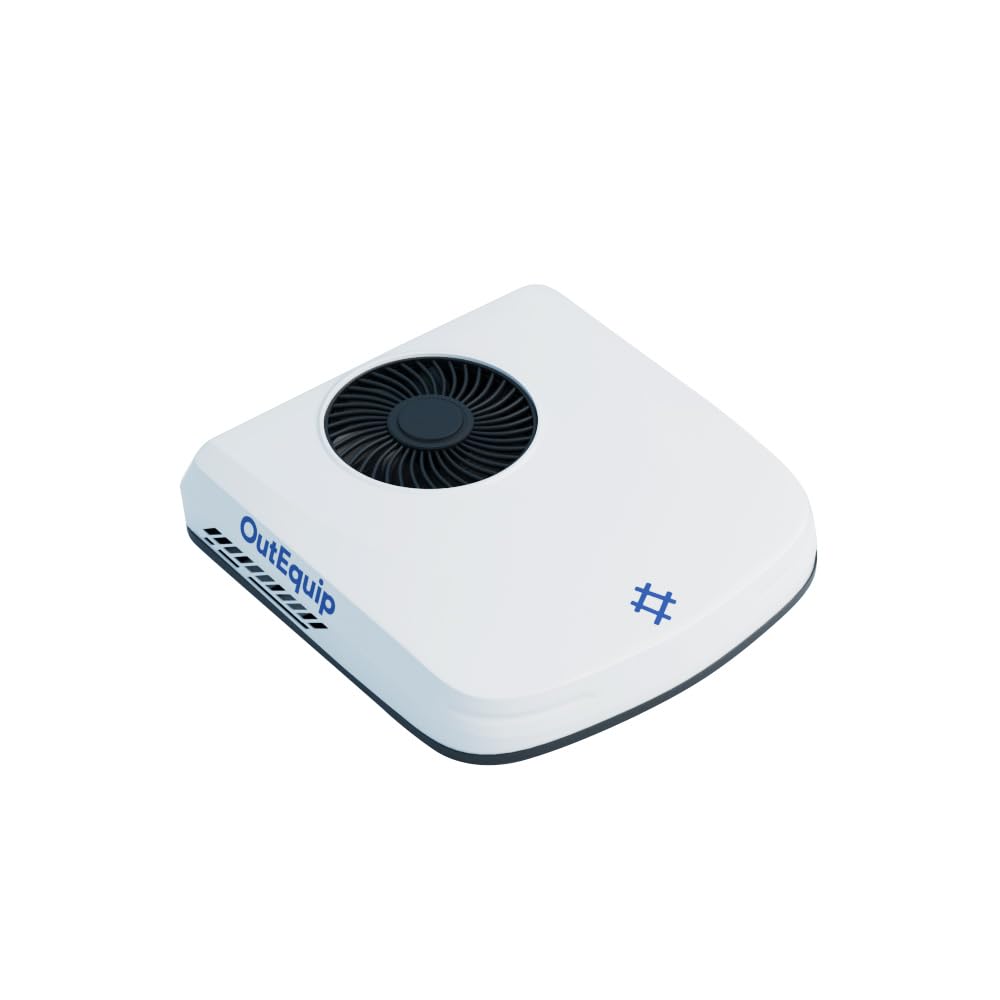
The OutEquip Pro delivers 10,000 BTU of cooling power with a low-power draw that makes it a standout for off-grid builds. Owners report it pulls 55 amps on turbo mode but drops to just 20 amps in eco mode, translating to 8 hours of runtime on a 480Ah battery bank. The inverter compressor technology allows it to ramp up and down smoothly, avoiding the harsh cycling that stresses electrical systems.
Weighing only 45 pounds, this unit is significantly lighter than many competitors, making it feasible for a single person to install on a van or truck roof. The included brushless copper motor fans keep noise to around 54 dB on high, which is quieter than a conversation and barely noticeable at night. Multiple owners verified it cooled a Class B van from 89°F to 79°F in 25 minutes during summer testing.
The unit comes with a remote control and supports eco, sleep, and turbo modes for flexible operation. Its low profile design works even on vehicles with limited roof clearance, and the UV-stabilized ABS shroud holds up well under direct sun exposure. Installation requires sealing carefully to prevent water ingress, but the EPDM foam gasket included in the box simplifies the process.
Why it’s great
- Very low amp draw in eco mode (20A)
- Light enough for easy solo installation
- Rapid cooling in under 30 minutes
Good to know
- Sealing around the roof opening is critical for preventing leaks
- Turbo mode pulls 50-55 amps, so battery planning is essential
2. Countrymod 12V 10K BTU
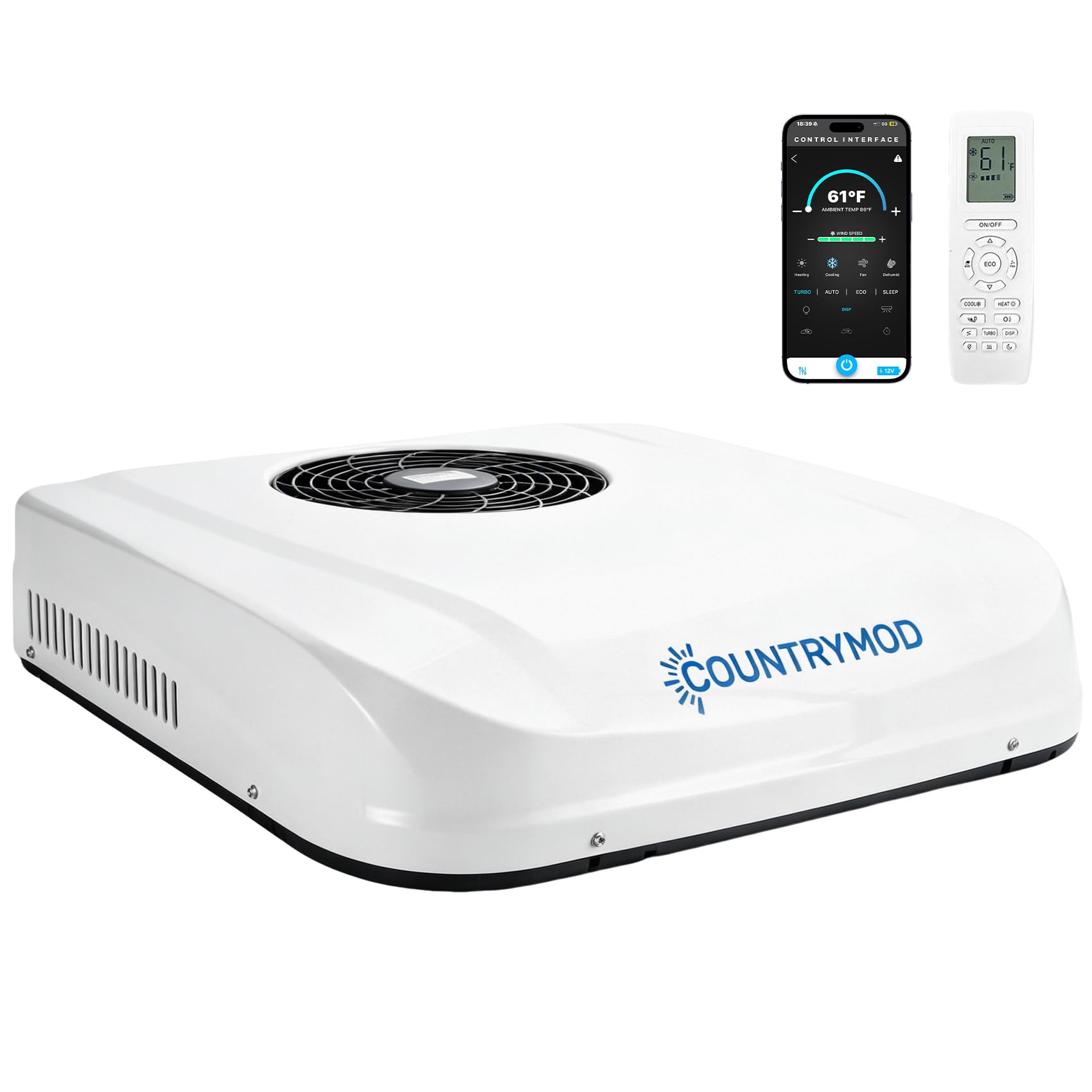
This 12V inverter unit from Countrymod claims 300-900W variable power consumption, which in real-world terms means it uses 0.3 kWh per hour — roughly five times more efficient than a standard 15K BTU rooftop unit. Owners consistently mention sleep mode noise at a whisper-quiet 44 dB, making it a top choice for overnight use in campers and vans. The horizontal compressor design reduces vibration and lowers the center of gravity, improving stability on rough roads.
The unit fits a standard 14″ x 14″ roof vent opening and requires no major structural modifications for installation. It pairs with both a remote control and a smartphone app, giving you temperature adjustments from anywhere inside the rig. Several buyers reported a 480Ah battery lasting a full night on sleep mode, which is a practical benchmark for boondockers who want silent cooling without a generator.
On the downside, a few owners noted that thicker roofs (over 1.5 inches) require sourcing longer all-thread rods for a secure fit, and the included instructions are sparse. The corner bracket can snap if over-torqued during installation, so a careful hand is needed. Despite these quirks, the overall efficiency and quiet operation make it a compelling option for anyone prioritizing battery life.
Why it’s great
- Extremely low energy consumption at 0.3 kWh/hr
- Sleep mode noise level of 44 dB is barely audible
- Horizontal compressor reduces vibration and wear
Good to know
- Instructions are basic; YouTube guides are helpful
- Thicker roofs require longer mounting bolts
3. VEVOR 15K BTU 120V with Heat Pump
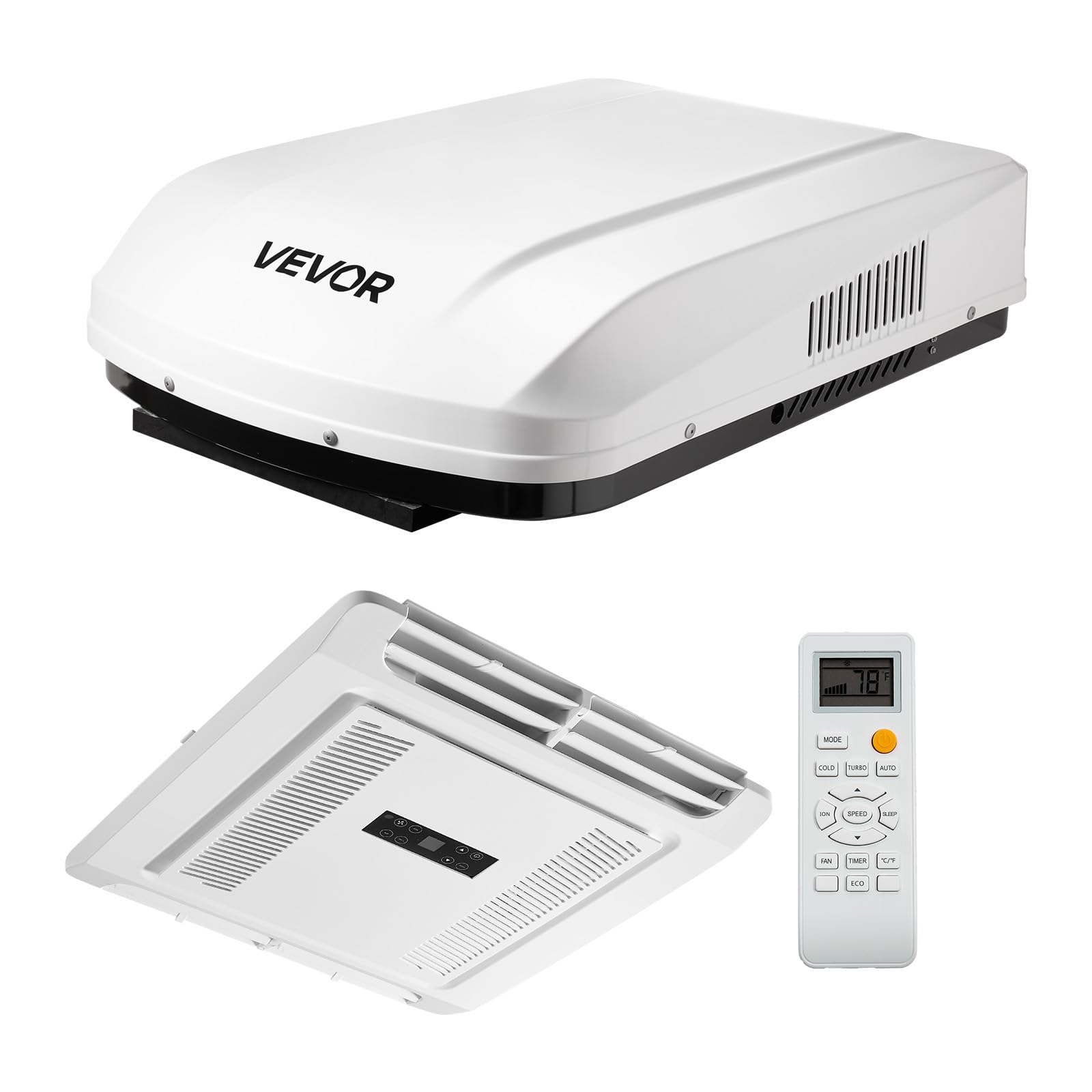
VEVOR packs 15,000 BTU of cooling and a 10,236 BTU heat pump into a unit that covers up to 172 square feet, making it suitable for larger RVs and campers. The variable-speed compressor provides consistent temperature without the jarring on/off cycles of older designs. Owners confirm it cools extremely well and maintains temperatures below the set point on hot days. The integrated heat pump adds electric heating for shoulder-season camping without firing up a propane furnace.
At 10.6 inches tall, the slim profile reduces wind resistance and aerodynamic drag during travel. It fits a standard 14.25″ x 14.25″ roof opening and includes a remote control plus a button panel with auto, ion, eco, and dry modes. Several users found the installation straightforward, though the wiring for the control panel can be slightly confusing. The antimicrobial air filter is a thoughtful addition for trapping dust and allergens.
There is a notable concern about reliability: one owner reported the compressor stopped engaging after seasonal storage, and customer service was not responsive. The 30-day return window means a failure months later leaves you with few options. If you go with this unit, ensure you test it thoroughly within the first month and consider an extended warranty from the retailer.
Why it’s great
- Powerful 15K BTU cooling with integrated heat pump
- Low profile design reduces wind drag
- Multiple operational modes for varied conditions
Good to know
- Reported reliability issues with compressor after storage
- Customer service support is limited after purchase
4. TURBRO Inverter 13.5K BTU

At just 10.0 inches tall, the TURBRO is one of the thinnest inverter units available — up to 35% slimmer than competing rooftop models. This translates to less wind resistance and potentially better fuel economy on the road. The inverter compressor delivers a soft-start current of only 1.6 amps, and sustained operation draws around 9 amps, which is exceptionally low for a 13,500 BTU unit. Owners report it starts reliably from a 1500W inverter without tripping breakers.
The ceiling assembly includes an LED atmosphere lamp with blue, yellow, or white lighting, adding a touch of ambiance to the RV interior. Both a remote control and a smartphone app manage the unit, allowing temperature adjustments, fan speed changes, and mode switching from your bunk. The heat pump function provides supplemental warmth, with one owner noting it heated a trailer from 40°F to 70°F in 30 minutes.
Some owners experienced issues with the thermostat sensor reading low because it sits near the cold air outlet, causing the unit to run full blast even when the cabin is comfortable. The app works well, but a Tuya-based workaround with an external sensor is needed to fix the temperature reading. Also, the supplied bolts may be too short for thicker ceiling builds, so measure your roof thickness before installation.
Why it’s great
- Extremely low startup current (1.6A)
- Slim profile saves fuel and reduces noise
- Atmosphere lamp adds interior appeal
Good to know
- Thermostat reading can be inaccurate without external sensor
- Bolt length may be insufficient for some ceiling thicknesses
5. TOSOT GO Cool 16K BTU

The TOSOT GO Cool brings 16,000 BTU of cooling power backed by a 12,500 BTU heat pump, making it one of the most thermally versatile options for larger RVs and travel trailers. Owners report it keeps a 23-foot trailer at 70°F even when outdoor temperatures hit 105°F. The unit operates at a whisper-quiet 43 dB, which is 32% quieter than standard RV ACs, making it ideal for light sleepers and families with young children.
The non-ducted design fits standard 14.25″ x 14.25″ rooftop vent openings, and the included WiFi connectivity through the Gree+ app allows full control from anywhere in the rig. The adjustable vents with sweep mode distribute air evenly across the cabin, avoiding hot spots. Installation is rated as easy DIY, with several owners completing it in under two hours using basic tools and the included hardware.
The biggest downside is long-term reliability. One owner reported a rooftop seal leak after about a year, and the company refused to provide a replacement part — only offering to sell a completely new unit. With a 2-year warranty, you’re covered for defects, but the lack of responsive customer service for seal issues is a risk to factor in. Check the sealant condition annually and consider reinforcing the mounting gasket.
Why it’s great
- Best cooling capacity at 16K BTU for large RVs
- Very quiet at 43 dB
- WiFi app control is convenient and responsive
Good to know
- Seal leaks reported after extended use
- Customer support response is inconsistent
6. Furrion Chill Cube 18K BTU

The Furrion Chill Cube is a premium 18,000 BTU variable-speed rooftop unit that uses R32 refrigerant for higher efficiency and lower environmental impact. At 72.4 pounds, it is about 10% lighter than similar-capacity units, making installation easier despite its output. Owners praise its quiet operation even on turbo mode, and the variable-speed compressor eliminates the sudden starts and stops that cause excessive amp draw. In Texas summer heat, it keeps a 37-foot fifth wheel comfortable and runs efficiently enough on a 30-amp service.
The aerodynamic shroud reduces wind drag and road noise while driving, and the unit works with either ducted or non-ducted setups. One 30-year RVer called it the best upgrade they had made, highlighting the remote thermostat that measures temperature anywhere in the RV rather than just at the ceiling return. The dry mode is effective at removing humidity without overcooling, which is a plus for coastal climates.
A minority of buyers experienced a loud compressor vibration that resonated through the entire RV, sounding like a semi truck ramping up and down. This appears to be a unit-specific defect rather than a design flaw, but it is worth noting as a potential risk. The unit also requires a separate ADB (Air Distribution Box) for controls, which is sold separately and adds to the overall investment.
Why it’s great
- High 18K BTU capacity with variable speed
- R32 refrigerant for better efficiency
- Remote wireless thermostat for accurate temp control
Good to know
- Some units may have compressor vibration issues
- ADB control box sold separately
7. FOGATTI InstaCool Ultra 16K BTU
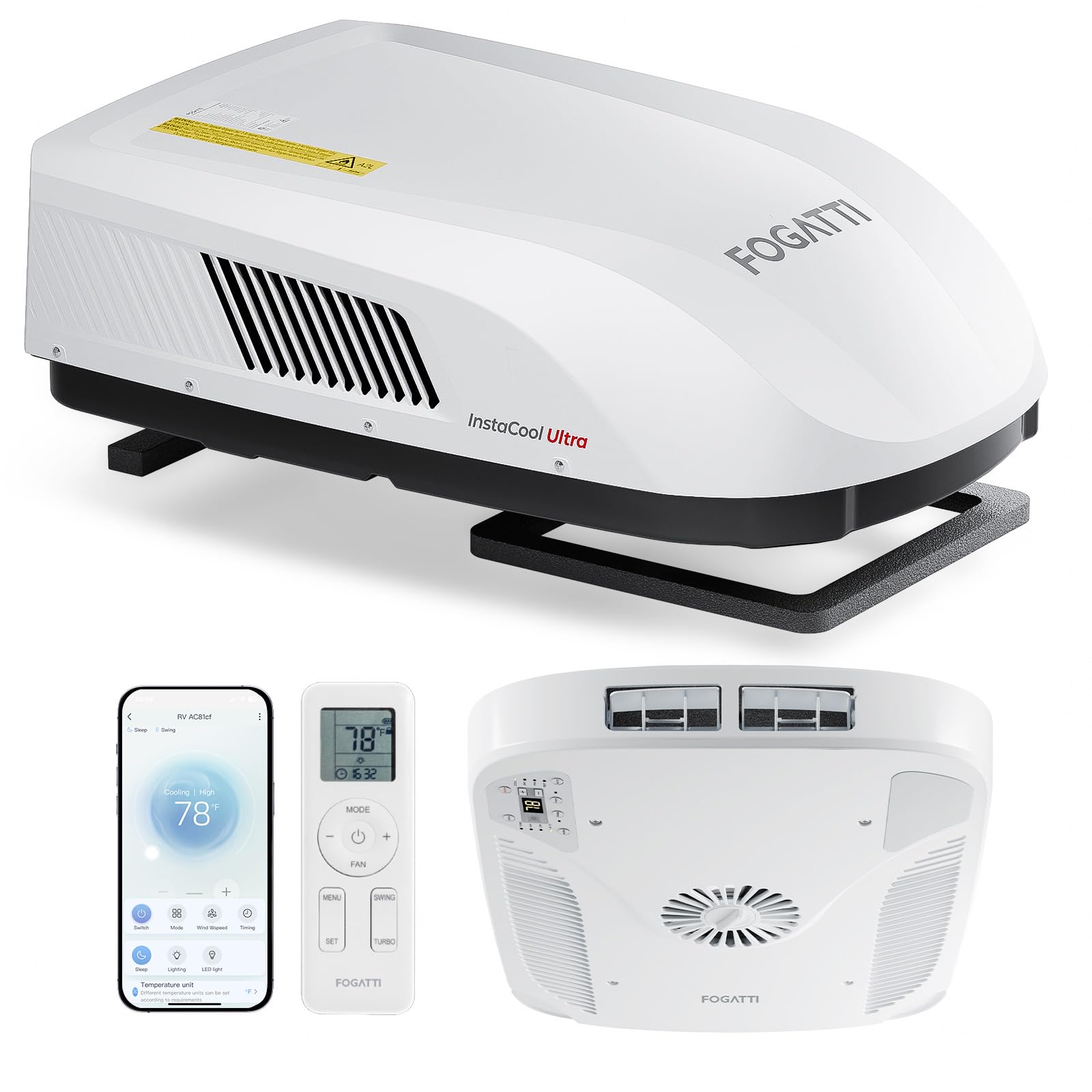
The Fogatti InstaCool Ultra stands out with its dual-motor, triple-fan system that pushes 418 CFM of airflow, claiming to cool your RV 30% faster than standard units. Owners confirm it cools a 42-foot toy hauler quickly and maintains low vent temperatures of around 12°F after initial startup. The 43 dB noise rating means the unit is barely audible even when running continuously in Florida summer heat.
The non-ducted design fits a standard 14.25″ x 14.25″ cutout and sits just 12.2 inches tall, making it bridge-clearance friendly. Control options include a remote, a touchscreen ADB panel, and a WiFi app — giving you flexibility depending on where you are in the rig. Made in Italy, the build quality feels high, and the dual-layer base absorbs road bumps to protect the compressor over long miles.
Installation can be tricky on certain vehicles. The unit ships in two separate boxes (the rooftop AC unit and the interior air handler), and aligning the interior trim with the roof unit requires patience. Some owners found the included screws too short and had to source machine screws and nuts for a secure fit. Also, the non-ducted design cannot be easily modified for ducted systems without a separate conversion kit.
Why it’s great
- Very high 418 CFM airflow for rapid cooling
- Ultra-quiet 43 dB operation
- Made in Italy with strong build quality
Good to know
- Installation requires careful alignment of separate boxes
- Not easily convertible to ducted systems
8. Dometic Penguin II 13.5K BTU

The Dometic Penguin II is a longstanding name in RV cooling, offering 13,500 BTU of cooling in a low-profile, aerodynamic package. It uses R410A refrigerant, which provides efficient heat transfer and has a lower environmental impact compared to older refrigerants. The EPP foam housing reduces weight without sacrificing structural integrity, and the rib-reinforced base pan handles rough road conditions. Owners report strong cooling performance in 90°F heat, keeping a 32-foot trailer comfortable.
This unit works with both ducted and non-ducted applications, giving flexibility depending on your RV’s existing setup. It requires a separate CCC2 or CT thermostat (not included), which is necessary for operation. The cool-shot feature sends a burst of cold air when you first turn it on, which is a nice touch for fast relief. Installation is straightforward if you have basic skills, though some owners needed a conversion kit for proper fit on older roof openings.
The noise level is higher than inverter-based competitors, and one owner described it as “not very quiet but expected” for this type of unit. The biggest risk is shipping damage — several units arrived with cracked housings, and while the seller often sends a replacement quickly, it adds frustration to the purchase. Also, the unit is cool-only, so you’ll need a separate heat source for winter camping.
Why it’s great
- Brand reliability with widespread parts availability
- Works with both ducted and non-ducted systems
- Cool-shot feature for fast initial cooling
Good to know
- Noisier than inverter units
- Separate thermostat required for operation
9. Dometic Blizzard NXT 15K BTU

The Dometic Blizzard NXT offers 15,000 BTU of cooling with an integrated heat pump, designed for both ducted and non-ducted installations. It comes with a pre-installed Multizone CCC II control board, simplifying the wiring process if you’re replacing an older Dometic unit. The high-capacity fan and motor deliver 350 CFM of airflow, and the vibration isolation system minimizes compressor noise and structure-borne rumble. Owners say it cools a 5th wheel effectively and operates smoothly.
The unit is built with a high-impact polypropylene injection-molded shroud and base pan, making it robust enough for long-term exposure to weather and road debris. It works in ambient temperatures ranging from 19.4°F to 109.4°F, making it suitable for year-round use across different climates. The aerodynamic shape reduces wind resistance while driving, contributing to fuel savings over long hauls.
Installation can be challenging because the unit ships with no installation instructions or mounting frame. Several owners had to call Dometic tech support to get the correct setup information, and the unit requires a specific communicating thermostat that is not included. Also, customer support for warranty claims can be difficult — one owner had a refrigerant line burst after 11 months and found that authorized dealers refused service because the unit was purchased on Amazon. Factor in the risk of difficult warranty support if you buy outside an RV dealership.
Why it’s great
- Robust construction with vibration isolation
- Pre-installed CCC II control board for easy wiring
- Works in extreme temperatures from 19°F to 109°F
Good to know
- No installation instructions included
- Warranty support is difficult for Amazon purchases
FAQ
Can I run a 15,000 BTU automotive AC on a standard 120V shore power?
How do I calculate the battery capacity needed for a 12V RV AC?
Why do inverter compressors use less power than fixed-speed compressors?
Final Thoughts: The Verdict
For most users, the automotive electric air conditioner winner is the OutEquip Pro 12V 10K BTU because it delivers a near-perfect balance of low amp draw, light weight, and powerful cooling for off-grid vans and RVs. If you want superior energy efficiency and whisper-quiet night operation, grab the Countrymod 12V 10K BTU. And for large RVs needing max cooling capacity with a heat pump, the TOSOT GO Cool 16K BTU is hard to beat.