
Your engine is only as good as the air-to-fuel mixture it receives, and an unreliable or miscalibrated fuel pressure regulator will flood your intake, surge your idle, or starve your carburetor under load. The right regulator holds a razor-steady PSI, rejects heat soak, and threads into your existing fuel line without forcing you to buy a separate gauge kit just to set the baseline.
I’m Min — the co-founder and writer behind Gadgets Feed. I’ve spent hundreds of hours cross-referencing real buyer feedback, pressure drop data, and port configurations across carbureted, EFI, and LS-swap fuel systems to find the regulators that actually hold their advertised setpoint and seal without thread-sealant theatrics.
Whether you are dialing in a classic small-block with a Holley carb or plumbing a return-style EFI rail for a boosted LS, the performance envelope you need is defined by the best automotive fuel pressure regulator that matches your fuel type, pressure range, and port architecture.
How To Choose The Best Automotive Fuel Pressure Regulator
Buying a fuel pressure regulator without first matching your fuel system type is a recipe for a rich idle or a dead rail. Carbureted engines need a deadhead or bypass regulator that meters flow at single-digit PSI, while EFI and LS-swap builds require a bypass return unit that holds 40-70 PSI without pressure creep. The regulator body material, port threading, and vacuum reference capability also determine whether the part is a direct bolt-on or a project that requires adapter fittings and gauge port tees.
Pressure Range vs. Fuel System Type
Carbureted engines operate between 4.5 and 9 PSI; exceeding that range blows the needle and seat off the float bowl, flooding the intake. A deadhead regulator, which meters flow on the return side of a mechanical pump, is the simplest and most cost-effective solution for carburetor builds. EFI systems demand 30-70 PSI (typically 58 PSI for LS platforms) and require a bypass return regulator that dumps excess fuel back to the tank, preventing the pump from overheating and maintaining rail pressure under high injector duty cycles. Selecting a 30-70 PSI regulator for a carbureted application is just as destructive as putting a 6 PSI regulator on an EFI rail — always match the range to the fuel delivery type.
Port Configuration and Thread Standards
The inlet, outlet, and return ports come in NPT (tapered pipe thread) and AN (Army-Navy flare) styles. NPT ports are standard on most OE-style regulators and work with brass fittings and thread sealant tape, but the tapered threads can crack cast aluminum regulator bodies if over-torqued. AN-style ports use a 37-degree flare that seals without tape and are the go-to for performance builds because they allow the use of braided stainless steel hose and reusable fittings. A regulator with both ORB-06 and NPT gauge ports gives you the flexibility to attach a pressure gauge without tapping the fuel rail or adding a tee in the line.
Vacuum/Boost Reference and Body Materials
A vacuum-reference port on the regulator cap allows the regulator to increase fuel pressure 1:1 with boost pressure, maintaining the pressure differential across the injector under forced induction. Without it, boosted engines run lean as boost rises because the injector has to overcome manifold pressure. On naturally aspirated setups, a non-referenced regulator is perfectly adequate. Body material matters for heat rejection: billet aluminum or stainless steel dissipates heat faster than cast zinc or plastic, preventing fuel from vaporizing inside the regulator and causing erratic pressure spikes — a critical factor for hot engine bays in LS-swapped classics or high-compression small-blocks.
Quick Comparison
On smaller screens, swipe sideways to see the full table.
| Model | Category | Best For | Key Spec | Amazon |
|---|---|---|---|---|
| Quick Fuel 30-803QFT | Carbureted Deadhead | Small-block carbs up to 600 HP | 4.5 – 9 PSI range, preset at 7 PSI | Amazon |
| Standard Motor PR113T | OE Replacement | ’90s Chevy/GM EFI trucks | OE-fit aluminum body for TBI units | Amazon |
| Mr. Gasket 9710 | Universal Carbureted | Small engines and street rods | Adjustable 1 – 8 PSI, compact body | Amazon |
| Goodies Speed Filter/Regulator | LS Swap EFI | LS & LT engine conversions | 58 PSI (4 BAR) fixed, 5-micron filter | Amazon |
| EVIL ENERGY Adjustable | EFI Bypass Return | Budget EFI builds & hot rods | 30 – 70 PSI adjustable, includes gauge | Amazon |
| ACDelco Gold 214-2156 | OE-Grade EFI | GM TPI and LT1 EFI engines | Direct fit for 1985-92 small-block FI | Amazon |
| Aeromotive 13129 | High-Performance EFI | 1000 HP boosted EFI builds | 40 – 75 PSI, dual ORB-06 inlets | Amazon |
In‑Depth Reviews
1. Aeromotive 13129 Adjustable EFI Fuel Pressure Regulator

The Aeromotive 13129 is built for the enthusiast who refuses to compromise on fuel system integrity. Its dual ORB-06 inlet ports and single ORB-06 return port allow clean, swept hose routing in cramped engine bays — a critical advantage when plumbing a return line around a turbocharged LS or a supercharged modular motor. With an adjustable range of 40-75 PSI and a dedicated 1/8-inch NPT gauge port, you can set baseline pressure and monitor rail pressure without teeing into a fuel line.
Owner feedback confirms that this regulator holds a rock-steady 65 PSI after 20,000 miles on 7.3L Powerstroke e-fuel conversions, and the anodized aluminum body resists the corrosion and vibration loosening that plagues cheaper zinc castings. The vacuum/boost reference port is standard, allowing a 1:1 fuel pressure rise under forced induction — essential for preventing lean conditions when boost builds. At 10.1 ounces, the unit is compact enough for street rod firewall mounts without looking obtrusive.
The primary trade-off is the initial cost, which is roughly double a mid-range regulator. Bear in mind that this unit is compatible with gasoline, E85, and diesel fuels, so it transitions across projects without needing a replacement. For a 1000 HP build or a daily-driven turbo truck, the 13129 eliminates the most common fuel system failure: pressure creep under load. The included o-ring seals are high-quality, but the instructions are minimal — first-time EFI builders should study their fuel rail port sizes before ordering adapters.
Why it’s great
- Steady pressure holding even after thousands of miles on high-vibration, high-heat diesel and gas engines
- Dual ORB-06 inlets allow multiple fuel line routing options for tight engine bay plumbing
- Vacuum/boost reference port is built in and works on forced induction applications without a separate kit
Good to know
- Premium price bracket — best suited for builds where fuel system reliability is the top priority
- No gauge included; you must purchase an 1/8-inch NPT gauge separately for monitoring
- Instructions are sparse; expect to consult the Aeromotive tech sheet for torque specs and port assignments
2. Goodies Speed 4 BAR Filter/Regulator for LS Swaps

This filter-and-regulator combo from Goodies Speed is engineered specifically for LS engine swaps, where space is tight and the need for a clean -6AN connection is non-negotiable. The unit combines a pressure regulator set at a fixed 58 PSI (4 BAR) and a replaceable 5-micron filter into a single stainless steel body with -6AN inlet and outlet ports. That means you run one hose from the pump to the unit and one hose from the unit to the fuel rail — no separate filter head, no adapter fittings, and no extra mounting bracket.
Real-world users running 5.3 and 6.0 LS engines confirm zero leaks and steady rail pressure, even with high-volume Walbro pumps behind them. The stainless steel outer material handles the under-hood heat of a swap bay without oxidation, and the AN fittings seal positively without thread tape when used with quality braided line. Because the filter element is serviceable, you can clean or replace it without cutting the fuel line — just remove the center bolt and pull the element.
The trade-off is that the pressure is fixed at 58 PSI; there is no adjustment screw, so if your specific EFI system requires 43.5 PSI (common for early GM TPI) or 60+ PSI (some aftermarket ECUs), this unit is a mismatch. Ensure your fuel pump provides adequate flow volume, because the filter element adds a small pressure drop. For a standard LS swap running an OEM or Holley Terminator X ECU at 58 PSI, this is a turnkey solution that eliminates several potential leak points compared to separate filter and regulator units.
Why it’s great
- Combines fuel filter and pressure regulator in one stainless body, saving hose length and mounting space
- -6AN ports connect directly to braided line without adapter fittings, reducing leak points
- Replaceable 5-micron filter element protects sensitive LS injectors from debris during break-in
Good to know
- Fixed 58 PSI output cannot be adjusted for non-LS EFI platforms or alternate pressure targets
- Filter element replacement requires draining the fuel rail before service to avoid spillage
- Compatible only with -6AN hose ends; must use adapter or different regulator for -8AN fuel line systems
3. Quick Fuel 30-803QFT Fuel Pressure Regulator
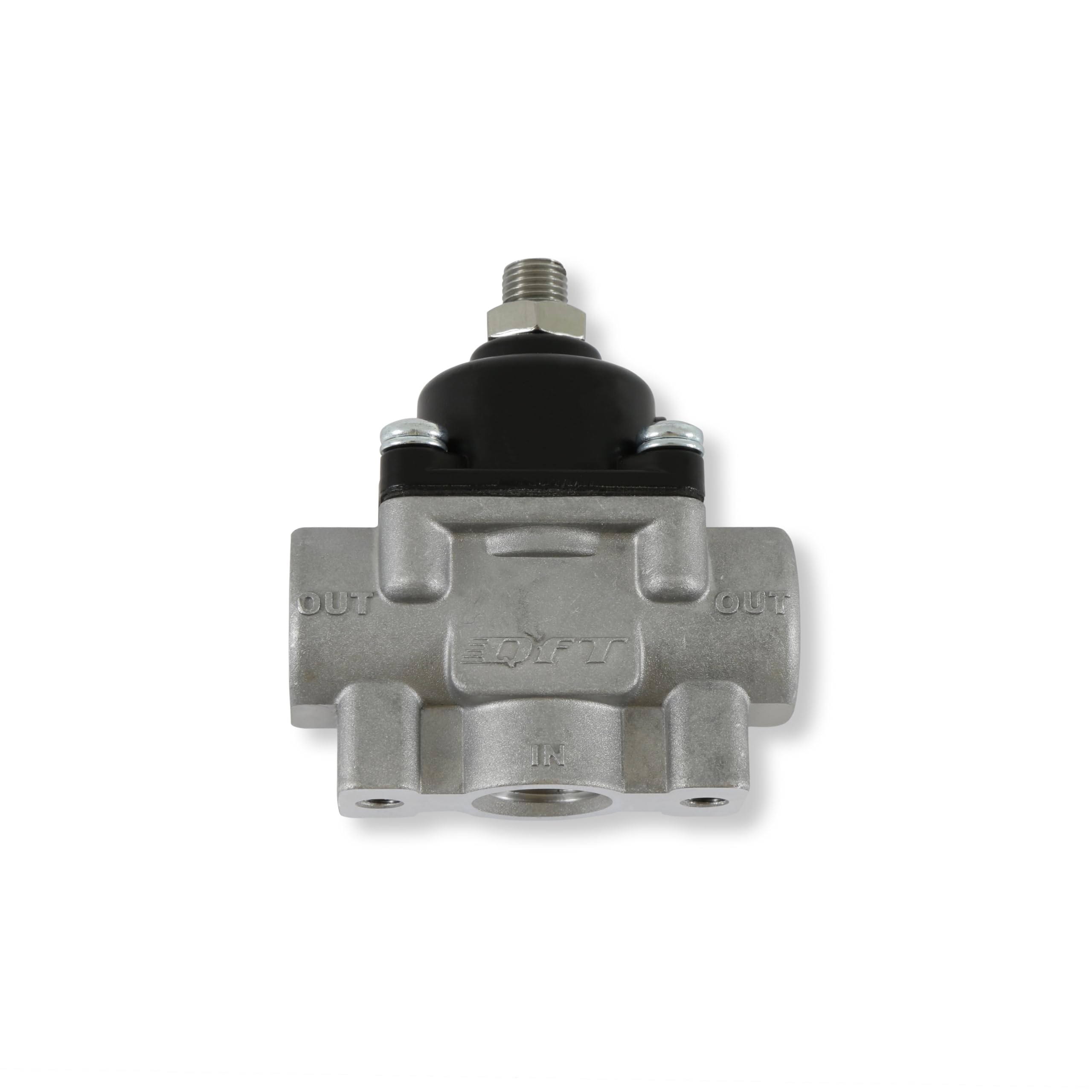
The Quick Fuel 30-803QFT is the go-to deadhead regulator for carbureted engines that run in the 4.5 to 9 PSI sweet spot, which covers a huge range of street-driven small-blocks fitted with Edelbrock and Holley carburetors. It arrives preset at 7 PSI, but multiple users report the actual delivered pressure was closer to 6.5 PSI, which is precisely where most four-barrel carbs want to see at the needle and seat. The 0.250-inch restriction is intentional — it limits flow volume so that the fuel pump doesn’t overwhelm the float bowl at low engine speeds.
The anodized aluminum body is lightweight at just a few ounces and comes with a mounting bracket and an 1/8-inch NPT port that can be used for a manifold vacuum reference or a pressure gauge. Buyer feedback spanning nearly a year of service reports no leaks, no pressure creep, and stable idle after installation. Several users paired it with Edelbrock electric pumps that originally delivered 8 PSI; the regulator pulled that down to a safe 6 PSI, resolving a persistent flooding issue in mixed street-and-highway driving. The deadhead design is simple — fuel enters, meets the spring-loaded diaphragm, and excess pressure is bled back through the pump’s return line — so installation involves only two hose connections and a mounting screw.
The caveat is that this is a deadhead regulator, not a bypass return unit, so it is only appropriate for mechanical or electric pumps that have a built-in return port. If your fuel system uses a returnless pump, this regulator cannot dump excess pressure and will cause the carb to flood. The included instructions indicate 7.5 PSI preset while the regulator actually delivers lower, so always verify with a dedicated pressure gauge before trusting the advertised setpoint. For a budget-friendly carbureted build under 600 HP, this is a proven solution that requires none of the complex AN plumbing of an EFI-style unit.
Why it’s great
- Arrives very close to the ideal 6.5 PSI for Holley and Edelbrock carbs, minimizing initial tuning
- Compact aluminum body with included bracket makes firewall or inner-fender mounting straightforward
- Includes an 1/8-inch NPT port for manifold vacuum reference or gauge connection
Good to know
- Deadhead design requires a fuel pump with an internal return port — not compatible with returnless pumps
- Preset pressure can drift below the advertised 7.5 PSI; always check with a separate gauge
- No gauge included, so you need to supply an 0-15 PSI gauge for accurate pressure verification
4. EVIL ENERGY Adjustable EFI Bypass Return Regulator
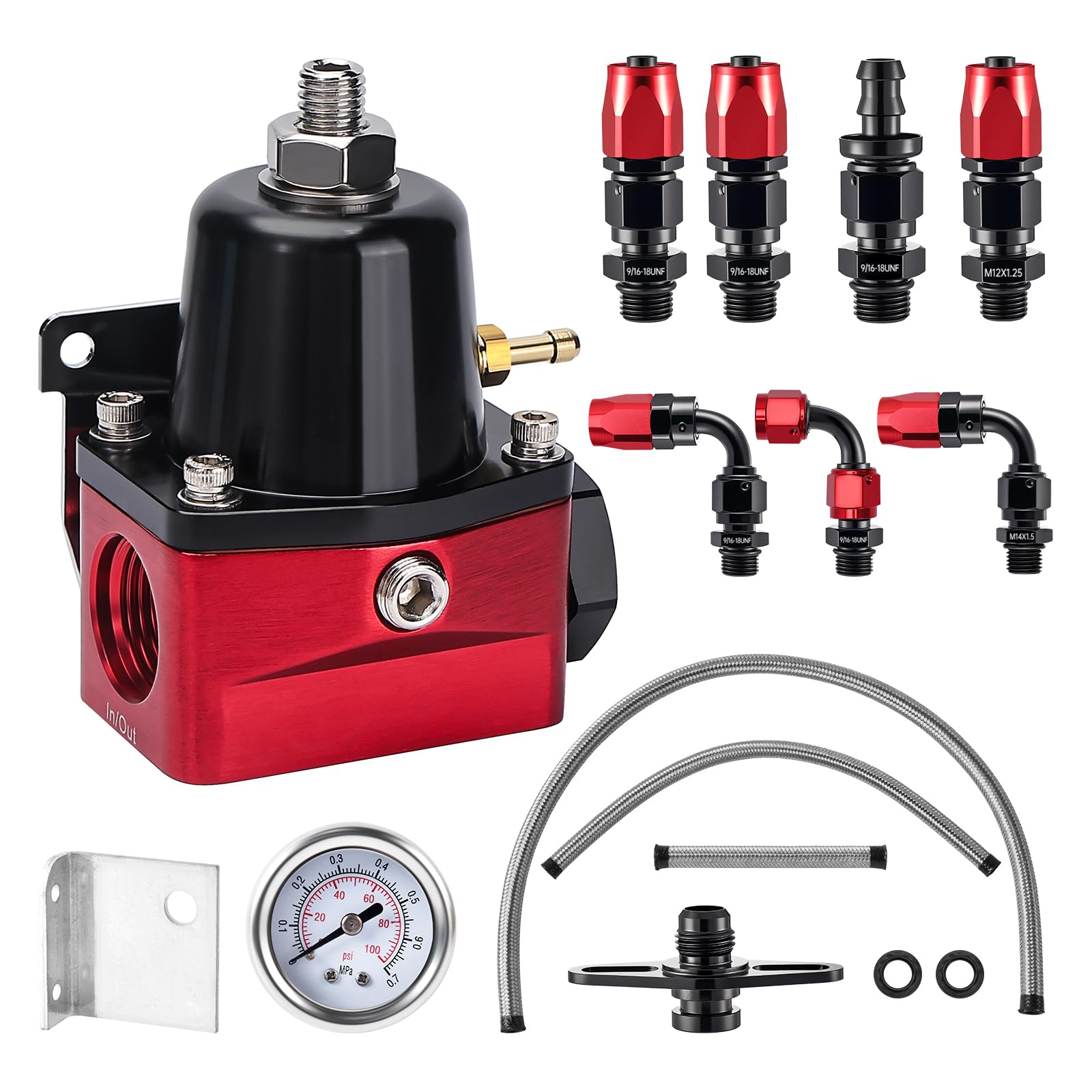
The EVIL ENERGY bypass regulator brings a comprehensive kit to the EFI builder on a mid-range budget. The included pressure gauge, bracket, AN6 port plugs, and a set of 6AN to M12x1.25 and M14x1.5 fittings for fuel rail connection mean you can pull this from the box and start plumbing without a secondary trip to the parts store. The adjustment range spans 30 to 70 PSI, covering the vast majority of naturally aspirated and mildly boosted EFI applications, including Holley Sniper and Terminator X systems.
Buyers report that the regulator holds pressure well at setpoints around 60 PSI for LS and small-block builds and that the aluminum body and painted finish resist underhood heat without degrading. The bypass return design circulates fuel back to the tank, preventing the pump from overheating — a critical advantage for vehicles running an in-tank electric pump in a return-style fuel system. Several users paired it with a Holley Sniper EFI unit after ditching the flimsy internal regulator that came with their fuel pump, reporting an immediate improvement in idle stability and throttle response.
The included hoses are low-quality rubber without nylon reinforcement and have been reported to tear during installation — replace them with proper 6AN braided line the moment you unbox the kit. A small number of units have arrived with leaking O-rings in the upper assembly, so it is wise to disassemble, inspect, and re-lubricate the o-ring before final installation. The regulator is compatible with gasoline and E85 but not diesel, and the nylon braided lines are not compatible with ethanol fuels. For the price, the kit represents a strong value if you budget for replacement hose.
Why it’s great
- Comprehensive kit includes gauge, bracket, and fuel rail adapters, reducing the number of separate purchases
- Adjustable from 30 to 70 PSI covers the pressure needs of Holley Sniper, Terminator, and basic LS builds
- Bypass return design keeps the fuel pump cool and prevents cavitation in return-style fuel systems
Good to know
- Included rubber hoses are subpar and prone to tearing — swap them for high-quality 6AN braided line
- Occasional quality control issues with leaking O-rings; inspect the diaphragm assembly before installation
- Nylon braided lines in the kit are not suitable for E85; must use PTFE or stainless braided hose for ethanol blends
5. Standard Motor Products PR113T Fuel Pressure Regulator

The Standard Motor Products PR113T is a direct-fit fuel pressure regulator for GM TBI-equipped engines from the late ’80s and early ’90s, specifically the 5.7L V8 found in Chevrolet and GMC trucks, Suburbans, and vans. The machined aluminum body matches the OE form exactly, meaning the three mounting bolts and the fuel line connections align without any bracket modification or hose adapter. This is the part you reach for when the original regulator starts bleeding pressure past its diaphragm, causing hard hot starts and a fuel smell that tells you the return line is overwhelmed.
Buyers report four-year service intervals on daily-driven trucks and confirm that the pressure holds steady at the factory specification after installation — no adjustment is needed because the PR113T is a fixed-pressure regulator, not an adjustable unit. At 7.2 ounces, it is a featherweight part that does not stress the fuel rail mounting flange. The machined exterior resists surface corrosion better than the painted OE unit, which often bubbles around the crimp seam after a few winters in the salt belt. Several users paired it with a fresh fuel filter and injector O-rings and reported an immediate restoration of cold-start behavior.
The limitation is strict fitment: this regulator only works on vehicles originally equipped with GM TBI. It does not fit throttle body units from Ford, Mopar, or aftermarket EFI systems. Also, there is no adjustment capability, so if your TBI unit requires a different fuel pressure due to a performance cam or oversized injectors, this regulator cannot compensate. For a bone-stock TBI truck that needs a leak-free replacement, the PR113T is the correct, inexpensive part that avoids the headache of modifying an adjustable regulator into a non-adjustable location.
Why it’s great
- Direct bolt-on replacement for GM TBI 5.7L engines — no brackets, adapters, or hose cutting required
- Machined aluminum body outlasts painted OE units in high-corrosion environments like winter road salt
- Fixed pressure eliminates the risk of accidental misadjustment during installation
Good to know
- Fitment is limited to specific GM TBI engines from the late ’80s and early ’90s; not a universal part
- Non-adjustable — cannot be tuned for higher-flow injectors or performance cam profiles
- No gauge port, so fuel pressure diagnosis requires an inline tee fitting between the regulator and the throttle body
6. ACDelco Gold 214-2156 Fuel Injection Pressure Regulator
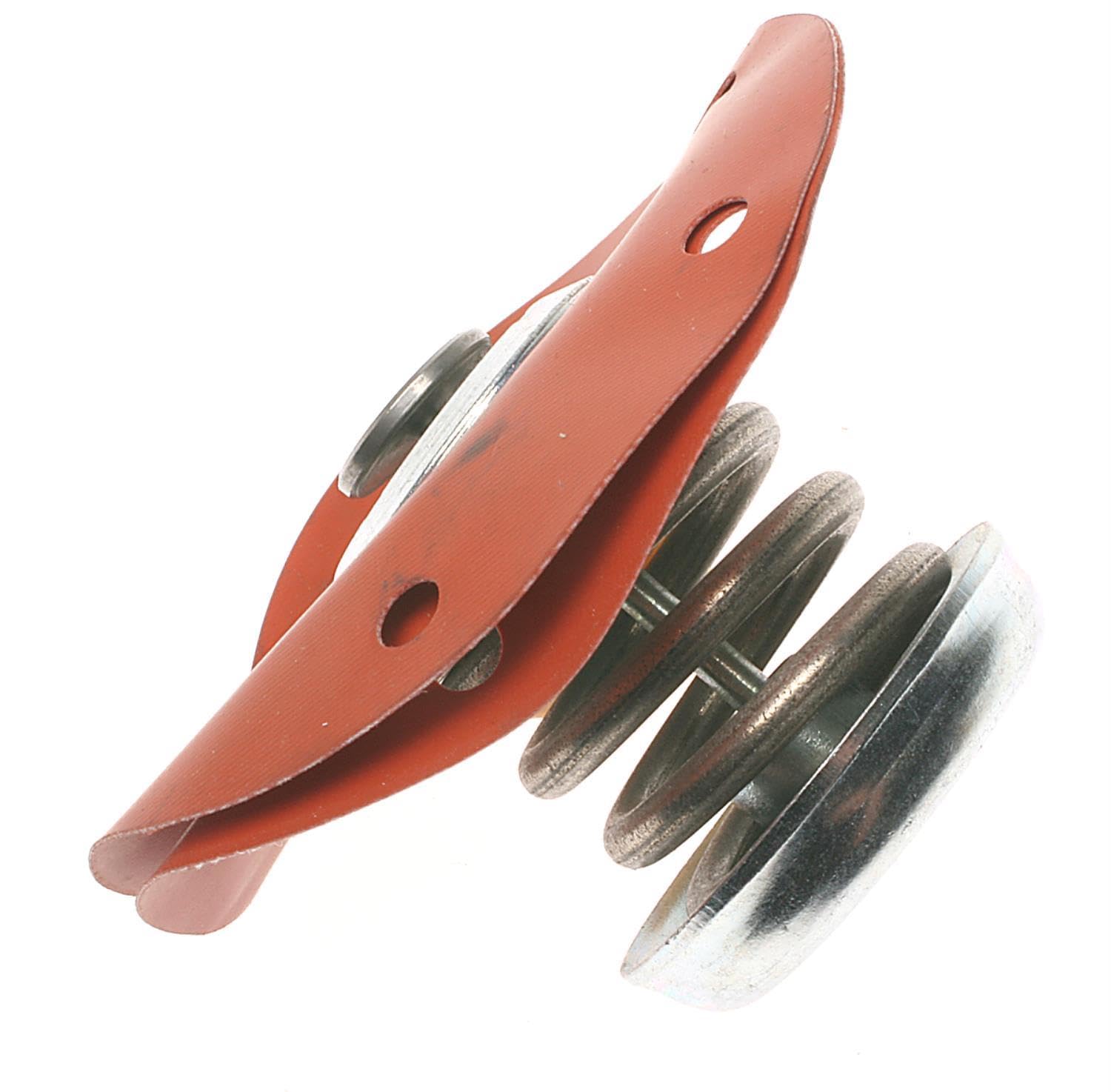
The ACDelco Gold 214-2156 is the professional-grade replacement regulator for GM TPI (Tuned Port Injection) engines found in third-generation Corvettes, Camaros, and Firebirds from 1985 through 1992. The original part on many of these cars is now 30-plus years old and prone to internal diaphragm leakage, which causes a chronically rich idle, black smoke from the exhaust, and fuel dilution of the engine oil. This Gold-series regulator uses an upgraded painted steel body and a diaphragm engineered to hold the factory 43.5 PSI setpoint without the creeping failure that plagues the original part.
Owner reports from 1989 Corvettes and 1991 Trans Am GTA TPI cars confirm that the regulator restored normal idle quality and eliminated the strong gasoline smell inside the cabin after a short drive. The tamper-resistant Torx screws on the mounting flange require a little patience to remove, but the regulator body itself drops into place identically to the factory unit. The 2.08-ounce weight is minimal, and the compact 2.8-inch height fits under the factory intake plenum without clearance issues — a problem with some aftermarket regulators that block the fuel rail crossover.
This regulator is not interchangeable with later Gen III or Gen IV LS platforms; it is sized for the specific offset and return port location of the TPI fuel rail. It is also a fixed-pressure unit, so if you have modified your TPI engine with a larger throttle body, high-flow runners, or a performance cam that requires a pressure adjustment, you need a separate bypass regulator with a gauge port. For maintaining a stock TPI engine at factory specifications, the ACDelco Gold is the most reliable cure for the rich-exhaust plague common to these cars.
Why it’s great
- Direct-fit replacement for GM TPI engines without aftermarket fuel rail modifications
- Restores correct 43.5 PSI fuel pressure, eliminating the rich idle and exhaust smoke from a leaking diaphragm
- Painted exterior resists surface rust better than the bare steel of the original GM part
Good to know
- Fixed-pressure unit — not adjustable for performance builds that require higher or lower rail pressure
- Only fits 1985-1992 GM TPI applications; will not fit LT1, LS, or TBI fuel rails
- Replacing the Torx-head fasteners on the original fuel rail can be difficult without the correct bit
7. Mr. Gasket 9710 Fuel Pressure Regulator
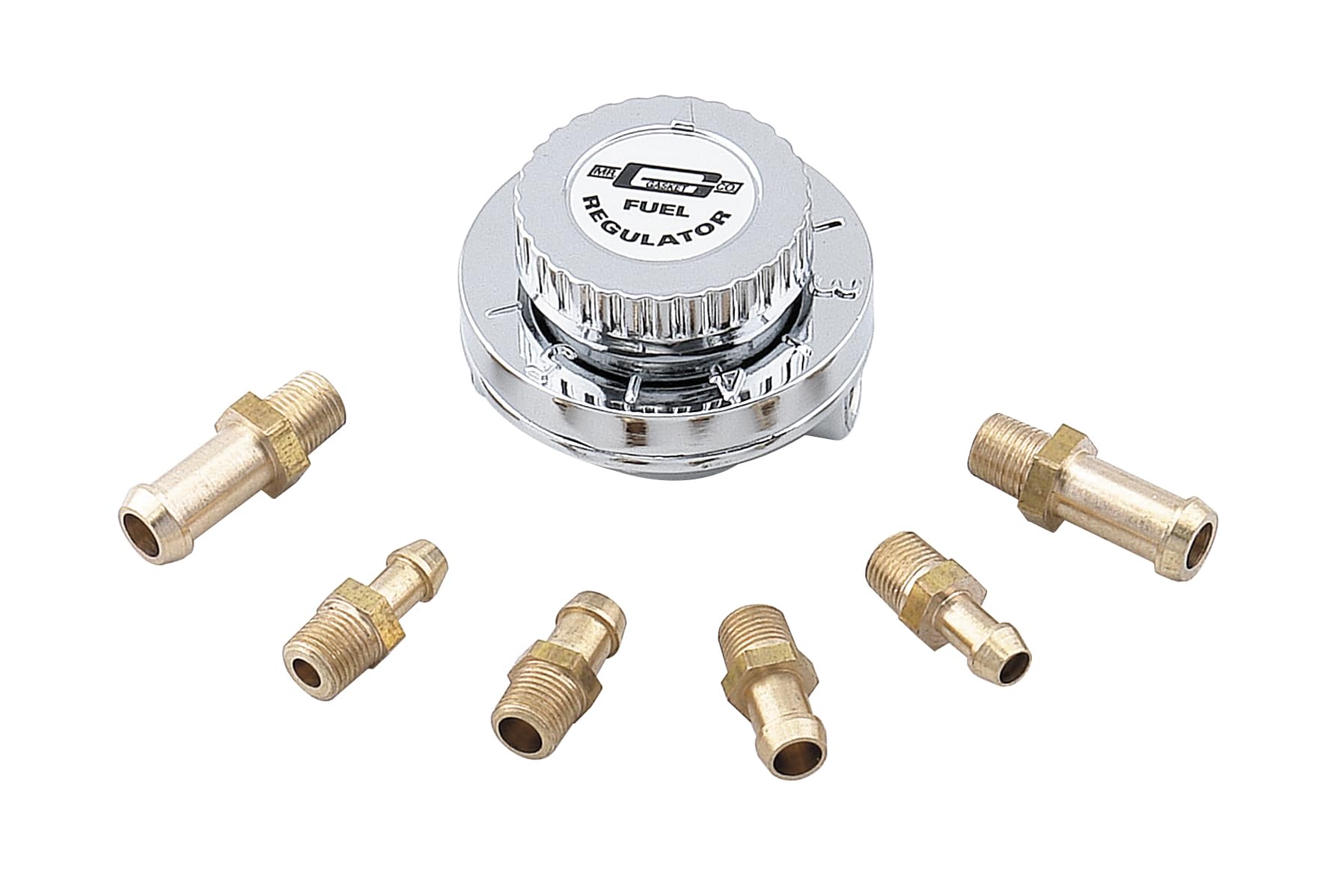
The Mr. Gasket 9710 is a compact, chrome-plated universal fuel pressure regulator designed for carbureted engines that need simple, manual adjustment in the 1 to 8 PSI range. The small body — only 7.5″ long and 5.4″ wide — fits into spaces where full-size deadhead regulators cannot, such as on lawn mower conversions, scooter engines, and tight street rod engine bays. The kit includes barb fittings for a rubber hose connection, making it accessible for builders who prefer push-on fuel hose over AN fittings. Several buyers used it to solve the flooding issue on small engines converted from gravity-fed to electric fuel pump, where the pump’s 8 PSI output overwhelmed the carb’s needle valve.
The adjustment screw on top allows fine-tuning with a screwdriver, and the chrome finish resists minor corrosion in open-engine environments. Users on Jonway scooters and 1968 Firebirds both report that the regulator successfully reduced fuel pressure from the pump output to the 5-6 PSI required by their carburetors, resolving the rich idle and hard-hot-restart behavior. The included hardware is basic — you must supply your own hose clamps and thread sealant tape, as the kit lacks both. The mounting bracket is absent from the design; the regulator body must be zip-tied or bolted to a flat surface using the small flange cast into the housing.
The plastic body material is the primary reliability concern. While it holds up well in moderate-temperature applications, sustained heat soak in a high-horsepower engine bay can cause the plastic housing to soften or crack at the threaded adjustment port. The 1/8-inch NPT ports have poor thread engagement, so overtightening fuel fittings can strip the threads. This regulator is best suited for low-heat, low-HP applications like small-displacement street rods, scooters, and mowers. For a high-horsepower carbureted build with a mechanical pump, the aluminum-construction Quick Fuel or Aeromotive offering is a safer bet for long-term durability.
Why it’s great
- Very compact body fits in tight spaces where full-size regulators cannot mount
- Wire adjustment screw allows fine pressure tuning between 1 and 8 PSI for small engines
- Chrome finish adds visual appeal in engine bay applications where appearance matters
Good to know
- Plastic body is vulnerable to heat distortion in high-horsepower or turbocharged engine bays
- No mounting bracket included — requires a creative mounting solution or zip-tie attachment
- 1/8-inch NPT ports have limited thread engagement; overtightening can strip the housing
FAQ
Can I use a deadhead regulator on a returnless electric pump?
Will a 30-70 PSI EFI regulator work on my carbureted engine?
Why does my fuel pressure drop when I accelerate hard?
Is the vacuum reference port on a regulator necessary for a naturally aspirated engine?
Can I install a fuel pressure regulator without a gauge port and still measure pressure?
Final Thoughts: The Verdict
For most users, the best automotive fuel pressure regulator winner is the Aeromotive 13129 because it delivers a steady 40-75 PSI across the widest range of EFI and turbo applications, with dual ORB-06 ports and a 1:1 boost reference port built in from the factory. If you want a dedicated unit that simplifies an LS swap with zero adapter fittings, grab the Goodies Speed Filter/Regulator. And for a budget-friendly carbureted build that just needs a stable 6.5 PSI out of the box, nothing beats the Quick Fuel 30-803QFT.