
Our readers keep the lights on and my morning glass full of iced black tea. As an Amazon Associate, I earn from qualifying purchases.
Specs are compiled from manufacturer listings and verified buyer reviews and can change over time — please confirm the key details on the product page before buying.
A cracked bumper, a loose trim piece, or a broken interior panel — these are the small plastic failures that make a car feel older than it is. The right adhesive for plastic on a vehicle must resist oil, heat, and vibration, not just stick two pieces together. This guide covers glues that handle tough conditions under the hood and around body panels, so your repair lasts through the next season.
I’m Min — the founder and writer behind Gadgets Feed. This guide is built by comparing the manufacturers’ published specifications and the patterns across verified customer reviews, so you get each pick’s real strengths and trade-offs instead of marketing spin.
Whether you are fixing a cracked headlight housing or re-attaching an exterior emblem, knowing which automotive glue for plastic can withstand the elements and the road is the difference between a repair that holds and one that fails.
Our Picks at a Glance
How To Choose The Best Automotive Glue For Plastic
Picking the right glue for a plastic car part means looking past the brand name. You are choosing between a fast, thin liquid that soaks into cracks and a thicker epoxy that fills gaps and gives structural strength. The wrong choice leads to a repair that snaps off on the first pothole.
Understand the Plastic Type
Most car interior and exterior plastics are made of materials like ABS (acrylonitrile butadiene styrene, a hard, tough plastic), polypropylene (PP, a flexible plastic often used in bumpers), or polyurethane (PU, a durable, impact-resistant plastic). Some glues, especially cheaper cyanoacrylates (the basic liquid super glue), will not stick to PP or PE (polyethylene, a waxy plastic used for some containers) without a special primer. If you are repairing a bumper or trim piece, look for an adhesive that explicitly lists those plastics in its compatible materials field. The J-B Weld Plastic Bonder, for example, specifies it works on most thermoplastics but warns that PP and PE need a different product.
Check the Environment: Heat, Oil, and Vibration
A glue for an interior door panel faces much less stress than one on an exhaust shield or under the hood. For engine bay or exterior body repairs, you need an adhesive that is rated for temperature extremes and resistant to oil and gasoline (petroleum-based fluids). The Kraftprotz super glue, for instance, is rated from -40°F to 230°F and resists oil, making it suitable for trim near the engine. For a plastic part that will be submerged in or near fuel, understand that not all epoxies hold up — one verified buyer of the Polymix adhesive reported that gasoline eats it.
Working Time vs. Cure Time
Some glues set in 15 minutes but take 24 hours to reach full strength (full cure). Others, like the Kraftprotz automotive super glue, are fully cured in just 4 hours. If you need to use the car the same day, a fast cure time matters. If you need time to position the part perfectly, a longer working time (like the 30-minute set time on the WXYCRUEYE epoxy) is a benefit. The trade-off is speed versus the strength of a structural bond.
Quick Comparison
| Model | Best For | Full Cure Time | Volume | Material Type | Amazon |
|---|---|---|---|---|---|
| J-B Weld Plastic Bonder 2-Pack★ Best Overall | Structural plastic repairs (bumpers, brackets) | 30 hours | 25 ml (2 syringes) | Two-part urethane | Amazon |
| Kraftprotz Automotive Super GlueFast Fixer | Fast repairs on cracks and clips | 4 hours | 1.76 oz (50 g) | Cyanoacrylate | Amazon |
| 3M Plastic Emblem & Trim Adhesive 3-Pack | Attaching emblems and badges | 24 hours | 1 fl oz (3 tubes) | Acrylic | Amazon |
| WXYCRUEYE Super Glue for Metal | Bonding plastic to metal parts | 24 hours | 1.76 fl oz | Epoxy resin | Amazon |
| Polymix Rigid Automotive Repair Adhesive | Large panel repairs (dashboards, fenders) | 180 minutes | 200 ml | Two-part polyurethane | Amazon |
In‑Depth Reviews
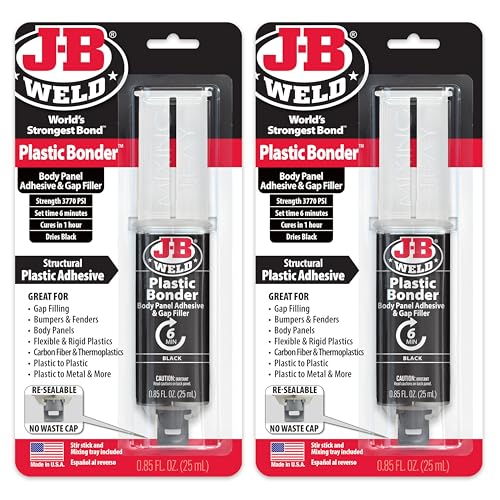
1. J-B Weld Plastic Bonder Black 25ml Syringe – 2 Pack (50139-2)
Our pick — over 4.5★ from 18,500+ verified ratings; the strongest balance of quality and price.
The two-part syringe that engineers a repair as strong as the original plastic part.
When rebuilding a broken bracket or filling a bumper dent, you want a glue that becomes part of the structure, not just a surface sticker. This J-B Weld kit uses a two-part urethane formula that you mix in the included tray, and it delivers a tensile strength (the amount of pulling force the bond can withstand before breaking, measured in PSI) of 3770 PSI, so the repair feels like hard plastic when it cures, not like a brittle glob that could snap.
The syringe design ensures precise application and prevents waste. The 1:1 mix ratio is pre-measured, and the re-sealable cap keeps the leftover adhesive from drying out for future jobs. Buyers report that it “starts hardening in 30 min, fully solid overnight,” which matches the published spec of a 15-minute set time and a 30-hour full cure time. That 30-hour cure is the longest in this lineup — the trade-off for that structural strength is needing to let the part sit overnight before putting it back under load. It bonds to thermoplastics, fiberglass, and coated metals, but experienced users note it does not work on polypropylene (PP) or polyethylene (PE) plastics without a specific primer.
Compared to the Polymix 200ml cartridge below, this 25ml syringe pack is a significantly smaller volume but the J-B Weld offers 18,758 ratings and a track record that is tough to beat for small-to-medium repairs. If you need to fill a large crack on a dashboard or repair a fender clip, this is the one to reach for.
Real-World Strengths
- 3770 PSI tensile strength creates a bond that feels like original hard plastic, according to multiple reviewers
- Syringe prevents leaks and allows precise application on small areas
- Sticks to thermoplastics, fiberglass, and coated metals — covers most common car plastics
Limitations to Note
- Full 30-hour cure time means you cannot use the part for a full day
- Does not bond to polypropylene (PP) or polyethylene (PE) — check your plastic type first
- Chemical smell is noticeable; use in a ventilated space
Best for: Anyone with a cracked bumper bracket, wiper arm, or interior panel who wants a permanent, sandable repair that can be painted over.
Not the one if: You need a quick fix — the 30-hour cure time is a commitment, and there are faster options below.
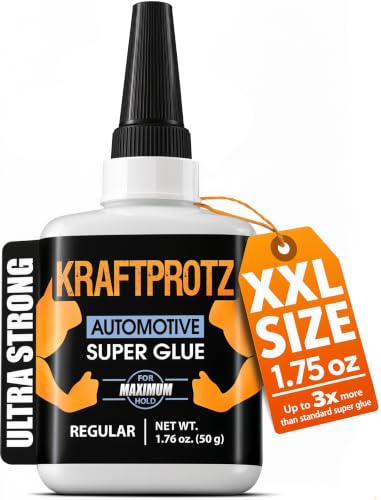
2. Kraftprotz Automotive Super Glue Liquid 1.76 oz XXL
The liquid super glue that wicks into hairline cracks and cures faster than any epoxy.
For cracks in trim, headlight housings, or dashboard clips, a thick epoxy cannot get into the gap. This Kraftprotz product uses a thin cyanoacrylate formula (the same class of chemical as standard super glue, but engineered for automotive conditions) that flows into microcracks via capillary action (a wicking effect that pulls the liquid into tight spaces). It bonds plastic, rubber, and metal, and it resists engine vibration, oil exposure, and temperatures from -40°F to 230°F. The full cure time is just 4 hours — compared to the WXYCRUEYE epoxy, which takes 24 hours.
The 1.76-ounce bottle is a generous workshop-sized quantity. One reviewer noted they “used this to glue back my visor in my car and some other things,” noting it held up through heat and rain. Another buyer fixed a separating front bumper on a Golf R, avoiding a body shop bill. The precision dropper tip helps you avoid overspill, and the anti-clog cap prevents the tip from crusting shut between uses. The catch is that it is a thin liquid — it will run if you apply too much, and it does not fill gaps. It works best when the two broken pieces fit snugly back together.
If you are comparing it directly to the 3M adhesive below, the Kraftprotz offers a much faster full cure (4 hours vs 24 hours) and a larger single bottle, while the 3M is better suited for bonding emblems to painted surfaces where the thinner cyanoacrylate might not give the same surface grip.
Why It Works
- Thin formula penetrates tight cracks where gel or paste cannot reach
- Fully cured in 4 hours
- Withstands oil, vibration, and temperature swings from -40°F to 230°F
The Trade-offs
- Does not fill gaps — pieces must fit together tightly for a strong bond
- Chemical smell is present; one buyer mentioned needing caution during use
- A first attempt may fail if the surface is not perfectly clean; one user had to reapply
Great for: Quick, invisible repairs on hairline cracks, loose trim clips, or a broken mirror housing where you need the car back on the road today.
Avoid if: You have a gap to fill or are bonding two pieces that do not mate perfectly — look for the J-B Weld instead.
3. 3M Plastic Emblem & Trim Adhesive (03601), 1 fl oz Tube (Pack of 3)

The badge-bonding specialist from 3M that sets fast and stays put through car washes.
Re-attaching a loose emblem or a piece of exterior trim is a specific job that calls for a specific glue. This 3M adhesive is an industrial-strength acrylic formula that sets in about 15 minutes and fully cures in 24 hours. The key advantage is weather resistance: it survives water, vibration, and heat, so badges stay on through automatic car washes. One buyer confirmed it “worked really well, cured in a little over 30 minutes even though it was quite cold in my shop,” which speaks to its reliability in less-than-ideal conditions.
The pack includes three 1 fl oz tubes, giving you multiple projects worth of adhesive. It goes on clear and dries clear, which is critical for visible parts like emblems or transparent light lenses. No mixing is required — just clean the surface, apply from the tube, and press. The flip side is that this glue is a bit messy if you use too much, as the same buyer noted, and 3M’s own double-sided tape might be easier for a completely flat emblem. The 24-hour full cure is slower than the Kraftprotz (4 hours), but the acrylic formula typically offers better adhesion on painted surfaces.
Compared to the Polymix cartridge which requires a separate application gun, these tubes are dead simple for a homeowner. If you need a reliable bond for a loose hood ornament or side molding, this 3-pack delivers exactly that.
Strengths Up Front
- Sets in about 15 minutes, so you do not have to hold the part in place forever
- Dries clear, making it ideal for visible emblems and transparent trim pieces
- 3-pack value gives you enough for multiple repairs or spares
Watch Points
- Gets messy if over-applied — work fast because it starts curing immediately
- 24-hour full cure is slower than super glue alternatives
- For completely flat emblems, 3M’s double-sided tape is easier and cleaner
Solid pick for: Anyone re-attaching a car emblem, side trim, or a cracked light lens who wants a weatherproof bond from a trusted brand.
Not your glue if: You need a gap-filling structural repair on a broken bracket — this is a surface adhesive, not a filler.
4. WXYCRUEYE Super Glue for Metal, Welding High Strength Oily Glue
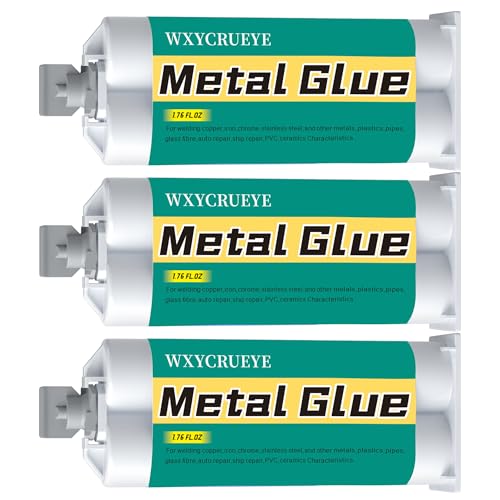
The epoxy paste that bridges the gap between plastic and metal parts with egg-yolk consistency.
When your repair involves gluing plastic to a metal surface — say, a cracked plastic intake onto a metal bracket or a broken tab on a cast-iron piece — you want an epoxy that grips both materials equally well. This WXYCRUEYE product is a two-part epoxy resin that forms a paste with a consistency described as “egg yolk” viscosity, meaning it stays where you put it without running. It bonds to aluminum, plastic, fiberglass, and ceramic, and after the 24-hour full cure, you can sand, drill, and paint it.
One owner reported “this metal glue works really well! It bonds quickly and holds metal pieces firmly in place,” while another mentioned it was “hard to get out of the tube.” The paste form means it can fill small gaps that a thin cyanoacrylate cannot handle. It is also resistant to oil and acid, making it a candidate for repairs in or near the engine bay. The catch is the 24-hour cure time and the tube requires strong fingers to push the plunger on the dual-syringe.
Unlike the Kraftprotz which is water-thin, this epoxy stays thick, so it is the better choice for vertical surfaces or applications where you need the glue to build up a missing piece of plastic. If you are repairing a plastic-to-metal joint on an exhaust pipe or a bracket, this is the most targeted option in this list.
Performance Highlights
- Thick paste consistency stays on vertical surfaces and fills small gaps
- Resists oil, acid, and alkali — holds up in engine bay conditions
- Can be sanded, drilled, and painted after curing, for a finish-matched repair
Potential Drawbacks
- 24-hour full cure requires an overnight wait before putting the part under load
- Dispensing from the tube requires significant hand strength, per buyer feedback
- 1.76 fl oz unit count is moderate — check if your repair is small enough
Good match for: Repairs that involve bonding plastic to metal, like a cracked housing on a metal bracket, where you need a thick, gap-filling paste.
Not for: Quick fixes or repairs on polypropylene (PP) plastics — check the material compatibility first.
5. Polymix Rigid Automotive Multipurpose Plastic Repair and Adhesive 200ml

The big-cartridge polyurethane that body shop techs reach for on large panel repairs.
If you are repairing a whole section of a dashboard or re-attaching a plastic bumper corner, a small syringe runs out fast. This Polymix cartridge holds 200ml — compared to the J-B Weld syringe pack’s 25ml — and it uses a two-part polyurethane formula that cures rigid. You need a standard caulk-style cartridge gun (not included) to push the dual-component mix through the included static mixing nozzles. The working time is just one minute, so you have to move fast once you start dispensing.
Buyers with experience in professional-grade products have compared this to brands like SEM and 3M. One experienced user repaired a cracked 2004 Dodge Dakota dashboard center vent section using mesh and this Polymix, calling it “amazing adhesion” and “just as effective” as much more expensive products. Another used it to fix broken plastic fender clips on a Toyota Corolla. The full cure time is 180 minutes (3 hours), which is significantly faster than the 24-30 hour epoxies above. However, a critical limitation reported by one reviewer is that “it doesn’t hold up to gas” — so this is not the glue for anything near a fuel tank or fuel line.
Compared to the 3M tube pack, this Polymix is for a different scale of work. The 3M is a dab-on solution for small emblems; the Polymix is for panel-sized repairs that need structural rigidity. The one-minute working time is a double-edged sword — it sets fast, but you have no room for repositioning.
Advantages for Big Jobs
- 200ml cartridge provides the most adhesive volume in this guide — enough for large repairs or several small ones
- Rigid polyurethane cures in 180 minutes, much faster than 24-hour epoxies
- Professional-grade performance at a price point that DIYers appreciate, per buyer feedback
Important Caveats
- Requires a separate cartridge gun (not included) to dispense the adhesive
- One-minute working time means you must position parts quickly with no second chances
- Not fuel-resistant — gasoline eats the bond, so keep it away from any fuel-system parts
Best use: Restoring cracked dashboards, repairing large plastic fender tabs, or fabricating replacement plastic parts where you need volume and a rigid, fast-curing bond.
Not for: Small dab repairs or any application near fuel or gasoline — buy the J-B Weld or Kraftprotz for those jobs.
Understanding the Specs
Full Cure Time
This is the total time the glue needs to reach its maximum advertised strength. It is different from the “set time” (when the glue is tacky enough to hold parts in place). For example, the J-B Weld Plastic Bonder sets in 15 minutes but takes 30 hours to fully cure. If you put a load on the part before the full cure time is up, the bond can break. For a repair you need today, a 4-hour cure like the Kraftprotz is worth the trade-off in raw strength.
Tensile Strength (PSI)
Tensile strength measures how much pulling force the glue can withstand before the bond snaps. It is measured in pounds per square inch (PSI). The J-B Weld Plastic Bonder has a tensile strength of 3770 PSI, which is very high. For comparison, a basic hardware-store super glue might rate at 1000-2000 PSI. A higher tensile strength means the glue is more like structural material — you can drill and sand it without the repair falling apart. Not all products list their tensile strength; if it is not in the specs, the manufacturer likely does not claim a high structural rating.
FAQ
Will automotive glue for plastic work on all types of car plastic?
What is the difference between a 15-minute set time and a 4-hour cure time?
Can I use the same glue for interior dashboard plastic and exterior bumper plastic?
Will these glues hold a side mirror back on?
How do I remove excess glue from a painted car surface?
Why did my glue repair break again after a few days?
What does “capillary action” mean in a glue?
Can I paint over these glues?
How long does a tube of automotive glue last once opened?
Is it safe to use these glues near the fuel system of my car?
Final Thoughts: The Verdict
If you want one dependable pick, the automotive glue for plastic winner is the J-B Weld Plastic Bonder because its 3770 PSI tensile strength and two-part urethane formula deliver a repair that feels like the original plastic. If you want a fast fix for hairline cracks and emblems that is ready in 4 hours, grab the Kraftprotz Automotive Super Glue. And for large panel repairs like a cracked dashboard that needs volume and structural rigidity, the Polymix Rigid Automotive Repair Adhesive delivers the most adhesive volume in a fast-curing formula.
How We Picked
We do not accept paid placement. Every pick is matched to a real buyer and a real use-case; we do not hands-on test units.
Sources & Methodology
Specifications: manufacturer listings and product documentation. Review insights: verified customer reviews, as of July 2026. Pricing: not shown on this page (it changes often); check the current price via the retailer link.
As an Amazon Associate, Gadgets Feed earns from qualifying purchases. This does not affect which products we feature.