
A blistering exhaust pipe inches from a plastic vacuum line, a fuel tank sweating under the car’s floorpan, or a motorhome doghouse radiating enough heat to make the cabin unbearable — these are the moments that separate a well-managed build from a costly repair. The right automotive heat shield doesn’t just add a layer; it redirects radiant energy away from components engineered to fail under thermal stress. Choosing a material rated for the wrong temperature range or skipping the required air gap can turn a simple fix into a recurring headache.
I’m Rikta — the co-founder and writer behind Gadgets Feed. My buying guides are built on deep market research that cross-references thermal ratings in degrees Fahrenheit, material construction (basalt fiber versus aluminized PET foam), adhesive backing strengths, and real-world user reports across dozens of makes and models. (And Homer 🐱 supervised the whole ranking from his warm spot on the hood of the project car).
This guide compares seven top-rated options across peel-and-stick sheets and flexible pipe wraps, covering installation ease, continuous temperature limits, and coverage area. Read on to find the best automotive heat shield for your specific exhaust, under-hood, or underbody application.
How To Choose The Best Automotive Heat Shield
A heat shield that fails on the road is worse than no shield — it gives a false sense of security. The key is matching the shield’s material, form factor, and temperature rating to the specific hot zone in your vehicle. Here are the three most critical factors to evaluate before buying.
Match Temperature Rating to Your Heat Source
The continuous operating temperature rating is the single most important spec. A shield rated for 800°F continuous is fine for a firewall near a catalytic converter, but you need a 1800-2500°F intermittent rating for direct exhaust pipe wrap applications. Always check the intermittent spike limit — this tells you how the shield handles sudden heavy loads, like a turbo spooling hard on a long uphill pull.
Choose Sheet vs. Pipe Wrap by Surface Geometry
Peel-and-stick sheets (like the 12″ x 24″ Second Skin Thermal Block) are ideal for flat or gently curved panels — hoods, floor pans, firewall, and fuel tank bottoms. Flexible pipe wraps with clamps (like the Titanium Pipe Shield) are built for round or irregular exhaust tubes, downpipes, and catalytic converters. Pipe wraps also allow an engineered air gap via standoff brackets, which dramatically increases heat dissipation compared to a direct-contact adhesive sheet.
Verify Material Construction and Backing Quality
A two-layer design with an outer reflective surface and an inner basalt fiber or silica fabric core offers better thermal insulation than a single-layer aluminum foil. For peel-and-stick options, check if the adhesive is repositionable (good for large sheets) or requires a perfectly clean, grease-free surface for permanent bond. A shield with PET fiber and aluminum construction resists oil, coolant, and solvents — critical for underbody or under-hood exposure.
Quick Comparison
On smaller screens, swipe sideways to see the full table.
| Model | Category | Best For | Key Spec | Amazon |
|---|---|---|---|---|
| DYNAMAT 11905 Hoodliner | Under-Hood Sheet | Noise & heat control | 0.75″ thick, 97% heat reflection | Amazon |
| Design Engineering Boom Mat 50130 | Under-Hood Sheet | Hood & generator insulation | 0.75″ thick, 12 sq ft coverage | Amazon |
| DEI Titanium Pipe Shield 10454 | Pipe Wrap | Exhaust tube protection | High-temp resistant, 4″ x 1′ | Amazon |
| Second Skin Thermal Block | Peel & Stick Sheet | Radiant heat reflection | 1/8″ thick, up to 800°F | Amazon |
| Racewill Titanium Pipe Shield | Pipe Wrap | Downpipe/cat wrap | Double-layer, 1350°F protection | Amazon |
| DEGEOBERLIN Pipe Heat Shield | Pipe Wrap | Motorcycle & J-pipe | Basalt fiber, 2500°F intermittent | Amazon |
| Abahub Sound Deadening 236 mil | Dual Purpose Sheet | Heat & noise reduction | 236 mil thick, 16 sq ft | Amazon |
In‑Depth Reviews
1. DYNAMAT 11905 Hoodliner

The DYNAMAT 11905 is the reigning standard for under-hood heat and noise control, trusted by top hot rod and custom builders since 1989. Its 3/4-inch “Sound Soaker” foam is paired with a reinforced 1 mm aluminized skin that reflects up to 97% of radiant heat, protecting your hood’s paint finish from cracking or fading over time. One 32″ x 54″ sheet covers 12 square feet, enough for most sedan and SUV hoods or a motorhome doghouse.
Installation is a one-shot affair — the adhesive is exceptionally aggressive, so precise measurement and a clean, degreased surface are mandatory. Owners of Class A motorhomes and Jeep CJ-7s report a noticeable drop in cabin temperature (around 40°F in one RV doghouse example) and a measurable reduction in engine noise. The included tape for seams works well, though some users supplement it with aluminum foil tape for a flawless seal.
The foam core resists water and oil better than many budget alternatives, but the 30-day warranty is shorter than you might expect for a premium product. If you need a combination of thermal blocking and sound absorption under the hood, and your surface is relatively flat, this remains the gold standard — it’s made in the USA and carries the brand reputation to back its performance claims.
Why it’s great
- Absorbs engine noise while reflecting 97% of radiant heat
- Strong self-adhesive backing bonds permanently to clean surfaces
- Trusted American brand with decades of aftermarket support
Good to know
- Adhesive is permanent — no repositioning once applied
- Higher price point than generic alternatives
2. Design Engineering Boom Mat 050130
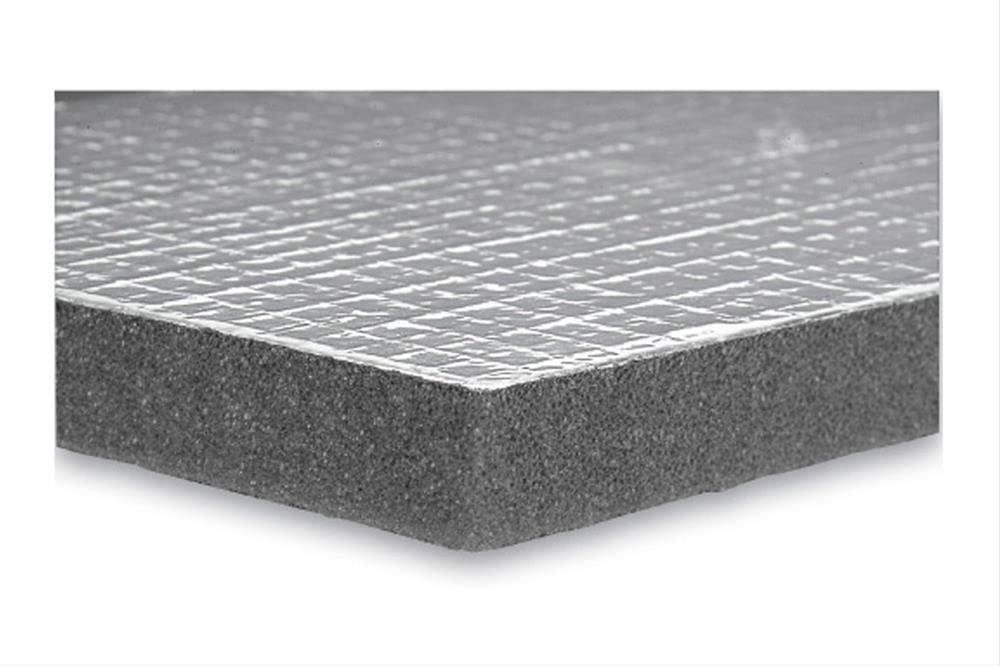
The Design Engineering Boom Mat shares the same 32″ x 54″ footprint and 0.75-inch thickness as the Dynamat Hoodliner, but it’s engineered with a slightly different foam composition and aluminum covering that prioritizes both thermal insulation and sound dampening for engine compartments. DEI recommends this for generator boxes and HVAC applications as well, giving it a wider use case than pure under-hood insulation. The peel-and-stick backing is strong, but a common trick from experienced users is to remove only the center 2 inches of backing first to allow repositioning before pulling the side strips.
Owners have used it to replace 12-year-old RV engine cover insulation, and the results are consistent: reduced road noise and elimination of heat rise through the doghouse cover. One user with a V12 Jaguar XJS used paper templates to cut perfect sections for the hood’s complex curves, then had an upholsterer sew color-matched edging for a factory look. The material cuts cleanly with scissors and conforms to mild contours, though deep three-dimensional shapes may require multiple smaller pieces.
The included tape for edge sealing has been criticized as weak — many users swap it for standard duct tape or aluminum tape for a lasting bond. Considering the price per square foot, this is a strong performer for those who need a universal heat and sound shield for flat under-hood areas, especially on older vehicles where the original fiberglass blanket has disintegrated.
Why it’s great
- Versatile for hoods, engine covers, generator boxes, and HVAC panels
- Cuts and fits easily with household scissors
- Repositionable with the center-strip technique
Good to know
- Tape for edging seams is underwhelming
- Expensive per square foot compared to single-layer options
3. Design Engineering Titanium Pipe Shield 010454

This is the premium pipe wrap from Design Engineering, a 4-inch-wide by 1-foot-long shield engineered for direct exhaust pipe and tube coverage. Unlike the flexible basalt wraps in this comparison, this shield uses a rigid titanium-look construction with riveted standoff brackets and hose clamps, creating a fixed air gap between the shield and the pipe. That air gap is the secret to its performance — still air is a poor conductor of heat, so a gap of even 0.25 inches can reduce surface temperatures by over 100°F compared to a direct-contact wrap.
Installation takes about 30 minutes and requires only a basic spanner or screwdriver. One Miata owner placed this near the midpipe connection and reported the footwell carpet near the gas pedal went from uncomfortably warm to barely warm. A Polaris Sportsman 850 owner used it to stop melting the rear body panel during low-gear, high-heat operation. The shield fits 3.5-inch-diameter pipes perfectly and can handle curved sections without losing structural integrity.
The fit is universal, but you must measure your pipe diameter and clearance before ordering — the 4-inch width won’t cover larger commercial truck pipes, and the rigid design cannot articulate fully to irregular bends. Some negative reviews stem from motorcycle applications where clearance is tight and the rivets can tear out if the shield contacts a moving suspension part. Choose this for a permanent, heatsink-style install on a downpipe, turbo outlet, or catalytic converter where you need maximum standoff performance.
Why it’s great
- Rigid bracket design maintains a consistent air gap for maximum cooling
- Premium materials resist mechanical stress and high heat
- Limited lifetime warranty from DEI
Good to know
- Not flexible — measure pipe diameter carefully
- Can be tricky to install on tight-routed exhaust systems
4. Second Skin Thermal Block Automotive Heat Shield

Second Skin’s Thermal Block is the most versatile entry-level peel-and-stick sheet in this roundup, offering a 1/8-inch thickness with a reflective aluminum foil face and a PET fiber insulating core. It’s rated for continuous exposure up to 800°F, making it safe for firewall, floor pan, fuel tank, and under-hood applications — though not for direct exhaust pipe wrap. Each sheet measures 12” x 24” (2 square feet per sheet), so multiple packs are needed for larger areas, but the per-sheet cost is low enough to cover a full project without breaking the bank.
Installation is straightforward: cut with scissors or a utility knife, peel the backing, and stick to a clean surface. Users have applied it to motorcycle saddlebags, dirt bike gas tanks, and the underside of plastic covers near mufflers, and the adhesive has held up well in all reported cases. Second Skin recommends a minimum 2-inch air gap for optimal performance, so it works best on surfaces that are not in direct contact with the heat source.
The main limitation is temperature — at 800°F continuous, it’s not suited for catalytic converter tunnels or exhaust pipe direct wrap. Also, the sheet is only 1/8-inch thick, so its sound-deadening contribution is minimal compared to the 3/4-inch foam options. For a lightweight, flexible radiant barrier that adds minimal bulk and costs very little per square foot, this is an excellent pick for entry-level thermal management projects.
Why it’s great
- Reflects up to 98% of radiant heat
- Resists water, oil, solvents, and coolant
- Thin and flexible for tight spaces
Good to know
- Requires 2-inch air gap for full performance
- 800°F limit — not for direct exhaust wrap
5. Racewill Titanium Pipe Shield 6″ x 12″

The Racewill Titanium Pipe Shield offers a double-layer design — an outer titanium material and an inner silica fabric core — rated to handle heat up to 1350°F. This places it well within the range needed for downpipe and catalytic converter heat management, where surface temps can spike aggressively under boost for long pulls. The 6-inch width and 12-inch length are generous enough to cover a short downpipe section, and the included rivet-based standoff brackets create that critical air gap between the shield and the pipe.
Installation is notably easier than a metal hard-shell shield. Users report taking about 30 minutes to wrap a turbo downpipe, with the flexible material conforming well to pipe curvature. The hose clamps are 3.5 inches in diameter, so they fit most standard exhaust pipes securely. One Subaru WRX owner used this on the intermediate pipe near axle boots and saw no damage to the product or surrounding components after three months of daily driving.
The one caveat: the material, while flexible, cannot articulate fully around every exhaust shape — particularly tight S-bends or factory headers with minimal clearance. Also, the instruction to wear gloves during installation is not optional; the silica fabric can irritate skin. For a middleweight pipe shield that balances price with real-world protection up to 1350°F, this is a solid upgrade from basic basalt wraps.
Why it’s great
- Double-layer construction with titanium and silica fabric
- Standoff brackets create an effective air gap
- Easy 30-minute installation on most downpipes
Good to know
- Does not conform to all tight pipe bends
- Wearing gloves during installation is necessary
6. DEGEOBERLIN Pipe Heat Shield 6″ x 12″
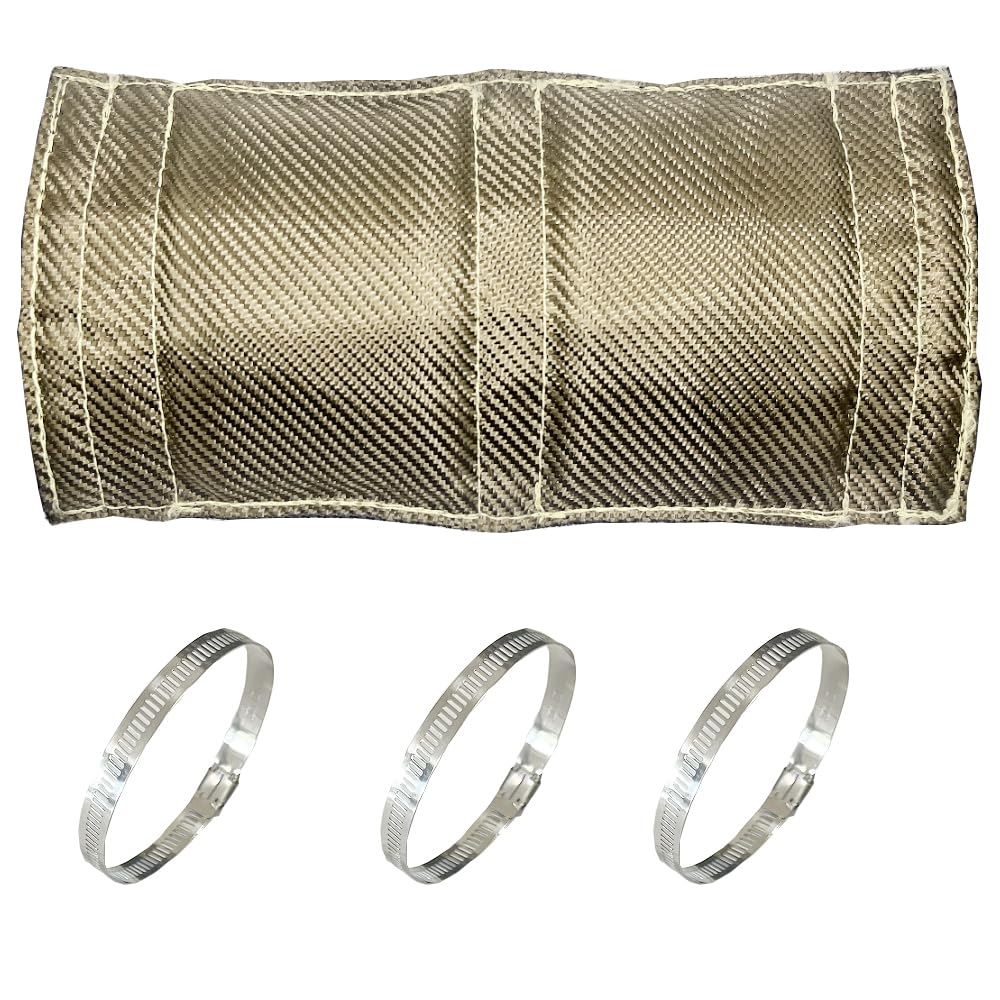
This compact 6” x 12” wrap from DEGEOBERLIN uses a two-layer basalt fiber core with an outer titanium surface, offering an impressive 2500°F intermittent rating and 1800°F continuous tolerance. For the entry-level price, you’re getting the highest temperature ceiling in this entire roundup — enough to handle even the hottest exhaust gas pulses directly off a manifold or turbo outlet. The included three stainless steel clamps (3.5-inch diameter) make installation a simple spanner job, and the flexible basalt core wraps around round, oval, or even slightly flattened pipe shapes.
Real-world feedback is strong: Harley V-Rod owners use it to protect their legs from exhaust heat, Subaru WRX owners put it on the intermediate pipe near axle boots, and it’s frequently compared favorably to traditional heat wrap tape because it requires far less fiddling. The 5-ounce weight is virtually unnoticeable once installed, and the material shows no discoloration after sustained use. A quick tip: measure your pipe circumference and clearance before buying — the 6″ x 12″ size is best for short runs (exposed section of a J-pipe or muffler inlet).
The biggest trade-off with this price point is the lack of rigid standoff brackets. The clamps hold the shield tight to the pipe, so the air gap is minimal — performance relies on the basalt core’s insulation rather than an engineered standoff. For a straightforward, high-temp, low-cost fix for a hot pipe section, this is the easiest recommendation in the budget category.
Why it’s great
- Extremely high temperature rating (2500°F intermittent)
- Lightweight and flexible for tight spaces
- Easy installation with no special tools
Good to know
- No standoff brackets — minimal air gap
- Limited to smaller pipe sections (12″ length)
7. Abahub Sound Deadening 236 mil 16 sqft

The Abahub 236 mil heat shield is a three-layer material — reflective foil, dense sound-dampening foam, and a strong adhesive backing — designed to serve double duty as both a thermal barrier and a noise deadener. At 59 inches by 39 inches (16 square feet), it’s the largest single sheet in this comparison, covering multiple doors, a full hood, or a trunk floor in one cut. A 2000 Camry owner used it as a direct replacement for the factory hood insulation and found it reduced both engine heat transfer into the cabin and the overall roar from the engine bay.
The thick 6.2 mm (236 mil) foam is noticeably denser than the 1/8-inch Second Skin sheet, giving it better vibration-dampening properties. It’s been installed inside van conversions for wheel well coverage and in semi-trucks, where the large sheet size helps reduce long-haul noise fatigue. The adhesive is very sticky — so sticky that repositioning is nearly impossible, as one user learned — so careful placement is critical. Pre-cutting with scissors is recommended before peeling the backing.
The aluminum foil surface is somewhat fragile and can tear easily if handled roughly. Several users recommend covering the edges with aluminum foil tape to prevent peeling over time, especially in high-heat zones. It’s also worth noting that the material comes rolled, which can cause minor wrinkles that settle out after adhesion, but a prior hole or tear is possible due to packaging. For the price, the sheer coverage area and dual-performance characteristics make it a compelling choice for a full-vehicle heat-and-sound project.
Why it’s great
- Large 16 sq ft sheet for extensive coverage
- Combines heat reflection with sound dampening
- Strong adhesive bonds permanently to metal panels
Good to know
- Foil surface tears easily without careful handling
- Adhesive is permanent — no repositioning
FAQ
Can I use a peel-and-stick heat shield directly on an exhaust pipe?
How do I calculate how much heat shield material I need for my project?
Will a thick hood liner like the Dynamat 11905 fit all vehicles?
Final Thoughts: The Verdict
For most users, the best automotive heat shield winner is the Dynamat 11905 Hoodliner because it combines superior 97% heat reflection with genuine sound dampening in a single, easy-to-install sheet trusted by professionals for over three decades. If you need a direct exhaust pipe wrap that can handle extreme intermittent heat (2500°F) and fits a tight budget, grab the DEGEOBERLIN Pipe Heat Shield. And for a rigid, standoff-style pipe solution that goes where flexible wraps can’t, nothing beats the DEI Titanium Pipe Shield 010454.