
Our readers keep the lights on and my morning glass full of iced black tea. As an Amazon Associate, I earn from qualifying purchases.
Specs are compiled from manufacturer listings and verified buyer reviews and can change over time — please confirm the key details on the product page before buying.
Your trim is flapping, the emblem is loose, and that crack in the headlight housing keeps getting worse. The right automotive plastic glue turns a weekend headache into a twenty-minute job, but grabbing the wrong tube means watching your repair peel off on the first hot day. This guide cuts through the thick and thin formula confusion to show you exactly which adhesive fits which repair, from instant interior fixes to exterior panels that need real structural strength.
I’m Min — the founder and writer behind Gadgets Feed. This guide is built by comparing the manufacturers’ published specifications and the patterns across verified customer reviews, so you get each pick’s real strengths and trade-offs instead of marketing spin.
You need a glue that fixes a dash crack fast or seals a body panel for good, and this guide matches the right automotive plastic glue to each job without wasting money.
Our Picks at a Glance
How To Choose The Best Automotive Plastic Glue
The biggest mistake buyers make is treating every plastic repair the same. A cracked interior door panel needs a different adhesive than a loose exterior trim piece that faces rain and vibration. Start by asking yourself where the part lives on the car and whether it needs to flex.
Match the Formula to the Job
Thin cyanoacrylate formulas (the same family as super glue) are champions at wicking into hairline cracks and bonding smooth plastic surfaces in seconds. Thicker sealants and adhesives fill gaps and bridge uneven surfaces, which makes them better for trim that has peeled away from its mounting point. If you are gluing a panel that carries weight or needs structural integrity, a two-part epoxy is the only real answer.
Respect the Cure Time
Cure time is the quiet killer of DIY repairs. Some adhesives set in minutes, letting you walk away almost immediately, while others need 24 hours of uninterrupted clamping under painter’s tape. Check the full cure time before you start. A fast-setting glue is perfect for small clips and trim, but a slow-curing sealant that holds firmly after a week is the better choice for a spoiler or a large panel that needs the bond to develop slowly.
Consider Temperature and Exposure
Underhood and exterior repairs face brutal conditions. Heat softens some adhesives, cold makes others brittle, and water breaks down weak bonds quickly. Look for a glue that explicitly states its temperature resistance range and whether it stands up to oil and moisture. A glue that dries clear is essential for visible repairs on transparent plastic like headlight lenses.
Quick Comparison
| Model | Best For | Full Cure Time | Base Chemistry | Size | Amazon |
|---|---|---|---|---|---|
| KRAFTPROTZ Super Glue★ Best Overall | Interior micro-cracks | 4 hours | Cyanoacrylate | 1.75 oz | Amazon |
| LIKFCBOND Silicone SealantBest Value | Weather-stripping & trim | 24 hours | Silicone Sealant | 100ml (2×50ml) | Amazon |
| LIKFCBOND Body Adhesive | Exterior black trim | 24 hours | Sealant | 100ml | Amazon |
| Tylove Seam Sealer | Body seams & rust repair | ~24 hours | Resin Paste | 10.5 oz | Amazon |
| VerdeVilla Headliner Glue | Sagging roof liner & fabric | 12-24 hours | Gel/Liquid Adhesive | 150ml | Amazon |
| 3M Emblem Adhesive | Emblems & trim | 24 hours | Liquid Adhesive | 5 oz | Amazon |
| Maxi-Bond MB-835 | Structural panel bonding | 24 hours | Two-Part Epoxy | 200 mL | Amazon |
In‑Depth Reviews
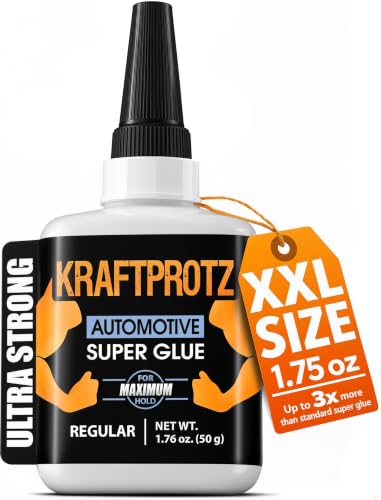
1. KRAFTPROTZ Automotive Super Glue
Our pick — over 4★ from 300+ verified ratings; the strongest balance of quality and price.
The watery super glue that wicks into hairline cracks and sets in 30 seconds.
If your repair is a crack in a headlight lens or a split in a dashboard panel, this is the bottle to grab. Its thin cyanoacrylate formula uses capillary action to pull itself into microcracks and tight gaps where a thick gel physically cannot reach, creating an invisible bond. Buyers report it is “as easy as put on, wait about 30 seconds then walk away,” and the fact that it dries clear matters when you are repairing something you have to look at every day.
This glue survives the rough life of a car interior. It bonds plastic, rubber, and metal, and resists engine vibration, oil, and temperature swings from -40°F to 230°F, so your repair stays put in extreme heat or cold. The precision dropper tip lets you control flow for clips and wire harness mounts, and the anti-clog cap keeps the nozzle from crusting over between projects. It reaches a full cure in just 4 hours — a full 20 hours faster than the 24-hour cure of the LIKFCBOND body adhesive below — so you can fix a crack in the morning and drive normally by lunch.
The 1.75 oz bottle is genuinely workshop-sized, giving you more glue per repair than standard automotive tubes, so it suits garages and fleet maintenance. Reviewers rave about its effectiveness, calling it “better than super glue.” One honest warning from the review pages: it is so clear that it is hard to see where it is, so do not accidentally glue your fingers together.
What Wins People Over
- Flows into tight cracks and micro-gaps where gel glue cannot reach
- Full cure in 4 hours — you are driving again the same day
- Withstands -40°F to 230°F, oil, and vibration
- Dries crisp for invisible repairs on visible parts
The Honest Trade-Off
- Too thin to fill gaps — it bonds, it does not bridge
- So clear it is hard to see where it has been applied
Reach for it when: you need a fast, invisible fix on a crack or split in a rigid plastic part like a lens, trim, or dash.
Look elsewhere for: filling a visible gap or bonding a heavy panel that needs a gap-filling, structural adhesive.
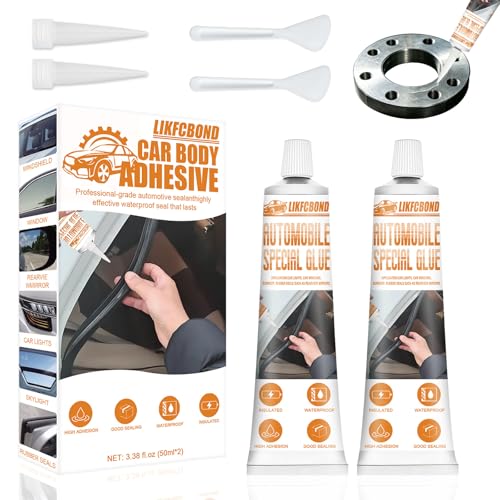
2. LIKFCBOND Automotive Adhesive Silicone Sealant
A weatherproof silicone that sticks trim back on and shrugs off the car wash.
When your truck’s plastic molding starts peeling away near the windows, this clear silicone sealant is the budget-friendly fix that actually survives outdoor life. It is weatherproof, waterproof, and temperature resistant, so it holds up through rain and washing where a basic craft glue would fail. The pointed nozzle gives you precision control and can also fill gaps, which makes it genuinely versatile for metal, plastic, vinyl, and weather stripping.
The chemistry here is different from the KRAFTPROTZ super glue above — silicone stays flexible, so it is the better choice when a part flexes or vibrates rather than sitting perfectly still. It starts to cure in just 5-10 minutes at room temperature, which means you can position the part before it locks in place. But the complete cure takes 24 hours, so plan to hold the repair with painter’s tape overnight. Owners mention that after taping a molding in place and removing the tape the next morning, “it held perfectly” — even through a car wash on exterior rubber cowls.
You get two 50 ml tubes in one pack, giving you a spare for the next repair. The thing everyone praises most is the adhesion, with owners noting it fixed rubber seals on four doors and a back latch. The recurring gripe is that it makes a mess — it is sticky and the residue lingers for days, so wear gloves and tape carefully while it cures.
Best for: reattaching weather stripping, molding, and rubber seals that need a flexible, waterproof bond that tolerates movement.
Think twice if: you want a glue that sets fast — this one needs a full 24 hours of taped clamping to reach maximum hold.
3. LIKFCBOND Car Glue Exterior Body Adhesive
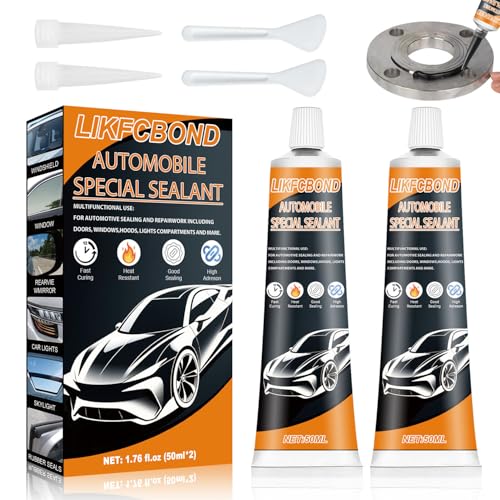
The black sealant that disappears into dark trim and holds panels through the weather.
This black formula is the pick for exterior repairs where a clear glue would stand out. The black sealant blends into dark automotive surfaces, giving a clean, professional finish on body panels, gaps, cracks, and loose trim. It is formulated for outdoor use, bonding metal, plastic, rubber, and vinyl while withstanding the elements.
The texture is noticeably different from the runny super glue at the top of this list — this is a thick, low-mess adhesive that stays where you put it. Customers note it bonds varied materials well and reattached car trim without a fight. The honest trade-off is speed: it is slow drying and only holds firmly after a week, so it is a patient person’s repair. As owners put it, it is “good for small repairs, not heavy parts.”
It comes in a generous 100ml tube, giving you plenty of material for multiple sealing jobs on the vehicle exterior. The full cure takes 24 hours, and the fast-drying, heat-resistant properties make it a solid all-rounder for anyone restoring a car’s body integrity. One practical note from the field: while it is wet it is water soluble, so you can clean skin with water before it cures — and use painter’s tape to hold the repair steady while it sets.
Why It Stands Out
- Black color matches dark trim for an invisible repair
- Thick formula stays put and fills gaps without running
- 100ml tube offers ample material for multiple repairs
What to Expect
- Takes a full week to hold firmly — not a quick fix
- Best for small repairs, not heavy structural parts
Grab this one if: you need a cosmetically clean, black-colored bond on exterior trim and panels that matches the car’s finish.
Skip it for: jobs that need to hold firm today — give this one days to develop its grip.
4. Tylove Seam Sealer Automotive
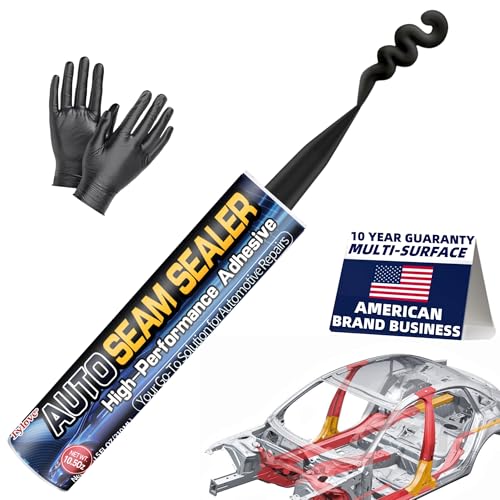
A body-shop-grade seam sealer that bridges rust holes and is ready for paint in half an hour.
This is the heavy hitter for body work. Unlike the glues above that stick parts together, the Tylove Seam Sealer is a fast-curing paste that fills seams, fender cracks, and rust areas on primed, painted, or bare metal. It is ready for paint in just 30 minutes with no sanding required, which makes it a standout for anyone doing actual auto body repair rather than a quick trim fix.
The all-weather formulation resists shrinking and cracking, holding up on cars, boats, trucks, and RVs. Reviewers point out it applies very easily, cleans up with water, and dries to a hard rubber texture that bonds really well to both plastic and metal. It fixed a water leak on a Honda Pilot seam and sealed fender cracks, all with a consistent tube flow that does not leak. The environmental angle is strong too — it is a low-VOC, solvent-free formula, so it is less harsh to work with than traditional seam sealers.
One thing to know: it takes about 24 hours to completely harden, and some owners find the cured result is hard as cement. It is also very tacky before it dries, so multiple glove layers are a good idea and cleanup after it cures needs mineral spirits. There is a split in opinion on adhesion and value, but the overwhelming consensus is that it delivers professional-grade results for body repairs.
Best for: sealing body seams, fender cracks, and metal-to-metal rust repairs where you plan to paint over the repair.
Not for: flexible trim or parts that move — it cures hard, not flexible.
5. VerdeVilla Headliner Repair Glue

The brush-on headliner fix that saves you from a costly full roof replacement.
If your car’s roof liner is sagging near the windshield, this kit brings it back without a trip to the upholstery shop. The integrated brush in the cap is the star feature — it lets you apply glue with control and accuracy, with no drips on your windshield, which owners specifically call out as the reason they prefer it over aerosol sprays. It bonds fabric, leather, plastic, rubber, and more, making it a true multi-surface interior adhesive.
The temperature resistance is extreme, handling -40°C to 120°C, so the bond stays flexible in freezing winters and does not melt in summer heat. It is also 100% waterproof, resisting rain, snow, and car washes without peeling. Shoppers say that after fixing a trashed headliner with minimal prep, it held for weeks and looked invisible. The formula is labeled non-toxic, VOC-free, and child and pet-friendly, which matters for an interior you breathe in daily.
The honest note is on application timing: initial curing takes 5-10 hours, and complete curing takes 12-24 hours. A buyer who applied a thin layer found it dried in a minute without getting sticky, so follow the instructions and press the fabric firmly for a clean result. What wins people over is the quality — the ease of use with the brush and the durability of the hold even when wet.
The Big Wins
- Built-in brush means zero mess compared to aerosol sprays
- Withstands -40°C to 120°C without melting or getting brittle
- 100% waterproof for a permanent sag fix
Application Notes
- Needs a firm press and 12-24 hours to fully cure
- Thin layers can dry quickly without tack — follow the instructions
Ideal for: sagging headliners, loose fabric, and interior trim that needs a clean, controlled brush application.
Not ideal for: metal-to-metal structural bonding or instant-setting repairs.
6. 3M Plastic and Emblem Adhesive

The name-brand favorite for emblems and trim that sets in 15 minutes and laughs at the elements.
When a Ford emblem falls off or side moldings start to peel at the ends, 3M is the brand owners trust first. This adhesive bonds fully cured automotive paints and plastic for both interior and exterior use, with strong adhesion that resists water and heat. It is quick-acting, setting in about 15 minutes and fully curing in 24 hours — practical for a repair you want to trust immediately.
The dries-clear formula makes it a go-to for transparent or translucent plastics, and the permanent bond it creates means you press it on once and forget it. Buyers report replacing emblems on a 2013 Ford Edge and reattaching truck side moldings, with one noting that three weeks after taping the trim back in place, it was still tight. The thing everyone praises most is its simple strength — it is very sticky and holds very strongly, and it is great for trim around tail lights.
The 5 oz tube is a solid size for several repairs, and the 24-hour full cure gives you time to align the part perfectly before it locks. This sits above the budget-friendly LIKFCBOND options in price, but for a visible emblem or trim that needs to stay put through years of weather, the reliability is worth it. It is a straight liquid adhesive, so it is not the choice for gap-filling — but for surface-to-surface bonding of nameplates and moldings, it is tough to top.
Why It Earns the Price
- Trusted 3M adhesive proven on emblems and body moldings
- Sets in 15 minutes, so parts stay put while you work
- Dries clear for bonding translucent plastics invisibly
The Catch
- Not a gap filler — surfaces need to mate closely
- Premium price for a 5 oz tube
Pick this when: you need a permanent, weather-resistant bond for emblems, badges, and trim that must not come loose again.
Pass if: you are filling a crack or gap rather than bonding two flat surfaces together.
7. Maxi-Bond Panel Bonding Adhesive MB-835
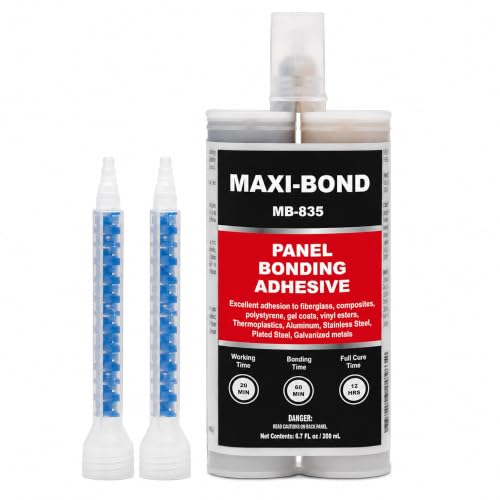
The structural two-part epoxy for body panels that needs a dispenser gun and delivers factory-grade strength.
This is the serious stuff for collision repair and fabrication. The Maxi-Bond MB-835 is a two-part epoxy that provides OEM-quality structural bonds for automotive panels and composite assemblies. The non-sag formula stays stable on vertical and contoured surfaces without dripping, which is critical when you are bonding a patch panel to a door or fender. It bonds steel, aluminum, fiberglass, plastic, and composite materials.
The complete kit includes a 200 mL dual cartridge and static mixing nozzles for smooth, air-free dispensing, though you will need a dispenser gun to push it through. Buyers call it “top of the line,” noting it gets rock solid and is perfect for welding in patch panels on classic trucks. One owner bonded fiberglass fender flares with excellent durability, while another reports it is still holding after years of use. It is a key ingredient for rust repair on body panels where strength is non-negotiable.
The realistic trade-off is the learning curve and the 24-hour cure. A dispenser gun is required — not included — and matching the correct working-time version matters for your project. There is one report of a batch failing to cure, though the seller resolved it directly. The adhesive quality, curing behavior, and bonding strength are the three things owners praise most, making this the choice when a repair must hold like factory work.
Best for: structural panel bonding, patch panels, fiberglass flares, and heavy repairs on classic cars and trucks.
Only for: users with a dispenser gun and the patience for a 24-hour full cure.
Understanding the Specs
Cure Time vs. Set Time
Cure time is how long until the bond reaches full strength, and it is the number that determines your workflow. A glue that sets in 30 seconds, like the KRAFTPROTZ, lets you walk away immediately, while a 24-hour cure like the LIKFCBOND sealants means taping and waiting overnight. Check this before you start — a quick-set glue is a lifesaver for clips and trim, but a slow cure is better when you need time to position a large panel perfectly.
Cyanoacrylate vs. Epoxy vs. Sealant
These are three different toolkits. Cyanoacrylate (super glue) is thin and wicks into cracks for invisible, instant bonds on rigid parts. Two-part epoxy, like the Maxi-Bond, is thick and structural, filling gaps and carrying real load on panels. Silicone and resin sealants stay flexible and are best for trim and seams that need weatherproofing rather than sheer strength. Matching the chemistry to the job is the difference between a permanent fix and a re-repair.
FAQ
What is the difference between super glue and epoxy for car plastic?
How long should I wait before driving after gluing car trim?
Can I use automotive plastic glue on a cracked headlight to keep water out?
Will these glues hold up under the hood in engine heat?
What is the difference between a seam sealer and a plastic adhesive?
Can I repair a sagging car headliner myself with glue?
Is 3M emblem adhesive better than using double-sided tape?
What tools do I need to apply two-part epoxy for body panels?
Final Thoughts: The Verdict
For most buyers, the automotive plastic glue winner is the KRAFTPROTZ Super Glue because it tackles the most common repair — a crack in a lens or dash — with a fast 4-hour cure and an invisible clear bond. If your trim is peeling and needs a flexible, waterproof hold, grab the LIKFCBOND Silicone Sealant and tape it overnight. And for structural panels that need real strength, the Maxi-Bond MB-835 is the one to reach for. Whichever job you are facing, matching the formula’s cure time and flexibility to the part’s location is the single smartest decision you can make.
How We Picked
We do not accept paid placement. Every pick is matched to a real buyer and a real use-case; we do not hands-on test units.
Sources & Methodology
Specifications: manufacturer listings and product documentation. Review insights: verified customer reviews, as of August 2026. Pricing: not shown on this page (it changes often); check the current price via the retailer link.
As an Amazon Associate, Gadgets Feed earns from qualifying purchases. This does not affect which products we feature.