
The single biggest mistake in any automotive refinish job happens before the color even touches the panel. Using the wrong primer, or no primer at all, guarantees peeling, rust creep, and a finish that looks wrong before it fails. The right automotive primer spray paint does more than cover bare metal — it etches, bonds, fills, seals, and creates a chemically compatible foundation for your topcoat. This guide breaks down the most effective formulations on the shelf, from high-heat engine prep to flexible bumper adhesion to industrial-strength rust conversion.
I’m Min — the co-founder and writer behind Gadgets Feed. I’ve studied dozens of aerosol primer formulations, analyzed technical data sheets, and cross-referenced hundreds of real-world application reports to identify which cans deliver professional-grade results without requiring a spray booth.
Whether you are restoring a classic car, repairing a plastic bumper, or sealing a rusty truck frame, finding the right best automotive primer spray paint determines whether your paint job lasts months or years.
How To Choose The Best Automotive Primer Spray Paint
Automotive primer is not one-size-fits-all. The substrate you are covering — bare steel, aluminum, plastic, fiberglass, or previously painted metal — dictates the chemical formulation you need. Using a standard filler primer over bare aluminum will peel, just as using a plastic-only bonding primer on a steel door will fail to etch. The three primary categories are etching primers (phosphoric acid-based for bare metal adhesion), epoxy primers (two-component systems for maximum corrosion resistance and a smooth sealer coat), and filler primers (high-build formulas that sand flat and hide minor surface imperfections). Choosing correctly means knowing what is underneath the primer.
Substrate Matching: Steel, Aluminum, Plastic, and Rust
Bare steel and cast iron benefit from an etching primer or a 2K epoxy system that chemically bonds to the metal surface. Aluminum requires a dedicated acid-etch primer because standard primers do not adhere to its oxide layer. Plastic bumpers and trim need a flexible primer surfacer that moves with the substrate without cracking, and adhesion promoter may be required on bare polypropylene. For surfaces with existing rust that you cannot fully grind away, a rust converter primer that chemically neutralizes iron oxide into a stable black layer is the correct choice — standard primers over rust will trap moisture and accelerate the problem.
Dry Time, Re-Coat Windows, and Sanding Behavior
The dry time listed on the can should not be confused with the recoat window. Many primers dry to the touch in 30-60 minutes but require a full overnight cure before sanding or topcoating. Fast-drying filler primers allow same-day sanding, which is critical for production work. The sandability itself matters: a good primer should sand to a smooth, even dust without gumming up the paper. High-build primers that fill deep scratches and pinholes in one coat reduce labor, but they require more drying time between coats. Check whether the primer specifies wet-sanding or dry-sanding before your topcoat application.
Quick Comparison
On smaller screens, swipe sideways to see the full table.
| Model | Category | Best For | Key Spec | Amazon |
|---|---|---|---|---|
| SprayMax 2K Epoxy Primer | Premium | Maximum corrosion protection & sealing | 2K epoxy, dust-dry in 15 min | Amazon |
| SEM 39133 Flexible Primer Surfacer | Premium | Plastic bumpers & flexible parts | Flexible formulation, easy to sand | Amazon |
| Raptor Acid Etch Primer 1K Aerosol | Premium | Bare aluminum & galvanized steel | Phosphoric acid ester formula | Amazon |
| Meuvcol 2 in 1 Rust Converter | Mid-Range | Rust conversion on frames & chassis | 35 oz, brush-on rust encapsulator | Amazon |
| Seymour 20-1674 PBE Professional Primer | Mid-Range | Filling deep scratches on metal | High-build filler, heat resistant to 250°F | Amazon |
| Rust-Oleum Universal Bonding Primer | Value | Multi-surface bonding (plastic, fiberglass) | Bonds to difficult surfaces, 30-min dry | Amazon |
| VHT Engine Enamel Primer | Budget | High-heat engine & exhaust parts | Heat resistant, urethane/ceramic blend | Amazon |
In‑Depth Reviews
1. SprayMax 2K Epoxy Primer Black
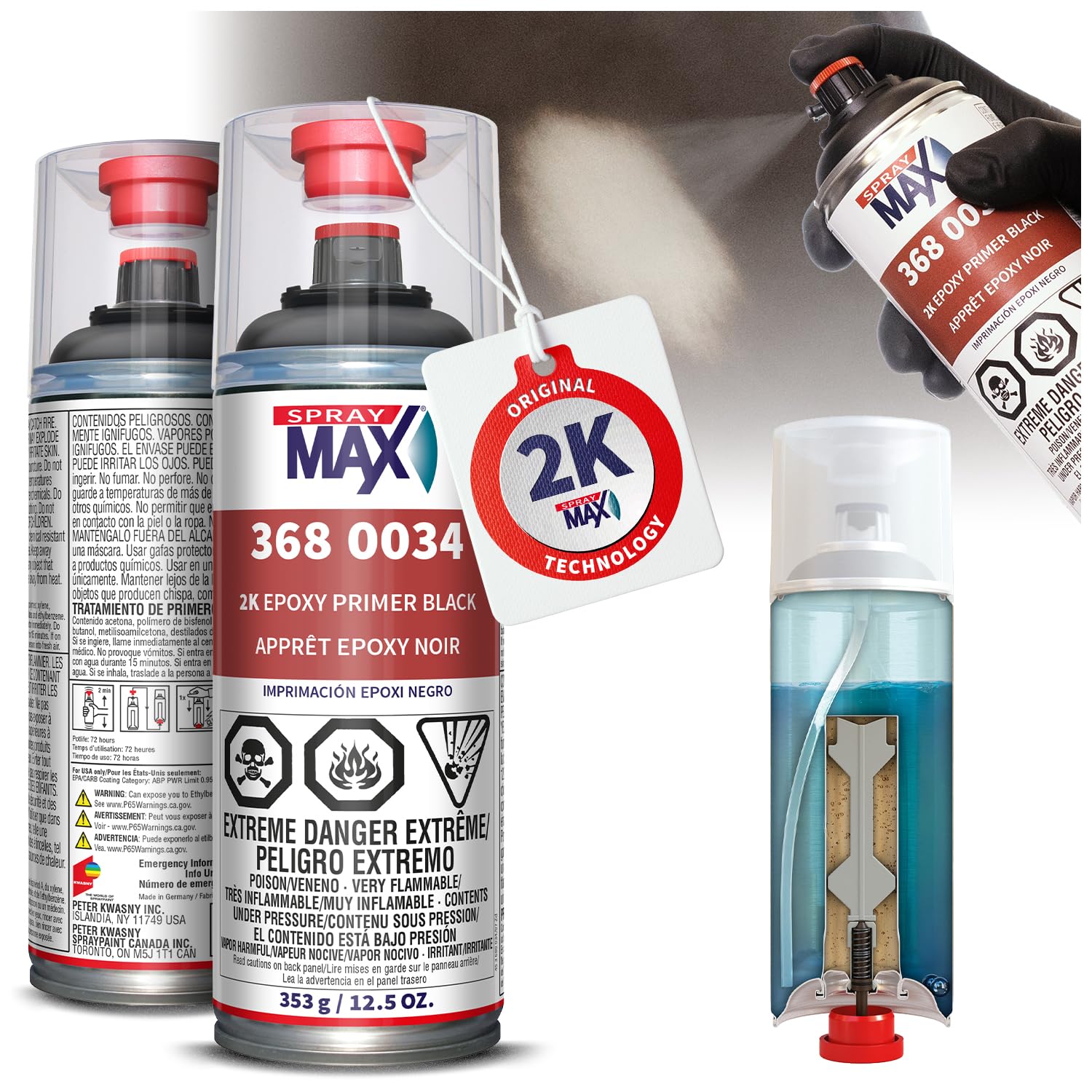
The SprayMax 2K Epoxy Primer represents the professional-grade standard in a rattle can. Its two-component epoxy chemistry delivers a hard, chemical-resistant film that seals bare steel, aluminum, and galvanized metal from moisture and corrosion. The aerosol system activates the hardener internally, giving you a true 2K result without a gun or compressor. It dries dust-free in just 15 minutes, which drastically speeds up panel prep for color application.
This primer sprays smoothly through an adjustable fan nozzle and sands easily to a flat surface within hours. Real-world users report exceptional adhesion on motorcycle tanks, truck bed coatings, and fiberglass repair panels, with no topcoat adhesion failure even after two years of exposure. The black color also serves as an excellent sealer coat under dark topcoats, reducing the number of color coats needed.
The main trade-off is coverage — one can covers roughly a door and rocker panel, so larger projects like a full hood and two fenders require two cans. The 2K mixture also has a finite pot life once activated, so you must use the entire can in one session. For bare metal restoration where long-term rust prevention is the goal, this is the most bulletproof aerosol primer available.
Why it’s great
- True 2K epoxy adhesion and corrosion resistance from an aerosol
- Dust-dry in 15 minutes, sandable within hours
- Excellent chemical and moisture barrier for bare metal
Good to know
- One can has limited coverage for large panels
- Must use entire can once activated
2. SEM 39133 Flexible Primer Surfacer

SEM 39133 is the go-to primer for anyone refinishing flexible automotive plastics, particularly bumpers and trim. Unlike rigid primers that crack when the substrate flexes, this formulation stays flexible and moves with the panel without delaminating. It is ready to spray straight from the can, dries quickly, and sands with minimal effort — body shop professionals have relied on this specific SKU for decades.
Users consistently report that it fills minor bumper imperfections and scratches in a single coat, laying down a smooth, uniform base for topcoat. The light gray color provides good contrast for guide-coat sanding. When paired with SEM’s adhesion promoter on bare plastic, the bond is robust enough to survive daily driving, washing, and temperature swings without peeling.
The aerosol nozzle on this can is a common weak point — some users report sputtering and an uneven fan pattern that requires frequent cleaning. A light wet sand with 800 grit after the primer cures solves the texture issue, but it is an extra step you would not expect at this price point. For dedicated plastic repair where flexibility is non-negotiable, SEM 39133 remains the industry standard.
Why it’s great
- Flexible formulation prevents cracking on bumpers and trim
- Fills minor imperfections in one coat
- Dries quickly and sands easily for fast workflow
Good to know
- Nozzle can sputter and requires cleaning during use
- Best results need light wet sanding after curing
3. Raptor Acid Etch Primer 1K Aerosol

The Raptor Acid Etch Primer is specifically engineered for bare metal substrates where standard primers fail — namely aluminum, galvanized steel, and smooth alloy panels. Its phosphoric acid ester formula chemically etches the surface to create a micro-profile that mechanical adhesion alone cannot achieve. This makes it a one-step solution for priming bare metal without requiring a separate etching step, saving significant labor on restorations and panel replacements.
The high-atomization fan nozzle delivers broad, even coverage that lays down quickly. No sanding is required before topcoating with most paint systems, though many professionals still opt for a light scuff.
This is not a filler primer — it will not hide deep scratches or surface imperfections. Its job is purely chemical bonding and corrosion prevention. For panels that already have body filler or existing paint, this is the wrong tool. Use it exclusively on bare, clean metal where adhesion is the primary concern, and it will outperform any general-purpose primer on the market.
Why it’s great
- Chemically etches aluminum and galvanized steel for superior adhesion
- One-step priming reduces labor on bare metal work
- Can be directly topcoated without sanding
Good to know
- Does not fill scratches or surface imperfections
- Not suitable over painted surfaces or body filler
4. Meuvcol 2 in 1 Rust Converter & Metal Primer
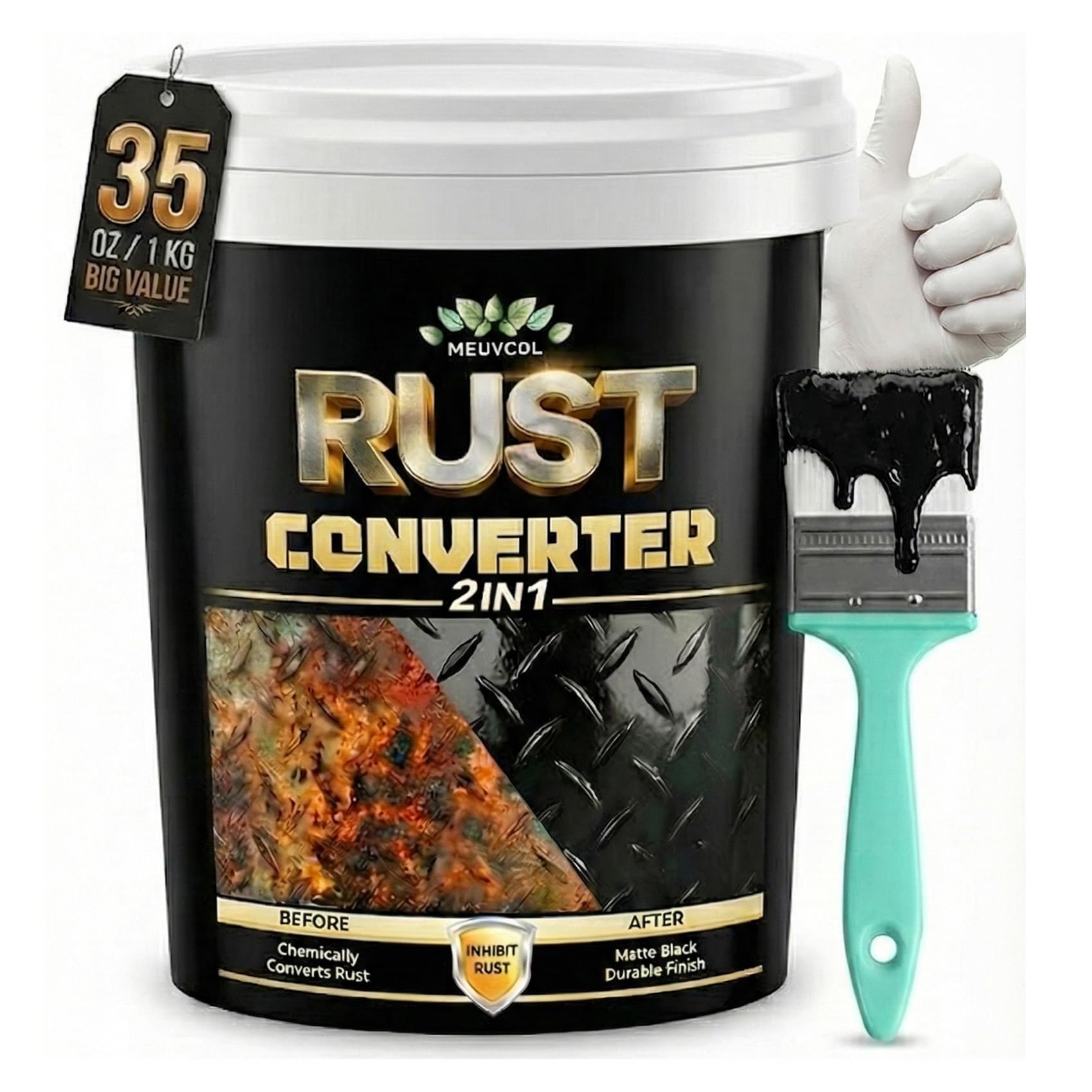
The Meuvcol Rust Converter takes a fundamentally different approach to priming: instead of covering rust, it chemically converts iron oxide into a stable black layer that blocks further corrosion. This is a brush-on liquid, not a spray, which makes it ideal for truck frames, trailer undersides, and chassis rails where aerosol coverage would be wasteful or impractical. The 35-ounce can includes a brush and gloves, making it a complete solution out of the box.
The formula dries to a hard, matte black finish that is paint-ready within 24 hours. Users report that it seals rusted RV underbellies and wet bays effectively, transforming ugly corrosion into a sleek protective coating. The application is forgiving — you can brush it on thick or thin, and it self-levels reasonably well. The chemical reaction stops active rust and prevents new bloom from forming underneath the film.
This is not a traditional primer for aesthetic bodywork — it creates a rough, textured black surface suited for areas that will be hidden or topcoated with a chassis paint. The strong solvent odor requires ventilation, and the manufacturer recommends two thin coats rather than one thick coat for best results. For frame-off restorations or undercarriage sealing, this delivers the best rust-stopping performance per dollar.
Why it’s great
- Chemically converts rust into a stable, paintable black layer
- Large 35 oz container with brush and gloves included
- Excellent for frames, trailers, and chassis rust treatment
Good to know
- Brush-on application, not spray — slower for large flat panels
- Strong odor requires good ventilation during application
5. Seymour 20-1674 PBE Professional Primer, Gray Filler
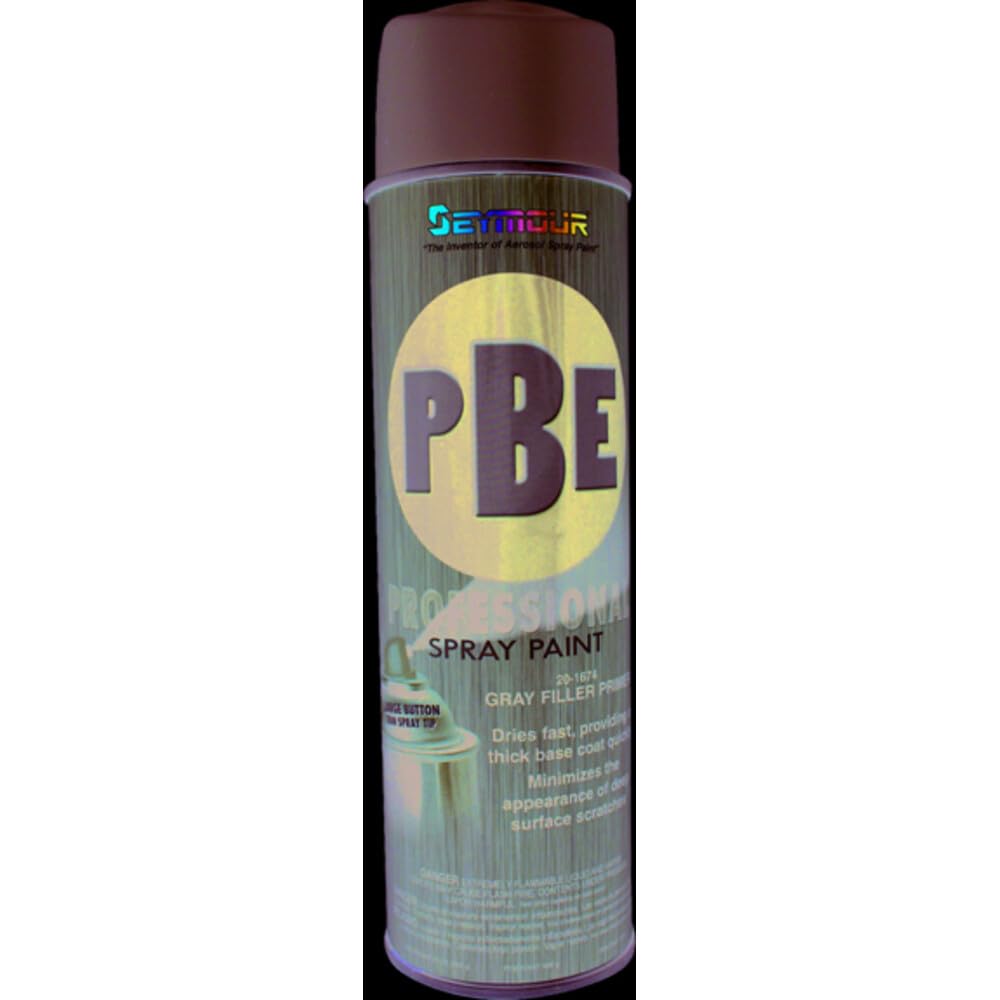
The Seymour PBE Professional Primer is formulated for body shop use, specifically to minimize the appearance of deep surface scratches on metal before the topcoat goes on. Its high-build composition allows you to fill low spots, pinholes, and fine sanding scratches in one coat, reducing the number of cycles between primer and sanding. The fan spray pattern covers wide panels efficiently, though it can make precise small-area application tricky.
This primer dries exceptionally fast — users report sandable results within 15-30 minutes under normal conditions. The cured film sands smoothly without gumming the paper, producing a fine dust that makes guide-coat sanding straightforward. It is also heat resistant up to 250°F, making it suitable for engine bays and other underhood areas where standard primers might soften.
The primary complaint is the fan-only spray pattern — if you need to spot-prime a small repair, the wide spray wastes product on surrounding areas. Some users report that the primer lays down heavy and may require wet sanding to achieve a perfectly flat surface before metallic or clearcoat finishes. For full-panel repaints and restoration projects where filling scratches is the goal, this is the most effective high-build aerosol available.
Why it’s great
- High-build formula fills deep scratches and pinholes in one coat
- Extremely fast drying for same-day sanding
- Heat resistant to 250°F for engine compartment use
Good to know
- Fan-only spray pattern wastes product on small repairs
- May need wet sanding for perfectly flat surface
6. Rust-Oleum 286793 Automotive Universal Bonding Primer

Rust-Oleum’s Universal Bonding Primer is designed to handle exactly those surfaces that give regular primer fits: plastic bumpers, fiberglass panels, galvanized steel, aluminum trim, and even chrome deletes. The professional-grade formula creates a chemical bond with difficult substrates without needing a separate adhesion promoter. It dries to the touch in 30 minutes and covers 10-12 square feet per can, making it a practical choice for smaller projects.
Users consistently report that it cuts down sanding time significantly, filling minor defects while still laying down a smooth base. The flat white finish provides excellent contrast for paint coats, and the spray pattern is manageable without excessive overspray. It works exceptionally well for chrome-delete projects where you need the primer to grab onto smooth chrome or plastic trim.
The finish can occasionally come out slightly textured even with good technique — a light sand with 400-grit paper is recommended before color. It is formulated for indoor use, so large outdoor panels in windy conditions may be challenging. For DIY enthusiasts working on mixed-material projects who want a single primer that handles everything from plastic to metal, this is the most versatile option in its class.
Why it’s great
- Bonds to difficult surfaces without separate adhesion promoter
- Fills minor defects and reduces sanding time
- Works on plastic, fiberglass, aluminum, and chrome
Good to know
- May leave a textured finish requiring light sanding
- Formulated for indoor use, limited outdoor performance
7. VHT Lt Gray Engine Enamel Primer

VHT Engine Enamel Primer is purpose-built for high-heat environments: engine blocks, valve covers, headers, transmissions, and exhaust components. The blend of urethane and ceramic resins creates a film that withstands corrosion from hot engine chemicals, salt spray, and degreasers that would break down standard primers. It dries to the touch in one hour and achieves full chemical resistance after an overnight cure.
Real-world users have put this primer through extreme tests — restoring beat-up motorcycle wheels with 100k miles, painting corroded aluminum motorcycle engines, and coating Harley transmissions. The consensus is that it sprays smoothly with excellent coverage per can, and the finish remains intact after thousands of miles of heat cycling. It is also available in 31 color options plus clear, making color matching straightforward for OEM restorations.
This primer is not designed for body panel work or flexible plastic parts. Its film is hard and somewhat brittle when fully cured, which is ideal for engine components but wrong for bumpers. The light gray color also requires multiple coats for full hiding on dark surfaces. For dedicated high-heat applications where standard primers would burn off or soften, VHT delivers proven reliability at the lowest cost per can.
Why it’s great
- Heat and chemical resistant for engine and exhaust parts
- Sprays smoothly with excellent coverage
- Proven durability over thousands of heat cycles
Good to know
- Not suitable for body panels or flexible plastic parts
- Light gray color needs multiple coats on dark surfaces
FAQ
Can I use high-heat engine primer on body panels?
Do I need to sand before applying automotive primer spray paint?
How long should I wait before painting over automotive primer?
Final Thoughts: The Verdict
For most users, the best automotive primer spray paint winner is the SprayMax 2K Epoxy Primer because its two-component chemistry provides professional-grade corrosion resistance and adhesion on bare metal that single-component primers cannot match. If you are working on flexible plastic bumpers and trim, grab the SEM 39133 Flexible Primer Surfacer for its crack-proof flexibility. And for treating rusted frames and chassis components, nothing beats the Meuvcol 2 in 1 Rust Converter for chemically stopping corrosion before it spreads.