
The difference between a showroom-ready panel and a muddy, uneven surface often comes down to the tool in your hand. An automotive sander that delivers consistent orbital motion, variable speed control, and efficient dust extraction transforms a tedious chore into precise bodywork, saving hours of hand-sanding labor.
I’m Min — the co-founder and writer behind Gadgets Feed. I’ve spent years analyzing the technical specs and real-world performance of pneumatic and electric sanders, separating marketing claims from the metrics that actually matter for collision repair, paint prep, and metal finishing.
After digging through dozens of models, I’ve narrowed the field to the seven best performers that offer the right balance of pad control, speed range, and build durability. This guide breaks down the best automotive sander options for every workshop budget and application.
How To Choose The Best Automotive Sander
Not all dual-action sanders handle body filler, paint, and bare metal the same way. The right choice depends on your compressor capacity, the type of finish you need, and how much vibration you can tolerate over a long shift.
Pneumatic vs. Electric Power
Pneumatic models rely on a compressor and deliver consistent, stall-resistant torque at high RPMs, ideal for continuous production work. Electric sanders offer cordless convenience and variable speed triggers, making them perfect for quick repairs or mobile detailing without a bulky air setup.
Pad Size and Orbit Diameter
A 6-inch pad covers large flat panels quickly, while a 5-inch pad maneuvers into tighter door jambs and curves. The orbit diameter — typically 3/16-inch for fast cutting or 15mm for a finer finish — directly affects whether you can feather edges or aggressively level filler.
Dust Collection and Paper Compatibility
Look for sanders with rear exhaust or integrated dust ports to keep the workspace visible. Decide between hook-and-loop backing for quick paper changes or adhesive-backed discs for aggressive cutting without slipping, as each system changes your consumable costs and workflow speed.
Quick Comparison
On smaller screens, swipe sideways to see the full table.
| Model | Category | Best For | Key Spec | Amazon |
|---|---|---|---|---|
| POWER AERO NOVIA | Pneumatic | Budget bodywork | 10,000 RPM / 3/16″ orbit | Amazon |
| Gedu Pneumatic Sander | Pneumatic | Low-vibration DA | 12,000 RPM / 6″ pad | Amazon |
| Ingersoll Rand 311A | Pneumatic | Medium production | 12,000 RPM / 0.25 hp | Amazon |
| IR 315G Straight Line | Pneumatic | Flat surface smoothing | 3,000 SPM / 17.5″ paper | Amazon |
| Milwaukee M12 Detail | Electric | Compact cordless | 1.3 lbs / 1.5mm orbit | Amazon |
| Chemical Guys Torq 15DA | Electric | Paint correction | 15mm long throw | Amazon |
| Festool ETS 125 REQ | Electric | Ultra-fine finish | 5″ pad / Jetstream dust | Amazon |
In‑Depth Reviews
1. Ingersoll Rand 311A Dual-Action Air Sander
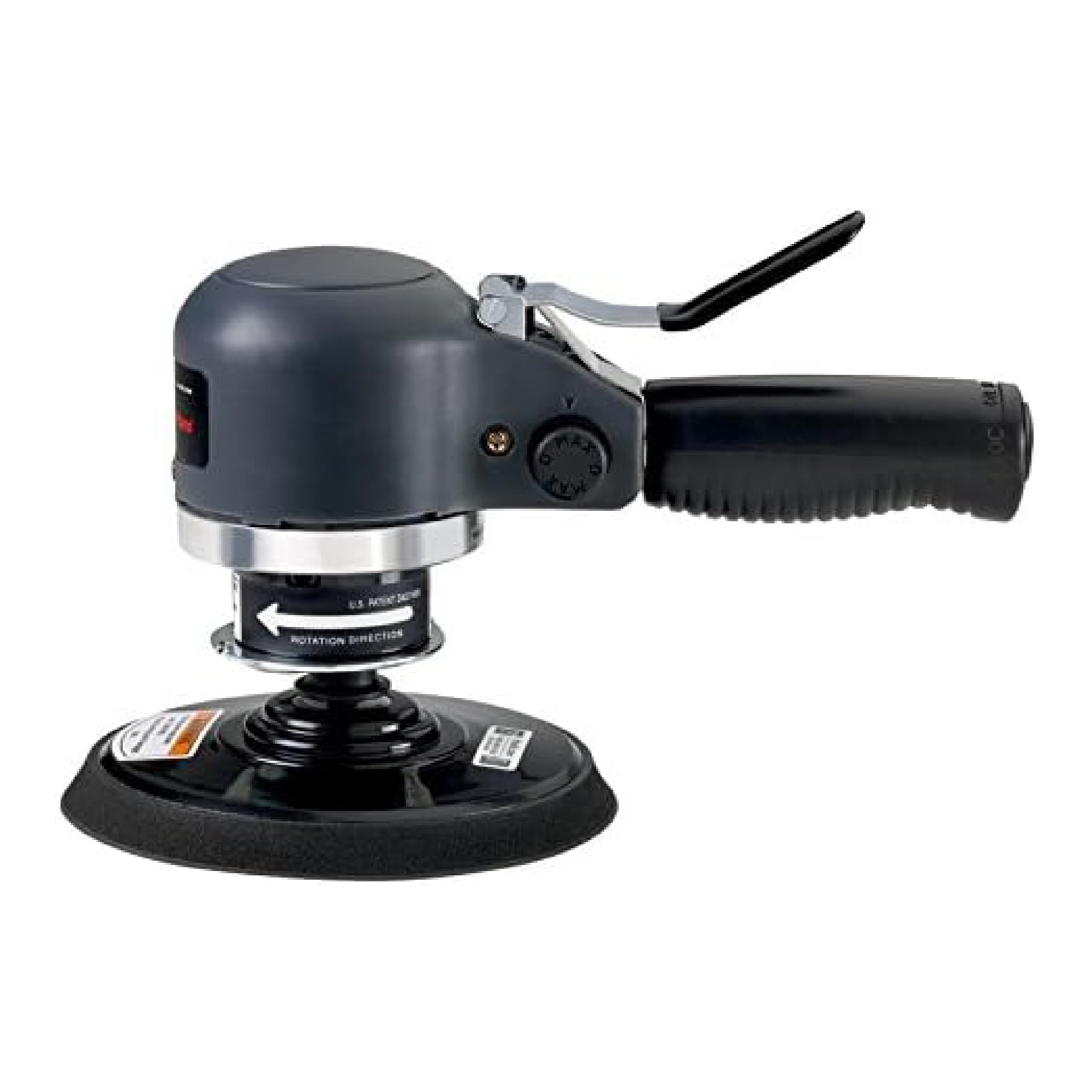
The Ingersoll Rand 311A delivers a proven 0.25 hp motor that maintains 12,000 RPM under load, making it a workhorse for feather edging, metal prep, and filler sanding. Its built-in silencer keeps noise manageable, and the balanced ball-bearing construction significantly cuts vibration compared to budget alternatives.
The 6-inch adhesive pad is optimized for PSA sandpaper, ensuring zero slipping during aggressive cutting. The side exhaust directs air away from the workpiece, keeping the surface visible. Many users pair this with an 80/60 gallon compressor to run it continuously without pressure drop.
The plastic air regulator can be a weak point after extended daily use, but replacement parts are readily available. If your shop already has a high-volume air system, this is a balanced choice that delivers professional results without the premium price tag of high-end German models.
Why it’s great
- Consistent power at 12,000 RPM for heavy sanding
- Low vibration and built-in silencer reduce fatigue
- Proven brand with readily available replacement parts
Good to know
- Consumes 17 CFM, requires a large compressor
- Plastic regulator may need replacement after heavy use
2. Festool ETS 125 REQ-Plus Random Orbital Sander

The Festool ETS 125 REQ-Plus is a precision sander built for flawless finishes. Its stepless variable speed motor lets you dial in exactly the right oscillation for paint prep or veneer sanding, while the Jetstream dust extraction system captures nearly all debris — especially when paired with a Festool CT HEPA vac.
Weighing less than many competitors, the ergonomic body and VS (vibration stop) design deliver remarkably low vibration, allowing extended overhead or vertical work without hand fatigue. The 5-inch StickFix pad accommodates a wide range of Festool abrasives, and the Systainer case keeps everything organized.
The 125 mm orbit diameter is conservative, meaning this sander prioritizes smoothness over aggressive material removal. It is not the tool for fast stripping. For body shops and woodworkers who demand the best finish and nearly dust-free operation, this is the ultimate investment.
Why it’s great
- Exceptional dust collection keeps the work area clean
- Very low vibration for comfortable long sessions
- Precise variable speed for delicate finishing
Good to know
- High entry price compared to pneumatic alternatives
- Focused on finishing, not fast material removal
3. Chemical Guys BUF505 Torq 15DA Long-Throw Polisher

The Torq 15DA features a 15mm long-throw orbit that covers more surface per pass than standard DA polishers, significantly reducing correction time on clear coat and oxidized paint. The 650-2500 RPM variable speed dial gives you fine control for applying compounds, polishes, and waxes without burning through the paint.
Its ergonomic design and low vibration profile make it comfortable for full-car details. The forced rotation design keeps the pad spinning under pressure, preventing the stall that cheaper random-orbit machines experience on curved panels. This is a dedicated car polishing tool, not a heavy-duty material remover.
The 5-speed selection is limited compared to stepless competitors, and the non-standard backing plate restricts pad choices to 5-inch or 6-inch. The digital RPM readout is more gimmick than necessity. For paint correction enthusiasts, this is a powerful, reliable polisher that delivers showroom results.
Why it’s great
- 15mm long throw covers panels quickly
- Variable speed from 650 to 2500 RPM
- Low vibration design for extended use
Good to know
- Limited to 5 preset speeds
- Backing plate limits pad size compatibility
4. Ingersoll Rand 315G Straight Line Air Sander
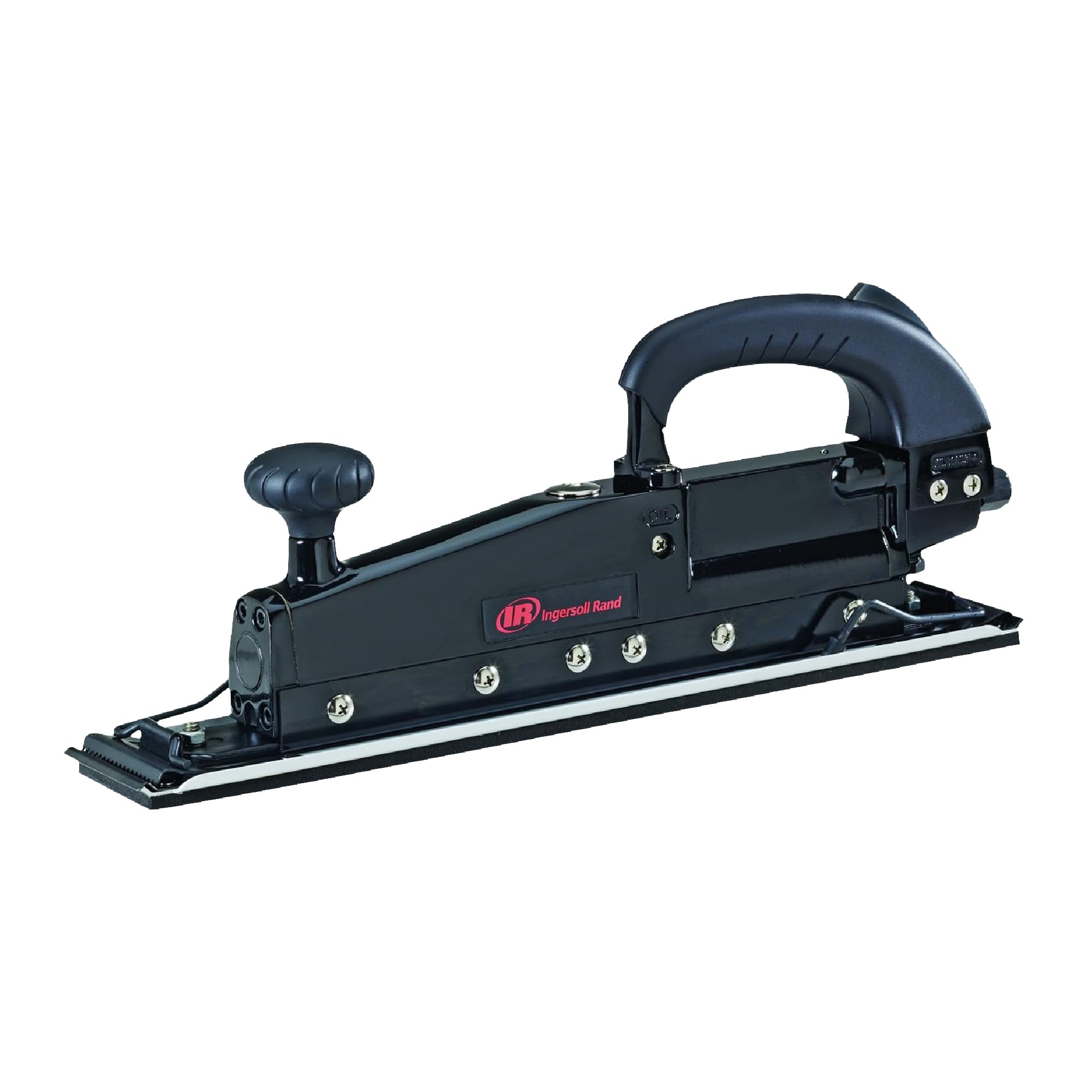
The 315G’s straight-line action is ideal for shaping and leveling large flat surfaces like hoods, roofs, and boat hulls. Its twin-piston design delivers 3,000 strokes per minute with extra power reserve to prevent stalling under load, making quick work of body filler and epoxy fairing compound.
The 2.75-inch by 15-inch pad uses fast-action paper clamps that accept 17.5-inch-long paper. The ergonomic grip and low-vibration body make it comfortable for extended use. Many users report cutting hours of hand-sanding time down to minutes on large panels.
One limitation is the lack of a PSA backing pad, so you must use the clamp system with longer paper or cut your own from rolls. It also requires a compressor with sufficient CFM output. For straight-line scratches and flat surface smoothing, this sander is unmatched in its class.
Why it’s great
- Straight-line action for flat surfaces
- Powerful twin-piston motor resists stalling
- Fast-action paper clamps for quick changes
Good to know
- Limited to straight-line sanding, no orbital action
- Requires 17.5-inch paper sheets or rolls
5. Milwaukee M12 Fuel Orbital Detail Sander

At just 1.3 pounds, the M12 Fuel Detail Sander is built for one-handed use in tight spaces like door jambs, mouldings, and ladders. Its four-speed trigger gives you variable control, and the integrated LED light illuminates the work area without shadows. The 1.5mm orbit diameter makes it safe for delicate finishes.
The M12 battery platform means this tool shares power with dozens of other Milwaukee tools. Users praise it for refinishing old doors, reaching into detailed woodwork, and sanding furniture where a full-size DA would be too bulky. The hook-and-loop pad allows custom-cut sandpaper for unusual shapes.
It is not designed for aggressive stripping or large panels. The small pad size and conservative orbit mean material removal is slow on large surfaces. For a mobile detailer or woodworker needing extreme portability and fine control, this is the go-to tool.
Why it’s great
- Ultra-light at 1.3 lbs for fatigue-free use
- Compact size reaches tight spots
- Four-speed trigger and LED light
Good to know
- Small orbit not for heavy material removal
- Requires M12 battery and charger
6. Gedu Professional Air Random Orbital Palm Sander

The Gedu sander delivers 12,000 RPM from a lightweight, low-vibration housing that competes with premium brands at a much lower entry point. The enhanced heat treatment cast steel cylinder and low center of gravity design keep it stable and comfortable during extended vertical or overhead sanding.
Several users report replacing 300-dollar industrial sanders with this model, noting its efficient air use and consistent performance over 15-hour weeks on paint, bondo, and fiberglass. The 6-inch pad is perfectly balanced for swirl-free finishes when paired with medium-grit discs.
The main caveat is compatibility: this sander uses an adhesive-backed (sticky) pad, not hook-and-loop. While this provides a stronger grip during aggressive sanding, it limits your paper options. The pressure switch placement also takes some getting used to. For budget-conscious shops, this is a standout performer.
Why it’s great
- Matches performance of sanders costing three times as much
- Low vibration and lightweight for comfortable use
- Efficient air consumption for a pneumatic model
Good to know
- Uses adhesive-backed pads, not hook-and-loop
- Pressure switch position is not ideal for all users
7. POWER AERO NOVIA Pneumatic Random Orbit Sander
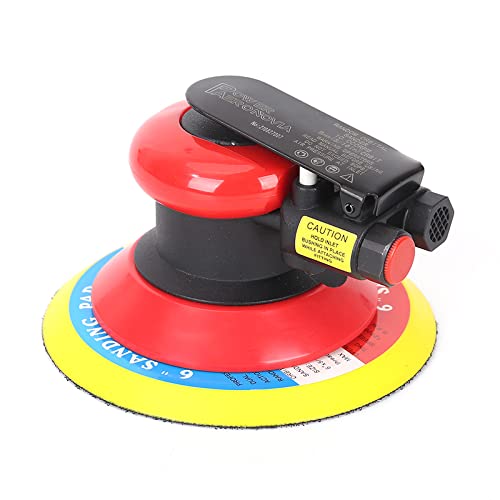
The POWER AERO NOVIA is built around a nodular cast iron cylinder and powder metallurgy rotor, delivering durability that surprises at its entry-level cost. The 10,000 RPM orbital motion with a 3/16-inch throw provides strong cutting action for body fillers, polyester, and vinyl, though it struggles with harder composites like fiberglass.
At under 2 pounds, the compact design allows single-hand operation, and the rear exhaust keeps debris away from the workpiece. Users in auto collision classes report it withstands heavy daily use and matches the performance of much pricier sanders, with slightly higher vibration as the only trade-off.
The 6-inch hook-and-loop pad makes paper changes quick, and the included wrench and quick connector get you started immediately. This is the ideal entry-level DA for students, hobbyists, or anyone needing a reliable pneumatic sander for general bodywork without a premium investment.
Why it’s great
- Excellent durability for the price point
- Lightweight and easy to handle with one hand
- Hook-and-loop pad for quick disc changes
Good to know
- Lacks cutting power for fiberglass and hard composites
- Slightly more vibration than premium models
FAQ
Can I use a 6-inch sander on 5-inch backing plates?
What CFM compressor do I need for a pneumatic DA sander?
Is a long-throw orbital better for paint correction?
Final Thoughts: The Verdict
For most users, the best automotive sander winner is the Ingersoll Rand 311A because it combines proven industrial durability with a balanced feature set and accessible maintenance. If you demand the finest finish and near-zero dust, grab the Festool ETS 125 REQ. And for precision cordless work in tight spaces, nothing beats the Milwaukee M12 Fuel Detail Sander.