
A rearview mirror dangling by a wire or a side mirror hanging loose after a car wash isn’t just an annoyance—it’s a safety hazard. The bond between your glass and the adhesive mount is the only thing keeping your view of the road intact, and when standard glues fail under extreme heat or vibration, you’re left with a frustrating repair. The right silicone-based formulation is engineered specifically to handle the thermal expansion of automotive glass and the constant shaking of daily driving, delivering a hold that outlasts the car itself.
I’m Min — the co-founder and writer behind Gadgets Feed. I’ve spent countless hours cross-referencing manufacturer data sheets, pull-strength tests, and real-world owner feedback to isolate the formulations that genuinely hold up on glass and painted metal surfaces inside a vehicle.
After reviewing cure times, temperature tolerances, and bond durability across dozens of cartridges, these are the formulations that earn a spot on any serious DIYer’s shelf. This guide breaks down the best automotive silicone mirror adhesive for a permanent, weatherproof fix.
How To Choose The Best Automotive Silicone Mirror Adhesive
Selecting a mirror adhesive for your car, truck, or RV isn’t about grabbing the cheapest tube of clear caulk at the auto parts store. The bond must withstand temperature swings from freezing winter mornings to asphalt-melting summer afternoons, all while resisting the constant low-frequency vibration of the engine and road. You need a formulation that remains flexible enough to absorb that movement without cracking, yet rigid enough to prevent the mirror from sagging out of alignment.
Cure Time and Workability
Fast-curing urethane adhesives can set in under two hours, getting you back on the road quickly, but they leave almost zero margin for error. If the mirror shifts even a millimeter during those first few minutes, you’re stuck with a crooked view. Slower-curing RTV silicones, which take 24 hours for a full cure, give you time to adjust the glass position. For mirrors mounted on door panels or in tight spaces, a paste-like consistency that doesn’t sag on vertical surfaces is a non-negotiable feature.
Temperature and Solvent Resistance
The interior of a parked car can exceed 140°F, while the same adhesive must hold at sub-zero temperatures. Look for a published temperature range of at least -40°F to 400°F. Additionally, the adhesive should resist exposure to moisture, UV radiation, and common automotive fluids like windshield washer fluid or road salt. A formulation that cracks or softens under these conditions will fail, usually at the worst possible moment.
Quick Comparison
On smaller screens, swipe sideways to see the full table.
| Model | Category | Best For | Key Spec | Amazon |
|---|---|---|---|---|
| Permatex 81173 | Mid-Range | Weatherproof seals | Temp Range: -75°F to 450°F | Amazon |
| Seal Bond CS-4300 | Premium | Large mirror panels | Low Odor, Solvent-Free | Amazon |
| Akfix 900N Clear | Premium | Non-corrosive mirror mount | 100% Solvent-Free Silicone | Amazon |
| FORTIVO PU Adhesive | Mid-Range | Quick curing jobs | 310ml Cartridge Size | Amazon |
| VICBTZT Urethane | Mid-Range | Heavy glass bonding | 2-Hour Full Cure Time | Amazon |
| SHIELDOM RTV Silicone | Budget | Small trim and accents | 3.4 Fl. Oz. Squeeze Tube | Amazon |
| Permatex 59203 RTV | Budget | Small glass-to-metal bonds | 80 ml Squeeze Tube | Amazon |
In‑Depth Reviews
1. Permatex 81173 Black Silicone Adhesive Sealant

The Permatex 81173 is the benchmark for a reason. Its temperature tolerance spans an extraordinary -75°F to 450°F, meaning it will not soften or fail in a sun-baked cabin or a freezing garage. The black RTV formula cures to a flexible, rubber-like consistency that absorbs road vibration without losing its grip on the glass or the metal mounting pad.
Users consistently report that this adhesive fixes leaky sunroofs and loose rearview mirrors with equal reliability. The paste is thick and tacky, which prevents sagging on vertical applications. It bonds to fabric, vinyl, and plastic trim pieces as effectively as it bonds to glass, making it a versatile tube to keep in any glovebox.
A minor trade-off is the cleanup—uncured residue requires gasoline or WD-40 to remove, and it will stain clothing permanently. The cartridge nozzle cuts cleanly, but you’ll want to apply it deliberately. For a one-and-done fix that holds up through seasons of weather extremes, this is the professional-grade choice.
Why it’s great
- Extreme temperature range covers any climate
- Flexible cured bond resists vibration cracking
Good to know
- Difficult cleanup; stains skin and fabric
- Requires caulking gun for application
2. Seal Bond CS-4300 Mirror Adhesive
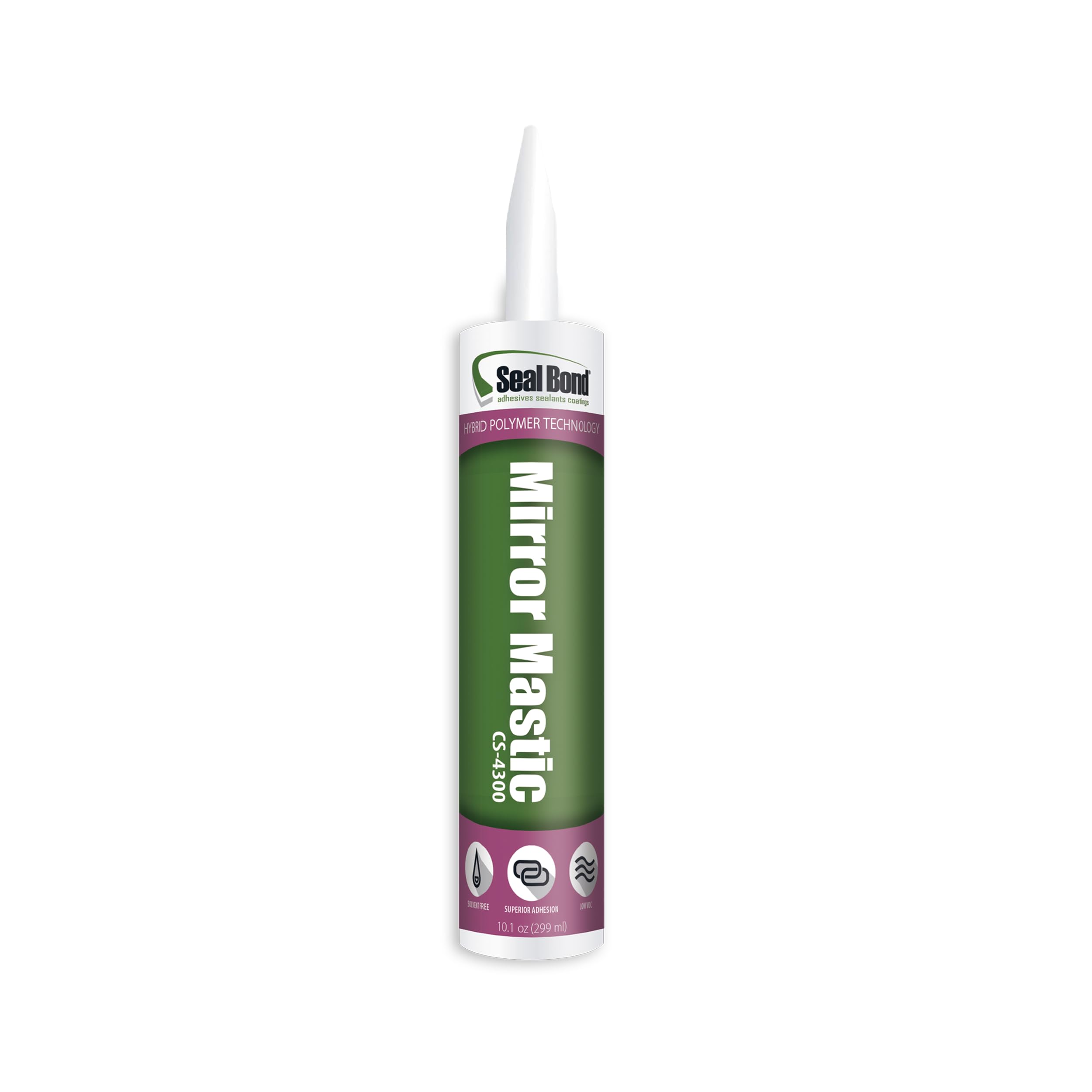
The CS-4300 is a specialist formulation engineered specifically for mirror bonding, and it shows in its solvent-free, ultra-low VOC composition. This is the adhesive you want when working with acrylic mirrors or in enclosed spaces where fumes are a concern. It provides an immediate, strong grab that holds the glass in place with very minimal repositioning allowed.
Reviewers have successfully mounted large 30×50 inch mirrors using just two tubes, with no mechanical fasteners required. The neutral cure formula avoids corroding the silver backing on the mirror, a common failure point when using standard construction adhesives. It is SCAQMD and CDPH compliant, meeting strict indoor air quality standards.
The main consideration is that this is a mirror-specific adhesive, so its versatility outside of glass-to-wall or glass-to-door applications is limited. It is also on the pricier side per cartridge. If you are mounting a heavy automotive mirror panel or replacing an entire rearview assembly, the extra cost buys you a guaranteed non-corrosive bond that will not eat through the reflective coating.
Why it’s great
- Safe for acrylic and standard glass mirrors
- Low odor, safe for indoor cabin use
Good to know
- Higher cost per tube than general adhesives
- Limited to mirror bonding tasks
3. Akfix 900N Clear 100% Silicone Adhesive for Mirror
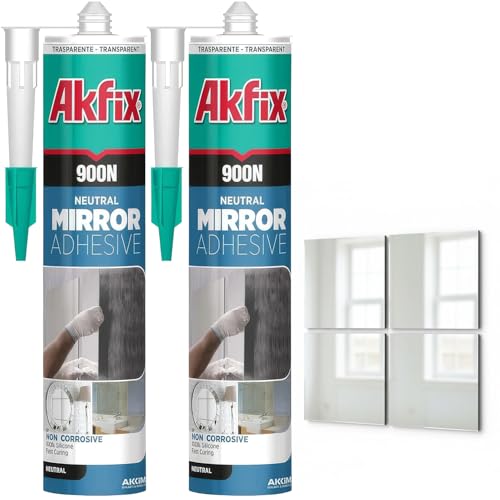
The Akfix 900N arrives as a two-pack of clear, neutral-cure silicone cartridges, making it the economical choice for anyone mounting multiple mirrors or sharing the job with a friend. The clear finish is invisible once cured, which is a major visual advantage when bonding a frameless mirror directly to a painted panel or door card.
Because it is 100% solvent-free, there is zero risk of the adhesive attacking the silver coating on the back of the mirror. The neutral cure system produces no acetic acid (vinegar) smell, which is a common complaint with standard bathroom silicones. Users report that it bonds securely to concrete, wood, metal, and ceramic tile, which means it works equally well on an RV’s interior cabinets or a garage wall.
The 24-hour full cure time demands patience. You will need to support the mirror during the first several hours, or use a temporary tape to hold it in place. The adhesive is also quite flexible, so it accommodates the slight flex of a door panel without the bond line cracking. For a discreet, corrosion-free installation, this is the clear winner.
Why it’s great
- Completely clear, invisible bond line
- Two-pack provides excellent value
Good to know
- Full cure takes 24 hours
- Not suitable for mirrors with plastic safety film
4. FORTIVO Urethane Windshield Adhesive
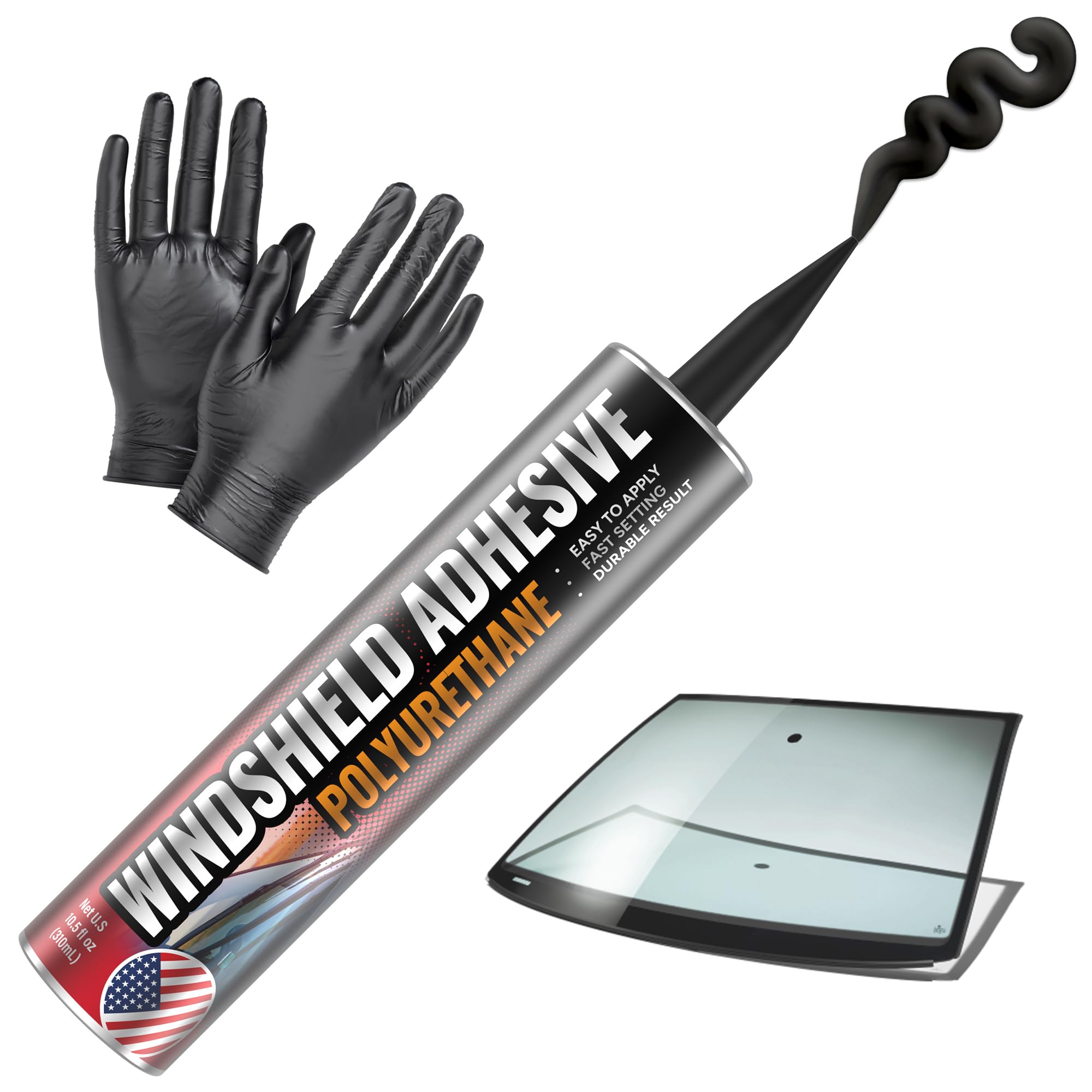
The FORTIVO urethane adhesive is optimized for speed. If you need your mirror or trim reattached and the vehicle back in service within a few hours, this is the formulation to reach for. It cures to a strong, waterproof bond that holds up even in rainy conditions and on rough roads where the glass is constantly vibrating.
Its non-sagging formula is ideal for overhead work, such as bonding a sunroof panel or reattaching a mirror that mounts to the headliner. The 310ml cartridge fits standard caulking guns, and no primer is required for most OEM glass surfaces. Users highlight its professional-grade results, noting that it seals side windows and body trim as effectively as it bonds glass.
The biggest con is the learning curve. The adhesive is extremely thick and sticky, making it difficult to spread evenly. Once it contacts a surface, repositioning is nearly impossible. If you are a perfectionist who needs to fine-tune the alignment, a slower-curing silicone is a safer bet. For quick, durable repairs where speed matters most, the FORTIVO delivers.
Why it’s great
- Fast curing gets you driving sooner
- Non-sag formula for vertical jobs
Good to know
- Very thick, difficult to reposition
- Not ideal for delicate adjustments
5. VICBTZT Urethane Windshield Adhesive
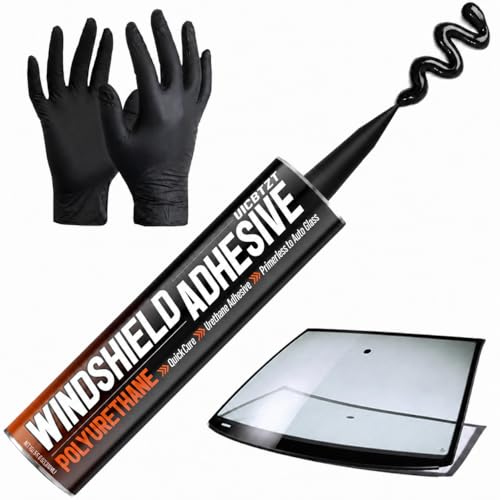
The VICBTZT urethane adhesive is nearly identical in function to the FORTIVO, offering a fast-curing, high-strength bond that sets in about two hours. It comes with nitrile gloves and an applicator tip, making it a complete kit out of the box. Users report that it stops water leaks immediately and holds heavy windshields and side windows without any loosening.
The key advantage here is its all-weather durability. The formula resists UV radiation and remains flexible for years without cracking or shrinking. It is also primer-free, which simplifies the process for DIY users who do not want to buy an extra bottle of activator. The 10.5 oz cartridge is a standard size that works with any caulk gun.
On the downside, the cartridge size may be too small for a full windshield replacement, as one reviewer noted. For mirror and small side-window repairs, it is perfectly adequate. The adhesive is also permanently staining; any accidental contact with fabric or paint must be addressed immediately. It is a capable, no-fuss solution for glass bonding that needs to dry fast.
Why it’s great
- Quick 2-hour cure time
- Primer-free application
Good to know
- Smaller cartridge may not be enough for large panes
- Permanent staining on contact
6. SHIELDOM RTV Silicone Adhesive Sealant
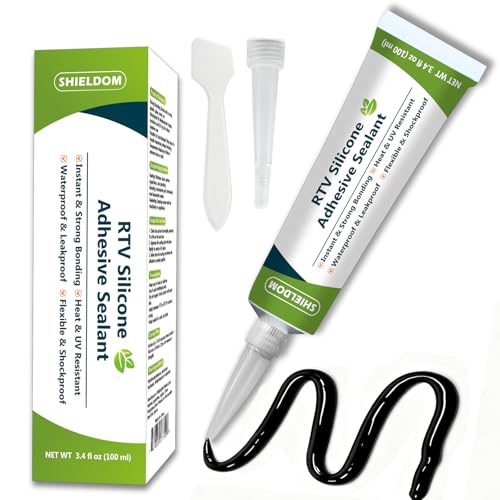
The SHIELDOM RTV silicone comes in a small squeeze tube that is perfect for tight, one-handed applications where a full-sized caulk gun feels clumsy. This is the tube to grab for bonding a mirror trim piece, securing a loose accent, or sealing a gap around an RV window. It contains a nozzle for precise bead control.
The silicone is a 100% RTV formulation that remains flexible after curing, which is important for applications where the metal and glass expand at different rates. It sets with a skin in about 15 minutes, giving you a short window to tool the bead and clean up any mistakes. Users have found it effective on motorcycle accents, RV windows, and baseboard gaps alike.
This is not the adhesive for heavy structural loads. The 3.4 oz tube is small, and the gel-like consistency does not have the same shear strength as a full urethane or high-end mirror silicone. For small repairs, precision work, and sealing tasks, it is an excellent value. For hanging a full side mirror assembly, you will want a stronger formulation.
Why it’s great
- Compact tube fits in tight spaces
- Fast 15-minute skin-over time
Good to know
- Not for structural or heavy mirror loads
- Small volume, limited coverage
7. Permatex 59203 Black RTV Silicone Adhesive Sealant

The Permatex 59203 is a compact, no-frills silicone tube that serves as a capable general-purpose adhesive for small glass-to-metal bonds. It is sensor-safe, meaning it will not contaminate oxygen sensors in the engine bay, making it a versatile option for sealing around the firewall, door panels, and electrical connectors as well.
Its all-purpose nature is reflected in the reviews: users have fixed cracked hose fittings, sealed rubber gaskets on dishwashers, and bonded glass panels to metal frames. The waterproof seal resists cracking and shrinking, and the black color blends into automotive trim seamlessly. It is an affordable tube that is easy to find and simple to use without any special tools.
The main limitation is the applicator tip, which some reviewers found clogged or inefficient. You may need to snip a larger opening or use a disposable brush to spread the adhesive. It also is not a high-strength structural adhesive; it is better suited for sealing and light bonding than holding a heavy mirror against constant vibration. For small, quick fixes and sealing jobs, it gets the job done.
Why it’s great
- Sensor-safe for engine bay use
- Versatile on glass, metal, plastic, and vinyl
Good to know
- Not designed for heavy structural loads
- Applicator tip can be finicky
FAQ
Can I use standard bathroom silicone caulk for my car mirror?
How long does mirror adhesive take to fully cure before I can drive?
Final Thoughts: The Verdict
For most users, the best automotive silicone mirror adhesive winner is the Permatex 81173 because its extreme temperature range and flexible yet strong bond make it the most reliable all-rounder for glass, metal, and plastic. If you want a low-odor, non-corrosive formula safe for acrylic mirrors, grab the Seal Bond CS-4300. And for a discreet, clear finish on a frameless mirror install, nothing beats the Akfix 900N.