
Our readers keep the lights on and my morning glass full of iced black tea. As an Amazon Associate, I earn from qualifying purchases.
Specs are compiled from manufacturer listings and verified buyer reviews and can change over time — please confirm the key details on the product page before buying.
An old, cracked automotive vacuum hose is the kind of small problem that brings a whole car to a stop. That brittle rubber line can cause a rough idle, a failed HVAC blend-door, or a check-engine light that sends you chasing ghosts. You need a replacement that seals tight on every nipple, handles under-hood heat without turning to chalk, and comes in the right sizes so you can fix it once and be done.
I’m Min — the founder and writer behind Gadgets Feed. This guide is built by comparing the manufacturers’ published specifications and the patterns across verified customer reviews, so you get each pick’s real strengths and trade-offs instead of marketing spin.
We examined seven different kits and spools to find the ones with thick enough walls to resist collapse, working pressures that match real engine conditions, and enough length or variety to cover a full replacement project — this is your focused look at the best automotive vacuum hose for a durable, leak-free fix.
Quick Picks
- Ucreative Silicone Vacuum Hose Kit — Best Overall
- Shineyoo Silicone Vacuum Tubing Hose 6.6 FT 5-Pack — Top Value
- EVIL ENERGY 1/4 Silicone Vacuum Tubing Hose Line 10FT — Dedicated Runner
- OFBAND 6-Pack 5Ft Vacuum Hose Automotive — Budget Starter
- Shineyoo Vacuum Hose Automotive 10 FT 5-Pack — Longer Runs
- Gates 27042 Windshield Washer/Vacuum Hose 50-Foot Spool — OEM Grade
- HBD 3341 Vacuum Hose 7/32″ x 50′ — Budget Long Run
How To Choose The Best Automotive Vacuum Hose
Picking the wrong vacuum hose is a fast ticket to a frustrating leak. Three specs separate a lasting repair from a repeat job: the wall thickness that stops the hose from collapsing under vacuum, the inner diameter that matches your engine’s ports, and the material’s ability to survive engine-bay heat without cracking.
Wall Thickness — The Collapse Preventer
A vacuum line works because the engine sucks air through it. If the hose walls are too thin, they flatten, blocking the flow and killing whatever that line was supposed to operate — a vacuum-actuated four-wheel-drive hub or a heater vent door. Look for a nominal wall thickness of at least 3 millimeters (about 0.12 inches), which is the standard for preventing kinking and collapse under sustained vacuum pressure.
Inner Diameter — The Fit Factor
Automotive vacuum systems use a range of port sizes, typically from 1/8-inch up to 3/8-inch. If you are replacing a single known line, a bulk spool in the exact size works perfectly. For a full engine refresh on an older car with unknown or multiple sizes, a multi-piece kit gives you the flexibility to match each port without a separate trip to the auto parts store.
Material and Heat Range
Standard rubber hose degrades under hood heat and ozone exposure — it dries out, gets brittle, and cracks. Pure silicone handles temperatures from -40°F up to 428°F (-40°C to 220°C) without drying out. Silicone also stays flexible in cold weather, making installation easier on a winter driveway repair.
Quick Comparison
On smaller screens, swipe sideways to see the full table.
| Model | Best For | Wall Thickness | Length / Pieces | Max Pressure | Amazon |
|---|---|---|---|---|---|
| Ucreative Silicone Vacuum Hose Kit | Full diy system rebuild | 0.125 in | 6 x 5 ft hoses + 113 connectors | 43 PSI working, 130 PSI burst at room temperature | $19.99$20.99Amazon |
| Shineyoo 6.6 FT 5-Pack | Quick multi-size fixes | 3 mm | 5 x 6.6 ft hoses | 130 PSI | $21.99Amazon |
| EVIL ENERGY 10FT 1/4″ | Single-size dedicated lines | 3 mm | 10 ft | 130 PSI | $13.99Amazon |
| OFBAND 6-Pack 5Ft | Budget variety pack | 3 mm | 6 x 5 ft hoses | 130 PSI | $18.99Amazon |
| Shineyoo 10 FT 5-Pack | Longer runs per size | 3 mm | 5 x 10 ft hoses | 130 PSI | $29.99Amazon |
| Gates 27042 50-ft Spool | OEM-quality single-line replacement | 0.078 in | 50 ft | 30 in-Hg | $28.05Amazon |
| HBD 3341 50-ft Spool | Budget long single-spool run | — | 50 ft | — | $28.99$33.33Amazon |
In‑Depth Reviews
1. Ucreative Silicone Vacuum Hose Kit
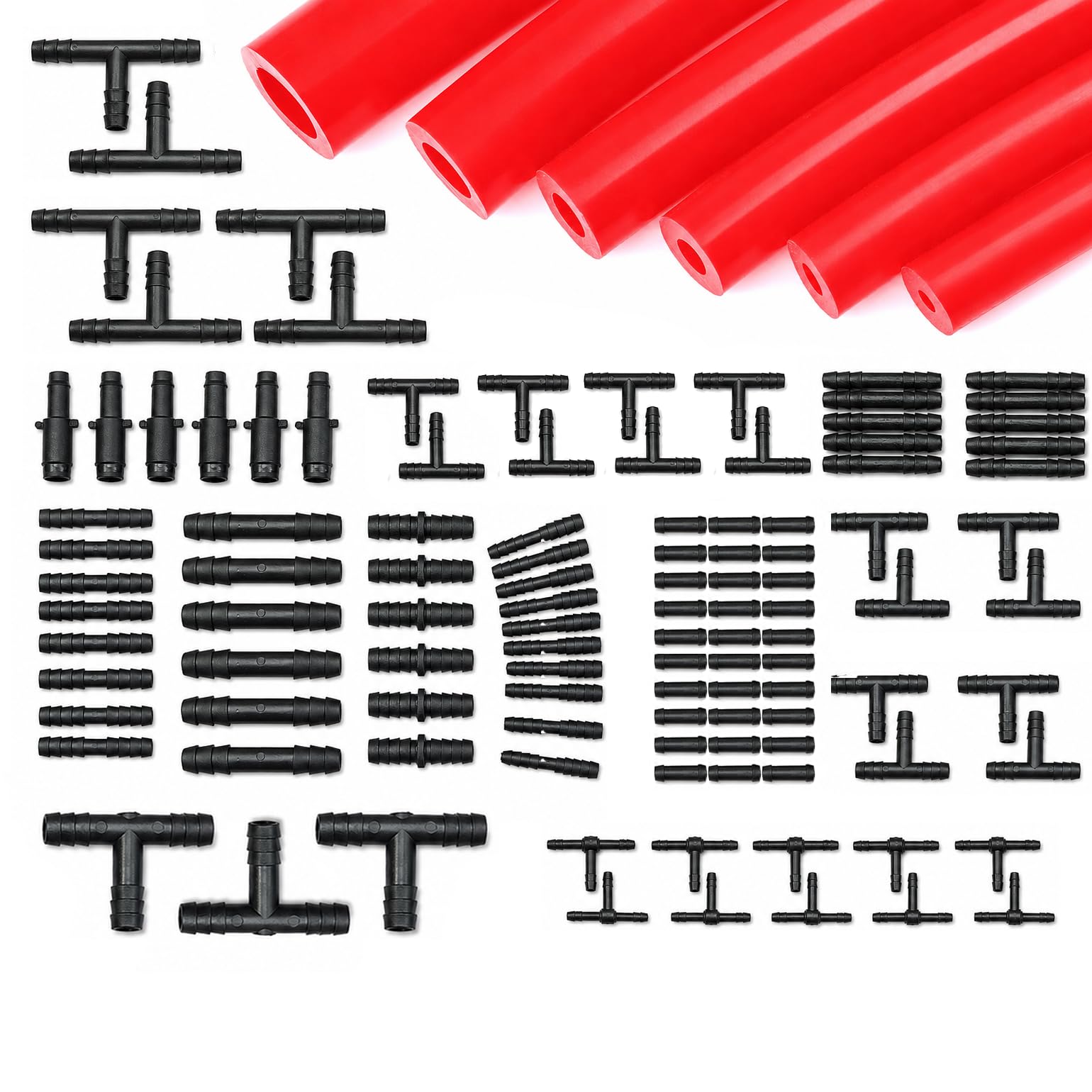
No other kit gives you a 0.125-inch wall and a connector bag big enough for a full engine vacuum re-line in one box.
You get six 5-foot hoses in sizes from 1/8-inch to 3/8-inch inner diameter (ID) plus 113 nylon connectors — everything to replace every dried-out rubber line on an older car. Buyers report the silicone “replaced disintegrated rubber hose causing AC selector malfunction,” and the bright red color helps you trace lines under the hood.
Each hose handles a working pressure of 43 PSI and a burst pressure of 130 PSI at room temperature, with a temperature range of -40°F to 428°F (-40°C to 220°C). At 1.27 kilograms versus 0.4 kilograms for a single 10-foot spool like the EVIL ENERGY, the kit is heavier because of the thick silicone and connector pack. The hoses are for air and water only, not for fuel or oil.
Compared to the OFBAND 6-pack, this one adds the connectors and a slightly thicker 0.125-inch wall versus the 3 mm (0.118-inch) on the OFBAND — a small but real difference in collapse resistance. If you only need one size, a bulk spool will cost less and give more length, but for a full-system rebuild this is the single-box solution no other kit on the list matches.
Best for full-system work: If you are doing a comprehensive vacuum line replacement on an older car or van, the included connectors and thick-walled silicone make this a single-box solution that the individual-size spools cannot match.
Watch out for weight: At about 2.8 pounds versus 0.4 kilograms for the EVIL ENERGY 10-foot single hose, this kit is heavier, so it is overkill if you just need one small replacement line.
Reach for this if: you are rebuilding a vacuum system from scratch and want every connector and size on hand without a parts-store run.
Look elsewhere if: you only need a single-sized run — a bulk spool will cost less and give you more length.
2. Shineyoo Silicone Vacuum Tubing Hose 6.6 FT 5-Pack

A black silicone set that looks factory-stock while giving you the same 3 mm wall thickness as the Ucreative kit, at a lower entry cost.
Unlike the red Ucreative kit, this one uses black silicone that owners mention keeps a “stock appearance” under the hood. Each of the five hoses runs 6.6 feet long — a middle ground between a 5-foot and 10-foot set. The wall thickness is 3 millimeters, matching the Ucreative’s spec for collapse resistance. One owner called them “JDM hoses for 2007 truck with 305k miles” and noted they were thicker and more flexible than the factory lines.
The maximum pressure is 130 PSI and the material handles temperatures from -40°F to 428°F (-40°C to 220°C). Total length across all five sizes is about 33 feet — a good middle ground between a compact 5-foot set and a full 10-foot set. The rubber-and-silicone material blend seals tight on vacuum ports without needing clamps for most applications.
At 6.6 feet per hose, you get less length per size than the 10-foot Shineyoo pack, so if you need to cross a wide engine bay, measure your longest run first. This set is cheaper than the Ucreative but has no connectors, so budget for fittings if you need them.
Best for OEM appearance: If you want silicone performance without a bright-colored hose drawing attention under the hood, the black finish and stock-looking diameters make this the cleanest choice.
Know the length difference: Each hose is 6.6 feet, not 10 feet — measure your longest run before choosing between this and the longer Shineyoo 10-foot pack.
Grab this for: a multiple-size replacement on a daily driver where you want the durability of silicone without changing the visual under the hood.
skip it if: you need more than 6.6 feet of a single diameter — the 10-foot Shineyoo pack is the same price tier with longer individual hoses.
3. EVIL ENERGY 1/4 Silicone Vacuum Tubing Hose Line 10FT

If you know you need 1/4-inch ID, this 3 mm-wall spool gives you a single-size 10-foot run and weighs 0.4 kilograms versus 1.27 kilograms for the Ucreative kit.
This 10-foot spool is for the 1/4-inch inner diameter that fits vacuum hubs, HVAC actuators, and PCV systems. The wall thickness is 3 millimeters, matching the Ucreative kit’s spec, and the hose weighs 0.4 kilograms versus 1.27 kilograms for the Ucreative kit. Customers note it is “pliable, thick-walled vacuum hose with good seal” and note it fits tight on nipples.
The 12-millimeter outside diameter (OD) fits snugly into factory line holders, and the black color blends in. Working pressure is 43 PSI with burst pressure of 100 PSI at high temperature and 130 PSI at room temperature. Temperature range matches the other silicone options (-40°F to 428°F). One reviewer installed it on a 2002 F250 and said it was thicker and better than the factory hose.
Compared to the Shineyoo 6.6-foot 5-pack, this spool has no other sizes — you get 10 feet of one diameter. That is great value if 1/4-inch is what your car uses, but a costly mistake if you guess wrong. The Gates 27042 spool is rubber and thinner (0.078-inch wall), so this silicone hose will outlast it under heat.
Best for targeted repairs: When you need one size and you know the fit, this spool gives you more length and better per-foot value than any multi-size kit.
The single-size limitation: It only covers the 1/4-inch diameter — if you discover another size is needed mid-project, you will be ordering again.
Ideal for: a mechanic or DIYer who knows their 2000s Ford or GM truck’s vacuum system uses 1/4-inch lines and wants a bulk spool.
Not for: guessing-games — if you are uncertain about port sizes, grab a multi-size kit first.
4. OFBAND 6-Pack 5Ft Vacuum Hose Automotive

Six diameters for the lowest entry price — but you supply your own connectors and get only 5 feet per size.
This kit gives you six inner diameters from 1/8-inch through 3/8-inch, each in a 5-foot length. The wall thickness is 3 millimeters, the same spec as the EVIL ENERGY and Shineyoo hoses. The outside diameter is 0.62 inches, while the Gates rubber spool lists 0.31 inches. One reviewer noted “it’s been several months and several hundreds of miles and they are holding up great,” confirming decent long-term durability for a budget kit.
The maximum pressure is 130 PSI, matching the other silicone options. The silicone material is flexible and resists aging, though the lack of included connectors (unlike the Ucreative kit) means you will need to supply your own T-fittings and couplers for any branching. It weighs 0.93 pounds, landing between the lightweight EVIL ENERGY spool and the heavy Ucreative kit.
For the same money, the Shineyoo 6.6-foot 5-pack gives you slightly longer hoses (6.6 ft vs 5 ft) but only five sizes instead of six. If you think you need the 3/16-inch size (which this kit has and Shineyoo’s 5-pack does not), this is the better fit. Just know you get no connectors and each hose is shorter than the Ucreative’s 5-foot hoses — tight for crossing a wide engine bay.
Best for low-budget exploration: If you are not sure what sizes your car needs and want a cheap starter set to diagnose vacuum leaks, this kit costs the least to get a size in your hand.
No connectors included: Unlike the Ucreative kit, you get only hoses — plan to buy or reuse your existing fittings.
Reach for this if: money is tight and you need to just get the car running again with a variety of sizes on hand.
Look elsewhere if: you want a complete one-box solution with connectors — the Ucreative kit adds that for a small step up in cost.
5. Shineyoo Vacuum Hose Automotive 10 FT 5-Pack

A 10-foot-per-size multi-size kit for long engine-bay routes, compared with 6.6 feet per hose in the shorter Shineyoo pack.
This set is the longer sibling to the Shineyoo 6.6-foot pack — same five sizes (1/8-inch through 3/8-inch), same 3 mm wall, same 130 PSI max pressure, same black rubber-silicone blend. The difference: each of the five hoses is 10 feet long instead of 6.6 feet, giving you more length for any single run that needs to cross the engine bay or reach a firewall-mounted component. Reviewers point out the set “contains most the sizes you’ll need to repair old rotted vacuum lines” and one noted “JDM hoses for 2007 truck (305k miles)” that were thicker and better than OEM.
The material range covers -40°F to 428°F (-40°C to 220°C). Each hose is 10 feet, so the bundle is bulkier than the 5-foot or 6.6-foot sets, but you will not run short on a long line. It does not come with connectors, so keep your own fittings handy.
Compared to the EVIL ENERGY 10-foot single-size spool, this pack costs a similar amount but gives you five sizes — better for a variety of unknown ports, but wasteful if you need only one diameter. Against the Ucreative kit, this has no connectors and a 3 mm wall versus 0.125 inches — a minor difference but the Ucreative’s spec edge helps on high-vacuum engines near the exhaust manifold.
Best for long, direct runs: If your vacuum line needs to stretch from the intake manifold to a distant solenoid or vacuum reservoir, 10 feet per size covers that without splicing.
Not the smallest package: This is a bulkier kit than the 5-foot or 6.6-foot versions — overkill for a single small repair.
Ideal for: restoring a large engine bay (truck, van, or SUV) where the vacuum line routes are physically long.
pass on it if: you are only patching a short, known line — a 10-foot spool in that exact size is simpler and cheaper.
6. Gates 27042 Windshield Washer/Vacuum Hose 50-Foot Spool
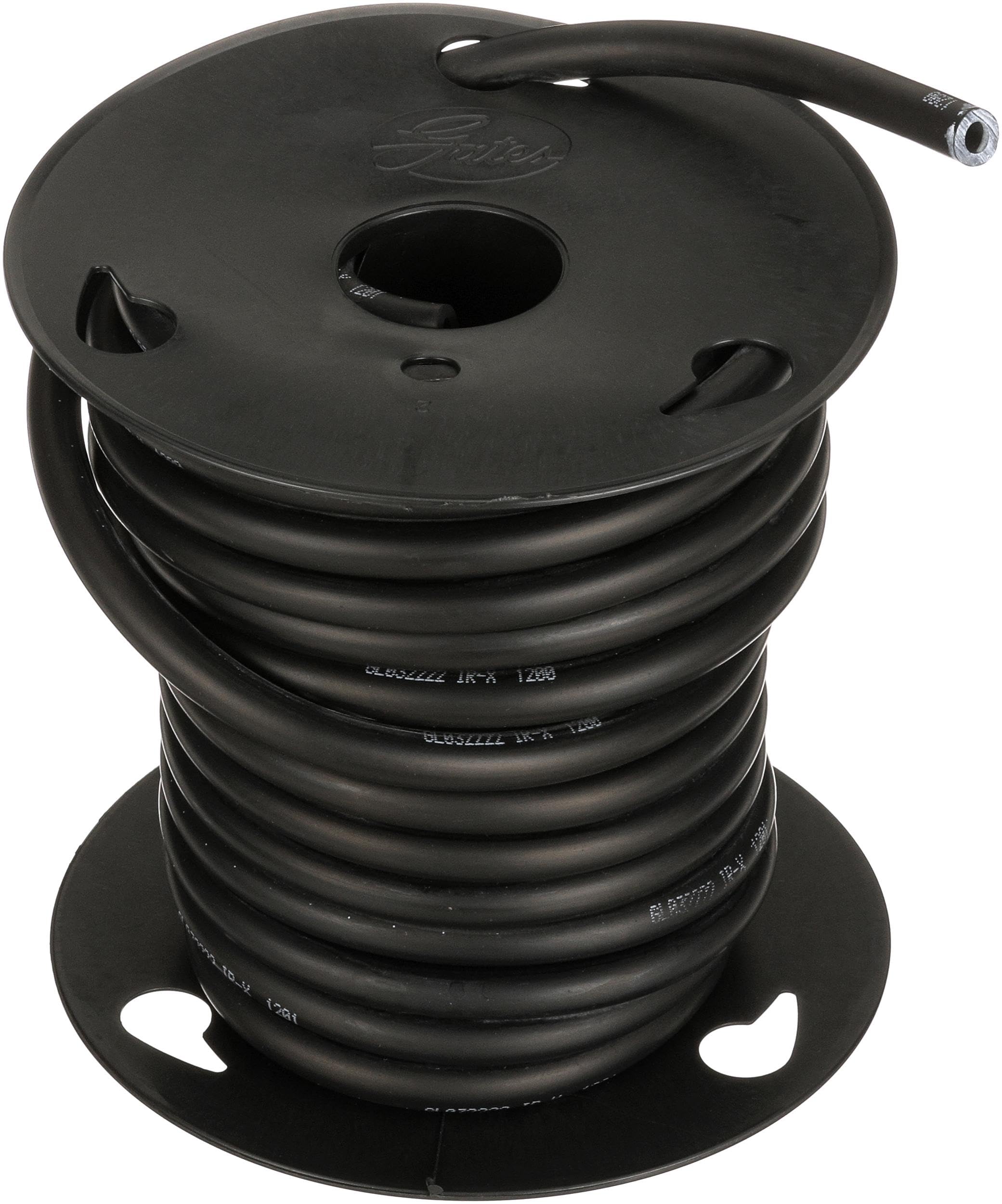
The industry-standard Gates rubber spool gives you 50 feet of hose for a single diameter — far more length than any silicone kit, but with a thinner wall that is best for cooler applications.
Gates is a name you will find in any auto parts store, and this spool brings that factory-grade reputation in a 50-foot length. The inner diameter is 5/32-inch (about 4 mm), and the outside diameter is 0.31 inches, while the OFBAND silicone kit lists 0.62 inches. The nominal wall thickness is 0.078125 inches (roughly 2 mm), which is thinner than the 3 mm silicone hoses. This is rubber, not silicone, so it resists heat, ozone, and coolant exposure but does not handle the same extreme temperature range as silicone. One buyer mentioned the “outer wall thick and high quality,” and several reviewers emphasize that Gates quality justifies the price.
The maximum pressure rating is 30 inches of Mercury (in-Hg), which measures vacuum (negative pressure) rather than positive pressure. For a direct 5/32-inch vacuum line replacement — think windshield washer tubing or a specific HVAC vacuum line — this spool gives you enough material for a dozen repairs. The spool is 50 feet long, while the silicone packs here provide 5 feet, 6.6 feet, or 10 feet per hose.
Against the EVIL ENERGY 1/4-inch silicone spool, the Gates is rubber with a thinner 0.078-inch wall versus 3 mm — more prone to collapse under sustained manifold vacuum on a performance engine. It is cheaper per foot, but you trade long-term durability under heat. Silicone’s thicker wall and higher heat tolerance (428°F vs rubber’s lower limit) outlast rubber near the exhaust or turbo.
Best for high-volume, single-size work: If you maintain several vehicles or are doing a full line replacement on one car and all the lines are the same 5/32-inch size, the bulk spool is the most economical choice.
Rubber vs. silicone durability: The wall is thinner (0.078 vs. 0.125 inches) and rubber degrades faster in high-heat environments — use silicone where the line sits near the exhaust or turbo.
Reach for this if: you want the trusted Gates brand and need a massive 50-foot run for a single-diameter job like windshield washer lines or general vacuum repairs.
Look elsewhere if: your application sits directly on a hot engine block — silicone’s thicker wall and higher heat tolerance will outlast rubber there.
7. HBD 3341 Vacuum Hose 7/32″ x 50′

A 50-foot spool in the wider 7/32-inch size — the only pick on this list that covers that specific diameter for Ford and GM applications.
While most vacuum lines use 5/32-inch (4 mm) or 1/4-inch (6 mm) inner diameters, some Ford, GM, and Chrysler applications call for a 7/32-inch (about 5.5 mm) line — for instance, certain windshield washer systems and vacuum-actuated components. This HBD spool gives you 50 feet of that specific size to cover a whole vehicle. The outside diameter is 0.22 inches. One buyer offered a practical warning: “just double check your hose diameter before you buy I now have 50ft of this and only needed 1 ft the rest of the lines were 7/32.” At 2 pounds, this spool is heavier than the Gates rubber spool (16 ounces / 1 pound).
The material is a synthetic manmade compound, not pure silicone, so it lacks the extreme heat tolerance of the silicone hoses. Reviewers report it works well for replacing dry-rotted lines on older cars, with one noting “Amazing how much better it run with no vacuum leaks” after replacing old hoses. It is a good pick if your car genuinely uses 7/32-inch lines.
Compared to the Gates 27042 spool (5/32-inch, 0.078-inch wall), this HBD hose is 7/32-inch and its wall thickness is not published — you cannot compare collapse resistance directly. If you need 7/32-inch, this is the only 50-foot option on the list. If you are not sure, a multi-size silicone kit like the OFBAND 6-pack (which includes 5/32-inch and 1/4-inch but not 7/32-inch) is safer for exploration.
Best for specific-fit needs: If you have already confirmed your vehicle uses 7/32-inch vacuum lines, this spool is the only 50-foot option in that precise size on the list.
Misidentification risk: Because 7/32-inch is less common than 5/32-inch or 1/4-inch, double-check your existing hose with a caliper before committing to 50 feet.
Ideal for: an owner of a mid-2000s Ford truck or GM SUV who knows the exact 7/32-inch spec and wants a bulk spool for a complete re-line.
Not for: general purpose or size-uncertain repairs — a multi-size silicone kit is safer if you are not 100% sure of the diameter.
Understanding the Specs
Wall Thickness & Collapse Resistance
The thickness of the hose wall directly determines whether it caves in under engine vacuum. A 3-millimeter (0.12-inch) wall — standard on most silicone kits here — prevents kinking and keeps the line open. The thinner 0.078-inch (about 2 mm) wall on the Gates rubber spool is adequate for low-demand systems like windshield washers but is more prone to collapse under sustained manifold vacuum on a performance engine.
Max Pressure (PSI vs in-Hg)
Most silicone hoses list a max pressure in PSI (pounds per square inch), like 130 PSI burst. That is a positive-pressure rating for boosted applications. Vacuum systems work in negative pressure, measured in inches of Mercury (in-Hg). A rating of 30 in-Hg (the Gates spec) means the hose can handle a near-perfect vacuum without collapsing. For turbo or supercharged cars, look for both a high PSI burst rating and thick walls to resist the pull of boost.
FAQ
Can I use an automotive vacuum hose for fuel or oil lines?
What size vacuum hose does my car need?
Is silicone vacuum hose better than rubber?
How do I prevent the vacuum hose from collapsing?
Can I use 130 PSI hose for a naturally aspirated vacuum system?
How often should I replace vacuum hoses?
What is the difference between 5/32-inch and 7/32-inch vacuum hose?
Will these silicone hoses work on a turbocharged engine?
Do I need clamps on silicone vacuum hoses?
Final Thoughts: The Verdict
If you want one dependable pick, the automotive vacuum hose winner is the Ucreative Silicone Vacuum Hose Kit because its 0.125-inch wall thickness, six-size range, and included 113-piece connector set make it a complete single-box solution for any full-system rebuild. If you want a single-size dedicated spool that weighs 0.4 kilograms instead of 1.27 kilograms, grab the EVIL ENERGY 10FT 1/4-inch hose. And for a long 50-foot bulk run at a single diameter, the Gates 27042 rubber spool is the trusted brand name with factory-level quality.
How We Picked
We do not accept paid placement, and we did not hands-on test every unit. Instead, we match each pick to a real buyer and use-case by comparing the manufacturers’ published specifications against the patterns in verified customer reviews — so you get each pick’s real strengths and trade-offs instead of marketing copy.
Sources & Methodology
Specifications: manufacturer listings and product documentation. Review insights: verified customer reviews, as of July 2026. Pricing: not shown on this page (it changes often); check the current price via the retailer link.
As an Amazon Associate, Gadgets Feed earns from qualifying purchases. This does not affect which products we feature.
Product prices and availability are accurate as of the date/time indicated and are subject to change. Any price and availability information displayed on Amazon at the time of purchase will apply to the purchase of this product. As an Amazon Associate I earn from qualifying purchases.
CERTAIN CONTENT THAT APPEARS ON THIS SITE COMES FROM AMAZON. THIS CONTENT IS PROVIDED "AS IS" AND IS SUBJECT TO CHANGE OR REMOVAL AT ANY TIME.
Amazon and the Amazon logo are trademarks of Amazon.com, Inc. or its affiliates.