
Our readers keep the lights on and my morning glass full of iced black tea. As an Amazon Associate, I earn from qualifying purchases.
Specs are compiled from manufacturer listings and verified buyer reviews and can change over time — please confirm the key details on the product page before buying.
That chalky white film left behind after sprinklers hit your paint or a hard water rinse dries on the glass is not permanent damage — it is a mineral deposit that the right chemistry can dissolve in seconds. The challenge is picking a formula that does the job without etching your clear coat or leaving a worse residue behind.
I’m Min — the founder and writer behind Gadgets Feed. This guide is built by comparing the manufacturers’ published specifications and the patterns across verified customer reviews, so you get each pick’s real strengths and trade-offs instead of marketing spin.
We looked at gel versus spray formats, acid-free versus mild-acid chemistry, and how each product handles fresh spots versus baked-on stains to find the best automotive water spot remover for different situations.
Quick Picks
- Chemical Guys Heavy Duty Water Spot Remover Gel — Gel Formula
- XPEL Water Spot Remover 16oz — Film Friendly
- PROJE’ Water Spot Remover — Two-Way Solution
- DUCKY PRODUCTS Original Water Spot Remover Spray — Boat & RV Standard
- Zephyr Pro-50 Eliminator Water Spot Removal — No Scrub Needed
How To Choose The Best Automotive Water Spot Remover
Not all water spot removers are the same. Some are mild enough for use on paint protection film, while others rely on strong acids that cut through thick mineral buildup but strip your wax. Here are the three factors that matter most.
Acid-Free vs Mild-Acid Formula
An acid-free formula is your safest bet if your vehicle has a ceramic coating, paint protection film, or a fresh wax layer. It breaks down light mineral deposits without risking discoloration or etching. A mild-acid formula (usually containing a weak organic or mineral acid) works faster on baked-on spots and heavy hard-water scale, but it can remove wax and sealants — you will need to reapply protection afterward.
Gel vs Spray Consistency
Gel-based removers cling to vertical panels like doors and side windows, giving the chemistry more time to work before it drips off. Spray formulas are easier to apply over large horizontal surfaces like hoods, roofs, and boat decks, but they can run off vertical glass before the mineral dissolves.
Surface Compatibility
Check whether the product is labeled for your specific surface. Some removers are safe on paint, clear coat, and glass but not on anodized aluminum or bare metal. A product rated for painted panels, chrome, and fiberglass gives you the most flexibility across your vehicle, boat, or RV.
Quick Comparison
On smaller screens, swipe sideways to see the full table.
| Model | Best For | Formula Type | Size | Weight | Amazon |
|---|---|---|---|---|---|
| Chemical Guys Heavy Duty Gel | Stubborn spots on paint & glass | Gel (acid) | 16 oz | 1.1 Pounds | $19.97Amazon |
| XPEL Water Spot Remover | Safe on protective films | Spray (acid-free) | 16 oz | 1.15 Pounds | $13.55Amazon |
| PROJE’ Water Spot Remover | Versatile car & home use | Spray (mild acid) | 16 Fl Oz | 1.28 Pounds | $17.99Amazon |
| DUCKY PRODUCTS Original Spray | Boat & RV exterior | Spray (acid) | 32 oz | 2 Pounds | $21.95Amazon |
| Zephyr Pro-50 Eliminator | No-scrub on metal & glass | Liquid (non-abrasive) | 32 Fl Oz | — | $31.99$36.95Amazon |
In‑Depth Reviews
1. Chemical Guys Heavy Duty Water Spot Remover Gel
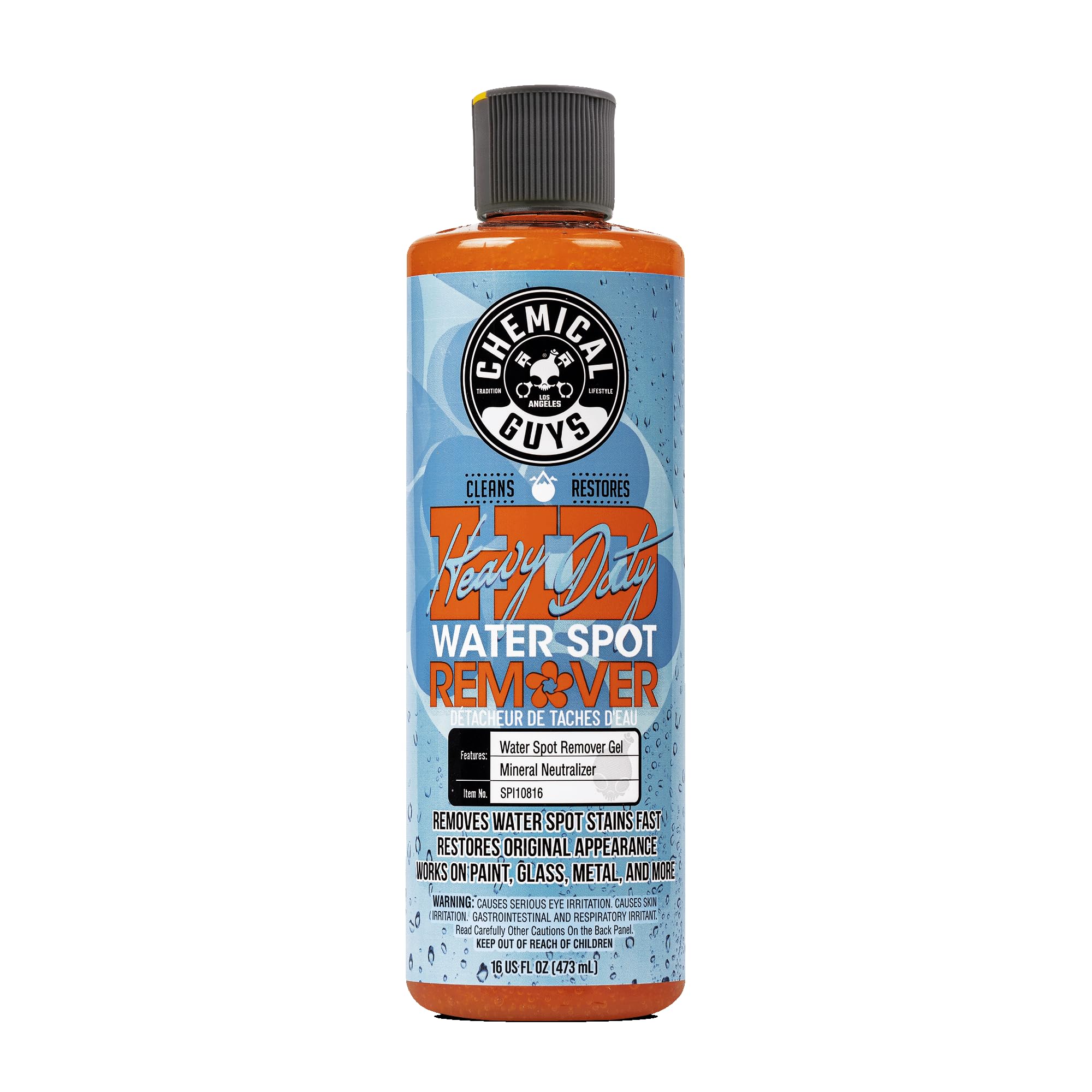
Its thick gel clings to vertical surfaces and dissolves mineral deposits that sprays let drip away, making it the top choice for years-old spots.
You spray this onto a microfiber towel or directly on the surface, and the thick gel stays put instead of running off — that dwell time is what lets it dissolve years-old hard water spots. One buyer reports it “removed years-old hard water spots from truck windows instantly with one cleaning, no heavy scrubbing.” At just 1.1 Pounds it is the lightest bottle of the heavy-duty options, but the compact 8.27 x 1.81 x 1.81 inch package means you get a dense, concentrated formula.
Unlike the XPEL pick below, this is not an acid-free formula — it uses active chemistry that cuts through stubborn calcium and mineral buildup faster. The trade-off, as buyers report, is that it strips any existing wax or sealant, so you will want to plan for a protection step afterward.
One buyer who tried CLR and vinegar first said this gel removed stubborn spots from shower glass where both failed, with minimal effort and no streaking.
Sledgehammer results: The gel formula is ideal for baked-on water spots on paint, glass, and metal. It sticks to vertical surfaces like doors and side windows so the acid has time to work — no dripping wasted product.
Plan for rewaxing: Because it strips sealants, you should treat the entire panel to avoid uneven fogging, then reapply your wax or ceramic coating.
This is the one for you if: you have years-old hard water spots on vehicle glass, painted panels, or shower doors and you do not mind spending an extra 10 minutes reapplying protection afterward. But skip it if: you want a maintenance spray you can use weekly without breaking down your wax layer, or if your vehicle has a ceramic coating that needs an acid-free formula.
2. XPEL Water Spot Remover 16oz
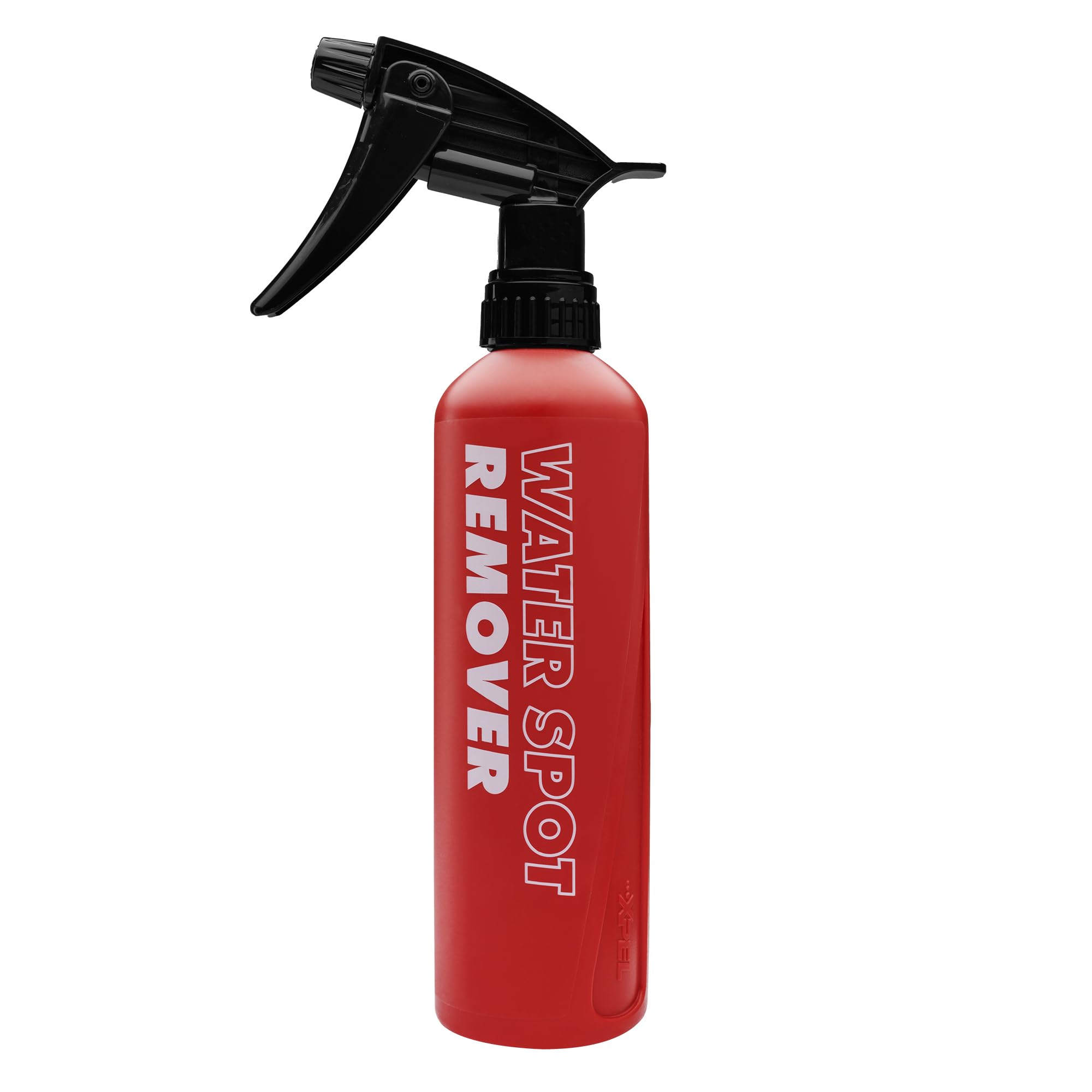
Because it is acid-free, this spray protects your paint protection film (PPF) and ceramic coating while still dissolving light to moderate water spots — it prioritizes protection over raw power.
If your car has a clear bra, PPF (paint protection film), or a ceramic coating, this is the one to reach for. The acid-free formula breaks down light to moderate water spots without risking discoloration or etching. One buyer who had major water spots from irrigation sprinklers said “this product eliminated the spots, no problem.” The 10.04 x 4.09 x 3.03 inch package is larger than the PROJE’ bottle at 8.23 x 2.28 x 2.2 inches, but the chemical design prioritizes surface safety over sheer dissolving power.
The catch is baked-in honesty: XPEL explicitly says this is not for severe or long-term water spots that have already etched into the paint. Those need a polish or an acid-based product. Think of this as a gentle daily driver that maintains your protection layers rather than a chemical hammer. Its 1.15 Pounds weight is nearly identical to the Chemical Guys gel, but the spray format makes it quicker to apply across the hood and roof.
Owners mention it also lifts environmental contaminants off ceramic coatings, keeping the gloss intact between full details.
Gentle enough for
- Paint protection film and ceramic coatings (acid-free formula prevents damage)
- Regular maintenance on cars that stay clean — catches spots before they bond
- Chrome, glass, and wheels without discoloration risk
Not for
- Baked-on, etched water spots that need polishing to remove
- Buyers who want a single product that handles both light and severe stains
This pick is ideal for: owners of wrapped, coated, or PPF-covered vehicles who need a spot remover that will not void the protection with harsh acids.
It is not for you if: your water spots have been sitting on untreated paint for months and have already etched into the clear coat — you need a polish or an acid-based step.
3. PROJE’ Water Spot Remover

Its mild-acid formula works on both car paint and stainless steel faucets, so one bottle covers the garage and the bathroom.
PROJE’ bridges the gap between automotive detailing and home cleaning. Its mild-acid formula neutralizes alkaline water spots from sprinklers, rain, and hard water without the harsh bite of industrial descalers. One reviewer noted it “removed driver side spots in one application, passenger side took 2-3 applications (likely due to more sun exposure)” — so the chemistry works, but sun-baked spots need patience. The 8.23 x 2.28 x 2.2 inch package is the slimmest bottle here, and at 1.28 Pounds it is only slightly heavier than the Chemical Guys gel.
Unlike the Chemical Guys pick, PROJE’ is safe for ceramic-coated vehicles, though reviewers caution that it does strip sealants — expect to reapply wax after use. Its versatility is the real draw: you can clean shower doors, kitchen faucets, and windows alongside your car paint, clear coat, and gel coat. The maker has over 25 years of car care manufacturing experience in Los Angeles County, which adds a layer of trust to the formulation.
One reviewer called it “the only water stain remover I’ve used that works,” but a few noted it requires multiple passes on tough spots, so it is not as fast as the gel formulas.
Cross-category flexibility: Works on paint, glass, metal, and home surfaces like stainless steel faucets, windows, and shower doors. You can buy one bottle and use it in the garage and the bathroom.
Persistence needed: Mild chemistry means fresh spots dissolve quickly, but older sun-baked stains may need 2-3 applications and some elbow grease.
Reach for this if: you want a single product that handles water spots on your car, boat, RV, and household glass and metal without buying four separate bottles.
Look elsewhere if: you need instant results on severe hard-water scale that has built up over years — the gel-based options will cut through faster.
4. DUCKY PRODUCTS Original Water Spot Remover Spray

This biodegradable spray has been dissolving hard water deposits on boat transoms and RV fiberglass since 1989, and it still outworks newer sprays on those surfaces.
This spray-on, wipe-off formula has been around since 1989, and it earned its long run by doing one thing extremely well: dissolving hard water deposits without toxic fumes. Customers note it “removes stubborn, baked-on water spots from glass and paint” — one user described spraying it on, waiting one minute, and watching the spots dissolve.
The formula is biodegradable and non-toxic, which matters if you are working near water or in an enclosed boat slip. It also handles exhaust deposits on chrome tips and transoms, something the other sprays here do not specifically claim. The catch: it contains no wax, so if you want gloss enhancement you will need the DUCKY Water Spot Plus version. Also, reviewers point out it is not effective on heavy hard-water buildup from constant sprinkler exposure — that scenario needs the Chemical Guys gel instead.
One user was surprised it also cleans tree sap, pollen, and bird droppings from their white car, calling it a 10 out of 10 recommendation.
Outdoor strength
- 32-ounce bottle gives you more product than the 16-ounce options here — fewer refills
- Biodegradable and non-toxic formula is safer for marine environments
- Also removes exhaust deposits and tree sap, not just water spots
Know before you buy
- Leaves a chalky residue that needs a follow-up glass cleaner for full clarity
- Not designed for heavy hard-water buildup from years of sprinkler exposure
The best pick for: Boat owners, RV travelers, and anyone who needs a large-volume, environmentally friendlier spray for regular water spot maintenance on large fiberglass and painted surfaces.
Not for: Heavy calcium scale that has built up over years — you need a gel or a stronger acid-based descaler for that job.
5. Zephyr Pro-50 Eliminator Water Spot Removal
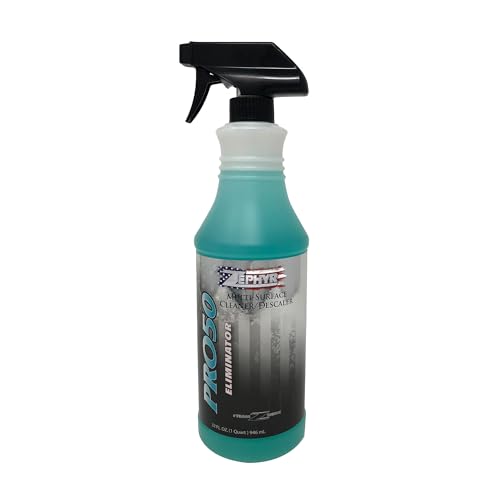
This non-abrasive descaler chemically breaks down calcium deposits on polished aluminum, so you do not have to scrub and risk scratching the metal.
Zephyr Pro-50 takes a different approach: it is a non-abrasive, non-corrosive descaler that works by breaking down calcium and carbon deposits chemically, so you do not have to scrub hard surfaces. One buyer who drives a concrete mixer said it removes water spots from their rims with ease despite daily water exposure. The 32-ounce bottle matches the DUCKY spray in volume, but the liquid consistency is thinner — it works best when applied with a towel or sponge and left to dwell.
Its specialty is polished metal surfaces. The maker recommends it for gelcoat, aluminum, stainless steel, glass, chrome, and fiberglass, but the surface recommendation on the label specifically lists glass. Shoppers say it restores glass shower doors to like-new condition and removes scale from faucets, though they note it does not handle tarnish — only scale and calcium deposits. One reviewer is on their fifth bottle, using it on boat hulls and car windows hit by sprinklers, which tells you the repeat-buy rate is high for those who find it.
Unlike the gel formulas or the acid-free sprays, Zephyr aims for a truly no-scrub experience, but stubborn spots may still need a second application.
Metal specialist: Excels on billet wheels, polished aluminum, chrome exhaust tips, and stainless steel surfaces where abrasives would leave scratches.
Patience required: The non-abrasive chemistry is gentler than acid gels, so heavy buildup may take multiple passes or longer dwell times to fully dissolve.
Pick this for: owners of polished aluminum wheels, boats with gelcoat hulls, and anyone who wants a chemical descaler that dissolves spots without needing heavy elbow grease or abrasive pads.
Not for: quick fixes on paint panels — the spray-and-wipe format of the DUCKY or Chemical Guys options will feel faster on vertical car paint.
Understanding the Specs
Acid-Free vs Mild-Acid Chemistry
An acid-free formula (like XPEL’s) uses surfactants (soap-like compounds) and chelating agents (chemicals that bind to minerals) to lift deposits without etching clear coats or damaging paint protection film. A mild-acid formula (like PROJE’ or Chemical Guys) uses a weak organic acid to dissolve calcium and alkaline deposits faster, but it can strip wax and sealants. Choose acid-free for maintenance on coated vehicles and mild-acid for stubborn spots on bare paint.
Gel vs Spray Consistency
A gel (like Chemical Guys Heavy Duty) clings to vertical surfaces so the chemistry has more dwell time — ideal for doors, side windows, and boat hulls. A spray (like XPEL, PROJE’, and DUCKY) covers horizontal areas faster but can run off before it finishes dissolving the mineral. For heavy spot removal on tall panels, gel wins. For quick passes on a hood or roof, spray is more convenient.
FAQ
Can I use any automotive water spot remover on my ceramic-coated car?
What is the difference between a water spot remover and a glass polish?
Will a water spot remover damage my car’s clear coat?
How long should I let the product sit before wiping?
Can I use these removers on shower doors and home glass?
Why does my water spot remover leave a chalky white residue?
Do water spot removers remove wax or sealant?
Can I use a water spot remover on matte paint?
How often should I use a water spot remover as maintenance?
Which product works best on boat gelcoat and fiberglass?
Final Thoughts: The Verdict
Across the board, the automotive water spot remover winner is the Chemical Guys Heavy Duty Water Spot Remover Gel because its thick gel clings to vertical panels and cuts through years-old mineral deposits that sprays leave behind. If you need a formula that is safe for paint protection film and ceramic coatings, grab the XPEL Water Spot Remover. And for boat owners who want a large biodegradable spray that handles transom exhaust deposits alongside water spots, the DUCKY PRODUCTS Original is the long-standing specialist for that job.
How We Picked
We do not accept paid placement, and we did not hands-on test every unit. Instead, we match each pick to a real buyer and use-case by comparing the manufacturers’ published specifications against the patterns in verified customer reviews — so you get each pick’s real strengths and trade-offs instead of marketing copy.
Sources & Methodology
Specifications: manufacturer listings and product documentation. Review insights: verified customer reviews, as of July 2026. Pricing: not shown on this page (it changes often); check the current price via the retailer link.
As an Amazon Associate, Gadgets Feed earns from qualifying purchases. This does not affect which products we feature.
Product prices and availability are accurate as of the date/time indicated and are subject to change. Any price and availability information displayed on Amazon at the time of purchase will apply to the purchase of this product. As an Amazon Associate I earn from qualifying purchases.
CERTAIN CONTENT THAT APPEARS ON THIS SITE COMES FROM AMAZON. THIS CONTENT IS PROVIDED "AS IS" AND IS SUBJECT TO CHANGE OR REMOVAL AT ANY TIME.
Amazon and the Amazon logo are trademarks of Amazon.com, Inc. or its affiliates.