
Our readers keep the lights on and my morning glass full of iced black tea. As an Amazon Associate, I earn from qualifying purchases.
Specs are compiled from manufacturer listings and verified buyer reviews and can change over time — please confirm the key details on the product page before buying.
An automotive WiFi router is the difference between a dead zone on a campsite and a live stream of the game, or between a laggy conference call and a clear one from the passenger seat. It works by pulling a cellular signal through an antenna and rebroadcasting it as a strong Wi-Fi network inside your vehicle. The catch is that this category splits hard into two camps: simple plug-and-play units and industrial-grade boxes meant for your RV or work truck, and picking wrong means buying data plans that do not fit your carrier.
I’m Min — the founder and writer behind Gadgets Feed. This guide is built by comparing the manufacturers’ published specifications and the patterns across verified customer reviews, so you get each pick’s real strengths and trade-offs instead of marketing spin.
You want a router that actually connects in your car or RV, so you need to match it to your vehicle’s power system and your carrier’s SIM policy (the rules your carrier sets for using a SIM card in a router). This guide to the best automotive wifi router breaks down signal strength, carrier compatibility, and installation so you buy a unit that works.
Quick Picks
- TUOSHI N300 WiFi open up 4G LTE Modem Router — Best Value
- LINOVISION Industrial 4G LTE WiFi Cellular — Industrial Pick
- Furrion Access 4G LTE Access Point — RV Favorite
- Winegard Gateway 5G GW-5G01 WiFi & 5G Router — Top Performer
How To Choose The Best Automotive WiFi Router
Picking a router for your car or RV depends on three things: which carrier you already use, how the unit gets power, and if you need a simple booster or a rugged device that can handle extreme temperatures. Most buyers start by assuming every router works with every carrier — that is a mistake that leads to wasted money and return shipping.
Carrier and SIM Compatibility Is Everything
An open up router means you can insert a SIM card from AT&T, T-Mobile, or Verizon, but the data plan you choose matters as much as the hardware. Some carriers detect a router and throttle your speeds or restrict you to hotspot data, which is why you need a plan designed for a mobile device rather than a home internet SIM. Check for an open up SIM slot and confirmed carrier bands before you buy.
Single-Band vs Dual-Band Frequency
A router that only broadcasts on 2.4 GHz will reach farther through walls but often feels slower than one that also uses 5 GHz. A dual-band router broadcasts on both 2.4 GHz and 5 GHz, so you get the longer reach of 2.4 GHz and the faster speeds of 5 GHz in one unit. If your vehicle has a lot of devices streaming video, dual-band is worth the extra cost.
Installation and Power Source
Some routers are compact boxes that plug into a 12V outlet (the standard car power socket), while others are designed to be mounted on a ceiling with a bracket and wired into your RV’s power system. Think about if you want a permanent install or something you can move between vehicles. A wide power supply voltage range means the router can handle the voltage swings common in vehicles, so it won’t shut off when your engine starts or your RV’s battery dips.
Quick Comparison
| Model | Best For | Frequency | Data Speed | SIM Slots | Amazon |
|---|---|---|---|---|---|
| TUOSHI N300 | Budget-friendly carrier flexibility | 2.4 GHz | 300 Mbps | 1 | Amazon |
| LINOVISION Industrial | Remote sites and extreme temps | 2.4 GHz | 150 Mbps | 2 | Amazon |
| Furrion Access | RV ceiling mount with extender mode | 5 GHz | 150 Mbps | 1 | Amazon |
| Winegard Gateway 5G | Starlink-ready RV setups | Dual-Band 2.4/5 GHz | 2000 Mbps | 1 | Amazon |
In‑Depth Reviews
1. TUOSHI N300 WiFi open up 4G LTE Modem Router
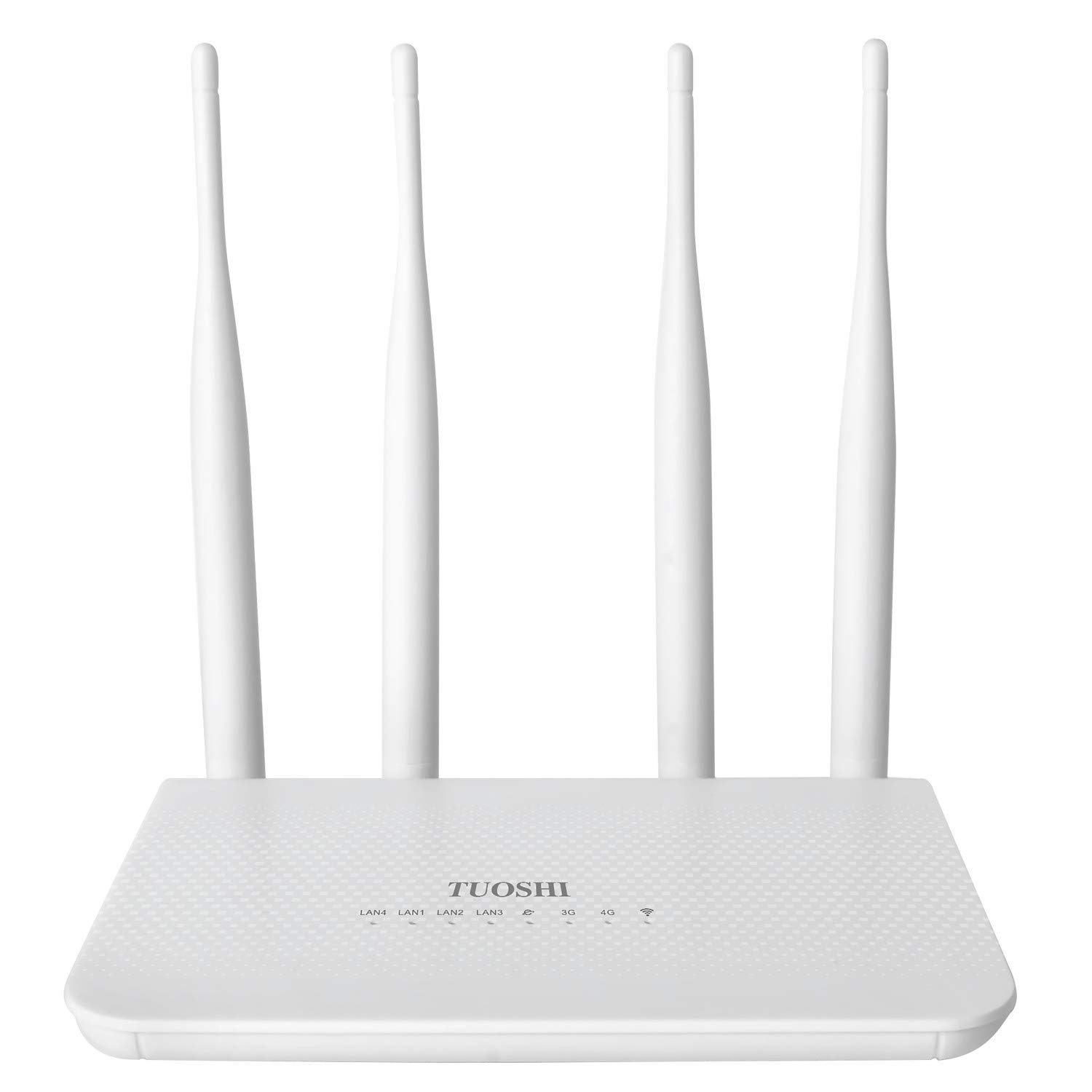
The flexible SIM-slot router that punches well above its price for travelers on a budget.
This TUOSHI router is the pick for the budget-conscious buyer who wants wide carrier support without a locked contract. It works with major 4G providers including AT&T and T-Mobile, and buyers report it also runs smoothly on Verizon through a US Mobile pooled plan, with no tether throttle and SIM adapters included in the box. The 4G LTE Cat4 modem (a standard that handles download speeds up to 150Mbps on cellular) reaches those speeds, while the Wi-Fi side broadcasts at up to 300Mbps on the 2.4 GHz band — plenty for streaming and file sharing in a car or cabin.
The setup is genuinely painless: a built-in standard SIM card slot offers plug-and-play functionality, and the web interface is beginner-friendly. Owners mention a fast 10-minute setup with an active SIM, and one even uses an IoT SIM to run security cameras. Just note that the 2.4 GHz single-band frequency is the weaker link here — unlike the dual-band Winegard below — so don’t expect blazing 5 GHz speeds if every device in the vehicle is streaming 4K at once.
Security is a strong suit, with embedded L2TP, PPTP, OpenVPN, and WPA3 encryption to safeguard your data, plus Mesh capability for roaming across rooms. The high-gain four antennas expand signal reach, and the wired LAN side offers 4 fast Ethernet ports for hardwiring devices. The most-discussed honest caution in the review data is connectivity — results vary by carrier and location, with a minority reporting poor speeds while most praise the easy setup.
What Owners Value
- Fast 10-minute plug-and-play setup that works with AT&T, T-Mobile, and Verizon SIMs
- 300 Mbps dual-band wireless speeds with WPA3 encryption for secure browsing
- Four Ethernet ports and a scheduled reboot feature for stable daily use
Trade-Offs to Know
- Single-band 2.4 GHz only — no faster 5 GHz channel for heavy streaming
- Connectivity quality is mixed depending on your carrier and where you park
- Plastic build and no WAN port limit it as a permanent RV install
Reach for this if: you want an affordable, open up router to test which carrier works best on your routes.
Look elsewhere if: you need a rugged, dual-band unit for extreme temperatures or permanent vehicle mounting.
2. LINOVISION Industrial 4G LTE WiFi Cellular Router

A rugged dual-SIM workhorse that holds a signal in places other routers give up.
This LINOVISION is built for remote sites, RVs, boats, and any vehicle that needs dependable internet far from towers. The defining feature is the dual SIM card slots, which let you back up between two cellular networks — it works with Verizon, AT&T, and T-Mobile, with confirmed compatibility on Verizon’s vzwinternet APN. The industrial design uses a compact diecast aluminum enclosure and operates across a wide temperature range of -40°F to +158°F, so it survives a truck cab in summer or a freezer-cold storage unit.
The router’s extended frequency bands, including B66 and B71, are the secret to its rural coverage — it pulls signal where regular routers fail. Three high-performance antennas with magnetic bases boost that reception further. On the wired side, the RS485 port provides data transmission for IoT devices like smart meters and cashier registers, and there are extra digital inputs and outputs for remote control. The download speed is rated at 150 Mbps with a 50 Mbps uplink, and the built-in failover automatically switches between LAN, cellular, and Wi-Fi networks with configurable priority.
Customers note this unit is “reliable for 2 years now,” tracking 10 security cameras on an empty property 1200 miles away, and it reconnects to the cell tower on its own without a power cycle. The most-discussed caution is that carriers may detect the router and throttle it to hotspot data — a common issue across this category. It also ships with a free two years of cloud subscription for centralized management. An occasional unit arrives defective, so check the SIM sockets and IMEI lock on delivery.
Built for the boonies: the extended B66/B71 bands and magnetic antennas make this the range champion of the list, and the -40°F to +158°F operating range means it belongs in a commercial vehicle, not just a family car.
Choose it when: your router lives in a harsh environment or a remote location where self-recovery matters more than speed.
Think twice if: you only need weekend RV Wi-Fi — the industrial price and complexity are overkill for light use.
3. Furrion Access 4G LTE Access Point and Wi-Fi Booster

The ceiling-mounted hybrid that turns weak park Wi-Fi into a strong onboard network.
This Furrion is unique in the list because it does double duty: it is both a 4G LTE access point and a Wi-Fi booster with a slide-in design and a ceiling mount bracket. That means it can grab a weak campground Wi-Fi signal and rebroadcast it inside your RV, or it can use its own cellular connection when no park Wi-Fi exists. The 5 GHz frequency band keeps things fast, with speeds up to 150Mbps, and the Gigabit Ethernet connections let you hardwire a TV or laptop directly rather than relying on wireless only.
The standout for many owners is that it works as a Wi-Fi extender without needing a data plan at all — one buyer runs it off an iPhone hotspot with the antenna, firewall, and MAC filtering (a security feature that only lets approved devices connect) all active. The iOS and Android app makes configuration straightforward, and WPS (a button that lets you pair devices quickly) is supported for quick device pairing. Furrion also offers online re-charging through its app, web, or call center, though the data plans themselves are widely considered pricey — most owners agree a phone hotspot is cheaper for daily use, making this a hub for convenience rather than a cost saver.
On the honest side, the review data shows the most-discussed aspect is functionality, which skews negative, including reports of a unit needing a reboot every 15 minutes and slow tech support with 3-day email replies. An occasional unit also arrives with overheating issues after a couple of months. The installation itself earns consistent praise — buyers find it an easy install with clear instructions for activating service.
Hybrid versatility: no other unit here can repeat park Wi-Fi and act as a cellular router in one ceiling-mounted box, but the premium price and finicky reliability mean it suits patient owners.
Ideal for: RVers who want a permanent, neat ceiling install and like having a Wi-Fi extender fallback in addition to cellular.
Not for: anyone who wants a set-and-forget router — the reboot issues and costly data plans demand ongoing attention.
4. Winegard Gateway 5G GW-5G01 WiFi & 5G Router
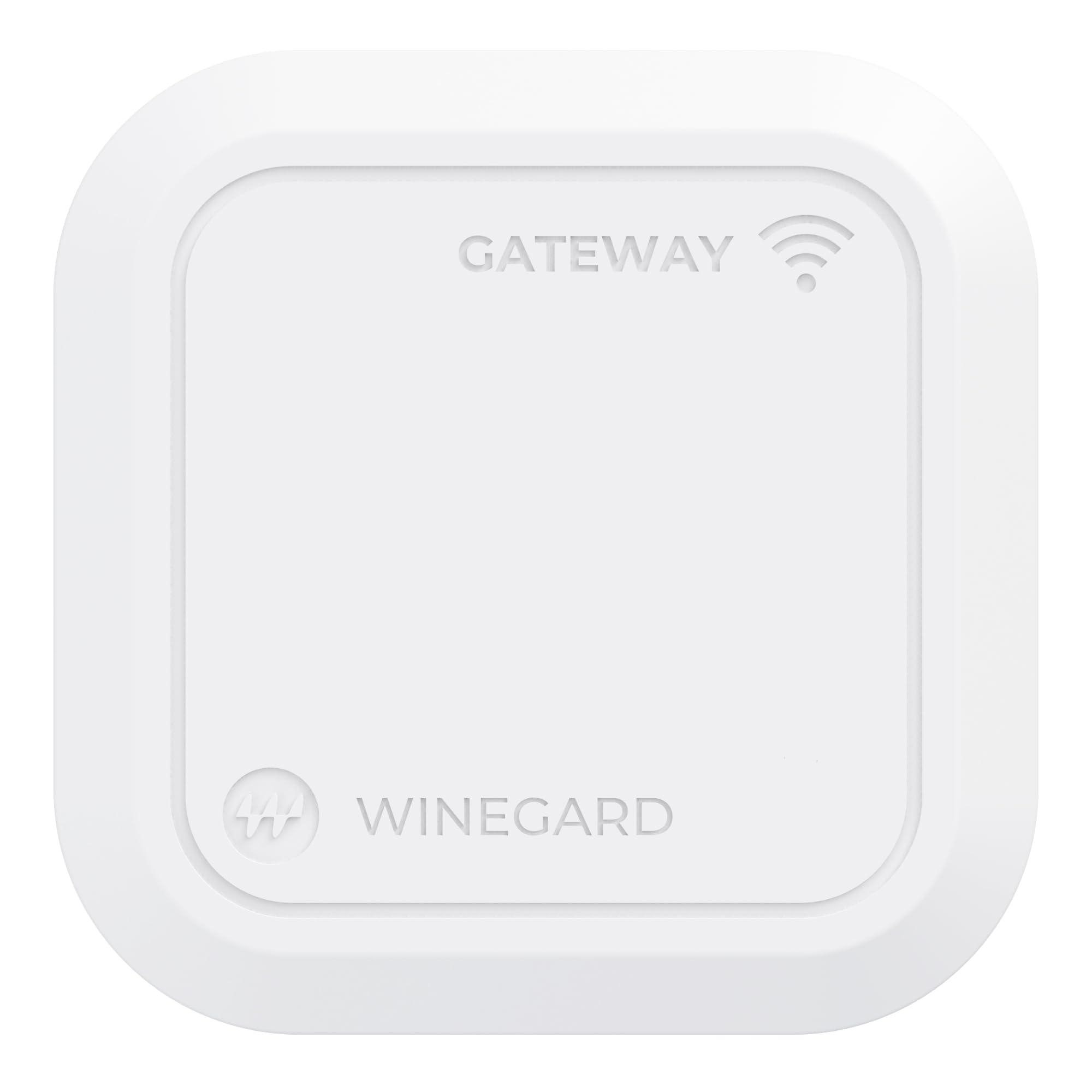
The 5G speed demon that pairs with your RV dome antenna and even Starlink.
This Winegard is the most future-proof router in the lineup, built around a 5G modem that integrates directly with Winegard’s Air 360+ 5G dome antenna for ultra-fast cellular backhaul while traveling. It supports dual-band 802.11ac Wi-Fi on both 2.4 GHz and 5 GHz bands, so you get the range of 2.4 and the speed of 5 GHz on the same unit. The data transfer rate is rated up to 2000 Mbps, which crushes the 150 Mbps ceiling of the Furrion and LINOVISION above, making it the clear speed leader of the group.
Carrier flexibility is excellent: it supports Winegard FreedomGO no-contract 30-day plans plus T-Mobile, Verizon, and AT&T, and it works with the new T-Mobile 5G Unlimited plan. For the ultimate setup, the Ethernet WAN port lets you add Starlink or another satellite network, and it supports RV Halo Smart Sensors to make your RV smart and secure with hybrid internet connections. U.S.-based design and servers are a point of pride here, aimed at buyers who want to avoid foreign monitoring concerns.
The review data shows a mixed installation picture, with some finding it easy and others hitting snags — a paperclip trick and YouTube help are mentioned as useful. Several owners stress the plan choice matters: use a hotspot-style mobile data plan, not a home internet SIM, for consistent performance. The coverage is rated at 1/3 mile, and the router holds a connection better than phones or typical RV park Wi-Fi. The most-discussed downside is value for money, with some finding it expensive relative to the effort.
Speed and Reach
- 2000 Mbps data rate and dual-band Wi-Fi for heavy streaming and gaming in the RV
- Integrates with Winegard Air 360+ 5G dome antenna and supports Starlink via Ethernet WAN
- Works with T-Mobile, Verizon, AT&T, and no-contract FreedomGO plans
Setup Reality
- Install is moderate, with some owners needing YouTube help and a paperclip trick
- The wrong SIM plan (home internet vs hotspot) causes performance problems
- Mixed reports on reliability — some find it works only half the time
Best for: the tech-forward RVer who already has a Winegard dome antenna and wants Starlink-ready, 5G-speed connectivity.
skip it if: you are on a tight budget — the premium price and the need for the right data plan make this a commitment, not a casual add-on.
Understanding the Specs
Frequency Bands
The frequency band is the channel your router uses to broadcast Wi-Fi. A single-band router on 2.4 GHz reaches farther through walls and vehicle panels, but it is more crowded and slower. A dual-band router adds the 5 GHz channel, which is faster but shorter-range — so you get both speed and coverage in one unit. The Winegard offers both, while the TUOSHI and LINOVISION are single-band 2.4 GHz.
Data Transfer Rate
The data transfer rate, measured in megabits per second (Mbps), tells you the maximum speed the router can push. The Winegard leads with 2000 Mbps, while the Furrion and LINOVISION cap at 150 Mbps and the TUOSHI at 300 Mbps. A higher number matters most when several devices stream video at once; for light browsing and email, even 150 Mbps is plenty.
FAQ
Will an automotive WiFi router work with any carrier SIM card?
What is the difference between a Wi-Fi booster and a cellular router?
Does a 5 GHz router perform better in a vehicle than a 2.4 GHz one?
Can I mount these routers permanently in my RV?
How long does an automotive WiFi router last?
Will my carrier throttle my data if I use a router instead of a phone?
How many devices can connect to these routers at once?
Is a Starlink-ready router a better buy for an RV?
What is a dual SIM router and why do I need one?
Are these routers secure for sensitive work data?
Final Thoughts: The Verdict
For the majority of shoppers, the best automotive wifi router is the TUOSHI N300 because its open up SIM slot and fast 10-minute setup give you the most flexibility for the least fuss. If you need rugged reliability for a remote site or a commercial vehicle, grab the LINOVISION Industrial with its dual SIM failover. And for the luxury end of the spectrum, the Winegard Gateway 5G is the one to reach for when you want 2000 Mbps speeds and Starlink-ready connectivity in your RV.
How We Picked
We do not accept paid placement. Every pick is matched to a real buyer and a real use-case; we do not hands-on test units.
Sources & Methodology
Specifications: manufacturer listings and product documentation. Review insights: verified customer reviews, as of August 2026. Pricing: not shown on this page (it changes often); check the current price via the retailer link.
As an Amazon Associate, Gadgets Feed earns from qualifying purchases. This does not affect which products we feature.