
An autonomous flying drone is no longer a futuristic fantasy—it’s a tool that plans its own path, tracks its subject, and returns home without you touching the sticks. The shift from manual piloting to AI-assisted flight has opened aerial cinematography to anyone willing to learn a few smart modes, but the gap between a toy with “follow me” and a true autonomous aircraft is defined by sensor arrays, real-time processing, and redundant safety systems.
I’m Min — the co-founder and writer behind Gadgets Feed. I’ve spent hundreds of hours analyzing the camera specs, gimbal stabilization systems, obstacle avoidance algorithms, and flight-time benchmarks of over forty current models to identify which drones actually deliver on their autonomous promises.
This guide ranks the top contenders based on camera quality, intelligent flight modes, battery endurance, and safety features so you can confidently choose the best autonomous flying drone for your budget and skill level.
How To Choose The Best Autonomous Flying Drone
Not every drone labeled “autonomous” actually flies itself. Real autonomy requires a combination of sensor fusion, intelligent flight software, and redundant fail-safes. Here are the critical factors to evaluate.
Obstacle Avoidance Systems
The autonomy chain breaks the moment the drone hits a tree branch. Look for omnidirectional avoidance—forward, backward, upward, downward, and side sensors. Vision-based systems work well in daylight, but forward-facing LiDAR (found on premium models like the DJI Mini 5 Pro and Autel EVO 2 Pro V3) is critical for low-light or night autonomous tracking. Without full coverage, the drone cannot make safe path-planning decisions on its own.
Tracking Intelligence
ActiveTrack and AI tracking modes vary dramatically. Basic “follow me” relies on GPS lock to the controller, which drifts when the controller moves erratically. True subject recognition uses visual algorithms to lock onto a person, vehicle, or object, keeping the frame centered even during turns, partial occlusion, or speed changes. The Potensic ATOM 3 and DJI Mavic 4 Pro represent the highest tier of this technology, maintaining lock at low altitudes and high speeds.
Gimbal Stabilization
Autonomous flight is useless if the footage is jello. A 3-axis mechanical gimbal is the baseline for stable video. Electronic image stabilization (EIS) can supplement but never replace a physical gimbal for professional results. The HOVERAir X1 PROMAX uses a 2-axis gimbal with EIS, which is acceptable for action selfies but not for cinematic work. Every drone in this guide has at least a 3-axis gimbal except where noted.
Flight Time and Battery Redundancy
Autonomous missions consume more power than manual flight because the onboard computer, sensors, and transmission system run at full load. A single battery under 30 minutes in real-world conditions is too short for complex waypoint or tracking runs. Multi-battery bundles (Fly More Combos) are essential for serious users. The Potensic ATOM 3 Fly More Combo delivers 120 minutes across three batteries, which is industry-leading endurance.
Return-to-Home Reliability
RTH is the last line of defense in autonomy. The best systems use GPS for horizontal positioning and downward vision sensors for precision landing. The Antigravity A1-360 and DJI Mini 5 Pro include AR RTH with landing pad recognition, which lands within inches of the takeoff point. Avoid drones that only offer basic low-battery RTH without vision-assisted landing.
Quick Comparison
On smaller screens, swipe sideways to see the full table.
| Model | Category | Best For | Key Spec | Amazon |
|---|---|---|---|---|
| Potensic ATOM 3 | Mid-Range | Best Overall Autonomous Performance | 16KM Transmission, 120-Min Flight | Amazon |
| DJI Mini 5 Pro | Premium | Omnidirectional Safety & 1-inch CMOS | 1-Inch Sensor, 52-Min Flight | Amazon |
| Antigravity A1-360 | Premium | Immersive 360° FPV Experience | 8K 360 Video, Vision Goggles | Amazon |
| Autel EVO 2 Pro V3 | Premium | Professional 6K Cinematic & No Geofencing | 1″ CMOS, 15KM Tri-band Transmission | Amazon |
| DJI Mavic 4 Pro | Premium | Professional Triple-Camera & Long Range | 100MP Hasselblad, 51-Min Flight | Amazon |
| DCX Volo X EZ AI | Mid-Range | AI-Assisted Flight with 360° LiDAR Avoidance | 45-Min Flight, LiDAR Obstacle Avoidance | Amazon |
| Holy Stone HS600D | Mid-Range | Wired-Relay Stability & Beginner Safety | Level-6 Wind Resistance, 80-Min Flight | Amazon |
| Potensic ATOM 2 | Mid-Range | Sub-249g Travel with AI Night Mode | 10KM Transmission, 96-Min Flight | Amazon |
| Bwine F7GB2 Pro | Mid-Range | Long Flight Time & High-Altitude Performance | 2000m Altitude, 75-Min Flight | Amazon |
| Bwine F7MINI 4K | Mid-Range | Sub-249g with Built-in RC Screen | 5.5″ 1080P RC Screen, 64-Min Flight | Amazon |
| HOVERAir X1 PROMAX | Premium | Handsfree Action Selfie Drone | 8K Video, 42 KM/H Follow Speed | Amazon |
In‑Depth Reviews
1. Potensic ATOM 3 Fly More Combo (RC PTD 2)
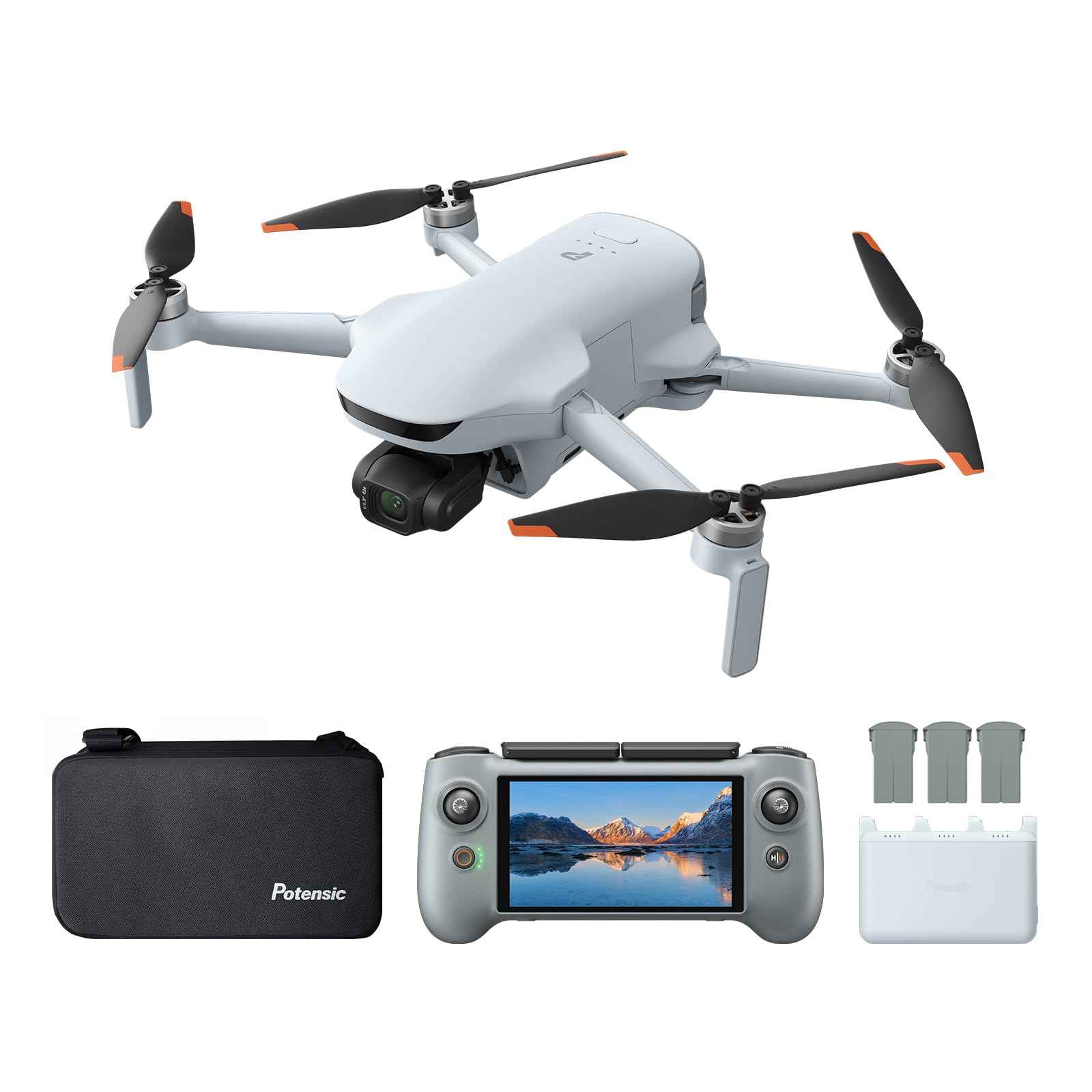
The Potensic ATOM 3 strikes the hardest balance between autonomous intelligence, camera quality, and flight endurance at a mid-range cost. Its 1/1.3-inch CMOS sensor captures 4K 60fps HDR video with P-Log for professional color grading, and the 50MP stills rival drones costing twice as much. The 16KM PixSync 5.0 tri-band transmission delivers a rock-solid 1080p/60fps live feed—critical for framing autonomous waypoint or tracking missions.
Autonomy is the headline here. AI Tracking 2.0 supports low-altitude tracking below 4 meters with the propeller guard, and the AR RTH uses apron recognition to land precisely. QuickShots like Drift, Spin Ascend, and Dolly Zoom execute complex cinematic moves without manual input. The included PTD 2 remote with its 5.5-inch FHD 900-nit touchscreen is bright enough for direct sunlight, eliminating the need for a phone mount.
The Fly More combo includes three batteries that fast-charge in 90 minutes via the 65W parallel hub, totaling 120 minutes of flight. At under 249g, it requires no FAA registration. The trade-off is that obstacle avoidance is not omnidirectional—only forward, backward, and downward—but for open-sky autonomous filming, this drone delivers best-in-class value.
Why it’s great
- Exceptional 4K 60fps HDR video detail and color depth from the 1/1.3″ sensor
- 16KM tri-band transmission with 900-nit built-in display remote
- AI Tracking 2.0 works effectively at low altitudes and high speeds
Good to know
- Obstacle avoidance is tridirectional, not omnidirectional
- Some users report occasional GPS signal drop in dense urban areas
2. DJI Mini 5 Pro Fly More Combo Plus with DJI RC 2
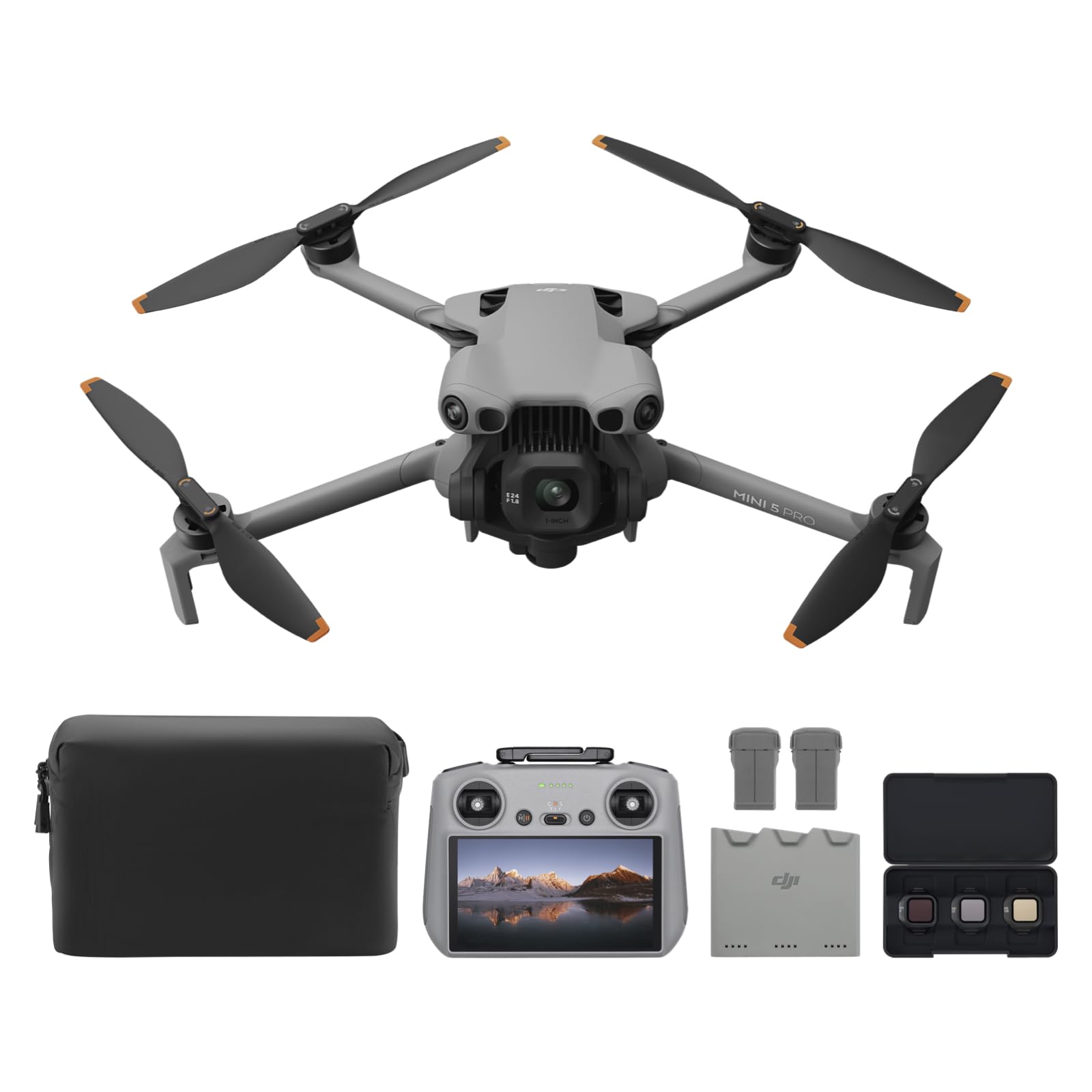
The DJI Mini 5 Pro is the safe haven for beginners who want professional autonomous features. Its 1-inch CMOS sensor captures 4K/60fps HDR video with impressive dynamic range, and the 225° gimbal rotation enables true vertical filming without cropping. The Nightscape omnidirectional obstacle sensing uses forward-facing LiDAR and vision sensors to detect obstacles in all directions, even in low light, making it one of the safest autonomous flyers under 250g.
ActiveTrack 360° is the star autonomy feature—it tracks subjects autonomously and makes navigation decisions in real-time, maintaining lock even when the lower half of a person is obscured. The upgraded ActiveTrack also has directional awareness for automotive cinematography up to 656 feet. With the Intelligent Flight Battery Plus, you get up to 52 minutes of flight, and fast charging brings three batteries to full in about 193 minutes.
The DJI RC 2 controller has a bright built-in screen, but note that the Plus batteries push the drone over 250g, requiring FAA registration and Remote ID. The Fly More combo includes ND filters, a charging hub, and a shoulder bag. Build quality is exceptional, and the DJI Fly app provides comprehensive flight modes, though the app is no longer on Google Play and must be downloaded from DJI’s website.
Why it’s great
- Omnidirectional obstacle sensing with LiDAR for night safety
- ActiveTrack 360° makes true autonomous navigation decisions
- 1-inch sensor delivers excellent image quality and HDR video
Good to know
- Plus batteries push weight over 250g, requiring FAA registration
- DJI Fly app removed from Google Play; manual download needed
3. Antigravity A1-360
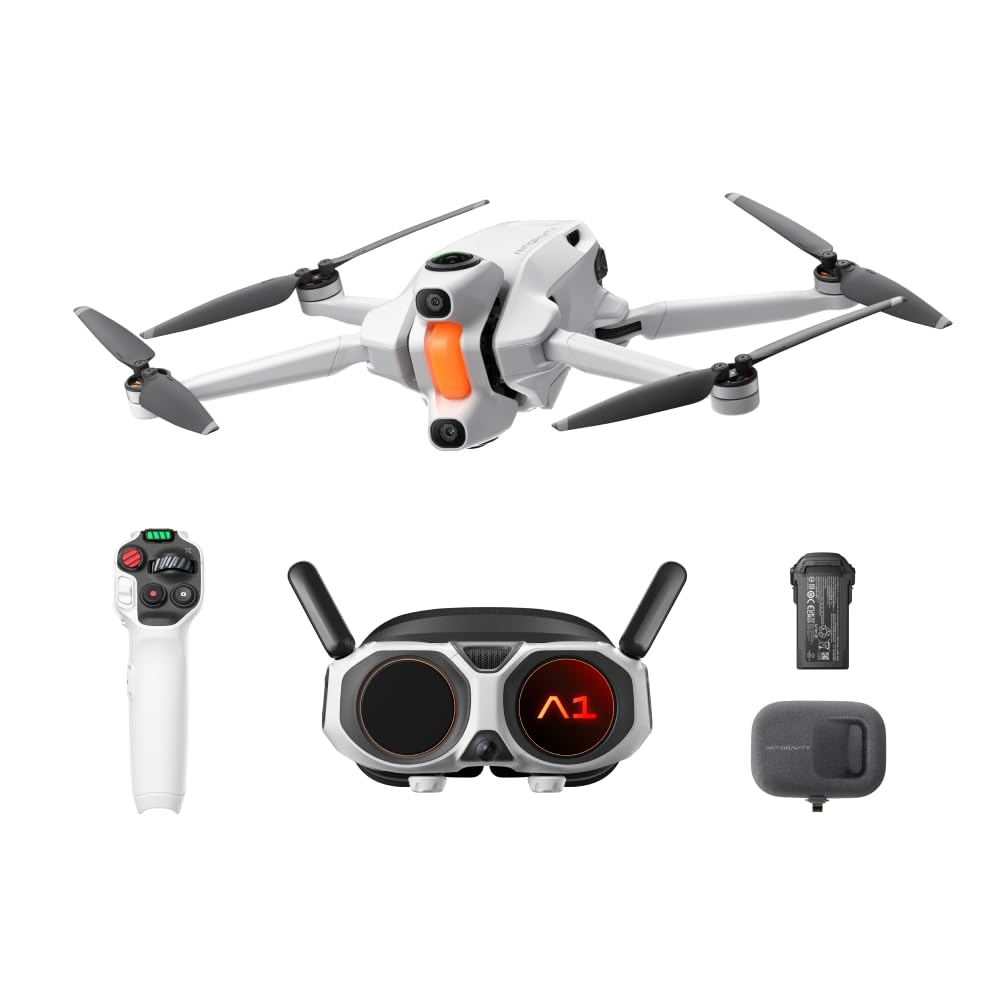
The Antigravity A1-360 redefines what autonomy means by combining 360-degree 8K video capture with immersive FPV goggles and point-to-fly motion control. Powered by Insta360’s 360 technology, it stitches seamless panoramic footage that you can reframe in post-production—so you never miss the shot because the drone was pointing the wrong way. The Vision Goggles offer a 90-degree FOV with dual 1-inch Micro-OLEDs and built-in diopter adjustment for a glasses-free experience.
Autonomy is intuitive here. FreeMotion Mode lets you point where you want to fly, and the drone executes the movement automatically. Sky Path creates automatic flight paths, Deep Track locks onto subjects, and Auto Editing 2.0 reframes 360 footage into ready-to-share films with music syncing. The 249g standard battery keeps it FAA-exempt, while the high-capacity battery extends flight to 39 minutes.
Omnidirectional obstacle avoidance fuses 360-degree sensing with front and downward binocular vision, though the drone’s unique form factor means some side clearance is tighter than traditional quads. The trade-off is that the gimbal is integrated into the 360 camera system, not a traditional 3-axis gimbal. For users who want a completely new autonomous flying experience that prioritizes cinematic flexibility over traditional piloting, the A1-360 is unmatched.
Why it’s great
- 8K 360 capture eliminates the need to aim the camera during flight
- Vision Goggles provide an immersive, lag-free FPV experience
- Point-to-fly motion control makes flying trivially easy for beginners
Good to know
- Not a traditional 3-axis gimbal; stabilization relies on EIS and 360 stitching
- Flight time is limited to 25 minutes on the standard battery
4. Autel Robotics EVO 2 Pro V3

The Autel EVO 2 Pro V3 is the uncompromising tool for aerial cinematographers who need 6K resolution and zero geofencing restrictions. Its Sony 1-inch CMOS sensor captures 6K HDR video with an adjustable aperture from F2.8 to F11, and the Moonlight Algorithm 2.0 pushes maximum ISO to 44000 for exceptional low-light performance. The 12-bit A-Log color profile records 68.6 billion colors, offering 64 times the color rendering power of 10-bit—critical for professional post-production grading.
Autonomous features are comprehensive. Dynamic Track 2.0 uses deep learning algorithms to detect pedestrians and automatically track selected subjects while avoiding obstacles in real-time. The 360-degree omnidirectional obstacle avoidance system uses 12 computer vision sensors, 2 sonar sensors, and 2 LED landing lights—the most sensor-dense configuration in this guide. The Autel Smart Controller SE features a 6.4-inch OLED touchscreen with an IP43 weather rating.
The major advantage over DJI is the absence of geofencing in no-fly zones—Autel leaves compliance responsibility to the pilot. The 7100mAh battery delivers 40 minutes of flight time, and the tri-band Skylink 2.0 transmission reaches 15KM. At 1191 grams, this is a larger, heavier drone that requires FAA registration. For professionals who need unrestricted autonomous operation and 6K post-production flexibility, the EVO 2 Pro V3 is the definitive choice.
Why it’s great
- 6K HDR video with 12-bit A-Log for professional color grading
- Most comprehensive obstacle avoidance system (12 vision + 2 sonar sensors)
- No geofencing restrictions for professional operations
Good to know
- Heavy at 1191g; requires FAA registration
- More sensitive flight controls than DJI equivalents
5. DJI Mavic 4 Pro Drone Fly More Combo
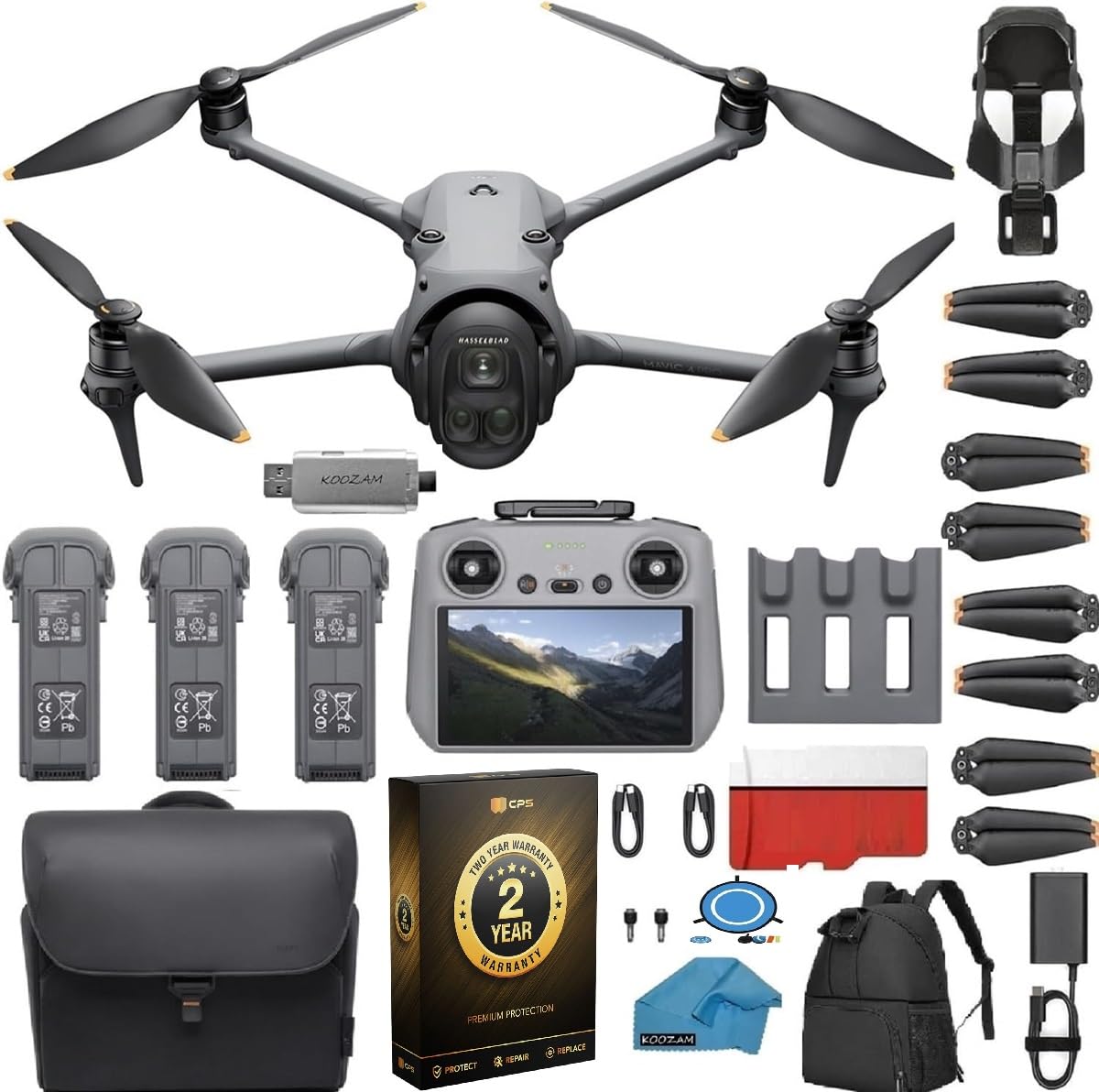
The DJI Mavic 4 Pro is the most technologically complete autonomous drone on the market. Its triple-camera Infinity Gimbal includes a 100MP Hasselblad wide-angle lens with 6K60 HDR and HNCS natural color science, a 48MP medium telephoto lens for portraits, and a 50MP telephoto lens for long-range detail. The wide and medium lenses support 4K120 slow motion, and all lenses feature dual native ISO fusion for exceptional dynamic range.
Autonomous tracking reaches its peak here. ActiveTrack 360 allows the drone to autonomously make navigation decisions, maintaining subject lock even when partially obscured, and tracks vehicles up to 656 feet away. The low-light omnidirectional obstacle sensing uses six 0.1-lux sensitivity fisheye sensors plus forward-facing LiDAR, enabling obstacle avoidance at up to 40 mph in near-darkness. The optimized battery delivers up to 51 minutes of flight time.
The Fly More Combo includes three batteries, ND filters, a charging hub, a backpack, and a landing pad. The backpack and tablet holder are basic accessories, but the drone’s core performance is unmatched. It requires FAA registration due to its weight. For professionals or serious enthusiasts who want every autonomous capability DJI has ever developed in a single drone, the Mavic 4 Pro is the ultimate investment.
Why it’s great
- Triple-camera system with Hasselblad color science for versatile shooting
- ActiveTrack 360 makes autonomous navigation decisions without pilot input
- Low-light obstacle avoidance at 40 mph using LiDAR and fisheye sensors
Good to know
- Fly More combo accessories (backpack, tablet holder) are basic quality
- Steep learning curve for first-time autonomous drone users
6. DCX Volo X EZ AI
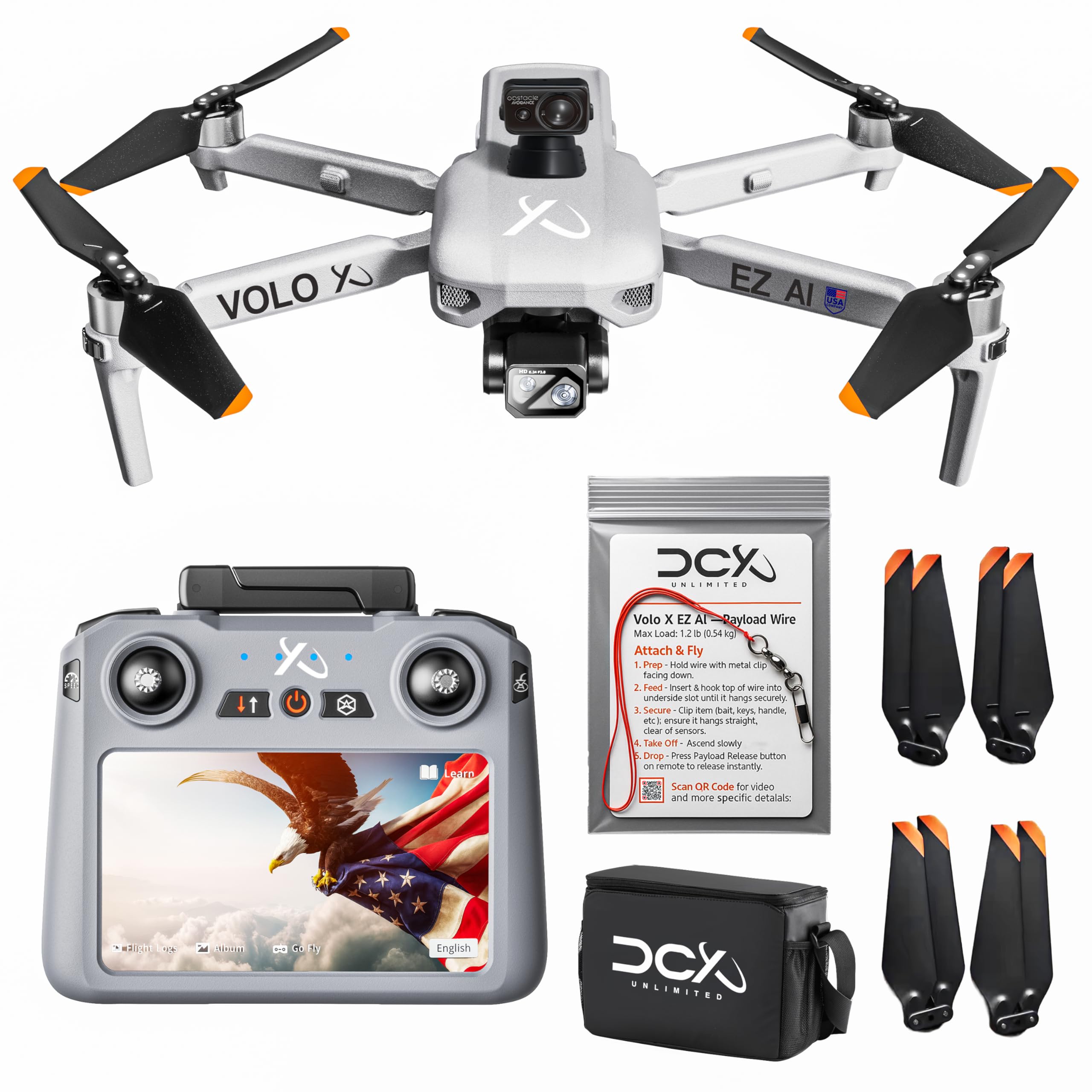
The DCX Volo X EZ AI puts genuine 360-degree LiDAR obstacle avoidance into a beginner-friendly mid-range package. This sensor setup detects obstacles in all directions of travel, making it significantly safer than drones with only forward/backward sensors. The 4K camera sits on a 3-axis gimbal with EIS, and the remote has a built-in screen that eliminates phone dependency. The Follow Me and Precision Return-to-Home features are fully automated.
The 5000mAh battery delivers up to 45 minutes of flight time, and the 4-mile range is generous for autonomous exploration. A unique feature is the built-in Payload Release air-dropping mechanism that can carry and release up to 1.2 pounds on command—useful for light delivery tasks. The drone is FAA Remote ID compliant and has no geofencing limits or height restrictions.
The trade-off is that the 12MP effective still resolution is low compared to competitors, and the camera’s low-light performance is not exceptional. Some users report controller sync issues that cause screen freezing. However, for buyers who prioritize LiDAR-based autonomous safety over maximum photo quality, the Volo X EZ AI offers strong value with a US-based support team.
Why it’s great
- 360° LiDAR obstacle avoidance provides comprehensive collision protection
- 45-minute flight time with 4-mile range for extended autonomous missions
- Built-in payload release mechanism for light delivery tasks
Good to know
- 12MP still resolution is lower than similarly priced competitors
- Some users report occasional controller sync issues
7. Holy Stone Sentinel HS600D

The Holy Stone HS600D is engineered for pilots who want stress-free autonomous flight with professional-grade stabilization. Its 603g reinforced frame houses a 1/2-inch Sony CMOS sensor with f/1.8 aperture, capturing 4K HDR video and 48MP photos. The wired-relay transmission system replaces unstable Wi-Fi with a tethered link, providing low-latency HD feed even in interference-heavy environments.
Autonomous modes include Follow Me, Smart Tracking, Time-Lapse, and Panorama. The beginner mode imposes automatic altitude limits and simplifies one-button takeoff and smart-return. Multi-sensor safety uses TOF, GPS, and optical flow positioning for low-altitude stability. The remote has a built-in screen, which reviewers praise for its clarity and usability.
The Level-6 wind resistance rating is genuine—reviewers have flown it in 30-40 mph wind with stable hovering. The camera lacks manual ISO and exposure adjustment, and RAW format is not supported, but for stable, easy-to-use autonomous footage, the HS600D is a reliable choice. Its two included batteries deliver about 80 total minutes of flight.
Why it’s great
- Wired-relay transmission eliminates Wi-Fi dropout issues
- Level-6 wind resistance ensures stable flight in challenging conditions
- Beginner safety modes with automatic altitude limits for new pilots
Good to know
- No RAW photo support or manual exposure controls
- Return-to-home landing is close but not always exact
8. Potensic ATOM 2 Fly More Combo
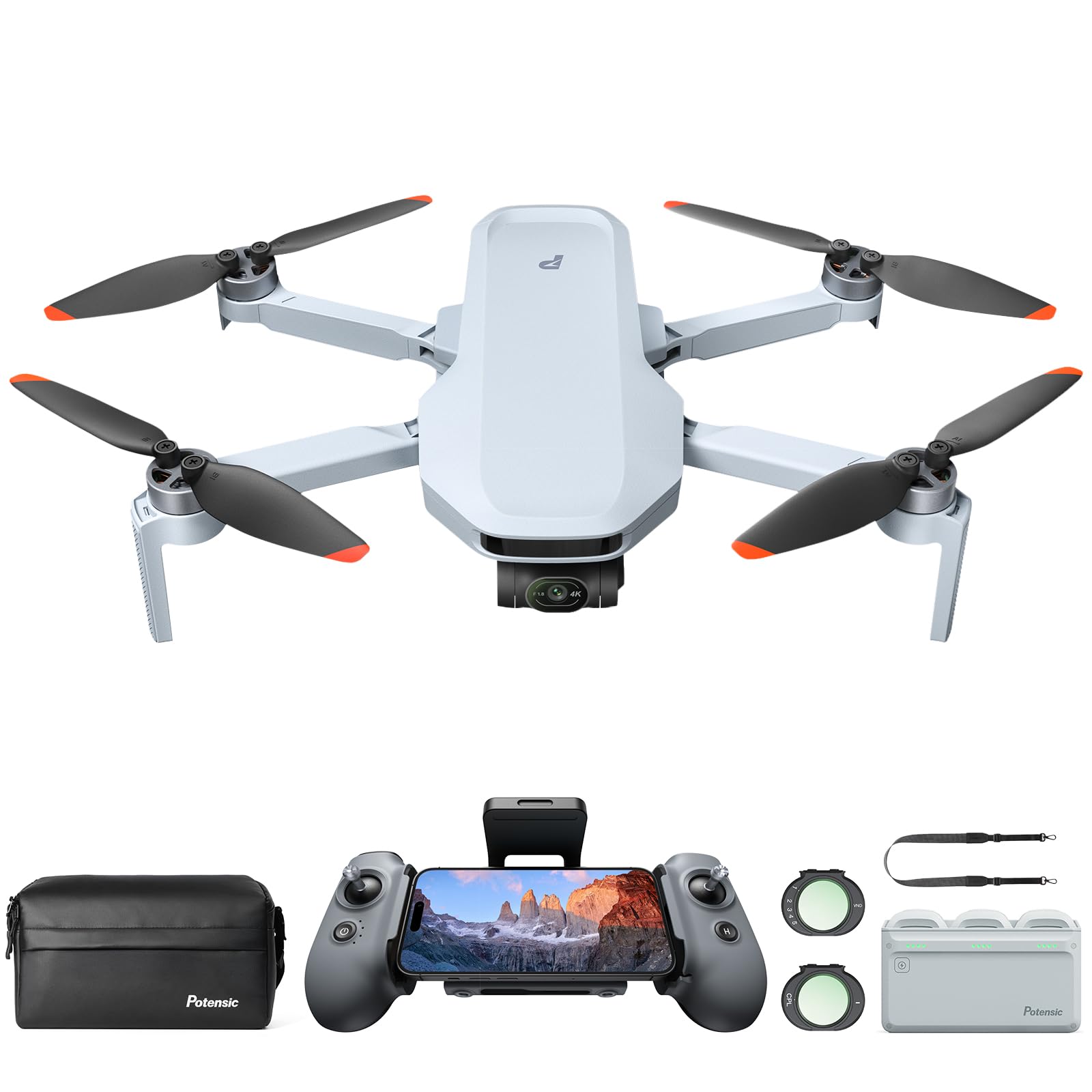
The Potensic ATOM 2 proves that autonomous performance doesn’t require FAA registration. At under 249 grams, it’s exempt from registration while still delivering AI tracking, 48MP photos, and 4K/30fps HDR video from its 1/2-inch Sony CMOS sensor. The 3-axis gimbal keeps footage smooth, and the 10KM PixSync 4.0 transmission provides 1080p/30fps live view with excellent anti-interference.
The AI-powered autonomous features include Spotlight, Follow, and Parallel tracking modes controlled through an intuitive frame-your-target interface. AI Night Shot mode enhances low-light video clarity. The Fly More combo includes ND and CPL filters for exposure control—a thoughtful inclusion. The three batteries charge simultaneously in 1.3 hours via the parallel charging hub, providing 96 minutes of total flight time.
Vertical shooting at 2.7K, Dolly Zoom, Slow Motion, CineRoll, and QuickShots provide creative autonomous cinematic options. The customizable Home Point and Smart RTH ensure safe landings. The trade-off is that, unlike the ATOM 3, it lacks waypoint navigation—a feature some autonomous pilots will miss. For travel creators who need full autonomy in a sub-250g package, the ATOM 2 is a refined choice.
Why it’s great
- Sub-249g design requires no FAA registration or Remote ID
- AI Night Shot mode delivers impressive low-light video quality
- ND and CPL filters included for professional exposure control
Good to know
- No waypoint navigation mode for automated flight path creation
- Omnidirectional obstacle avoidance is not present
9. Bwine F7GB2 Pro

The Bwine F7GB2 Pro is built for autonomous flight in challenging high-altitude and windy environments. Its 1806 brushless motors and Level-6 wind resistance allow stable operation at altitudes up to 2000 meters, with a control range of 3KM (10,000 feet). The 4K camera with 3-axis gimbal and 5x digital zoom captures steady footage, and the FAA Remote ID certification ensures legal compliance.
GPS autonomous features include Follow Me, Waypoint Fly, Orbit Fly, and Auto Return on low battery or signal loss. The three 2600mAh intelligent batteries are UL 2054 certified for safety and deliver a combined 75 minutes of flight. The 120-degree FOV lens and larger CMOS sensor handle night scenes reasonably well. The app includes filters and background music for on-the-go editing.
The remote overlay displays flight data but the screen can be hard to read in direct sunlight. Wind handling is strong based on customer feedback, and the responsive support team from Mary is frequently praised. The main compromise is camera distortion during turns and slightly soft image rendering at the edges—expected at this price point. For long-duration autonomous flights in variable weather, the Bwine F7GB2 Pro delivers exceptional flight time.
Why it’s great
- Certified for 2000m altitude operation with Level-6 wind resistance
- 75 minutes total flight time from three UL-certified batteries
- Complete autonomous modes including waypoint and orbit fly
Good to know
- Camera shows soft corners and some distortion during rapid turns
- Remote screen is difficult to see in bright sunlight
10. Bwine F7MINI 4K (RC3)
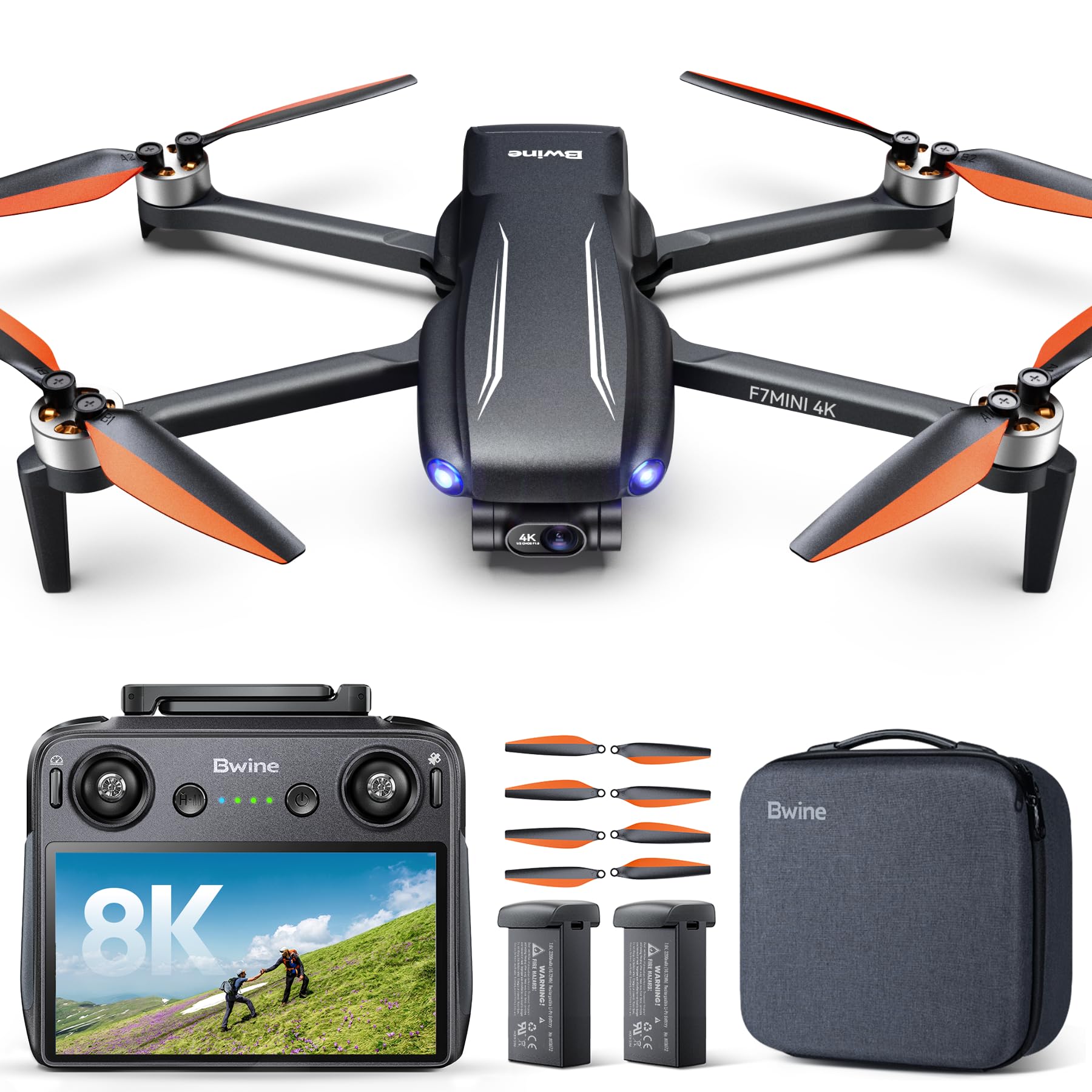
The Bwine F7MINI 4K (RC3) brings a budget-friendly approach to autonomous flight with one standout feature: the 5.5-inch 1080P 60Hz 500-nit remote screen that eliminates the need for a phone. This screen has 32GB of internal storage for saving shots directly. At under 249 grams, the drone is FAA-exempt, making it one of the most accessible autonomous drones for first-time buyers.
Autonomous GPS modes include Active Track with 0.5m accuracy, Cruise Control for steady shots, Orbit Flight for 360-degree circling, and Waypoint Planning for pre-drawn routes. The Smart RTH and Dynamic Home Point ensure the drone follows the controller’s location. The Drone Locator buzzer (120dB) helps find the drone if it goes down. The 4K video and 48MP photos use a 3-axis gimbal with EIS for stable footage.
The two included batteries provide 64 total minutes of flight (32 minutes each). PD 3.0 fast charging is supported (charger sold separately). The 6KM theoretical range drops to about 4.5KM in urban areas with 0.1s latency. The camera quality is good for the price but not professional-grade. For budget-conscious buyers who want a built-in screen and autonomous waypoint navigation, the F7MINI RC3 is an excellent entry point.
Why it’s great
- 5.5-inch 1080P remote screen with 32GB internal storage
- Sub-249g design requires no FAA registration
- Full waypoint planning and active track autonomous modes
Good to know
- PD 3.0 fast charger is sold separately
- Camera image quality is good but not professional grade
11. HOVERAir X1 PROMAX 8K
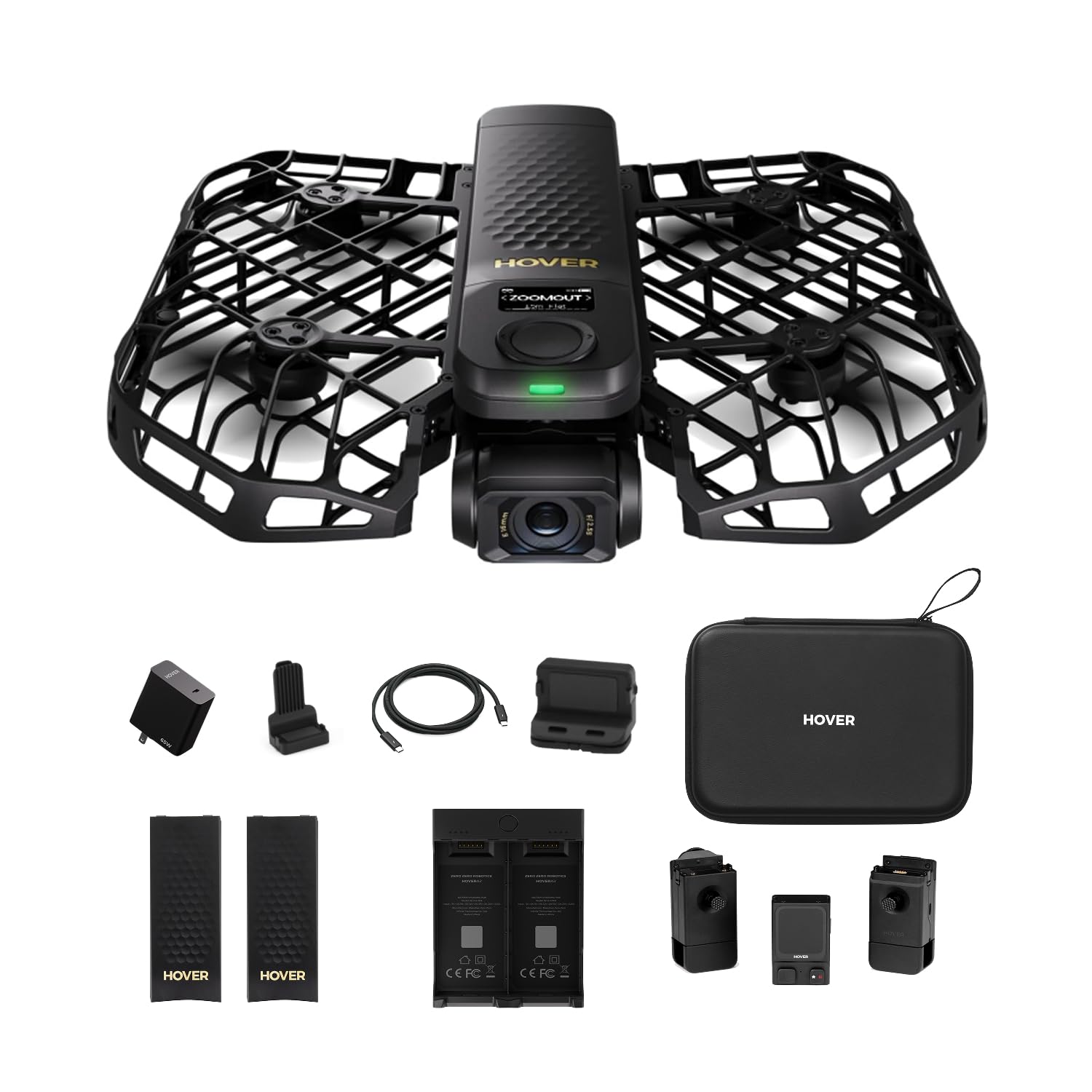
The HOVERAir X1 PROMAX is a specialized autonomous drone designed for a single purpose: following you during action sports without any controller. It launches from your hand, follows via voice command or button press, and lands in your palm. It weighs only 120g and is foldable, making it genuinely pocketable. The world’s first 8K@30fps flying action camera captures cinematic POV video.
Autonomy is fully hands-free. Over 10 flight modes (Hover, Zoom Out, Follow, Dolly Track) execute complex shots automatically. The OmniTerrain capability allows flight over snow, water, and cliffs—terrain that typically confuses GPS-dependent drones. Rear active collision detection uses a ToF sensor and visual sensor to brake before collisions at speeds up to 3m/s. The follow speed reaches 42 KM/H, with a burst speed of 60 KM/H for cycling and skiing.
The 2-axis gimbal with EIS and horizon leveling provides decent stabilization but doesn’t match a 3-axis gimbal for b-roll work. Battery life is limited to 25 minutes per charge, and the 1920mAh battery is relatively small. The 64GB internal storage is expandable to 1TB via SD card. The HOVERAir app handles configuration and download. This is not a general-purpose autonomous drone—it’s a specialist tool for active individuals who want a selfie drone that absolutely cannot be flown manually.
Why it’s great
- Completely hands-free launch, follow, and landing—no controller needed
- 8K@30fps video with OmniTerrain flight over snow and water
- Folds to pocket size at only 120g for true travel portability
Good to know
- 2-axis gimbal cannot match 3-axis for cinematic stabilization
- Battery life is limited to 25 minutes per flight
FAQ
How does ActiveTrack differ from basic GPS follow me?
Is a 3-axis gimbal necessary for autonomous flight?
Final Thoughts: The Verdict
For most users, the best autonomous flying drone winner is the Potensic ATOM 3 Fly More Combo because it delivers the highest autonomy-to-price ratio with 4K 60fps HDR video, 16KM transmission, AI Tracking 2.0, and 120 minutes of flight time—all at under 250g. If you want the industry-standard obstacle avoidance and ActiveTrack 360°, grab the DJI Mini 5 Pro. And for professional 6K cinematography with zero geofencing restrictions, nothing beats the Autel EVO 2 Pro V3.