
Frost on the windshield, numb fingers on the wheel, and a weak factory heater that barely takes the edge off by the time you reach your exit — that’s the cold reality for anyone relying on a car with a blown heater core, an older engine that takes forever to warm, or a cab designed more for utility than comfort. An auxiliary heater for car use isn’t a luxury; it’s the difference between white-knuckle shivering and a tolerable commute.
I’m Min — the co-founder and writer behind Gadgets Feed. My deep dives into automotive accessories have focused on how underdash heating units convert engine coolant or battery power into usable warmth, analyzing BTUs, wattage, and airflow patterns to separate effective gear from overhyped plastic.
This guide breaks down the core technologies — coolant-loop hydronic heaters, PTC electric fan units, and portable 12V defrosters — so you can match the right system to your vehicle and winter conditions. Whether you drive a classic pickup with no heater, a utility vehicle with an open cab, or a daily commuter that needs a boost, finding the right auxiliary heater for car is a direct path to a safer, more comfortable winter driving experience.
How To Choose The Best Auxiliary Heater For Car
Whether you are restoring a classic truck, winterizing a UTV, or supplementing a failing dash heater, the right auxiliary unit depends on your car’s cooling system and power budget. A coolant-loop heater that taps into your engine’s hoses provides serious, continuous heat (measured in BTU) without draining your battery, while a 12V electric or PTC unit offers simpler wiring at the cost of higher amp draw and lower total output. Choose based on how much heat you need and how much electrical capacity your vehicle can spare.
Coolant Loop vs. 12V Electric: The Fundamental Split
Coolant-based heaters (often called hydronic or water-heater units) require splicing into your vehicle’s 5/8-inch heater hose line — they pull hot engine coolant through a core and blow cabin air over it. These deliver the highest BTUs, often 8,000 to 8,500, and will keep a cab genuinely warm even in subzero temperatures. Their downside: installation takes more time, they need coolant, and they only work after the engine warms up. Electric units, by contrast, plug into a 12V battery source with a ceramic PTC element. These are faster to install, work immediately regardless of engine temp, but top out around 200W to 800W, which is adequate for a small defrost area but not the whole cabin on a bitter day.
BTU, Wattage, and Airflow: Decoding the Heat Numbers
BTU (British Thermal Unit) is the universal measure for coolant heaters. A unit claiming 8,000 BTU will produce roughly 2.3 kilowatts of heat — enough to warm a typical car cabin in freezing weather. Wattage, used for electric units, tells a different story: 200W is about 680 BTU, useful only for a tiny enclosed space like a 3D printer enclosure or a very small footwell. For real cabin heat in a van, truck, or SUV, a coolant-based heater in the 8,000 to 8,500 BTU range is the baseline. Airflow (measured in CFM) also matters: a high-BTU heater with a weak fan is a waste of hot coolant, so look for units with at least three fan speeds to push warm air where you need it.
Install Reality Check: Hose Splicing, Wiring, and Mounting
Every coolant heater requires a 5/8-inch (16mm) inner diameter heater hose — the standard on most cars and small trucks — and that hose is almost never included in the box. You will also need T-fittings, hose clamps, and a location to mount the core under the dash or inside a utility cab. Electric PTC units are easier: splice into a 12V power source (battery or accessory fuse box) and secure the fan housing with screws or zip ties. Before buying, crawl under your dash and measure the mounting depth — many units are bulky and won’t fit in tight footwells without modification.
Quick Comparison
On smaller screens, swipe sideways to see the full table.
| Model | Category | Best For | Key Spec | Amazon |
|---|---|---|---|---|
| Evargc 8500 BTU | Coolant | Full cab warmth in trucks/UTVs | 8500 BTU, 80 CFM, 3-speed fan | Amazon |
| XuSha 8000 BTU | Coolant | Budget hydronic heat for hot rods | 8000 BTU, 4-port, low noise | Amazon |
| Therwen 6-Port | Coolant | Windshield defrosting focus | 6-port, compact underdash fit | Amazon |
| Saihisday 4-Port | Coolant | Budget coolant heater for underdash | 4-port, 8A draw, universal | Amazon |
| CYDZSW 800W | Electric | 12V battery defrosting | 800W PTC ceramic, hardwire | Amazon |
| Roadpro 300W | Electric | Car with bad heater core | 300W ceramic, 15-ft wire | Amazon |
| PTCYIDU 200W | Electric | Small enclosure heating | 200W PTC, 110V, 0.5m³ space | Amazon |
In‑Depth Reviews
1. Evargc 12V Compact Hydronic Heater (8500 BTU)
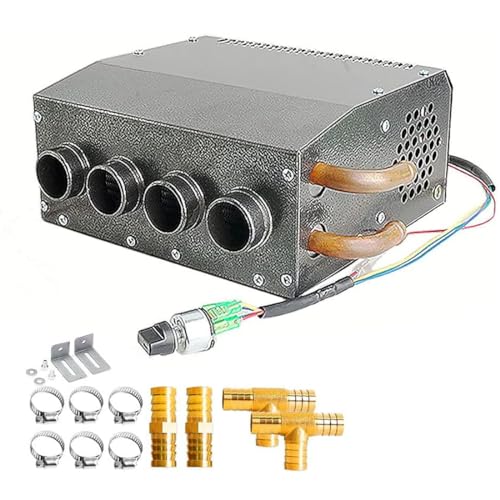
This is the unit that sets the benchmark for coolant-loop heaters. With a full 8,500 BTU output — about 2.5 kW of thermal energy — and a three-speed fan pushing 80 CFM, it has the thermal capacity to warm a Skid Steer cab, the rear of a 12-seat bus, or a classic pickup cab in sub-20°F temperatures. The assembly is compact enough for underdash mounting, though the bracket arrangement puts the coolant ports on the left side, which may not suit every install without hose rerouting.
Real-world reports from owners installing it in skid loaders and buses confirm that it cranks out more heat than needed for moderate winter climates, though extreme cold users (below -15°F) should anticipate slightly slower warm-up. The 96-watt fan motor draws very little current, so it won’t tax your alternator or battery — a significant advantage over 12V electric units that pull hundreds of watts directly. The included power switch, however, has a plastic knob known for a loose fit on the shaft; a dab of super glue solves it.
Installation requires T-fittings and a 5/8-inch hose (not included), plus a bit of creativity if your vehicle’s coolant lines aren’t readily accessible. Owners who put in the effort report a dramatic improvement over factory heat, making this the single best option for anyone restoring a vintage truck or adding warmth to a utility vehicle that has none.
Why it’s great
- 8500 BTU is the highest output in this roundup — real cab warmth, not just a warm breeze.
- Low 96W fan draw preserves battery and alternator capacity.
- Three fan speeds let you balance heat delivery with noise.
Good to know
- Coolant ports sit on the left side, which may require extra hose length for right-side hookups.
- Plastic knob on the fan switch is fragile and may need adhesive to stay secure.
- 5/8-inch heater hose not included in the box.
2. XuSha 8000 BTU 4-Port Coolant Heater

For drivers on a tighter budget who still need genuine coolant-based heat, the XuSha delivers 8,000 BTU in a 4-port configuration that’s remarkably compact. The unit itself measures just 10.6 inches wide, making it one of the most space-efficient core-style heaters available. It has found a loyal following among hot rod builders — one owner installed it in a 1957 Dodge pickup with a modern drivetrain and reported it clears the windshield effortlessly on cold mornings.
Reviewers running UTVs with soft doors in 16°F weather confirm the heater keeps the cabin warm without leaks, though a few noted that the included mounting screws were missing from the package (likely a packing issue rather than a design flaw). The heater relies on your engine’s water temperature, so it won’t produce instant heat on startup — but once the thermostat opens, it pushes warm air reliably. Some owners reported a vibration that transmits acoustic noise into the cab, which may be mitigated with foam isolation pads during mounting.
The unit’s built-in switch can be a weak point: one buyer reported it burned out after the second use, though the overall consensus is positive given the accessible price. If you are comfortable sourcing your own 5/8-inch hose and mounting hardware, this is the most cost-effective entry into real coolant-powered heat.
Why it’s great
- 8000 BTU output rivals units costing twice as much in the same form factor.
- Very compact 10.6-inch width fits tight underdash spaces.
- Proven in hot rod and UTV applications for effective cab warming.
Good to know
- Inconsistent accessory quality — some boxes arrive missing screws or clamps.
- Vibration noise can transfer into the cab without soft mounting.
- Switch failure reported on a small number of units.
3. Therwen 12V Universal 6-Port Auxiliary Heater

The Therwen takes a windshield-first approach. With six exit ports instead of the standard four, it distributes warm air across a wider area of the glass, which makes a real difference when you are fighting fog and frost simultaneously. It fits 5/8-inch coolant hose and is designed to mount under the dash — owners have successfully installed it in 1991 S10s and the tight footwell of a 2010 Dodge Journey, though finding a location on driver-side dashes with limited depth can require creativity.
Heat output is respectable for a 6-port unit, but several buyers note that the two included fans can produce a noticeable noise resembling a jet engine at higher speeds. This is a thermal trade-off: the unit moves air aggressively to clear fog, and that fan whine may be intrusive during quiet driving. The build quality of the included switches also draws criticism — some switches failed after limited use, though the heater core itself held up.
One owner installed it in a short school bus conversion and found it heated the rear well, suggesting the unit’s reach is larger than its footprint implies. As with most coolant heaters, you will need to supply your own mounting bolts and hose. If you prioritize fast windshield clearing and have good hearing protection or a loud engine, the Therwen is a strong candidate.
Why it’s great
- Six ports deliver wider airflow coverage for faster window clearing.
- Proven in both small pickups and larger bus conversions.
- Universal fitting works with standard 5/8-inch heater hose.
Good to know
- Fans are loud — described as similar to a small jet engine on high speed.
- Switches have a high failure rate in early units.
- No mounting bolts included, and no room for driver-side install in some cars.
4. Saihisday 12V 4-Port Universal Underdash Heater

This mid-range coolant heater from Saihisday offers a good entry point for drivers who want underdash heat without the premium price of the top BTU units. It uses a 4-port design and requires a 8A electrical connection to run the blower motor — a reasonable draw that won’t overload most vehicle circuits. Installation stories from owners of a 1998 Chevy S10 single cab confirm it provides usable heat where there was none before, at a fraction of the cost of a professional dash tear-down.
Build quality is a mixed bag. The plastic air hoses and hose clamps feel cheap and are prone to stripping, and the speed control switch has been reported as defective out of the box on some units — requiring wire wiggling to stay connected. The fan is adequate but on the weaker side; it circulates warm air effectively in a standard cab but may struggle in larger cargo areas. For the price point, most owners found it well worth the effort, especially when the alternative is a thousand-dollar dash heater core replacement.
The unit’s 17-inch packaging dimension is larger than it looks — the actual heater body is compact but shipping boxes can be misleading. As with all coolant heaters, you must supply your own 5/8-inch hose and T-fittings. This is a solid budget-conscious pick for those willing to work around minor QC issues.
Why it’s great
- Low electrical draw (8A) is compatible with most stock alternators.
- Proven in single-cab trucks to restore heat at low cost.
- Easy to install with basic tools and standard coolant hose.
Good to know
- Reported switch defects — some units only work when wires are jiggled.
- Hose clamps and air tubes feel flimsy and may strip during install.
- Fan airflow is modest; not ideal for large or cargo-heavy cabins.
5. CYDZSW 12V 800W PTC Ceramic Heater

If a coolant-loop installation feels too invasive, the CYDZSW offers the highest wattage 12V electric option in this roundup — 800W of PTC ceramic heat that works the moment you connect power. The ceramic element automatically adjusts resistance to maintain a constant temperature, which improves safety and avoids overheating. In a test scenario inside a forklift cab, the unit raised cabin temperature 25 to 35 degrees Fahrenheit above ambient, proving it can add meaningful warmth to an enclosed space.
The catch is power: at 800W on a 12V system, this heater draws roughly 67 amps. That is a serious current demand that will test even a healthy alternator and may require a dedicated circuit. The included quick-connect plug is a weak point — one owner reported it melted within hours, then resolved the issue by hardwiring directly to the battery with a proper inline fuse. The unit is designed for permanent installation, not cigarette-lighter use, despite some confusion in marketing materials.
Installation takes under 10 minutes if you follow the wiring instructions carefully. The heater is compact and lightweight at just over two pounds, making it easy to mount in tight spaces. Use it as a defroster in a golf cart, a supplement in a truck with a weak heater core, or a primary heat source in a small UTV cab. Just respect the amp draw and upgrade your wiring accordingly.
Why it’s great
- 800W PTC ceramic is the most powerful 12V electric option in this list.
- Instant heat with no warm-up — great for defogging on the go.
- Compact and lightweight, fits on dash or under seat.
Good to know
- 67-amp draw is very high — requires hardwiring with a 30A+ circuit.
- Quick-connect plug is undersized and prone to melting under sustained load.
- Not suitable for vehicles with weak alternators or small battery banks.
6. Roadpro 12V RPSL-681 Ceramic Heater / Fan

Its defining feature is the generous 15-foot, 12-gauge wire set, allowing you to reach the battery from almost any mounting location in the cabin. It works as a fan-only or heat mode with a simple switch, making it usable year-round for air circulation.
The heat output is modest — 300W translates to roughly 1,020 BTU, which will produce a noticeable warm stream at point-blank range but struggles to raise the temperature of an entire car interior. Multiple reviews confirm that the airflow is weak; warm air travels only about six inches from the unit before dissipating. This makes it best suited as a foot-warmer or a supplementary defroster aimed directly at the windshield from short range, not as a primary cabin heater.
Build quality reports are polarized: some owners love its simplicity and battery hookup convenience, while others describe it as flimsy and warn it drained a large battery bank in under an hour. If you need a low-cost band-aid for a car with a bad heater core and you sit close to the unit, it will take the edge off. For anyone expecting real cabin warmth, look to a coolant-based system instead.
Why it’s great
- Long 15-foot 12-gauge wire makes battery hookup easy from anywhere in the cabin.
- 300W PTC ceramic element has burn-guard for safe operation.
- Dual fan/heater mode offers utility in summer and winter.
Good to know
- Very weak airflow — warm air only travels about six inches.
- High current drain relative to heat output; can kill a battery quickly.
- Construction feels flimsy; some units arrived with functional defects.
7. PTCYIDU 110V 200W PTC Fan Heater
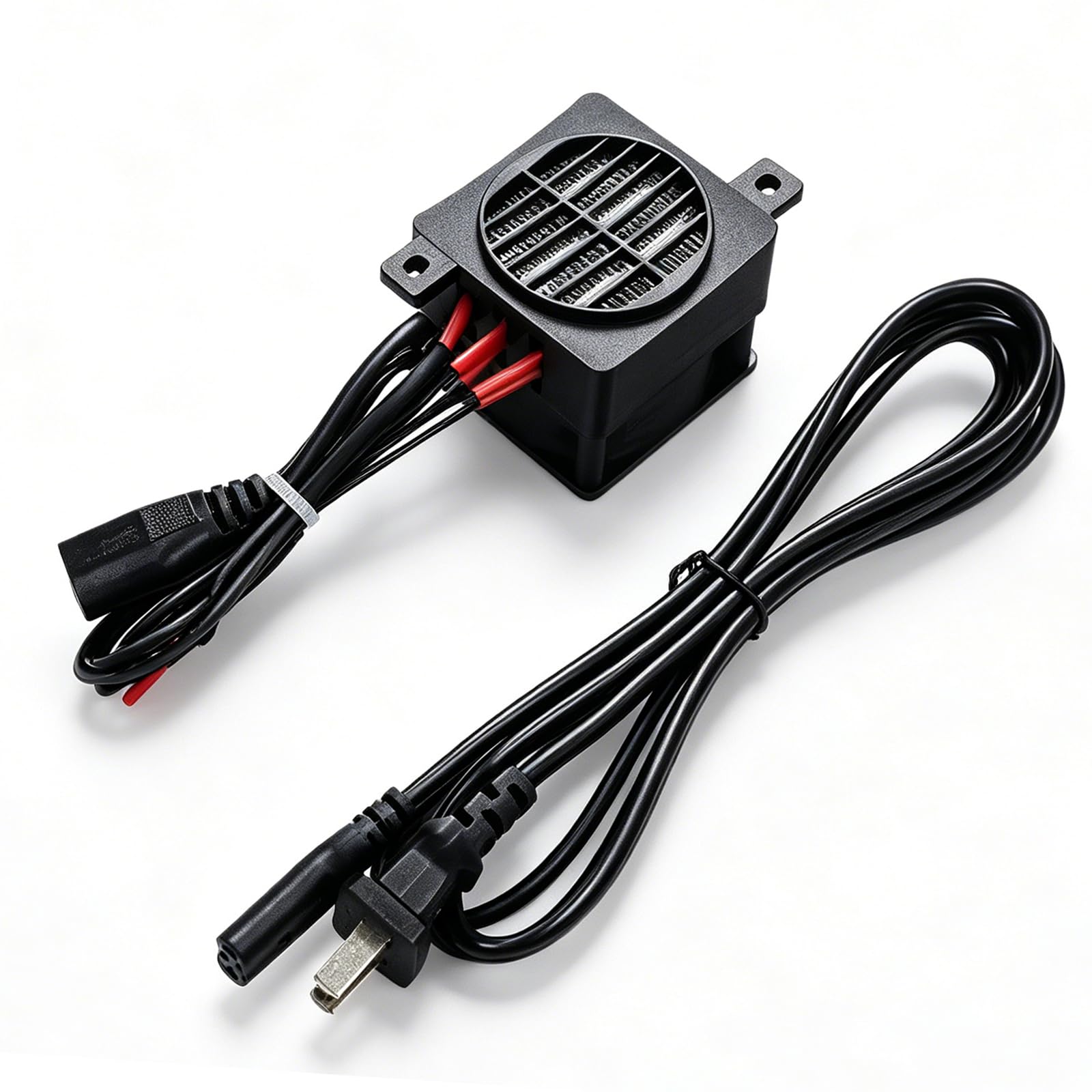
This PTCYIDU unit operates on 110V AC power, not 12V DC, which immediately demarcates it as a niche product for certain car auxiliary applications. You would use it in a parked car with a 110V inverter, an RV with shore power, or — most commonly — in a small enclosed space like a 3D printer enclosure, a chicken coop, or a tiny tent. The 200W output produces about 680 BTU, and its ceramic PTC element delivers automatic constant-temperature regulation for safety.
Real-world testing confirmed it raises a 2.5-by-4.5-by-7-foot tent visibly in 30 seconds, and 3D printer owners report it maintains chamber temperature around 20°F ambient with the help of a PID controller. The build includes a fan switch and a surface-insulated heating core that stays cool to the touch unless air is actively moving. It is small — just under 6 inches deep — and includes mounting holes for permanent fixture.
If your use case is specifically heating a sub-0.5m³ space in a car (like a footwell enclosure or a small dog compartment in a van), this works. But for general cabin heat or windshield defrosting while driving, the 110V requirement and low wattage make it impractical. It is the perfect tool for the exact right job, not a general-purpose car heater.
Why it’s great
- Surface-insulated PTC element is inherently safe for confined spaces.
- Very fast temperature rise in small enclosures — noticeable warmth in under 30 seconds.
- Compact size with mounting holes suits permanent installations.
Good to know
- Requires 110V AC — needs an inverter or shore power to run in a vehicle.
- Only 200W output; insufficient for heating a full car cabin.
- Specific to spaces under 0.5m³; buyers must measure before purchasing.
FAQ
Can I install a coolant auxiliary heater in any car?
How much does a 12V electric heater drain my car battery?
What is the difference between a 4-port and a 6-port coolant heater?
Final Thoughts: The Verdict
For most users, the auxiliary heater for car to beat is the Evargc 8500 BTU Hydronic Heater because its 8,500 BTU output, low 96W fan draw, and three-speed versatility deliver genuine cab warmth without straining your electrical system. If you are on a budget and comfortable with coolant hose work, grab the XuSha 8000 BTU Heater for nearly the same heat at a lower entry cost. And for a simple 12V electric boost aimed directly at a defrosting windshield, nothing beats the convenience and instant heat of the CYDZSW 800W PTC Heater. Choose based on your installation ambition and how much shiver you are willing to endure.