
Our readers keep the lights on and my morning glass full of iced black tea. As an Amazon Associate, I earn from qualifying purchases.
Specs are compiled from manufacturer listings and verified buyer reviews and can change over time — please confirm the key details on the product page before buying.
The moment you buy a new 8K TV, the old receiver in your rack becomes the weakest link. You need to pass 8K video and lossless Dolby Atmos sound from your sources to that new screen, and you need enough amplifier channels to make your speakers disappear into the room. A quick note before we start: this list uses flexible matching for the channel count requirement, so every pick here handles 8K video passthrough, but the speaker channel count varies slightly by model.
I’m Min — the founder and writer behind Gadgets Feed. This guide is built by comparing the manufacturers’ published specifications and the patterns across verified customer reviews, so you get each pick’s real strengths and trade-offs instead of marketing spin.
You want a receiver that supports HDMI 2.1 features like 4K/120Hz for gaming and 8K/60Hz passthrough for the newest content, and this roundup of the best av receiver 8k models breaks down which one fits your room, your speakers, and your future-proofing budget.
Our Picks at a Glance


How To Choose The Best AV Receiver 8K
Buying an 8K receiver is a multi-year commitment, so getting the channel count and the HDMI 2.1 ports right the first time matters more than any other spec. Focus on the number of speakers you plan to run, the number of 8K sources (like a PlayStation 5 or Xbox Series X) you need to plug in, and if you want automatic room correction.
The Bandwidth Bottleneck: HDMI 2.1 Explained
The simplest way to understand HDMI 2.1 is to think of it as a wider pipe for video data. The older HDMI 2.0 pipe can carry 4K at 60 frames per second, but it chokes on 8K or on 4K at 120 frames per second. Look for a receiver that lists 40Gbps or 48Gbps bandwidth so your 8K TV actually receives the full signal from your console or streaming box.
Channel Count: Matching The Receiver To Your Room
Channel count is the number of speakers the receiver can power, and more channels mean a more enveloping sound. A 7.2 receiver runs seven speakers and two subwoofers, which is perfect for a classic 5.1.2 Atmos layout (five main speakers, one sub, two height speakers). A 9.2 or 11.2 receiver adds more height or surround channels, which matters in a dedicated home theater but is overkill in a small living room.
Room Calibration: The Invisible Equalizer
Room calibration software (like Audyssey, YPAO, or Dirac Live) is the feature that separates a good receiver from a great one. It listens through a microphone you place at your seating position, then automatically adjusts speaker levels, distances, and EQ to compensate for your room’s weird reflections and bass nulls. It is the single most effective tool for making a speaker system sound like a single, cohesive unit.
Quick Comparison
| Model | Best For | Channels | 8K HDMI Inputs | Room Calibration | Amazon |
|---|---|---|---|---|---|
| Denon AVR-X1700H★ Best Overall | Overall Value | 7.2 (80W) | 3 | Audyssey | Amazon |
| Yamaha RX-V6ABest Multi-Room | Multi-Room Streaming | 7.2 | 3 (of 7 total) | YPAO R.S.C. | Amazon |
| Onkyo TX-NR6100THX Certified | Loud, Certified Power | 7.2 (210W) | 3 | AccuEQ | Amazon |
| JBL MA710 | Modern White Look | 7.2 (110W) | — | EzSet EQ | Amazon |
| Sony STR-AN1000 (Renewed) | Budget Sony Atmos | 7.2 | — | D.C.A.C. IX | Amazon |
| Denon AVR-S970H | Gaming Features | 7.2 (90W) | 3 | Audyssey | Amazon |
| Yamaha RX-A2A AVENTAGE | Premium Build | 7.2 | 3 | YPAO R.S.C. | Amazon |
| Onkyo TX-RZ50 | Serious Home Theater | 9.2 (11.2 proc) | — | Dirac Live | Amazon |
| Sony STR-AN1000 | 360 Spatial Sound | 7.2 (165W) | — | D.C.A.C. IX | Amazon |
| Sony STR-AZ1000ES | Custom Install | 7.2 (100W) | — | D.C.A.C. IX | Amazon |
| Marantz SR8015 | Flagship Power | 11.2 (140W) | — | Audyssey | Amazon |
In‑Depth Reviews
1. Denon AVR-X1700H 7.2 Channel AV Receiver
Our pick — 4.5★ from 650+ verified ratings; the strongest balance of quality and price.
The 8K gateway that pairs easy setup with genuinely rich, theater-like 7.1.2 sound.
The X1700H is the receiver people mean when they say a Denon “just works.” It pushes 80 watts per channel, which is plenty for most medium-sized living rooms, and it decodes both Dolby Atmos and DTS:X with support for Dolby Atmos Height Virtualization — that’s a trick that fakes height effects when you have no ceiling speakers. Setup is the star here; the on-screen guide walks you through every step with clear instructions on your TV, and the back panel is color-coded so you don’t need a magnifying glass to find your inputs.
Video features come straight from the future-proofing checklist: 3 dedicated 8K inputs and 1 output, with 8K/60Hz and 4K/120Hz pass-through, plus 8K upscaling on all 6 inputs. It supports 4:4:4 Pure Color Sub Sampling, HDR10, HDR10+, Dolby Vision, and HLG, so your new TV’s picture stays clean and bright whether you are gaming, streaming, or watching a Blu-ray. With 6 HDMI inputs and 2 subwoofer pre-outs, this unit gives you room to grow without needing a switch box.
Owners are clear about what wins them over: build quality and sound quality top the list. One user described it in all caps as simply “WOW,” while others note that the eARC (the audio return channel that sends your TV’s sound back to the receiver) works flawlessly — though the physical setup to get it dialed in can take time. There is a phono input for a turntable, so vinyl fans get a home here too.
What Owners Praise Most
- Amazing sound with a solid build; the 7.1.2 mode creates a theater-like experience.
- Easy-to-follow on-screen setup with color-coded connections.
- Many HDMI ports and a phono input for turntables.
The Trade-offs
- Bluetooth connectivity receives mixed feedback; some buyers report flaky pairing.
- No pre-outs for external amplifiers, so you cannot expand beyond this unit’s power.
- The HEOS app interface feels clunky and text-based to some.
Reach for this if: you want a balanced, do-it-all 7.2 receiver with the easiest setup in its class and solid headroom for gaming and movies.
Look elsewhere if: you have a giant room needing serious wattage, or you plan to add external amps later via pre-outs.
2. Yamaha RX-V6A 7.2-Channel AV Receiver with MusicCast
A feature-packed 7.2 hub with a huge HDMI count and multi-room streaming that keeps the whole house in sync.
The RX-V6A leads its class on sheer connectivity: 7 HDMI inputs carry 8K60 and 4K120 signal with HDCP 2.3 and eARC, which is a 2.3x gap over the Onkyo TX-NR6100’s 3 inputs — a real advantage if you have a console, streaming stick, Blu-ray player, and cable box all fighting for ports. It also dives deep into music services, piping Pandora, Spotify, TIDAL, and Amazon Music HD around your home via Wi-Fi, Bluetooth, AirPlay 2, and MusicCast. This is the receiver for a whole-house audio setup, not just a movie room.
Voice control is a full ecosystem play here: it works with Alexa, Google Assistant, and Siri (through AirPlay 2). The video side handles Dolby Vision, Hybrid-Log Gamma, and BT.2020 for accurate color, and YPAO R.S.C. room calibration with multipoint measurement tunes the sound to your seating area. Owners mention this as a dependable replacement with a long lifespan expected; the phrase on the review pages is “reliable Yamaha replacement, 10yr lifespan expected” — a confident statement of durability.
Owners single out sound quality and the incredible range of functionality as the highlights, noting the video passthrough is clean. The setup is the sticking point for some; the manual is online-only and the menus run deep, so you will want some patience or a YouTube video.
The Connectivity King: Seven HDMI inputs give you port flexibility that most rivals simply don’t match, perfect for a fully wired entertainment center.
Setup Grows With You: The online-only manual and deep menus demand patience, but the payoff is a receiver that never runs out of features.
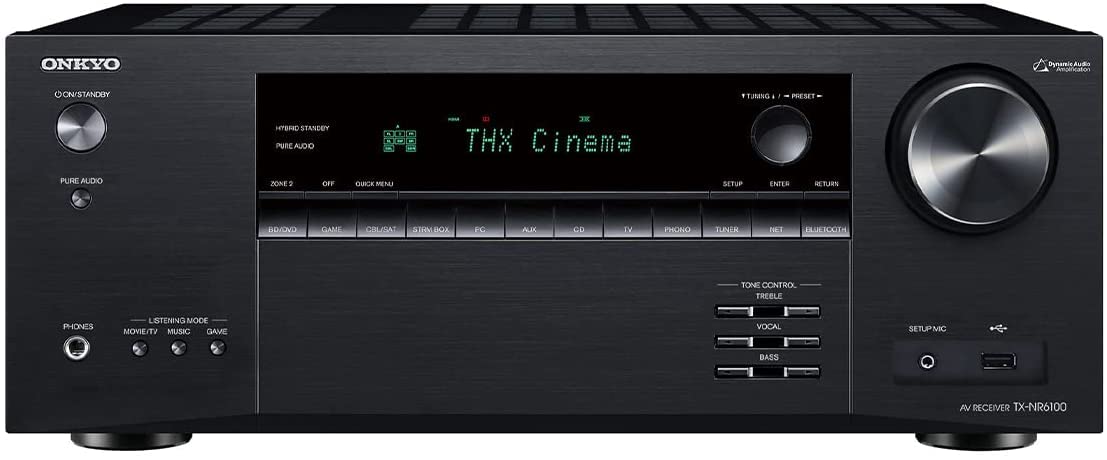
3. Onkyo TX-NR6100 7.2 Channel THX Certified Network AV Receiver
Raw certified muscle that runs louder than pricier rivals, wrapped in a hefty THX-certified chassis.
This is the receiver that owners say is “louder than Denon X1700” — a bold claim, but the spec sheet backs it up with 210W per channel, a significant headroom advantage when you drive inefficient speakers. It is THX Select Certified, meaning it passes a rigorous set of tests ensuring nothing is added or taken away from the source material. That certification shows in the action scenes; owners describe precise directional effects and engaging immersion in 5.1.2 Atmos setups.
The TX-NR6100 handles 5.2.2-channel Dolby Atmos and DTS:X playback, and brings 8K with HDMI 2.1 40Gbps across 3 inputs. It also has a Discrete Zone 2 for dedicated audio in a second room. Owners upgrading from older Onkyo units praise the 4K/120Hz gaming support, auto Google Nest integration, per-speaker tuning, and excellent upscaling that makes an 86-inch screen look sharp.
What wins people over is the build quality and value for money, but it is worth knowing this unit is big — at 21″D x 18.64″W, it is a 3.4x depth gap vs the Yamaha RX-V6A (6.25″D). Measure your cabinet before you buy. Reliability is the most-discussed aspect and it lands as mixed in the owner consensus, so a longer warranty and a good return policy are your friends here. A note on setup: bi-amp mode drops the rear channels, so a full 7-channel layout requires care in the configuration menu.
Boxing-Day Power: The certified 210W per channel makes this the loudest, most sturdy pick in the mid-range tier, ideal for big Klipsch or Polk speakers.
Measure Twice: Its 21-inch depth is a real fit problem for shallow media consoles, so check your rack before committing.
4. JBL MA710 7.2 Channel (110 Watt x 7) 8K AV Receiver (White)

A rare white 8K receiver that blends into a bright living room without sacrificing surround power.
The MA710 is the pick for anyone tired of black slabs dominating their decor. At 110 watts across 7 channels, it decodes Dolby Atmos and DTS:X and supports up to 7.1 or 5.1.2 speaker configurations — enough for a proper cinema experience in a normal room. It pairs with smart TVs and gaming consoles via 6 HDMI inputs and 1 output with eARC, and it includes a moving magnet phono input so a turntable can join the party without an extra box.
Owners describe a “sleek, crisp sound that is sharp looking,” and note how easy the install is when replacing an old Onkyo. A follow-up review across a year of use mentions that firmware updates have smoothed out the early glitches, and the sound remains clear and great. Streaming covers Bluetooth, Apple Airplay 2, and Google Chromecast, so you are not locked into one ecosystem. At 6.3 kg, it is also one of the lighter full-size receivers here, which makes lifting it into a shelf less of a back-breaking chore.
The honest catch: this is a newer model with a smaller owner base, so the software is still maturing — those firmware updates are real and do the heavy lifting. If you want a white receiver that sounds clean and looks the part, this is the one.
Design-First Cinema: The white chassis and 110W per channel deliver crisp Dolby Atmos in rooms where a black box would clash.
Software Still Cooking: Early glitches are resolved via firmware, so expect to run an update on day one; the sound itself is a known quantity.
5. (Renewed) Sony STR-AN1000 7.2 CH Surround Sound Home Theater 8K A/V Receiver
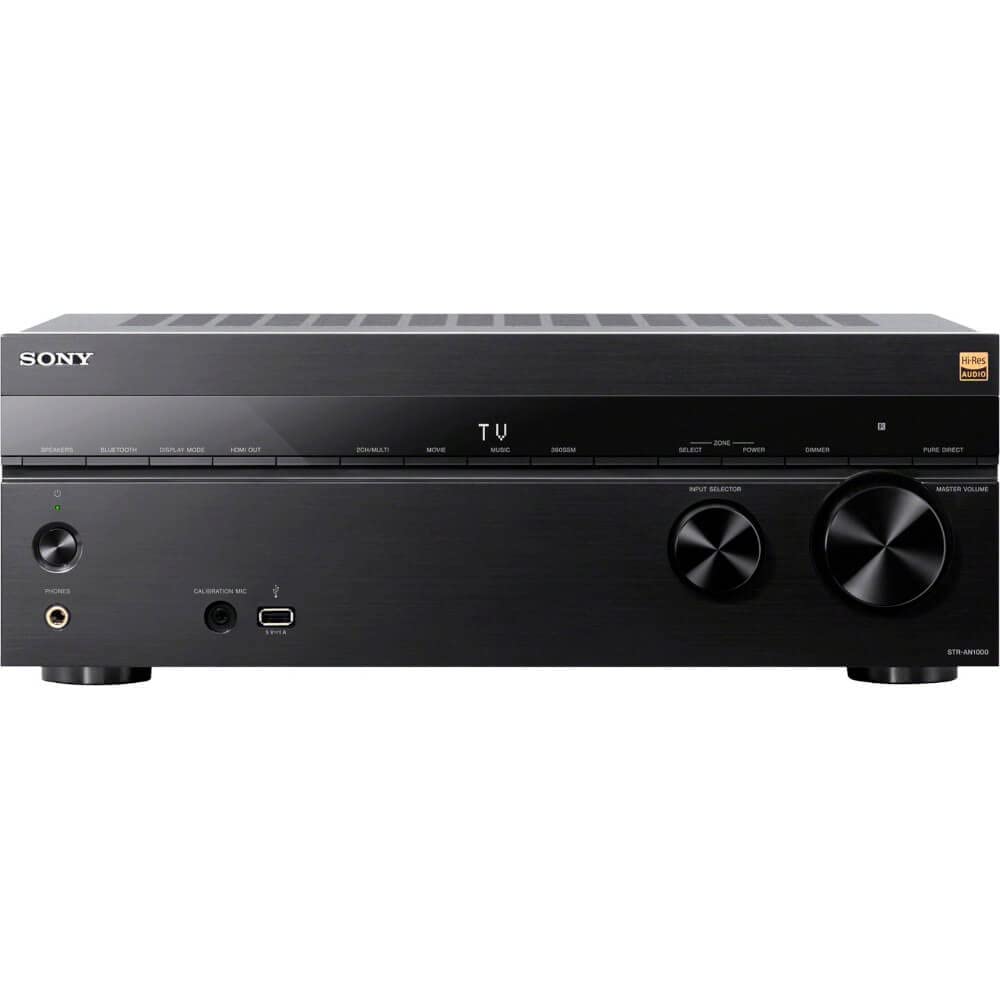
A renewed Sony Atmos machine that brings flagship 8K decoding to a budget-minded buyer.
This is the play for someone who wants Sony’s excellent 8K & 4K/120Hz HDMI 2.1 connectivity without paying full retail. The renewed STR-AN1000 supports Dolby Atmos and DTS:X object-based sound, plus today’s leading HDR formats, in a 7.2-channel layout. Owners building a mini theater call it “perfect for the Atmos experience” and land on it as a strong value play for the money.
The key here is understanding what “renewed” means: it is a professionally inspected and restored unit, which is exactly why this sits in the value tier. The risk profile is slightly different from buying new, and the owner feedback shows exactly why you should buy from a seller with a solid return policy. One buyer’s unit started malfunctioning almost immediately, with the logic board failing, input selection stopping, and the remote acting up.
When it works — and for most buyers it does — the sound is excellent and setup is easy. Just go in with eyes open: a renewed unit is a “buy the seller, not just the product” situation.
Bang For The Buck: Full Sony 8K Atmops support and clean HDMI 2.1 passthrough at a fraction of new retail cost.
Know Your Seller: Refurbished electronics carry a small risk of early failure; choose a seller with a strong return policy and test the unit on day one.
6. Denon AVR-S970H 7.2 Channel 8K UHD AV Receiver

Next-gen gaming features like VRR and ALLM meet a 90W-per-channel Denon heart in one clean box.
Gamers, this is your Denon. The S970H supports 8K/60Hz pass-through plus Variable Refresh Rate (VRR), Quick Frame Transport (QFT), and Auto Low Latency Mode (ALLM) — the trifecta that keeps your Xbox Series X or PS5 frames smooth and tear-free. It carries 8 HDMI ports (6 in/2 out) with 3 dedicated 8K inputs, so a console, streaming device, and PC can all stay wired. At 90W per channel, it powers a 7.2 or 5.2.2 setup with authority.
Owners call it “a beast,” praising the excellent power delivery and the on-board phono input for vinyl. The onscreen setup uses guided videos, which makes the initial configuration genuinely painless. Heat management is a quiet win: it runs cooler than rival Onkyo units, a durability point that matters in enclosed cabinets. The eARC works flawlessly, and Bluetooth is reliable for casual streaming.
The community consensus lands firmly on sound quality and performance as the standout strengths, with plenty of Dolby and DTS options to play with. The trade-offs are niche: the powered Zone 2 reuses the back channels (dropping you to 5.2 if you run a second zone), and there is no tape-deck connection for the analog purists. Neither matters for most modern setups.
Built For Play
- VRR, QFT, and ALLM make 4K/120Hz gaming lag-free and tear-free.
- Runs cooler than rival receivers, a plus for enclosed racks.
- Phono input and 8 HDMI ports cover all modern devices.
Room For Compromise
- Zone 2 powered mode drops you from 7.2 to 5.2 channels.
- No tape-deck connections for legacy analog gear.
7. Yamaha RX-A2A AVENTAGE 7.2-Channel AV Receiver

Yamaha’s premium AVENTAGE line brings a heavier build and Surround:AI that tunes itself in real time.
The AVENTAGE line is Yamaha’s top tier, and the RX-A2A earns the badge with premium construction and a real sonic upgrade. Its signature feature is Surround:AI, which analyzes audio in real time and automatically tune the sound and effects — so a quiet dialogue scene and a screaming action sequence both get the exact processing they need without you touching a button. At 25.4 pounds, it is noticeably heavier and more solidly damped than the RX-V6A below it, which cuts down on vibration.
Connectivity is fully modern: 7-in/1-out HDMI with HDCP 2.3 and eARC, with three inputs supporting 8K60 and 4K120, plus ALLM and VRR for gaming. It handles Dolby Vision, HDR10+, HLG, and BT.2020 for top-tier video. Advanced YPAO R.S.C. room calibration with multipoint measurement tunes the sound precisely. The music side is rich: Wi-Fi, Bluetooth, AirPlay 2, Spotify Connect, MusicCast, Roon Tested, and it works with Sonos via a Sonos Port (sold separately).
Owners describe setup in about 10 minutes including the YPAO mic, and report handling action films like “No Time to Die” at high volume with noticeable improvement over older receivers. Sound quality is the consensus highlight. The catch is price — owners note it feels overpriced at MSRP, and one recurring quirk involves no-signal events with certain Sony TVs. If you want Yamaha’s best sound in a 7.2 package and can catch a sale, this is the one.
The AVENTAGE Step Up: Surround:AI and a heavier chassis deliver a more refined, dynamic sound than the RX-V6A, ideal for dedicated movie rooms.
Wait For The Sale: At full MSRP it is a tough sell; on discount, it becomes Yamaha’s smartest 7.2 upgrade.
8. Onkyo TX-RZ50 9.2-Channel THX Certified AV Receiver

Dirac Live room correction makes this 9.2 THX-certified Onkyo the smartest upgrade in the premium tier.
The biggest feature here is handled before you ever play a movie. Dirac Live — a premium room-calibration system that normally costs extra as a separate license — is included free, and it uses a wired mic to measure your room and correct the sound for accurate, balanced output. Owners consistently call it transformative, dramatically improving the imaging and taming bass problems that other EQ systems cannot fix. This is the receiver for a serious home theater that demands exact, reference-grade sound.
With 9.2 channels powered and up to 11.2 channels of processing, it runs a 7.1.4 Dolby Atmos layout (four height speakers) if you add an external amp for two channels, or a full 9.2 system straight from the start. It is THX Certified, so the source material stays faithful across every input. HDMI 2.1 with 8K and 4K/120 gaming support, plus eARC, keeps it current. Discrete Zone 2 HDMI switching lets two rooms watch different Ultra High-Definition content at once.
The Klipsch tune Mode is a clever touch: select your specific Klipsch Reference speakers and the crossover settings apply automatically. Owners praise the sound quality and performance, noting it “exceeds THX reference.” There are quirks — it is a heavy unit, dual sub outs are not independent, and you will need your own speaker cables — but the owner consensus is that the price-to-performance ratio here is class-leading.
Calibration Royalty: Included Dirac Live is the single biggest upgrade to your sound you can buy, worth far more than the receiver’s premium on its own.
Set Up For The Serious: Expect a learning curve with Dirac and no printed manual; the payoff is a 7.1.4-receiver that truly sounds like a movie theater.
9. Sony STR-AN1000 7.2ch Home Theater 8K A/V Bluetooth Receiver

Sony’s 360 Spatial Sound Mapping adds a phantom height layer that makes surrounds feel taller than the box.
The STR-AN1000 packs an unusual trick: 360 Spatial Sound Mapping, which Sony says creates a more rich bubble of sound around you, working with Digital Cinema Auto Calibration IX (D.C.A.C. IX) to position effects with precision. At 165W (6 ohms, 1kHz, 1ch), it has real headroom for driving a 7.2 system, and it decodes Dolby Atmos and DTS:X. Owners describe the sound as crisp, with one comparing the surround to “stunning pictures” and another praising the 7.1 channel experience with Polk speakers.
HDMI 2.1 support brings 8K and 4K/120, with a 6-in/2-out layout and eARC. It “Works With Sonos,” so it slips into an existing Sonos system via a Sonos Port. Streaming coverage is exhaustive: Bluetooth, Wi-Fi, Chromecast built-in, Spotify Connect, and Apple AirPlay. Video upscaling gets explicit praise, adding sharpness to older 1080p sources. Zone 2 and Zone 3 outputs add flexible multi-room reach.
The most-discussed praise is sound quality, but the setup experience is the sticking point — the calibration GUI is described as inaccurate for subwoofer distance in one owner’s room, and the front display is hard to read. An S-Center mode lets you use a compatible Sony Bravia TV as a center channel, which is a nice synergy for Sony-only households. This is the pick for someone who wants Sony’s audio processing in a 7.2 package.
Sony’s Sound Bubble: 360 Spatial Sound Mapping and D.C.A.C. IX calibration deliver a crisp, rich field that is a step beyond standard Atmos.
Calibrate With Care: The auto-setup can misjudge subwoofer distance, so a manual tweak afterwards makes a real difference.
10. Sony STRAZ1000ES Premium ES 7.2 CH 8K A/V Receiver

Sony’s ES line targets custom installs with IP control and a build quality that owners call high-end.
The ES designation is Sony’s professional-grade line, and the AZ1000ES is built for integrators and serious owners alike. It delivers 100W + 100W (8 ohms, 1kHz, 2ch) with the same 8K and 4K/120 HDMI 2.1 connectivity, 6-in/2-out, as the AN1000, but adds smooth IP Control integration with leading control systems — meaning a Crestron or Control4 system can talk to it directly. Owners describe the build quality as high-end and note the PiP mode and one-remote control work beautifully with a Sony Bravia 9 used as a center channel.
It supports Dolby Atmos and DTS:X, plus Digital Cinema Auto Calibration IX and 360 Spatial Sound Mapping for rich audio. HDR formats include Dolby Vision, HDR10, Hybrid Log Gamma, and IMAX Enhanced. It “Works With Sonos” for system integration. A replaceable power cord is a thoughtful touch for rack installs.
The owner base is smaller, and the sound quality feedback is mixed across reviews — some call it wonderful while others note older speakers may limit the surround volume. Calibration has its quirks: if you have no rear speakers, you need to plug the height channels into the surround ports or calibration fails. This is a niche pick for the custom-integration crowd who value IP control and bulletproof build over raw feature count.
Integrator’s Choice: True IP control and high-end build make this the right pick for a professionally controlled whole-home system.
Fiddly Setup: Calibration demands specific port assignments when you skip rear speakers, so expect some trial and error on day one.
11. Marantz SR8015 11.2 Channel (140 Watt x 11) 8K Ultra HD AV Receiver

A heavyweight 11.2-channel flagship that powers a true 7.2.4 Atmos theater and cools well doing it.
The SR8015 is the endgame for anyone with a dedicated theater room. It pumps 140 watts across 11 channels, enough to drive a full 7.2.4 Atmos layout (four ceiling speakers) without breaking a sweat. Owners describe clarity that is “clear, crisp highs and a perfectly balanced low range that punches out with incredible clarity,” and note it sounds better than a Yamaha RX-A6A while running cooler — so the heat critics expect from a flagship simply does not appear. It needs 8 inches of clearance above for airflow, which is the one physical requirement to honor.
Video is fully current with 8K Ultra HD HDMI, 2 outputs, and eARC. The HEOS built-in handles wireless multi-room music, and voice control covers Amazon Alexa down to Google Assistant. The 11.2 layout with 3D audio makes it among the most capable receivers on this list for object-based soundtracks. Owners upgrading from older models call it “a standout” and highlight the Atmos height effects as genuinely spectacular.
The most-discussed praise is sound quality, but performance gets mixed feedback — one owner reports an HDMI output stopping, so a warranty is essential on a unit like this. The remote is a known weak point, described as cheap-feeling and occasionally unresponsive. This is a luxury pick that justifies itself best when you actually populate all 11 channels with quality speakers.
The Full Orchestra: 140W across 11 channels makes this the only real choice for a complete 7.2.4 Atmos theater without separate amps.
Flagship Caveats: The cheap remote and a small risk of HDMI issues mean you buy this for the sound and keep a good warranty handy.
Understanding the Specs
HDMI 2.1 & Bandwidth
HDMI 2.1 is the connection standard that allows 8K video and 4K at 120 frames per second to travel from your source to your TV. Look for receivers that list 40Gbps or higher bandwidth, plus features like VRR (Variable Refresh Rate, which stops screen tearing in games) and ALLM (Auto Low Latency Mode, which switches the TV to game mode automatically). These determine whether your next-gen console or 8K TV actually performs as advertised.
Dolby Atmos & Channel Layouts
Dolby Atmos is an object-based audio format that places sounds anywhere in a 3D space, including above you. A 5.1.2 layout means 5 ear-level speakers, 1 subwoofer, and 2 height speakers; a 7.1.4 adds two more ear-level and two more height speakers. The first number is your channel count, so a 7.2 receiver runs 7 speakers and 2 subs. More channels equal a more enveloping sound, but only if your room and budget justify them.
FAQ
Do I need an 8K receiver if my TV is only 4K?
What is the difference between 7.2 and 9.2 channel receivers?
Will an 8K receiver work with my old speakers?
What is eARC and do I need it?
Is a THX-certified receiver worth the extra cost?
What does room calibration software actually do?
Can I use a receiver for a 5.1.2 setup with height speakers?
How many HDMI 2.1 ports do I really need for 8K?
What is the difference between Dolby Atmos and DTS:X?
Final Thoughts: The Verdict
If you want one dependable pick, the av receiver 8k winner is the Denon AVR-X1700H because it balances easy setup, rich 7.1.2 sound, and the full set of HDMI 2.1 gaming features at a price that makes sense for a first 8K upgrade. If you want the most ports and multi-room streaming, grab the Yamaha RX-V6A. And for a serious home theater with room correction that transforms your sound, the Onkyo TX-RZ50 is the one to reach for — its included Dirac Live is the smartest upgrade you can buy in the premium tier.
How We Picked
We do not accept paid placement. Every pick is matched to a real buyer and a real use-case; we do not hands-on test units.
Sources & Methodology
Specifications: manufacturer listings and product documentation. Review insights: verified customer reviews, as of August 2026. Pricing: not shown on this page (it changes often); check the current price via the retailer link.
As an Amazon Associate, Gadgets Feed earns from qualifying purchases. This does not affect which products we feature.