
Our readers keep the lights on and my morning glass full of iced black tea. As an Amazon Associate, I earn from qualifying purchases.
Specs are compiled from manufacturer listings and verified buyer reviews and can change over time — please confirm the key details on the product page before buying.
Buy the shovel that packs small, assembles without a fight, and moves heavy avalanche debris without folding. The picks below cover that whole spread, from a compact aluminum pack shovel to a saw-in-the-handle survival tool, so you can match one to the way you ride.
I’m Min — the founder and writer behind Gadgets Feed. This guide is built by comparing the manufacturers’ published specifications and the patterns across verified customer reviews, so you get each pick’s real strengths and trade-offs instead of marketing spin.
An avalanche shovel is rescue gear first and convenience gear second, so weight and blade volume pull in opposite directions. This guide to the best avalanche shovel weighs blade volume, pack size, and handle strength instead of hype.
Our Picks at a Glance


How To Choose The Best Avalanche Shovel
The wrong way to shop this category is to buy the lightest thing that fits in your pack. A shovel that weighs nothing but scoops almost nothing forces you to take twice as many swings when a partner is buried. Rescue shovels are built around the opposite trade-off: you want the biggest scoop you can honestly carry. Everything else, the collapsed length, the shaft length, and how the blade locks onto the shaft, follows from that.
Blade volume decides how fast you move snow
Blade volume, measured in liters, is the real speed number. A 2.5 liter scoop like the one on the ORTOVOX Badger carries more snow per swing than a trimmed-down pack blade. Deeper side walls and a pronounced center ridge keep that big scoop from bending when you push into debris. If you tour often, favour volume over a gram-count you will never notice on your back.
Packed length versus shaft length in use
Two lengths matter and they are not the same. Collapsed length is what has to slide into your daypack, while extended length is how much leverage you get when you dig. A shovel that packs down to 13 inches disappears into a small pack, but a long extended length like 39.5 inches lets you stand taller over the hole. Look for both numbers on the same spec sheet before you commit.
Handle and shaft strength where it counts
The shaft is where cheap shovels fail. Spring pins and centering aids are what let you assemble the shovel with gloves on in a hurry, and a D-grip or hybrid grip is what lets you put your body weight behind a push. Watch for ovo-concave or shaped shafts, which stiffen the handle so it does not bow under load. An ABS anti-slip handle or a finger-guard D-grip keeps your hands planted when you are digging fast.
Quick Comparison
| Model | Best For | Weight | Length | Blade / Scoop | Amazon |
|---|---|---|---|---|---|
| G2 Backcountry Lightweight Telescopic★ Best Overall | Pack carry on a budget | 1.1 pounds | 17″ packed, 24″–30″ in use | Aluminum, adjustable angle | Amazon |
| Crescent Moon Collapsible Snow ShovelBest for the Car | Year-round car and camp kit | 1.1 pounds | 20″ to 33″, three fixed settings | 6000 series aluminum | Amazon |
| ORTOVOX BadgerBiggest Scoop | Big scoop, still light | 625 g | 70 (45) cm | 2.5 liters | Amazon |
| BCA Dozer 1T | Snowpit work and rescue | — | — | 6061 T6 aluminum, stomp edge | Amazon |
| Voile Telepro | Hard-packed snow and ice | — | 31″, extends to 39.5″ (Mini 33.5″) | Aluminum | Amazon |
| SnowBigDeal Emergency Shovel with Saw | Snowmobile and survival kit | 1.875 pounds (850 g) | 28.5″ collapsed, 34.5″ extended | 10″x12″x1.75″ blade, 13.75″ saw | Amazon |
| Mammut Alugator Light | Ounce-shaving tours | 1 pound | — | Sharpened aluminum, tilt-proof | Amazon |
| Black Diamond Transfer LT | Ultralight UIAA safety | 405 g | Two-piece telescoping shaft | 7075AL riveted aluminum | Amazon |
In‑Depth Reviews
1. G2 Backcountry Lightweight Telescopic Avalanche Snow Shovel
Our pick — 4.5+★ from 100+ verified ratings; the strongest balance of quality and price.
The pack-friendly all-rounder that gives you a real shovel without a real weight penalty.
What you get for a modest outlay is a genuinely packable rescue tool. The shaft collapses to 17 inches and sits at just 1.1 pounds, which means it disappears into a daypack instead of dictating how you pack. In use it stretches from 24 inches up to 30 inches, so you get a workable digging stance rather than hunching over a stubby handle.
At 1.1 pounds, it is the lightest pack-sized shovel in this lineup. It weighs 1.1 pounds against the 1.875 pounds of the SnowBigDeal saw shovel, and the difference is one you feel on the skin track rather than at the trailhead. Owners consistently come back to build quality and the way the tool simply works; durability of the aluminum alloy is the praise that leads the conversation, with functionality right behind it.
The honest catch is the emergency-use question. A handful of buyers push back on treating this as dedicated life-saving gear, and that is fair for a general-purpose pack shovel. If your tours are serious avalanche terrain, the scoop here is smaller than a purpose-built rescue blade. For everything short of that, the adjustable blade angles and pop-up button assembly make it a flexible tool for snow removal and field digging.
Where it earns its keep
- Packs to 17 inches and weighs 1.1 pounds, so it fits a small daypack
- Adjustable blade angles and shaft length for digging and snow removal
- ABS anti-slip handle keeps your grip planted with gloves on
What to weigh first
- Scoop is smaller than a dedicated rescue blade
- Not positioned as a life-saving avalanche device by some buyers
Reach for this if: you want one compact aluminum shovel for touring, car duty, and camp that will not weigh down your pack.
Look elsewhere if: your priority is maximum scoop volume in deep debris.
2. Collapsible Snow Shovel for Car & Adventures
One shovel that lives in the trunk all winter and still earns a place on the sled.
Start with the number that decides the seat time: this one extends from 20 inches to 33 inches across three fixed settings and weighs 1 pound. That short 20-inch mode is what lets it tuck into a car boot or the bottom of a pack. The longer settings give you proper leverage once you are actually digging out a buried wheel or a stuck sled.
Packability is clearly the headline here. Portability is what buyers praise most, with compact size and the low weight following close behind. The 6000 series aluminum blade and the D-grip with finger guard lets you change your pushing angle and throw snow rather than just scoop it.
Where it falls short is outright brute strength. Sturdiness splits buyers down the middle, so treat this as a car and camp tool rather than a chunder-churning rescue blade. Compare it to the Voile Telepro, which runs 31 inches and extends to 39.5 inches, and this one is 11 inches shorter at full stretch. For shovelling around a vehicle or clearing a campsite, that length trade-off is the right call.
The value read: three length settings and a 1 pound frame make this the easiest shovel in the lineup to keep permanently in a vehicle.
And the limit: with sturdiness described as mixed, this is not the blade to bet a backcountry rescue on.
The right buy for: skiers, snowmobilers, and drivers who want one orange shovel ready in the trunk year-round.
Think twice if: you need a stiff, long-handled blade for serious avalanche debris.
3. ORTOVOX Shovel Badger Lightweight Aluminum Avalanche Shovel
A 2.5 liter scoop on a 625 gram frame — the volume-first choice for real rescue digging.
Blade volume is the number that separates this from the pack shovels above. The scoop holds 2.5 liters, and it is braced with high side walls plus a pronounced center ridge so all that capacity stays rigid when you drive it into debris. The blade measures 28 by 21 by 4 cm, and the shaft runs 70 cm extended and 45 cm collapsed.
At 625 grams, it is heavier than the ultralight picks in this list by a clear margin. That weight buys you a hybrid ergonomic grip built for power transmission, so your effort goes into the snow instead of flexing the handle. Non-slip grooves along the top edge of the blade give your boots something to bite on when you stomp it in. A centering aid in the shaft socket also helps you get it assembled fast in cold hands.
The trade-off is honest and simple. You are carrying more weight and a longer collapsed 45 cm package for a scoop that moves noticeably more snow per swing. For a tour where the shovel lives in a pack all day, that is a conscious choice rather than a flaw. For a rescue-ready kit where digging speed matters more than gram-counting, it is the obvious one.
The rescue case: 2.5 liters of scoop with a stiffened center ridge is a genuine step up in snow-moving rate over trimmed-down blades.
The carry cost: 625 grams and a 45 cm collapsed shaft ask more of your pack than a 1.1 pound featherweight.
Pick it when: shovelling speed in a rescue beats saving every gram on the climb.
Pass on it if: you are counting grams for a fast-and-light kit.
4. Backcountry Access BCA Dozer Shovel

Built to cut clean snowpit walls by day and clear a burial by afternoon.
This is the Dozer 1T, the size BCA builds for the widest range of riders. The blade is 6061 T6 aluminum with a flat stomp edge, so adding body weight lets you punch through crust and hardpack instead of chipping at it. The front third of the blade is smoothed flat, which is what gives you a clean face when you cut a snowpit wall for a stability test.
Assembly is the other stand-out. Auto-engaging spring pins at the blade and shaft connection let you deploy it hands-free, which matters when you are wearing thick gloves. The ovo-concave shaft stiffens the handle against flex. BCA also shapes these shovels to lie flat in a pack with no protruding ferrule or neck, so it steals less room from your other gear. Build quality is what wins people over here, with the tool’s do-it-all flexibility right behind it.
Weight is the sticking point. Buyers split on it — some find it extremely light, others say it lands far heavier than the advertised figure suggests. It is also listed to meet the UIAA standard for avalanche rescue shovels, which is the benchmark you want on a safety tool. Check the actual weight against your pack budget before you commit, and this becomes a straightforward call.
Why guides reach for it
- Flat stomp edge lets you use body weight to cut through crust
- Auto-engaging spring pins deploy hands-free with gloves on
- Lies flat in the pack with no protruding neck
- Designed to meet the UIAA standard for rescue shovels
What to check before buying
- Reported weight is a split topic — confirm it against your own pack budget
Made for: riders who cut snowpits and want one shovel that handles science and rescue duty.
Worth a second look if: you are chasing the absolute lowest carry weight.
5. Voile Telepro Avalanche Shovel
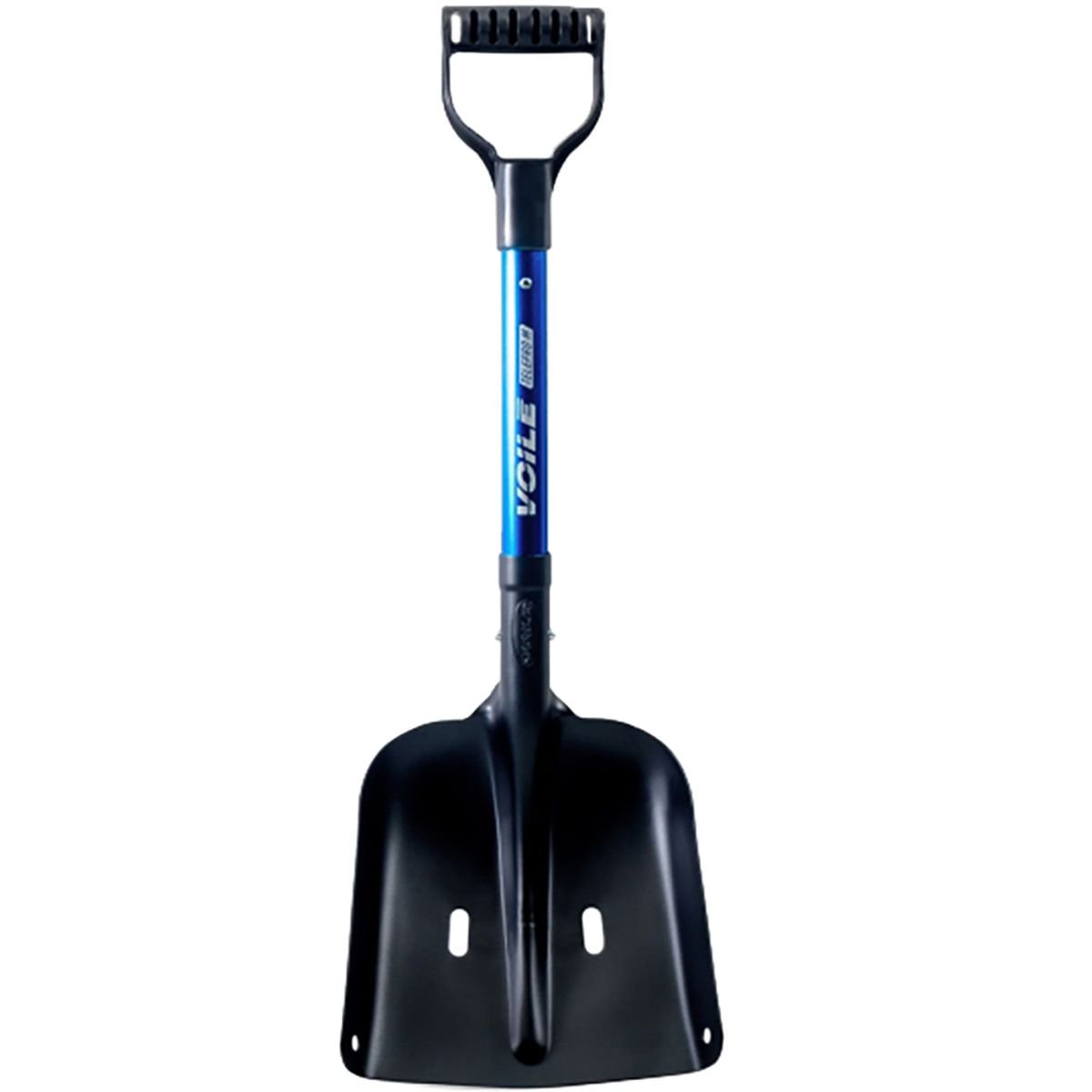
The long-handled digger that eats frozen, hard-packed snow for breakfast.
Length is the whole story here. The Telepro extends to 39.5 inches, with a Mini version at 33.5 inches, so you get a long lever to stand over the hole instead of crouching into it. That extra reach is what turns stubborn, frozen ground into something you can actually clear. Compare it to the Crescent Moon at 33 inches fully extended, and this one simply gives you more shaft to work with.
Sturdiness is the praise that leads the conversation, and it shows up in the digging. Buyers report it carving through hard-packed salt and snow mixtures and clearing frozen ground that stops lesser blades. The aluminum blade and handle keep the tool light enough to swing for a long session. One owner described digging out of deep snow mounds, which is the sort of load this shaft was made for.
The catch is that a long extended reach has to go somewhere when you pack it. At 31 inches in its listed form, this is not the tool that vanishes into a tiny summit pack. It is the shovel for heavy snow and real digging jobs, not quick laps.
The digging verdict: 39.5 inches of extension plus an aluminum blade makes this the clear choice for frozen, hard-packed conditions.
Pack reality: a 31 inch footprint asks for a full-size pack rather than a race vest.
Best matched to: riders who face ice crust and frozen snow and want maximum leverage per swing.
Not the one for: gram-counting tours where pack space is measured in inches.
6. Emergency Snow Shovel with Saw

A shovel, a saw, and a hoe in one shaft — the survival kit in a single tool.
Three tools share one handle here. The 6061 series aluminum shovel weighs 1.875 pounds (850 grams) and is built to take abuse from heavy snow, avalanche debris, and even dirt and mud. A 13.75 inch saw tucks into the handle to cut wood, snow, and ice. The whole thing then converts into chop/hoe mode, which lets you move snow at a faster pace with less effort than straight scooping.
The dimensions tell you how it carries. The blade measures 10 by 12 by 1.75 inches, the shovel collapses to 28.5 inches, and it extends to 34.5 inches in use. That is a bigger, longer tool than the pack shovels up top. It weighs 1.875 pounds against the 1.1 pound G2, and that extra heft is the price of having a saw and a hoe built in. The D-grip handle lets you lean into a push when you need to.
The honest trade-off is that no one tool does three jobs perfectly. A saw tucked into a handle is a convenience cutter, not a full replacement for a proper snow saw. The extra 0.775 pounds over the lightest pack shovel is also something you feel on a long climb. For a snowmobile kit or a car survival box, that weight is a small ask for the extra functions.
What you gain
- Saw in the handle cuts wood, snow, and ice without a second tool
- Chop/hoe mode moves snow with less effort than scooping alone
- 6061 series aluminum handles snow, debris, dirt, and mud
- D-grip handle supports a full-body push
What you give up
- 1.875 pounds is heavy for a carried shovel
- 28.5 inch collapsed length is longer than the pack-first picks
Built for: snowmobilers and winter survival kits that want digging, cutting, and hoeing from one tool.
Look elsewhere if: you pack a shovel on your back every tour and want the lightest option.
7. Mammut Alugator Light

A one-pound aluminum blade for travelers shaving every gram off their kit.
The sharpened aluminum blade is the part worth understanding. It is tilt-proof and strong, so it stays square in the snow instead of skating off at an angle. Attachment holes in the blade let you build a snow anchor or rig a rescue sled with the same tool. The straight back of the blade is there for shaving clean snowpit walls so your snow profile reads accurately.
The handle telescopes so you can tune the shaft to your digging efficiency, then collapses into a compact package. At 1 pound, the whole tool slips into a small daypack alongside the blade. This is Mammut’s lightest shovel, built for gram-counting tourers. The trade-off is a scoop that prizes trimming over brute volume, which is the right call for long tours and the wrong one for chunder-heavy debris.
Where it beats the heavier saw shovel above is carry weight, and where it loses is raw snow-moving capacity. If your days are long ascents, the 1 pound frame is the point. If your days are short laps with heavy digging, a bigger scoop will save you swings.
For the gram-counting tourer: a 1 pound aluminum shovel that still cars a sharpened, tilt-proof blade for anchors and snowpit work.
Not ideal if: you want maximum scoop volume for deep, heavy debris.
8. Black Diamond Equipment Transfer LT Backcountry Snow Safety Shovel
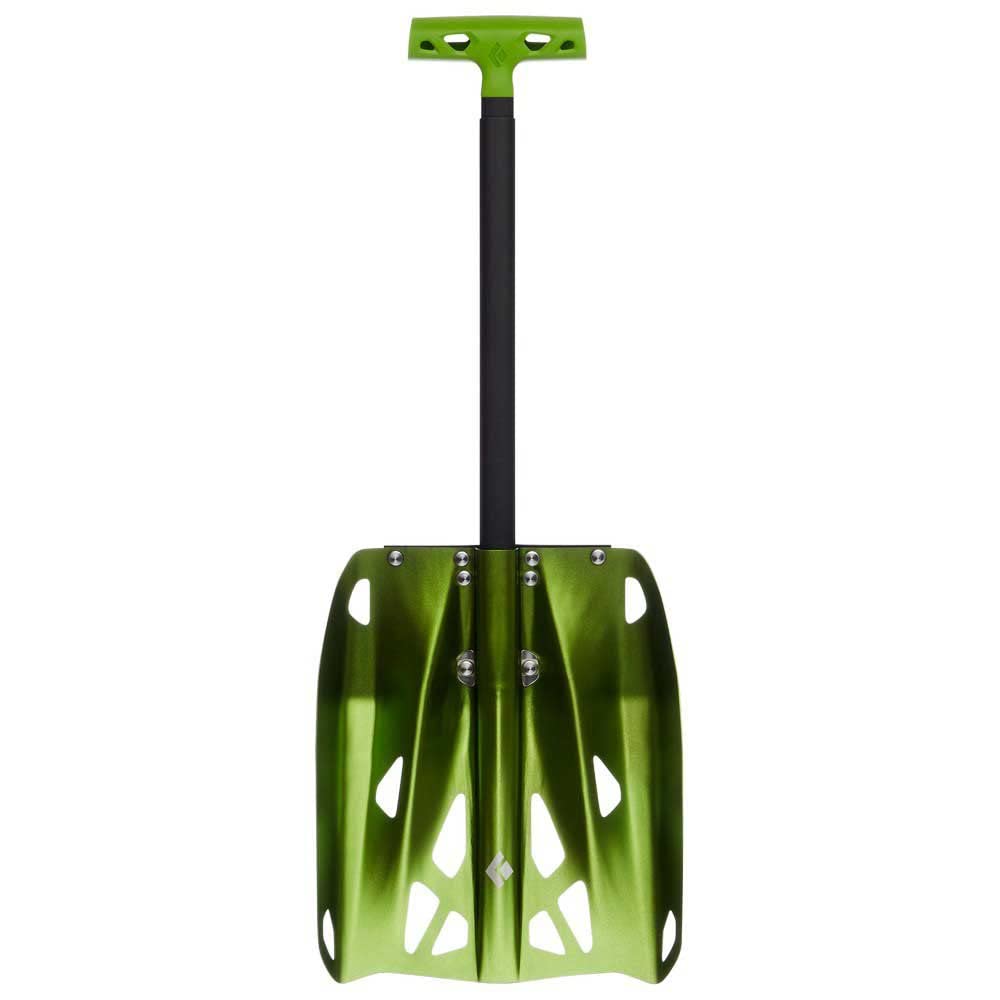
The 405 gram shovel that refuses to trade safety for weight savings.
Two facts define this tool. It is listed as the lightest UIAA certified shovel on the market at 405 grams. That certification matters because UIAA is a recognized standard for avalanche rescue shovels, so the low weight does not come at the cost of the benchmark. The 7075AL riveted blade is built to stay ultralight and durable at the same time.
The shaft is a two-piece telescoping design that is also removable, which is what lets it break down into the smallest possible package. For a traveler counting every gram in a long-tour pack, that combination of 405 grams and a certification-backed rescue tool is the whole argument. It is a premium pick in this lineup, and the extra spend goes straight into weight saved without a safety compromise.
What you still have to weigh is the blade itself. A 7075AL blade this thin is built for rescue speed rather than shovelling dirt or churning through rocky debris. Treat it as the dedicated safety tool it is, and it stays the lightest certified option here.
The ultralight case
- 405 grams makes it the lightest shovel in this lineup
- UIAA certified for avalanche rescue
- Two-piece removable shaft breaks down for tight packs
Where it asks care
- Built for rescue speed rather than dirt and rocky debris
- Premium tier for a dedicated safety tool
Reach for this if: you want the lightest certified rescue shovel you can carry and you treat your gear well.
skip it if: you need one blade to dig dirt, roots, and debris as well as snow.
Understanding the Specs
Blade volume and scoop size
Volume tells you how much snow one swing carries. Larger scoops like a 2.5 liter blade move more snow per stroke but add weight. Smaller pack blades save grams but need more swings. High side walls and a center ridge keep a big scoop from bending under load.
Collapsed versus extended length
Collapsed length decides whether the shovel fits your pack, while extended length decides how much leverage you have when digging. A short packed footprint is great for carry, but a long extended length lets you stand over the hole and work efficiently.
Blade material and certification
Aluminum is the standard for rescue blades. 6061 T6 and 7075AL alloys are strong and light, and a riveted or wedged blade stays rigid. UIAA certification marks a shovel tested to a recognized rescue standard, which is worth seeking on a safety tool.
Handle and shaft design
D-grips, hybrid grips, and finger-guard handles control your push. Spring pins and centering aids speed up assembly with gloves on. Ovo-concave and shaped shafts stiffen the handle so it does not bow when you put your weight behind a dig.
FAQ
What blade volume should I look for in an avalanche shovel?
How short does a shovel need to pack for a daypack?
Is UIAA certification important on a rescue shovel?
Can I use an avalanche shovel to dig my car out?
Do I need a shovel with a saw for snowmobile use?
How much does an avalanche shovel weigh, and does it matter?
What is the difference between collapsed and extended length?
How do I assemble a telescoping shovel quickly with gloves on?
Can a lightweight shovel still handle hard-packed snow?
Does a bigger scoop always mean a better shovel?
Final Thoughts: The Verdict
For most riders, the avalanche shovel winner is the G2 Backcountry Lightweight Telescopic because it packs to 17 inches at just 1.1 pounds and still gives you a 30 inch digging stance. If you want maximum scoop volume for real rescue digging, grab the ORTOVOX Badger with its 2.5 liter blade. And for the lightest certified option on the market, the Black Diamond Transfer LT at 405 grams is the one to reach for.
How We Picked
We do not accept paid placement. Every pick is matched to a real buyer and a real use-case; we do not hands-on test units.
Sources & Methodology
Specifications: manufacturer listings and product documentation. Review insights: verified customer reviews, as of November 2026. Pricing: not shown on this page (it changes often); check the current price via the retailer link.
As an Amazon Associate, Gadgets Feed earns from qualifying purchases. This does not affect which products we feature.