
Our readers keep the lights on and my morning glass full of iced black tea. As an Amazon Associate, I earn from qualifying purchases.
Specs are compiled from manufacturer listings and verified buyer reviews and can change over time — please confirm the key details on the product page before buying.
The hardest part of shopping for educational toys isn’t finding one that teaches—it’s finding one your kid doesn’t abandon after five minutes. The best picks here share one trait: they reward repeat play, whether that’s rebuilding circuits, launching paper planes, or melting a dragon’s ice column for the tenth time. This guide focuses on award winners and parent favorites that earn their shelf space.
I’m Min — the founder and writer behind Gadgets Feed. This guide is built by comparing the manufacturers’ published specifications and the patterns across verified customer reviews, so you get each pick’s real strengths and trade-offs instead of marketing spin.
From the iconic Snap Circuits Jr. with over 100 buildable projects to a squishy anatomy model, this breakdown of the best award winning educational toys cuts through the noise to show you what actually keeps kids engaged and learning.
Our Picks at a Glance


How To Choose The Best Award Winning Educational Toys
An award sticker is a great starting point, but it shouldn’t be the whole story. What matters most is whether the toy fits your child’s development stage and how much hands-on patience they have. A toy that’s too complex ends up in the closet; one that’s too simple ends up boring.
Match the Age, Not the Label
Manufacturer age ranges are a guide, not a law. The Snap Circuits Flight Deck is listed for ages 8 and up, yet parents report it’s a hit for 6- and 7-year-olds while being too complex for a 5-year-old. Look at the complexity of the build and the size of the pieces, then judge against your own child’s experience.
Count the Rebuild Value
The best educational toys aren’t one-and-done. Snap Circuits Jr. packs over 100 projects into a single box, meaning the play lasts for months of weekends. Similarly, a quality board game like Dragon’s Breath offers quick 15-minute rounds that families replay back-to-back because the setup is fast and the rules don’t need a referee.
Check the Materials and Safety
Younger kids put everything in their mouths, so material matters. Wooden sets like Hape and Rmischolar use non-toxic, child-safe finishes and are hand-sanded to avoid splinters. For plastic kits, look for terms like “non-toxic” or safety standard compliance. Small parts, like the Otamatone’s compact size, are a real concern for toddlers, so know your child’s choking risk before buying.
Quick Comparison
| Model | Best For | Age Range | Projects / Items | Type | Amazon |
|---|---|---|---|---|---|
| Snap Circuits Jr. SC-100★ Best Overall | Budding Electrical Engineers | 8+ | 100+ Projects | Electronics Kit | Amazon |
| Hape Pound & Tap BenchToddler Favorite | Toddlers (12-36m) | 12m-3y | 1 Bench | Pounding Toy | Amazon |
| National Geographic Chem SetLab Starter | Young Scientists | 4+ | 50 Experiments | Science Kit | Amazon |
| Snap Circuits Flight Deck | Paper Airplane Launchers | 8+ | 5 Projects | Electronics Kit | Amazon |
| HABA Dragon’s Breath | Family Game Night | 5+ | 1 Game | Board Game | Amazon |
| Dan&Darci Squishy Body | Curious Biologists | 4-8 | 30 Parts | Anatomy Model | Amazon |
| Kaodezhu Dinosaur Balance | Early Math Skills | 3+ | 30 Weights | Math Toy | Amazon |
| Rmischolar Wooden Instruments | First Musical Play | 18m-12y | 8 Instruments | Percussion Set | Amazon |
| Otamatone Unicorn | Novelty Gifting | 6+ | 1 Synth | Electronic Toy | Amazon |
In‑Depth Reviews
1. Snap Circuits Jr. SC-100 STEM Electronics Kit
Our pick — over 4.5★ from 29,000+ verified ratings; the strongest balance of quality and price.
The gold standard that turns 8-year-olds into weekend electrical engineers.
The box is a compact 12 x 9.5 x 1.75 inches, but the play it open up is enormous. With 29 Snap Circuits parts that snap onto a plastic grid and a 4-color manual, kids build over 100 different electric-powered projects—from a flying saucer to a working alarm. There’s no soldering and no tools needed, so the barrier to entry is basically zero.
What wins people over is quality, with thousands of owners praising how the pieces click together and survive years of use. The instructions are clear enough that one family logged over 20 hours of play, and it’s compatible with other Snap Circuits kits, so the system can grow with your child. While it’s advertised for ages 8 and up, the engaging projects have fans as young as 4 and as old as 108, per the manufacturer.
The one honest trade-off? A few sets arrived with components that felt fragile and didn’t snap securely. It’s worth checking the pieces early on, because the manufacturer’s customer service is famously responsive—buyers report getting free replacement parts shipped for wear-and-tear damage. The brand’s award pedigree is deep, including the Specialty Toy of the Year Award and Good Housekeeping’s Best Toys.
Why It Earns Top Billing
- Over 100 projects from one box means months of replay value.
- No soldering or tools required, so kids can work independently.
- Color-coded, numbered pieces make the manual easy to follow.
The Honest Trade-Offs
- Needs batteries, which aren’t included.
- Some owners mention a few parts feeling fragile on arrival.
Reach for this if: you want a proven, deep STEM kit that scales from a curious 5-year-old to a tinkering pre-teen, and you value a brand that stands behind its parts.
Look elsewhere if: your child gets frustrated by multi-step builds without adult help, since some projects lean challenging.
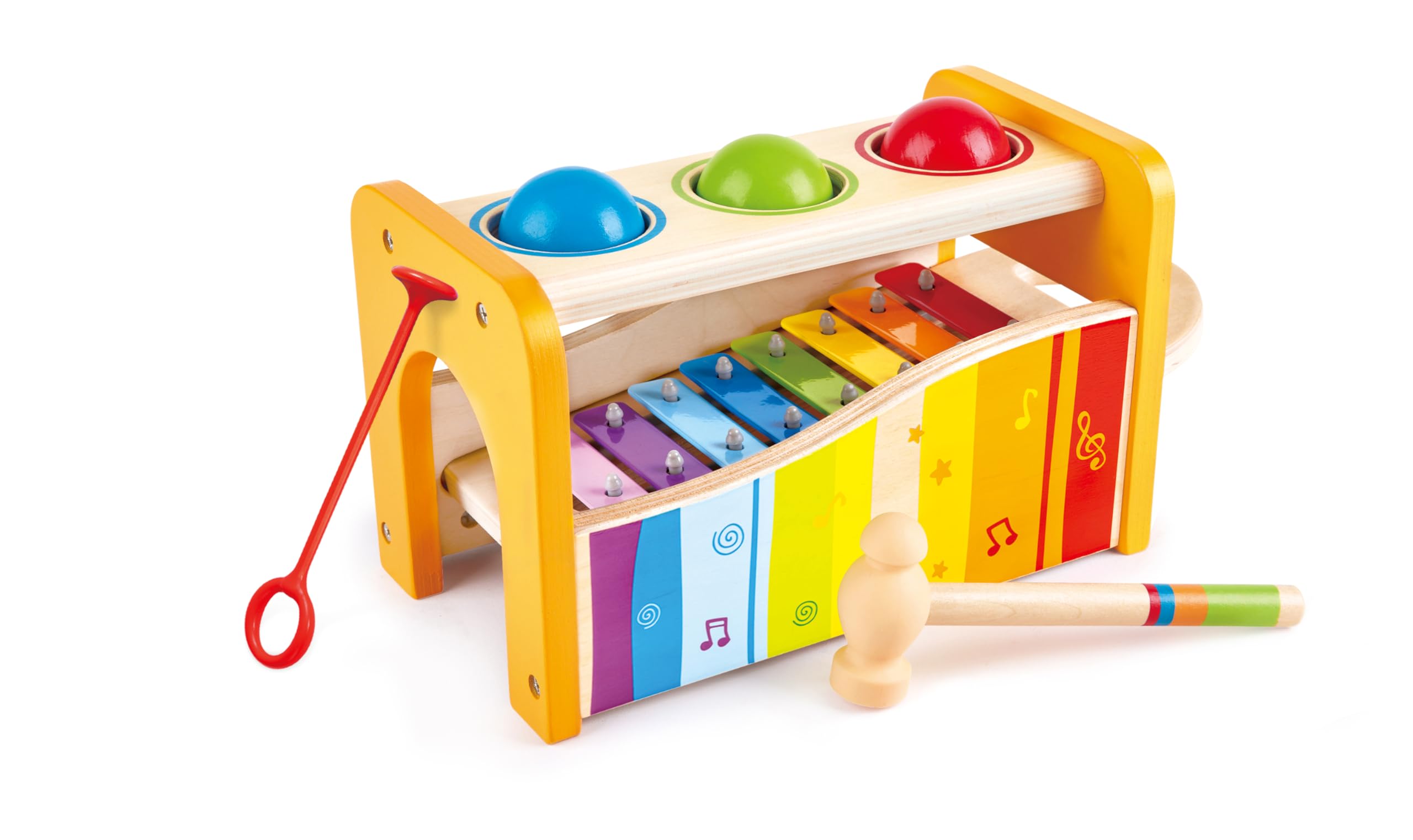
2. Hape Pound & Tap Bench with Slide Out Xylophone
The two-in-one wooden favorite that makes cause-and-effect pure joy for toddlers.
For the 12-months-to-3-years crowd, this is the pick that dominates playrooms. Pound the balls with the mallet and they drop onto the xylophone below, tinkling out a pleasant scale. Then, pull out the xylophone entirely so your toddler can play the keys directly. It’s two toys in one dense 9.45 x 5.91 x 5.31-inch wooden bench.
The craftsmanship is the headline here—beautifully finished, non-toxic, child-safe wood that survives the enthusiastic pounding of a 1-year-old. Parents note the balls are large enough to be safe and easy to grab, and the toy teaches colors, motor skills, and the connection between hitting and hearing. It’s a very common first-birthday present that keeps holding attention well past the toddler years.
If there’s a quibble, it’s the sound. Some owners describe the xylophone notes as pretty, while a few call the tone terrible, which is subjective. A more practical gripe: the balls sometimes don’t roll down the slide because of the flat angle, and there’s no storage for the hammer, so it falls out easily. Hape does sell replacement balls, which speaks to the toy’s longevity.
Built to be pounded: the heavy-duty construction and large, safe balls make this the sturdiest option for the under-3 set, and the slide-out xylophone doubles the play value.
Best as: a first birthday gift or a high-traffic toy for a toddler who loves to bang and explore, backed by a brand known for durable wood.
Think twice if: you need absolute melodic accuracy, since the xylophone tone quality splits opinion.
3. National Geographic Junior Chemistry Set with 50 Experiments
A complete home lab that makes baking soda and vinegar feel like real science.
For a child aged 4 and up who’s curious about why things fizz and bubble, this kit delivers a complete chemistry lab experience. It includes 20+ durable, child-safe lab tools—test tubes, goggles, droppers, flasks, beakers, and funnels—so kids can run 50 hands-on experiments using common household items. The included illustrated guide gives clear, step-by-step instructions that let young scientists work toward successful results on their own.
What the reviews celebrate most is the pure enjoyment factor, with parents noting their kids love making colored solutions and playdough. Because the experiments rely on things like baking soda and vinegar, you can pick and choose activities based on what you already have in the pantry. The toy is an Amazon exclusive from Blue Marble, a Toy of the Year Award winner, and it’s designed specifically for younger kids ages 4-6.
The catch is supervision. Many of the experiments need a lot of adult hand-holding, and one parent noted their 5-year-old lost interest after a few easy ones, suggesting it’s better suited for ages 7-8. Also, nitrile gloves are not included, and the dyes can stain little hands, so have play clothes ready.
Set expectations early: this is a guided science experience, not independent play for a preschooler—plan to sit with them for the majority of the experiments, and you’ll both enjoy it.
Who it fits: a curious 4-to-6-year-old with a patient adult on hand, or a 7-plus kid ready to run experiments with minimal help.
Who it skips: parents looking for a zero-mess, zero-prep toy, since this one demands household ingredients and cleanup.
4. HABA Dragon’s Breath Board Game

The dragon-themed board game that turns preschoolers into strategic gem collectors.
Here’s a board game that holds the attention of both a 4-year-old and a 9-year-old, which is a rare feat. In Dragon’s Breath, players help a dragon family collect sparkling gems by melting an ice column. The rules are simple and intuitive, so kids aged 5 and up can jump right in, and rounds run about 15 minutes—short enough to keep little attention spans and quick enough to inspire “one more game” replays.
The gameplay is the thing everyone raves about, and it quietly builds counting and color recognition skills. One family noted their kids prefer it over TV, which is the highest praise a toy can earn. The pieces are sturdy and the art is detailed, featuring a holographic dragon, and it’s made in Germany, so the build quality is excellent. It’s also adaptable—play a luck-based version for the youngest players and a strategy mode for older ones.
The main note for parents: this is a shared family game, not a solo toy. While kids aged 4-5 can play with supervision, younger ones will need help understanding the gem-drop mechanic. There’s minimal reading required, making it an excellent choice for a mixed-age family game night.
The Playful Highlights
- Fast 15-minute rounds that families replay back-to-back.
- Builds counting and color recognition without feeling like a lesson.
- Sturdy, high-quality pieces with a gorgeous holographic dragon.
The Parent Notes
- Needs an adult or older sibling to guide the youngest players.
- It’s a game for the table, not a toy for independent play.
Reach for this if: you want a screen-free family ritual that a 5-year-old can genuinely win at and a 9-year-old won’t find babyish.
Look elsewhere if: you’re shopping for solo, child-led play, because this one shines with a group around the table.
5. Snap Circuits Flight Deck STEM Toy

A paper airplane launcher that sneaks in lessons about circuits and air pressure.
This is the most physical of the Snap Circuits family. Instead of just building a gadget that lights up, kids build the circuits that launch paper airplanes, flying saucers, and balls. The kit includes five unique projects in total, adding a spinning wheel that creates artistic patterns and a fan that levitates balls to teach air pressure and aerodynamics.
As a gift, it’s a clear winner—it’s the top-mentioned positive aspect among owners. The kit is highly reusable, because the configurations are interesting enough that one child repeatedly rebuilds them. And since it’s Snap Circuits, it’s compatible with the other kits in the line, so your Jr. SC-100 parts will work with it, extending the whole system’s value. The plastic construction is quality, and replacement parts are affordable from the manufacturer.
But the paper airplane launcher itself is finicky. Even adults struggle with it, so it lands better with ages 6-7 than with a 5-year-old. There are also durability concerns—a few customers note the black top piece of the motor breaking within the first use. It’s a fantastic add-on for an existing Snap Circuits fan, but as a standalone first kit, it has a steeper learning curve than the Jr. SC-100.
Build it together: the launcher mechanics are tricky, so treat this as a parent-child project rather than an independent activity for a first-timer.
Best paired with: an existing Snap Circuits collection, since the cross-compatibility makes it a no-brainer expansion for a kid already hooked.
Avoid as a solo gift: if you’re buying for a 5-year-old, the finicky paper plane feature will frustrate more than it entertains.
6. Rmischolar Baby Musical Instruments Montessori Wooden Toys
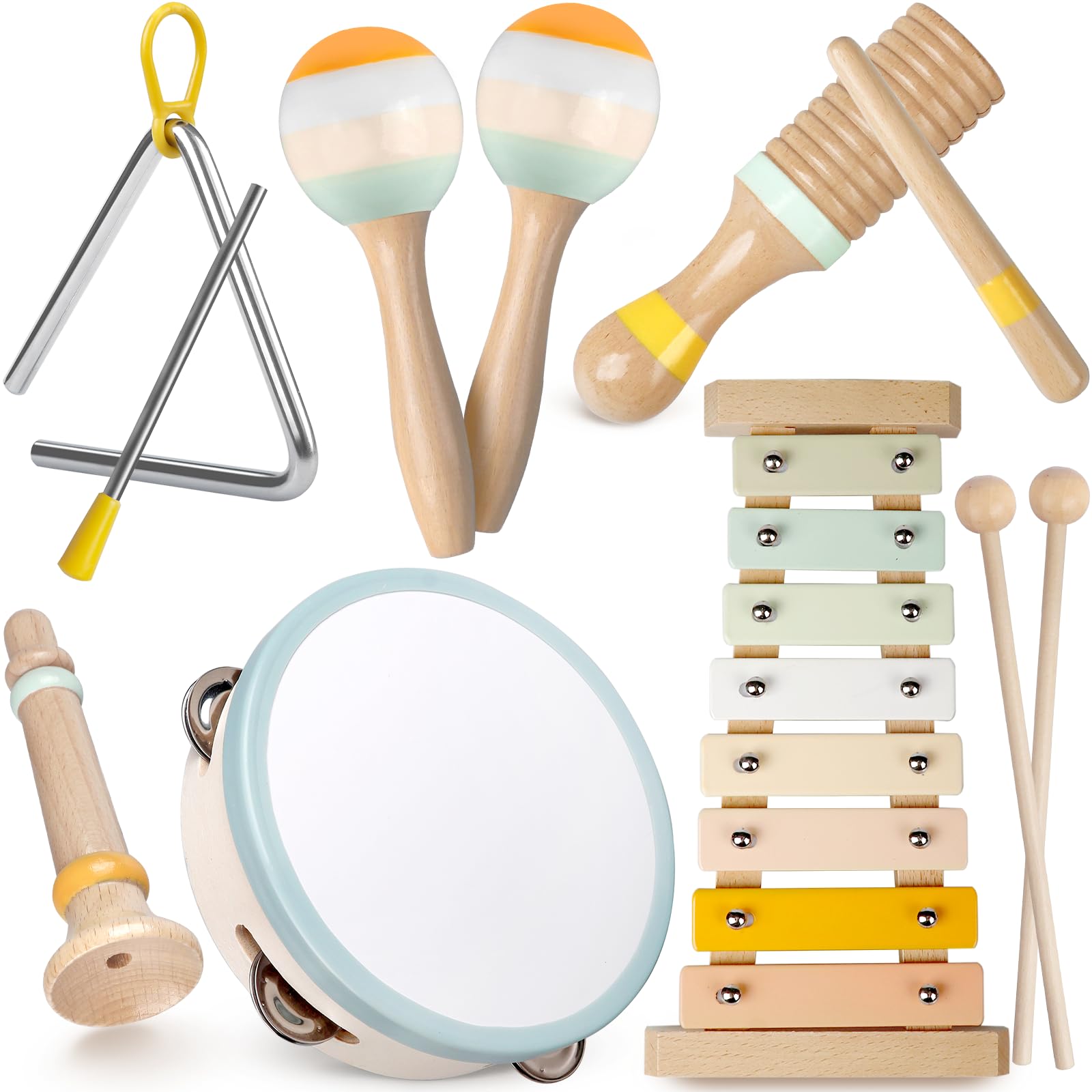
A full wooden percussion orchestra in neutral tones that fits your boho playroom.
This is the complete starter band for a toddler. The set includes an 8-tone xylophone with 2 mallets, a tambourine with jingle cymbals, 2 maracas, a clarinet whistle, a güiro, and a triangle with striker. All of it is made from premium natural wood with organic pigments and non-toxic, water-based paints, hand-sanded for smooth, rounded edges with no sharp corners or splinters.
The xylophone is the star here—owners describe it as “particularly special and pretty in tone and appearance,” and it’s tuned properly, which isn’t always a given at this price. The sounds are soft and non-overwhelming, so a toddler can play without giving you a headache. This is a Montessori-inspired set designed for ages 18 months to 12 years, and it’s aesthetically versatile enough to double as stylish décor in a boho nursery.
There are two honest notes. Safety is the big one: some families flagged small parts as a choking hazard, so this isn’t a chew toy for a baby under 18 months. And durability is mixed—the xylophone sticks can bend or break under heavy pressure, and the tambourine has been reported to fall apart after minimal use with a particularly rough toddler.
The Melodic Wins
- Properly tuned xylophone with a pretty, soft tone.
- Hand-sanded natural wood with non-toxic, water-based paints.
- Neutral aesthetic that looks great on a shelf and in a playroom.
The Cautionary Notes
- Small parts create a real choking hazard for toddlers under 18 months.
- The xylophone mallets can bend under heavy, rough play.
Who it fits: a 2-to-5-year-old who loves making noise, in a home that cares about natural materials and clean aesthetics.
Who it skips: families with a heavy-handed toddler who will abuse the mallets, or any child who still mouth-chews toys.
7. Dan&Darci Human Anatomy Squishy Body Model
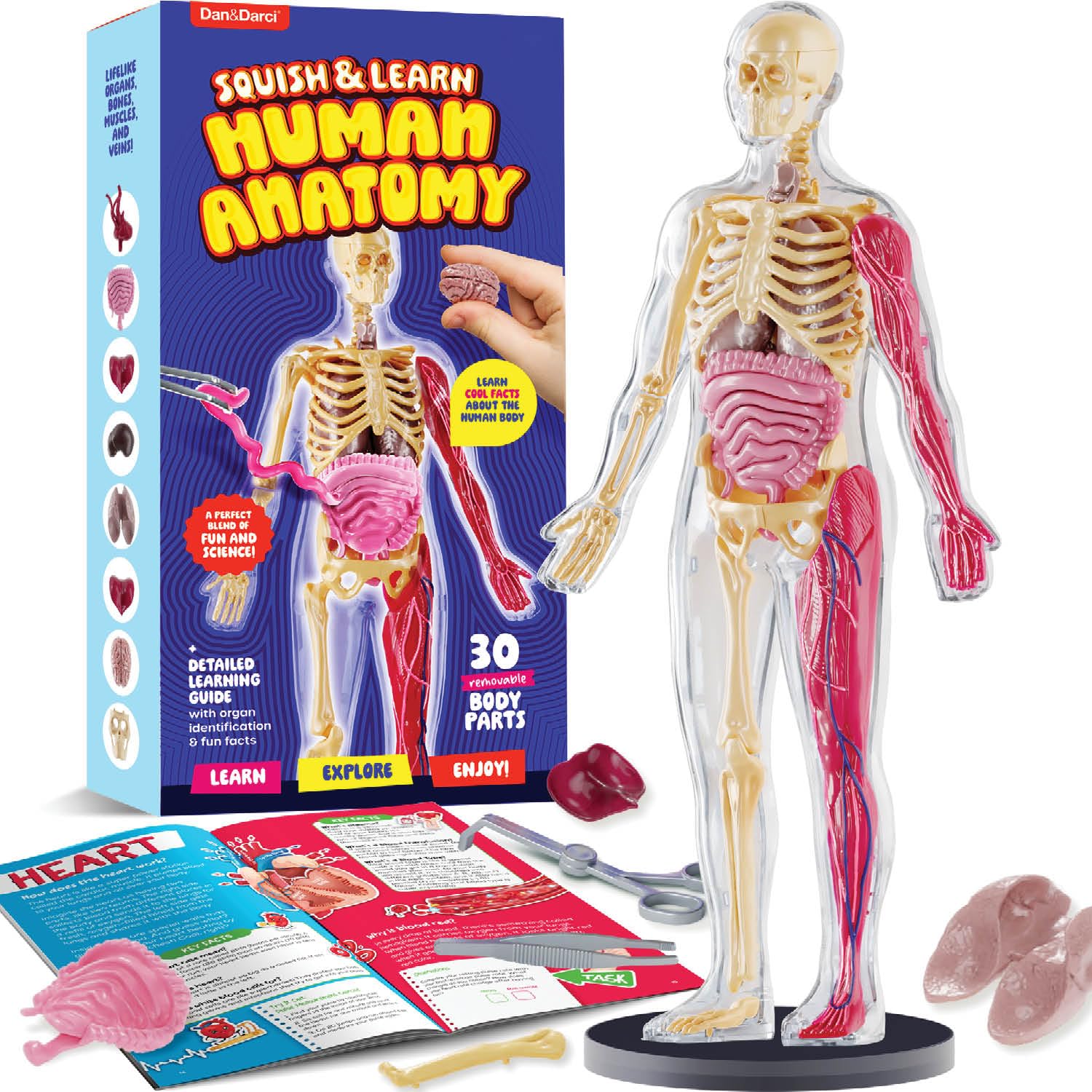
The squishy, gooey anatomy lesson that lets kids play surgeon at home.
This model turns biology into a hands-on adventure. It features 30 removable squishy body parts, including the brain, heart, lungs, ribs, trachea, fibula, a gooey stomach, and a flexible spine. Kids can squeeze the spleen, stretch the intestines, pop out the humerus, and then rebuild the entire body, with a numbered organ organizer chart that helps them remember where everything belongs.
For homeschool families and curious kids, the educational value is the headline—the included illustrated guide is packed with facts about breathing rates, why we blink, what causes thirst, and even why we get goosebumps. Kids aged 4-8 are the target, but parents of 9-year-olds report it’s a hit there too, especially for those who love pretending to be a surgeon. The squishy texture of the organs is a big part of the appeal.
Here’s the honest friction: putting the body back together is a puzzle. While some find assembly pretty easy, others describe it as “a pain” and a “tricky reassembly,” with 16 owners specifically flagging the rebuild challenge as negative. The pieces are durable enough for play but won’t survive rough tossing, so treat the whole set with reasonable care.
Guide required: use the detailed learning guide to identify the squishy organs—it’s the difference between a toy you throw together and a real lesson in how the body connects.
Reach for this if: you have a child obsessed with how the body works, or you’re homeschooling and want a tactile biology aid.
Look elsewhere if: your child gives up easily on tricky puzzles, since the reassembly step demands patience.
8. Kaodezhu Dinosaur Math Balance Toys

The dinosaur scale that makes addition feel like a game of see-saw.
This is one of the smartest ways to teach early math to a 3-to-6-year-old. The set includes a dinosaur-shaped balance, 2 trays, 10 colorful number weights, and 20 small dinosaur weights. Kids place a number block on one side and the matching number of mini dinos on the other to make the scale balance, turning abstract numbers into a physical, visible concept.
What makes it engaging is how quickly it clicks—parents report a 2.5-year-old grandson counting dinos and balancing the scale within days of getting it. It’s made from high-quality ABS non-toxic plastic that has passed the US CPSIA test, with a smooth surface designed around a baby’s little hand. The cards include addition, subtraction, multiplication, and division, so it grows with the child.
Size and durability are the mixed notes here. Some owners find it durable and perfectly sized, while others describe the plastic as a bit flimsy and the dinosaurs as small. It’s also lightweight, which helps a toddler manage it but means it’s not a rough-and-tumble toy. One teacher bought it for a classroom and loved the scale, even if the included cards were confusing enough to get thrown away.
Start simple: skip the cards on day one and just use the scale to count dinos—the one-to-one matching is where the magic happens for a 3-year-old.
Best for: a preschooler who loves dinosaurs, or a kindergarten classroom looking for a hands-on math center.
Think twice if: you need a heavy-duty toy, since the plastic feels light and the dinos run small.
9. Otamatone Japanese Electronic Synthesizer – Unicorn
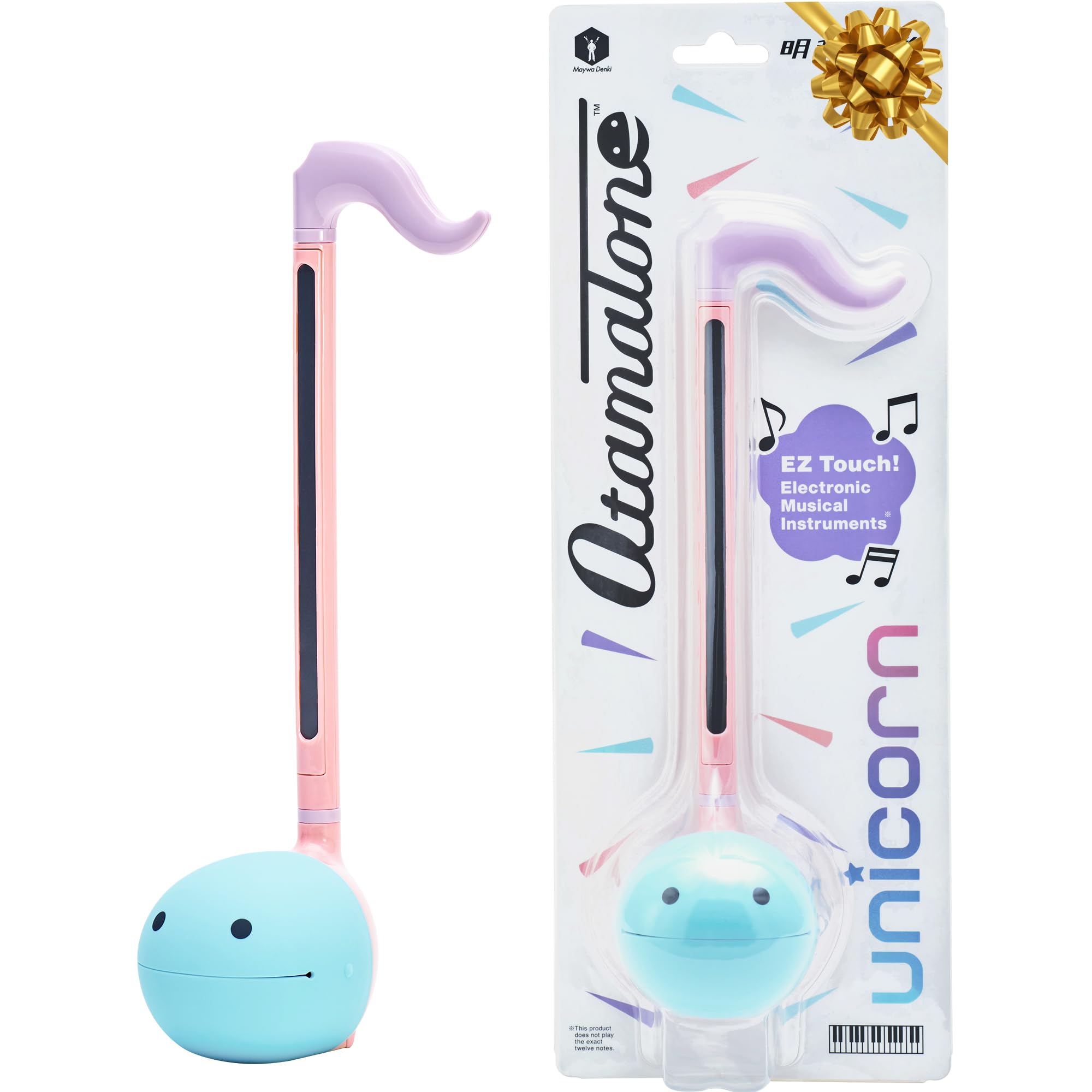
Japan’s silliest musical toy that kids adore and parents begrudgingly tolerate.
There’s no toy on this list that sparks more pure, unapologetic joy than the Otamatone. It’s a portable synthesizer where you touch or slide your fingers along the stem to change pitch and squeeze the cheeks for vibrato. At roughly 10.6 inches, it’s compact enough for a backpack, and it runs on 3 AAA batteries (not included). This Unicorn edition is one of over 30 designs from Maywa Denki Studio.
As a gift, it’s a certified hit. Kids from 8 to 80 love the silly sounds and the expressive face, and it’s been noted as particularly great for ADHD and spectrum kids who appreciate the sensory and musical exploration. It’s genuinely a fun, unique way to learn about pitch and melody, even if the tone is more comedic than concert-grade. The fun factor is the single biggest thing owners talk about.
Now the honesty. The quality is genuinely mixed—the highest-count feedback is actually mixed, with many owners reporting it stops working after a few days or breaks within weeks. It’s also admittedly annoying to adults; one parent wrote “I hate this but my kid loves it” and warned against taking it on road trips. The pitch stem can be too small for adult hands, making it ideal for ages 7-11, and it’s durable only if you don’t throw it around.
Call it a gag gift with a brain: expect high novelty value and real musical exploration, but hedge on the build quality holding up over a long year of play.
Reach for this if: you want a hilarious, memorable gift for a 7-to-11-year-old who already loves music and won’t be heartbroken if a novelty item wears out.
Look elsewhere if: you need a durable instrument for a rough kid, or you value your own quiet—this one gets loud and repetitive fast.
Understanding the Specs
Project Count vs. Play Value
A higher project count usually means more bang for your buck, but only if the instructions are clear enough for your child to follow independently. The Snap Circuits Jr. packs 100+ projects, making it a long-term investment, while the Flight Deck’s 5 projects offer focused, physical fun. The key is matching the project difficulty to your child’s patience level.
Material and Safety Standards
For toddlers, material is everything. Wooden toys like the Hape bench and Rmischolar set use non-toxic, child-safe paints and are hand-sanded to avoid splinters. Plastic kits should be non-toxic and ideally pass a standard like the US CPSIA test. Always check for small parts that pose a choking risk for kids under 3, since even the best educational toy is a hazard if it’s not sized right for the child.
FAQ
Are Snap Circuits Jr. kits compatible with other Snap Circuits sets?
What age is the Hape Pound & Tap Bench really suitable for?
How many batteries do I need for the Snap Circuits kits?
Is the National Geographic Chemistry Set safe for a 4-year-old to use alone?
Can toddlers choke on any parts of the Rmischolar wooden instrument set?
What is the difference between the Snap Circuits Jr. and the Flight Deck?
How long does a typical game of HABA Dragon’s Breath last?
Is the Otamatone durable enough for a child who drops their toys?
Does the Kaodezhu Dinosaur Balance help with advanced math or just counting?
Final Thoughts: The Verdict
The crowd favorite here is the Snap Circuits Jr. SC-100, and it earns the top spot because it combines the deepest project library with the clearest instructions and the best brand support—a rare trifecta in the STEM aisle. For the toddler set, the Hape Pound & Tap Bench is the sturdiest, most beloved choice for ages 1-3. If you want a family game night that even a 5-year-old can win, the HABA Dragon’s Breath is the one to pull off the shelf. Whatever you choose, match the complexity to your child’s patience, not just their age.
How We Picked
We do not accept paid placement. Every pick is matched to a real buyer and a real use-case; we do not hands-on test units.
Sources & Methodology
Specifications: manufacturer listings and product documentation. Review insights: verified customer reviews, as of August 2026. Pricing: not shown on this page (it changes often); check the current price via the retailer link.
As an Amazon Associate, Gadgets Feed earns from qualifying purchases. This does not affect which products we feature.